
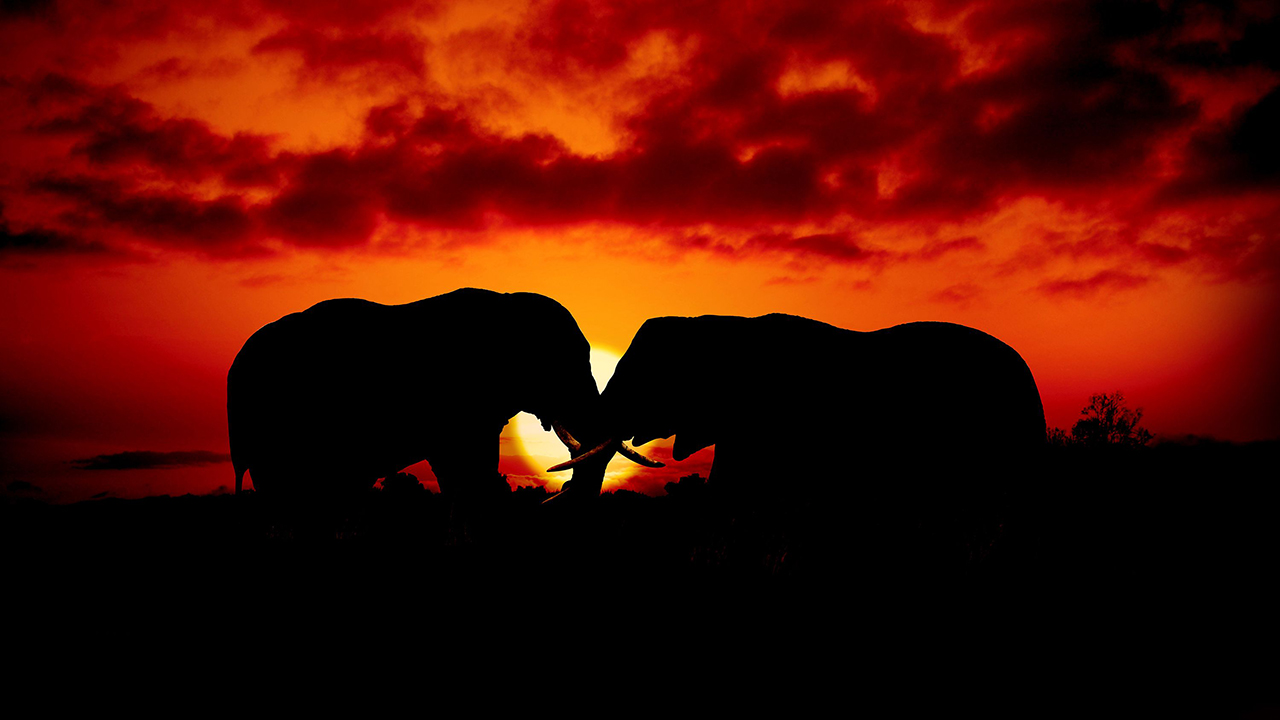
Elephants are easy to admire from a distance. They’re enormous yet gentle, powerful yet impossibly calm, and they’ve captured human imagination for thousands of years. But for all the time we’ve spent watching them, scientists are still uncovering just how extraordinary these animals really are, and some of their discoveries are genuinely hard to believe.
Beneath that thick, wrinkled skin is an animal with a rich emotional life, a surprisingly sophisticated way of communicating and a mind that continues to amaze the researchers who study it. In many ways, elephants are far more like us than we might expect, and in others, they’re unlike anything else on Earth.
To show just how remarkable these gentle giants are, World Animal Protection, an international animal welfare charity, has gathered some of the most surprising facts about them. Scroll down to discover the most fascinating ones.
More info: Instagram | worldanimalprotection.org
#1 Wild Elephants May Need Surprisingly Little Sleep
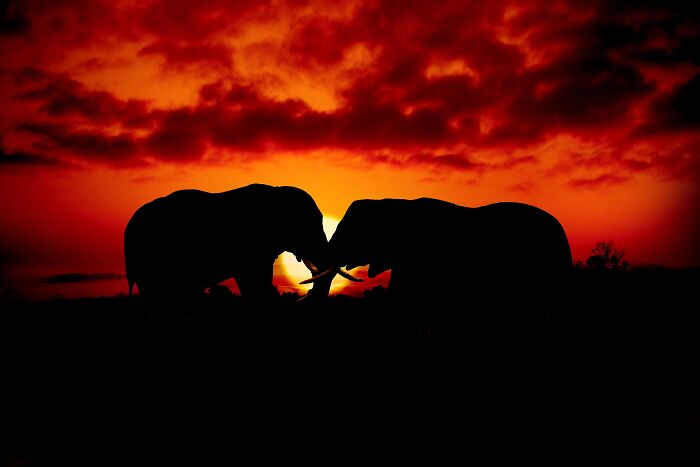
A 2017 study that tracked two matriarchs in Botswana found they slept only about two hours a day, the least ever recorded for a mammal, and sometimes stayed awake for up to two days when danger was near.
© Photo: Bisakha Datta / Pexels
#2 Elephants Mourn Their Lost Loved Ones
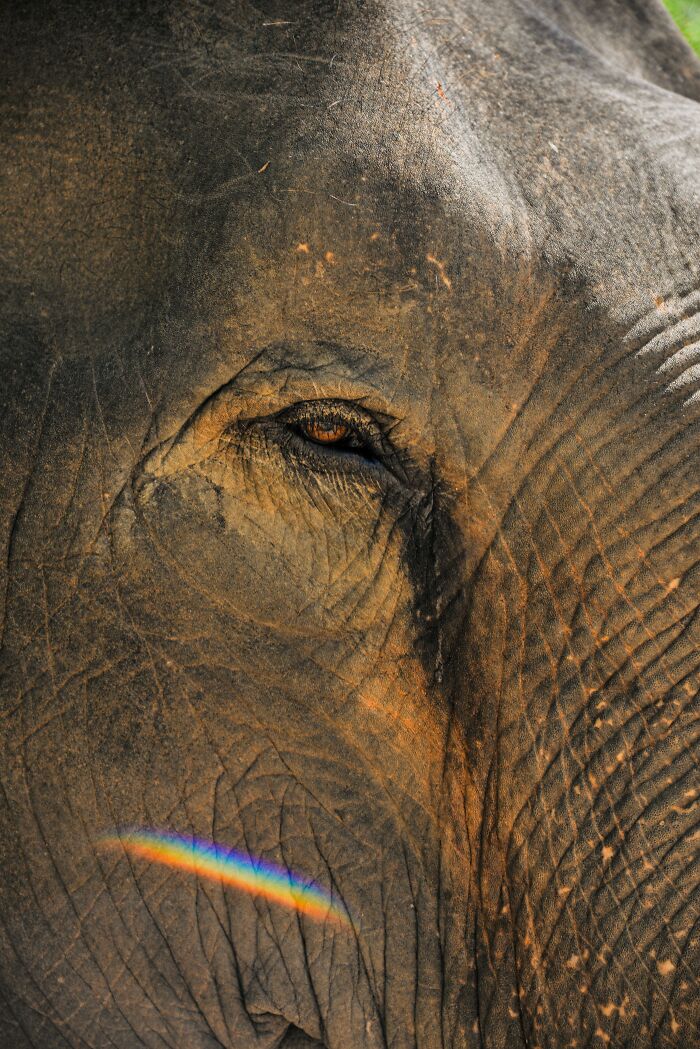
Just like humans, elephants mourn when members of their herd pass away. They gather around the body, touching and smelling it with their trunks, and sometimes stand silent vigil for hours. When an elderly matriarch named Queen Victoria passed away in Kenya’s Samburu National Reserve in 2013, researchers watched elephants from three different families come to inspect her remains. Her son even nudged her gently with his tusks, as if trying to help her stand. Years earlier, relatives of another female, Eleanor, kept returning to her body for nearly a week, some rocking back and forth while others stood perfectly still.
Behavior like this suggests that elephants have deep emotional awareness. The gentle giants form lifelong bonds with their families. Calves spend most of their time within just a few meters of another elephant, and adults can recognize the calls of relatives they haven’t seen in more than a decade. With connections that strong, it’s no surprise that a loss within the herd can be felt so deeply. As anthropologist Barbara King, author of How Animals Grieve, put it: “I have no doubt that elephants grieve.”
© Photo: Paolo Botio / Pexels
#3 Elephants Are Afraid Of Bees, And They Even Have A Special Alarm Call To Warn The Herd
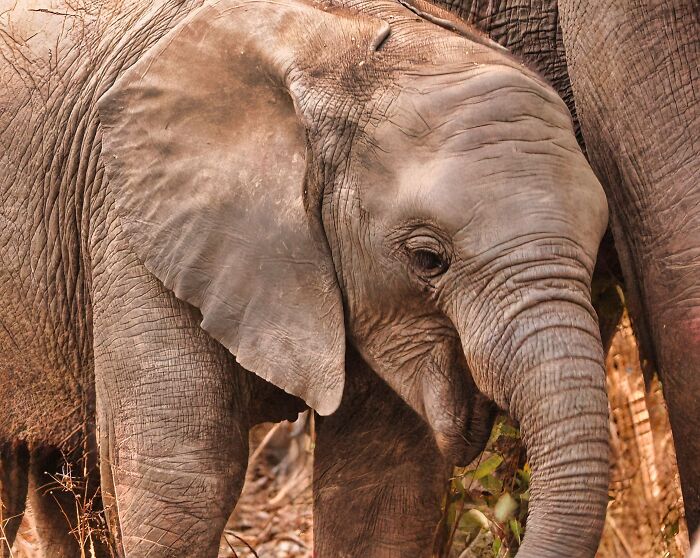
t’s hard to believe that one of the largest animals on Earth could be intimidated by something as small as a bee. But elephants have good reason to be wary. While their thick skin can handle a lot, bees go straight for the sensitive spots, like the inside of the trunk and the delicate skin around the eyes. A swarm can send an entire herd running.
Even more impressive is how precisely elephants warn each other about the danger. Researchers have discovered that elephants produce a distinct alarm rumble when they hear bees buzzing nearby. When other elephants hear it, they shake their heads and quickly retreat, even if they haven’t heard the bees themselves. Later studies found they also use a different call to warn of approaching humans, suggesting elephants may have separate “words” for different threats. Their fear of bees has even turned into a conservation tool: in parts of Africa, farmers now protect their crops with beehive fences, which keep elephants away peacefully and help people and elephants live side by side.

© Photo: Charlotte Owens / Pexels
#4 Baby Elephants Suck Their Trunks For Comfort, Much Like Toddlers Suck Their Thumbs
Young elephants sometimes suck their trunks for comfort, just as human babies suck their thumbs. The habit comes from the same natural sucking reflex that drives nursing, and it’s especially common in the early months, when calves are still learning to control a trunk packed with more than 50,000 muscle units. Even adult elephants occasionally do it when they feel nervous or unsure, a small, soothing gesture that’s not only adorable but also a glimpse of their vulnerability.
© Photo: Thomas Porter / Pexels
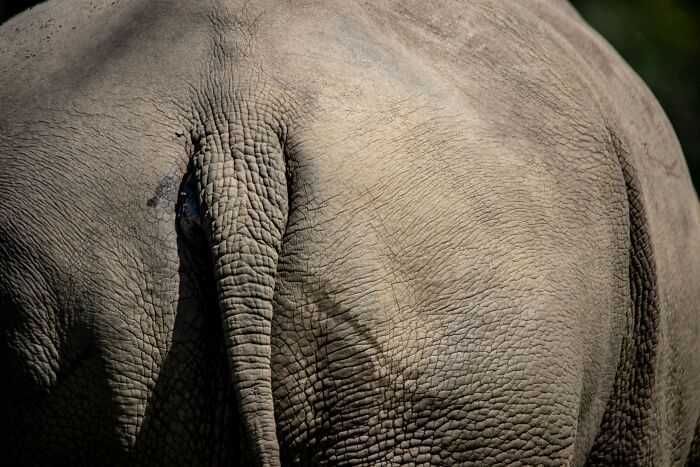
#5 An Elephant’s Tail Hair Works Like A Diary, Recording Where It Has Been And What It Has Eaten
An elephant’s tail might look like a simple fly swatter, and it does that job well. While the ears fan away pests at the front, the tail takes care of the back. But the tail holds a much more surprising secret. Its thick, wiry hairs can grow nearly a meter long and are so tough that they’re chemically closer to rhino horn or horse hooves than to ordinary hair. Because each strand grows slowly over time, it also works like a natural diary. By analyzing the chemistry along a single hair, researchers in Kenya could reconstruct what an elephant had been eating and where it had traveled over months. The newest growth near the base reveals recent meals, while the tip holds clues from much further back. Elephants also use their tails to communicate: a raised tail can signal excitement, playfulness or alarm, and they can even feel what’s following behind them.
© Photo: Magda Ehlers / Pexels
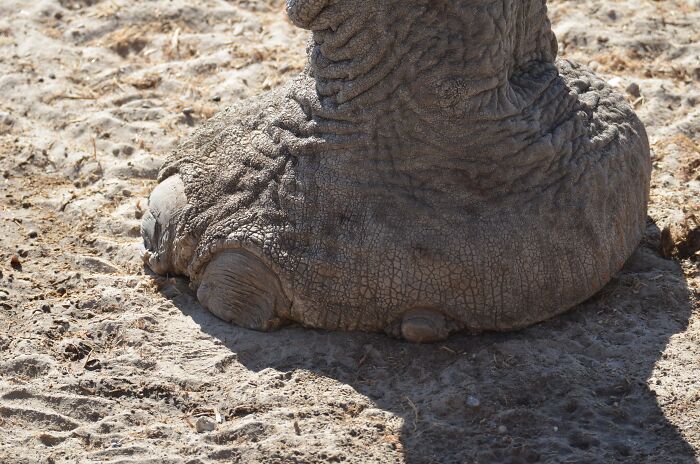
#6 Elephants Walk On Tiptoe
An elephant’s foot rests on a thick fatty pad that works like a built-in shock absorber, so they’re essentially walking on their toes. Researchers have even found a hidden “sixth toe,” a bony structure inside the foot that helps support their enormous weight.
© Photo: Kallie Calitz / Pexels
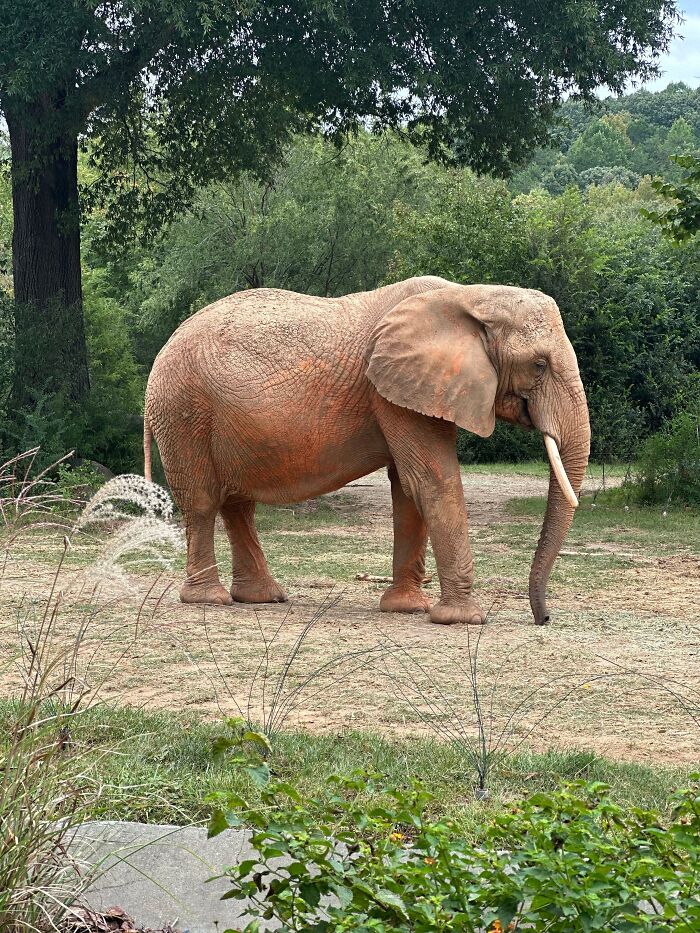
#7 Elephants Have The Longest Pregnancy Of Any Land Animal
An elephant pregnancy can last up to 680 days, or about 22 months, which is longer than any other mammal studied. Scientists believe much of that extra time goes into developing the calf’s large, complex brain. The result is a newborn that arrives remarkably ready for the world. Weighing around 100 kilograms (about 220 pounds), a calf can usually stand within 20 minutes of birth, take its first steps within an hour and keep up with the herd in just a couple of days. That long journey together also helps forge a bond between mother and calf that can last a lifetime.
But such a slow pace of life comes at a cost. With a long pregnancy and typically only one calf every four years or so, elephant populations take a very long time to recover from threats like poaching and habitat loss. By supporting conservation efforts, we can give elephant families the time and safety they need to grow and thrive again.
© Photo: Van-Es Flores / Pexels
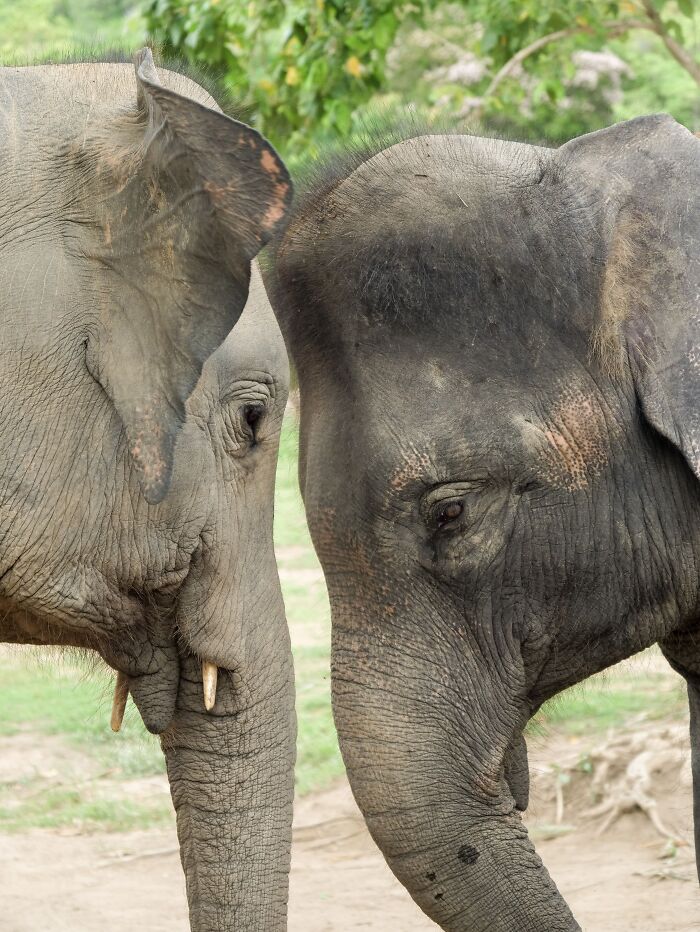
#8 Elephants Kept Alone Can Show Signs Of Depression
Elephants are deeply social animals, built to live surrounded by family. When they’re kept alone for long periods, the effects can be heartbreaking. Isolated elephants in captivity often develop repetitive behaviors such as swaying, pacing, rocking and head bobbing, which are rarely seen in the wild and widely recognized as signs of stress and depression. As elephant behavior expert Joyce Poole put it, solitary elephants have “nothing to do, nowhere to go, no one to see, no one to communicate with.”
© Photo: Katie Hollamby / Pexels
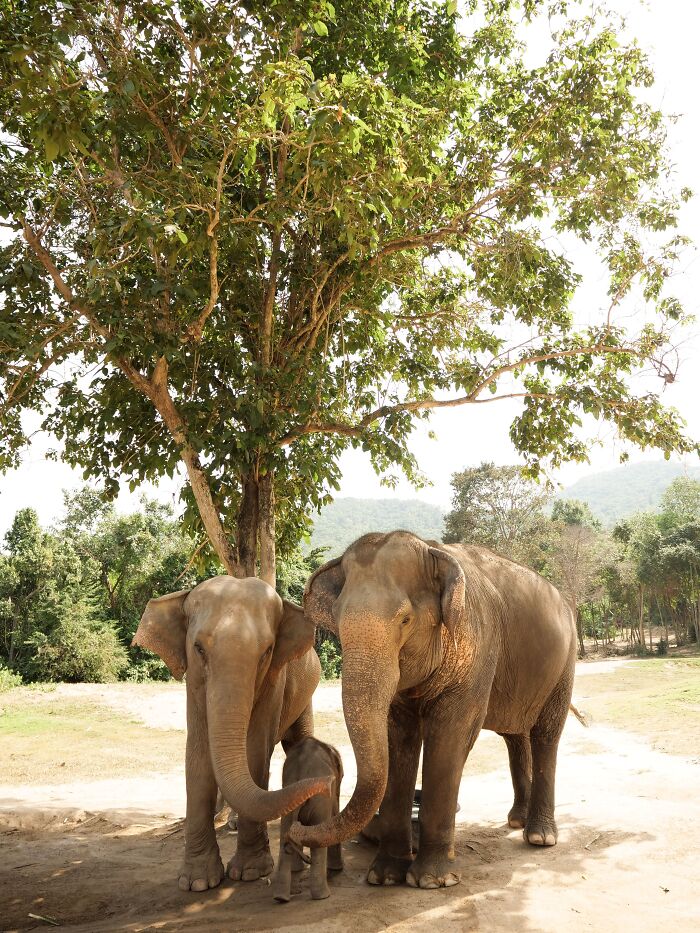
#9 Every Elephant Has Its Own Personality, From Outgoing Social Butterflies To Cautious Introverts
ust like us, elephants have distinct personalities. Some are outgoing, playful and seem to know everyone, while others are more reserved and prefer a small, trusted circle. Researchers at the Amboseli Elephant Research Project in Kenya even assessed the members of one family using a personality questionnaire designed for humans, scoring each elephant on traits like curiosity, activity and aggression.
Those differences shape life within the herd. Some elephants are more popular than others, and the most respected leaders tend to be confident, well-connected matriarchs admired for their wisdom and charisma. Even then, leadership isn’t always a given: any family member can suggest where to go next, and a matriarch sometimes has to argue her case. Understanding this is a powerful reminder that elephants aren’t interchangeable. Each one is an individual, with its own temperament, relationships and place in the family.
© Photo: Katie Hollamby /Pexels
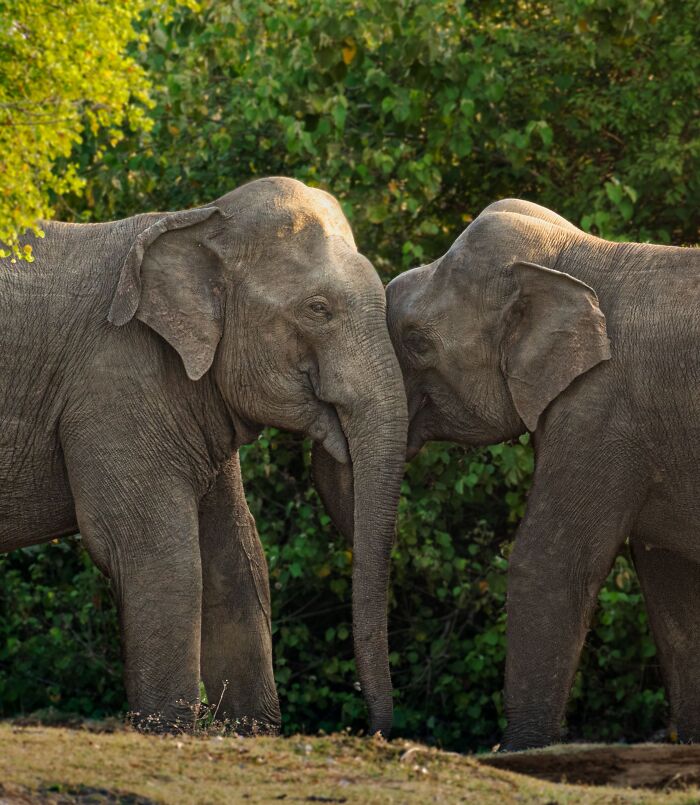
#10 Elephants Purr Like Cats
When elephants are relaxed or bonding with one another, they often produce a deep, soft rumble that’s frequently compared to a cat’s purr. For calves, these low vibrations from their mothers can be deeply reassuring, a gentle signal that all is well. Interestingly, researchers at the University of Vienna discovered in 2012 that the sound isn’t made the way a cat purrs at all. Instead, it comes from vibrating vocal folds, much like the human voice.
© Photo: Mohamed Raseem / Pexels
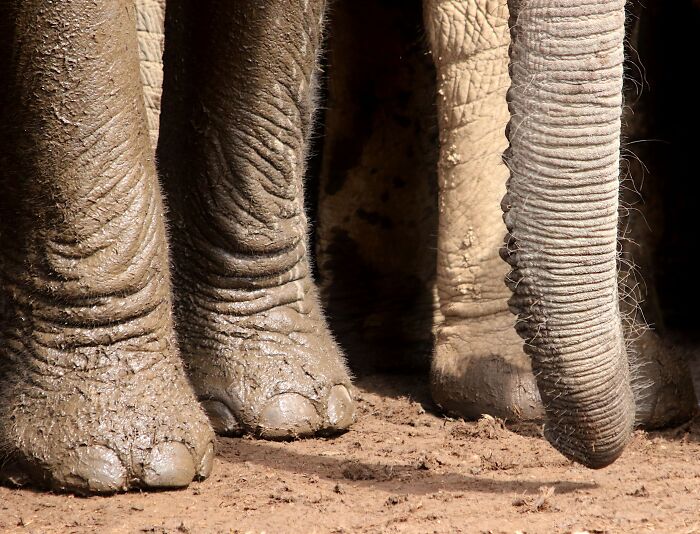
#11 Elephants Can “Hear” With Their Feet
When we think of elephant sounds, the famous trumpet usually comes to mind first, perhaps followed by the occasional rumble or groan. But those are only the beginning. Elephants rely on a surprisingly sophisticated communication system, much of which humans can’t even hear.
Many of their rumbles are so low in frequency that they fall below the range of human hearing. Those deep vocalizations ripple not only through the air but also through the ground, traveling for several kilometers. Other elephants pick up the vibrations through highly sensitive receptors in their feet and trunks, sometimes leaning forward or lifting a foot as if to “listen” more closely. This hidden network lets herds warn one another of danger and find each other across vast distances, without ever seeing one another. Their communication may be even more personal than that: in 2024, scientists found that African elephants appear to address each other with individual, name-like calls.
Now imagine how disorienting life in captivity must be for an animal built to stay connected this way, cut off from the signals that keep its family close.
© Photo: Elize Bezuidenhout
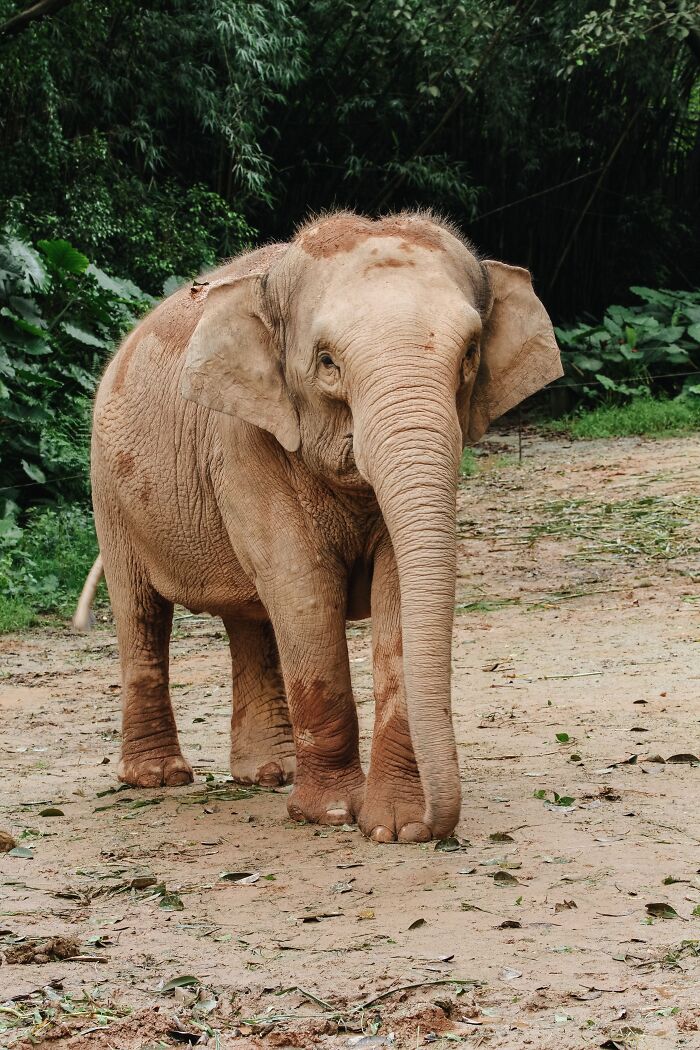
#12 Elephants Can’t Jump
It may sound like a fun bit of trivia, but this elephant fact reveals just how unique their bodies are. Elephants are one of the few mammals that can’t jump. Even when they run, reaching speeds of about 15 mph, at least one foot always stays on the ground.
One look at an elephant explains why. As biomechanics expert John Hutchinson of the Royal Veterinary College puts it, elephants have “really wimpy lower-leg muscles and not very flexible ankles,” along with a body built for steady movement across vast landscapes, not for leaps, tricks or performances. They don’t need to jump to escape predators either, since their sheer size is their best defense. Forcing them to move in unnatural ways can cause painful damage, including cracked nails, ulcers and skin lesions, which is a heavy price for something that goes against their very nature.
© Photo: Mehmet Turgut Kirkgoz / Pexels
#13 Elephants Recognise Themselves In A Mirror
Self-recognition is rare in the animal world, but elephants are among the few species that have shown it. They can recognize their own reflection in a mirror, using their trunks to explore their faces and bodies much as we use our hands. In a 2006 study at the Bronx Zoo in New York, researchers gave three Asian elephants a large mirror and watched them pull at their ears and peer inside their own mouths. One of them, an elephant named Happy, passed the classic “mark test”: when researchers painted a visible mark on her head, she repeatedly touched it with her trunk while ignoring an invisible one on the other side. It’s an ability shared by only a handful of other species, including humans, great apes, dolphins and magpies.
© Photo: FUTUREKIIID .JPEG / Pexels