

We all love saving money wherever we can, right, Pandas? After all, who wouldn't want to keep a little extra cash in their pocket? Well, unless you're someone who enjoys watching your bank balance shrink, chances are you're always on the lookout for ways to make your money go a little further. And sometimes, the best tricks are the ones you'd never think would actually work.
So, when we came across a thread asking, “What's a money hack that sounds fake but actually works?”, we knew we had to dig through the answers and find some of the best ones to share with you. From surprisingly simple everyday tricks to clever ways of cutting costs, these suggestions might just change how you handle your money. Keep scrolling, Pandas, and get ready to take some notes!
#1
You don't save money buying things on sale, you save money not buying things.

© Photo: BirdChuffer
#2
Waiting 24 hours before buying anything i didnt plan to buy.

© Photo: Min1mumAd266
#3
Not spending money you dont actually have. I never understood why americans have 3 credit cards on average.
© Photo: frappacino1312
Most of us know that saving money is important, Pandas. Whether it's building an emergency fund for unexpected medical bills, covering a sudden car repair, or simply making sure we can cover basic expenses if something goes wrong, having money set aside can offer a real sense of security. But knowing we should save and actually managing to do it are two very different things. Even though saving is a sensible financial habit, plenty of people struggle to put money aside. A study conducted by ING Group across 13 European countries, involving nearly 14,000 participants, found that 29% of respondents reported having no savings, while another 36% had savings equivalent to just three months of living expenses. These figures highlight how financially vulnerable many households can be when unexpected costs arise.
#4
Automate your savings for the same day you get paid.
It sounds almost insultingly basic, but the trick is that you never really experience the money as available. If $100 automatically disappears into savings every payday, your lifestyle tends to adapt around what remains.
Trying to save “whatever is left at the end of the month” usually produces the fascinating discovery that somehow there is never anything left 😭
Basically, pay your future self before your current self discovers Uber Eats.

© Photo: AdTerrible738
#5
Pay off your entire credit card bill every month and you never pay interest and it doesn't hurt your credit. For some reason everyone believes the CC propaganda that you have to carry a balance to have good credit score. .
© Photo: Overhear_Overponder
#6
Define what a large purchase is to you, and anything over that amount has a 3 day waiting period from the time you want it to the time you can buy it. By that third day, you’ve most likely realized you don’t need it.

© Photo: YippieKayYayMrFalcon
The situation has also raised concerns in the United States. A 2017 GoBankingRates survey found that 57% of Americans had less than $1,000 in savings, while 39% reported having no savings at all. Although these figures are several years old and don't reflect current savings levels, they illustrate how long-standing the challenge of building a financial cushion has been. When much of your income goes to rent, groceries, bills, and other essentials, saving can feel impossible. And even when you have a little money left over, it can be hard to know where to start or how to stay consistent.
#7
The secret ingredient is crime.

© Photo: Chopper3
#8
If you are buying something online, make an account, put the items in your cart, go to the checkout screen so your email is logged, and then close the window.
Wait 24 to 48 hours.
A huge number of online retailers use automated marketing systems that track abandoned carts. They will automatically email you a discount code (usually 10% to 20% off) with a subject line like "Did you forget something?" to get you to finish the transaction.
It doesn't work on every single website, but it works often enough that it is always worth a try if you aren't in a rush.

© Photo: francesrodriquezbp
#9
Paying for *everything* with a cash-back credit card.
BUT...only if you pay it off IN-FULL at the end of the month.
© Photo: KaktusDan
Income, of course, plays a major role in how much people can save. Someone earning a comfortable salary may have more room to set money aside than someone struggling to cover basic necessities. Research has repeatedly found a relationship between household income and savings, with some studies suggesting that people below a certain income level have very little left to save after covering their expenses. However, income isn't the only factor that influences saving habits. Psychological factors, spending patterns, personal priorities, and the way people think about money can also affect their financial decisions. While no budgeting trick can make an inadequate income stretch indefinitely, understanding our habits can help us make better use of the money we do have.
#10
If my kiddo (18F) knows she has a bill or something she'll need money for coming up, she moves that money over to her savings so she won't accidentally spend it.
I don't know where she learned that, but it definitely wasn't from me.
© Photo: krisfunk27
#11
Cars are the biggest money pit in modern American society. Your car does not define you. You don't need a nice car, and do not finance a car even if all of your peers are. Just drive a clunker until you can pay cash for whatever it is that you want.

© Photo: 2012Tribe
#12
Waiting 24 hours before buying something you didn't plan to buy.
It sounds too simple to actually matter, but it kills a ridiculous amount of impulse spending. If you still want it after 24 hours, buy it. Most of the time the urge is gone and you realize you didn't actually need it.
It's basically a money-saving hack that costs absolutely nothing.

© Photo: Dry-Cardiologist3617
One book that explores this relationship between money and human behavior is The Psychology of Money: Timeless Lessons on Wealth, Greed, and Happiness by Morgan Housel. One of its central ideas is that building wealth isn't necessarily about earning a huge salary or buying all the things that signal success. It's also about what remains after we've spent our income. Housel explains that saving often requires resisting the urge to spend money to impress other people or keep up with their lifestyles. It's easy to feel pressure to upgrade our phones, buy the latest clothes, or spend on things that make us appear successful. But the money we don't spend can be just as valuable as the money we earn, especially when it gives us more security and choices in the future.
#13
Live well below ur means.

© Photo: Creative-Violinist44
#14
As an older person I would say start contributing into a 401k as early as possible. Me I waited 10 years always as a young person wanted to keep all my money. I’ve now caught up with my retirement goals but it’s one decision I regret if I had to do over I would do differently .

© Photo: Capital-Education592
#15
Cancel your subscriptions.
Having one supports this model, and we need corporations to not feel comfortable with subscriptions.
Another important lesson from Housel's book is that money can provide something more meaningful than material possessions: control over your time. Having savings can give you the freedom to leave a job that makes you unhappy, take time to care for a loved one, explore a new career, or handle an unexpected expense without immediately falling into debt. Of course, not everyone has enough disposable income to build a substantial safety net quickly, and financial security looks different for everyone. Still, even a modest amount saved over time can provide a little more breathing room when life doesn't go according to plan.
#16
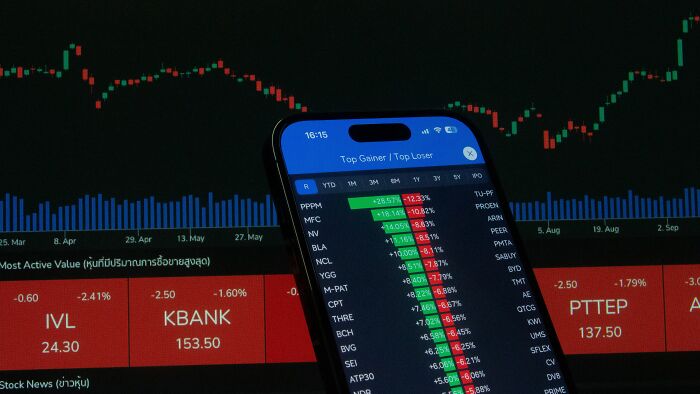
If you let your money compound invested for a long time it will be worth millions of dollars.
© Photo: Known_Painting_1878
#17
Getting “free” money from your employer by utilizing their HSA and 401k contribution matching.

© Photo: SPOOKESVILLE
#18
Add your adult child as an authorized user on your credit card to help them build credit, even if you never plan to give them the card.

© Photo: RetroBerner
So, how can you make saving feel more achievable? Better Money Habits, an educational resource from Bank of America, recommends setting specific savings goals. Instead of simply telling yourself to save more, think about what you're saving for. It might be a holiday, a new car, a future home, or an emergency fund. Work out roughly how much you'll need and how long you have to reach your goal. Breaking a large target into smaller, manageable steps can make the process feel less overwhelming and help you see the progress you're making along the way. Your goals can change as your circumstances do, too, so there's no need to have everything figured out from the start.
#19
I don't know how to call it something catchy or small... but it's what my cousin did.
My cousin had saved up a nice chunk of change, but nothing huge. He swears he got the idea from a phone game. So anyway, he takes his chunk of money, and he bought a Coin-operated Car Wash. Not 100% passive income, but his maintenance and time he had to spend on it was minimal. He would go on the weekends, collect the cash, restock the soap and stuff... And once he saved up some more money, he bought a second coin operated car wash... he now owns 8 of them, and with the money he collected up, he has now started buying vending machines and putting them in places that have a good flow of people.
His point is... a bunch of repetative small amounts of income, build up to something big. The trick is finding that thing that requires minimal time and attention, that you can just keep running.

© Photo: SouthernDog13
#20
Learn to cook.
A meal that's $20 at a restaurant can be made for under $2. Edit: I'm looking at my go to simple vegetable Indian curry over rice, if I throw in chicken thighs (which I get bone in for dirt cheap) it doesn't even come up to $3 a serving. If you shop around you can find raw ingredients for cheap but you have to be comfortable cooking and prepping more. I like doing it (hence the username) and know I'm biased, but really if you want to save money this is the best way I've found.

© Photo: DaBiChef
#21
Auto parts stores like AutoZone, O'Reilly, and Advance Auto Parts have a "Loan-A-Tool" program that sounds exactly like return fraud but is a completely legitimate corporate policy.
If you need a specialized tool for a car repair, like a torque wrench, a steering wheel puller, or an O2 sensor socket, you don't have to buy it. You just go to the counter and ask to borrow it. They will charge your card for the full retail price of the tool as a deposit. You take it home, get your car fixed, and bring the tool back a day or two later. They refund 100% of the money right back to your card.
It feels like you are getting away with something, but it is their actual business model. They know that if you are pulling apart your engine or suspension, you are going to need consumable parts like brake pads, fluids, or grease. By letting you use the expensive, highly specific tool for free, they guarantee you will buy the actual parts from them while you are standing in the store. It saves you from dropping $150 on a heavy piece of metal you will only ever use once in your life.

© Photo: soniarogersec
Another practical trick is to set spending limits on your credit or debit cards, if your bank offers that feature. A limit can encourage you to pause before impulse purchases and ask whether you really need something. Some banking apps also let you track spending by category or send notifications when you're approaching a set amount. These tools won't automatically fix every spending habit, but they can make it easier to spot where your money is going and adjust your budget before small purchases add up.
And in a world where so much of our spending happens digitally, it's worth taking a closer look at recurring payments. Streaming platforms, music services, cloud storage, fitness apps, and other subscriptions can add up quickly, especially when we pay for services we rarely use. Taking a few minutes to review your bank statements and subscription lists can help you identify anything you no longer need. You don't have to cancel everything you enjoy, either. The goal is to make sure your money is going toward things you genuinely value rather than services you've simply forgotten about.
#22
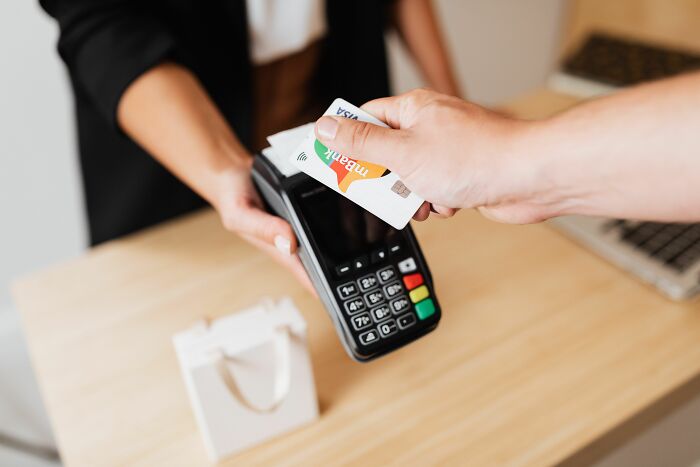
I have it set to when I use my debit card, it rounds up to the next $5 and deposits that amount into a saving account. It’s not a crazy amount of money, but it puts about $75 - $100 into savings each month.
© Photo: -Words-Words-Words-
#23
You'll save way more money by not buying that thing that's on sale. Also don't buy a new car.
#24
If you are offered overtime hours and want to work them, do so.
Ignore the coworker who says it's not worth doing because "they just take it all in taxes".
A pay check containing overtime pay may withhold more taxes as compared to a regular pay period (no OT), but the year-end tax filing will account for that.
I've had someone try to tell me this at every job I've had.
Same if anyone tells you that getting a raise just puts you in a higher tax bracket. Technically true, but only the earnings above that bracket are taxed at the higher rate.
Fake example: Employee gets a raise from 48k to 52k. One of the tax brackets lies at 50k- for this fake example, say the tax rate goes from 10pct to 15pct at that 50k line. The only wages that will be taxed at 15pct are dollars 50k to 52k. 10pct tax on that 2k would be 200, but 15pct tax on that 2k is 300. So you're paying an extra 100 dollars in tax for earning 2,000 dollars more. Still a large net gain, so take the raise.

© Photo: AwixaManifest
It's also important to remember that saving money isn't always a matter of discipline or willpower. Sometimes, rising living costs, low wages, family responsibilities, or unexpected emergencies leave people with very little to spare. If that's your situation, don't feel guilty about not being able to save as much as you'd like. Financial progress doesn't look the same for everyone, and even small steps can count when they're realistic for your circumstances. The point isn't to deprive yourself of every little pleasure or turn every purchase into a source of stress. It's about finding a balance that helps you meet today's needs while gradually building more stability for tomorrow.
#25
If you pay things every 2 weeks instead of monthly, you'll make 2 "extra" payments a year and pay off things that much faster with 26 half-sized payments instead of the 12.
Sure, you pay more and have less money, but it makes a significant difference paying down the loan.
© Photo: Clawdius_Talonious
#26
Portion control works for money the same way it works for weight gain. Limit your access to your primary uncontrolled spending method, and you will find that you spend less overall and can save more. I'm a cash spender, so I can only withdraw a certain amount of money per period for walking around. It's also good to split your paycheck, sending a reservoir into a passbook (or otherwise difficult to access) savings account.
I'm not saying this will magically make you rich or even solve the problems caused by the service economy, but it will help.

© Photo: Casual-Notice
#27
Also check your local library before buying any book, board game, or museum ticket. Modern libraries have a "Library of Things" where you can rent everything from power tools to camping gear for completely free.

© Photo: CosmiTourist
Coming back to today's post, some of these money hacks offer clever ways to make saving a little easier without completely changing your lifestyle. Whether it's setting spending limits, reviewing subscriptions, or giving yourself a clear reason to save, the best approach is the one that works for your situation and that you can realistically maintain. So, Pandas, which of these tricks have you already tried? Do you have a money-saving hack of your own that has genuinely made a difference? Share it in the comments—you might just help someone else make their money go a little further.
#28
Idk if it's been said. Crock-Pot and air fryers. Crock-Pot 3-4 giant meals and get Tupperware containers to section it off, freeze it. Use store bought meats like chicken pork or anything else you can air fry. Throw frozen veggies in microwave. Cook the meat one day. Warm up the leftover crock pot the other day. Get a full months Worth's, for a single person, for about two hundred to three hundred. (Closer to 190-220ish if you smart shop) This covers roughly 50 of the 60-70 meals you eat each month. Assuming you skip breakfast.

© Photo: TheLightningCount1
#29
Make 2 laps around the store before you check out and you will find that you second guess your first time through and want to put back those impulsive buys.
The problem most people have is they get their cold stuff first in the back and walk to the front in a hurry before their milk goes bad so just toss stuff into their cart they won't even eat.
Most Americans throw out like 1/3 of what they purchase at the grocery store which is insane.

© Photo: Doogiemon
#30
If you can’t comfortably afford to buy it twice right now, you can’t afford it.
Not really a “hack” but it’s served me well.

© Photo: BlueDragoon24
#31
Churning Checking / Savings accounts, as well as Credit Card bonuses. I’ve made over $5,000 in a year doing it.
#32
NOT reading any financial news at all, no YouTube finfluencers, no weird Facebook groups, no media based on finance at all…
… but simply buying low cost index funds without worrying about anything else.
Statistically, you are overwhelmingly favored to outperform all the sweaty tryhards on wsb and the like.

© Photo: orcvader
#33
Round up house or car payments... significantly shortens loan/reduces intrest accrued.
For the sake of argument say your car payment is $557 a month, pay $600 every single time. Works even better with a house loan.
Personally I pay even more exyra the first few payments which really jumps start the process.
Don't think it matters much? Just spend 5 minutes with any loan calculater or even AI and you will be shocked in a good way... I promise.
#34
Compounding interest. You do nothing and you make free money. A lot - if you have a lot.
#35
A friend used to happily live in their approved (free) overdraft. Each payday would bring them back up to roughly zero, then they would start spending down.
Don't do that.
#36
Credit cards that give you a percentage back on purchases is free money (provided you pay off the balance to avoid accumulating interest).
I use my credit card for EVERYTHING and pay it off right away. I saved my points and was able to get myself a ps5 pro and switch 2 for free as a result.
#37
Using your credit card's 5% cash back rewards and paying the balance off immediately.
#38
Use cash. Leave your cards in a drawer.
Take out what you want to spend that week, e.g. $200. A lot of frivolous spending goes away when you have to pull out the only cash you have and look and it and think what you need for the rest of the week.
#39
SAVING.