
Some things feel so basic that we just assume everyone knows how to do them. Cooking a simple meal, doing laundry, or changing a lightbulb are everyday skills we rarely think about learning. That usually changes when we meet someone who doesn’t know where to begin.
Growing up doesn’t mean we learn everything we need. Some people move out without knowing how to manage money, do basic chores, or look after themselves on their own. What feels like common sense to one person might be totally new to someone else.
People online shared the everyday skills that surprise them most when other adults don’t know how to do them. From simple chores to practical tasks many of us take for granted, these stories might make you think differently about what counts as a basic life skill.
#1
Letting people off the elevator before you get on.

© Photo: Scary_Board_8766
#2
Knowing when to shut up is such a crucial skill. The number of people who don't seem to have it is really concerning.
Sometimes, the most surprising thing about being an adult is discovering just how much basic knowledge some people seem to be missing.
Personal finance is one of the clearest examples of a responsibility adults must learn outside school. About 49% of financially knowledgeable U.S. adults have learned a great deal or a fair amount about personal finances from family and friends, compared with just 19% who learned the same in K–12 schools.
That leaves many people to figure out budgeting, saving and debt management through trial and error. Only 59% of U.S. adults feel confident about creating a monthly budget, while 56% feel confident about saving money. Growing up does not automatically prepare someone to manage every adult responsibility.
#3
To read. I thought people were being internet dramatic when they said that kids these days are basically illiterate. Nope. I work with a 16 year old right now and there are tasks the rest of us have to do for him because his handwriting and spelling is so bad. Some of his friends come in and they cannot fill out simple paperwork and won’t even try. It’s scary.

© Photo: pizzaazzips
#4
Basic hygiene. What credit is and how it works. How to use your phone with earbuds.

© Photo: mo-nie
Knowing how to handle money helps with everyday tasks, but practical skills matter even more when the unexpected happens. The American Red Cross suggests that families get ready for emergencies like fires or floods, pick meeting spots, and choose someone outside the area to contact.
Having a simple plan makes it easier to act quickly instead of searching for answers in a crisis. The Red Cross also suggests giving each family member a specific job and practicing the plan together.
Families can decide ahead of time who will collect emergency supplies, who will look after children or older relatives, and where everyone should meet if they need to leave home. These steps might not seem important on a normal day, but being prepared makes a big difference when routines are disrupted.
#5
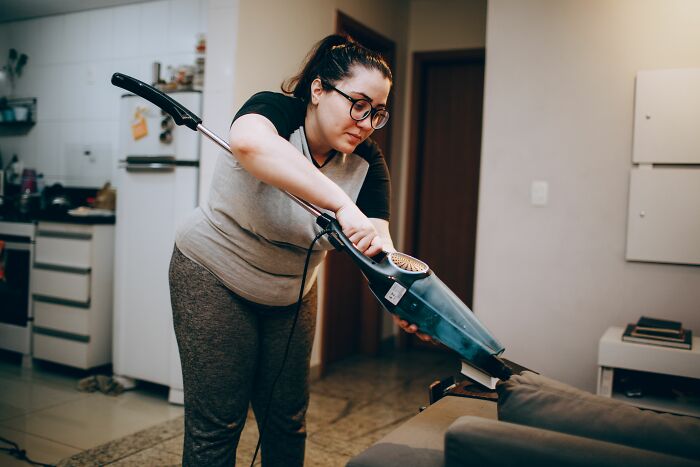
Knowing how to properly clean your own home is seriously underrated.
© Photo: WillingnessAny8780
#6
The craziest example I’ve ever seen was a foreign exchange student who came from a very wealthy family.
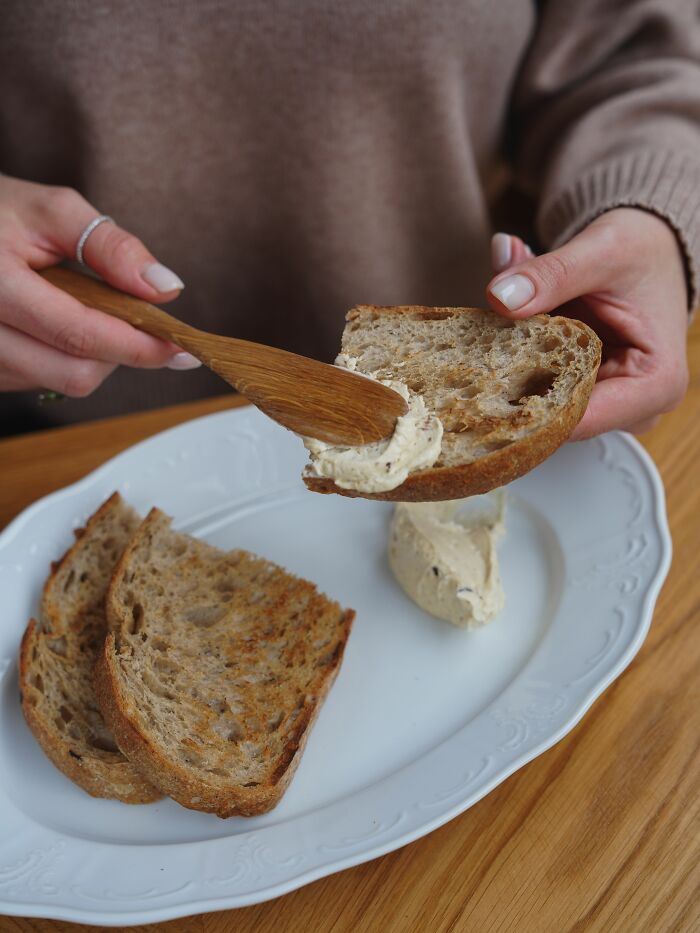
She was staying with my friend’s family, and one day she wanted toast for lunch. She was so accustomed to having a private chef that she had to double-check with us to make sure she was putting the bread into the toaster correctly.
Then came the butter.
She was genuinely intimidated by the idea of spreading it herself. She was literally trembling while holding the butter knife, like she had been handed some kind of unfamiliar tool.
© Photo: omkvgd
Many adults do not have equal opportunities to learn practical skills, even after they leave school. UNESCO's Global Report on Adult Learning and Education points out that access to further education is especially limited for people in rural areas, migrants, older adults, Indigenous learners, and people with disabilities.
Because of these barriers, some people miss out on knowledge that others gain through work, training, or support from their communities.
This shows that missing skills are not always a sign of laziness or a lack of common sense. If someone never had affordable training, good guidance, or a supportive place to learn, they might become adults without learning certain skills. When learning opportunities are not equal, people can still have gaps in their knowledge long after they finish school.
#7
To question anything they read, hear, or see instead of immediately embracing it as fact, regardless of source.
Anecdotal evidence is unfortunately the most powerful kind of evidence when people are weak minded and don’t like to question things. It is not nearly as strong as scientific evidence which relies on much larger portions of the population in controlled settings, but it is linked to emotions which can be very powerful persuaders.
I really wish we had people who could think for themselves and didn’t accept everything we told them as fact.

© Photo: capaldithenewblack
#8
These answers are exactly why I get my daughter involved whenever I'm working on something.
Once my dad was helping replace my car's brakes and I wanted to bring my daughter out to watch. He said "no, she won't be interested in that. That's not girl stuff."
I told him I don't care if it's "girl stuff" or not, but it never hurts for someone to know how to do things. Even if she never does it herself, at least she'll have a better idea about how cars work and is less likely to be taken advantage of if she takes it to a mechanic. .
#9
Swimming. A group of 4 friends invited me swimming a few weeks ago. Out of all of 5 us I was the only one that could swim. Mind you I am 20 years old.
Most of them were around my age or a bit older. One of them has also never dunked her head under the water and refuses to…. I am a great swimmer with many lifeguard qualifications and genuinely offered to teach all of them because I was appalled and it’s boring asf just wading in waist high water when you expected to be going for a swim around the lake.
None of them were interested because they are scared or don’t believe that they need that life skill. I get that not everyone is at a more advanced level, but you should at least know the basics of swimming so that you can save yourself or someone else if it comes down to it.

© Photo: Fickle-Mix1457
The question that rises then is: does modern life require more skills? As technology changes the way we work and live, the skills adults need are also changing. About 18% of adults do not reach basic levels in literacy, numeracy, or problem-solving. These skills help people understand information, work with numbers, and deal with new situations.
Digital tools are also changing how people handle daily tasks. Adults now need to check online information, use digital services, and make choices based on data. Artificial intelligence and digital technology are changing everything from managing money to solving problems at work.
Being able to do a task in the past does not mean someone can do its new, tech-based version.
#10
How to write a professional sounding email. How to put an actual subject in the subject line instead of writing the entire email in the subject line.

© Photo: IsopodIndependent553
#11
How to sincerely apologize without shifting blame or minimizing the issue.

© Photo: SeattleSunflower7000
#12
Emotional regulation.
Learning how to recognize, name, and manage your own emotions is a basic social skill. Same with learning how to express them in a healthy way and avoid making your emotions someone else's responsibility.
All that is foundational to emotional intelligence. It doesn't exactly shock me that a lot of adults were never taught these thing, I mostly feel dismay and sadness. There are a lot of horrible parents out there who a) don't know how to regulate their own emotions, b) never do the work to learn how, and c) pass the chaos on to their children.

© Photo: AnneBoleynsBarber
Life was very, very different before modern conveniences. Today’s appliances have taken away much of the hard physical work that used to come with household chores. In the mid-1800s, washing clothes meant carrying water from a river, well, or cistern, heating it, scrubbing clothes by hand, and hanging them outside to dry.
Doing laundry for the week could take a whole day of tough work. Cooking used to involve much more than just following a recipe. Before electric stoves, people gathered fuel, chopped wood, built fires, and worked to keep the right temperature while making meals.
When mechanical washers and electric appliances arrived, they made these jobs much easier. People in the past needed a lot of practical know-how, but today, modern conveniences have changed the household skills we use most often.
#13
Conflict Resolution. Unfortunately a large amount of people grew up in toxic/unsafe households where they were taught toxic, aggressive , and even violent ways to handle and approach conflict.
It’s very rare I come across someone who is genuinely adequate or capable of de escalating a conflicting/dangerous situation. The opposite is also true unfortunately where on the end of the spectrum, people that grew up with parents/guardians/caretakers who avoided conflict altogether.
It’s very pervasive issue that can observed among all people and work industries even if you observe closely enough.
© Photo: No-Bag-211
#14
How to fix things with some basic tools.
Examples:
Using a screwdriver and a drill to reinforce the hinges and door lock plate with 3” wood screws
Using a hammer to nail in a picture hanging hook
Using a wrench and pliers to fix a leaky faucet
Using the jack and lug nut wrench in your car to fix a flat tire.

© Photo: RichardBonham
#15
How to line up.
I see so many people line up at a window/stand and block the walkway. It doesn’t take much to have the line go along the wall/stand. .

© Photo: johnlee158
While technology makes some tasks easier, adults still have to balance work and personal life. According to the American Psychological Association's Stress in America 2025 report, 69% of working adults in the U.S. say work is a major source of stress.
Work often takes up the time and energy people could use to learn new skills or take care of their homes. The stress does not stop when the workday ends. Adults also have to pay bills, schedule appointments, care for family members, and keep up with new technology.
#16
How to read an ordinary clock.

© Photo: PoisonCoyote
#17
How to SHOP for cooking.
The "its cheaper to eat out" sentiment going around just tells me people dont know how to shop efficiently to feed themselves.
You dont shop for individual meals/recipes, of course that's going to get expensive. You shop for staple ingredients then learn how to combine/season/prepare those ingredients into different meals.
You buy large(r) packs of proteins like chicken and ground beef/pork, eggs, large bags of rice/potatoes/lentils and frozen/fresh veggies from costco. The meat we portion and freeze. We buy onions, garlic, avocados/other extras/seasonings as needed. We slowly built up a collection of seasonings over the years but you can get started with a few staples. We shop deals and what's in season for fruits/vegetables. Snacks also come from costco. So does bread, we just freeze the extra loaves then thaw when we need them. We get a big block of cheese from costco, portion it out and freeze.
You can also chop up and freeze bell peppers, onions, broccoli/cauliflower, carrots, peas (if youre into soups/stews/French cooking in general you can cut up a typical mirepoix mix and freeze it to have it ready to go), etc. Super easy to add to dinners and allows you to take advantage of bulk produce pricing and not worry about it rotting before you eat it all.
Anything we can't get at costco I price match using Flipp.
We cook enough at dinner to have lunches the next day that we take to work.
Are our weekly dinners restaurant quality? Of course not. Theyre not meant to be. Theyre meant to be balanced, filling and enjoyable, if a little repetitive. Too many people are too convenienced by doordash and completely lost the art of feeding themselves efficiently.

© Photo: MissAcedia
#18
Don't stare at your phone while you're crossing the street
With so many demands on their time, learning something new can feel like just another chore instead of a chance to grow. This is one reason why even busy, capable adults sometimes do not develop certain useful skills.
At the end of the day, nobody knows how to do everything, and we all have gaps in our knowledge. So, before judging someone for not knowing something that seems obvious, it might be worth asking ourselves what we still have to learn. After all, adulthood doesn't come with an instruction manual!
#19
Finances.
#20
Critical thinking, healthy skepticism.
#21
How to do dishes properly and wring out the sponge so that it doesn’t get stanky.
#22
Walking on the right (or left) side of a pedestrian area. It appalls me how many people at malls or in public areas walk on the opposite side of where they would drive if they were in a car. It just never occurred to them that walking against the flow of pedestrian traffic creates conflict and frustration for everyone else.
#23
Food safety. You cannot touch raw chicken and then go around touching everything. Wash your hands. And what internal temps should be. Stop eating undercooked meat please, I have seen someone eat fairly underdone chicken and then was surprised when I explained they could get super sick.
Also, washing your hands correctly. A little pump of soap and 2 seconds of water does nothing for you.
#24
Emotional Intelligence. There are too many people running around thinking theyre the only people on the planet, and no one else matters.
#25
Common sense-it’s not that common.
#26
27 here. Cooking. Going to University in my early 20's. I didn't realize how many people had never turned on an oven before.
Awareness of one's surroundings. This is bad with phones.
The ability to listen and use critical thinking skills.
The ability to have a conversation.
Basic house chores. Doing dishes, laundry, cleaning/cleanliness.
#27
How to tackle owning your mistakes before someone finds out about them. If you discover you’ve messed up, hiding makes it grow and quickly.
My previous manager would hide his mistakes from our director. Even when confronted, he would find any/every excuse under the sun as to why it happened except for his involvement. Eventually, he lost all credibility and was pretty much treated like a child for the rest of his career.
#28
You can look up how to do just about anything online. You can look up any word you don’t know or find information about any topic that puzzles you or piques your curiosity. It shocks me how many times I am in a conversation and some question comes up…anything: wildlife, science, geography, whatever…and everyone will just shrug and say “dunno.” Ok. But how about we all find out right now with this supercomputer in our pocket? Don’t know how to change the brakes on your bike? Google it. Want to know exactly where Iran is in relationship to Israel? Oh, look. I have a world atlas right here.
How is it that the generations raised online seem less motivated and less empowered than my old Gen X a*s to *leave no question unanswered?*.
#29
That in most of North America, streets are laid out odd numbers on one side, evens on the other. And you can make a good estimate of how far down the road your destination is by looking at house numbers.
Example: You're delivering pizza to 101 Elm Street and you turn off Main Street and see the first house on the right is 19, the first house on the left is 20. At the next intersection, the first homes are 43 and 40.
This tells that 101 will be on your right side and about six more blocks down.
Every cabbie, pizza guy, cop and delivery driver back in the day knew this. But today people rely on GPS which is well known for getting locations of single family homes wrong. (Because it uses this estimate rule based on the map, not the actual properties.).
#30
Basic household chores - how to load a dishwasher, do Laundry, how frequently they should clean things especially in the bathroom + bedding.
#31
The fact that actions have consequences.
My ex was always telling me about stuff that “just happens to her”. No, stuff doesn’t just happen. You don’t live in a vacuum. If you push a kid he falls. That’s not an act of god that’s your own action. So take some responsibility because you're hurting people.
#32
Art of conversation.... Its all me me me me me now.... Main character syndrome throughout....
#33
Finances. It was a bit of a shock to me when my co-worker (who makes more than I do) was talking about a problem he was having. He somehow had $100 left in his bank account and was having trouble figuring out how to spend it. There are multiple red flags here!
#34
Manners.
#35
Cooking.
#36
The concept of shared space. This is a subway, not a place for you to trim your toe nails. This is a restaurant, you can't have a prolonged conversation on speakerphone. NYC here, the things I see on the daily, you would not believe.
#37
Look before you cross.
#38
Basic Political awareness
The amount of people twice my age ive had think for example that russia is still communist is frightening
And its more frightening that such people can vote.
#39
To not date or have children with bad people.
#40
To treat other cultures with respect.
#41
Never taught, or never learned. Pedantic, but there are plenty of things that were taught to people not paying attention.
Cooking would be the one I'm surprised some people just refuse to learn. It's fun and you eat your creation at the end. And saves money. I taught myself to cook at like 10 so I didn't have to eat the same boring stuff all summer.