

Women are not angry. Women are just tired. There is a meaningful difference, and if you need that explained, you might want to read this article twice. Every day, without fail, without exception, and without anyone apparently being able to stop it, women navigate an obstacle course of small and absolutely exhausting interactions that individually seem minor and collectively make you want to move to a remote island with good Wi-Fi and a strict no-mansplaining policy.
Not the big stuff, although that too. The stuff that happens so regularly that women have developed a whole facial expression for it that men have never correctly identified. On a Thread, a user asked women to list the microaggressions they field way too often, and the answers were so universally recognized by every woman who read it that it could have gone on indefinitely. These are the highlights, although "highlights" is doing a lot of work as a word here.
#1
“World Cup” vs “Women’s World Cup”. “Basketball” vs “ Women’s Basketball”.
“Soccer” vs. “Women”s Soccer”.
Asking women what they use for birth control, but not asking men. Medical records not even having a place to document what men do for their part in contraception. It doesn’t even occur to people that men can (and should) play a role in pregnancy prevention.

© Photo: aevelyn08
#2
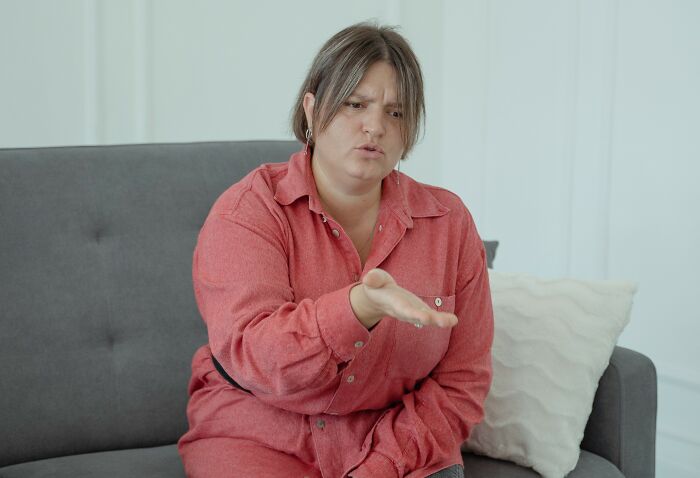
“I did the dishes for you”
No. You did the dishes because you’re an adult who Iives here and eats food.
Also, please stop announcing it like I’m supposed to throw confetti and cheer.
© Photo: mirandorkus
#3
“It’s just a joke” after saying some of the most heinous things.

© Photo: tenacious_zebra
Microaggressions are exactly what they sound like, micro. Not the big, obvious stuff that everyone can agree is a problem, but the small, everyday moments that individually seem almost too minor to mention and collectively make you feel like you are losing your mind. The term was coined by psychiatrist Chester Pierce in the 1970s and later expanded by psychologist Derald Wing Sue, who defined them as the commonplace verbal and behavioral indignities that communicate something negative, whether the person delivering them meant to or not.
That last part is the one that tends to derail every conversation about this topic, because intention and impact are not the same thing, and the woman who just got asked if she is sure she understands how the software works does not feel better about it because the guy asking probably meant well. The message landed all the same, and the damage is the same regardless.
#4
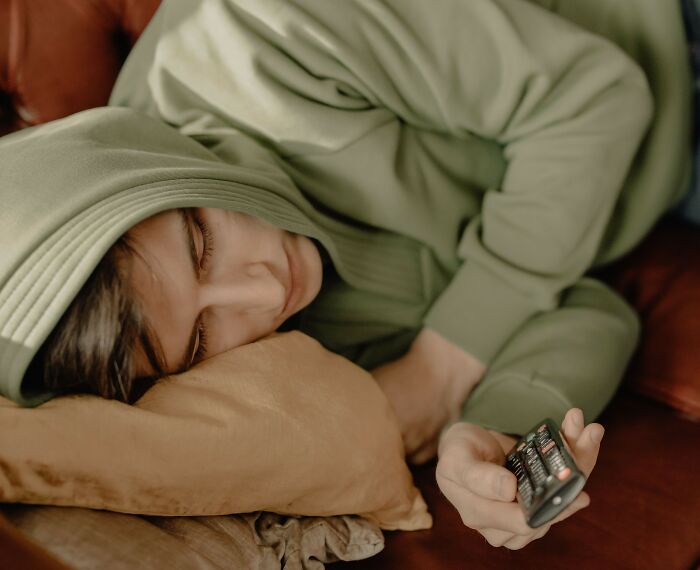
Thinking their 8 hour work day is harder than our 8 hour work day for no reason.
© Photo: heroine_themovie
#5
Referring to everything a woman does as “little.” “Have fun with your little book club,” “how’s your little project going?” “Go have your little girl’s night.” Excuse me sir I am not Stuart Little please stop infantilizing everything I do.

© Photo: bethmariemac
#6
The worst: a woman speaks up in a meeting with a good idea/solution. She is ignored and her idea rejected. 2 minutes later, a man says the same thing, word for word, and he is a genius.

© Photo: ruggerduck
Mansplaining has been happening for centuries, but it got its name in 2008 when Rebecca Solnit wrote an essay called 'Men Explain Things to Me', describing the experience of a man at a party confidently explaining her own book to her without knowing she had written it. The essay went viral because every woman who read it immediately thought of seventeen personal examples.
Research confirmed what women already knew from lived experience: a 2014 study from George Washington University found that men interrupted women 33% more in mixed-gender conversations and were more likely to interrupt women than women were to interrupt men. The interruption is rarely aggressive but it is relentless, and that is the most exhausting part.
#7
“I’ll help. Just give me a list”.

© Photo: franklapenguin
#8
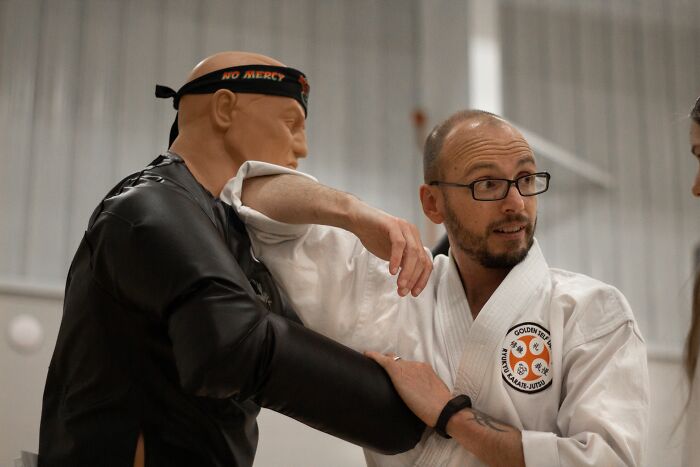
Using variations of “like a girl” to insult other men.
I’m a martial arts instructor. Had a guy in class recently struggling with a drill and taking out his frustrations on another dude by telling him he hit “like a little girl”.
I told him in no uncertain terms that was unacceptable. Then I stepped in to work with him and show him how hard a girl hits. He left class bruised but wiser, and most importantly quieter.

© Photo: darksidedivas
#9
Asking the woman in a group to take notes in a meeting or be in charge of the catering.

© Photo: mindirice
The professional credibility gap is another common issue that a Yale study gave some validity to. They sent identical CVs to faculty across American universities with one variable: the name at the top. The female-named applications were rated as less competent, less hireable, and deserving of a lower starting salary than the male-named ones.
Same CV. Different name. Different outcome. Both male and female faculty rated them this way, which might be the worst part of it all. Women in professional settings who feel like they are constantly having to prove something their male colleagues are simply assumed to have are not imagining it. Yale confirmed it.
#10
*ACTING like they don’t notice when things need to be cleaned.

© Photo: seemypeep
#11
When men find you attractive, they be nice and polite. When they don’t, they are acting rude and unkind.

© Photo: loupphoque
#12
Giving women “tips” to avoid being attacked/graped but never acknowledging who’s doing the attacking/graping.
© Photo: becklynng
Arlie Hochschild coined the term 'emotional labour' in 1983 to describe the work of managing your feelings as part of a job, originally applied to flight attendants trained to stay pleasant no matter what was happening around them. The concept has since expanded to cover something women have been doing for free in every area of their lives for way longer.
In professional settings, it looks like softening bad news so nobody feels bad, mediating conflicts nobody asked you to mediate, and remembering every colleague's birthday while also doing your actual job. At home it looks like being the person who notices when the toilet paper is running low, tracks the family calendar, and senses that something is wrong before anyone has said a word. It is work. It just does not get called that, which is rather convenient for everyone who benefits from it.
#13
Don't touch us when moving around us. You don't do it to males.
#14
Challenging/arguing with whatever women say, no matter how innocuous.
If I say the sky is blue a man will pop up from six towns over to bicker about it. It's weird as hell and y'all need to stop.

© Photo: champersstamers
#15
Manspreading into our space. Especially on airplanes.
When you look at the numbers, it is simply too alarming to mansplain away. According to the McKinsey Women in the Workplace Report, 55% of women report experiencing at least one competence-based microaggression at work, and research by the Integrating Women Leaders Foundation puts the broader figure at 65% experiencing subtle or indirect discrimination on the job, making women up to three times more likely to encounter it than men.
In male-dominated or highly competitive fields, those numbers climb to between 72% and 85%, which at that point makes it an integrated part of the job description. It's just not one you will see openly advertised n LinkedIn.
#16
I hate it when a man says “Looks like it’s someone’s time of the month”.
#17
when talking to a couple, assuming the man is the one that has the final say on the matter.

© Photo: lafloren81
#18
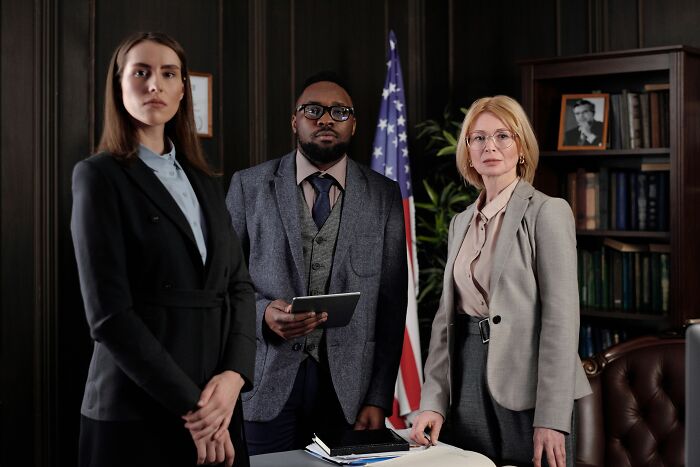
Calling male political candidates by their last names and female political candidates by their first names.
© Photo: zevatybel
And although this kind of behavior can be seen in every industry, women in medicine are particularly targeted. Among female resident and attending physicians, 84.6% reported experiencing gender-based microaggressions, and 72% of women applying for residency programs reported encountering them during interviews, compared to 30% of men going through the exact same process.
These are not entry-level industries full of people still figuring out professional norms. These are highly trained specialists in rooms full of other highly trained specialists, and it is still happening at that rate, which tells you something about how little the level of the room changes the dynamic.
#19
Calling a father "helpful" for parenting his own children.

© Photo: lifeandalex
#20
Claiming direct communication from women is “aggressive” or “crazy” when they celebrate that same language from men.
© Photo: indignantgnome
#21
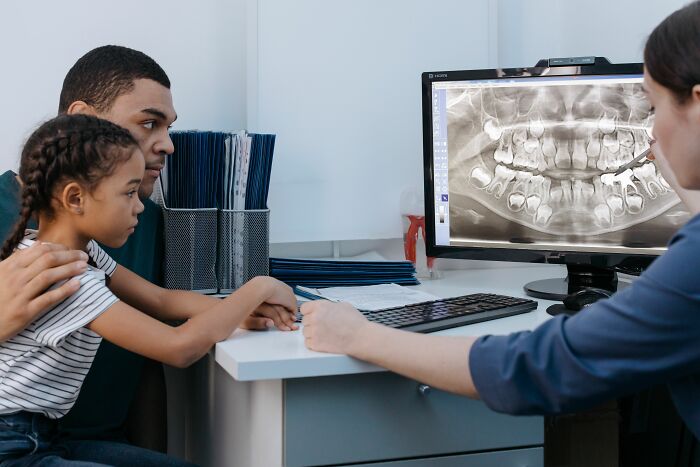
When dads bring their kids to the doctor’s office and we ask for THEIR OWN CHILDREN’S medical history, they go, “Oh, I never handle that. That’s their mom’s area.” Then they proceed to ask their own kids if they have any allergies or call MOM to ask. ONE TIME, I HAD A 7-YEAR-OLD WHO KNEW MORE ABOUT HER OLDER SISTER’S MEDICAL HISTORY THAN HER OWN FATHER DID. LET THAT SINK IN.
© Photo: reading_chaos
For women with multiple marginalized identities, the odds are probably the worst. Black and Asian women are seven times more likely to be confused with another person of the same race or ethnicity than White women. 42% of Black women report having to provide more evidence of competence than their colleagues, compared to 31% of women overall and 16% of men.
#22
Being really dramatic gross and loud with their hacking and coughing and sneezing.

© Photo: rosethezen
#23
Men pretending they’re unaware of microaggressions against women.
#24
All of the men who think they can beat elite female athletes in their sport... like sir, I swam d1, you're not beating me in a 500 free without years of training.

© Photo: margo8b
But if you are a lady reading this, none of this is new information to you. Every woman reading this thread nodded along with the exhausted recognition of someone who has been absorbing these moments for years and largely keeping it to herself because the alternative is being told she is overreacting.
It is real and significantly worse if you are also navigating race or any other marginalized identity on top of gender. But ladies have been cataloging it all along, and for now we are laughing together because sometimes that is the only plausible response to something you cannot fix before lunch.
What microaggression are you faced with way too often? Lets find some solidarity in the comments!
#25
When a woman says they're a fan of anything traditionally male centered (ex: sports, gaming) and men immediately quiz them to make them prove what they know.

© Photo: caffhere
#26
I took my daughter to buy a car. The sales man kept talking to me, despite her asking all the questions. I finally looked at him and said “She’s the one buying the car. I’m just her ride, because she needs a car.”

© Photo: stormwrestlingacademy
#27
Flapping on about how easy it is to be a caregiver for someone when they’ve never fn actually done it.
© Photo: fumbleson
#28
The constant surprise that you are knowledgeable and competent.

© Photo: heartnsnark
#29
At a new job, in a meeting with my new direct reports. Business discussed. Confused graces among all the men, who took notes?
They all turn to me and point out that I had been taking notes and that I could share. I said, “No. Because I’m the only woman in the room taking personal notes. I will not be sharing. Assign a note taker in advance.” Slammed my book shut and strutted out of the room.
2 hours later, my boss approaches and said, “so glad you’re here.”
#30
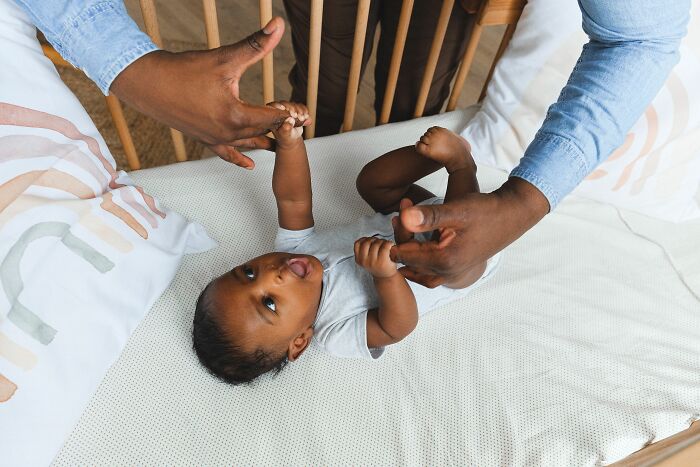
“Babies are so easy.. you just put them in a bouncy chair and that’s it— that’s all you have to do.”
© Photo: fumbleson
#31
Dr. First Name for women, Dr. Last Name for men.
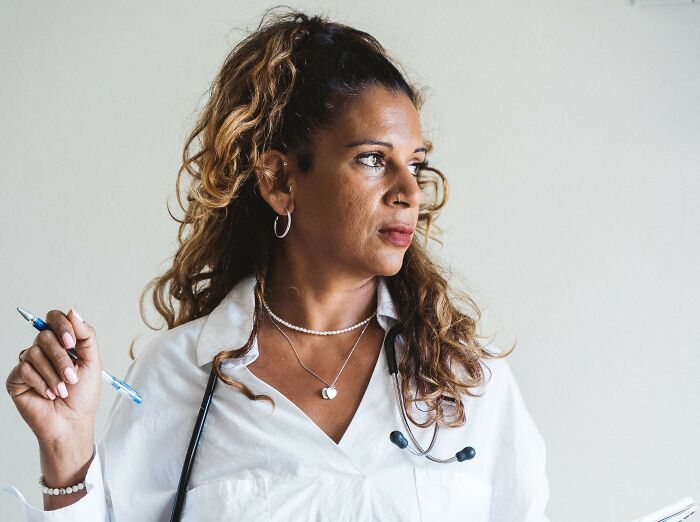
© Photo: sjxarroh
#32
Laughing at women for watching reality tv as if televised sports aren’t the same thing in comfier shoes.

© Photo: rymermade
#33
Honestly it’s the interrupting. Constant. I’d love to simply finish a sentence.
#34
I teach 6th grade, and even my male students quiz me when I say I like UFC. Most of them only know a couple main fighters but assume they know more than I do.

© Photo: a_beauchman
#35
Refusing to consume film, TV, books, music, theater or art that centers women and girls, and claiming that it "just doesn't interest me."
#36
Refusing to believe something you said until a man says it.
#37
I’m a veterinarian, I have a doctorate in Veterinary Medicine. When I was dating and men would ask me what I did for work, I would say I’m a veterinarian. More then once the guy would jump in and say “you mean a vet tech?” because they couldn’t mentally reconcile a women who is a doctor.

© Photo: vickery4victory
#38
My friend is a well-respected defense attorney. Her client was refusing to take her very sound legal advice. She fought with him for days.
Finally, she sent her male partner in. The client agreed immediately.
He just had to hear it from a man.
#39
I’m a wedding photographer. My second shooter is a man.
9/10 times the DJ will go to him about timeline questions, changes, any communication basically. It drives me nuts.
“Females”.
#40
Expecting her to remember everything: Appointments, school forms, birthdays, groceries, and what everybody needs.
#41
A conversation with a man I know who never travels anywhere - Me: “I’m so excited to go to the Tongass National Forest” Him: “aren’t you going to Alaska?” Me: “yes..?” Him: “ there’s no rainforests there, it’s Alaska” Me: “so, fun fact. A forest just needs a lot of rain to be a rainforest, it doesn’t have to be hot.” He stares at me, then walks away. Later I find him googling it.
#42
Using my name when it's already clear you're speaking to me.

© Photo: cassiesaidno
#43
When men say my name to me in the third person, “How is Amy doing today?”