
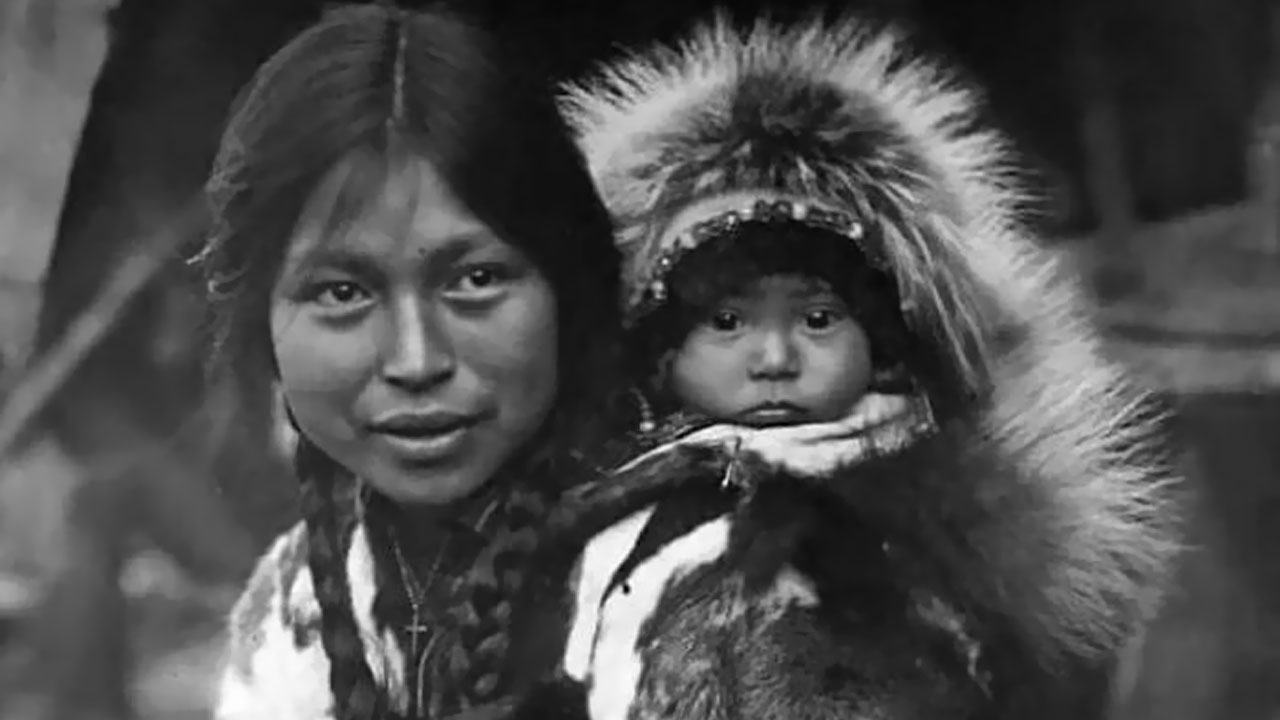
The past is far more interesting and bizarre than you think. In reality, it's much more nuanced and captivating than what you probably learned back in school. It’s humbling to realize learning never stops, and we could all use some extra lessons.
We are featuring the most intriguing facts and photos from the ‘Magnificent History’ Instagram account. They prove history is more than dusty tomes and dull dates. Ready to sharpen your mind? There's no test after this, but you might still want to take notes.
#1
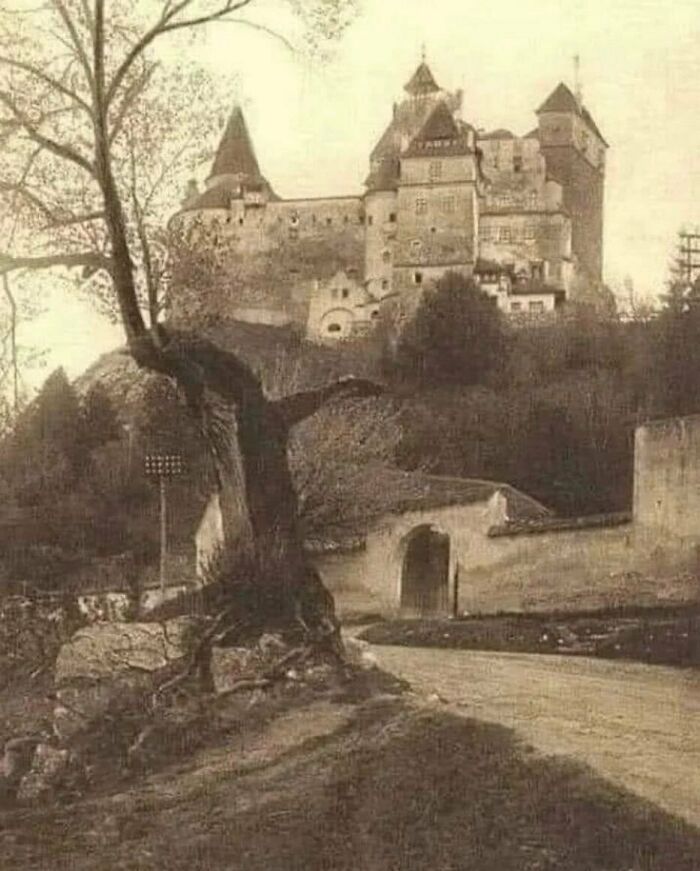
Bran Castle (Dracula's Castle), Romania, 1920s.
© Photo: magnificent_history
#2
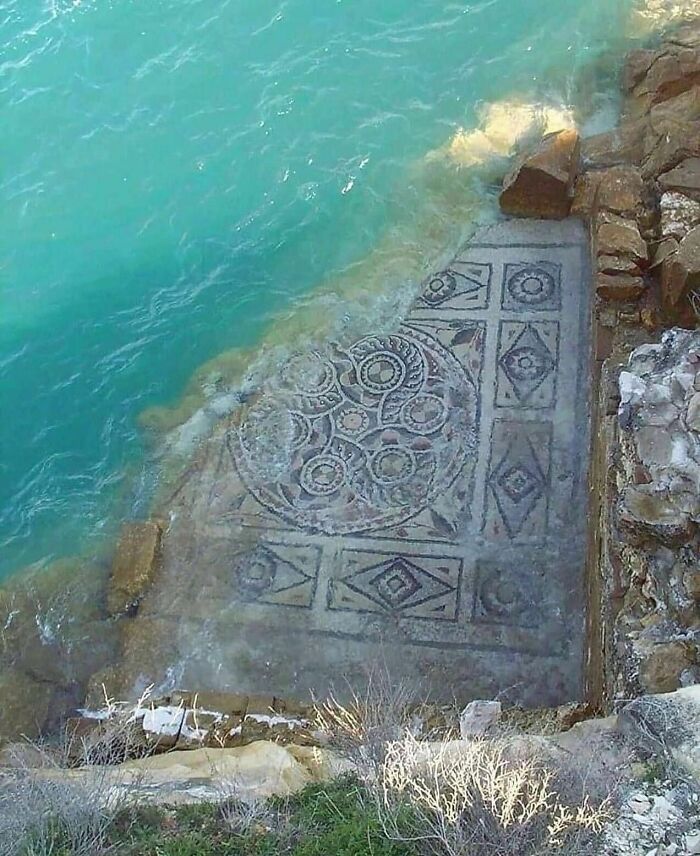
A mosaic of the Roman Empire two thousand years ago, washed by the waters in present-day Turkey.
© Photo: magnificent_history
#3
In 1916, the English socialite and suffragette Florence Norman went to work in her office in London on an "electric scooter", which practically did not differ from the modern version of Lime or Bird. Around the same time, the U.S. Postal Service was testing scooters for special delivery. For some time, the popularity of such transport grew. But they couldn't beat the machines.
The technology had drawbacks at that time. Although someone experimented with electricity, most scooters ran on gas, and they had a noisy engine. To start the engine, you had to push the scooter and jump on it. They were heavy and expensive – from $100 to $400.
Besides, there was nowhere to ride them. "A hundred years ago there was a struggle over who owns the streets. Many tried to make sure that they were primarily intended for cars. There was a rather pleasant period a little over 100 years ago when it seemed that the streets could be for everyone, but people who wanted only cars to drive on them increased the speed limits to such an extent that if you were not in the car, you would be afraid to move around," explains historian Peter Norton.

© Photo: magnificent_history
Repeating a piece of information over and over again does not necessarily mean that it is true. It does, however, increase the odds of the public thinking that it’s true. Objective truth and subjective interpretations are two different things, however.
That being said, reaching that objective truth is by no means easy. ‘Perfect’ objectivity is, broadly speaking, out of reach. And yet, it is still something worth aiming for.
According to ‘History Skills,’ in history, it is “rare that we are completely sure that sources are 100% reliable.” So, it’s better to talk about degrees of reliability.
#4
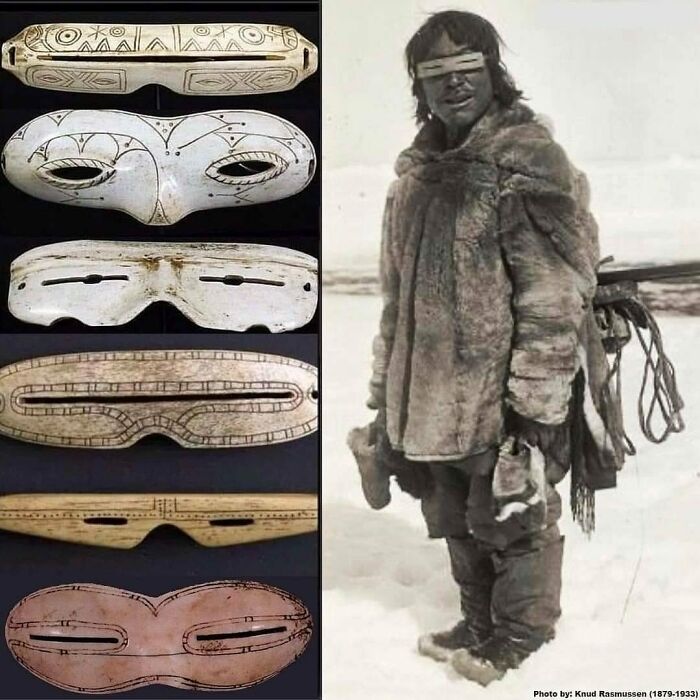
Snow glasses are glasses used by the Arctic peoples of the Inuit and Yupik to prevent snow blindness.
Glasses are traditionally made of wood (especially spruce), bone, walrus tusk, reindeer horn, and sometimes coastal vegetation.
© Photo: magnificent_history
#5
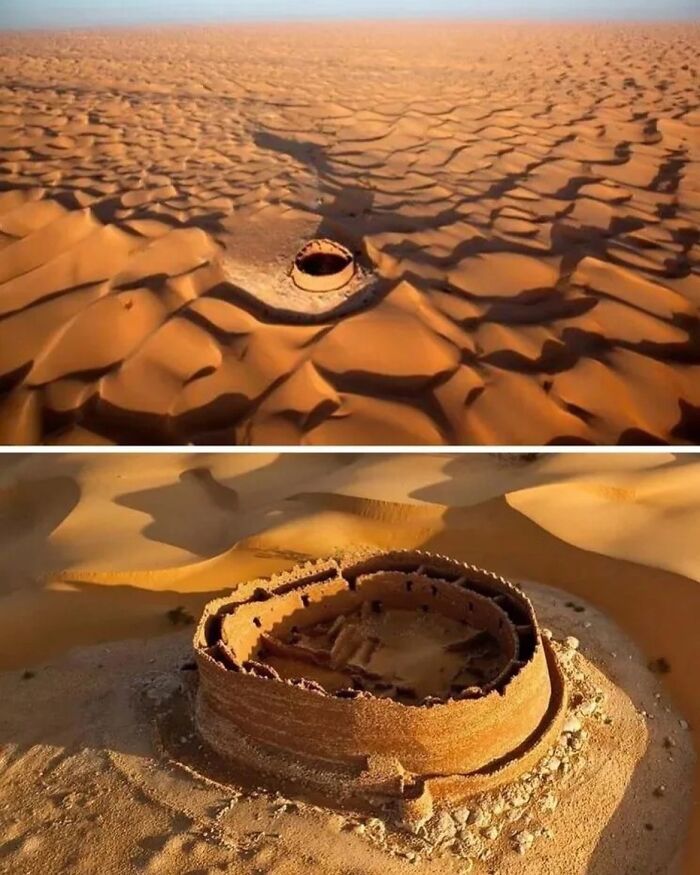
Ksar Draa Fortress is built in the middle of the sand dunes of the Sahara, about 50 km from the city of Timimun.
It is unknown when and by whom it was built, what was its exact purpose. No mention of it has been preserved even in the writings of the indigenous peoples of the region.
© Photo: magnificent_history
#6
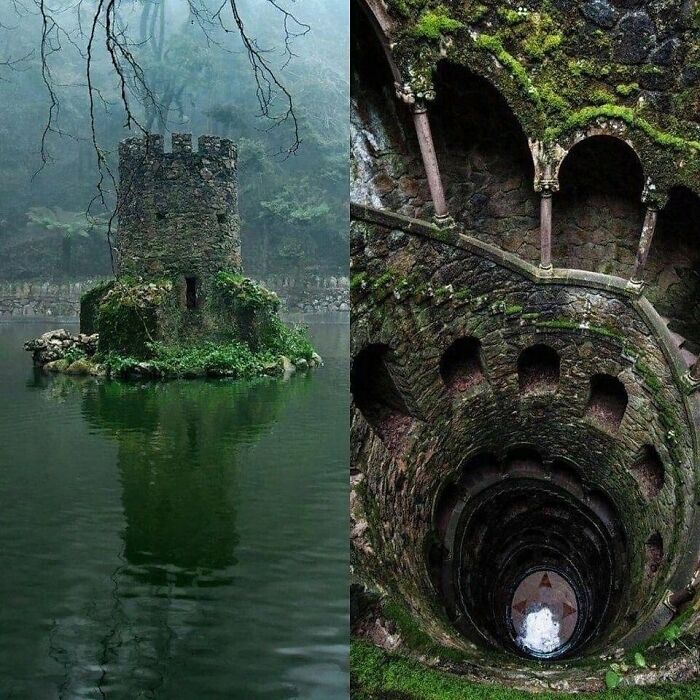
Two unusual architectural landmarks in Sintra, Portugal
© Photo: magnificent_history
As ‘History Skills’ explains, sources are more likely to be unreliable when the creator was not present at the time of the event, does not have a sufficiently educated perspective on the topic, and has not been fact-checked by an educated audience.
Opinions and interpretations should not be perceived as cold, hard facts. You have to think about what agendas and biases the creator of the source might have, and what they might seek to gain from their target audience thinking or feeling a certain way.
#7
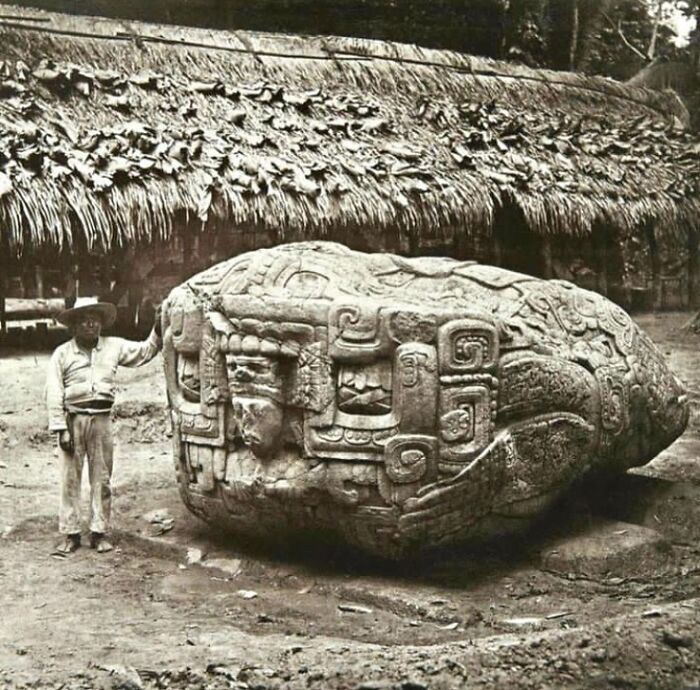
Amazing vintage photos of massive 3D zoomorphic Mayan creations from Central America.
By Alfred P. Maudslay
© Photo: magnificent_history
#8
What's up with all these gigantic books? This picture was taken sometimes during the 1950s by M.Peterka at the Archives of Prague Castle, Czech Republic.

© Photo: magnificent_history
#9
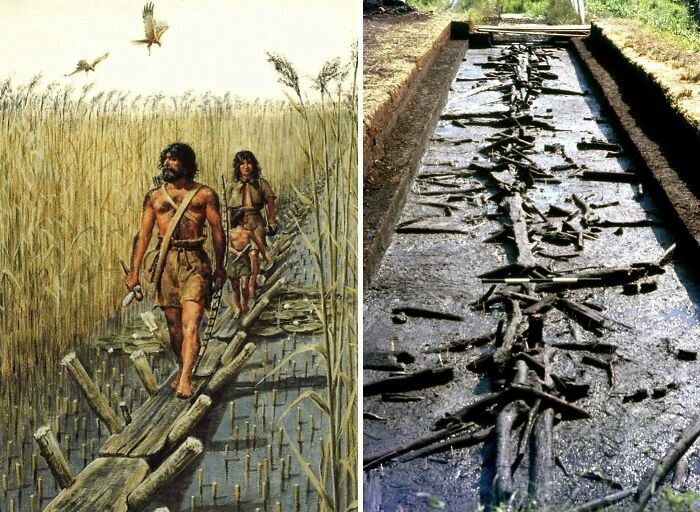
A 5,830-year-old wooden bridge in Somerset, England.
Discovered in 1970, it was part of a network of wooden "roads" that covered the swampy area thousands of years ago.
© Photo: magnificent_history
Meanwhile, Margot Note Consulting LLC suggests that you ask yourself the following questions when gauging how (un)reliable a historical primary source may be:
- Was the source created at the same time as the event it describes?
- Who made the record, when, and why?
- Who furnished the information?
- Would the informant have benefited from giving incorrect or incomplete answers?
- Is the information in the record (names, dates, places, event, relationships, etc.) logical?
- Does the information make sense in the broader context?
- What other evidence supports the info in the source?
- What reliable evidence contradicts the source?
- Is the source an original or a copy?
- How has the passage of time affected the source document's readability?
#10
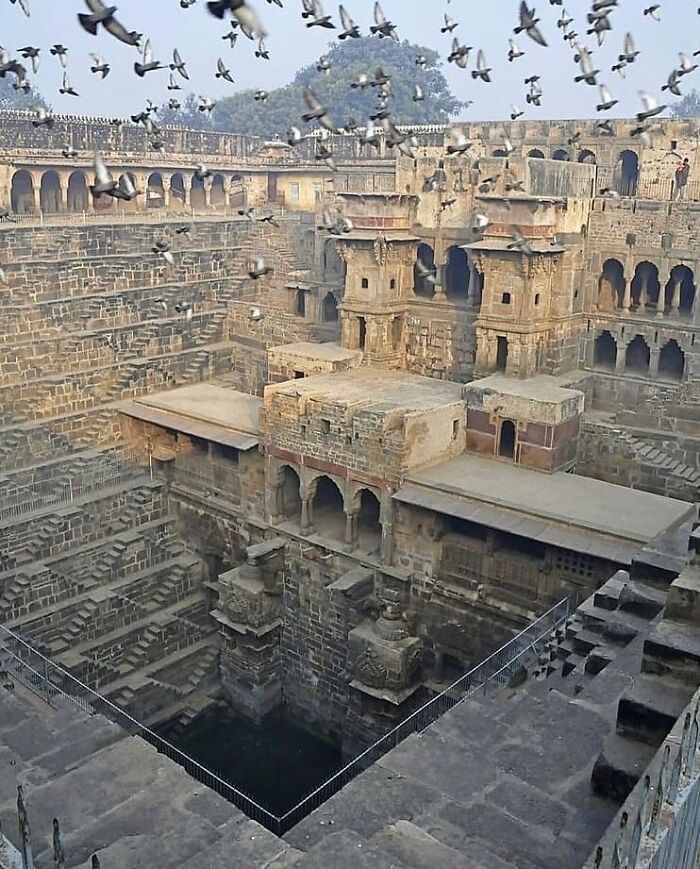
The Chand Baori architectural complex is one of the oldest and deepest step wells in India. The giant structure, resembling an inverted pyramid, goes underground for more than 30 meters, on its three walls there are 3,500 steps in perfect symmetry, along which you can descend to a small murky green lake.
© Photo: magnificent_history
#11
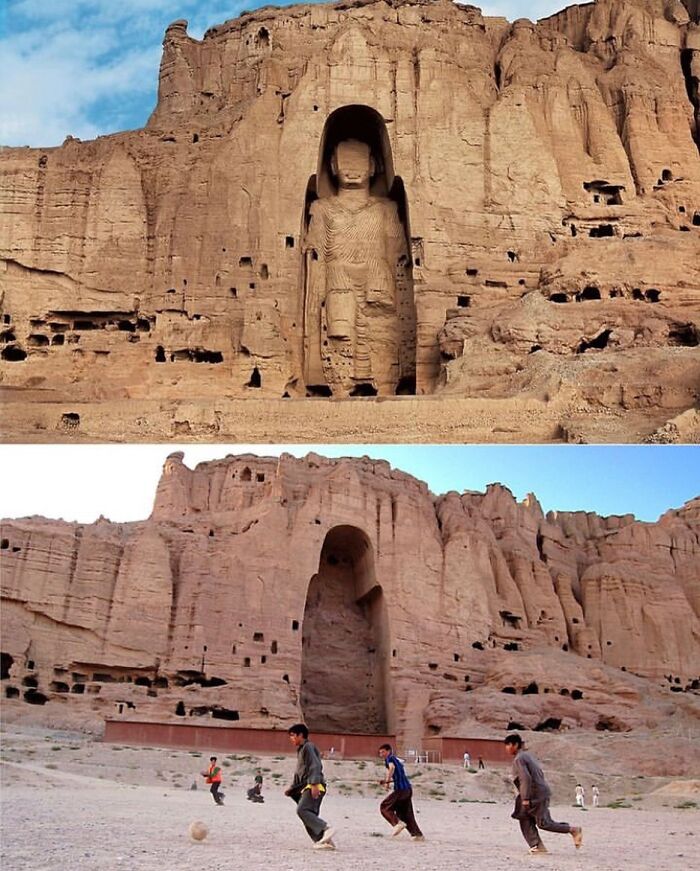
The giant Buddha statue, carved into rocks 1,500 years ago in Afghanistan’s Bamyan Valley, was dynamited and destroyed by the Taliban in 2001.
© Photo: magnificent_history
#12
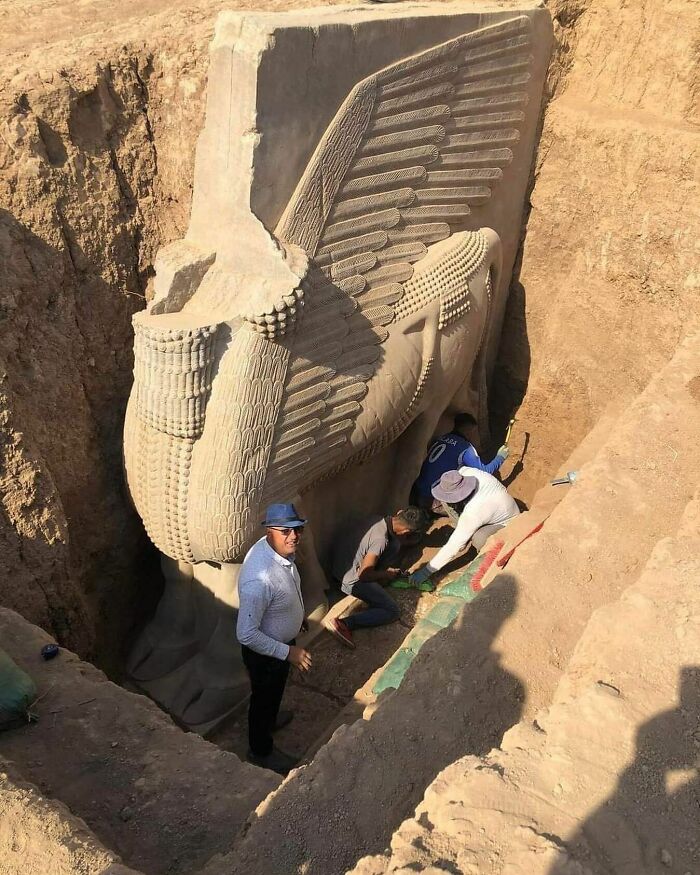
The new opening of the French mission in Nineveh (Lammas or Shedu).
The motif of a winged animal with a human head is characteristic of the ancient art of the entire Middle East; for the first time it is found in finds from Ebla at the beginning of the III millennium BC.
In the New Assyrian era, shedu became ubiquitous throughout Assyria: the figures of the "man-god" guarded all significant state structures and entrances to cities.
© Photo: magnificent_history
What’s your perspective? What’s something new that you learned about the past today? What are some mysteries that live rent-free in your head?
What historical periods interest you the most, and why? Has this changed since your school days? What do you personally do to broaden your mind and keep learning new things, no matter how many adult responsibilities you have these days?
What do you think are the main issues that affect modern society, and what do you think might realistically happen in the near future?
Share your thoughts in the comments under the images or at the bottom of this post.
#13
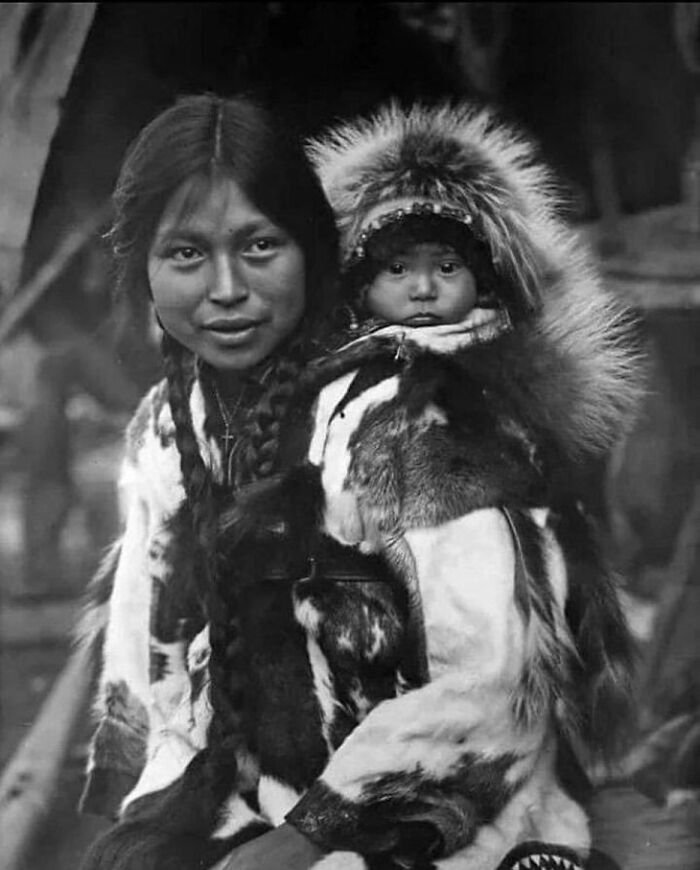
The Inuit people can’t be imagined without their signature parkas, fashioned from fur and hide of the local wildlife. One of the many reasons why early European voyages into the Arctic circle failed is because they were underprepared for the extreme weather conditions of the north. They wore wool clothing, which kept them hot on the inside, but made them sweat a lot, which made their clothing freeze in the extreme temperatures. The Inuit never faced this problem, as they have been making their parkas from caribou deer or seal hide from as early as 22,000 BC (Siberia). The production of these parkas took weeks, and the tradition of making them was passed down from mother to daughter, taking years to master. Depending on the geographical location of the tribes, the design of the parkas varied according to the types of animals available. Beadwork, fringes and pendants frequently decorated the clothing. Roald Amundsen was the first explorer who outfitted his crew with Inuit clothing, which enabled him to successfully circumvent the North-West Passage in 1906. In the 20th century the use of traditional Inuit clothing declined, but it has seen a recent resurgence, as the Inuit strive to preserve their culture.
© Photo: magnificent_history
#14
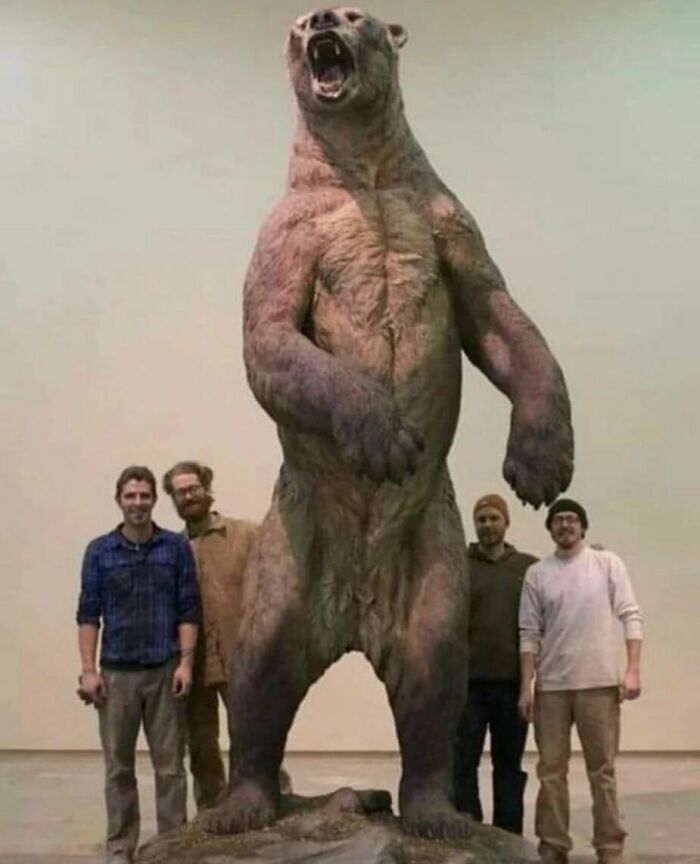
The short-faced bear is an extinct ancient bear that lived in North America 11,000 years ago. They were extremely large bears, weighing more than 1 ton (1000 kg) and standing up to 12 feet (3.7 m) tall. Despite their enormous stature, the Bear could run up to 40 miles per hour.
© Photo: magnificent_history
#15
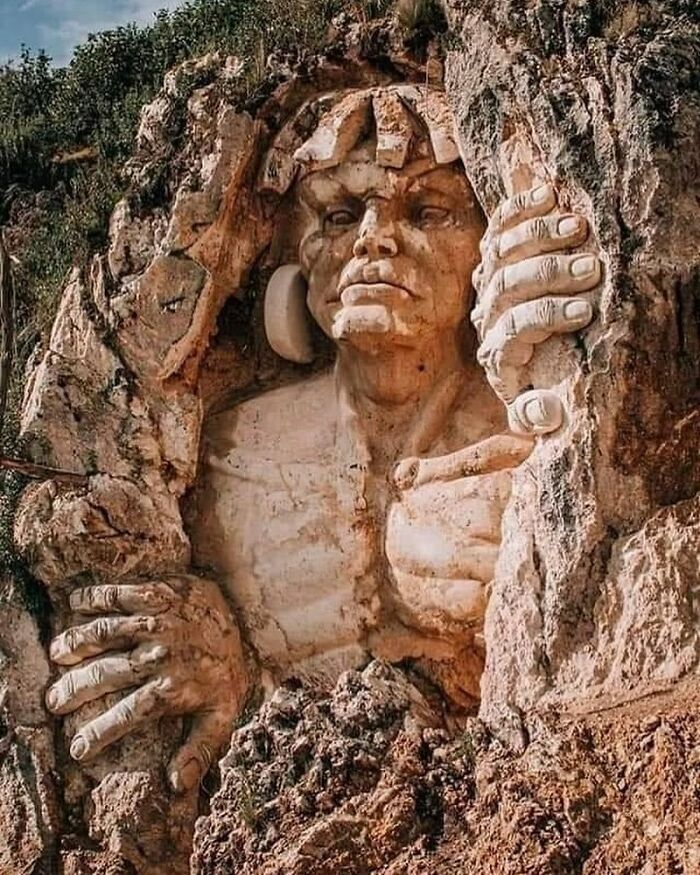
Sculpture of the Inca god in Cuzco, Peru.
© Photo: magnificent_history
#16
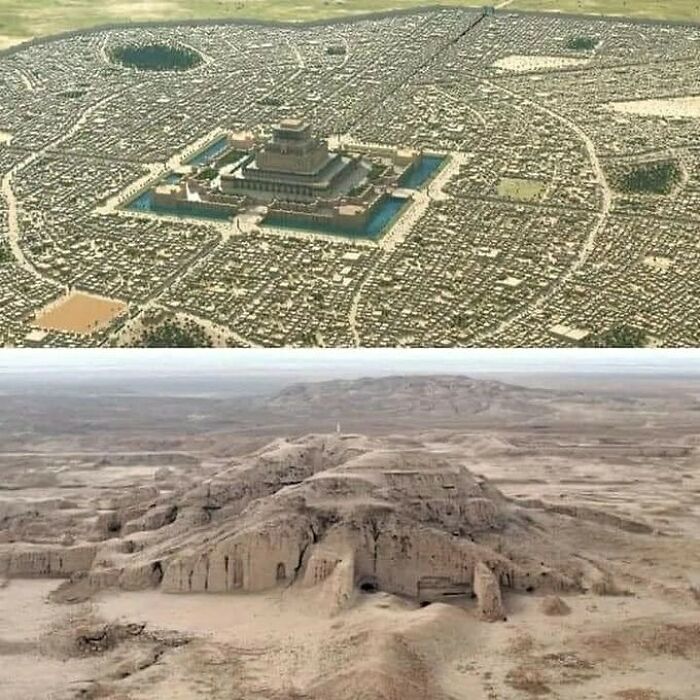
Uruk is one of the oldest cities in the world, which developed in parallel with the entire history of Mesopotamia.
© Photo: magnificent_history
#17
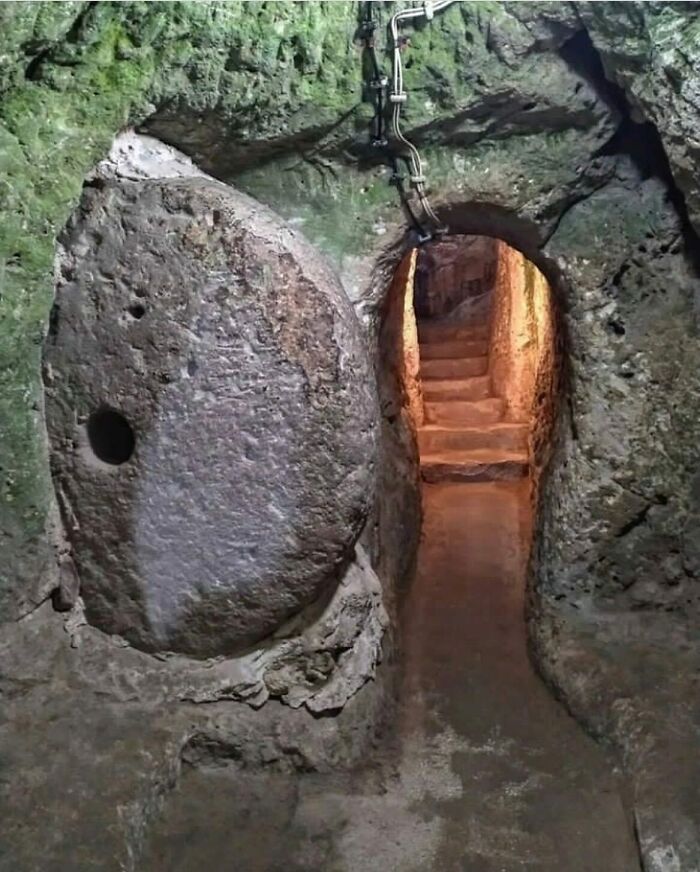
The Derinkuyu underground City is an ancient multi-level underground city in the Derinkuyu district in the Cappadocia region, Turkey, extending to a depth of approximately 85 meters (279 feet).
It is believed that the underground city was built as a shelter, which should not be visible from above, for the Christian community to escape from the pressure of the Roman Empire and the Arabs.
It is large enough to shelter up to 20,000 people along with their livestock and food supplies. This underground city contains many complex structures such as ventilation, a church, a stable and a cellar. It is carved from a malleable rock of volcanic ash called tuff.
© Photo: magnificent_history
#18
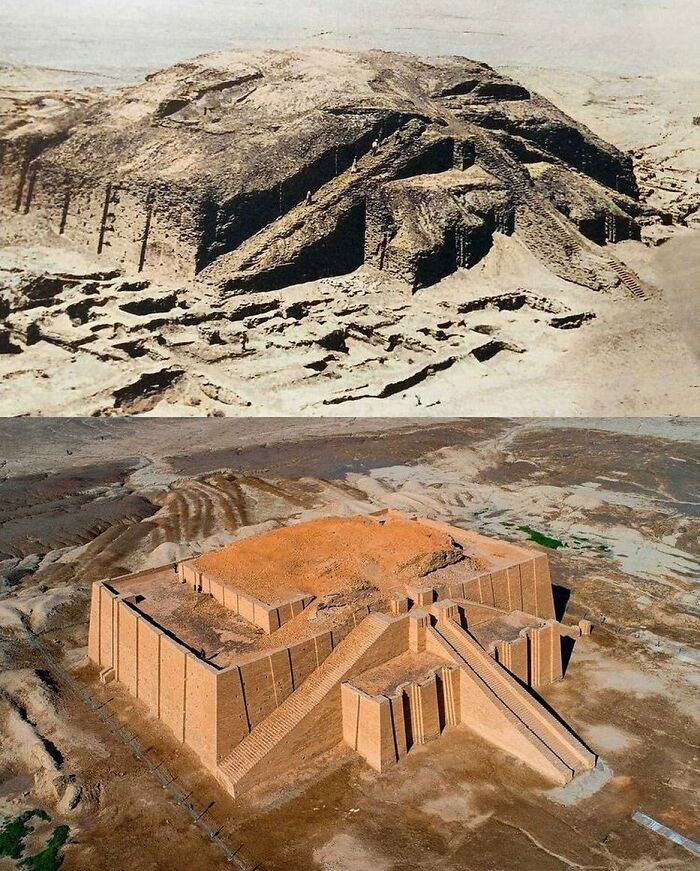
Before and after the excavation and restoration of the 4000-year-old Great Ziggurat. It was erected around 2100 BC in honor of the Moon God Nanna, the patron saint of the city-state. Today it is located on the borders of Iran.
© Photo: magnificent_history
#19
© Photo: magnificent_history
#20
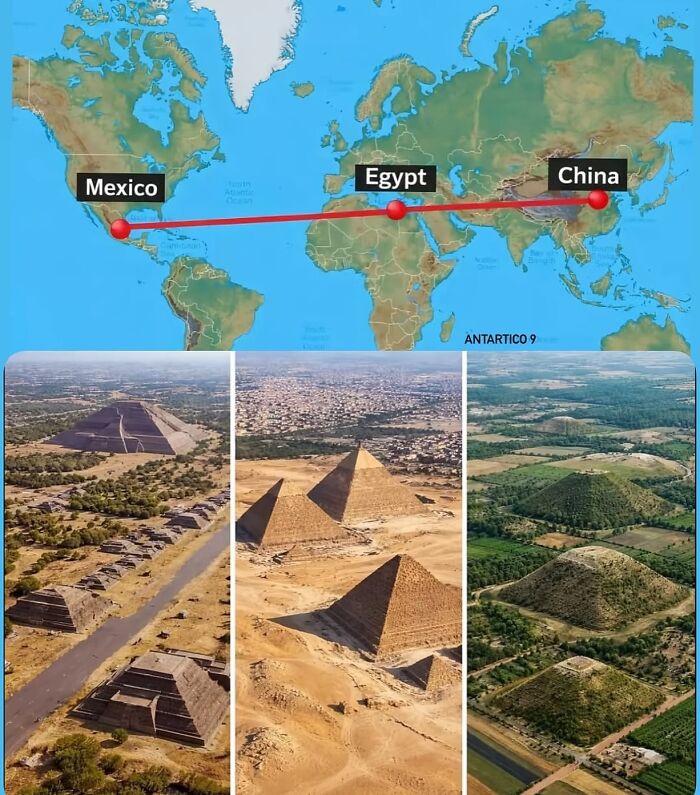
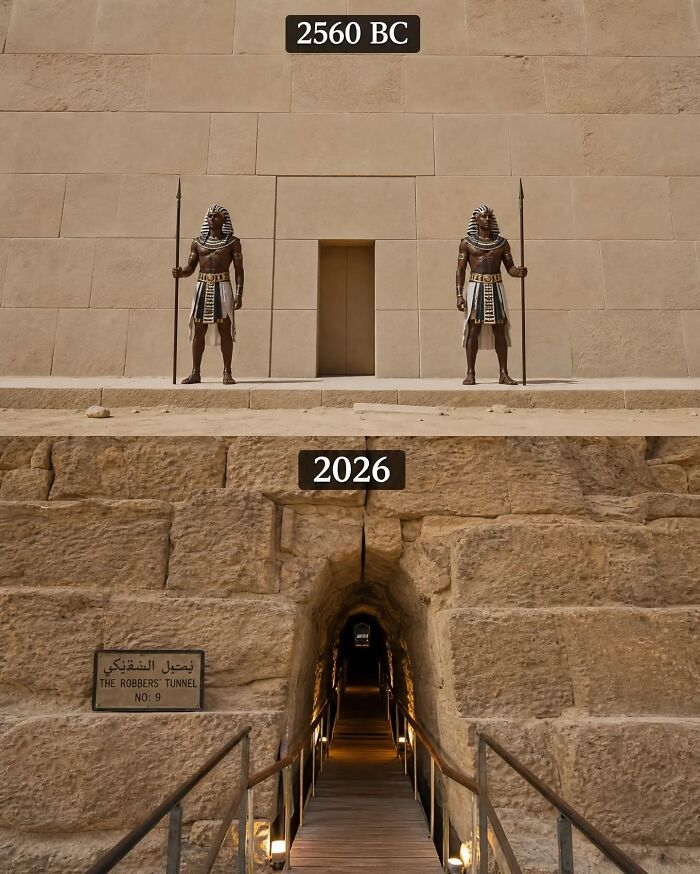
The Giza Pyramids The Giza Pyramids were built during the Old Kingdom period of Egypt (approximately 2580-2500 BC), in the 4th Dynasty. The largest pyramid (the Great Pyramid) was built for Pharaoh Khufu (Cheops).
The pyramids next to it were built for his son Khafre (Kefren) and his grandson Menkaure (Mikerinos). These pyramids were designed as tombs for the pharaohs and were completed with the advanced engineering knowledge of the time and the labor of tens of thousands of workers.
Today, they are among the most iconic ancient structures in the world and are a symbol of Egypt. They have a history of approximately 4500 years in total.
© Photo: magnificent_history
#21
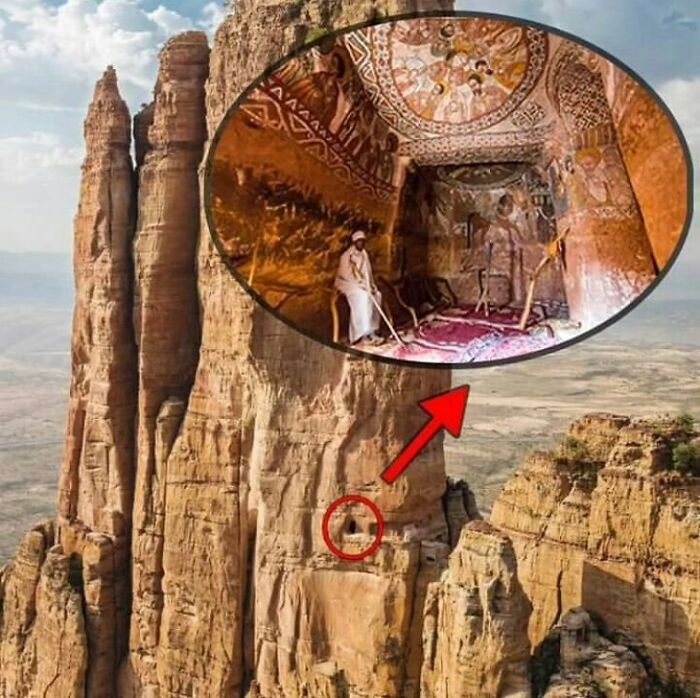
"Abuna Yemata Guh" is the most inaccessible place of worship on earth, and it takes a very long walk to get to it.
© Photo: magnificent_history
#22
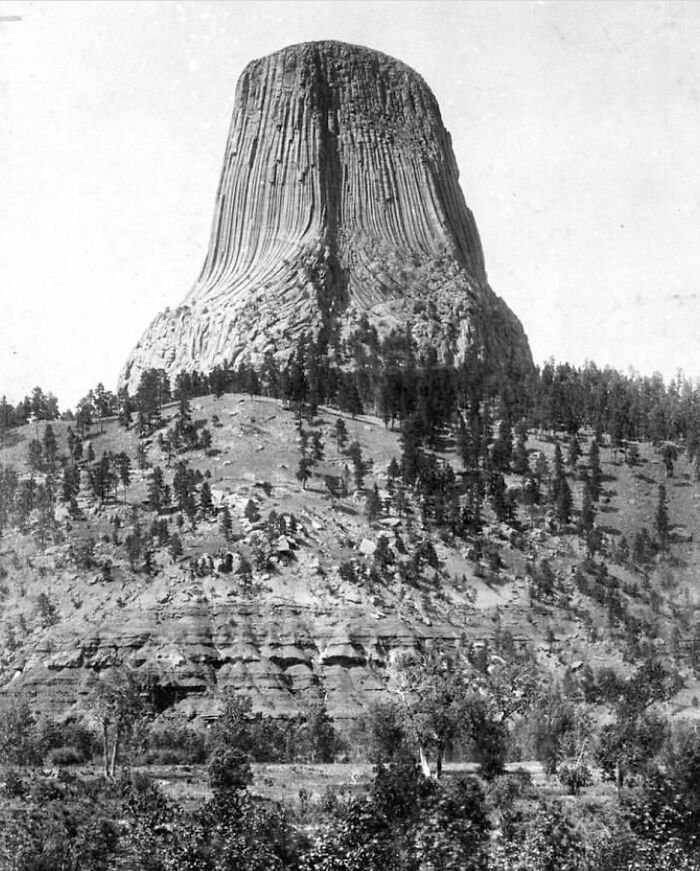
Devils Tower (also known as Bear Lodge Butte) is a butte, possibly laccolithic, composed of igneous rock in the Bear Lodge Ranger District of the Black Hills, near Hulett and Sundance in Crook County, northeastern Wyoming, above the Belle Fourche River.
It rises 1,267 feet (386 m) above the Belle Fourche River, standing 867 feet (264 m) from summit to base. The summit is 5,112 feet (1,558 m) above sea level The name "Devil's Tower" originated in 1875 during an expedition led by Colonel Richard Irving Dodge, when his interpreter reportedly misinterpreted a native name to mean "Bad God's Tower".All information signs in that area use the name "Devils Tower", following a geographic naming standard whereby the apostrophe is omitted.
The landscape surrounding Devils Tower is composed mostly of sedimentary rocks. The oldest rocks visible in Devils Tower National Monument were laid down in a shallow sea during the Triassic.This dark red sandstone and maroon siltstone, interbedded with shale, can be seen along the Belle Fourche River. Oxidation of iron minerals causes the redness of the rocks. This rock layer is known as the Spearfish Formation. Above the Spearfish Formation is a thin band of white gypsum, called the Gypsum Springs Formation, Jurassic in age.
Overlying this formation is the Sundance Formation.During the Paleocene Epoch, 56 to 66 million years ago, the Rocky Mountains and the Black Hills were uplifted.Magma rose through the crust, intruding into the existing sedimentary rock layers.
© Photo: magnificent_history
#23
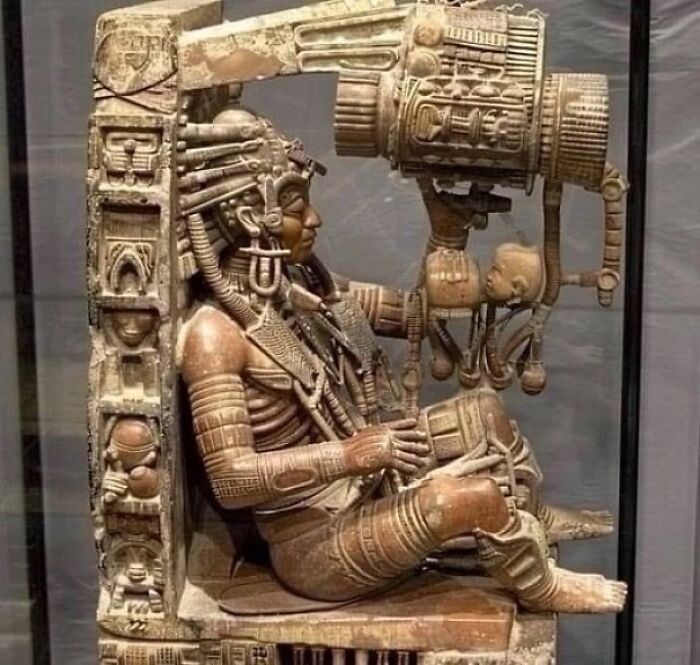
The mysterious astronaut Maya Palenque has captured the imagination of many scientists and enthusiasts. This figure, depicted on the lid of the sarcophagus of Pacal the Great in Palenque, has sparked discussions about extraterrestrial links with the Maya civilization.
Could this intricate carving really depict an ancient astronaut piloting a spaceship, suggesting a deeper connection with beings beyond our world? Or is it a flight of people’s imagination?
© Photo: magnificent_history
#24
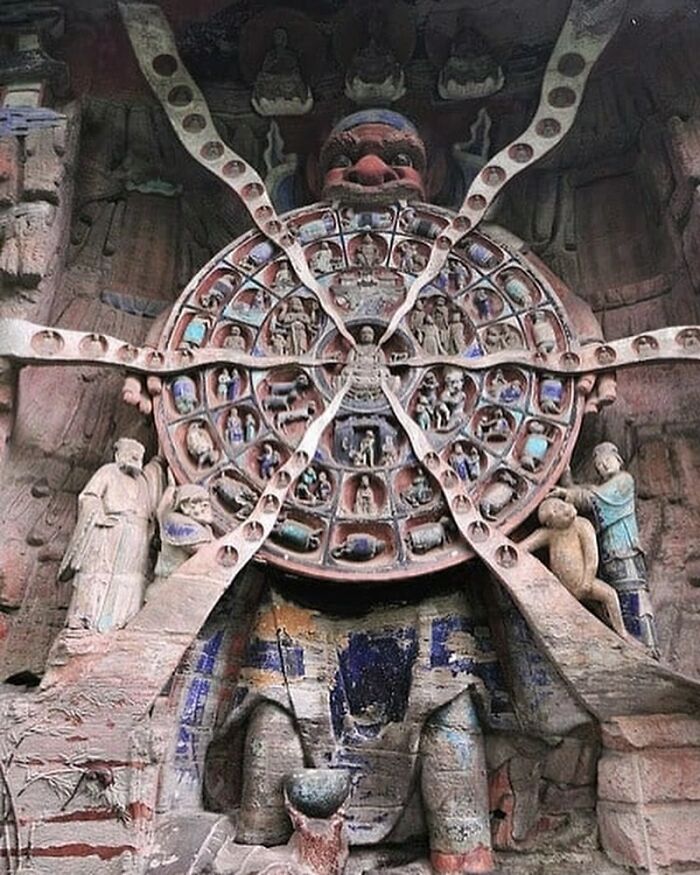
Bas-reliefs of the Northern Mountain (Beishan), China
The bas-reliefs of the Northern Mountain (Beishan) are located two kilometers from Dazu.
The most impressive bas-relief on the Northern Mountain is the Wheel of Samsara.
At the outer ring of the wheel, a snake is visible at the bottom, which then turns into a sheep, then into a horse and further, further, further at the very top a man. But he behaved, apparently, not like a human being and then the reverse process of turning into all kinds of animals went on, again everything ends with a snake.
© Photo: magnificent_history
#25
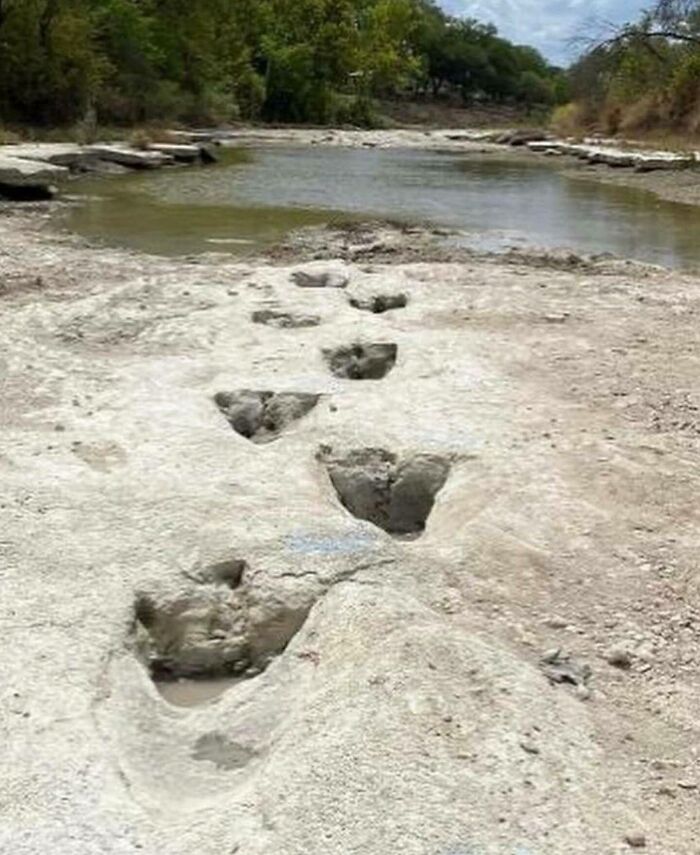
In Texas, due to a severe drought, dinosaur tracks were found, which are about 113 million years old.
© Photo: magnificent_history
#26
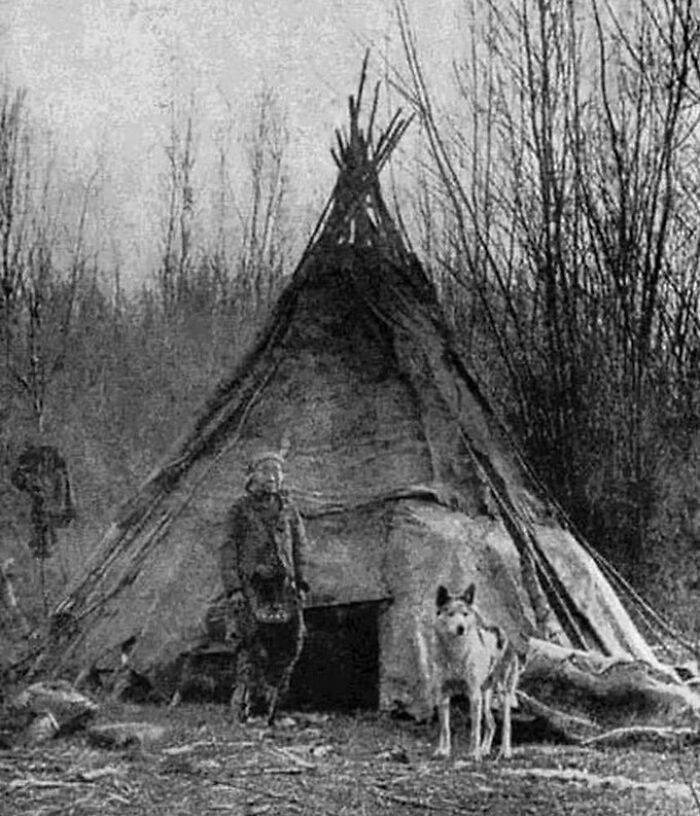
One of the earliest photographs showing a Native American with a wolf.
© Photo: magnificent_history
#27
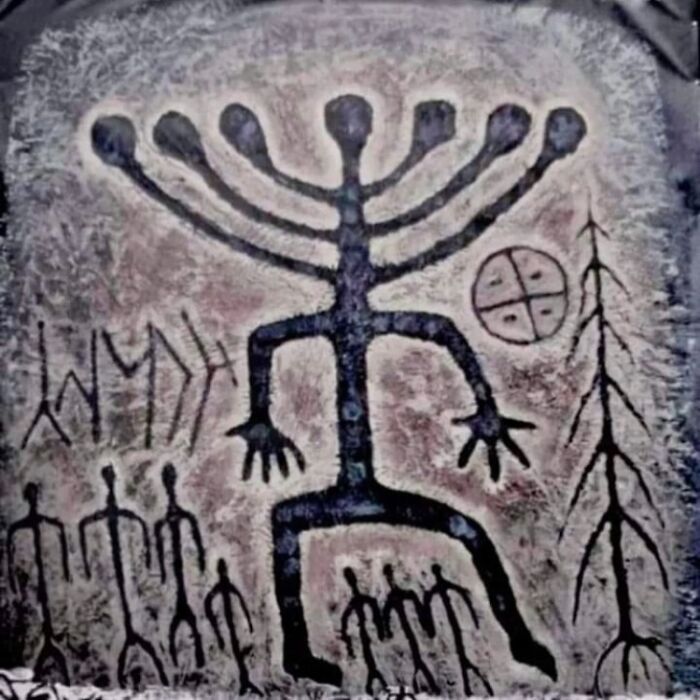
This mysterious seven headed petroglyph originates from Khakassia in Russia, and dates back to around 5000 BC
© Photo: magnificent_history
#28
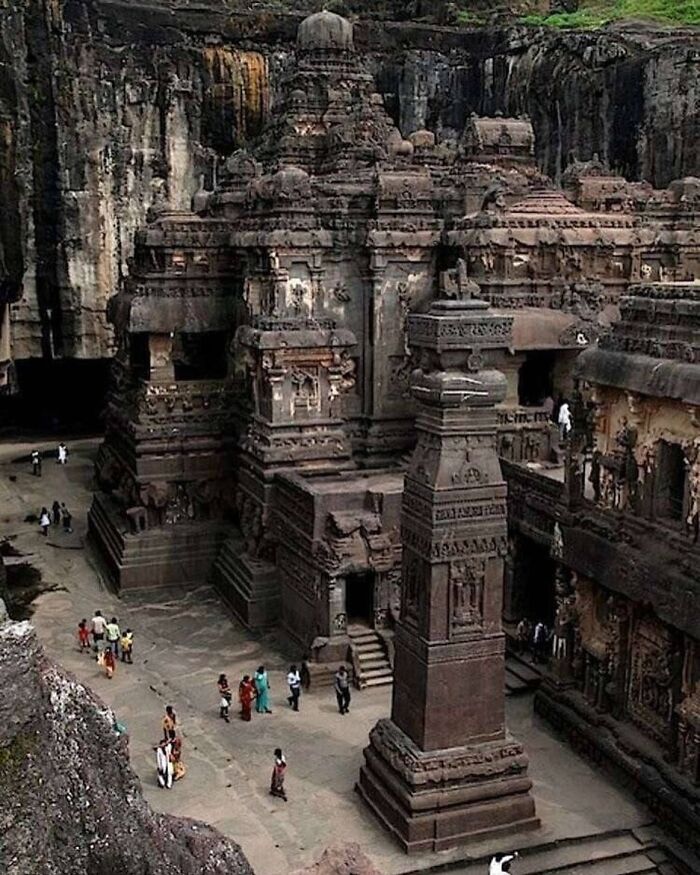
It is not built, but carved into a monolithic rock from top to bottom.
© Photo: magnificent_history
#29
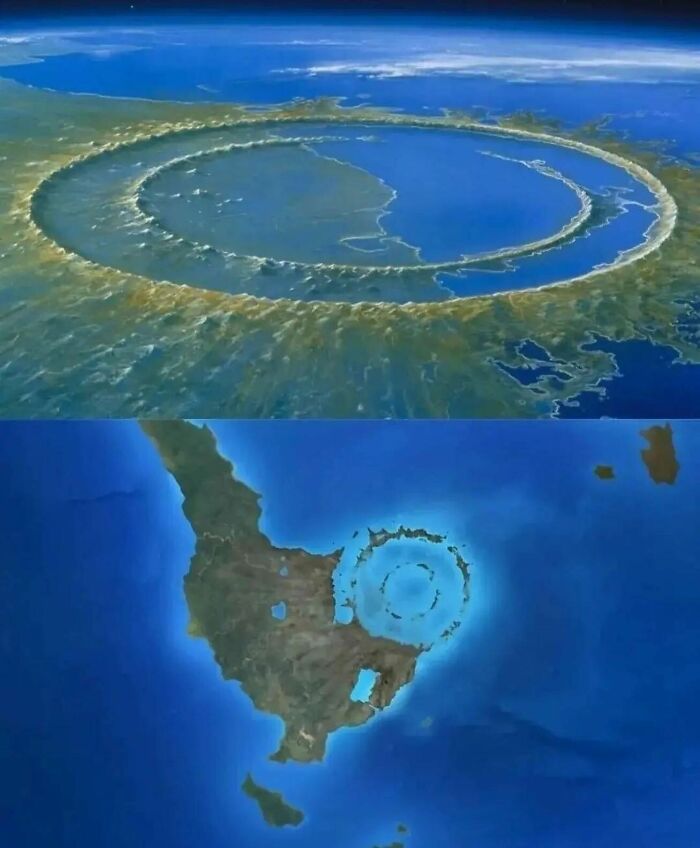
Chicxulub crater was formed when a large asteroid (10 km in diameter) crashed into the Earth.
Many scientists believe that this event caused the extinction of the dinosaurs.
© Photo: magnificent_history
#30
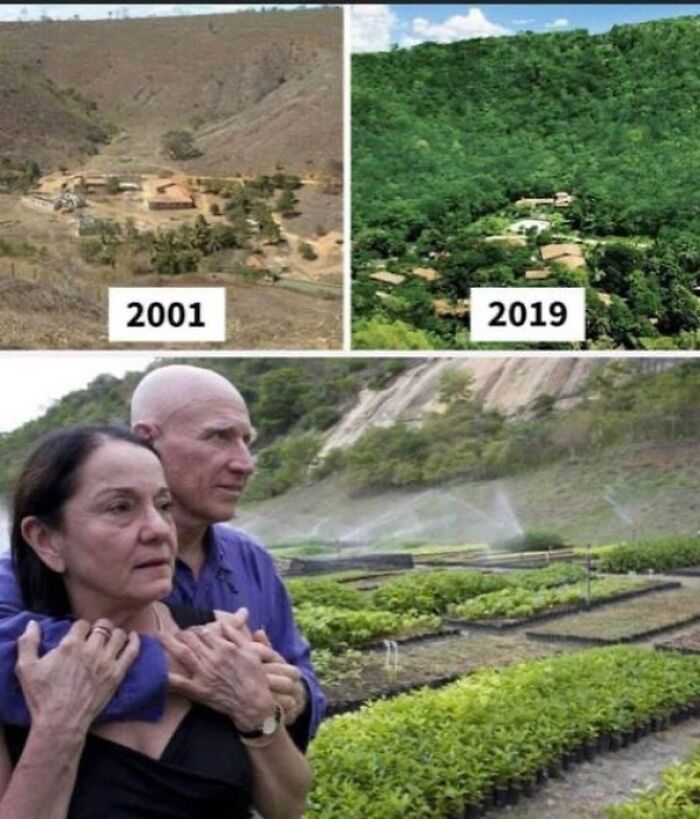
A couple from Brazil planted 2 million trees over 18 years, bringing back 172 species of birds, 33 mammals, 15 amphibians, 15 reptiles and 293 species of plants.
© Photo: magnificent_history
#31
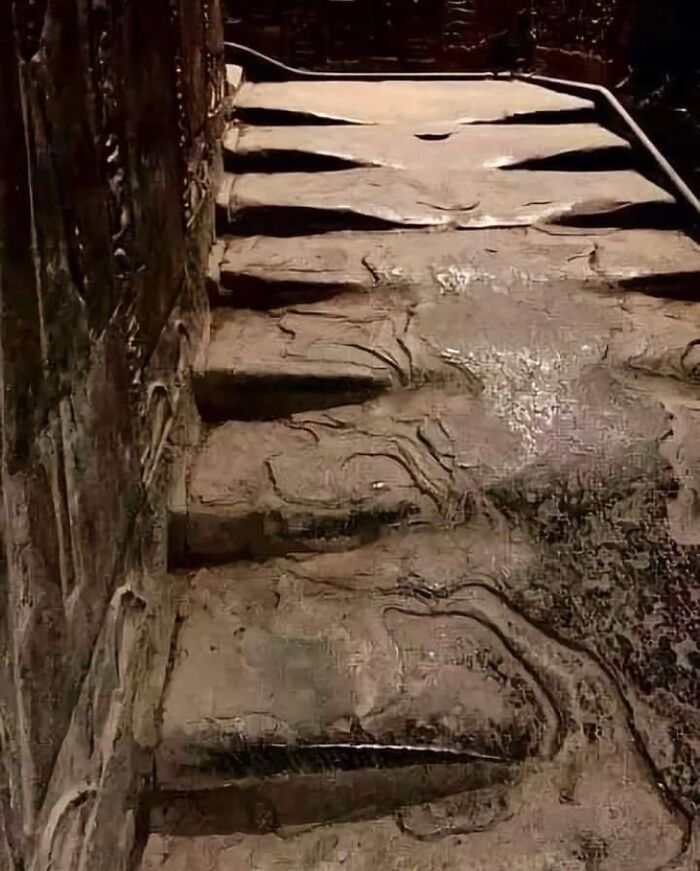
The staircase to the Temple of Hathor is a complete mystery to archaeologists. The steps of the staircase of the Temple of Hathor, located in Egypt, are completely melted, which science cannot explain in any way, since they are built of solid granite. Upon closer examination of the staircase steps, it becomes clear that their damage could not have been caused by erosion or normal wear and tear
© Photo: magnificent_history
#32
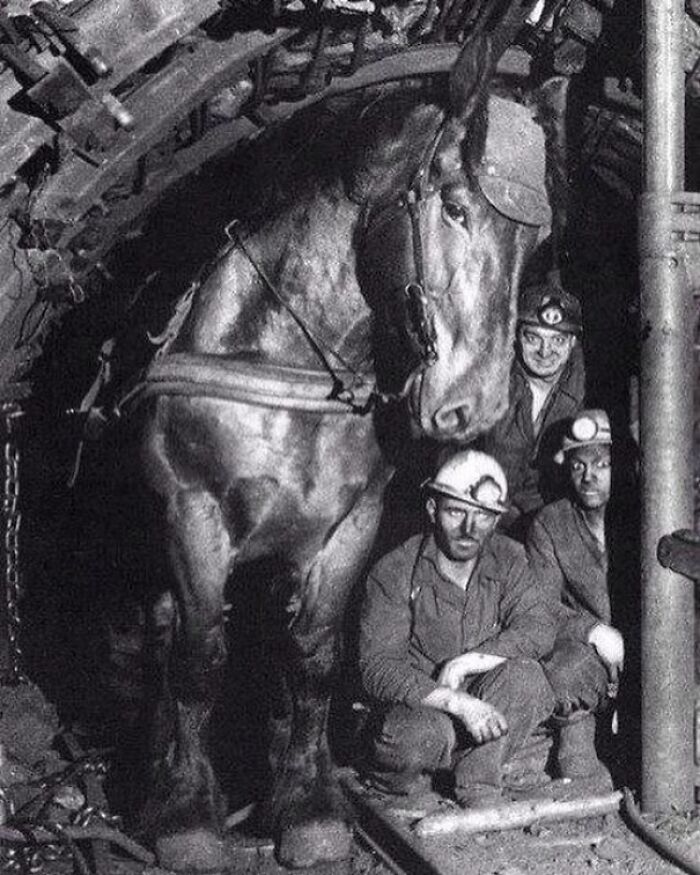
Miners and their workhorse in the mine. France, 1970
© Photo: magnificent_history
#33
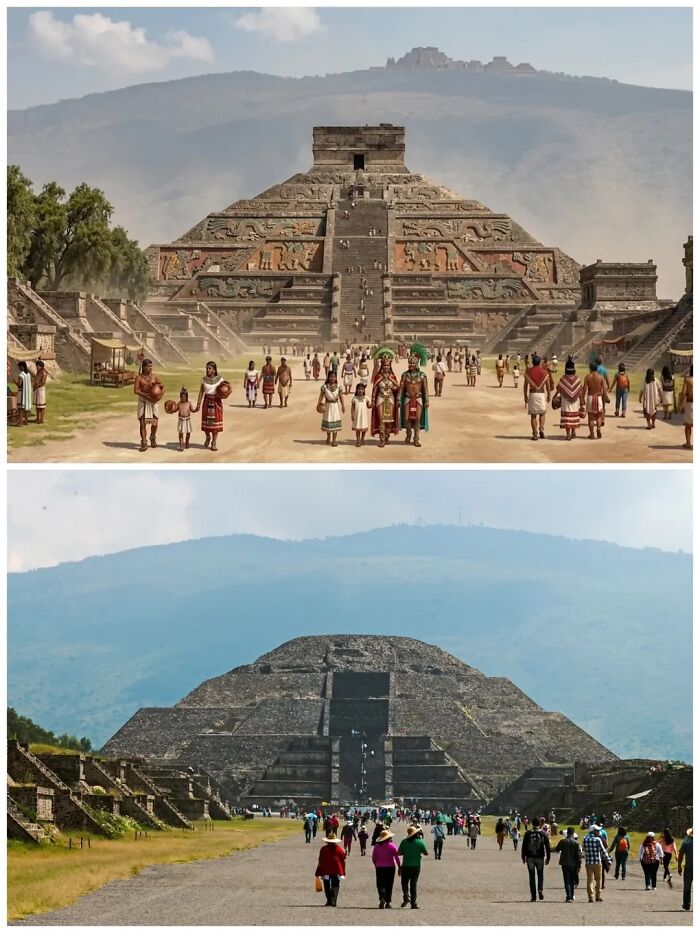
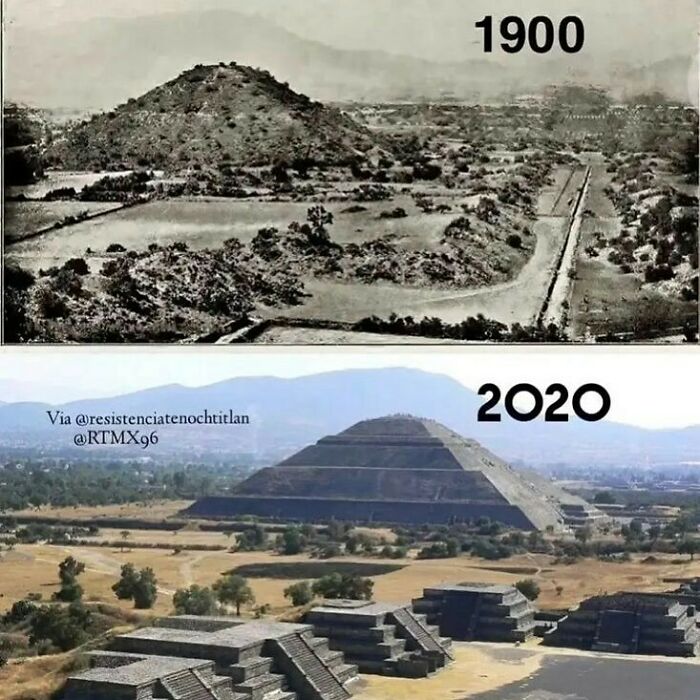
The Pyramid of the Sun: Between Past and Present, the Third Largest Pyramid in the World After the Great Pyramid of Giza in Egypt It is one of the largest and most important archaeological sites in the ancient city of Teotihuacan, located in Mexico, about 40 kilometers northeast of Mexico City.
It is the third largest pyramid in the world after the Great Pyramid of Giza in Egypt and the Great Pyramid of Cholula in Mexico. It stands approximately 65 meters tall, with a base extending over 220 meters on each side. Construction: The pyramid was built around 200 AD using limestone, earth, and local materials. It is distinguished by its stepped design, which was once covered with a layer of plaster (gypsum) painted with vibrant designs.
Cultural Significance: The exact name of the civilization that built it is unknown (it predates the Aztec civilization by centuries), but the Aztecs named it the «Pyramid of the Sun» when they later discovered the abandoned city and believed it to be the birthplace of the gods. Archaeological discoveries: Scientists discovered a tunnel extending beneath the pyramid leading to cavernous chambers, believed to have been used for ritual purposes related to sun or ancestor worship.
© Photo: magnificent_history
#34
Time ⏳
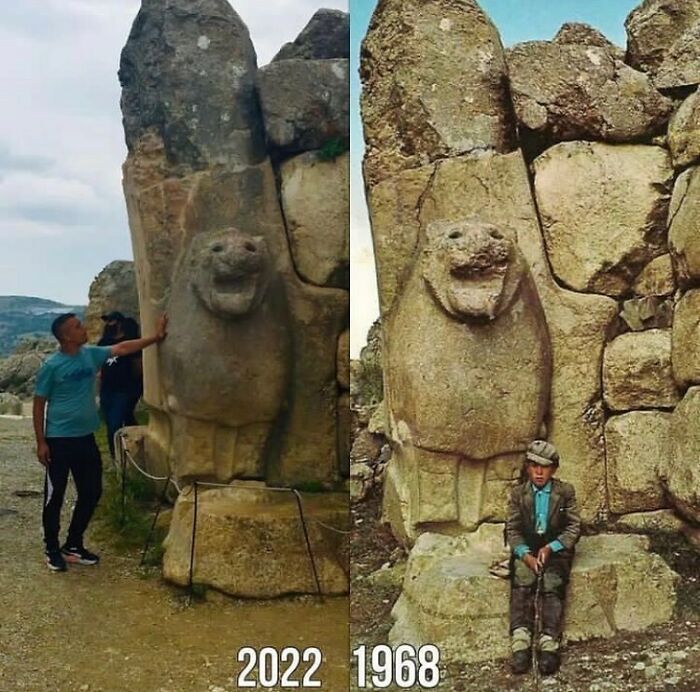
© Photo: magnificent_history
#35
Mosaic discovered in old town of Hvar (Croatia)
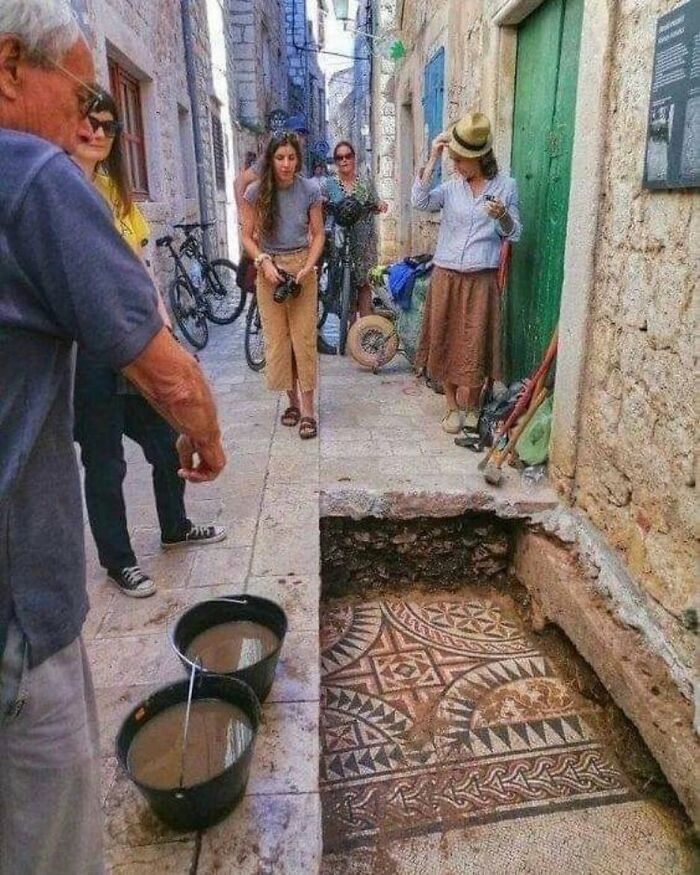
© Photo: magnificent_history
#36
Lace workers at work. Brittany, France, 1920.

© Photo: magnificent_history
#37
Roman mosaic floor of the 4th - 5th century AD, Montorio, Verona, Italy.
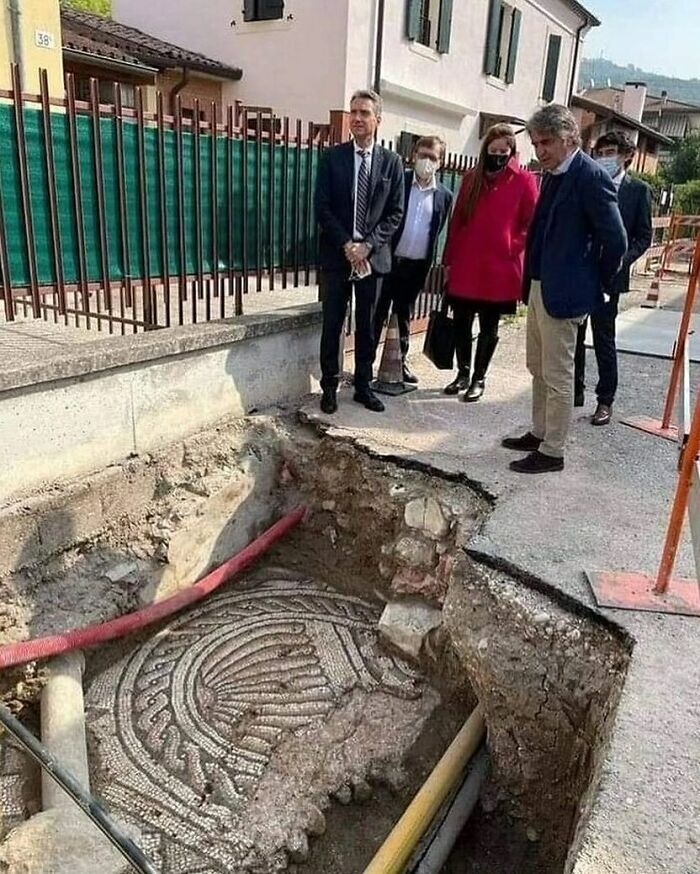
© Photo: magnificent_history
#38
Skulls of Pleistocene dwarf elephants are found in coastal caves of Italy and Greek islands, most likely, they inspired the ancient Greeks to create legends about cyclopes.
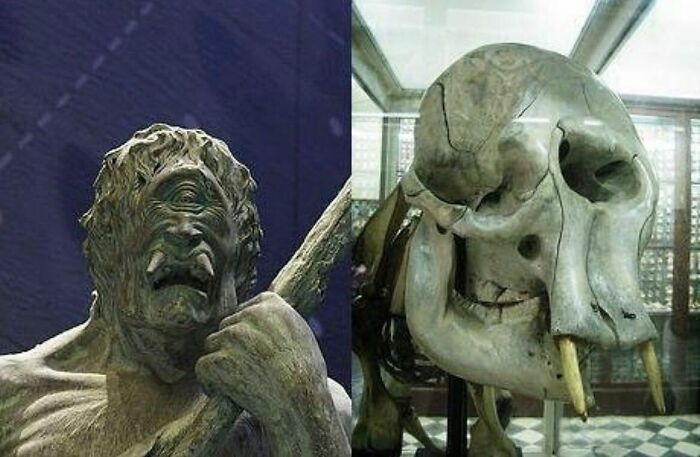
© Photo: magnificent_history
#39
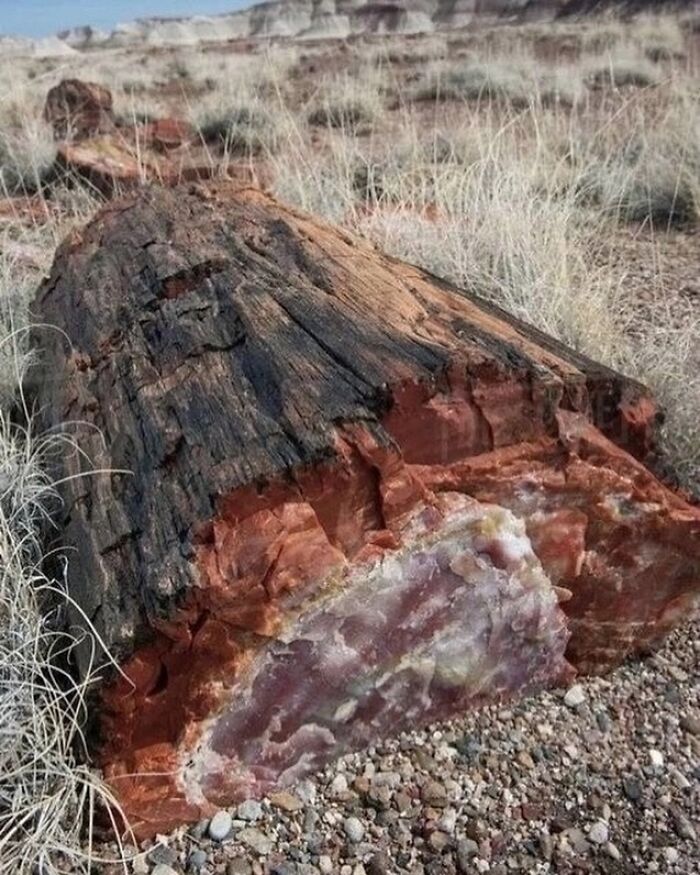
This is what a petrified tree looks like
© Photo: magnificent_history
#40
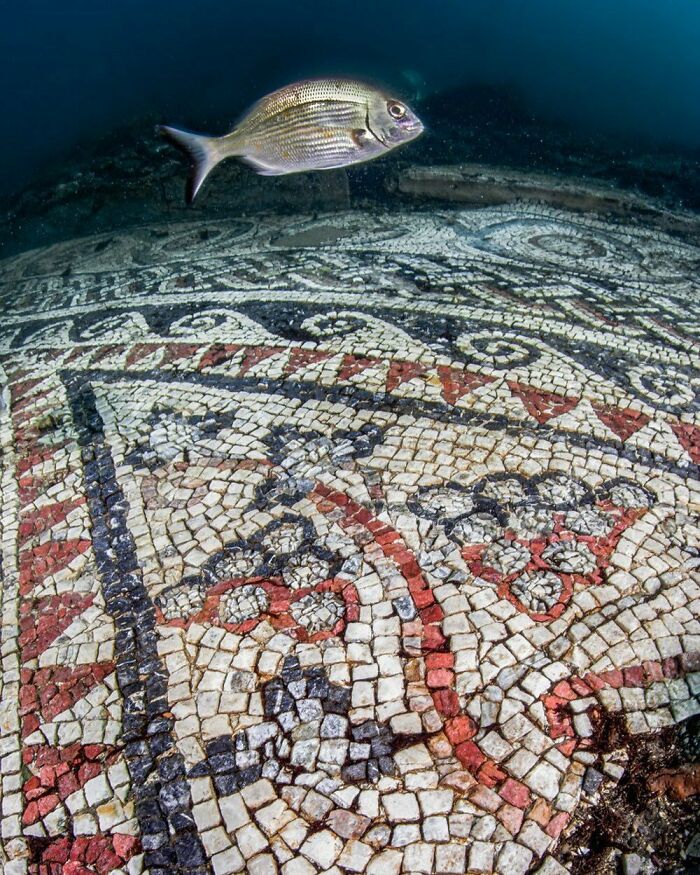
This is a fantastic photo of a mosaic (and a beautiful fish) that was discovered a few months ago in the flooded ruins of the Roman city of Baiae.
© Photo: magnificent_history
#41
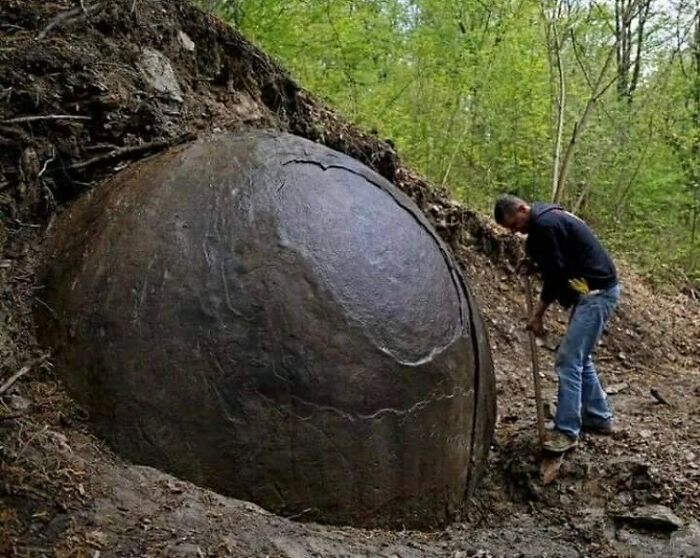
The 60 ton round giant stone sphere was found in Bosnia
© Photo: magnificent_history
#42
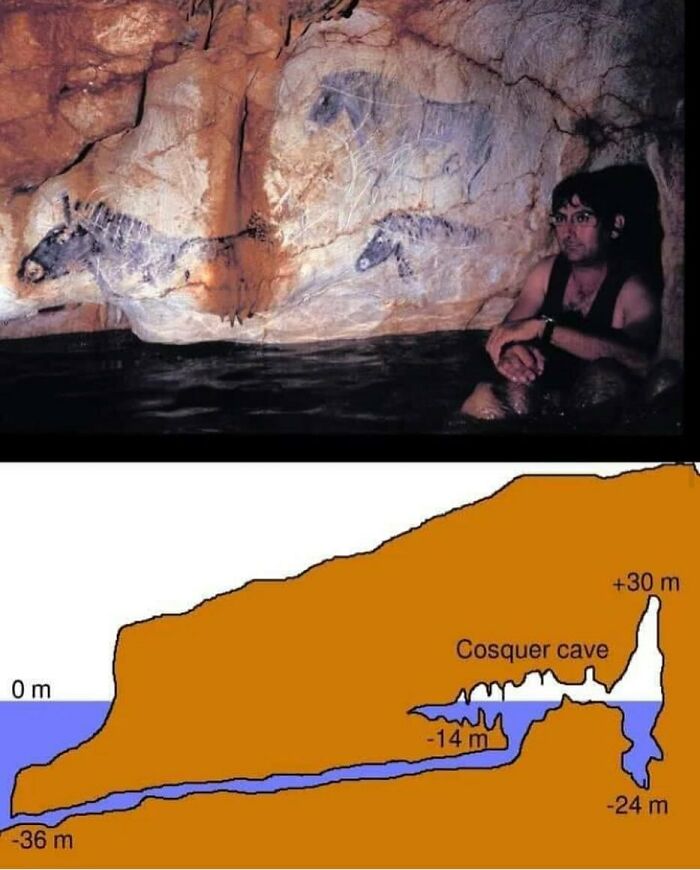
The Cosquer cave is a Palaeolithic decorated cave, located in France, that contains numerous cave drawings dating back as far as 27,000 years BP. The cave has more than 200 parietal figures and is also the only decorated cave whose entrance opens under the sea.
© Photo: magnificent_history
#43
Ainu women with traditional tattoos on their lips, Japan, 1915

© Photo: magnificent_history
#44
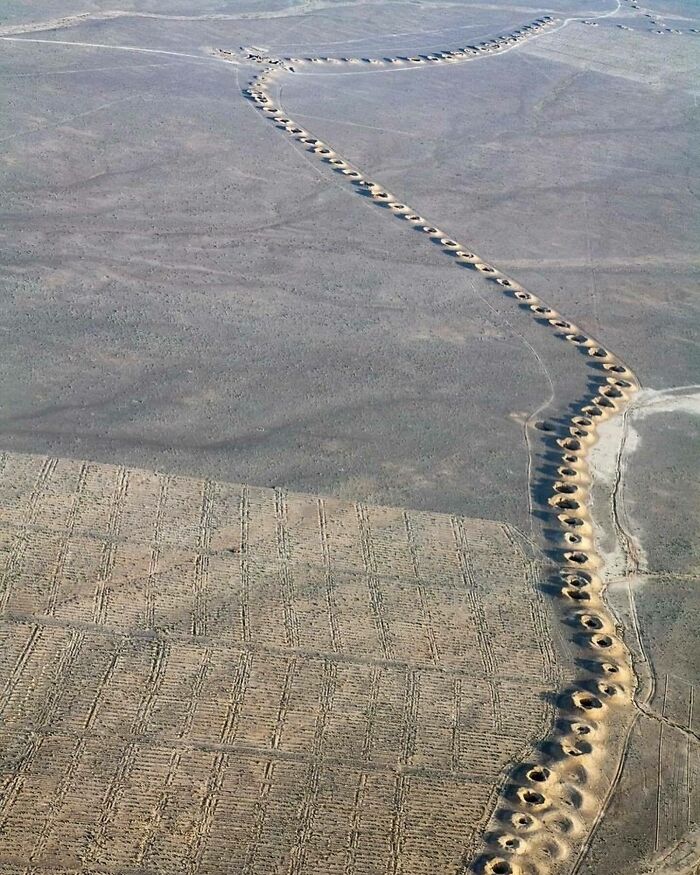
3,000 years ago, the underground canal "Kariz" was built on the territory of modern Iran. It was needed to transport water over long distances. The canal supplied water to villages and farms that simply would not survive here in a dry hot climate.
Kariz is one of the reasons for the rise of Persia in the region. After all, the water allowed for a large harvest.
These characteristic holes are necessary for maintenance.
The holes were needed to allow oxygen to enter the tunnel. The workers who were manually digging the canal needed air.
The tunnel goes under a thick layer of soil. This is necessary to reduce evaporation losses. Compared to open water – for example, in an aqueduct, it was possible to transport water much further through kyariz.
The builders of kyariz received a lot of money for their work. This craft was inherited.
A huge plus of the channel is that it is resistant to natural disasters. Neither a flood nor an earthquake can destroy it.
© Photo: magnificent_history
#45
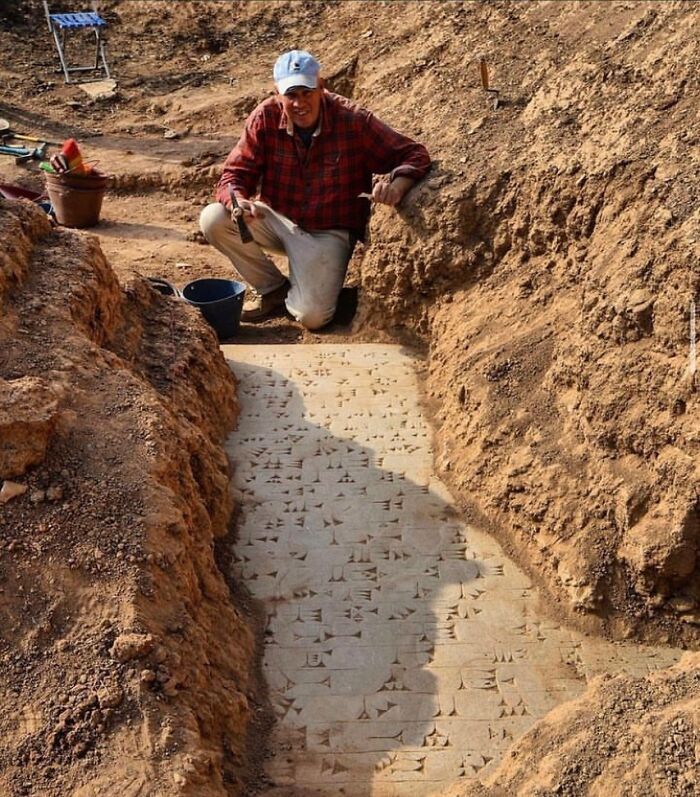
At Nimrud, excavations uncovered an inscribed door threshold of Assyrian king Adad-Nerari III. Assyriologist John MacGinnis provides scale.
© Photo: magnificent_history
#46
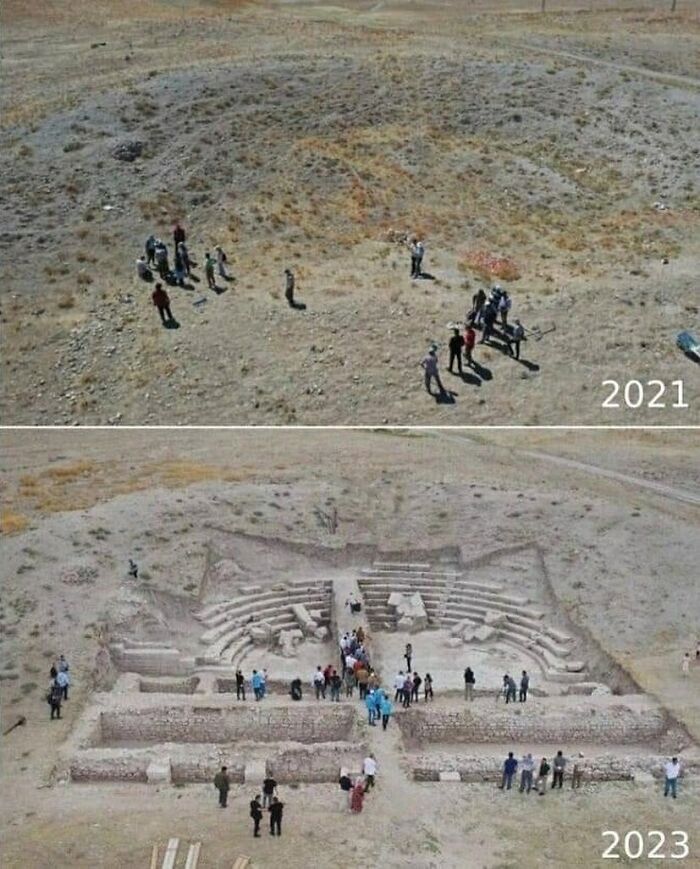
Excavations of the ancient theater in Savatra, on the territory of modern Turkey
© Photo: magnificent_history
#47
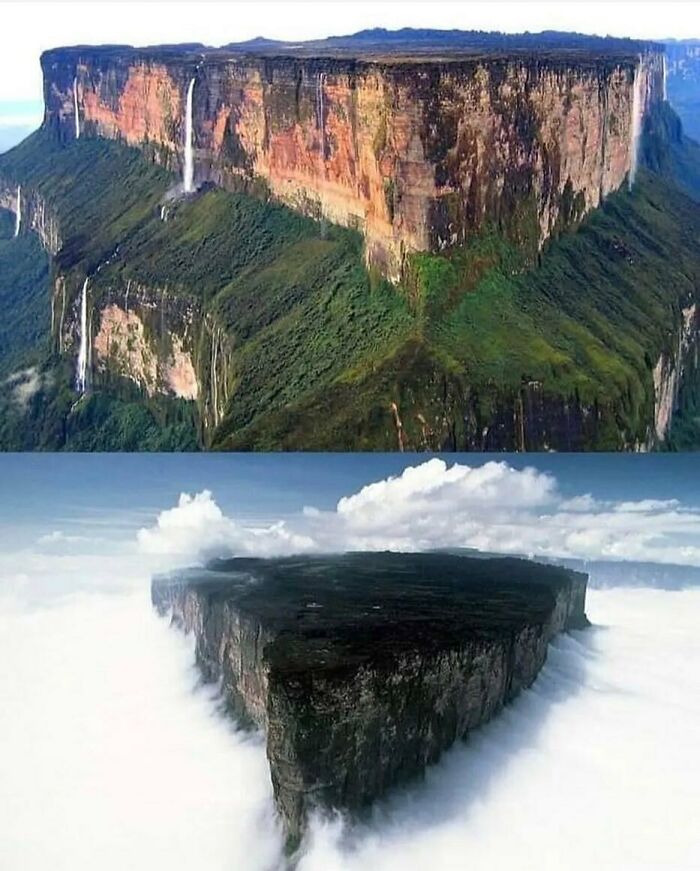
Mount Roraima is the highest of the Pakaraima chain of tepuis or plateaux in South America. First described to Europeans by the English explorer Sir Walter Raleigh during his 1595 expedition, its 31-square-kilometre summit area is bounded on all sides by cliffs rising 400 metres.
© Photo: magnificent_history
#48
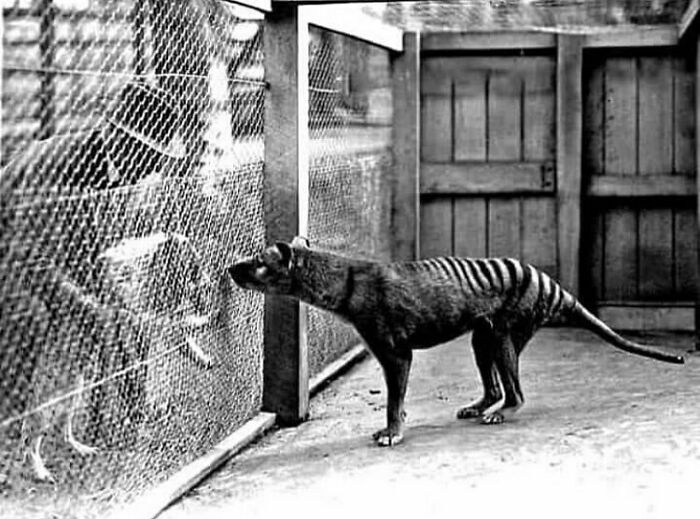
The last captive Thylacine interacting with Arthur Reid (the curator of the zoo) and his dog.
The photo was taken in 1933 at the Hobart Zoo (QD)and was originally a postcard.
The thylacine (Thylacinus cynocephalus), now extinct, is one of the largest known carnivorous marsupials, evolving about 4 million years ago. The last known live animal was captured in 1933 in Tasmania. It is commonly known as the Tasmanian tiger because of its striped lower back, or the Tasmanian wolf because of its canid-like characteristics. Various Aboriginal Tasmanian names have been recorded, such as "coorinna", "loarinna", "laoonana" and "lagunta", while "kaparunina" is used in the constructed language of Palawa kani. The species was native to Tasmania, New Guinea, and the Australian mainland.
The thylacine had become extinct on the Australian mainland before British settlement of the continent, but it survived on the island of Tasmania along with several other endemic species, including the Tasmanian devil. Intensive hunting encouraged by bounties is generally blamed for its extinction, but other contributing factors may have been disease, the introduction of dogs, and human encroachment into its habitat.
The modern thylacine probably appeared about 2 million years ago, during the Early Pleistocene.
© Photo: magnificent_history
#49
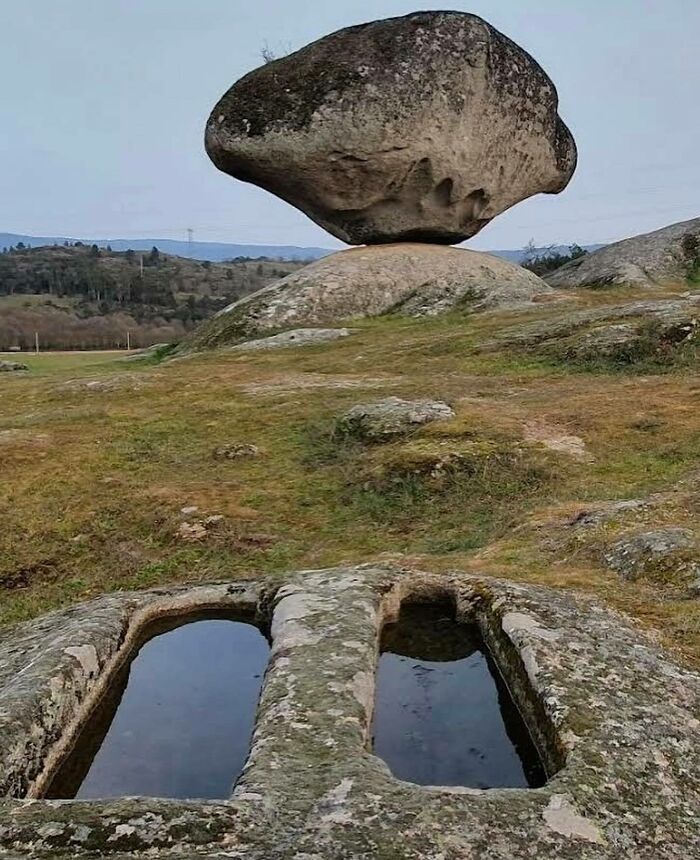
Celorico da Beira, Portugal
© Photo: magnificent_history
#50

© Photo: magnificent_history
#51
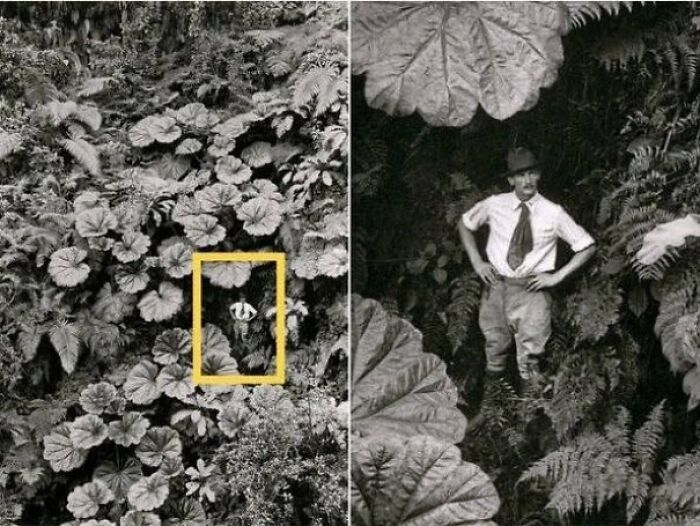
Giant vegetation near volcanoes. The Hawaiian island of Maui.
"The human figure gives a clear idea of the size of the green giant growing in a narrow gorge on the slope of the extinct volcano Haleakala," says the February 1924 issue of National Geographic.
© Photo: magnificent_history
#52
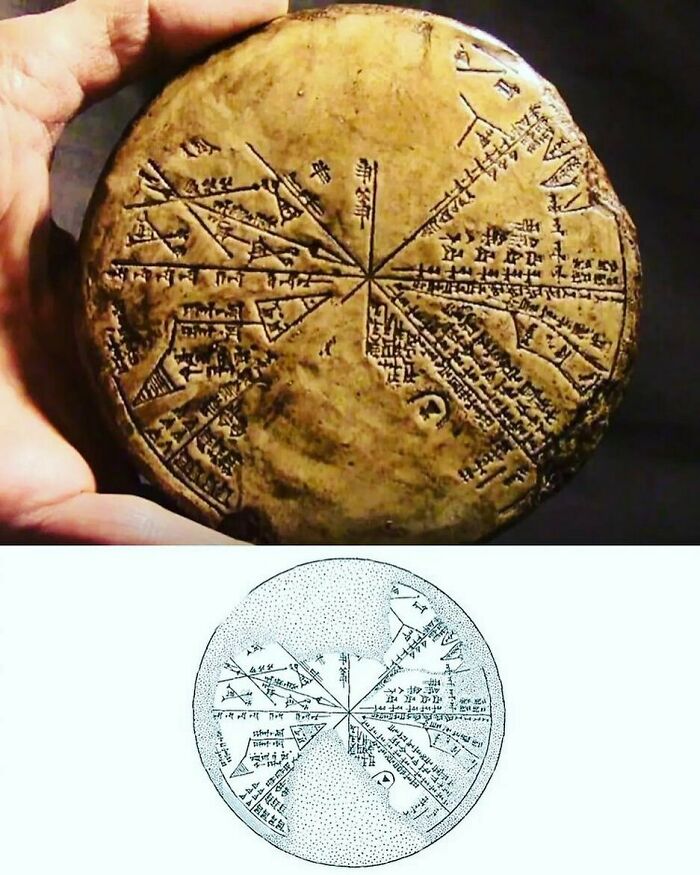
The artifact, which is kept in the British Museum, is a round clay tablet found in the library of King Ashurbanipal in Nineveh, Iraq. Initially, this artifact was identified by archaeologists as a find of Assyrian origin. According to Sitchin and other scientists, this would be evidence of high technology and possible contacts with extraterrestrial civilizations in ancient times. presenting the landing map of the god Enlil. It's actually an astrolabe: a star map is depicted on the table, and modern studies of Moderna archaeoastronomy have made it possible to understand how it was connected, in particular, with the sky that could be observed from Mesopotamia in 650 BC. The shapes identify the constellation known today as Gemini, then the Pleiades and two triangles mark the bright stars of Pegasus. Thus, the find dates back two and a half millennia after the Sumerians and about 600 years after the decline of the worship of Enlil in favor of Marduk, the Babylonian God, again replaced by Assur, the Assyrian God.
© Photo: magnificent_history
#53
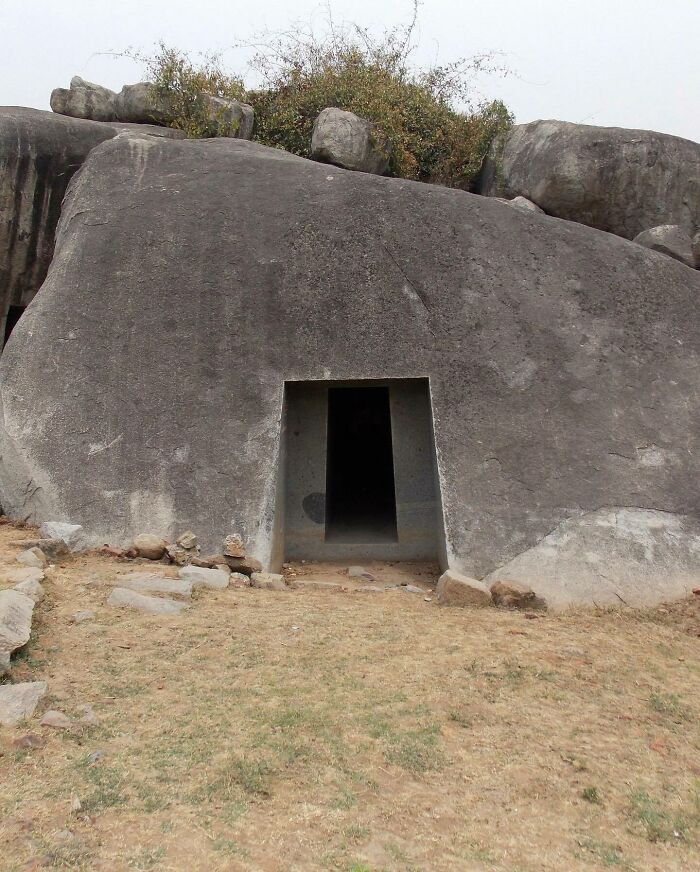
India. Nagarjuni, cave 2. The amazing quality of surface treatment. WOW
© Photo: magnificent_history
#54
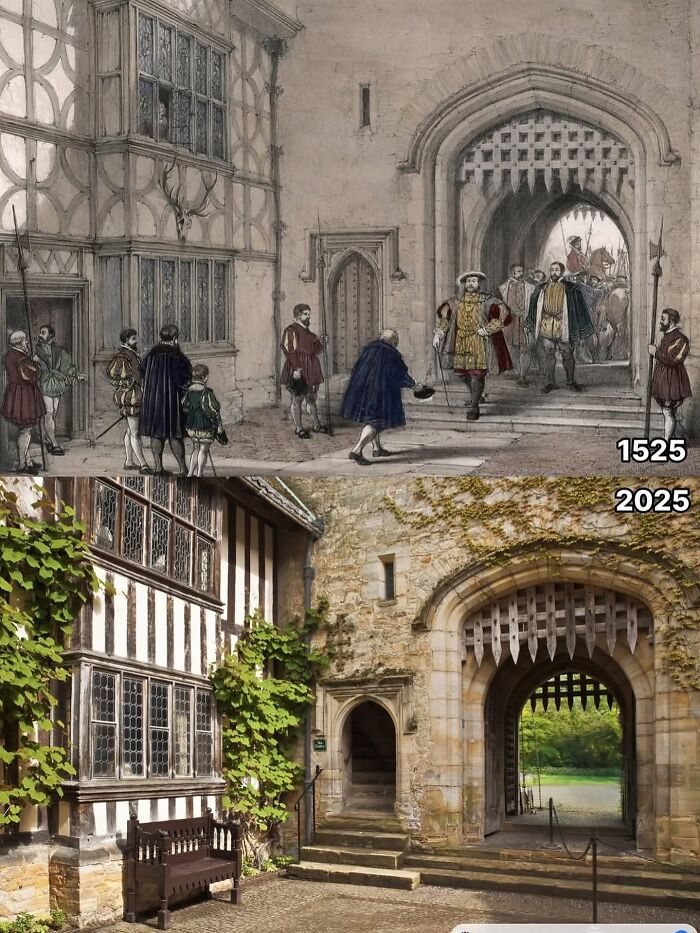
A 19th-century engraving by Joseph Nash depicts Henry VIII arriving at Hever Castle in Kent. The castle was the childhood home of Anne Boleyn, whose charm first caught the King’s attention within its walls. Their relationship set in motion the events that led to England’s break from the Catholic Church and transformed the nation’s monarchy and faith. Built in the 13th century and later home to the Boleyn family from 1462 to 1539, Hever Castle was where Anne spent her early years. After her father’s passing, it passed briefly to the King and then to his fourth wife, Anne of Cleves.
© Photo: magnificent_history
#55
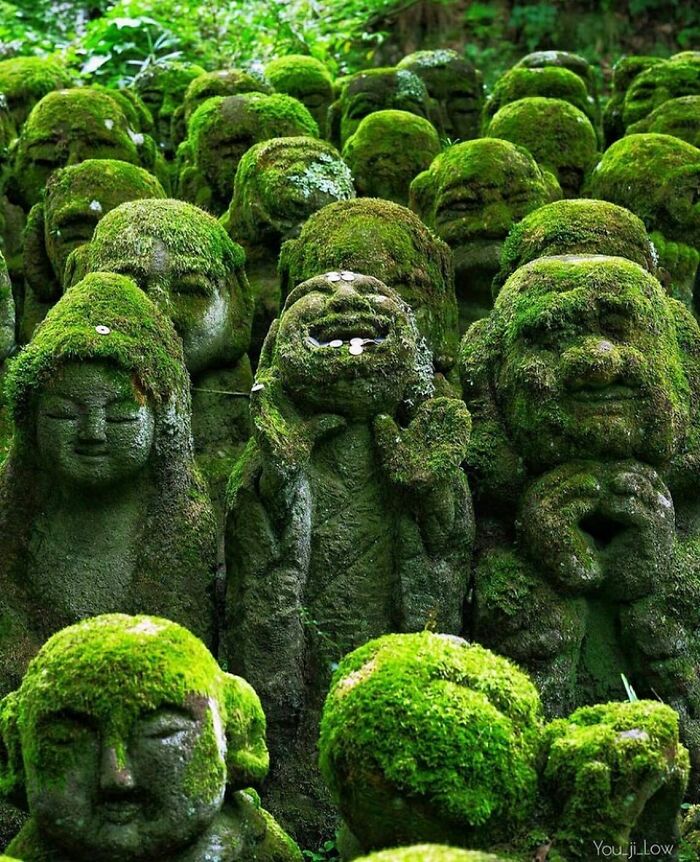
A temple called Otagi Nenbutsu-ji, hidden in the hills in the far west of Arashiyama with a collection of 1,200 Rakan statues. It's one of Kyoto, Japan's most unique and bizarre temples.
© Photo: magnificent_history
#56
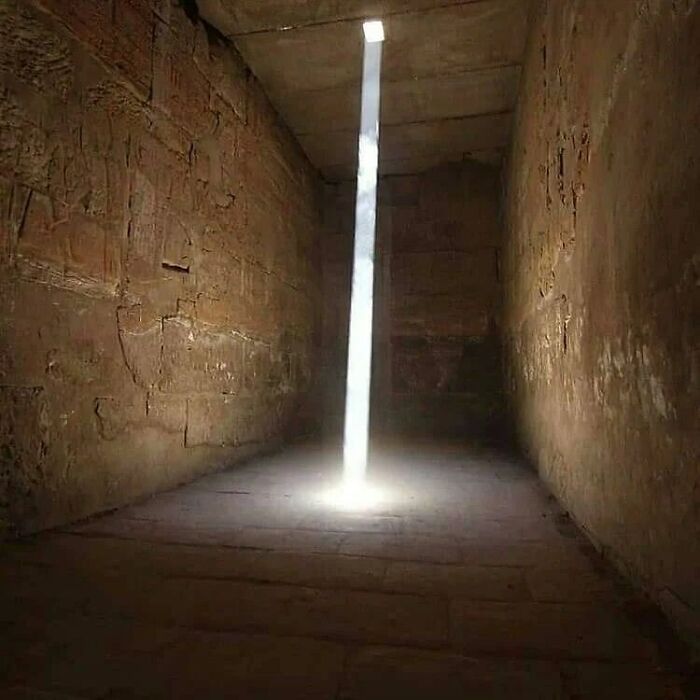
Light penetrates into the inner sanctuary of Amun-Ra in the temple of Ramesses in Karnak, Egypt.
© Photo: magnificent_history
#57
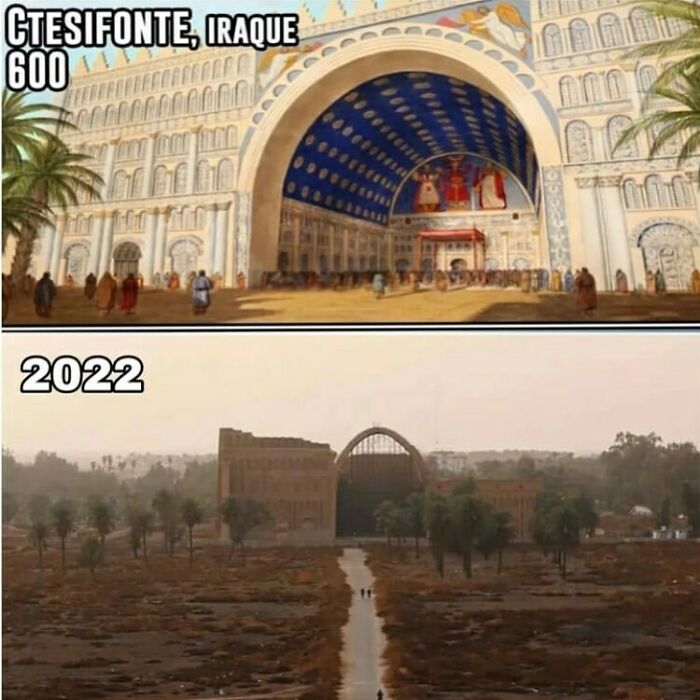
Ctesiphon was one of the main cities of Mesopotamia, it was the capital of the Parthian empire and later of the Sassanid one.
© Photo: magnificent_history
#58
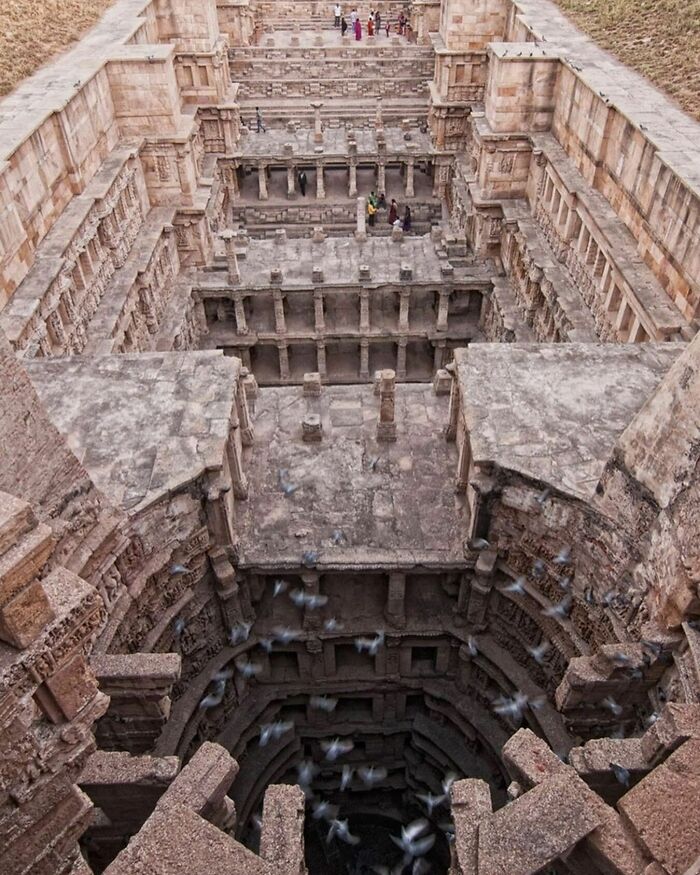
Unique well Rani-ki-Vav (Rani-ki-Vav), India.
Rani-ki-Vav is an underground stepped well located in Patan, Gujarat, India. The length of the well is 64 m, width 20 m, depth — 24 m. The stepped stairs are located on the east side, the water sources are on the west side. It is one of the largest examples of Gujarati step wells.
The name "Rani-ki-vav" translates as "The Well of the steps of the queen".
It is generally believed that the well was built by Udayamati, the widowed Queen Bhimdeva I (1022 — 1063 AD) in memory of the king. Bhimdev was the son of Mularaj, the founder of the Solanki dynasty in Patan. The well was later flooded by the nearby Saraswati River and was lost until the late 1980s, when it was discovered and excavated by archaeologists. During excavations, magnificent carvings and statues of the well were found in pristine condition.
Under its last step, which descends to the water, a 30-meter secret passage leading to the city of Sidhpur was discovered. Most likely, it was built in case of war, for the evacuation of the rulers of Patan.
In June 2014, "Rani-ki-vav" was included in the UNESCO World Heritage List.
Rani-ki-Vav is an architecture of great cultural significance for India. Today, Rani ki Vav is an important tourism destination in Gujarat.
© Photo: magnificent_history
#59
Then/Now
© Photo: magnificent_history
#60
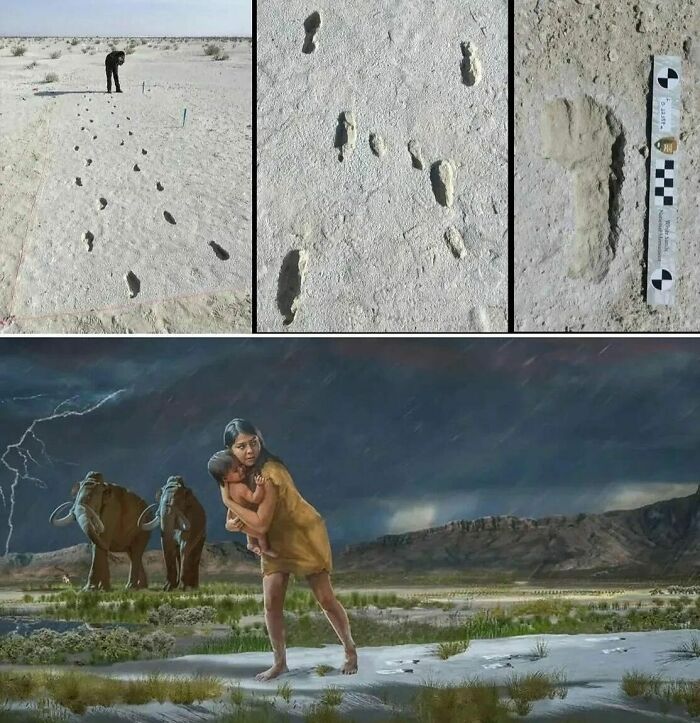
This very ancient chain of human footprints stretches for 1.5 km in White Sands National Park, USA. The footprints were left by a young girl (or a teenage boy) who went on a dangerous journey 13,000 years ago, carrying a 2-year-old child in her arms. These people were walking along the shore of the lake that has dried up now, the first chain of tracks was hurried, the man was moving at a speed of about 6 km / h, at times he lowered the baby to the ground, then picked him up again and hurried, often slipping.
The second chain goes in the opposite direction, the girl is no longer in a hurry, the steps are more confident, there are no traces of the child. Scientists do not know what the order of events was, whether she came for the child, with whom she then hurriedly left, or vice versa, hurriedly gave someone the baby and went back. In any case, the journey was very dangerous and desperate, the footprints of people crossed the footprints of saber-toothed cats, wolves and huge mammoths of Columbus.
© Photo: magnificent_history
#61
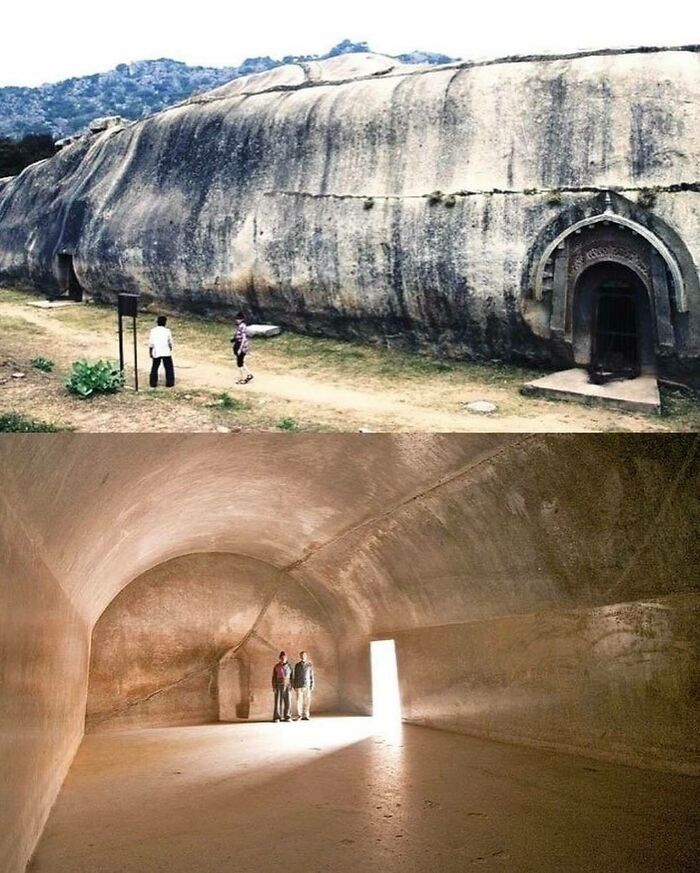
First photo: view of the entrance to the Lomas Rishi Cave (Barabar caves)
India (Bihar), our days.
The second photo: the same place in 1870.
What do you think?
© Photo: magnificent_history
#62
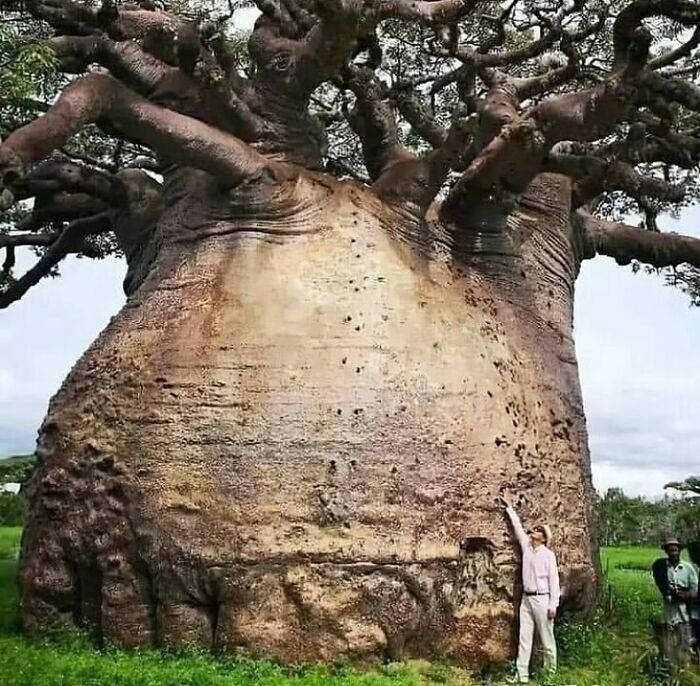
Baobab: Iconography of the "GB of Life" The majestic baobab is an icon of the African continent and is at the center of many African traditional and folk remedies. The baobab is a prehistoric species that predates humanity and the division of continents more than 200 million years ago.
Indigenous to the African savannah, where the climate is extremely dry and windy, it is a symbol of life and positivity in a landscape where nothing else can thrive. Over time, baobabs have adapted to their environment, they are succulent, which means that during the rainy season they absorb and store water in their large truck, which allows them to produce fruit rich in nutrients in the dry season, when all the places are dry and dry.
Thus, it became known as the "Tree of Life". Baobabs grow in 32 African countries. They can live up to 5,000 years, reach 30 meters in height and 50 meters in the ocean. Baobab trees can provide shelter, food and water for animals and humans, which is why many savannah communities have made their homes near bao trees.
© Photo: magnificent_history
#63
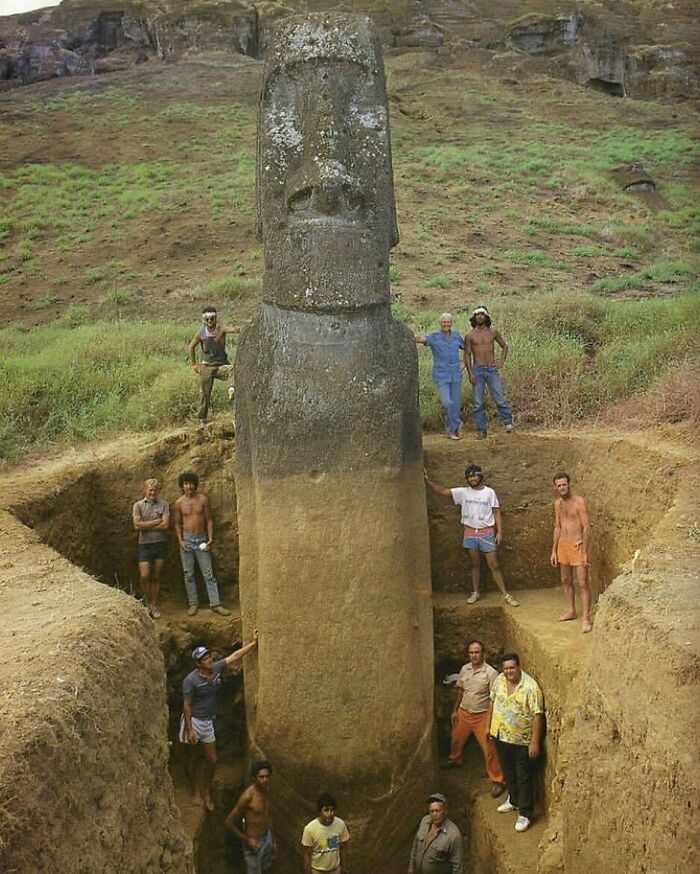
A Moai statue unearthed during excavations on Easter Island. Approximately 1000 statues, the largest of which is 10 meters long and weighs 82 tons
© Photo: magnificent_history
#64
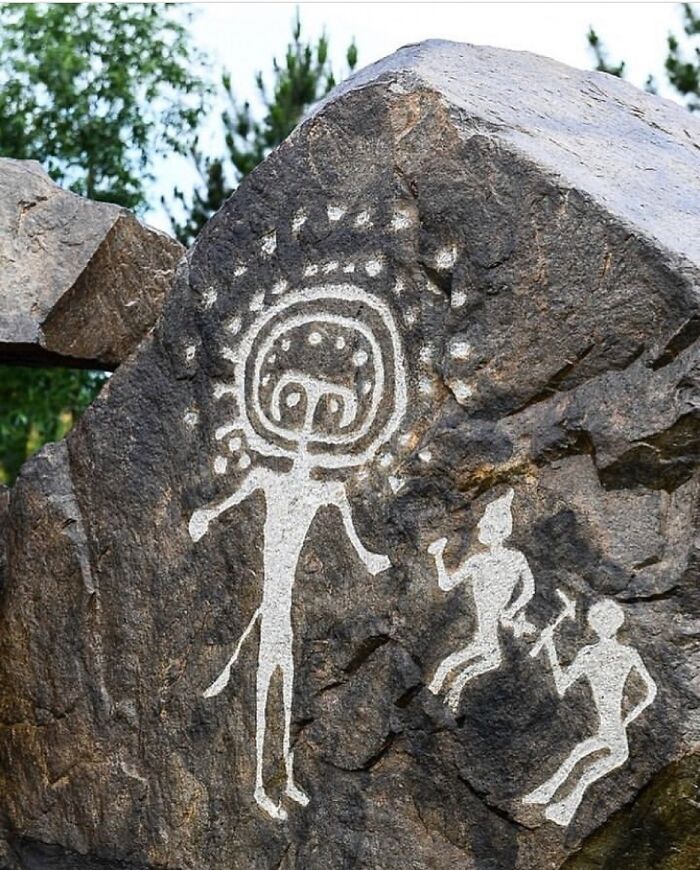
There are many unregistered petroglyphs in Kazakhstan.
© Photo: magnificent_history
#65
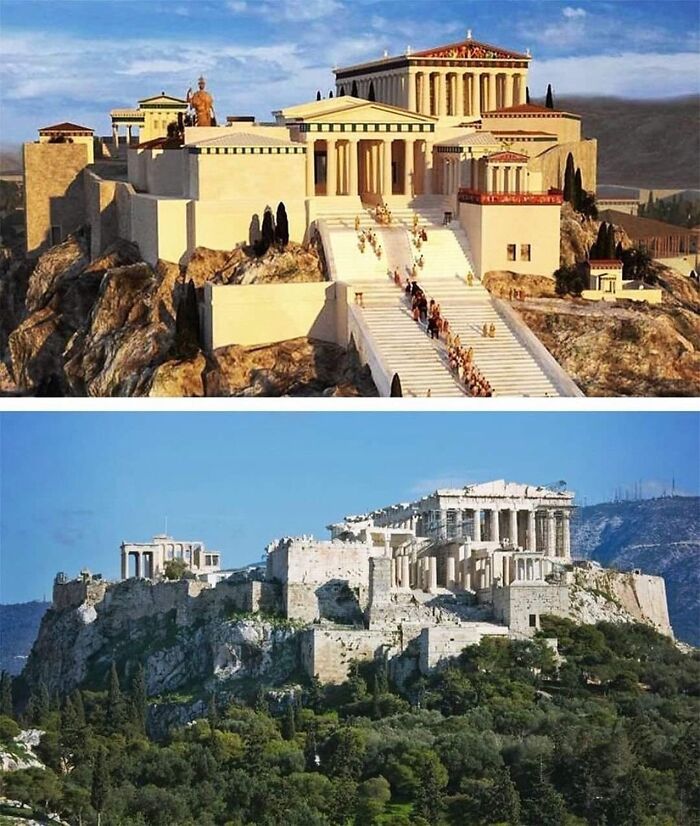
Then / Now
© Photo: magnificent_history
#66
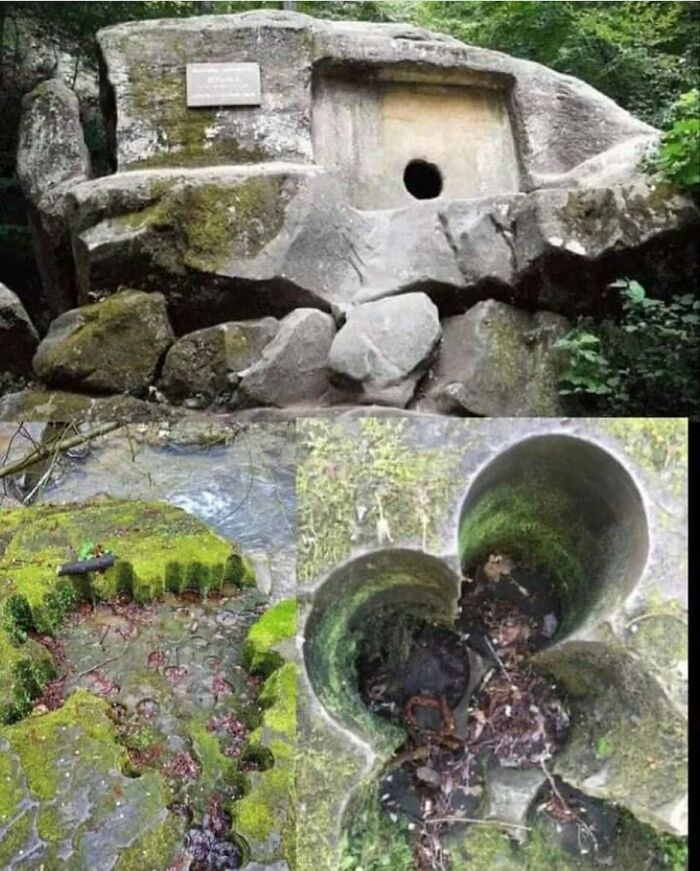
Ancient Megaliths
© Photo: magnificent_history
#67
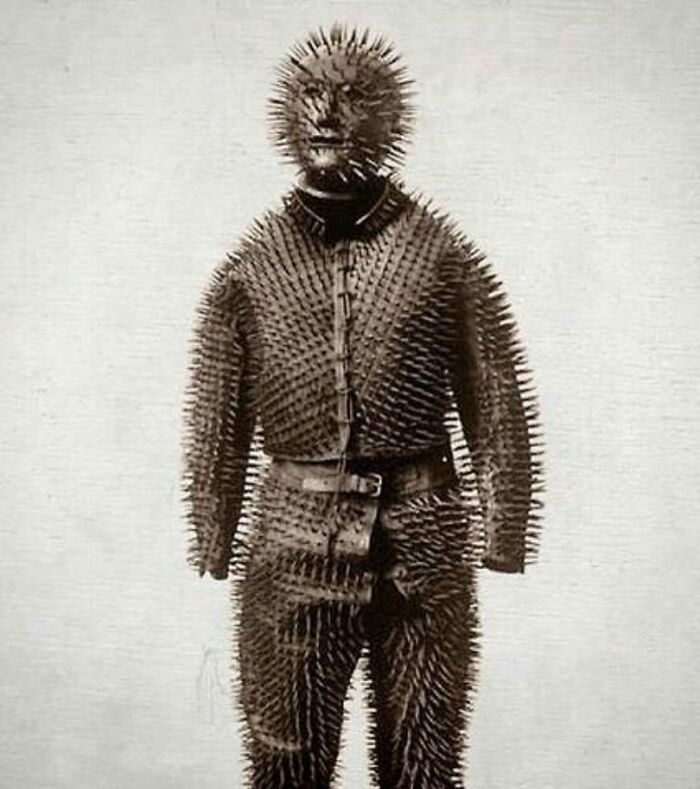
Siberian Bear Hunting Costume
© Photo: magnificent_history