

At some point between 18 and 30, the truth about adulthood arrives, and it is nothing like the brochure. The brochure said freedom, independence, and making your own rules. The reality is a grocery bill that keeps climbing, a bedtime you now enforce on yourself, and the creeping suspicion that everyone else has figured something out that you have not.
The internet has been processing this collective disappointment through memes, and the results are uncomfortably accurate. Not the inspirational kind of accurate. The one where you laugh a little, which then fades into a whimper. These are the ones that hit closest to home, so we can write this off as group therapy.
#1
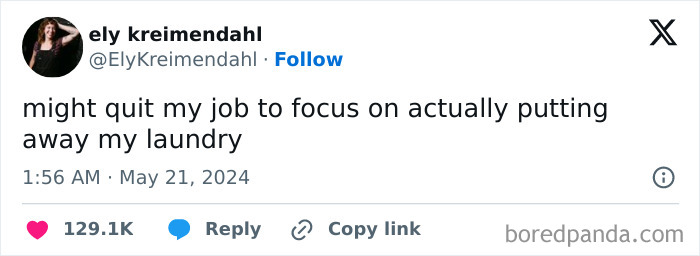
© Photo: ElyKreimendahl
#2

© Photo: SwaGGTheRapper
#3
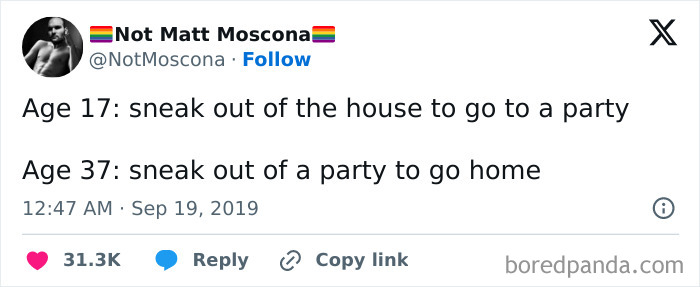
© Photo: NotMoscona
The uncomfortable truth about adulthood is that nobody actually knows what they are doing, and the research puts our minds at ease. Psychologists Pauline Clance and Suzanne Imes coined the term “imposter syndrome” to describe the experience of intellectual self-doubt that makes you feel uniquely underprepared for your own life, and between 70% and 82% of the population experiences it at some point.
The particularly deflating detail is that it does not resolve with experience, promotions, or advanced degrees. Physicians and academics report it at remarkably high rates, which means the surgeon about to operate on someone and the person Googling whether they can eat week-old leftovers are, psychologically speaking, in very similar territory.
The reason it persists is structural: you have front-row seats to your own internal panic and indecision, while everyone else only shows you their polished exterior. The asymmetry is the whole problem.
#4
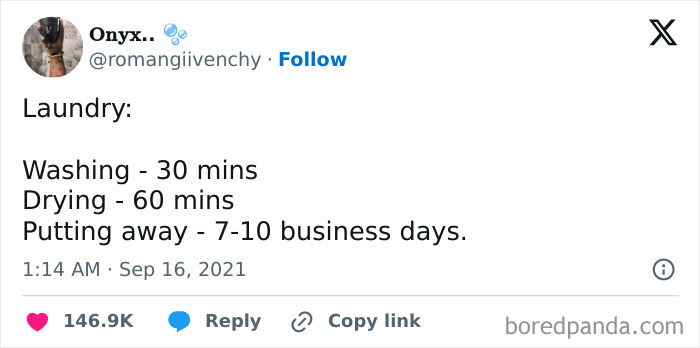
© Photo: romangiivenchy
#5

© Photo: hashjenni
#6
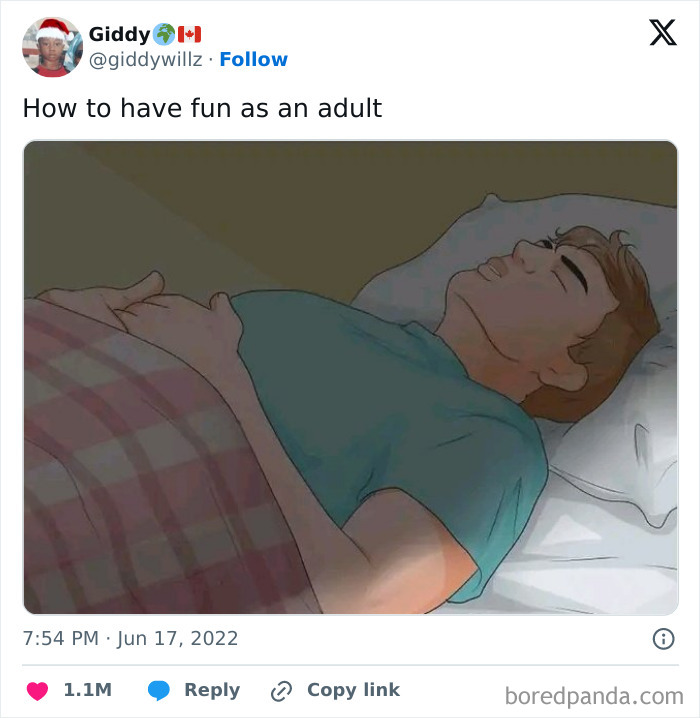
© Photo: giddywillz
On top of all the self-doubt, the body starts its own agenda, completely independent of how you feel about it. Baseline metabolism drops by roughly 1% to 2% per decade from your late 20s onward, tied directly to the age-related loss of muscle mass that begins around 30. Because muscle burns more calories at rest than fat, losing it means your body requires less energy even if nothing about your diet has changed, which is one of the more devastating pieces of biology available.
The sound your joints make when you stand up, the clicking and popping that your body never used to produce, even has a name: crepitus. It happens when synovial fluid thins and cartilage wears slightly, causing tendons to snap over bony projections. It is the sound of structural wear and tear and of your body decomposing in real time.
#7
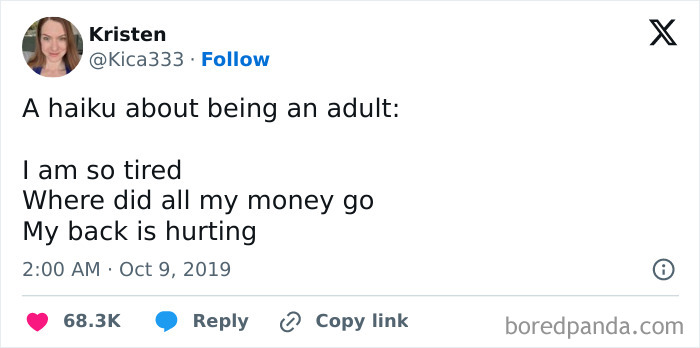
© Photo: Kica333
#8

© Photo: Highoffantt
#9
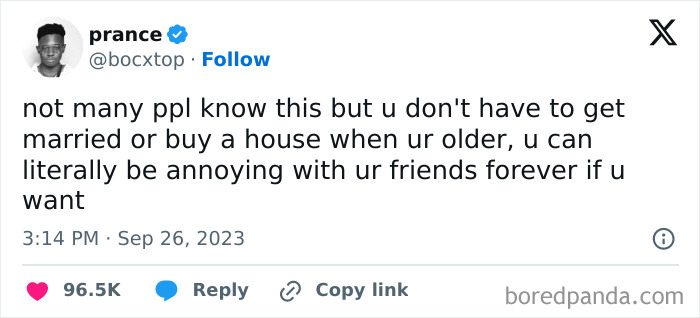
© Photo: bocxtop
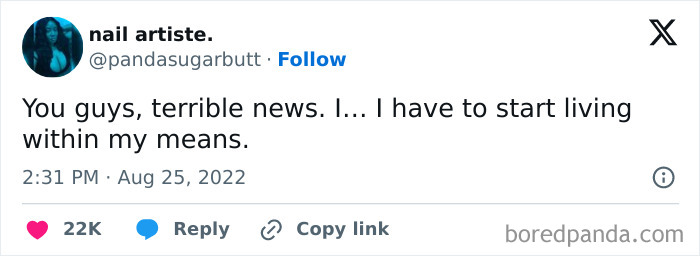
The financial architecture of adulthood has also shifted, making all the panic seemed justified. In 1975, the typical American home cost roughly 3.5 times the median household income. By mid-2026, that ratio had reached 7.13 times the median income. That means in one generation it has become double as expensive to just get by.
The path around this, theoretically, is higher education leading to higher income, except that the average Gen Z borrower currently carries a student loan balance 13% higher than a Millennial held at the exact same age, even adjusted for inflation. The system requires young adults to spend their early financial lives paying interest before they can begin saving for the thing the education was supposed to make accessible. The math was never going to work, and no one warned us.
#10
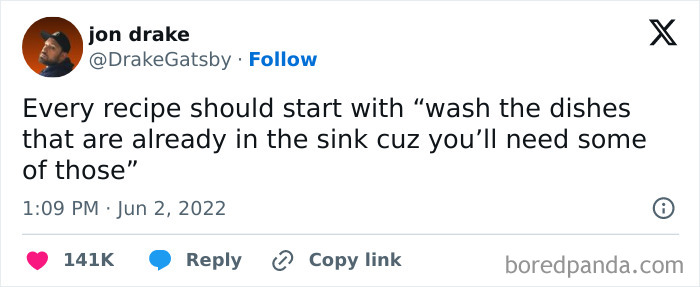
© Photo: DrakeGatsby
#11
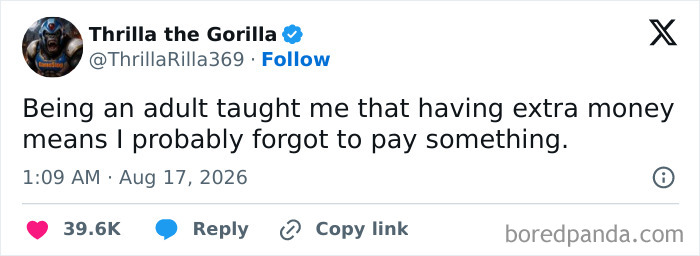
© Photo: ThrillaRilla369
#12
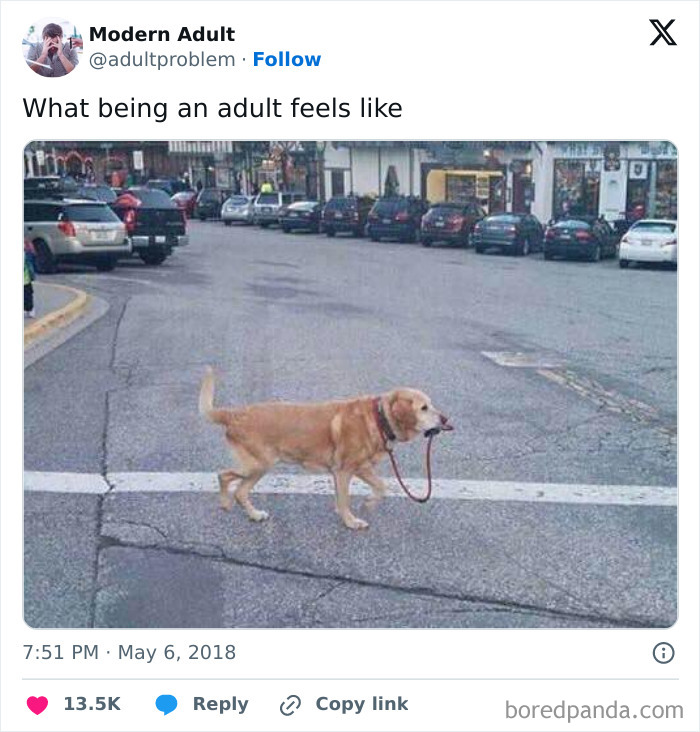
© Photo: adultproblem
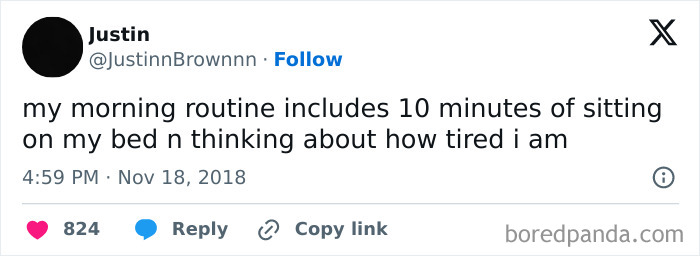
If you feel like you're fighting to stay awake just reading this, you are not alone. Roughly 75% of adults report feeling very tired or exhausted on multiple days, and nearly a third of the population is not meeting the medical minimum of seven hours of sleep per night.
What makes this generation's fatigue different from previous ones, though, is where the tired comes from. Prior generations were physically tired from physical labor. Modern exhaustion is structural, cognitive, and systemic. Your mental load does not release when the laptop closes because the mental load does not have a laptop. So we should go back to simpler times, before all our troubles were digitised and filed into our brain compartments.
#13
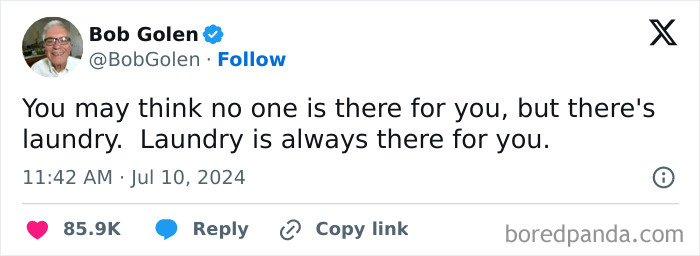
© Photo: BobGolen
#14
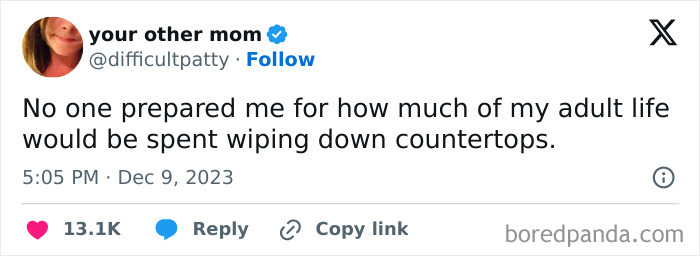
© Photo: difficultpatty
#15
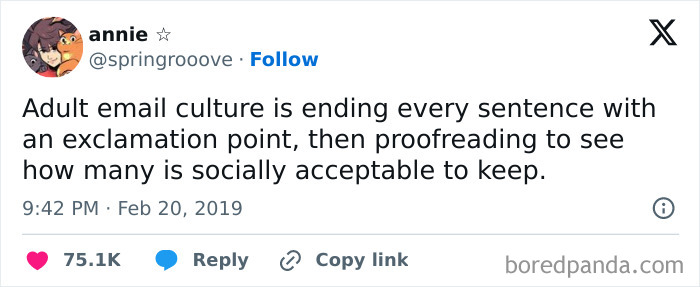
© Photo: springrooove
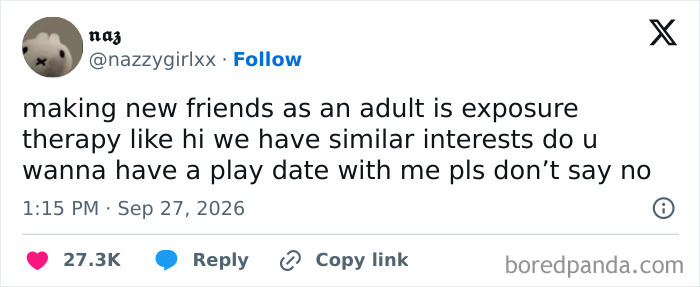
And if you feel like the social contracts in your 20s are impossible to keep up with, it's not something you are imagining. A landmark joint study by Aalto University and Oxford University analyzed mobile data from over three million users and found that human social circles peak at exactly age 25, after which they steadily decrease for the next two decades.
The environments that made earlier friendships effortless, like shared classrooms, shared dormitories, and shared proximity by default, disappear at the exact moment that adulthood makes building new bonds so much more complex. Making a friend at 32 demands scheduling, sustained effort, and a mutual willingness to be vulnerable with someone you have only known for eighteen months. At eight, it required just sitting next to each other.
#16
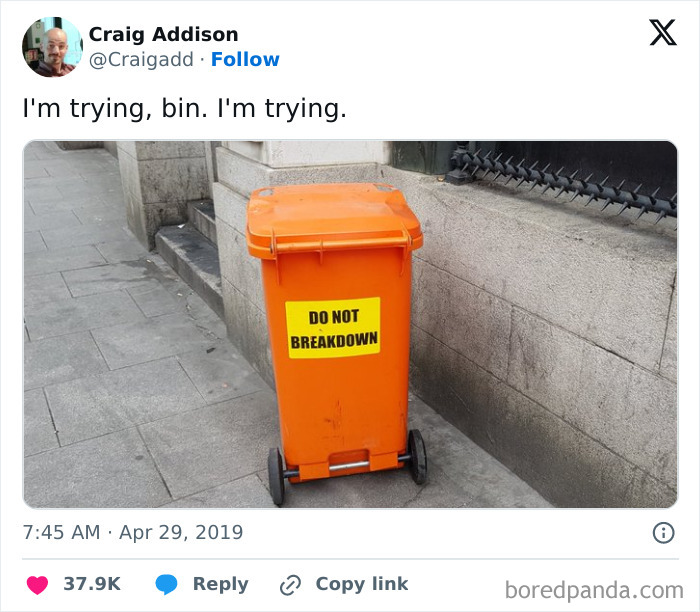
© Photo: Craigadd
#17
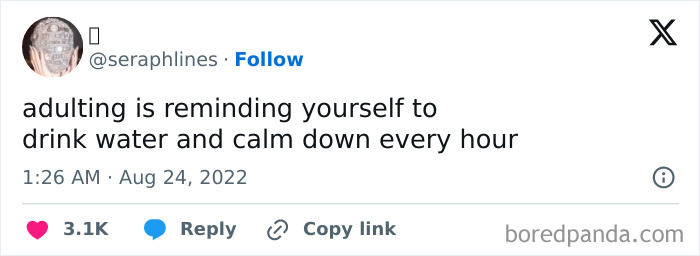
© Photo: seraphlines
#18
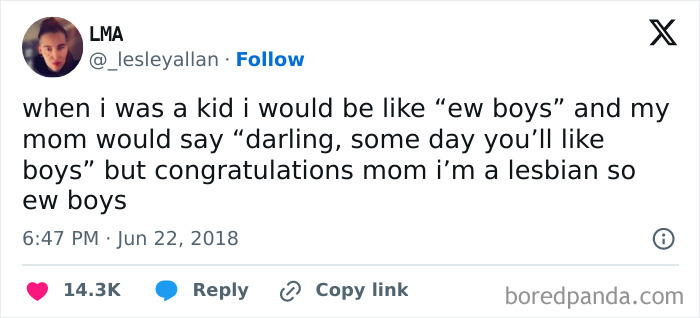
© Photo: _lesleyallan
The humbling thrill that arrives when you find the perfect sponge or a candle that smells exactly right is not a personality collapse. Experts say it is a neurological reorganization. At 16, the brain is built to crave high-octane novelty, but by 30, it has shifted toward craving allostasis, the experience of stability and the mitigation of chaos.
The reward system has been recalibrated by experience and responsibility, and what now registers as genuinely pleasurable is a quiet morning, a functional household, and a cleaning product that actually works. You did not become boring, so stop stressing. Your brain updated its priorities, and a good candle is now the answer to several of your problems.
#19
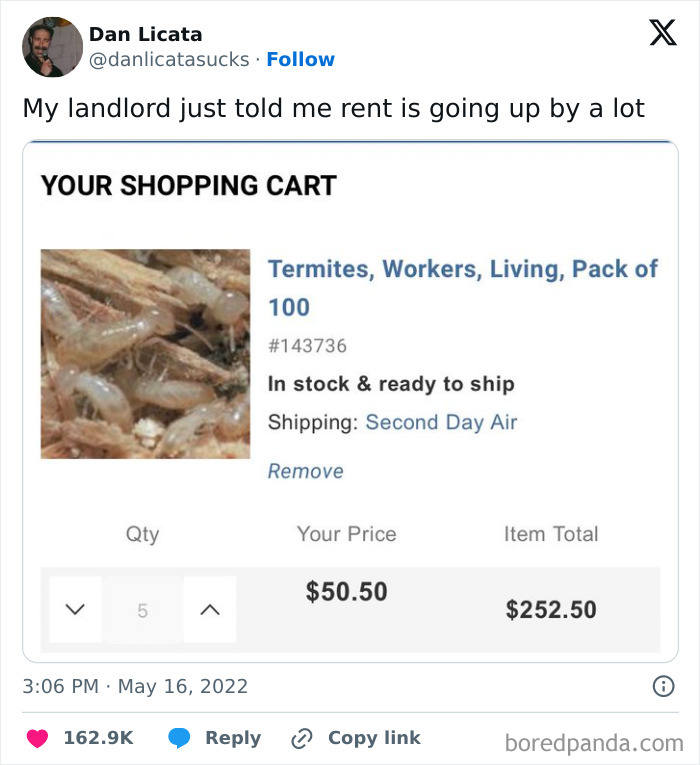
© Photo: danlicatasucks
#20
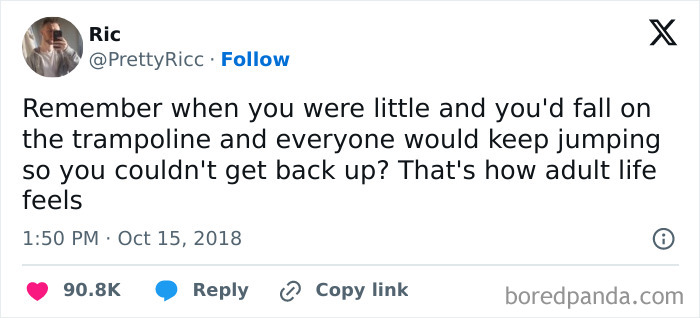
© Photo: PrettyRicc
#21
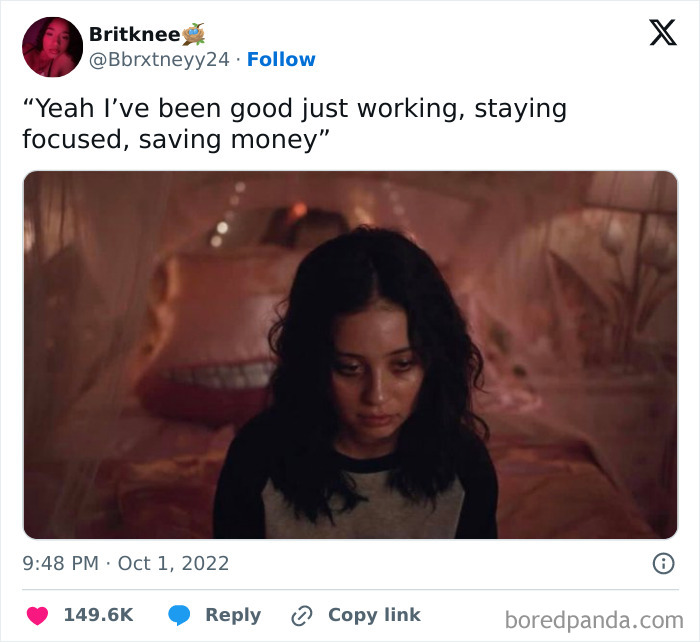
© Photo: Bbrxtneyy24
Sociologist Elizabeth Emens defines "life admin" as the invisible, office-like work required to run a household. Trigger warning: processing paperwork, balancing budgets, managing calendars, and negotiating with service providers. The problem is that instead of stepping away from a desk to rest, adults step away from a professional desk to sit at a domestic one. The psychological context changes but the neurochemical strain on the brain's prefrontal cortex remains completely identical.
When Saturday becomes a secondary shift of domestic labor, the brain registers the environment as continuously demanding, keeping cortisol and adrenaline subtly elevated. Over months and years, the absence of what researchers call an "allostatic reset" degrades sleep quality, suppresses immune function, and produces burnout that feels impossible to explain because technically you did not work this weekend.
#22
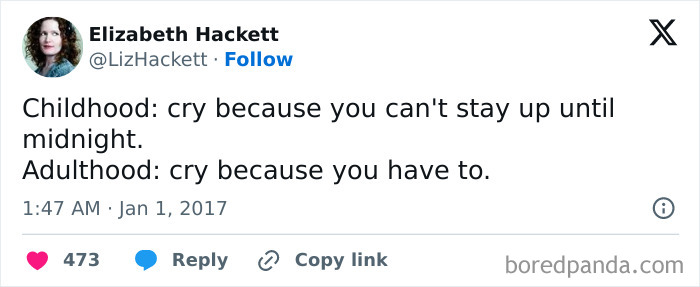
© Photo: LizHackett
#23
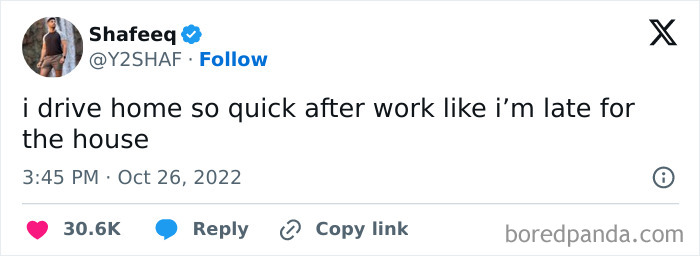
© Photo: Y2SHAF
#24

© Photo: a_bi_gal
Do you know the feeling that everyone else received a manual for adulthood that somehow never arrived for you? Social scientists call it the "comparison trap," and it existed way before the internet made it louder. Psychologist Leon Festinger's Social Comparison Theory, developed in 1954, proved that humans naturally measure their own worth against those around them in the absence of objective benchmarks.
What modern technology changed is the parameters. Algorithmically engineered feeds do not show you an accurate cross-section of other people's lives. They show you the peaks, the announcements, the highlight moments, calibrated to produce engagement. Your brain is running a social comparison on a dataset that has been specifically curated to make you feel behind. Knowing this sadly does not fully fix it. But it is at least a more accurate thing to be annoyed about.
#25
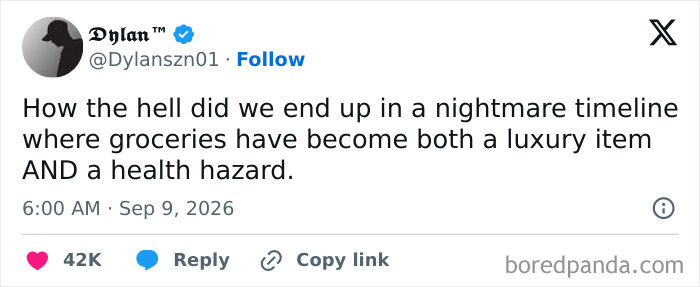
© Photo: Dylanszn01
#26
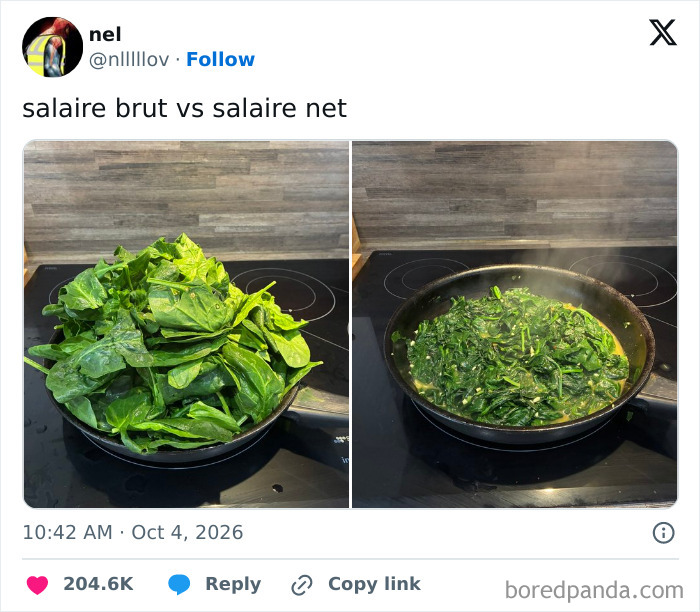
© Photo: nlllllov
#27
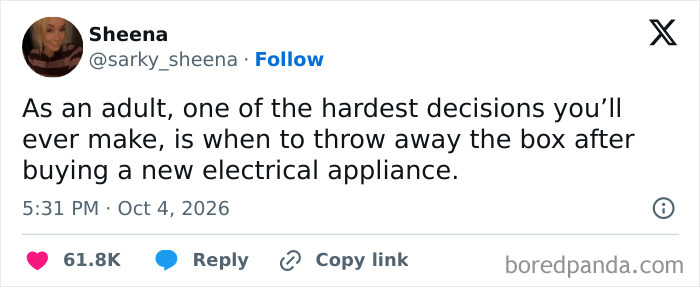
© Photo: sarky_sheena
#28
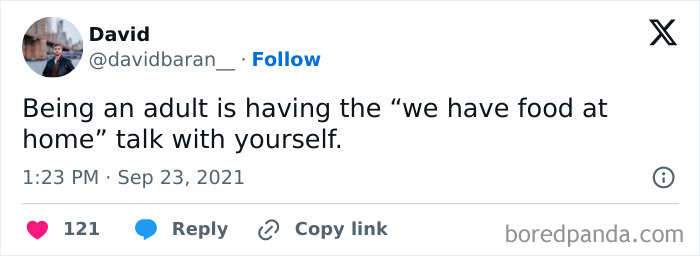
© Photo: davidbaran__
At this point, the best thing we can do for our own sanity is to openly admit that "we ain't got this." We can find solidarity and solace in our communal ignorance, and then slowly start to rebuild a more accurate version of what adulthood really is.
It is treading water, trying to eat enough vegetables, fighting to have a positive balance in your account at the end of the month, while everything around you is on fire. But hey, at least we are all doing it, so somehow that makes it all ok.
Tell us what your most hilarious observation about adulthood is in the comments!
#29

© Photo: 9GAG
#30
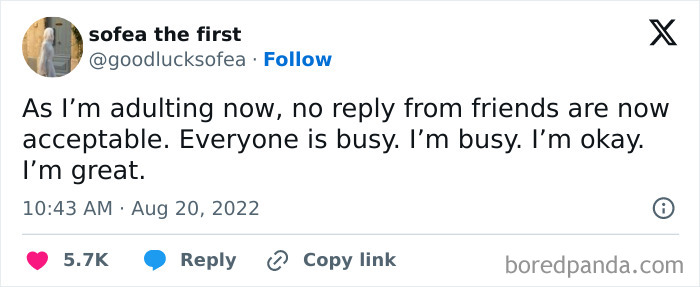
© Photo: goodlucksofea
#31
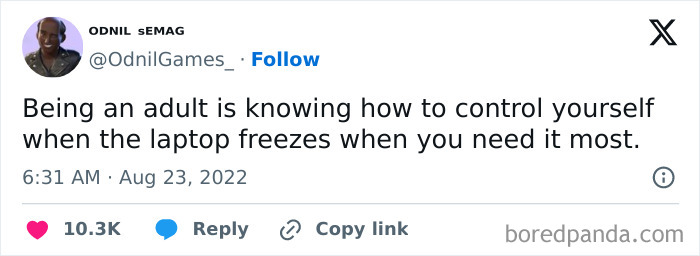
© Photo: OdnilGames_
#32
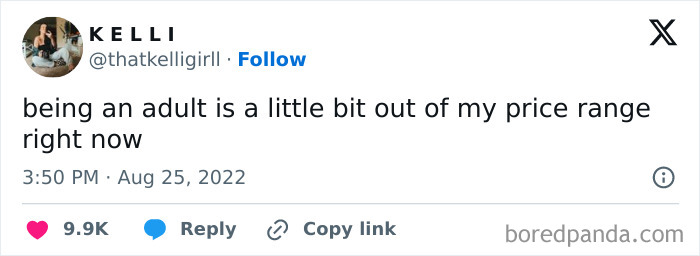
© Photo: thatkelligirll
#33
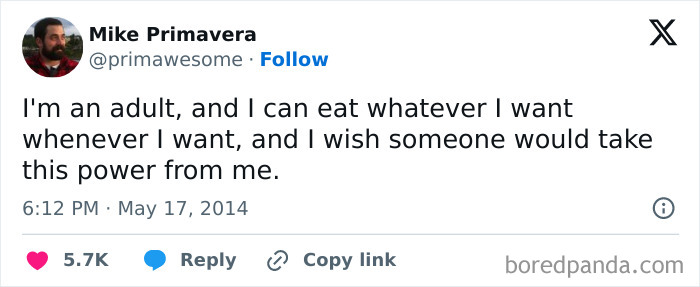
© Photo: primawesome
#34
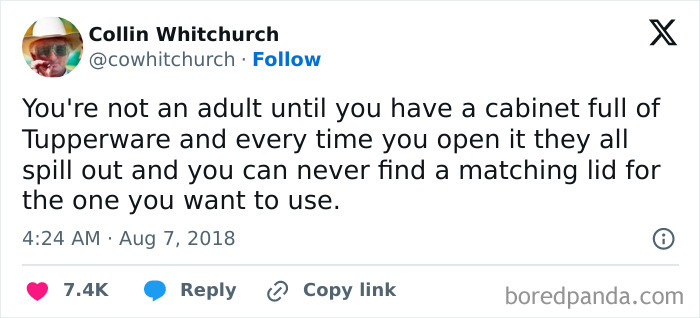
© Photo: cowhitchurch
#35
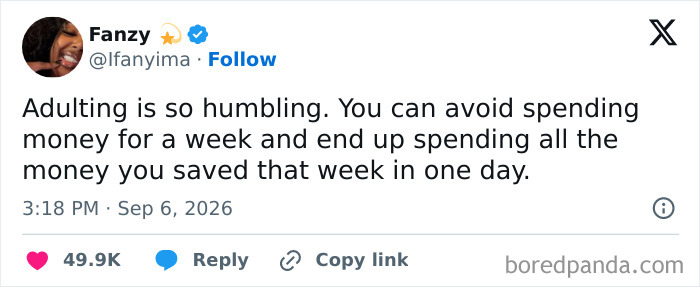
© Photo: Ifanyima
#36
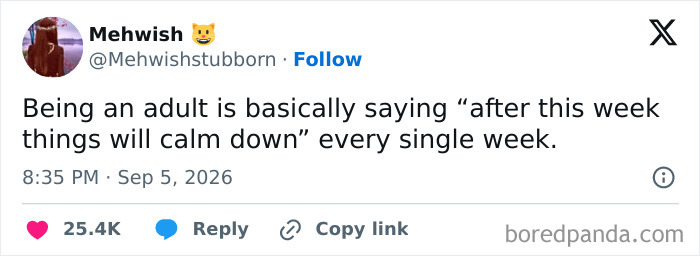
© Photo: Mehwishstubborn
#37
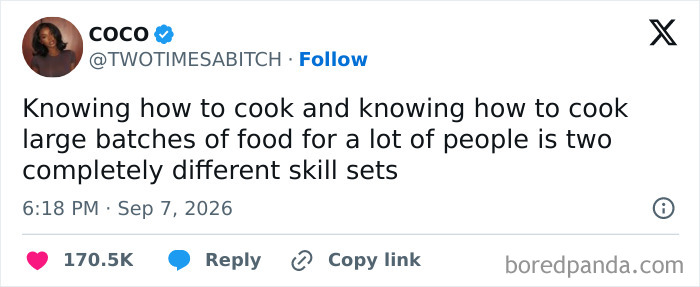
© Photo: TWOTIMESABITCH
#38
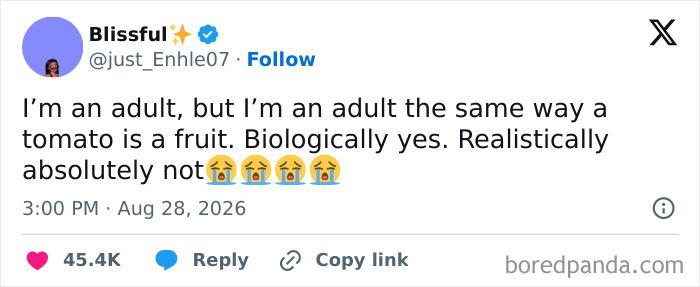
© Photo: just_Enhle07
#39
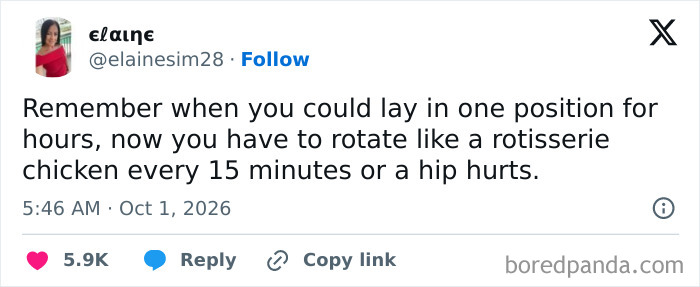
© Photo: elainesim28
#40
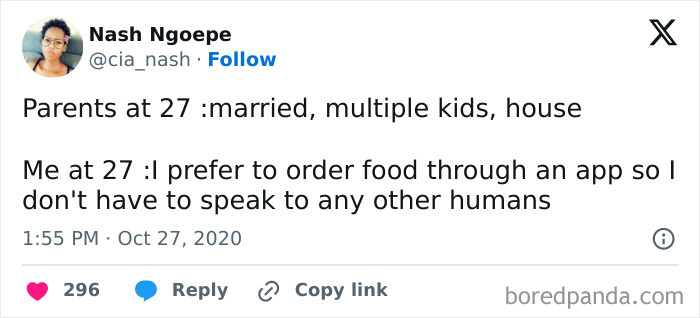
© Photo: cia_nash
#41
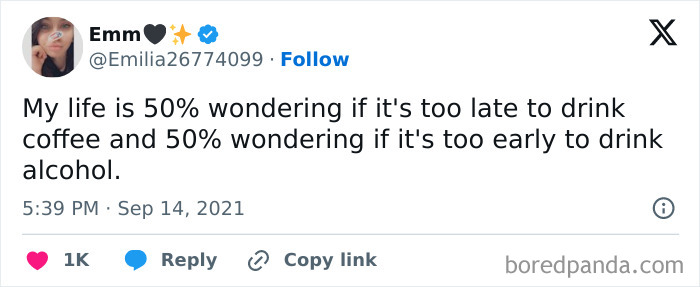
© Photo: Emilia26774099
#42
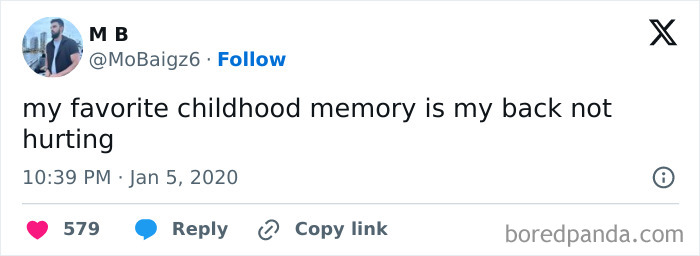
© Photo: MoBaigz6
#43
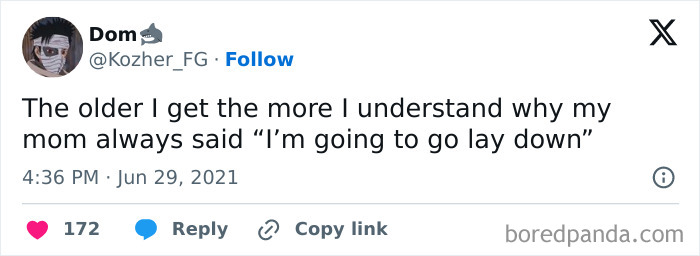
© Photo: Kozher_FG
#44
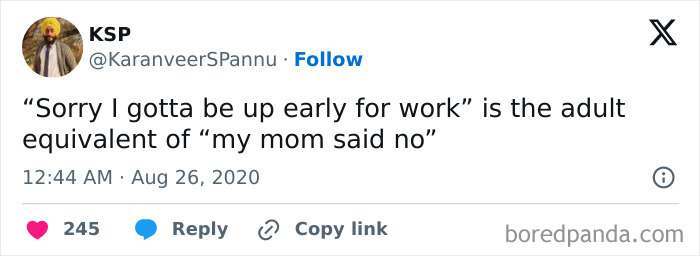
© Photo: KaranveerSPannu
#45
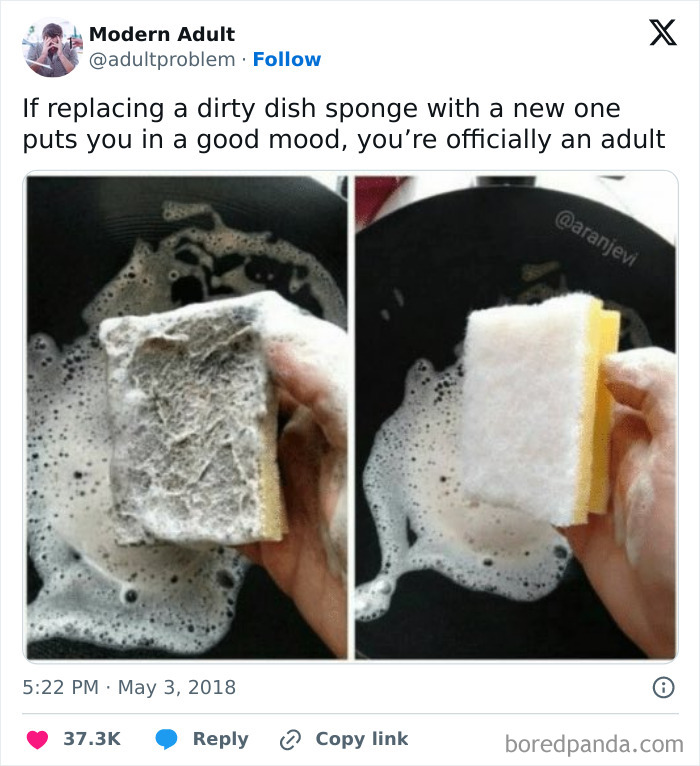
© Photo: adultproblem
#46
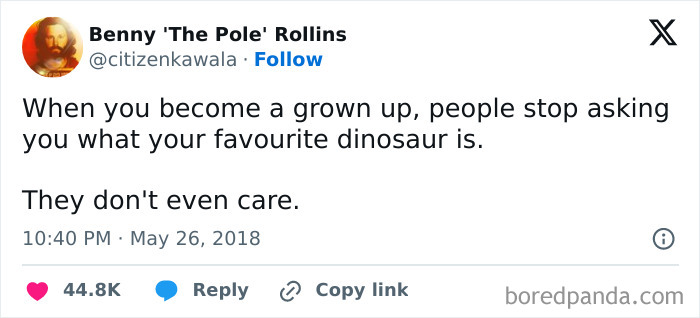
© Photo: citizenkawala
#47
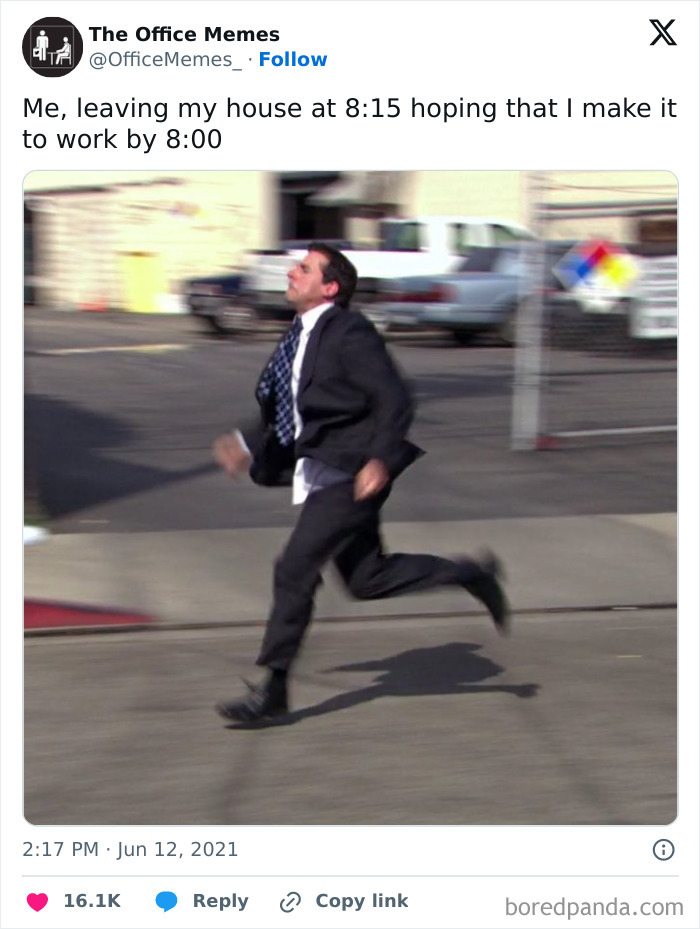
© Photo: OfficeMemes_
#48
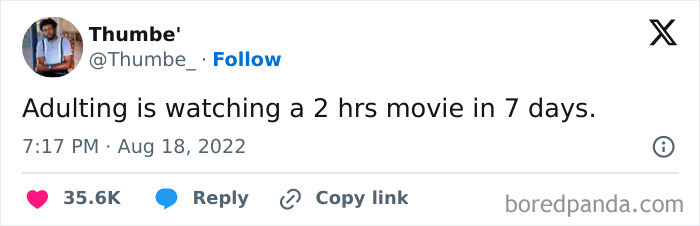
© Photo: Thumbe_
#49
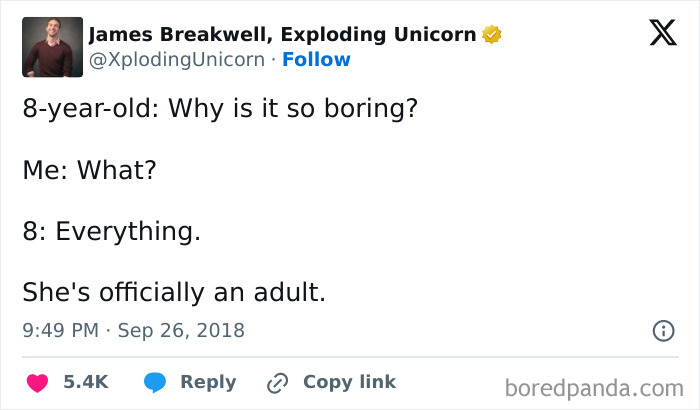
© Photo: XplodingUnicorn
#50
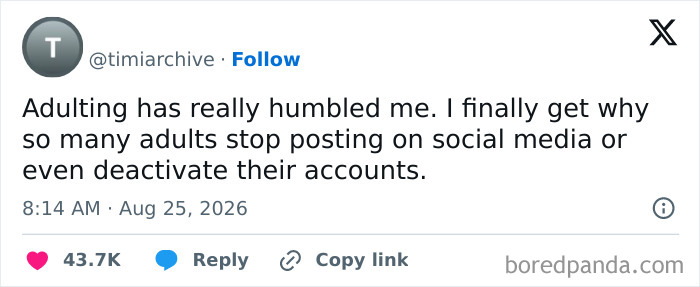
© Photo: timiarchive
#51
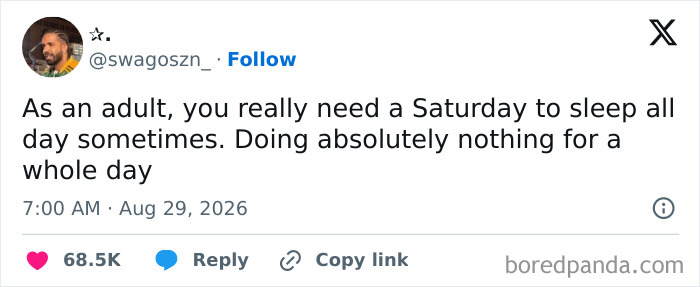
© Photo: swagoszn_
#52
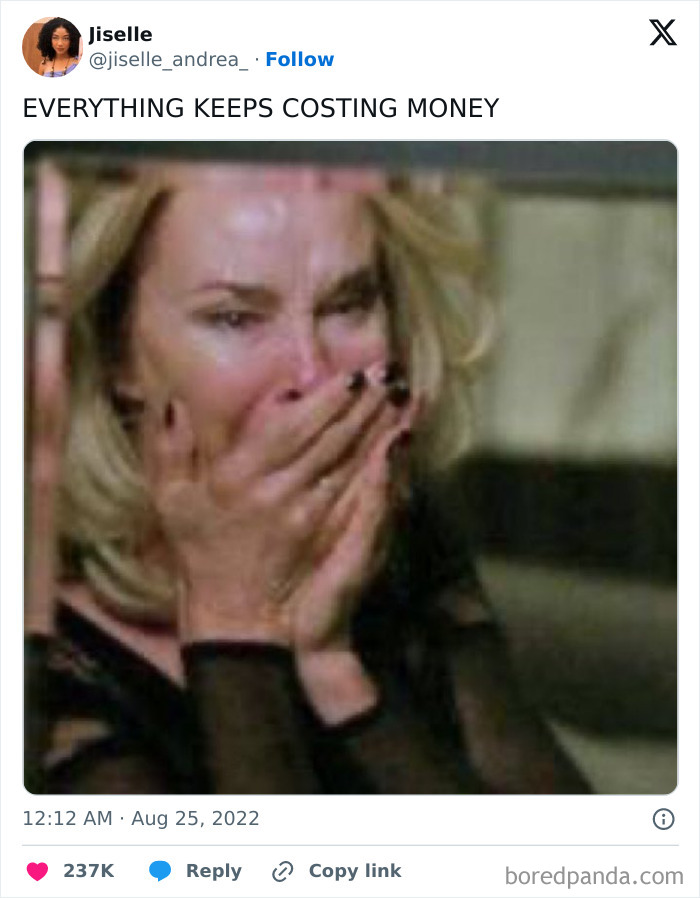
© Photo: jiselle_andrea_
#53
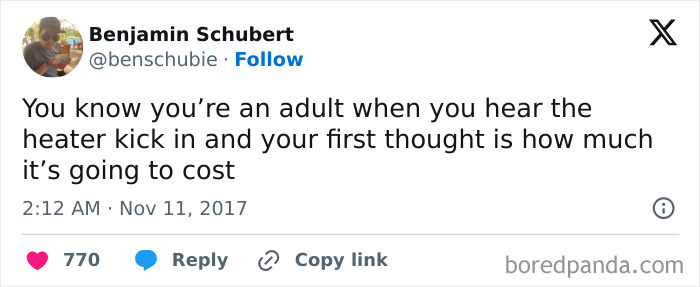
© Photo: benschubie
#54
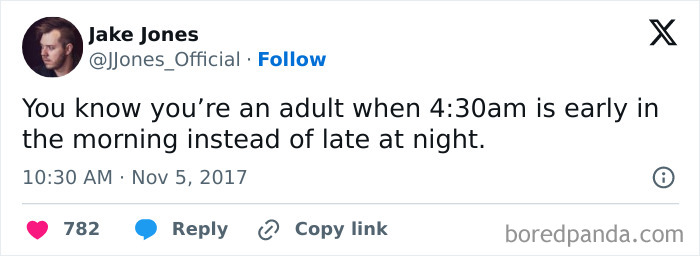
© Photo: JJones_Official
#55
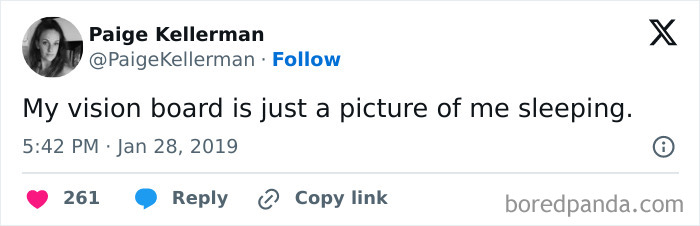
© Photo: PaigeKellerman
#56
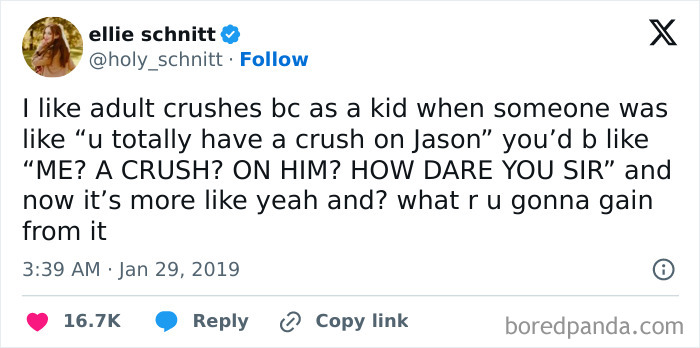
© Photo: holy_schnitt
#57
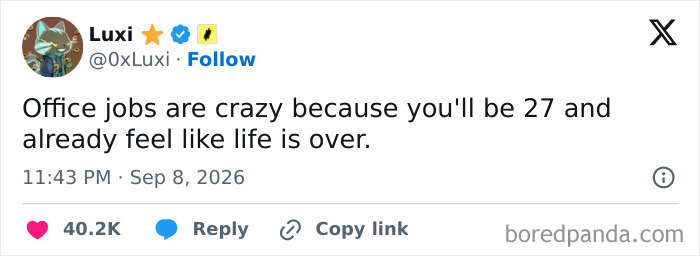
© Photo: 0xLuxi
#58
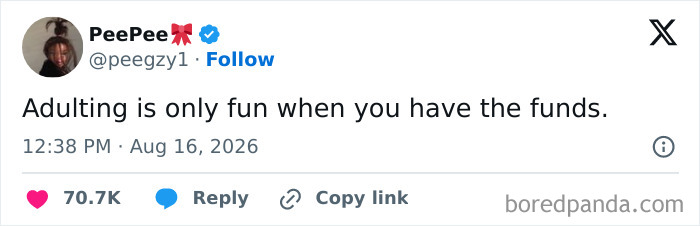
© Photo: peegzy1
#59
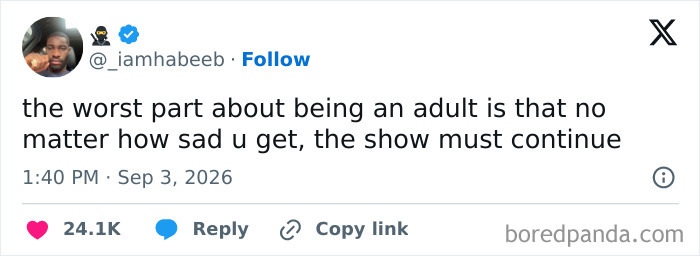
© Photo: _iamhabeeb
#60
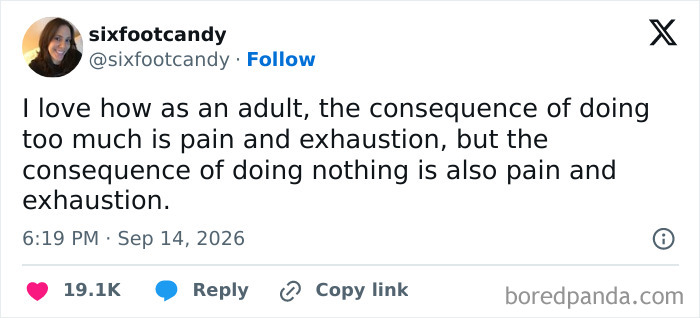
© Photo: sixfootcandy
#61
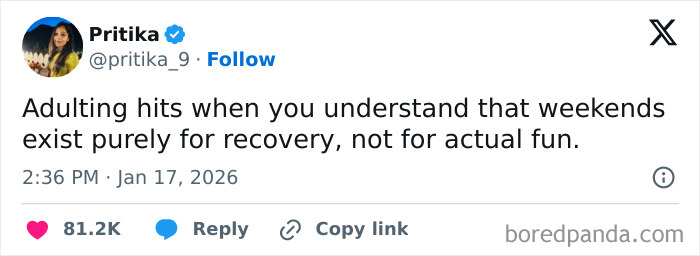
© Photo: pritika_9
#62
© Photo: nazzygirlxx
#63
© Photo: JustinnBrownnn
#64
© Photo: NgwanaMopedi1
#65
© Photo: pandasugarbutt
#66
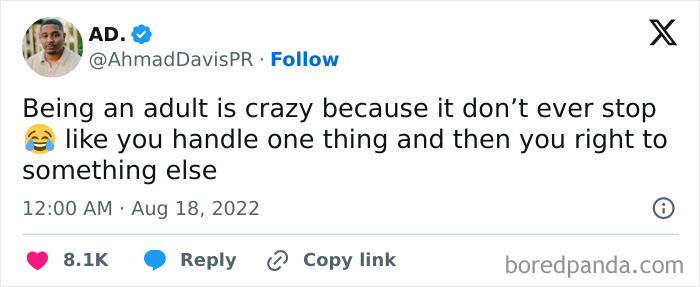
© Photo: AhmadDavisPR
#67
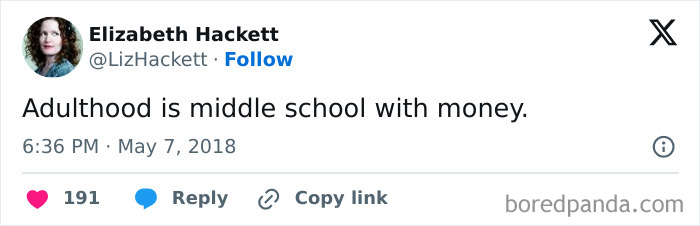
© Photo: LizHackett
#68
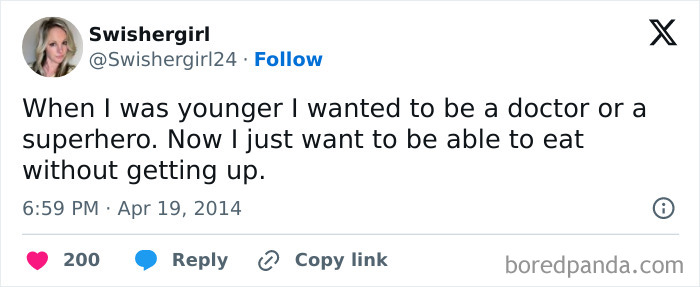
© Photo: Swishergirl24
#69
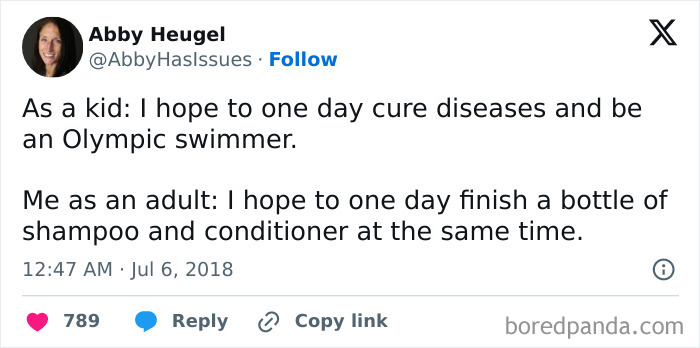
© Photo: AbbyHasIssues
#70
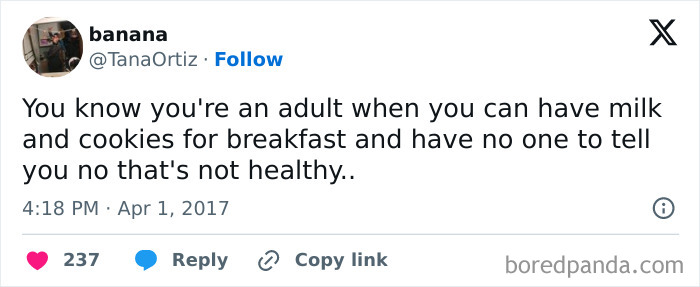
© Photo: TanaOrtiz
#71
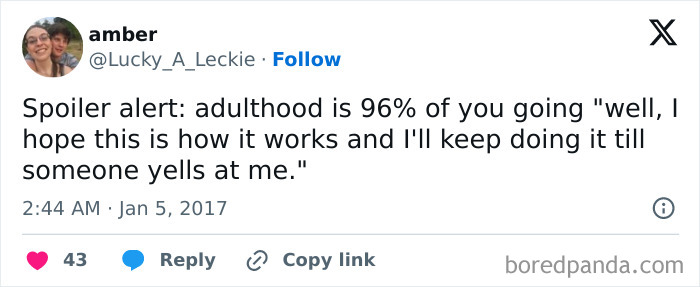
© Photo: Lucky_A_Leckie
#72
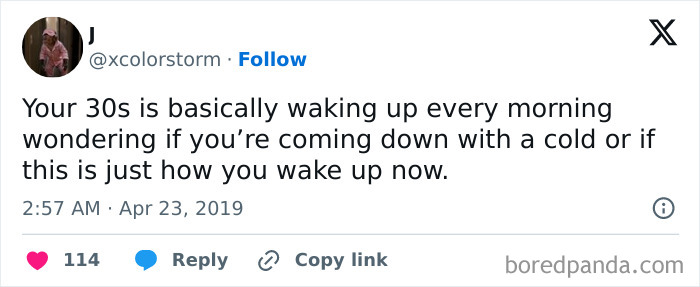
© Photo: xcolorstorm
#73
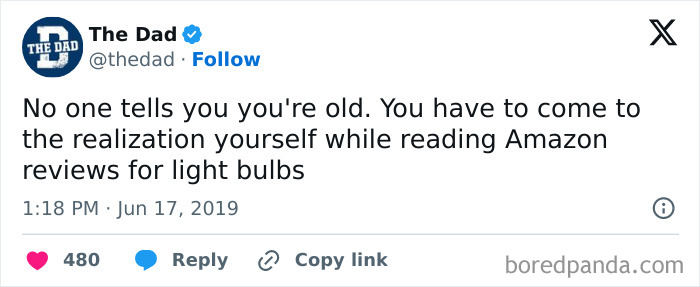
© Photo: thedad
#74
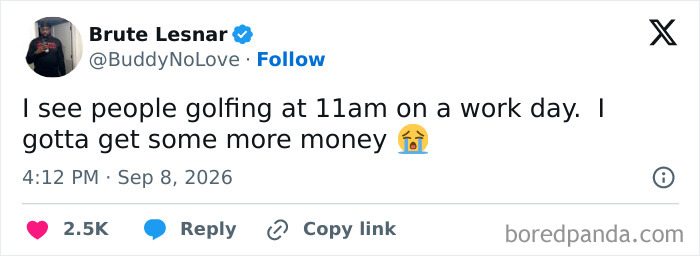
© Photo: BuddyNoLove
#75
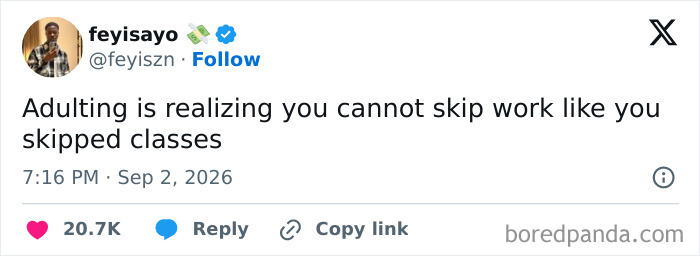
© Photo: i
#76
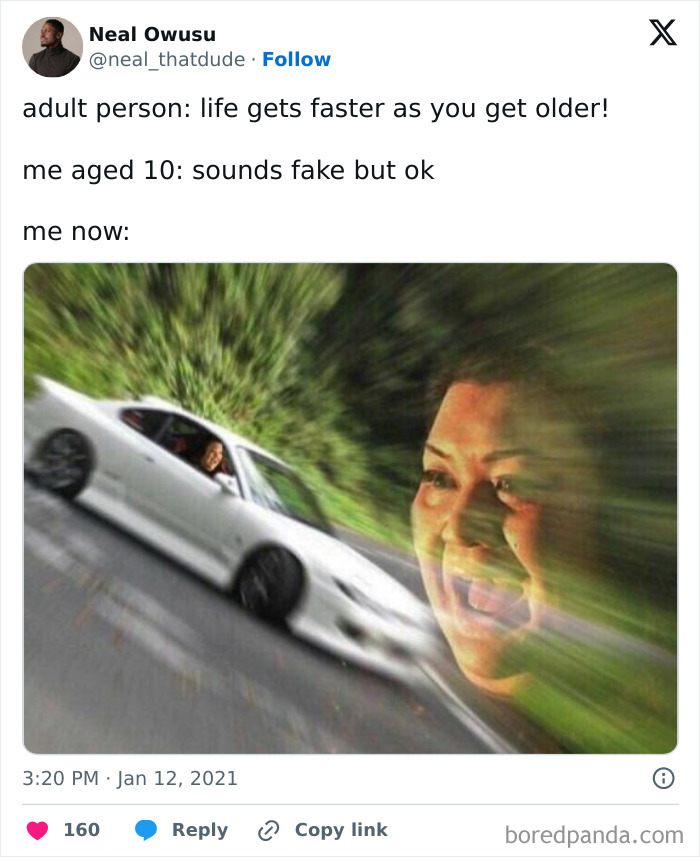
© Photo: neal_thatdude
#77
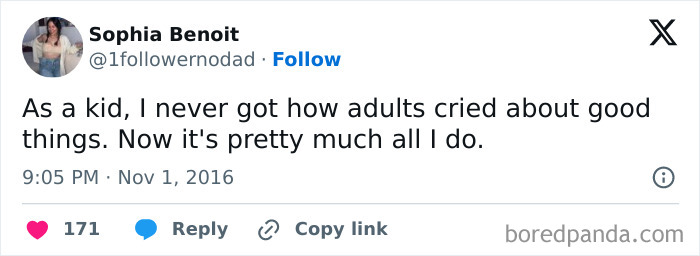
© Photo: 1followernodad