
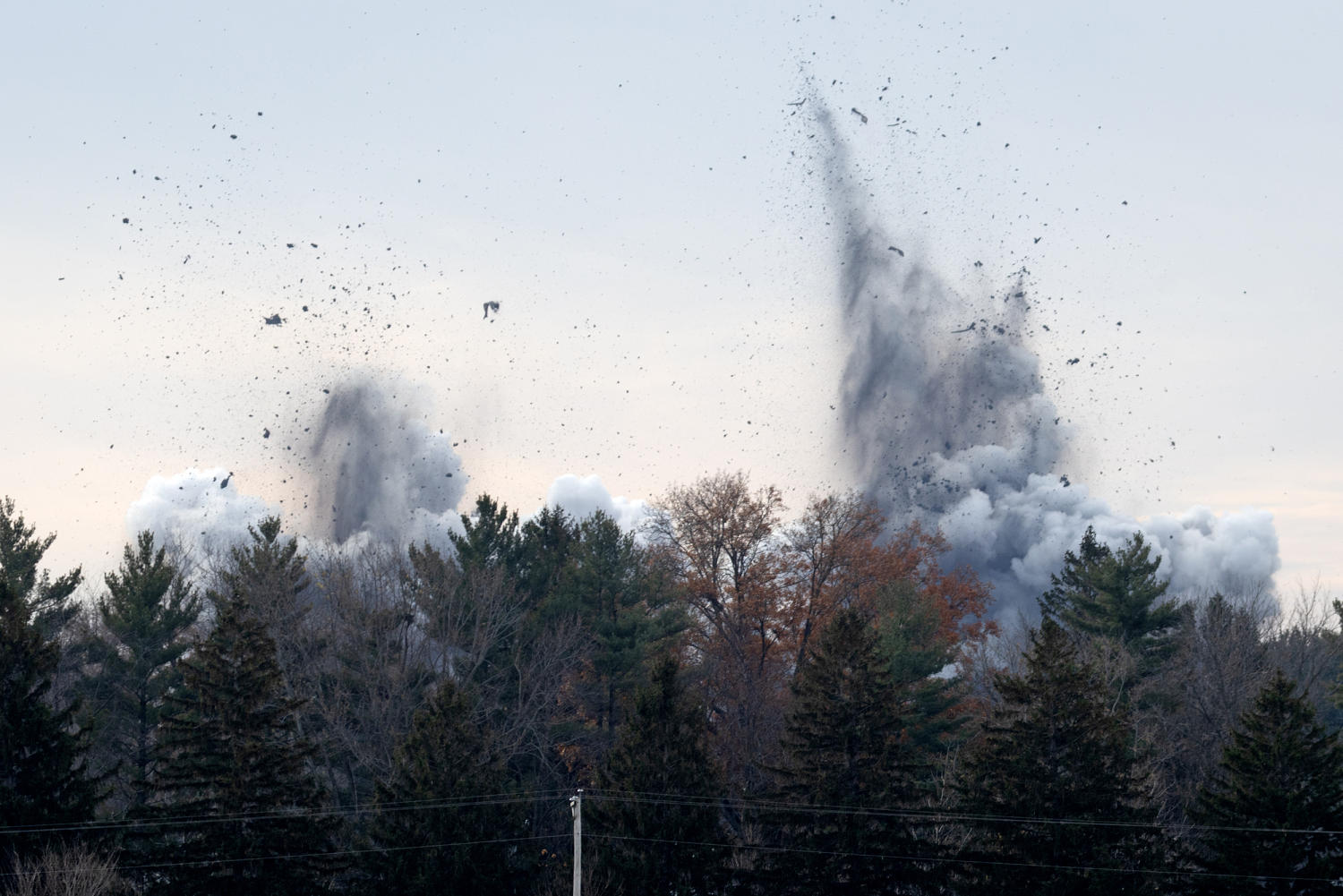
The Army detonated a stockpile of unstable lead azide explosives in southeast Iowa on Wednesday, a blast that was expected to spread a plume of lead dust for many miles.
The detonation at the Iowa Army Ammunition Plant in Middletown was intended to eliminate 68 drums of deteriorating, toxic lead azide — about 9,700 pounds. The Army said the material had become “recrystallized” inside and outside the drums, was at risk of a spontaneous explosion and couldn’t be safely moved.
NBC affiliate station KWQC in Iowa filmed the detonation from a location in Danville, about 4 miles north of the plant.
Just after 9 a.m. local time, the camera feed showed two blasts of gray and white smoke, which appeared to dissipate after about 30 seconds. Reporter Cyle Dickens said he felt a “percussion” from the explosion and a shock wave that traveled across a farm field toward him.
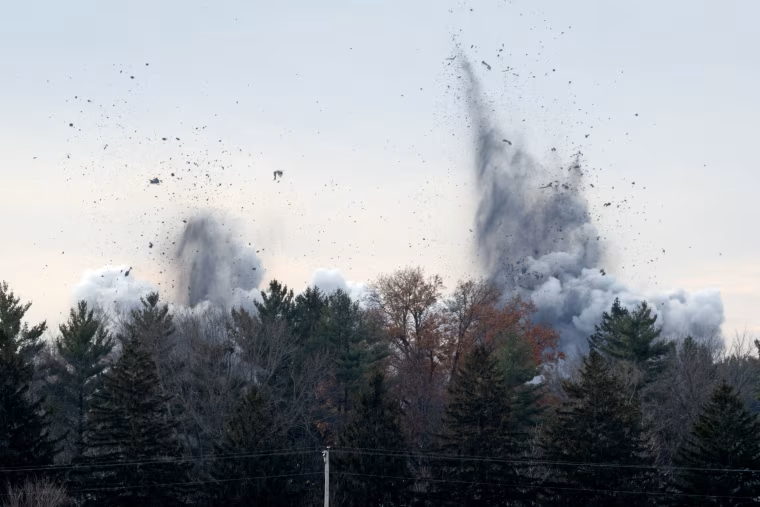
Linda Ross, who lives about a mile southwest of the site, said she felt “very little shaking and no plume in sight” in the moments after the blast. “Two short boom boom sounds. Dog started barking. That’s about it.”
She said her windows did not shake but it was still “unnerving.”
“We will stay inside today,” Ross said.
In a statement, Iowa Gov. Kim Reynolds said that “initial feedback from our state experts and federal partners is that the detonation at the Iowa Army Ammunition Plant was successful” and that state agencies would continue to monitor.
The U.S. Environmental Protection Agency, which approved the Army’s permit to detonate, said air quality monitors were reporting “ZERO detection of airborne lead throughout the region.” However, previous modeling of lead dust deposition suggested it would take several hours for the plume to disperse.
Independent experts have said it will take some time to determine how much lead was deposited and what the risks to nearby communities could be.
President Donald Trump said on Truth Social that “early reports” suggested that the Army’s mitigations had “exceeded expectations,” though he provided no additional details.
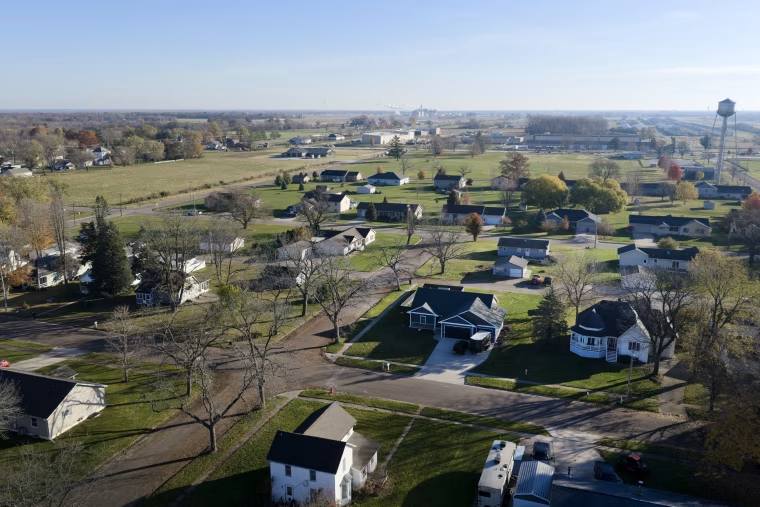
Before the explosion, the Army had called for evacuations in Middletown and a 5-mile zone to the southwest of the ammunition plant.
Soldiers went door to door Tuesday afternoon to notify residents that they should evacuate. The Federal Emergency Management Agency is providing short-term hotel lodging to those in the evacuation zone through Friday.
Based on Wednesday’s expected weather conditions, Army projections indicate the cloud of lead dust could travel some 100 miles southwest and cross into northeastern Missouri.
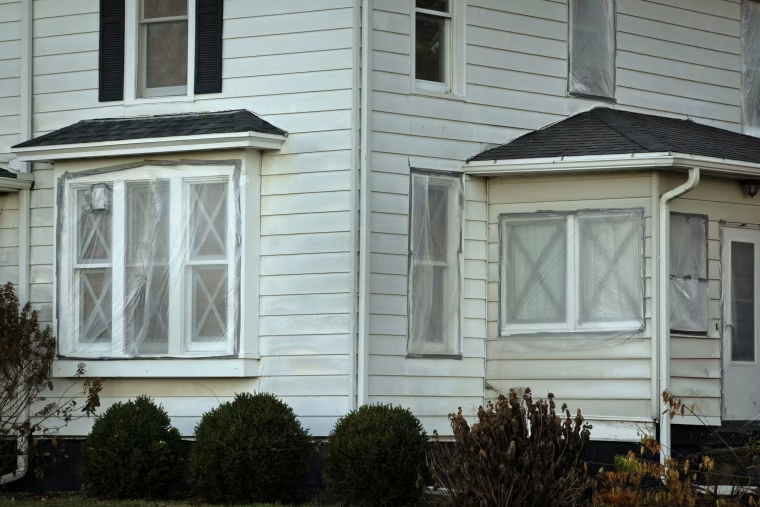
The plan prompted widespread fear and anger among local residents in the days before the detonation, with many people saying they did not receive enough warning. Residents in the potential path of the plume scrambled to change Thanksgiving plans, tape windows, cover gardens, buy cleaning supplies and, in some places, get their families out of town.
Jill Holler, who has a family farm about 20 miles west of Middletown, said she spent Sunday night rushing to take soil samples for future comparisons of lead concentrations.
“I was down in the dark getting the soil samples, and it’s just frustrating,” she said.
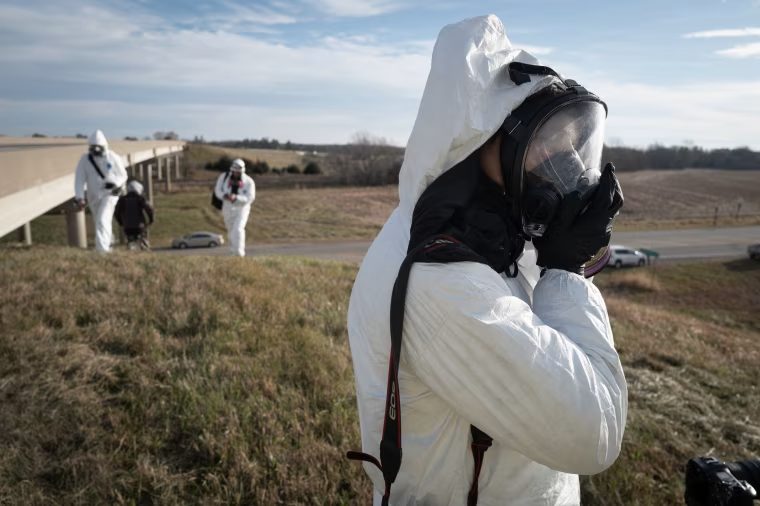
Lead is a potent neurotoxin and no amount of exposure is safe. It poses the biggest health threat to children. Exposure is associated with learning disabilities, reproductive health problems, mental health issues and increased risk of hearing loss, among other effects.
Once deposited on surface or in soil, lead particles can remain there forever unless physically removed.
Army officials have maintained that it was safer to detonate the chemicals in a controlled manner, with mitigation measures in place, than risk a surprise blast. Before the detonation, they described a range of mitigation strategies intended to keep as much lead dust as possible within the ammunition plant.
That included two stories of “HESCO” barriers — modular, collapsible structures filled with sand — built around the detonation site and a plan to spray water during the explosion to catch small particles. Officials also said aqueous foam blocks, gel blocks and two “water walls” made of four 16,000-gallon water tanks each would help absorb the blast.
According to emergency permitting documents submitted to the Environmental Protection Agency, the Army expected the blast to leave a crater about 38 feet wide and 5 feet deep.
The Army said in a release Tuesday that after the detonation, environmental monitoring teams would follow the plume’s path “to collect soil, surface-water, and surface-wipe samples to verify lead levels against baseline models and guide any localized cleanup.”
If any residential properties are found to exceed a certain threshold of lead contamination — 200 parts per million — the Army said, “remediation teams will remove affected soil, clean surfaces, and restore the property at complete government expense.”
It offered few specifics, however, about how or when such testing would be conducted — or the process or timeline for any government-led remediation work.
Andrew Whelton, a professor of civil, environmental and ecological engineering at Purdue University in Indiana, said that even the documents in the Army’s emergency permit did not describe those plans in detail.
“Based on the document I reviewed, there is no plan for applying an evidence-based approach to determine if people’s homes, schools, and businesses are safe after the detonation,” he said on Tuesday.
Peter Thorne, a pulmonary toxicologist and environmental health specialist with the University of Iowa’s College of Public Health, said that scientists planned to conduct independent monitoring of the plume of lead dust.
“We have monitoring equipment out there that’s going to tell us the extent of lead that’s became airborne and moved with the wind,” he said Tuesday. “Our models will be able to tell us how much lead is depositing on soil and on playground equipment and so forth. And from that, we can make some estimates of what what the degree of of danger is associated with this exposure.”
Thorne questioned how these explosives were allowed to become so dangerous over time. The nation’s stockpile of lead azide — once used to make bomb triggers but phased out about 15 years ago — was moved to the ammunition plant in 2009, officials have said.
“Why wasn’t this dealt with long ago when they could have chemically degraded and the lead azide would no longer be a hazard?” he said. “It should have been dealt with in the past, and now of it’s become a crisis with very few good options left.”