Everybody knows that life-changing moments can’t be planned; they come about when you least expect them and then turn everything upside down. Such experiences can reinvent how folks see themselves and their lives, and they might want to take drastic action because of it.
This is what one pastor went through when he was 17 years old and an atheist after hearing a demonic voice in his mind. The experience was so compelling for him that it changed his life’s trajectory and led him to conduct some shocking research.
Sometimes when people find their way back to religion, they might double down on their beliefs
Gift Habeshaw 🇪🇹 / Pexels (not the actual photo)
A Christian pastor who didn’t believe in God suddenly heard the Devil’s voice
Alan DiDio was a 17-year-old in 1998 and kept getting into trouble, which is why he was in and out of jail. That year, his friend took him to a Pentecostal-style church in North Carolina so he could hear a specific band play. During the ceremony, the pastor singled him out of the crowd, prayed for him, compared him to a biblical figure, and baptized him. When that happened, DiDio felt angry and believed Christianity was a cult, but in the days following, he experienced a heavy “cloud” of negative thoughts following him.
Later on, at a church youth group party, he claimed that he felt a satanic presence was around him and speaking to him with perfect clarity. It was convincing him to leave God behind and to stay away from religious people. This actually spurred the teen on to rebuke the demonic voice, as he believed that if Satan was real and talking to him, then Jesus had to be real too. That’s also when DiDio mentions that his soul became filled with the teachings of the religion, despite barely having read the Bible.
Ivan S / Pexels (not the actual photo)
The atheist-turned-pastor’s religious awakening at seventeen made him realize that he needed to work in the ministry
DiDio later moved to Ohio to begin Bible college, and during that time he helped protect a woman from possession by a demonic force. He claimed that she had attended a prayer meeting and that her eyes suddenly turned milky and she tried to bite people. Because he truly believed in Jesus, he used God’s name against her, which instantly calmed her. This reassured him that if people invoked their Almighty’s name, they would be protected from evil and demons.
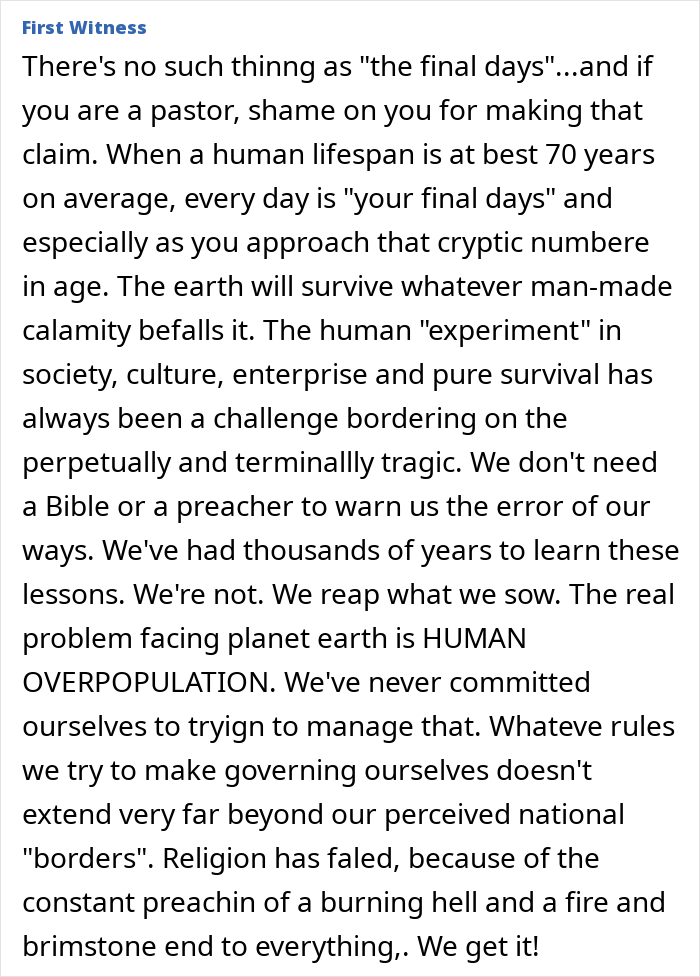
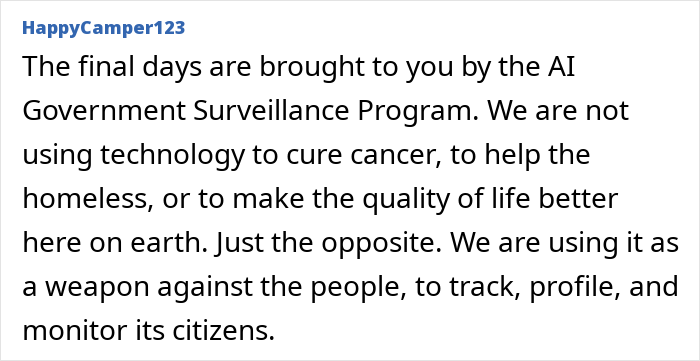
In 2023, the pastor started the Revival Nation Church to help people receive biblically grounded teaching and prophetic insight. He also said the signs and symbols of the end times have been cropping up, with seven years of chaos and disasters on Earth before God’s return. That’s why he urges folks not to worry about Satan’s increasing activity, as it means that the Almighty is also working hard.
Funky MojoJojo / Pexels (not the actual photo)
Despite so many people being religious, atheism definitely seems to be on the rise
According to Gallup research on 43,250 people across 42 countries, around 55% of people consider themselves religious, 30% say they’re not, and 10% are comfortable identifying themselves as atheists. Africa had the highest number of believers, at 93% of respondents, followed by the Arab World at 92%.
In Western Europe, however, this figure was much lower, with only 37% identifying as religious, compared with 44% who said they weren’t believers. This trend was similar in Northeast Asia, with 35% of people admitting to being atheists, a number that is much higher than the rest of the world.

Oliver Schmid / Pexels (not the actual photo)
Many different factors affect how much faith people put into their religion
The research also shows that 58% of women are more likely to call themselves believers than 51% of men. Education can also affect a person’s religious identity, and it seems there is an inverse relationship. 67% of folks with lower education report being believers, compared to 50% of those with a higher degree and above.
The country’s national income can impact religiosity significantly, as 78% in lower-income areas are believers, while atheism seems to be most prominent in high-income settings. That’s why it’s so important to understand how a person’s belief system can be challenged by their environment, gender, and social standing.
Some Christians believe that bad thoughts, their insecurities, and jealousy could all be a sign that the Devil is trying to take control over them. That’s why it’s important not to give in to this negativity, as it might pull them away from God and lead them into the wrong things in life.
This is similar to what Pastor DiDio believed when he started hearing nasty things in his mind and immediately thought that Satan must be talking to him. That’s why religious folks are wary of entertaining any ideas or beliefs that are negative, as it might lead them down the wrong path to envy, coveting, and even crime.
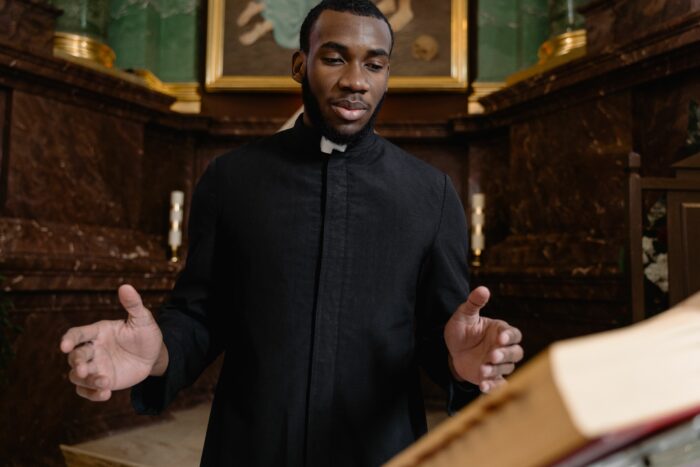
MART PRODUCTION / Pexels (not the actual photo)
People believe in God for a lot of different reasons, and regardless of why they choose this path, it’s important that they’re comfortable in their choice
According to the Pew Research Center, folks tend to believe in the Almighty for moral guidance, to build hope, and because they yearn for heavenly life beyond this realm. According to the data, 45% of Americans turn to religion for practical guidance and common sense. Around 30% of Catholics and 27% of Orthodox Christians turn to their faith for moral insight.
This story makes it clear that DiDio’s belief system set him on a completely different path, and that he used that knowledge to help many people. Whether he truly heard the voice of Lucifer is up for debate, and something none of us can prove, but it certainly looks like it changed his life.
What do you think about this story, and do you believe this atheist-turned-pastor? We’d love to hear your honest opinions down below.
Here, you can find how the humanity’s major religions are spread around the wold
@wscevl How did the five major religions spread around the world, and when were they founded? #islam #religion #christianity #buddha #hindu ♬ original sound – Wascemal
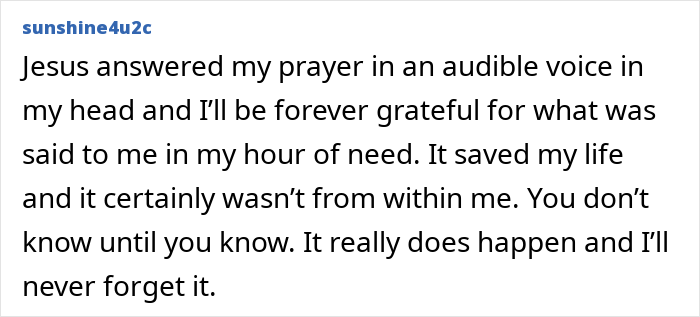
Most people were skeptical about the Bishop’s story and felt he was just spewing lies, while some believers praised him