
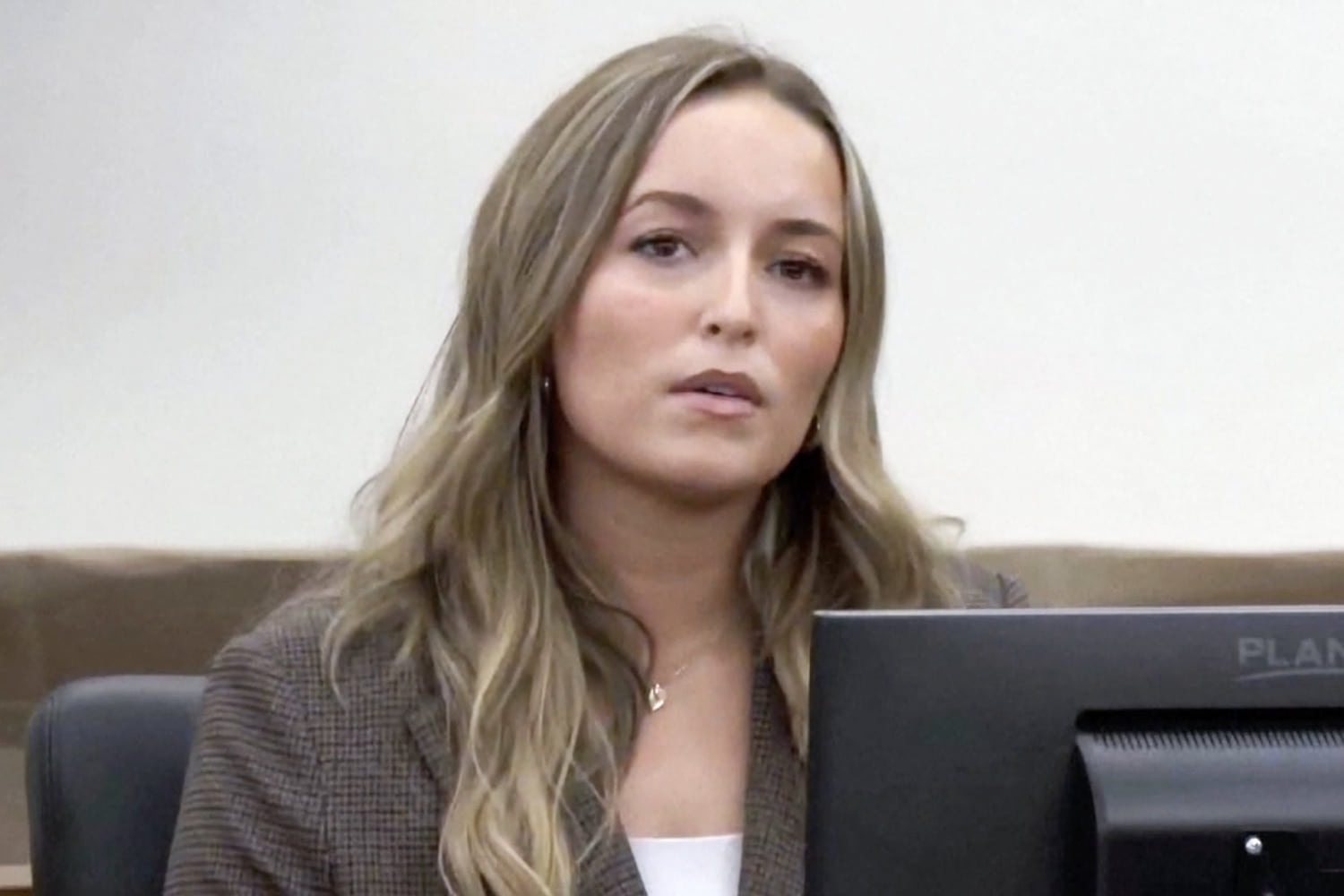
When Alleigha Botner, Caleb Flynn’s 24-year-old former mistress, took the stand in his murder trial last week, she admitted several potential crimes she herself may have committed.
She deleted text messages from the night Flynn’s wife was killed. She lied to the FBI to save her reputation. She admitted that she, too, said she wanted Ashley Flynn dead.
But despite her testimony, legal experts say, Botner is unlikely to face any criminal charges. She also said the prosecutor did not promise her anything in exchange for her testimony, according to NBC affiliate WLWT of Cincinnati.
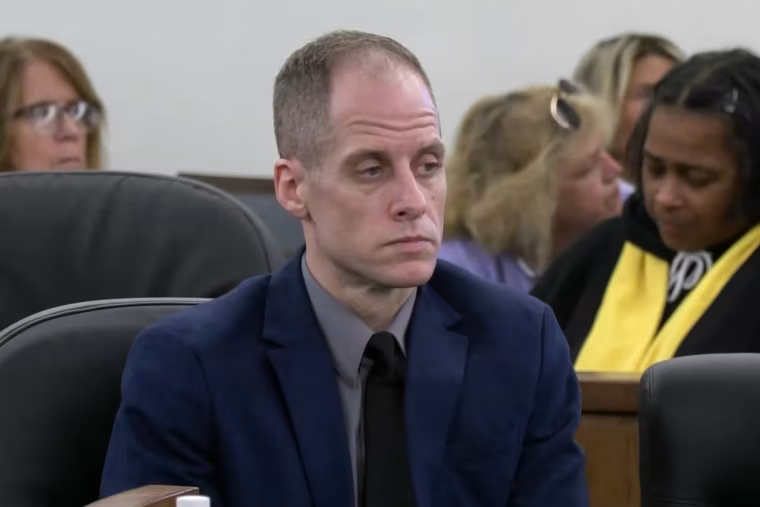
Flynn, 40, a former music pastor and contestant on “American Idol,” was found guilty Tuesday of murdering his wife in their Ohio home in February and staging the scene to make it look like an intruder committed the crime. It took a jury just over two hours to convict him on nine counts of murder, assault and tampering with evidence.
His trial drew national attention when Botner, who said she and Flynn had been having an affair when Ashley Flynn was killed, took the stand for the prosecution, testifying against her former paramour. She read from the more than 107,000 text messages they are said to have exchanged during their affair, and the jury heard AI-generated love songs Flynn apparently made for her.
The text messages revealed a young woman who was desperate for her lover to leave his wife, at times even saying she wished Ashley Flynn were dead so Botner could be with Flynn.
Botner said on the stand that she regretted those sentiments, sobbing as she read one particularly painful message: “I want to kill her, Caleb.”
Botner said Flynn replied: “That makes two of us.”
But legal experts told NBC News that the chances Botner is also charged in Ashley Flynn’s death are slim.
“Wanting someone to die or even be murdered isn’t enough for criminal liability,” said Neama Rahmani, a former federal prosecutor. “Botner would have to be a co-conspirator, accomplice, aider and abettor or accessory to murder.”
He added: “Unless Botner had the criminal intent to kill Ashley Flynn and agreed to or helped commit the murder, she can’t be prosecuted.”
In at least one other instance, Flynn is alleged to have mused about a life without his wife, writing in a text message in August 2025: “I was up until 4 a.m. last night crying, literally trying to think of ways to kill her and not go to jail.”
But Botner also told Flynn she did not actually want his wife dead. She repeatedly asked him to leave his wife, though, and imagined a future together without her.
“I’m not asking that you take her life obviously, because that’s not what you should do, and I know you actually wouldn’t,” she wrote in another message. “But to make the divorce happen, it would change everything.”
Rahmani noted that Botner’s defense — that she wanted Flynn to leave his wife, not to kill her — is strong enough to avoid criminal charges.
Botner and Flynn continued to message up until the night before the murder. According to the text messages, Flynn told Botner that night that he was “free” and had chosen her, promising they would have a life together.
When she found out the next morning that Ashley Flynn had been shot dead, she texted Flynn asking what had happened, she testified. When he didn’t respond, she said, she deleted the messages because she figured someone would want to look through his phone and she was scared their affair would be found out.
She also admitted that she lied in her first interview with the FBI to save her reputation, fearful she would be forever attached to the affair — or the murder.
“Destroying the messages and electronic devices after the fact may make her guilty of tampering with evidence or obstruction of justice,” Rahmani said. But prosecutors “rarely charge their star cooperating witnesses after they testify. That would chill cooperation in future cases and is bad policy.”
Mark Godsey, a criminal law professor at the University of Cincinnati College of Law, said there also may be some kind of deal between Botner and prosecutors that will shield her from charges, even if she was not formally given immunity.
“It would be malpractice for her attorney to put her on the stand with zero protections,” Godsey said. “It might be true that ‘promises’ were not made, but in my experience, I think there is some sort of understanding that her testimony will help her and get leniency.”
In the four years since their relationship began, Botner told the court, her feelings toward Flynn have changed — and she now hates him.
Asked why she hated him, she said, “Because I believe that he murdered his wife.”
Flynn will be sentenced Oct. 5. He faces up to life in prison without the possibility of parole. Defense attorney Patrick Mulligan said Flynn will challenge the verdict.