We’ve all been there: being asked to do something at work that’s way more complicated or time-consuming than it needs to be. Maybe a manager insists on a pointless extra step or a painfully convoluted process, or a client demands far more time and labor than the job could ever require.
It’s especially grating when you’ve been doing the job long enough to know there’s a simpler way. But sometimes, the best way to make a point is to do exactly what you’ve been told. At least, that’s how it played out for this utility locator. Fed up with contractors constantly demanding that entire properties be marked, even when he was sure the digging would only happen in a much smaller area, one day he (quite literally) decided to draw the line. One the contractor wouldn’t forget anytime soon.
This locator was tired of “mark entire property” requests for tiny jobs

acele / Unsplash (not the actual photo)
So they followed the next one to the letter, and it left a lasting mark

magnific / Magnific (not the actual photo)


Nick Page / Unsplash (not the actual photo)

koldunova_anna / Magnific (not the actual photo)

magnific / Magnific (not the actual photo)



Eder Pozo Pérez / Unsplash (not the actual photo)
Utility markings serve an important safety purpose, but some requests make the job harder than it needs to be
If you’ve ever done any major work around your home, you’ve probably seen the work of a utility locator firsthand. Their job is to identify, trace and mark buried pipes and cables, such as electric, gas, and fiber-optic lines, before anyone starts digging. Those colorful lines, stakes and little flags they leave behind help prevent damage to all that infrastructure.
While those markings might not be the prettiest sight for homeowners, they serve an important purpose. Damaging an internet cable can be inconvenient and expensive, but accidentally hitting a gas line can have fatal consequences.
In the US, anyone planning to dig generally has to contact 811 first to arrange for underground utilities to be located and marked. The specific requirements, including how much notice is needed, vary by state, but the general process is the same. Contractors submit what’s known as a “locate ticket,” which tells the relevant utility companies where the excavation is planned. Obviously, the clearer those instructions are, the easier it is for locators to know which areas need marking.
But getting that information isn’t always straightforward. Findings from the Common Ground Alliance’s locator research show that 51% of surveyed locators identified poorly defined marking areas as their biggest challenge to completing locates accurately and on time. Another 37% pointed to inaccurate or insufficient information from excavators about the jobsite.
Sometimes, the problem isn’t that requests are unclear, but that they’re far too broad. Just how far that can go is clear from an example shared by the National Utility Locating Contractors Association (NULCA) in Planet Underground’s American Locator Magazine: “In one documented dataset, a single excavator submitted a ticket covering 464 million square feet, over 8,000 football fields, with a legal response window of two business days. That is not a ticket. That is an ambush.”
In that context, it’s easy to see why seemingly unnecessary “mark entire property” requests can be such a sore point for locators like the poster. They’re expected to respond within the required timeframe, even when a ticket covers far more ground than they believe the planned work requires. Of course, that doesn’t mean they can simply ignore the instructions or assume they know better than the contractor, but it helps explain why some might become frustrated.
Locators mark what’s buried, but some problems run deeper
The poster drew a line with the contractor by maliciously complying with their request. But according to NULCA, the problem goes deeper than individual disputes between locators and contractors. As the association explains:
“Any system that allows an excavator to submit unlimited work orders at zero cost, with no consequence for scope inflation, no accountability for tickets that never generate a single shovel of dirt, and a legal requirement that someone respond to all of it within two business days—that system is not broken. It is functioning precisely as designed. And it was designed to fail.”
Importantly, NULCA is careful not to blame contractors, stressing that “the excavators are not the enemy.” It argues instead that the real issue is a system that pits locators and contractors against each other instead of addressing the underlying problems.
The livid homeowner’s yard might’ve become the battleground for a fight that had nothing to do with them, leaving them with unsightly marks that could linger for months. But if NULCA’s take is anything to go by, perhaps the contractor wasn’t the right target either. That doesn’t mean the poster’s frustration wasn’t valid. Still, a few extra coats of paint and an earful from an unhappy homeowner were never going to solve the bigger problem.
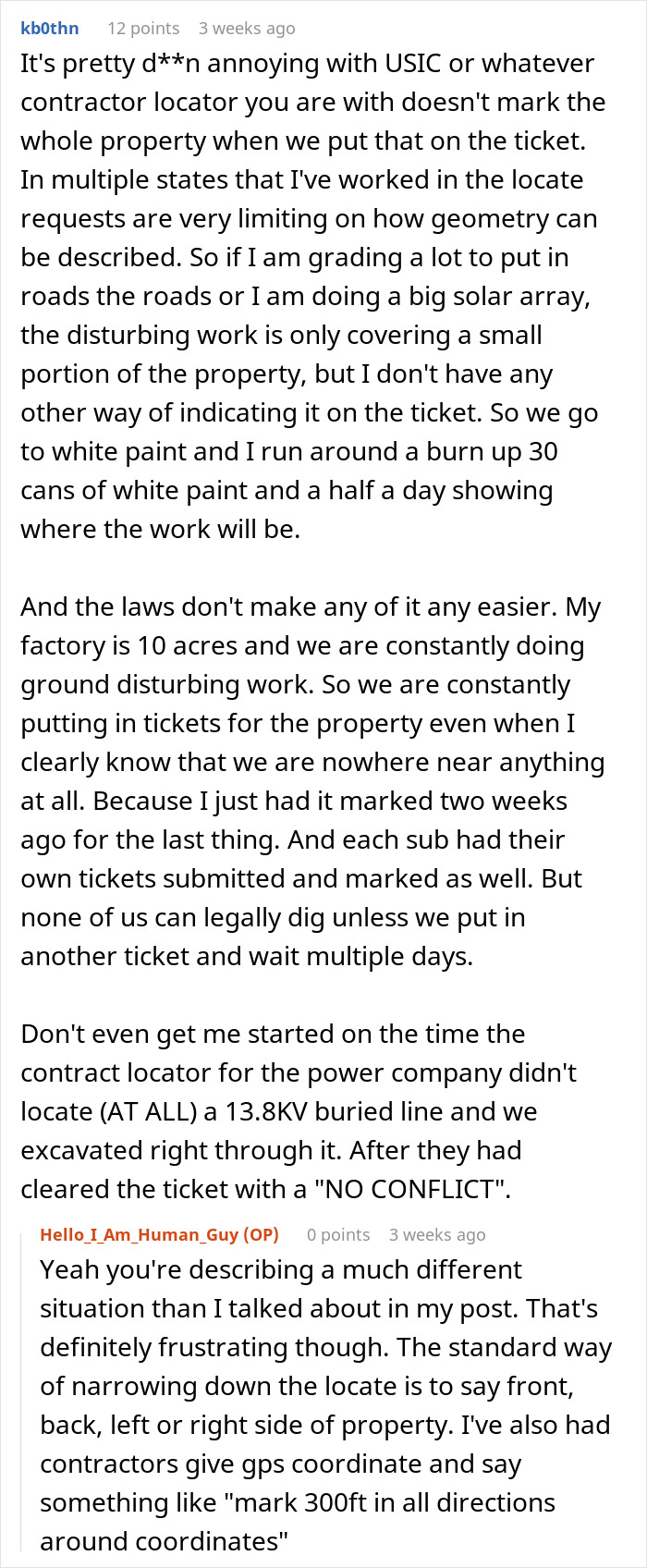
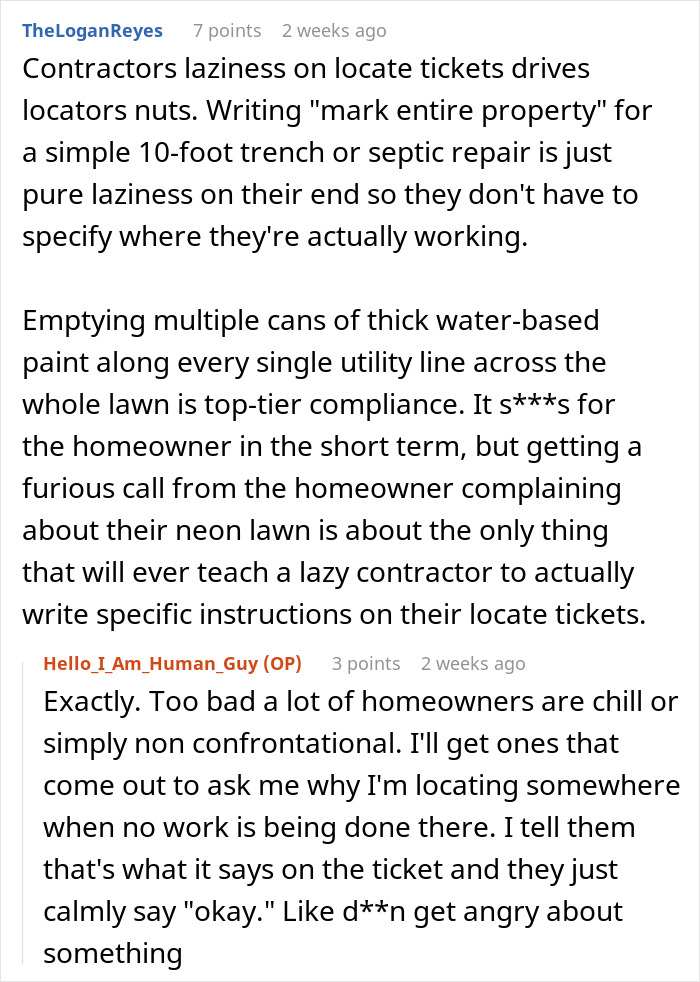
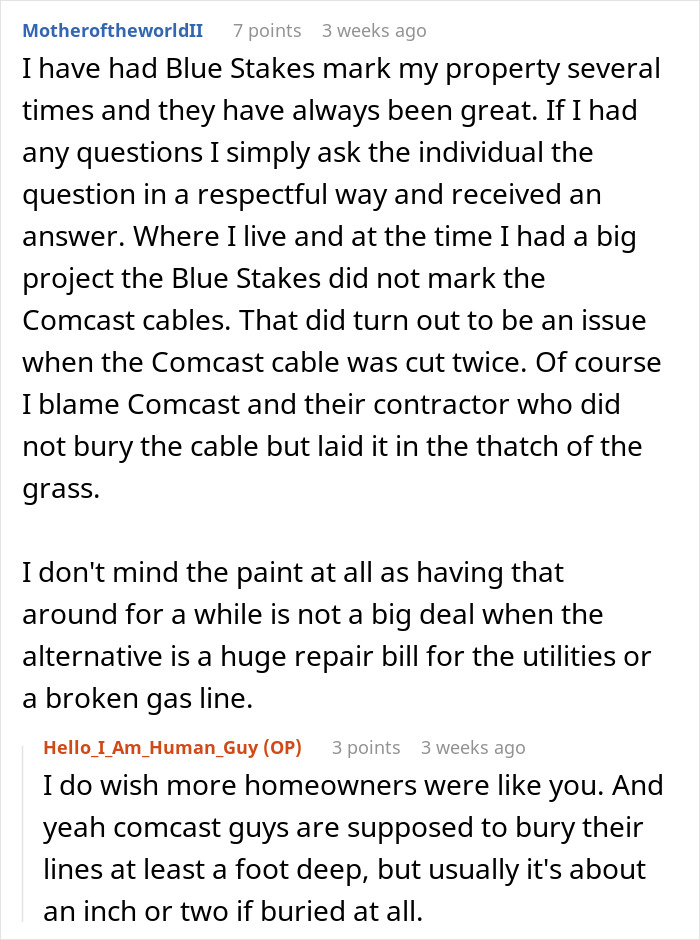
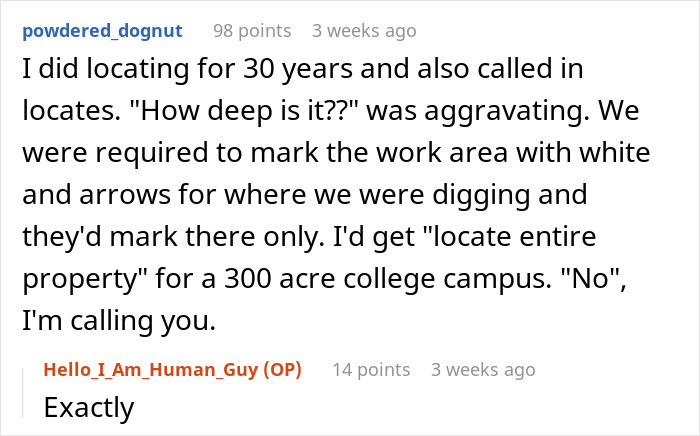
“Not MC. Just tantrum”: Some commenters called the poster out
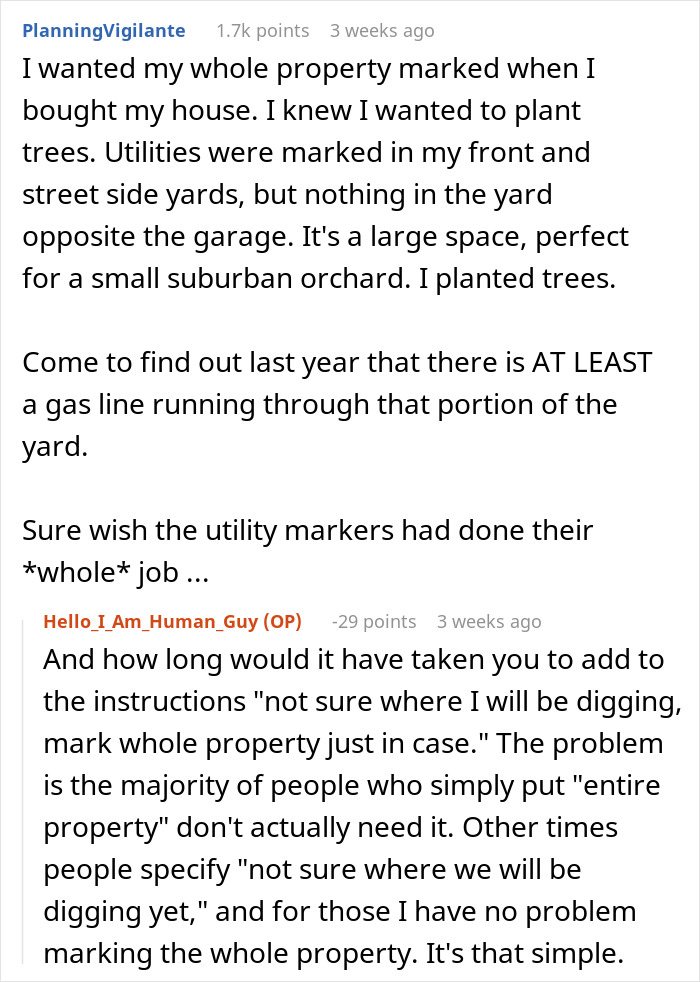
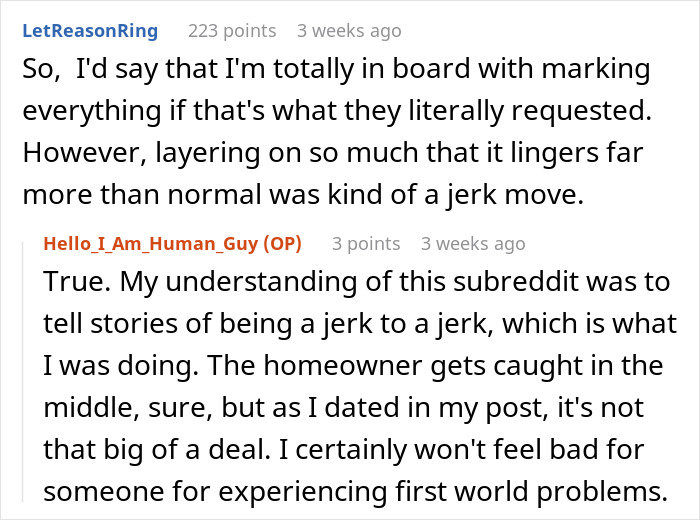
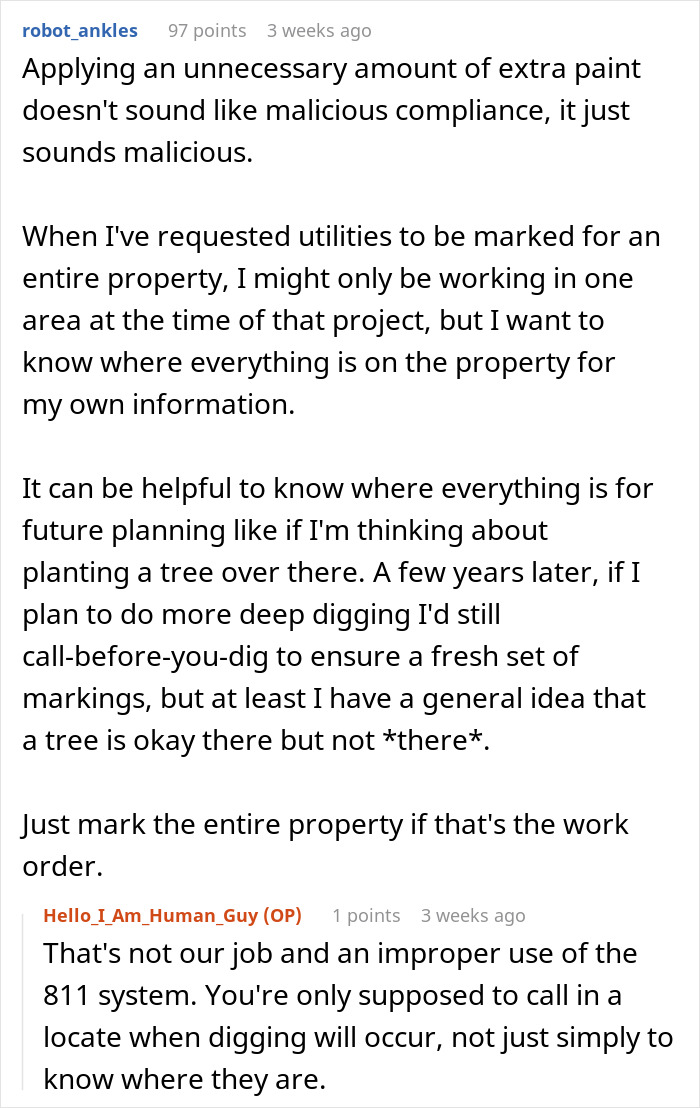
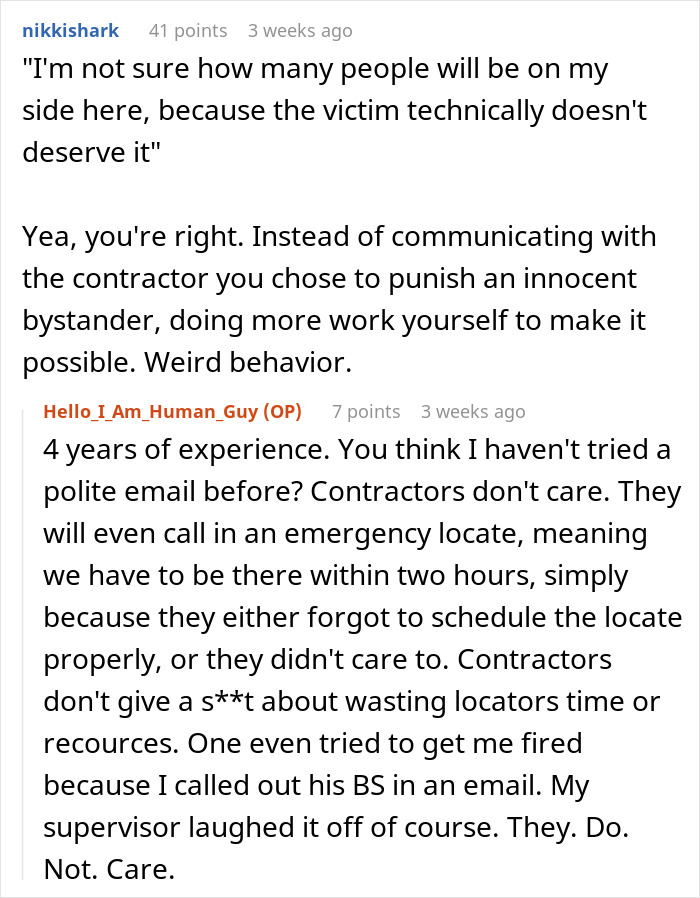
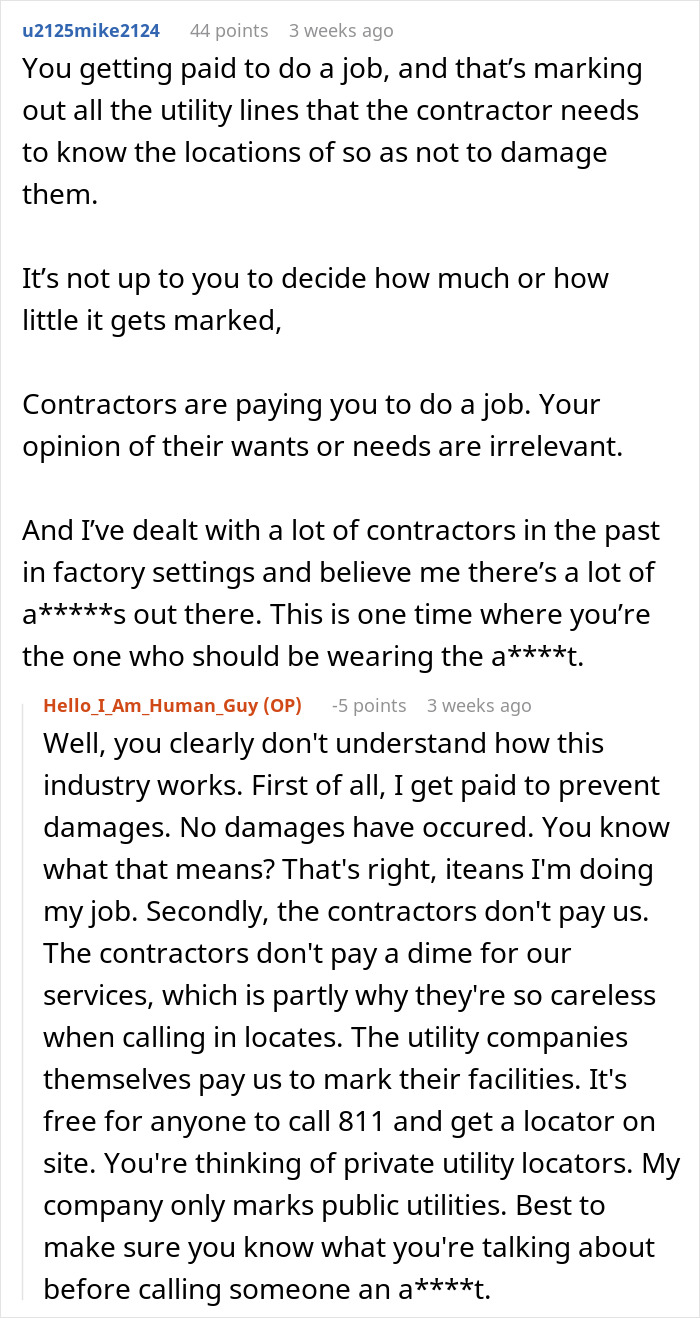
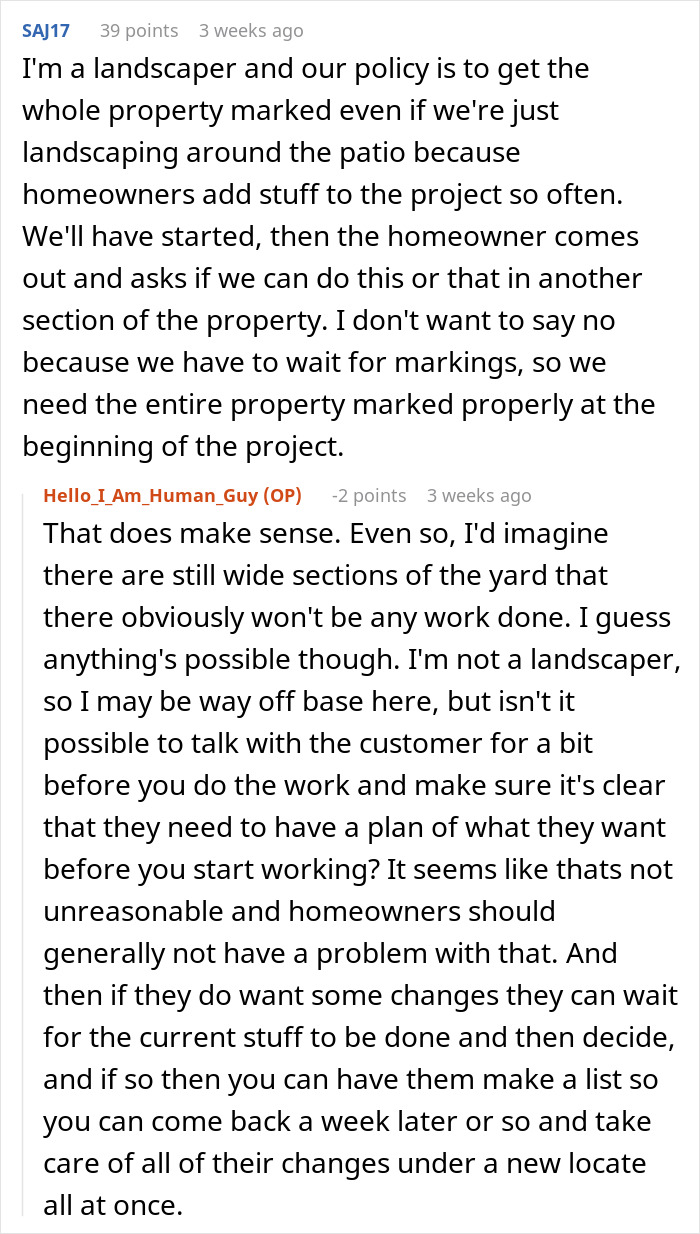
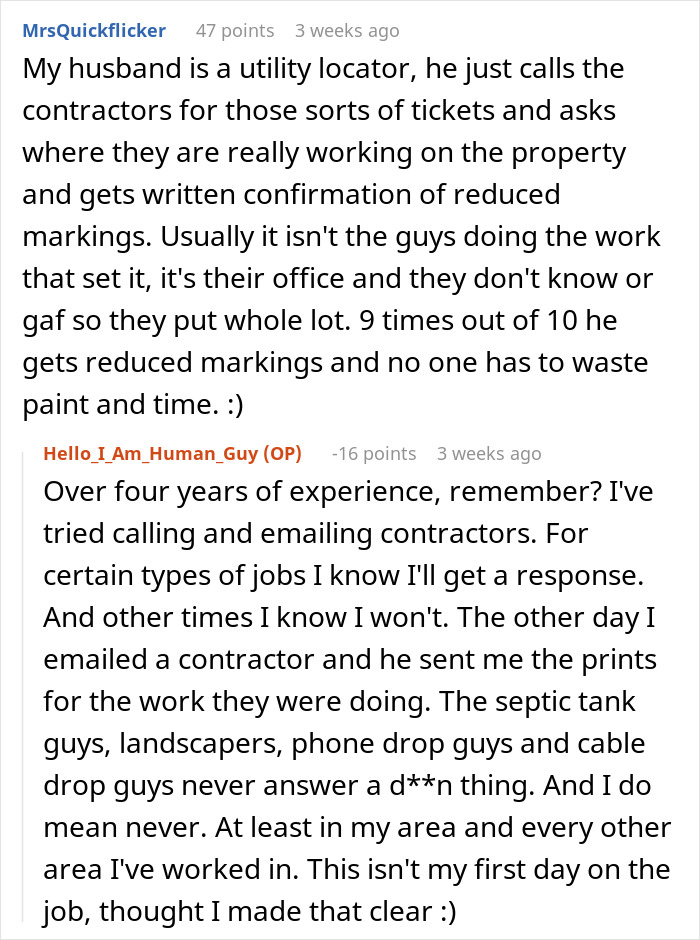

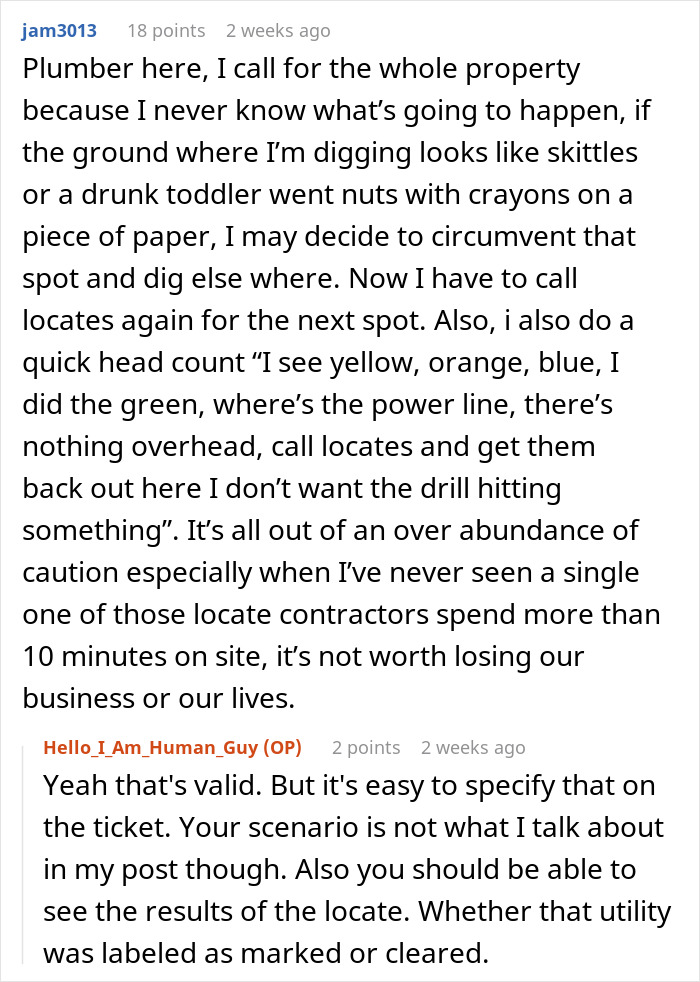
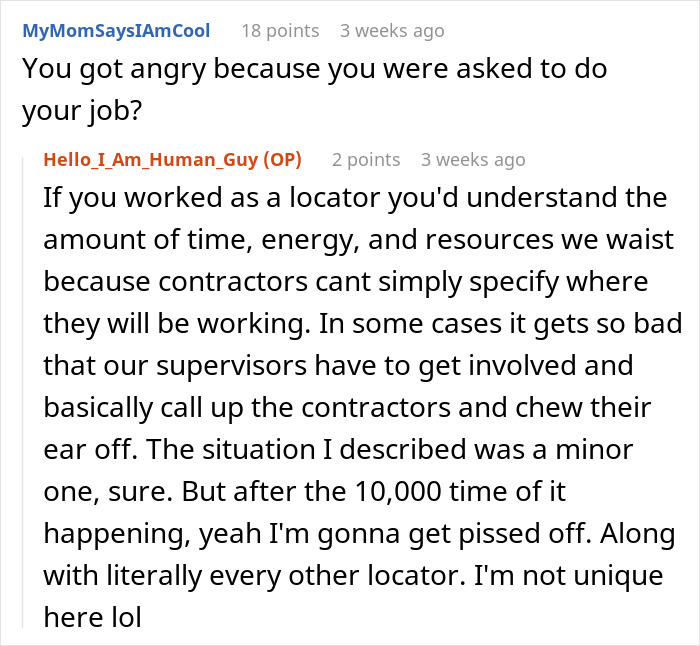
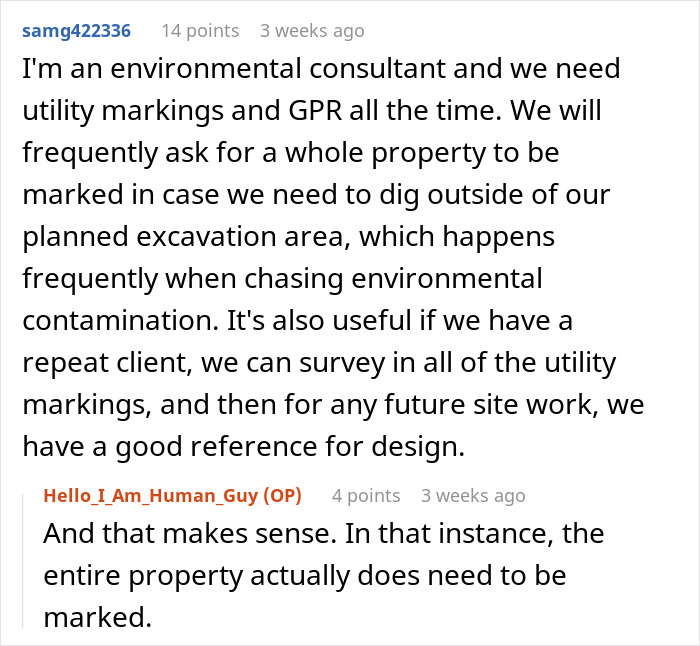
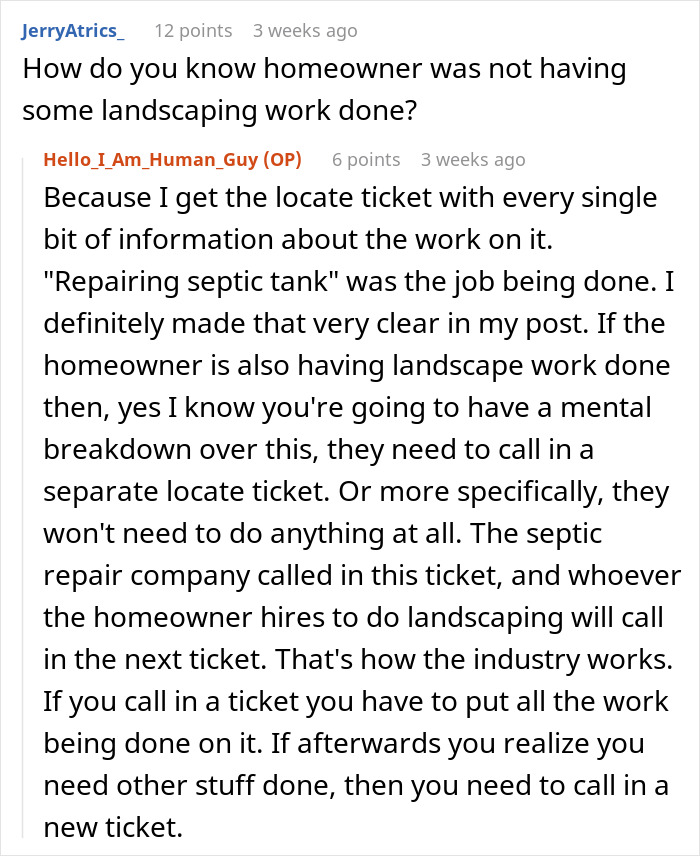
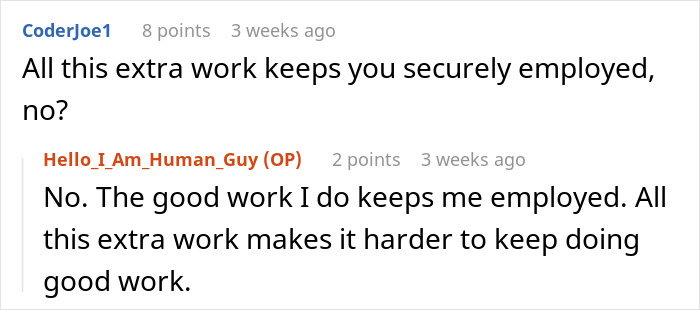


But others could relate to the poster’s frustration