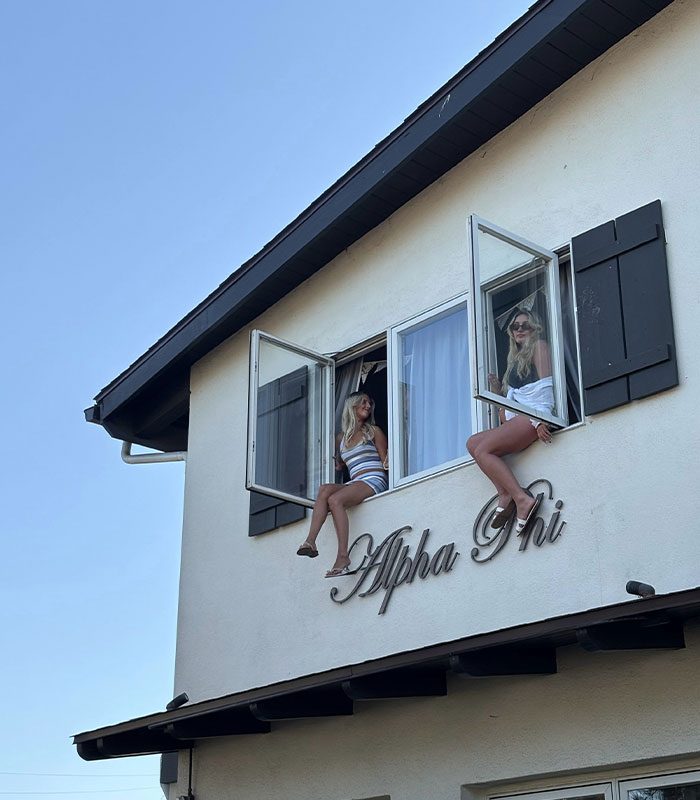
Last month, members of UC Santa Barbara’s Alpha Phi chapter accused a recruitment adviser of excluding women of color from the sorority’s fall intake. The adviser was removed after members confronted her, but the damage was already done.
The sorority is actively bleeding out members.
“We’re literally having walk outs and other major issues because of racism,” one anonymous reviewer wrote on September 30, with others warning women of color from joining.
Former members of the Alpha Phi sorority are walking out over racism
On September 30 at 9:42 pm, someone using the name “Alexis” posted a one-star review of Alpha Phi on GreekRank, a website where users anonymously rate college sororities and fraternities.
The reviewer warned that the chapter was “not a good place for people of color.”
Less than an hour later, another anonymous account said that “the racism” inside the sorority was “crazy,” and urged women of color to stay away from it.
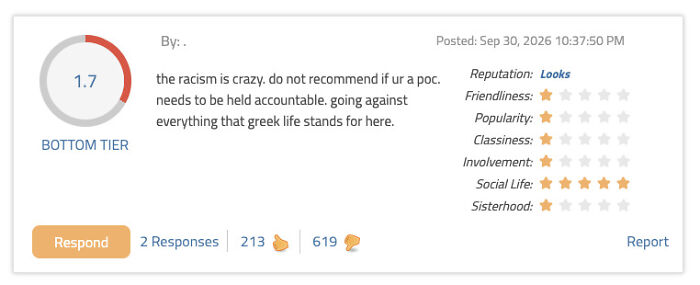
By October 18, the first post had received 269 upvotes. The second had 213. Both also drew hundreds of downvotes, while other reviewers defended the chapter. The public response was sharply divided.
For instance, a defender described its members as “kind girls who are genuine and care about each other.” Another had called it “the best house at UCSB.”
The reviewers’ identities have not been verified. Nor has their claim about walkouts been independently established. What is clear from interviews with named chapter members is that women confronted the recruitment advisers, and one adviser was subsequently removed.
The dates matter, too.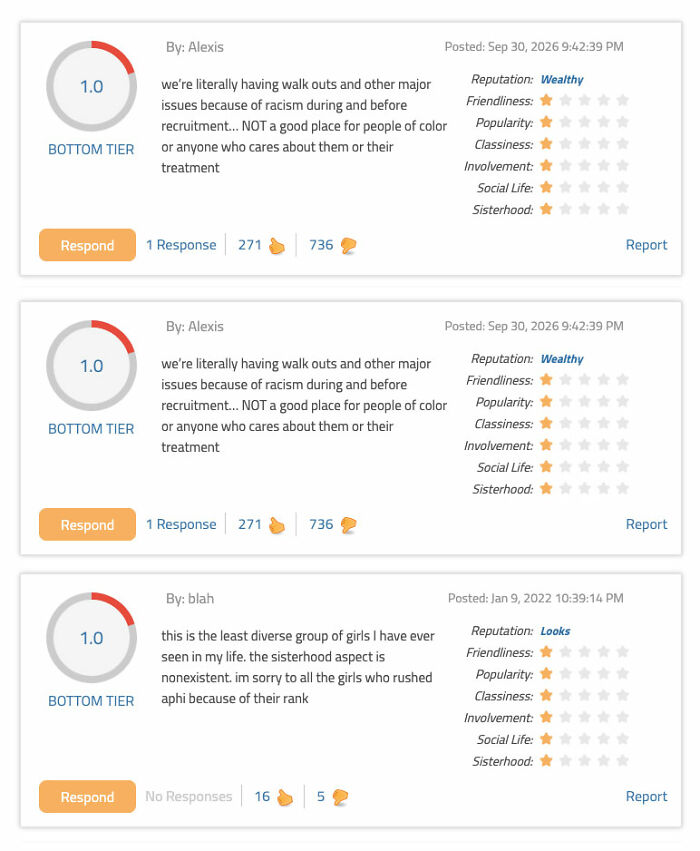
Those warnings appeared on September 30, while recruitment was still underway. Alpha Phi’s final round did not take place until October 3. Women deciding whether they wanted to join could encounter the accusations before the chapter had finished selecting its new members.
To understand why someone would leave such a warning, the story goes back four days.
Chapter members noticed women they wanted to meet had disappeared from recruitment
View this post on Instagram
On September 26, Alpha Phi members met prospective recruits during the first round of UCSB’s sorority recruitment.
Afterward, they recorded their impressions and scores, expecting those assessments to help determine whom they would see again.
The representatives overseeing the process sent the members home while the invitations were decided. When the next round began on September 27, members say the group returning to Alpha Phi looked wrong.

President Alana Nielsen described “a large and noticeably diverse group of women” who were missing. That surprised the chapter as members had been told that roughly 90% of the prospective recruits wanted to return.
The concern extended beyond invitations.

Representatives also assigned current sisters to the small groups that would speak with applicants. Sky Achola noticed that she and other women of color in her sorority family had been given few opportunities to participate.
On the other hand, her white “little,” a younger member she mentored, had been assigned rounds.

Achola and her fellow members wanted to know who had made those decisions. Near the end of the day, Nielsen sought a meeting with the representatives. She said an educational leadership consultant initially told her one was unnecessary and suggested ending recruitment on a “happy note.”
By then, as reported on October 6 by campus newspaper The Daily Nexus, members were crying upstairs. Nielsen gathered them in the chapter room anyway.

They stood up and challenged the representatives about the missing applicants and the assignments. Recruitment director Emerson Novosel described the confrontation as feeling “like a revolution.”
Members subsequently learned that the volunteer recruitment adviser had selected which applicants would return and created the groups that would meet them, according to Novosel.
The adviser, a UCSB Alpha Phi alumna who had helped with recruitment in the previous two years, was removed from her position. The two educational leadership consultants remained while the chapter took control of the remaining rounds.

On October 1, members issued a statement explaining why they would finish recruitment despite the allegations.
“We have chosen to remain in the recruitment process,” they wrote, saying they believed they could make changes from within.
They completed the final round on October 3. Two officials from Alpha Phi International’s health, wellness and accountability department met with chapter leaders and attended a meeting on October 5.
The allegations have put Alpha Phi’s national diversity commitments under scrutiny

The accusations have done some serious damage to Alpha Phi’s image, especially when taking into account what International tells its members about inclusion.
Its “Stand Together” programming describes a sisterhood where differences are valued. The organization has also offered training addressing “identity, implicit bias and the impact of language in our everyday lives.”
For the UCSB women who spoke out, the question is how those promises applied when invitations and assignments were being decided.
View this post on Instagram
The chapter had stayed in recruitment hoping to help the women who were left out. In its October 1 statement, members explained their decision:
“Stepping away would mean giving up our opportunity to advocate for the sisters and future members of this chapter.”
After recruitment ended on October 3, director Emerson Novosel told The Daily Nexus that members had kept a list of applicants they “loved” but had not been invited back.
She hoped to offer places to as many as possible through Continuous Open Bidding, which lets sororities invite new members after the main recruitment period.

There was a catch. Alpha Phi had filled its recruitment quota, and Novosel said the chapter might not be allowed to offer any more places.
Yesterday (October 18), A UCSB spokesperson told the New York Post that “Discrimination is not tolerated at the university.”
The spokesperson said reports are investigated by the university’s Office of Discrimination and Harassment Prevention and referred to Student Conduct when appropriate.
“Happens at every school in the South,” a reader wrote