People often develop an attachment to their living space. Even when they don’t own their home, settling in often brings a sense of familiarity, safety, and belonging. So, when others enter without invitation or notice, people rightfully feel violated. They cross personal boundaries, and feelings of safety start to deteriorate.
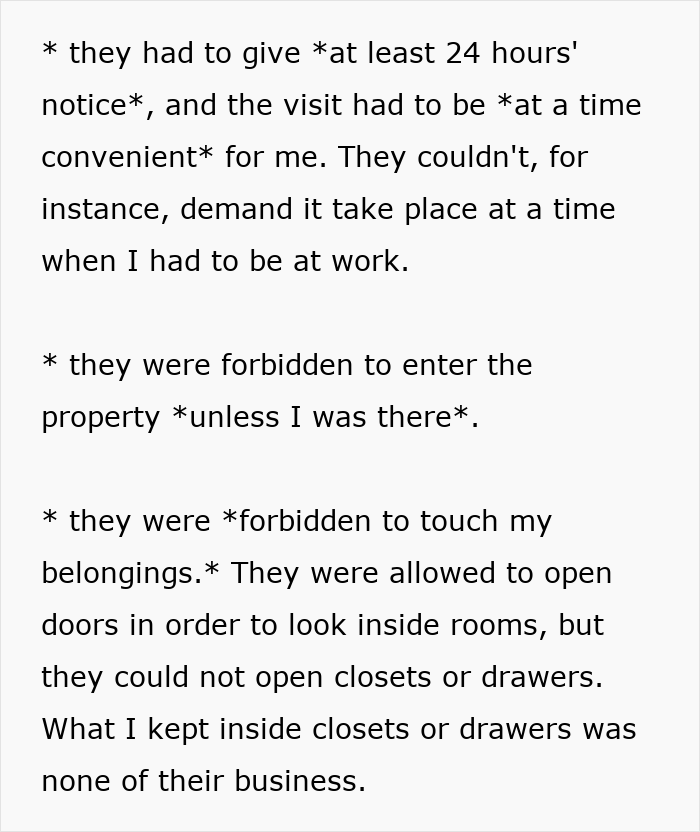
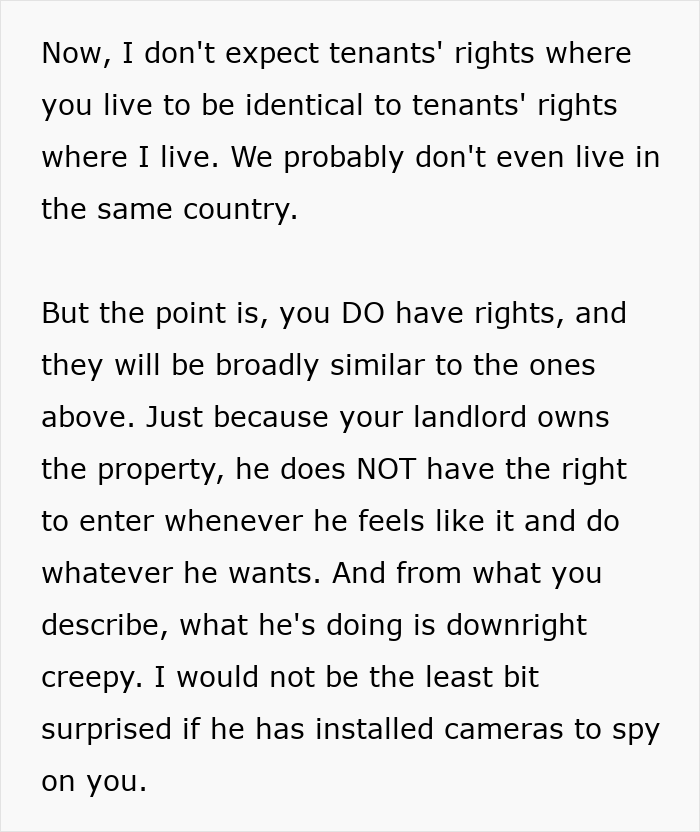
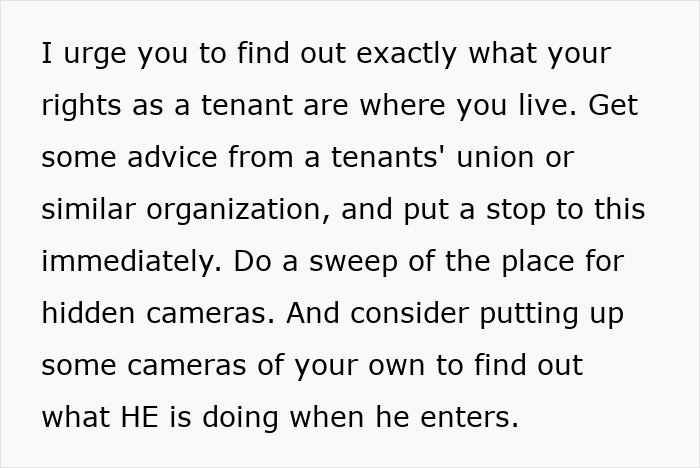
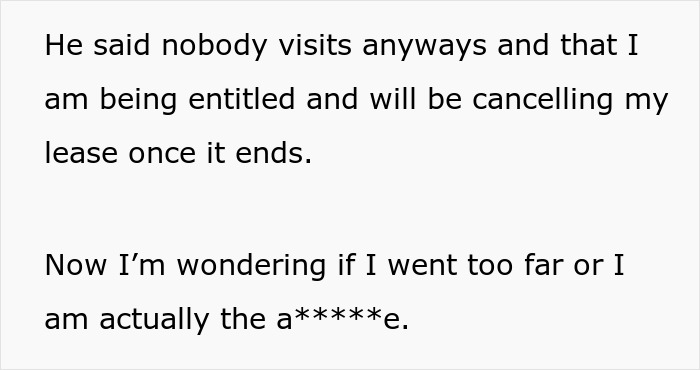
One woman shared her story on Reddit about her entitled landlord starting to visit without notice. She finally took a stance when he started moving her things and using her Wi-Fi while she was away. The landlord’s reaction suggested something more devious than the woman had initially considered.
Tenants usually avoid arguments with their landlords to keep their home

Chris F / Pexels (not the actual photo)
But this woman decided to finally stand up against her shady landlord

RDNE Stock project / Pexels (not the actual photo)

Sora Shimazaki / Pexels (not the actual photo)
Privacy is an absolute necessity in any home
In his seminal work, social psychologist Irwin Altman proposed categorizing people’s spaces by the roles they play in daily life. Public territories, like libraries, stores, beaches, and sports courts, are usually not central to the user. They’re available for everyone to use, so people usually don’t feel ownership or the need to defend them from others. Secondary territories, such as a person’s neighborhood, workplace, or their usual seat at school or cafeteria, often evoke a blend of public availability and private control. They’re usually public places an individual spends so much time in that they start to feel ownership over them. Finally, places like a home or a car are considered primary territories. They’re private spaces easily recognized as belonging to the owner.
A home, however, doesn’t necessarily have to be owned by a person for them to feel ownership over its territory. For example, if a person pays rent for and lives in an apartment, they treat it as their primary territory. Psychology professor Frank T. McAndrew, Ph.D., says that even certain rooms within a home are often divided as primary territories among different family members, making ownership more intuitive than literal.
Primary territories are used for recharging, says professor Shawn M. Burn, Ph.D. In their homes, people use routines, agreed-upon norms, and well-known roles to establish a low-intensity environment. This reduces stress and restores energy before people head back out into the world.
Having houseguests over disturbs these routines. The less familiar the guest, the more control is lost in the personal space. People can tolerate a few short visits, but longer stays or unwelcome intrusion into their primary territory can cause many issues. Burn advises guests to be careful about touching personal items or eating the host’s food. These actions can make more anxious hosts feel like their living space has been contaminated, causing unwanted tension and distress. These negative emotions may become associated with the guest over time. To reduce the host’s stress, guests should plan stays for appropriate lengths of time and clean up after themselves.
Most hosts take social norms and hospitality more seriously than the increased stress levels of bringing someone into their personal space. When frequent guests start taking a toll, Burn offers practical tips for reducing stress. First, notice when your invitations are insincere. Avoid phrases like “you should visit some day” or “we have plenty of room if you ever need a place” if you don’t intend to follow through. Always clarify your expectations and limits, because guests can’t read your mind. Something that might seem irritating to you might be completely normal from their perspective. To avoid feeling rude in the moment, share important routines, availability, and preferences in advance.
Finally, don’t feel pressured to invite unwanted guests. Some people might hint or make direct requests to stay with you. It might feel like it’s most socially acceptable to extend an invite at that point, but it can cause more harm than good. If you don’t feel comfortable with the idea, it’s best not to respond to hints and politely decline direct requests. Have some assertive phrases ready. “I’m not feeling up to having guests over, but we can meet elsewhere” or “I’ve got a lot going on, but I can help you look for a different place nearby” both set clear boundaries while politely offering alternatives.
Your personal space and privacy are yours to keep. Home should feel like a safe place where you get to wind down and prepare for other challenges. Do not let entitled people use positions of power to invade your privacy. In most places, tenants have rights that require landlords to give sufficient notice before visits during agreed-upon hours. Exercise these rights to keep your space stress-free.
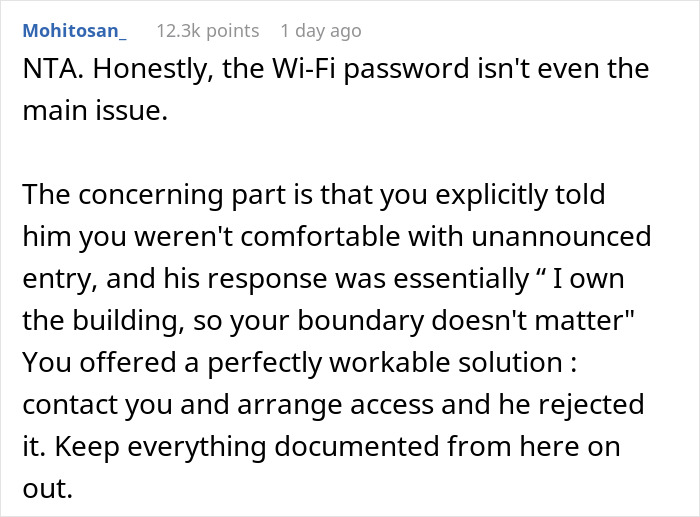
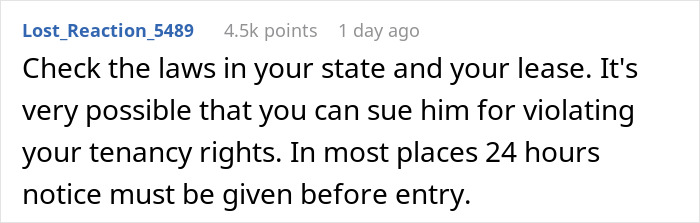
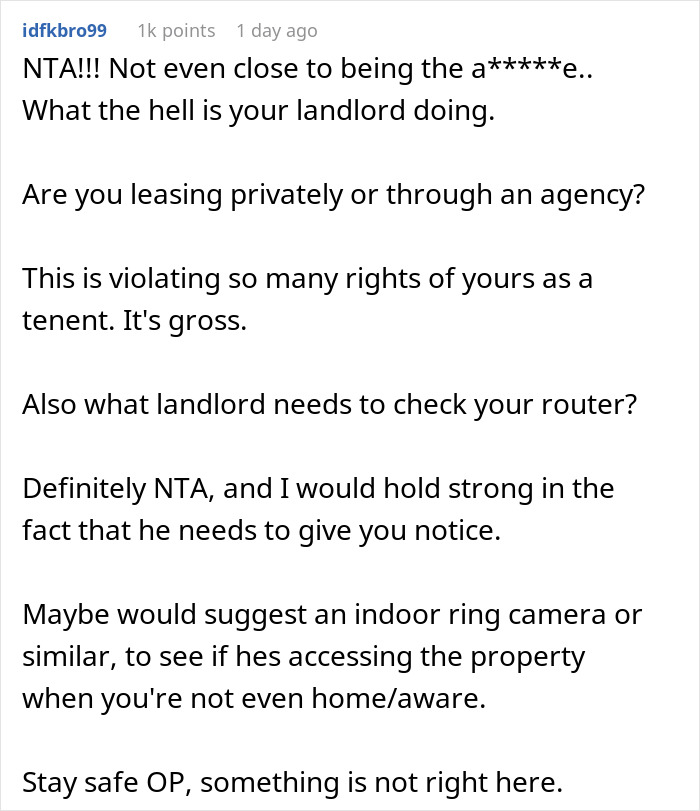
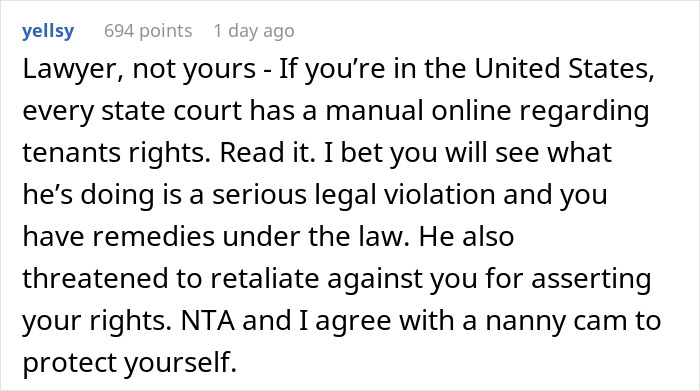
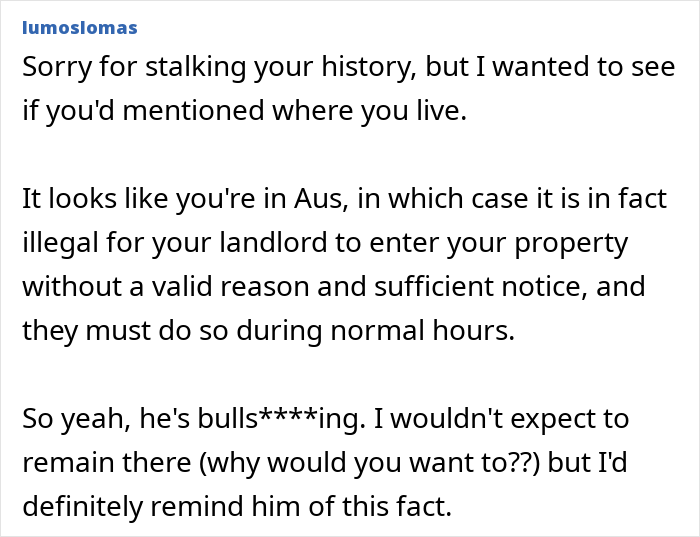
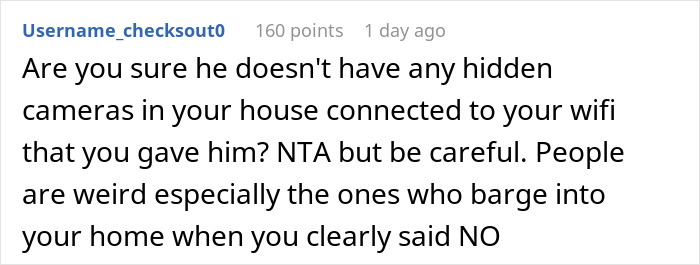
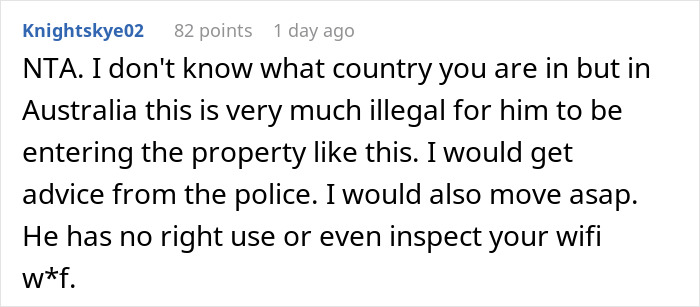
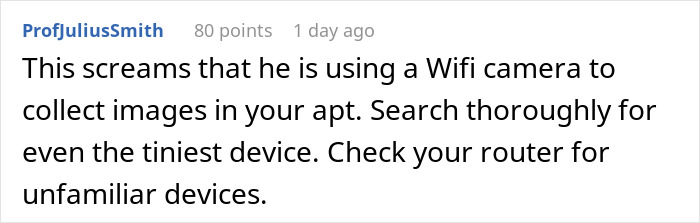
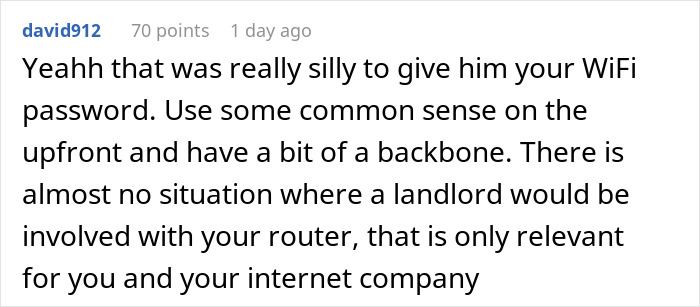
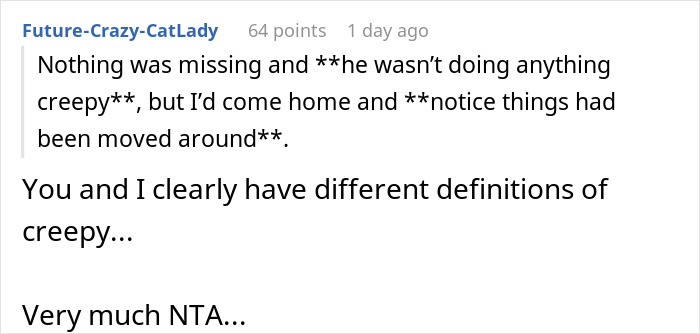
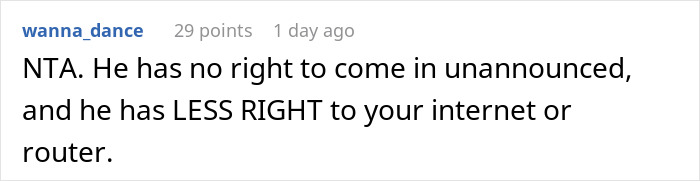
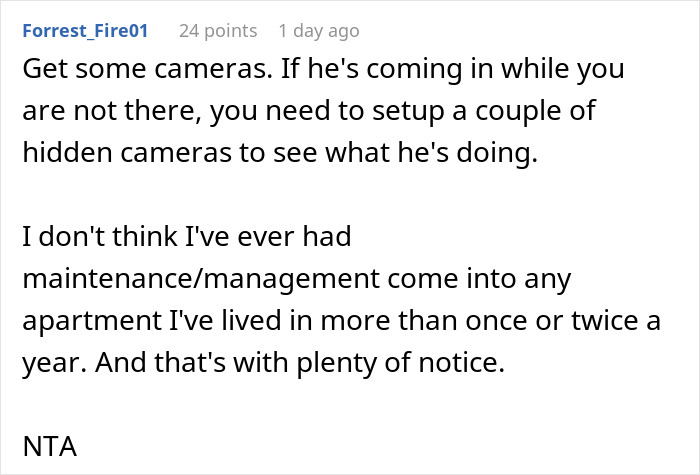
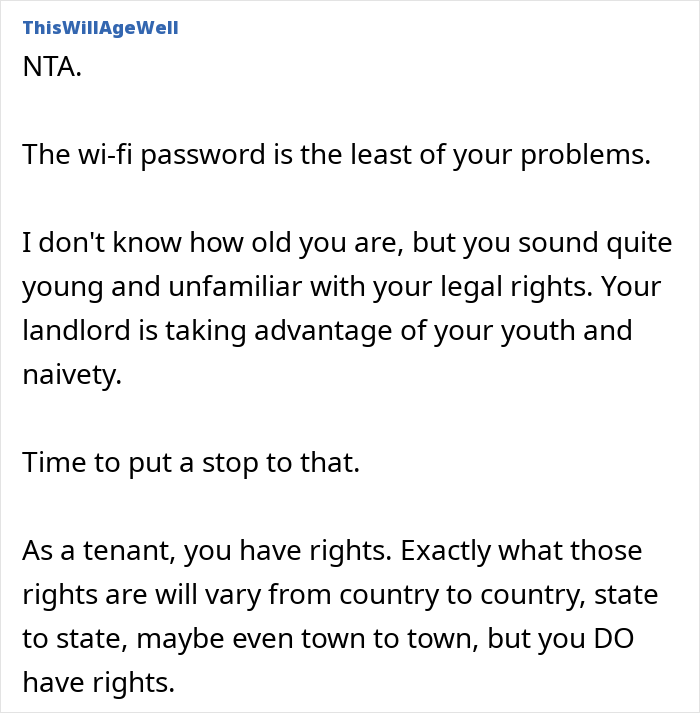
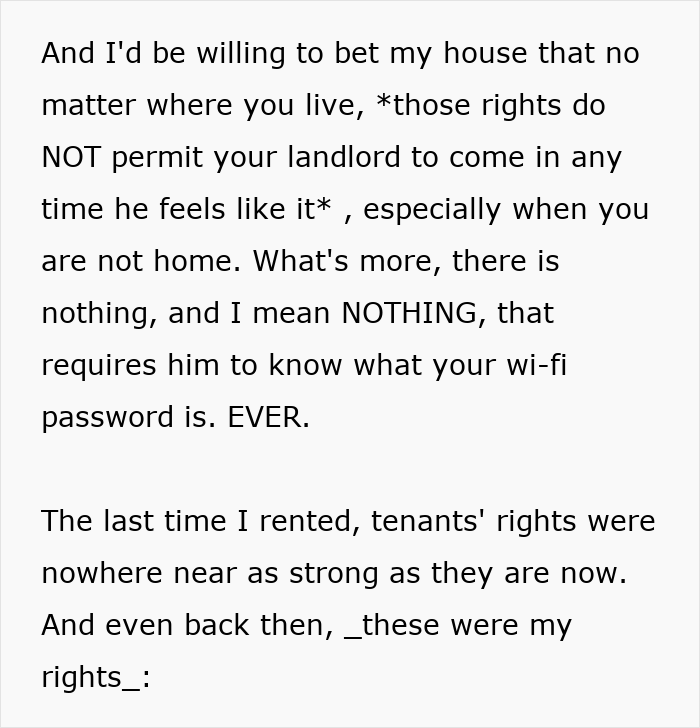
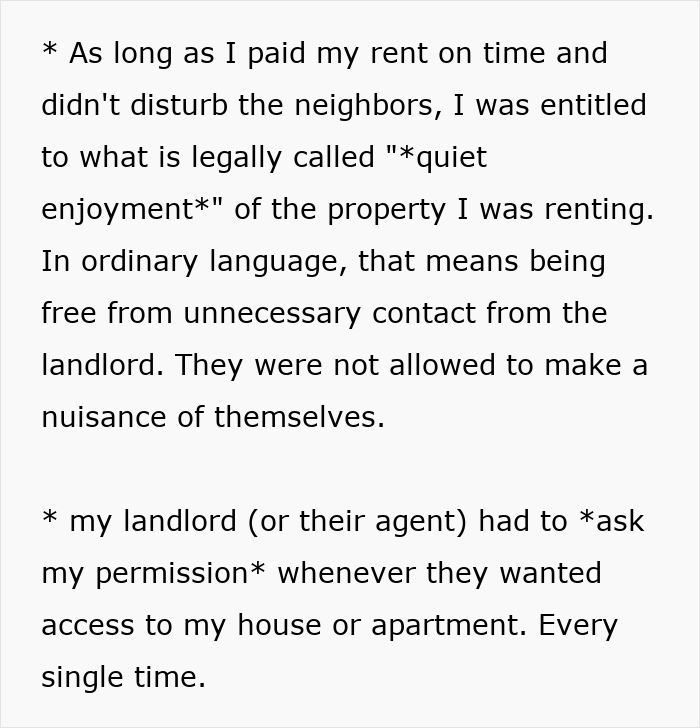
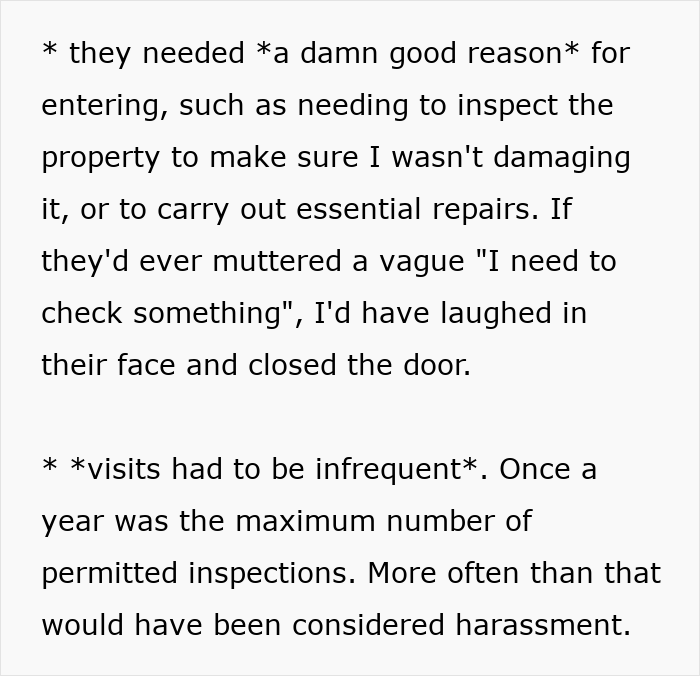
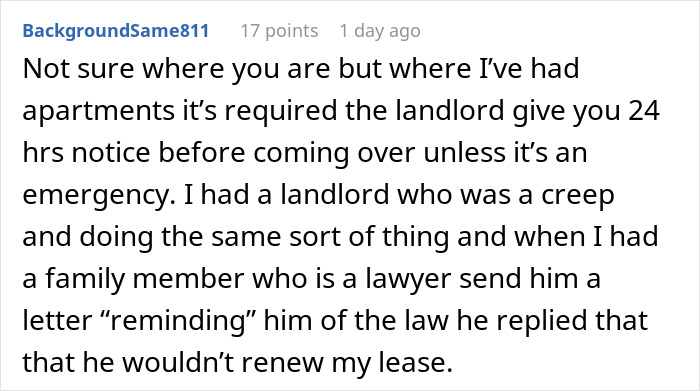
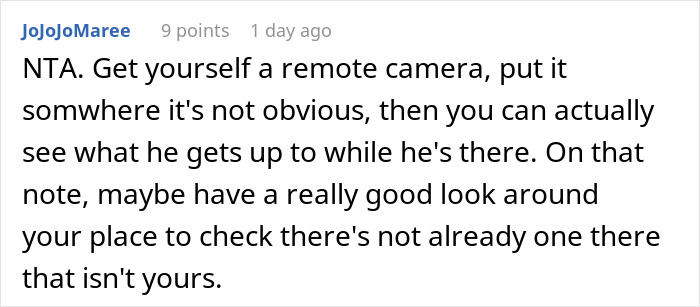
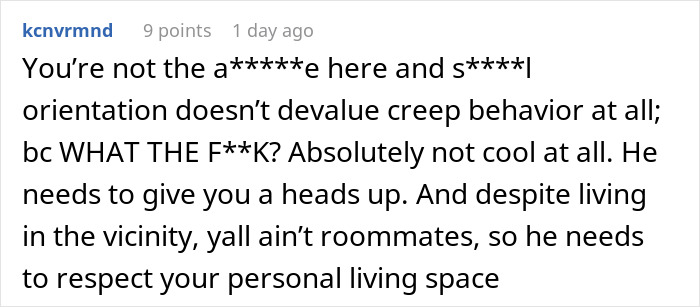
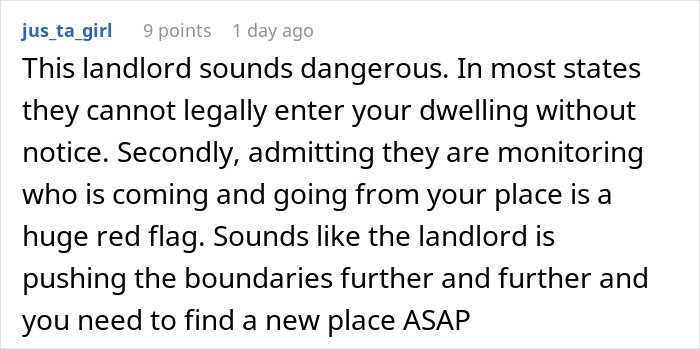
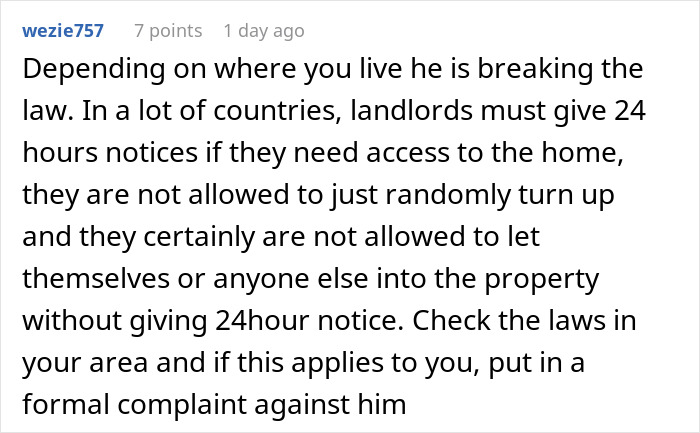
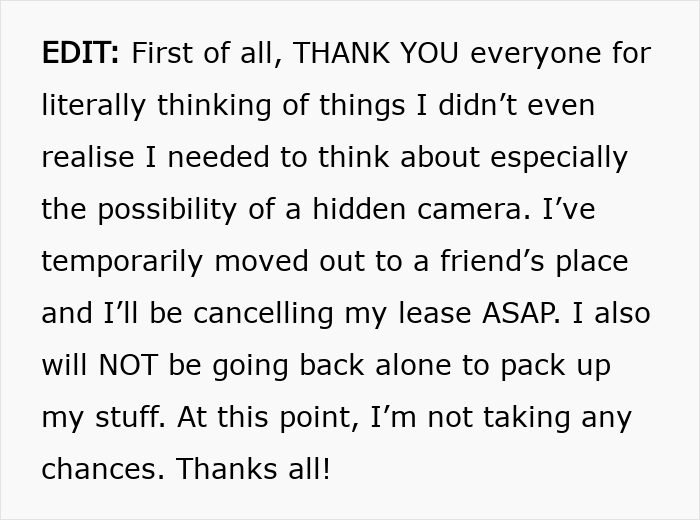
People in the comments were joining the woman’s side and warning her about the landlord’s suspicious behavior