White spots on the skin are easy to dismiss as harmless blemishes, especially when they appear without pain or other noticeable symptoms.
However, when these marks appear in clusters or develop in sensitive areas, doctors warn that they may warrant closer inspection.
A closer look, however, should not lead to home remedies or attempts to extract the bumps, experts caution.
Katy Perry is among the celebrities whose skin bumps have drawn attention when cameras zoomed in on her during red carpet appearances or paparazzi sightings.
Doctors explain what clustered white spots could mean and how to treat them
Getty Images/Unsplash (not the actual photo)
Clustered white spots may be a sign of a common skin condition called milia.
According to the Cleveland Clinic, it causes small, white cysts to form beneath the skin’s surface.
Around 40% to 50% of newborns develop the condition, and adults can experience these tiny bumps, too, the prominent nonprofit multispecialty academic medical center noted.
Rawpixel/Magnific (not the actual photo)
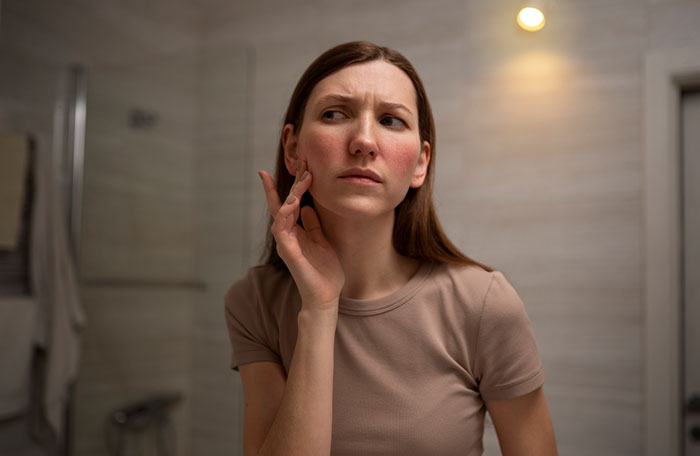
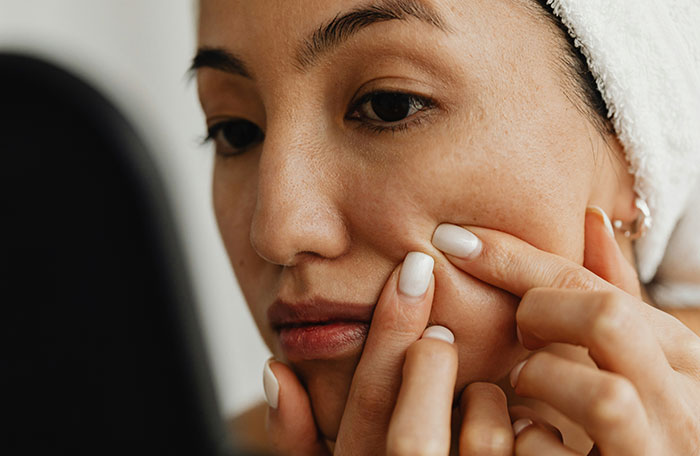
Dr. Marnie Nussbaum, a clinical instructor of dermatology at Weill Cornell Medical College, explained to Women’s Health in June that milia is often mistaken for whiteheads or acne, leading people to squeeze or scrub the affected areas.
However, she said these methods are ineffective because the bumps aren’t filled with liquid sebum or bacteria.
Getty Images/Unsplash (not the actual photo)
Milia often disappears on its own within a few weeks, the expert explained, while also suggesting preventative measures for those who wish to avoid it.
Gentle cleansing can help prevent flaky skin cells from accumulating on the face, which may contribute to milia. Regular exfoliation with skincare products containing alpha hydroxy acids, such as glycolic or lactic acid, can also help prevent buildup.
Retinol, a popular skincare ingredient derived from vitamin A, is another option for managing milia. It is widely used to address concerns such as acne and signs of aging.
“Retinols are extremely helpful as they increase skin cell turnover and therefore help bring cells to the surface to prevent their formation,” Dr. Nussbaum said.
However, she warned against applying retinol to sensitive areas, such as the upper eyelids, as it can cause irritation.
An aesthetic nurse offered further advice, citing Katy Perry as an example of someone with possible milia
Ver esse post no Instagram
Um post compartilhado por Rachel Varga (@rachelvargaofficial)
Rachel Varga, who identifies herself as a double board-certified aesthetic nurse on Instagram, shared a video in April 2025 in which she zoomed in on a picture of the Roar hitmaker.
After pointing out a scar on Perry’s face and fine lines around her lips, Varga added, “I do see a lot of these milia bumps forming.”
She suggested that inadequate skincare and makeup habits could be contributing factors, before echoing Dr. Nussbaum’s warning that scrubbing and squeezing are ineffective ways to address these formations.
In her opinion, one of the best treatments for “these types of milia irregularities” is a HydraFacial.
For those unfamiliar with the procedure, it is a medical-grade, noninvasive skincare treatment that uses a patented vortex-fusion device to cleanse, exfoliate, extract impurities, and hydrate the skin in a single session.
Varga described HydraFacial as “the b*mb,” adding that it would “outperform the old school microdermabrasions, soap peels, salt facials, things like that.”
Milia, however, is not the only skin condition that can cause small, white spots.
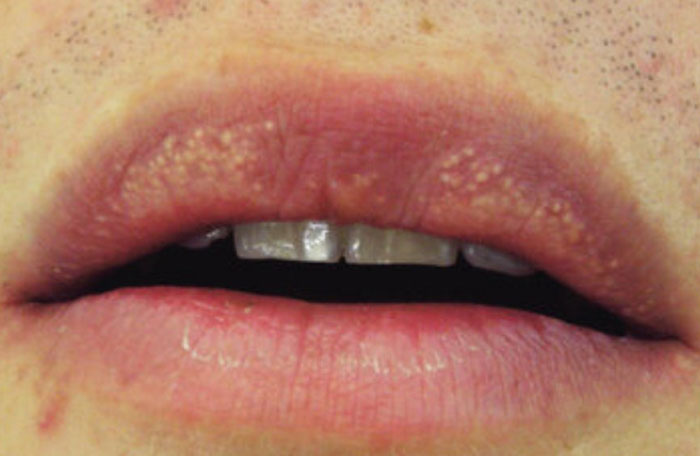
Clustered white spots may also be Fordyce spots, which commonly appear in intimate areas
Magnific (not the actual photo)
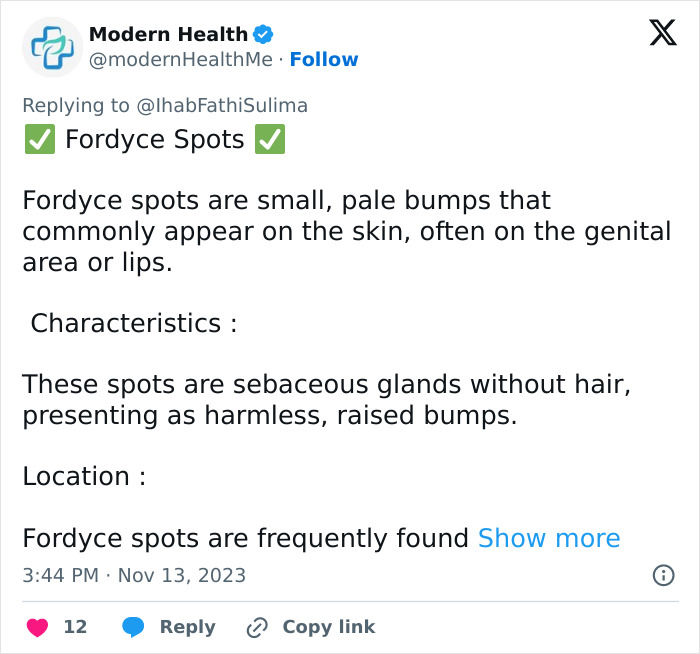
According to the Cleveland Clinic, Fordyce spots are a common condition characterized by small, visible bumps that can appear on mucosal surfaces, including the lips, p*nis, and v*gina.
These spots are not signs of an infection or disease. They occur naturally and may become more prominent with age.
Karolina Grabowska/Unsplash (not the actual photo)
Like milia, Fordyce spots are harmless and generally do not require treatment.
However, for those who wish to reduce their appearance, treatments such as retinoids may help.

Shedrack Salami/Unsplash (not the actual photo)
Cryotherapy is a more invasive option.
The procedure uses extremely cold substances, such as liquid nitrogen, to freeze and destroy targeted tissue.
“Detox from sugar, processed food and preservative,” a netizen suggested as preventative measures for white spots