Kids will be kids. But when it comes to raising tiny humans, not everyone is on the same page. Some parents prefer to keep a close eye on their little ones, while others give them more freedom to explore. And while there’s no single right way to parent, differences in expectations can sometimes cause friction, especially when families get together.
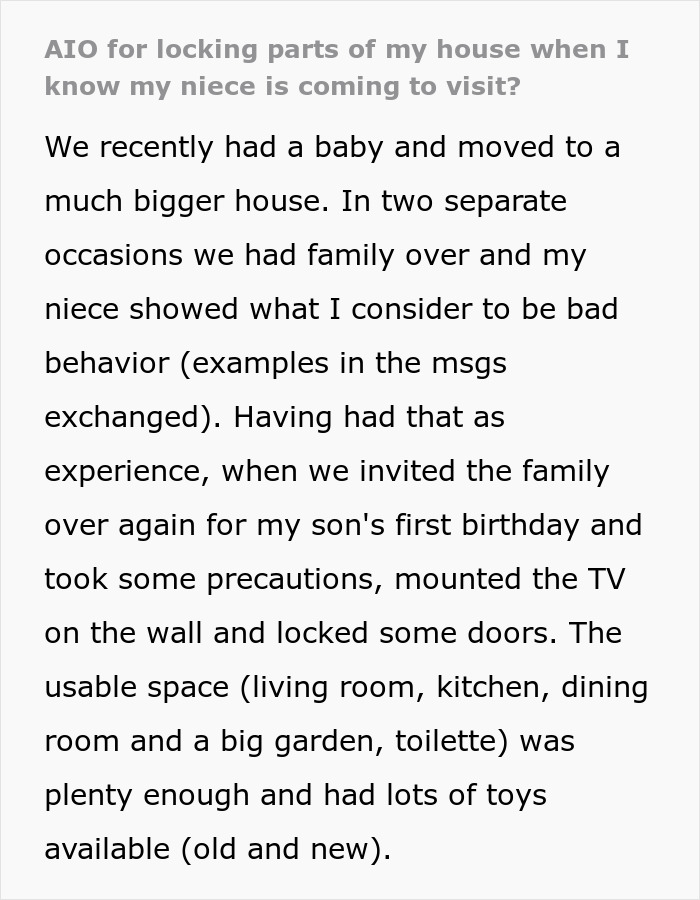
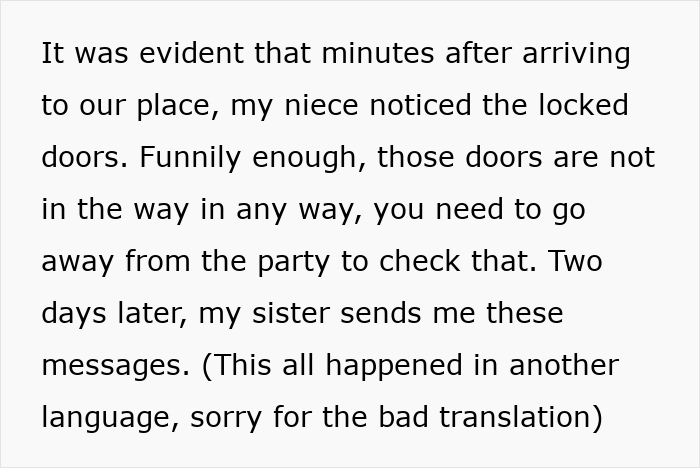
One person found themselves in this exact situation after hosting family at their home. Following two difficult visits from their five-year-old niece, they decided to take precautions before the next gathering. Their sister, however, wasn’t pleased with the decision and made her feelings known, leaving the host wondering, “Am I overreacting?”
Parents don’t always agree on how much freedom kids should have

vkstudio / Magnific (not the actual photo)
What one person sees as a precaution, another might see as punishment
Alex Green / Pexels (not the actual photo)
Parker Coffman / Unsplash (not the actual photo)

Getty Images / Unsplash (not the actual photo)

Curated Lifestyle / Unsplash (not the actual photo)
zhenzhong liu / Unsplash (not the actual photo)

Getty Images / Unsplash (not the actual photo)

ekoneva695 / Magnific (not the actual photo)
When parenting differences spill into other people’s homes
We’ve probably all seen how much parenting styles can differ from family to family—heck, sometimes even from sibling to sibling. And really, how people choose to parent is their own business, provided their children are safe and cared for. But parenting decisions don’t happen in a vacuum, and differences in expectations can become harder to navigate when children visit other people’s homes.
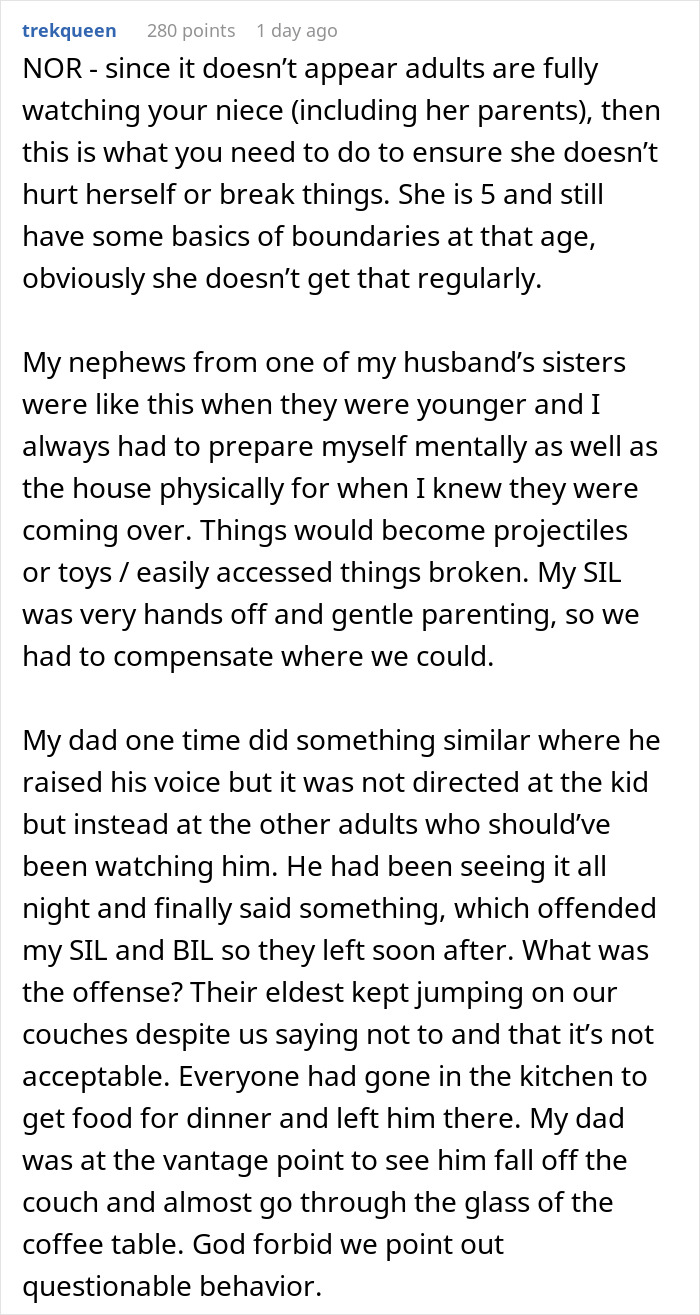
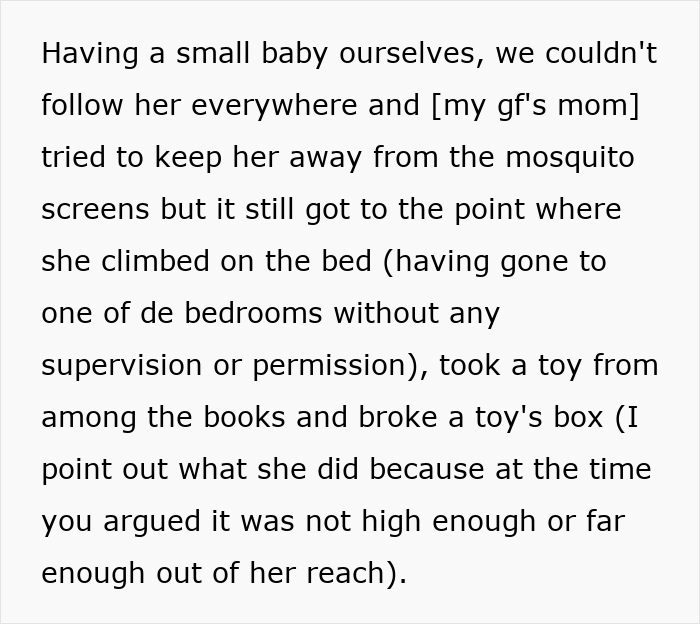
What one parent considers harmless childhood curiosity might strike someone else as crossing a boundary, especially when little hands start reaching for things that don’t belong to them or yoga balls get punted repeatedly at the TV. And when disagreements over a child’s behavior arise, it’s not always easy to address them without ruffling a few feathers.
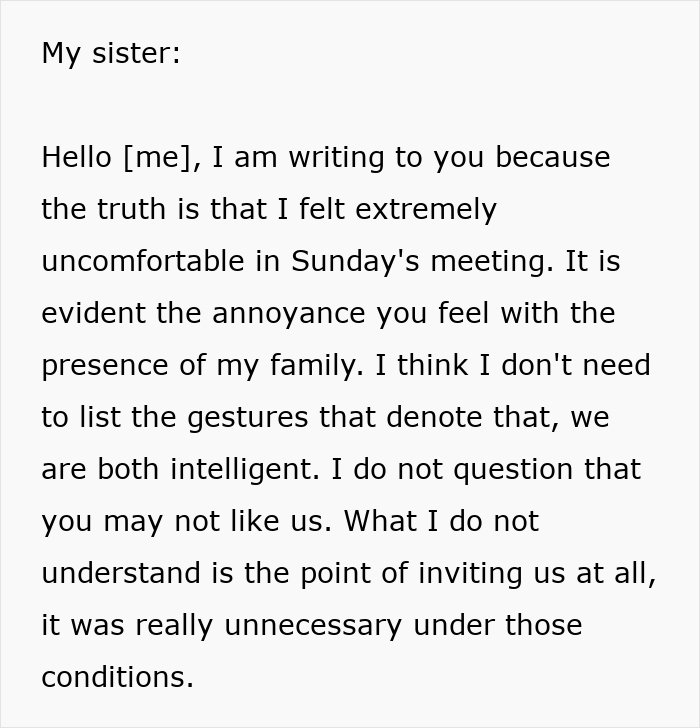
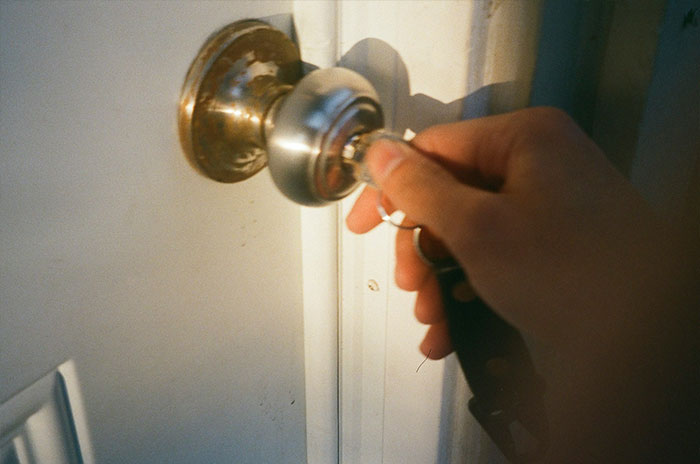
Sometimes, it’s far simpler to mount a TV and lock a few doors.
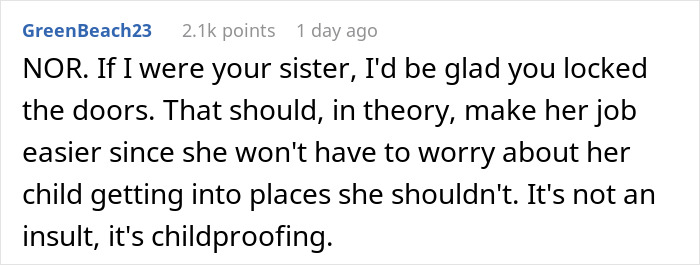
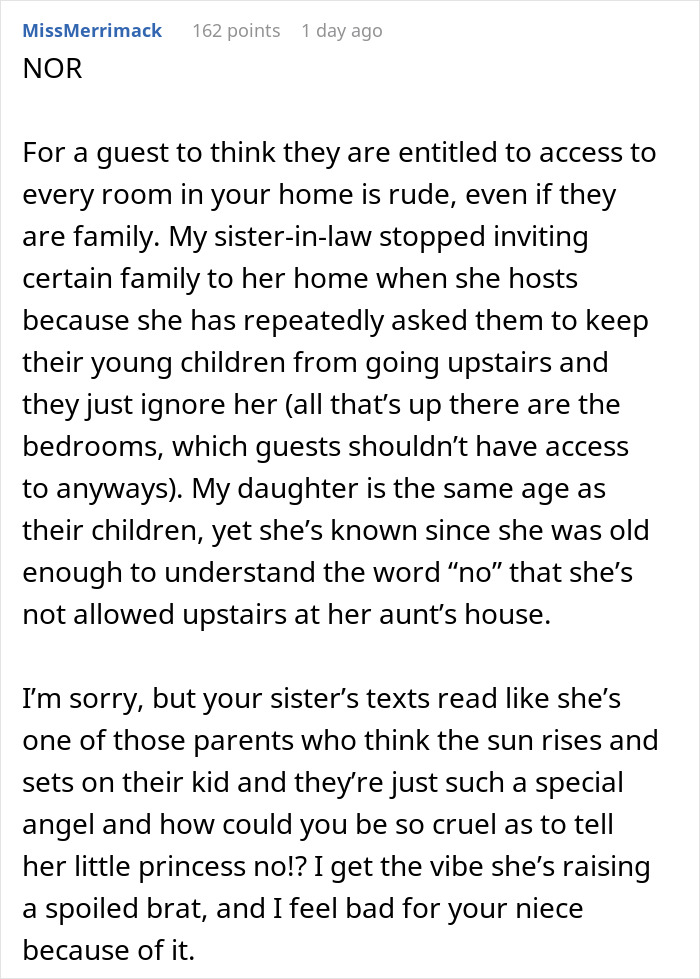
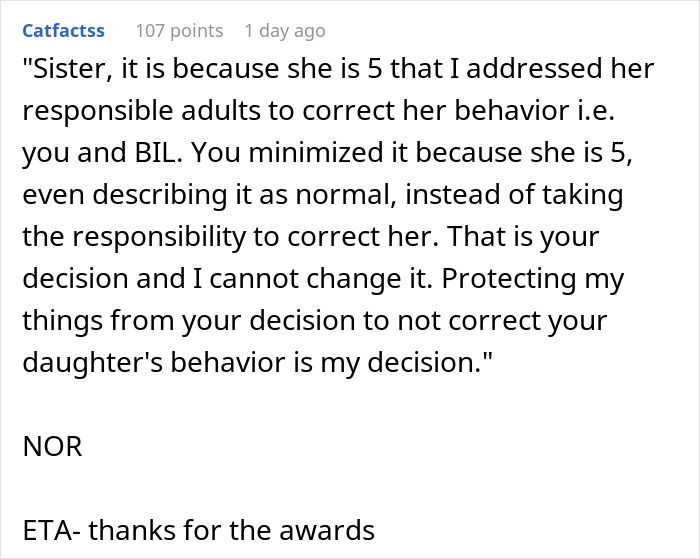
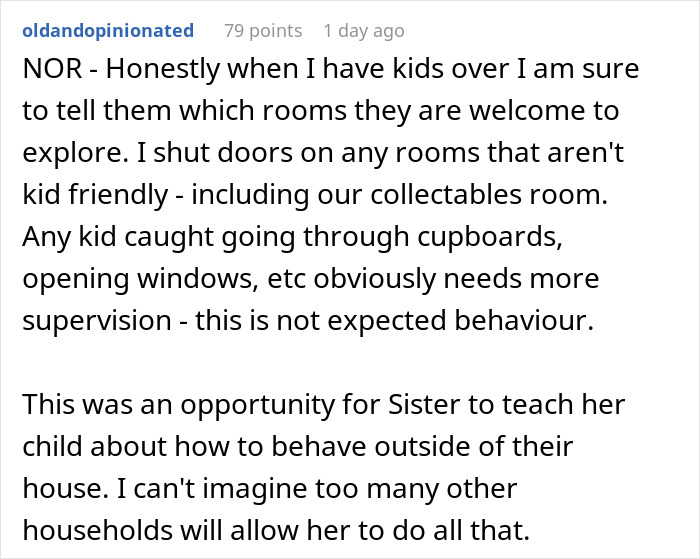
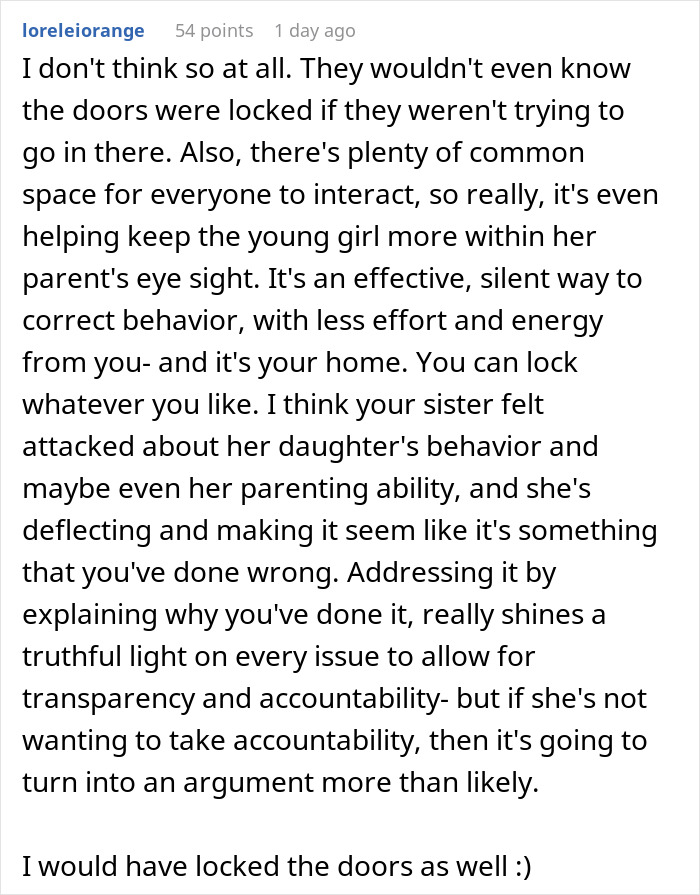
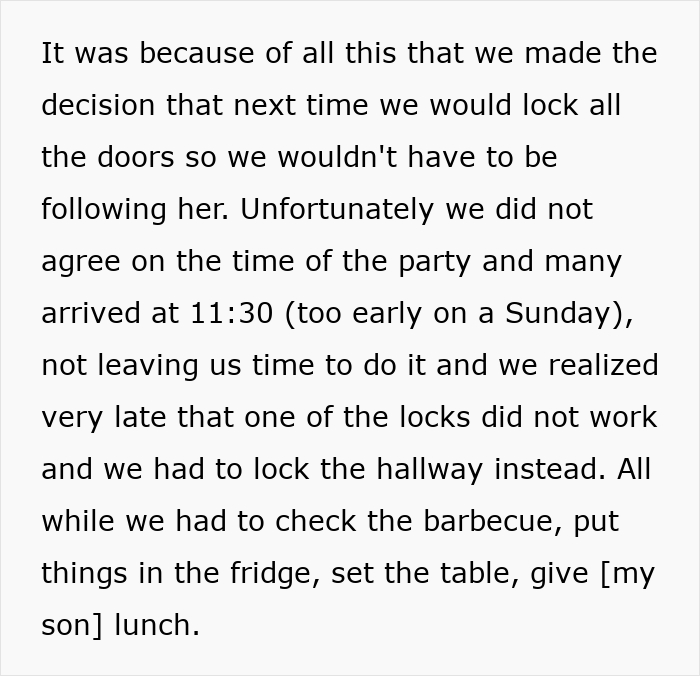
In my humble opinion, this was a perfectly reasonable response. We’ve surely all moved certain things out of reach before having guests over—maybe it’s a box cutter, or maybe it’s something we’d simply rather curious, sticky little hands didn’t touch. The former is so commonplace that it even has a name: childproofing.
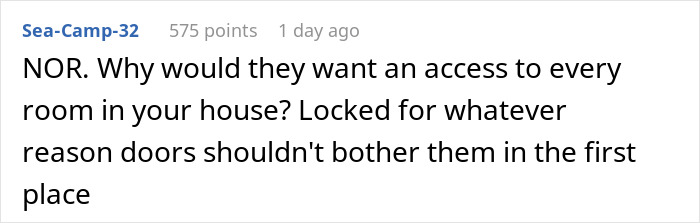
But this isn’t necessarily even about the five-year-old at the center of the story. I don’t know what it says about me or my friends, but I wouldn’t find it the least bit concerning if any of them chose to close off part of their home during a get-together. Everyone is entitled to their privacy, and being invited into someone’s home shouldn’t automatically mean you have access to every room, right?
When boundaries are mistaken for rejection
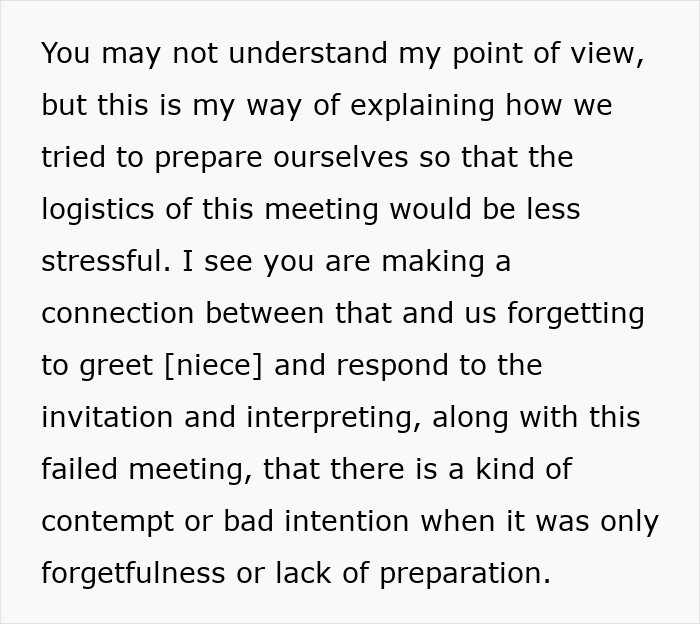
Of course, not everyone will see it that way. What one person considers a reasonable precaution might feel like a personal slight to someone else—especially when family is involved and the decision feels like a judgment of their parenting. But setting a boundary isn’t necessarily about pushing people away, even if that’s how it comes across.
Writing for Psychology Today, Ilene Strauss Cohen, PhD, describes boundaries as guidelines that help people communicate what they consider acceptable and unacceptable behavior. As she puts it, “They are not walls to keep others out; they are guidelines that help us express our needs and expectations clearly and assertively.”
Boundaries don’t necessarily have to accommodate everyone else’s needs, either, licensed marriage and family therapist Angela Sitka explains to Time. But they’re also not selfish: they can benefit the relationships themselves.
Sitka explains that healthy boundaries can help people feel safer, reduce conflict, and even bring family members closer together. As she puts it, they can help create relationships where people can “enjoy people’s presence more and be present in the moment with them.”
In other words, setting a boundary doesn’t automatically mean you don’t want someone around. Sometimes, it’s what allows you to enjoy having them there in the first place.
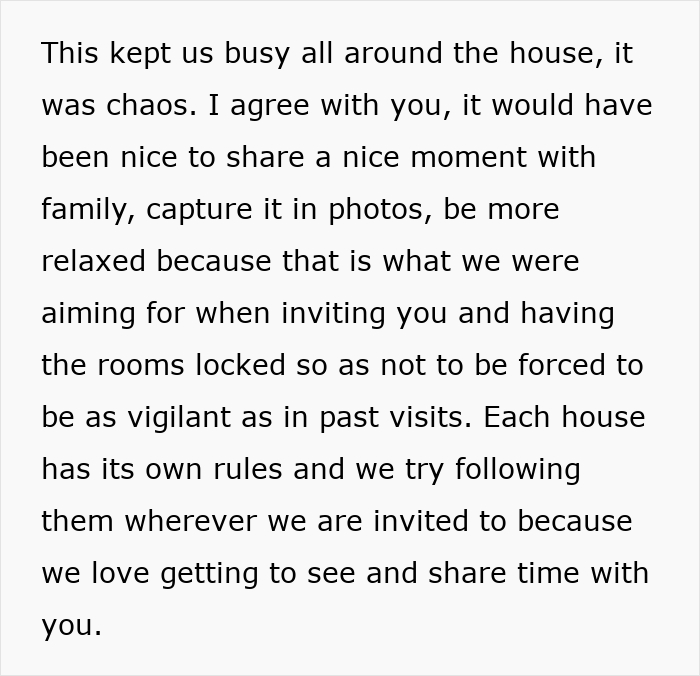
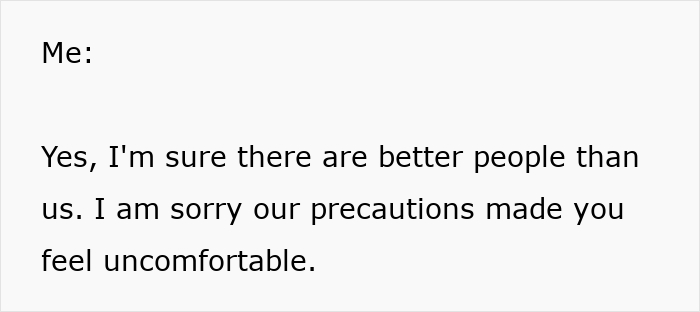
The poster seems to share that sentiment, writing to their sister, “Each house has its own rules and we try following them wherever we are invited to because we love getting to see and share time with you.”
As for the sister’s claim that the poster was out of touch with “the real world” for expecting a child to follow the rules of someone else’s home, I’ll leave that for you to weigh in on in the comments.
The poster responded to a few comments
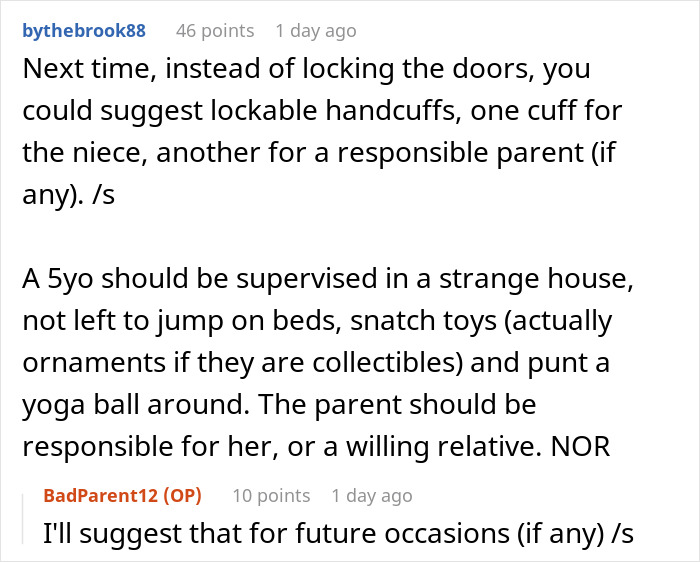
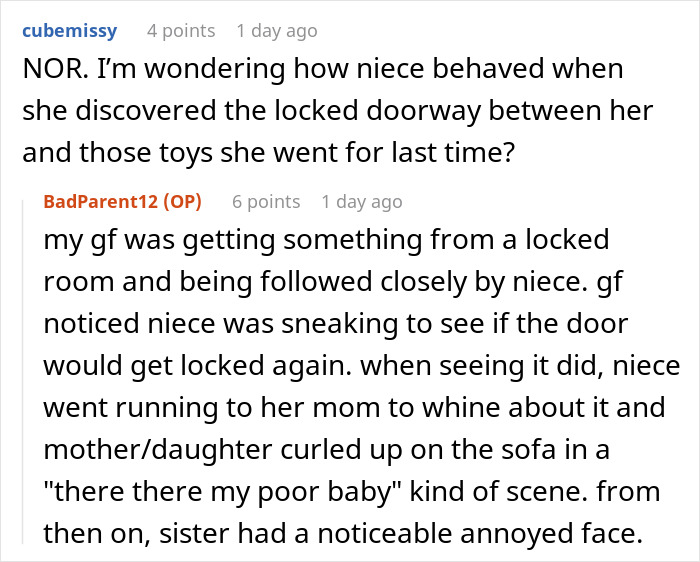
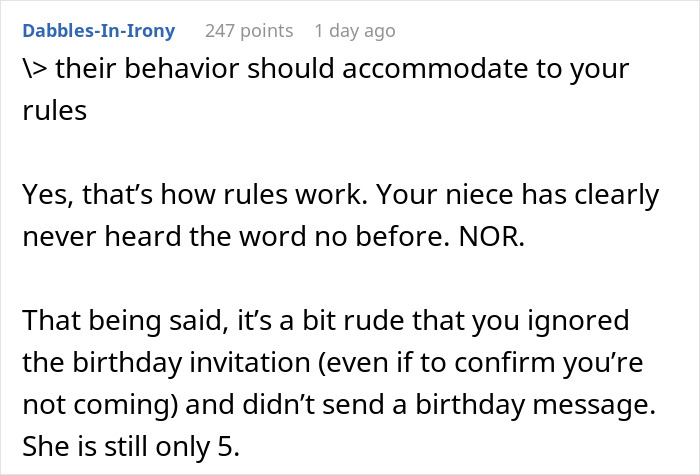
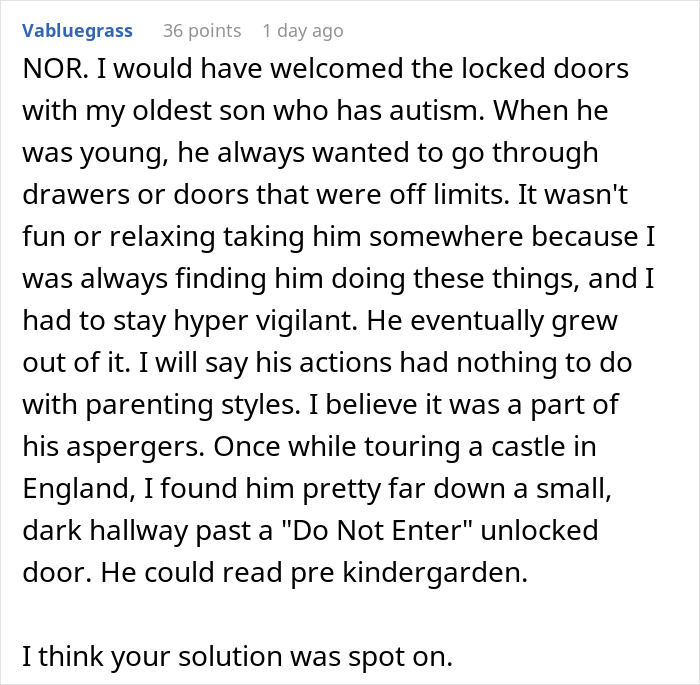
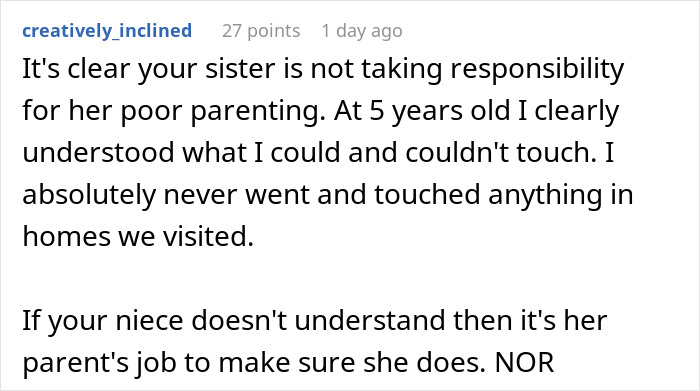
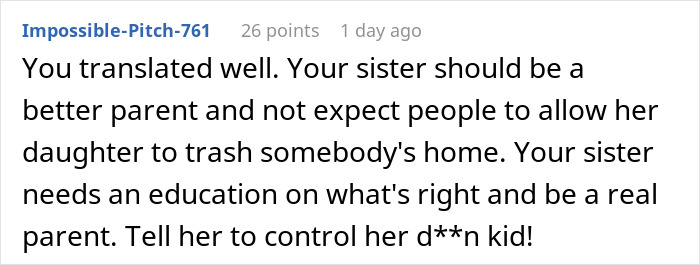
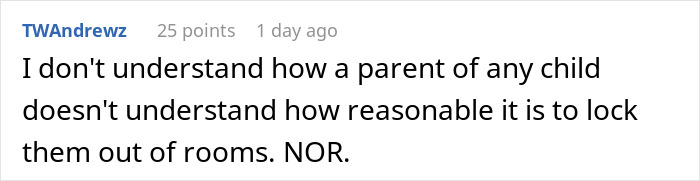
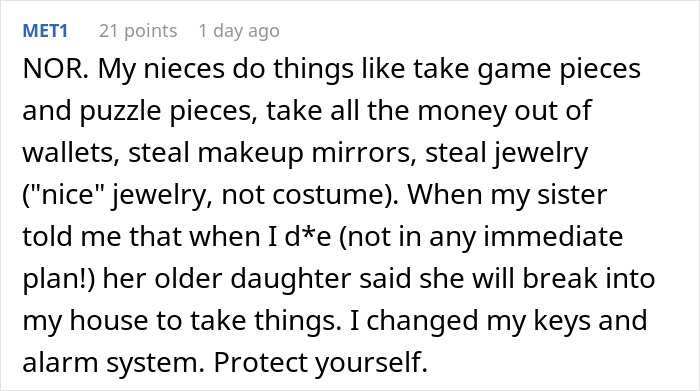
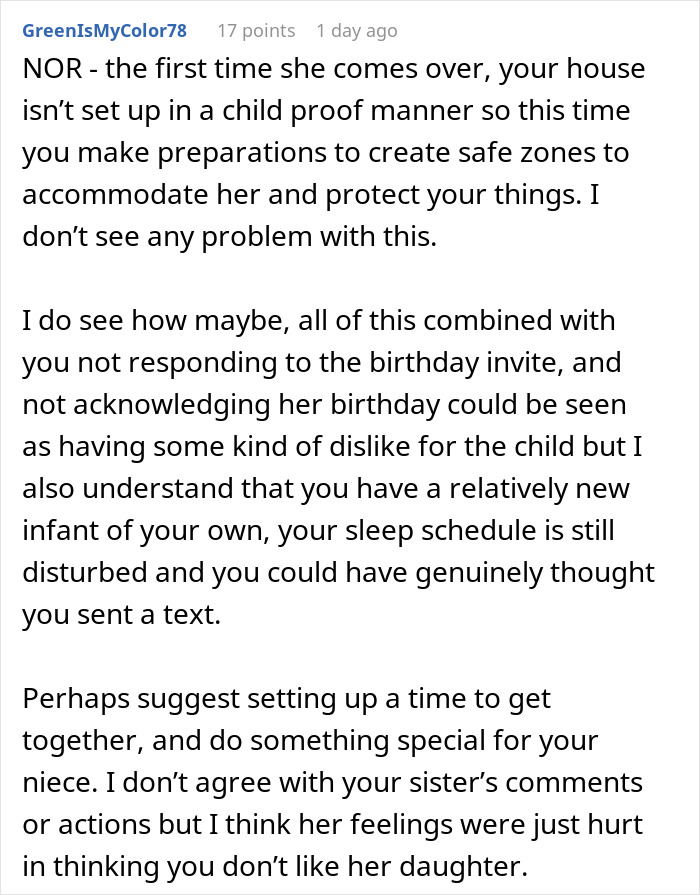
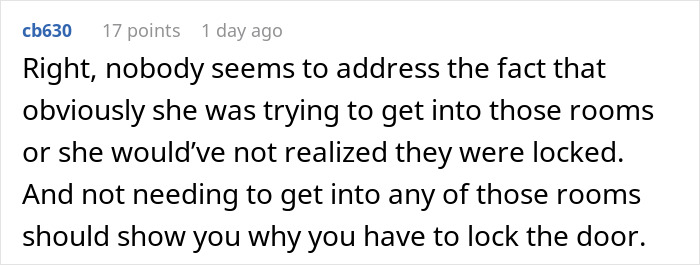
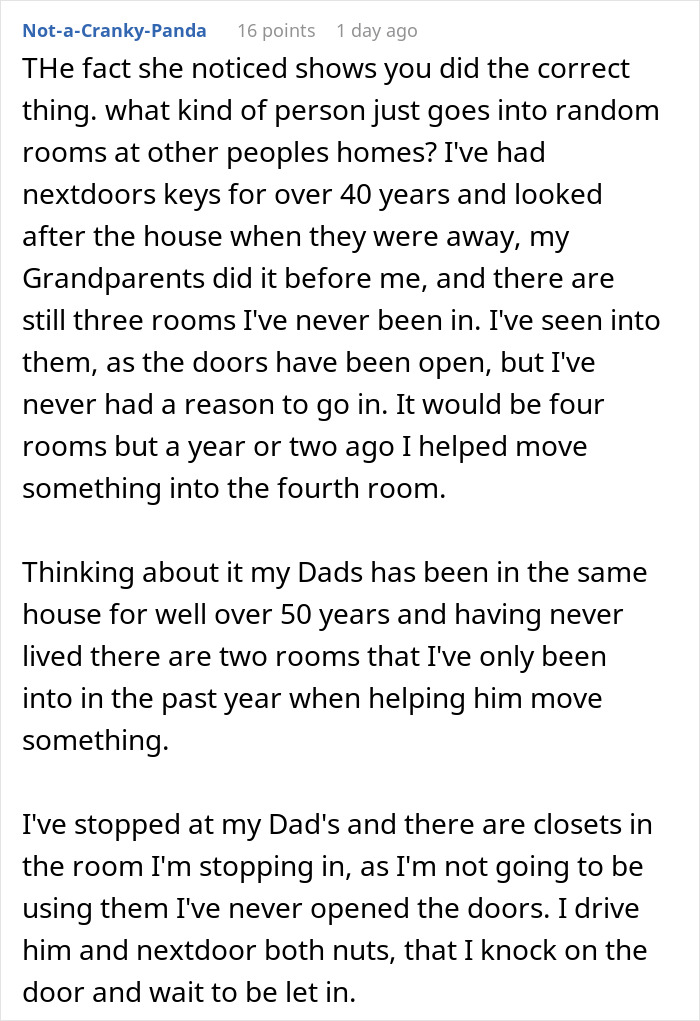
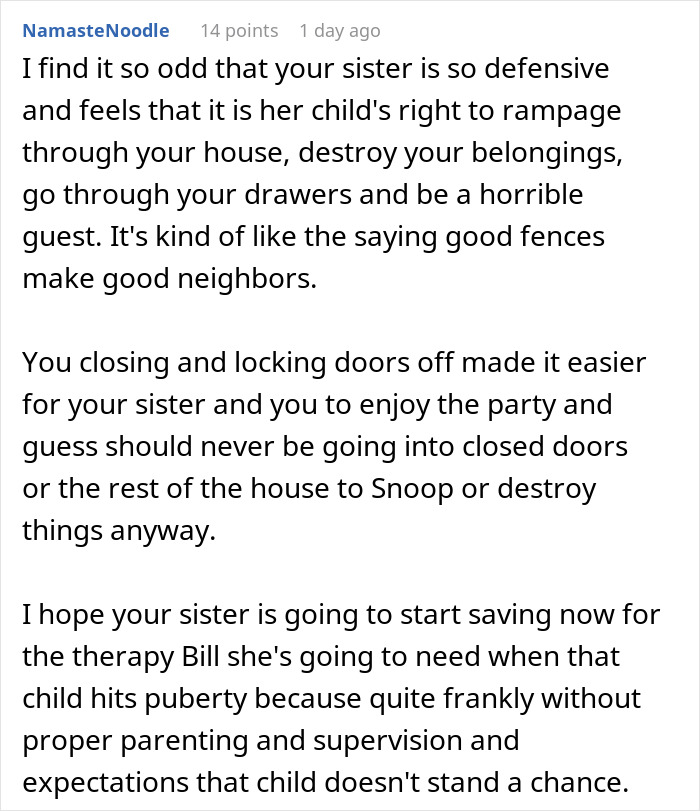
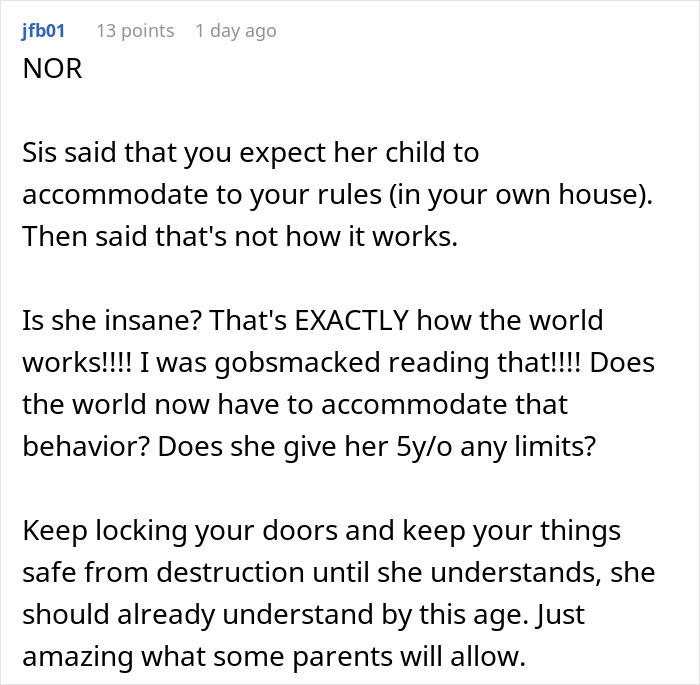
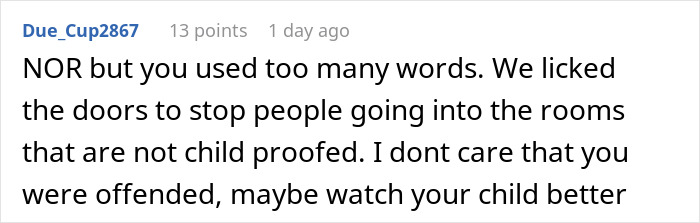
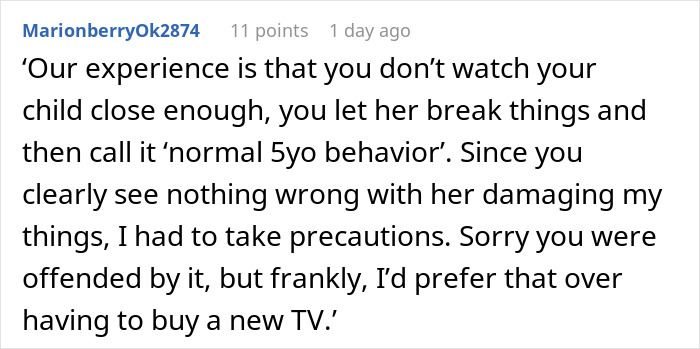
“I think your solution was spot on”: Commenters backed the poster’s decision to lock the doors