Money is a sensitive issue even in the best of circumstances. The topic is even more delicate when you’re discussing it with people in your close social circle, like your friends. When someone’s acting unfairly and eyeing your wallet, it’s a tough balance to strike between defending your boundaries and keeping your relationships intact
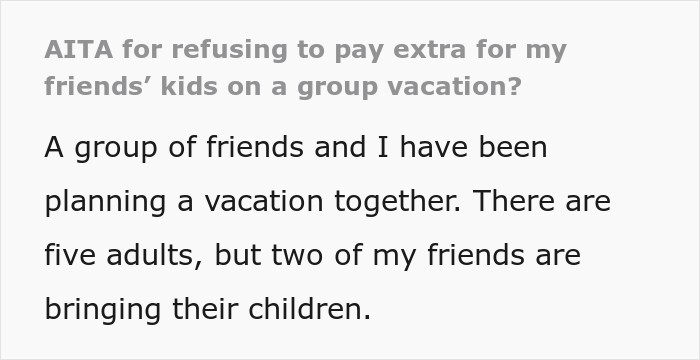
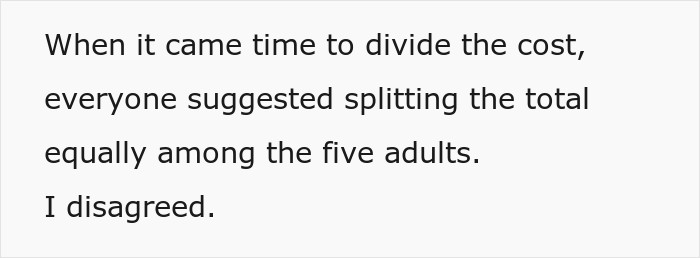
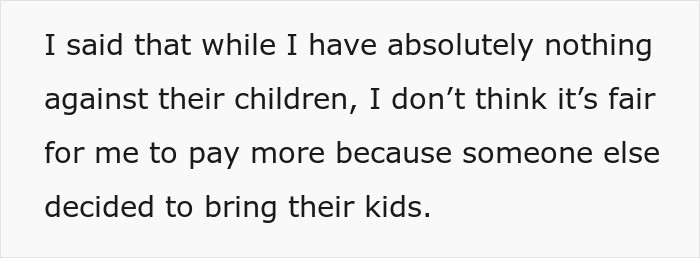
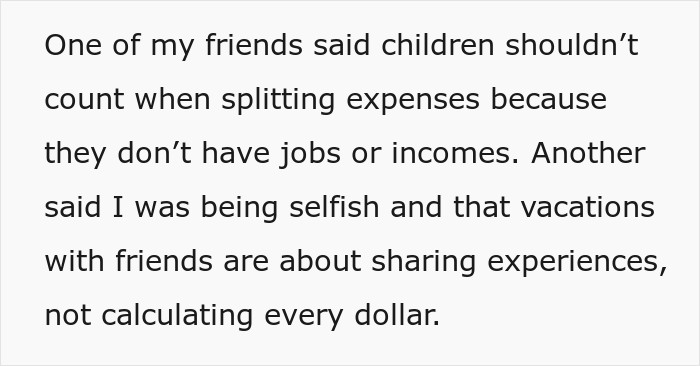
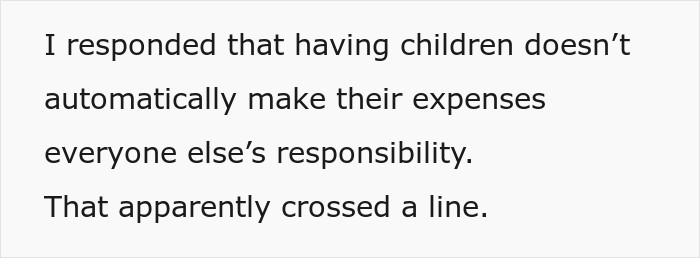
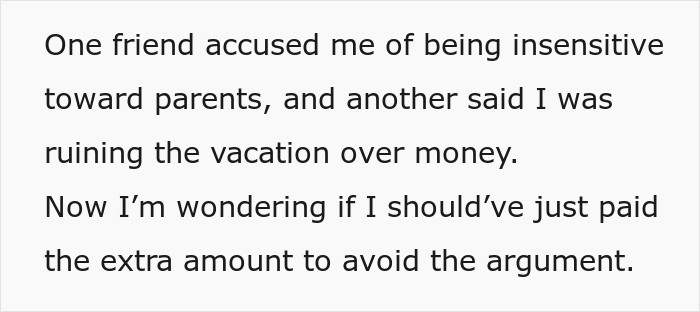
One man opened up online about how standing his ground when planning a vacation for friends sparked major drama. According to him, two of his friends decided to bring their kids, which upped the price of their accommodation. His friends were furious when he refused to divide the new cost equally.
It’s sad when your friends see you as a generous piggy bank to cut personal costs

xapdemolle/envato (not the actual photo)
This man shared why he decided to stand up to his friends after they decided to bring their kids on vacation


perfectlab/magnific (not the actual photo)

Friendship is a two-way street. It’s important that you figure out ASAP how much you’re willing to support your friends financially, if at all
When it comes to finance-related questions, a lot depends on how you and your friends have traditionally approached these issues. What are the precedents? How have you usually divided up the costs for short trips, accommodation, long vacations, dining out, etc.?
That being said, it is completely natural to be upset when someone close to you asks you to pay more for a very personal decision they made. You can be fine with your friends bringing their children on the group vacay without wanting to pay more for the additional costs.
It’s easy to demand that your friends be more generous with their cash, when it’s you who ends up saving money. Friendship—real friendship that is, not fair-weather friendship—is a two-way street. It requires a give-and-take mindset.
If you notice a trend where all your friends do is ask for favors without reciprocating, it should set off your alarm bells. The healthy approach isn’t just to criticize your friends’ behavior, but to put yourself under the microscope, too. Think about how much you’re contributing to your relationships and try to be objective about whether you’re generally too generous, or… just a tad too selfish.
At the end of the day, though, you are responsible for setting, communicating, and protecting your boundaries. You can stand to be a tad more flexible with them with your family and friends as opposed to colleagues and complete strangers. But having no boundaries is not an option (unless you’re a fan of frustration, resentment, burnout, and stress!).
“The first step to establishing healthy boundaries is figuring out what you want them to look like. Ask yourself what you need from your friends, but also what you can offer them. Once you have clear answers to these questions, think about what parameters you can erect to cultivate these preferred dynamics,” Business Insider suggests.
For instance, if you feel like your friends are (not so) subtly encouraging you to pay for them or are asking for money, your best strategy might be very simple—honesty. For example, you can refuse their request for a financial favor and then offer to help them another way.
This way, you show them that you still care about them, but you’re also not sidelining your own needs. You have to find what you’re personally (un)comfortable doing for your friends. How much do you want to support them, no matter if they pressure you or not?

The Yuri Arcurs Collection/magnific (not the actual photo)
Clear boundaries are healthy for you and your relationships. You should not feel guilty about putting your well-being first
Meanwhile, if your friends keep having financial problems, paying for them, covering their expenses, or giving them loans is probably not the best approach. Think about the long term. They could probably use financial advice about budgeting, investing, getting a better-paying job, etc. instead.
“Your friends’ lives are their own, your life is your own, and your friendship isn’t a transaction — it’s a connection. That connection does not require you to financially contribute to your friends’ lives, but it does necessitate that you view them and their situations with empathy and, if you feel you have the capacity, think about how you can show up for them in other ways,” BI explains.
Fake friendships can affect our mental and emotional health. According to Verywell Mind, they can negatively impact you and make you feel the following:
- Disappointment
- Betyrayal
- Anger
- Hurt
- Self-doubt
- Low self-esteem
- Cynicism
- Trauma
Aimee Daramus, PsyD, a clinical psychologist at Clarity Clinic, Chicago, urges people to trust their instincts when it comes to friendships. Meanwhile, let your friends know exactly what you need from them. This way, you’re giving them a chance to “show up for you” while you pay attention to their actions and words.
If you decide to confront your friends, you have to be prepared for them to get defensive or be in denial. Meanwhile, focus on establishing clear boundaries. They have to understand that you will not help them unless things change.
According to Dr. Daramus, you have to be willing to limit contact with your friends if they continue disrespecting you. In short, there have to be consequences for ignoring your boundaries.
You should not feel guilty about prioritizing your personal happiness and well-being. Though, from experience, many of us know how guilty we feel for saying “no” even when we’re being entirely reasonable.
We want to hear from you, Pandas! Share your perspective and experiences in the comments. How would you have handled the situation if your vacation for friends suddenly got a lot more expensive because someone decided to bring their kids? When was the last time you felt that a friend treated you and your finances unfairly? Tell us all about it.

svetlanasokolova/magnific (not the actual photo)
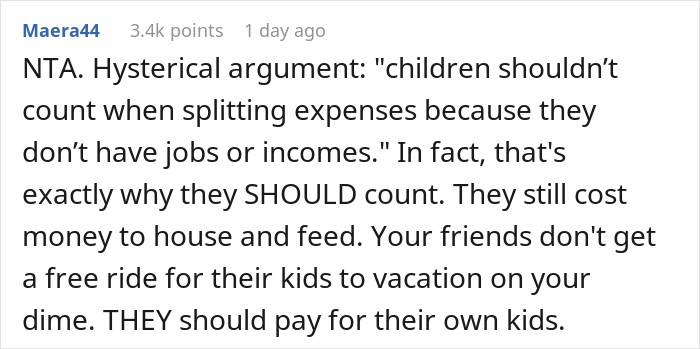
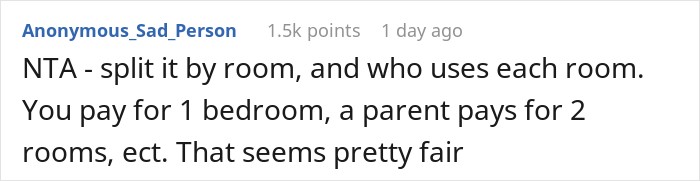
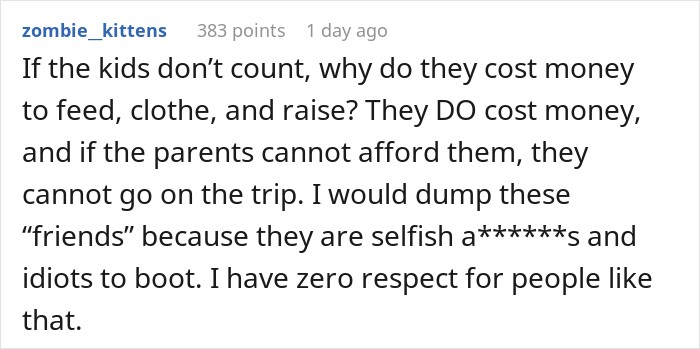
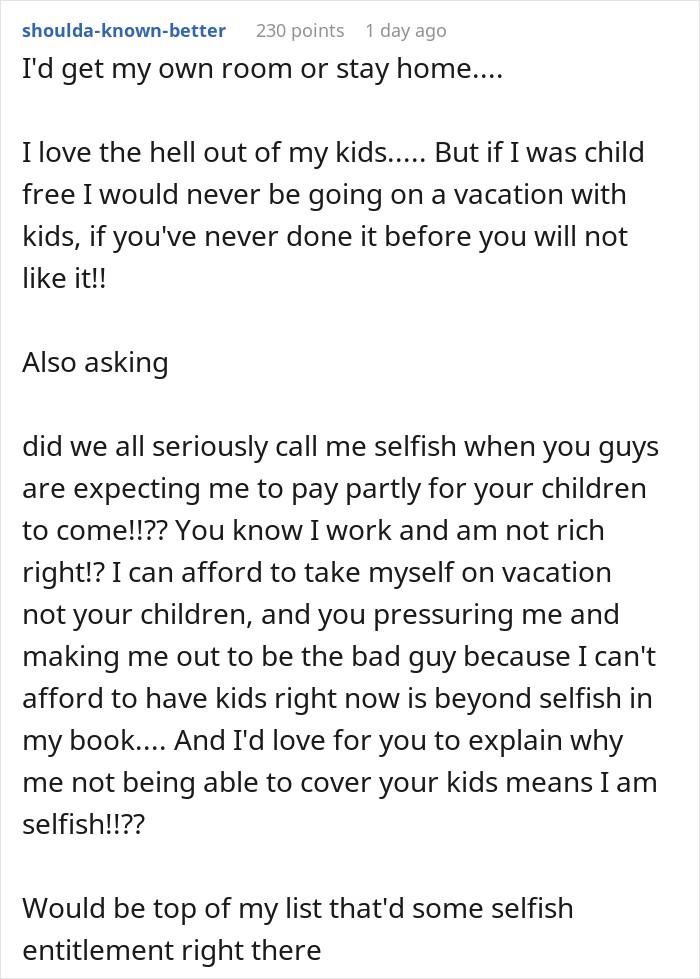
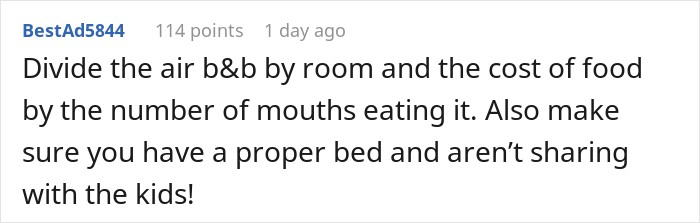
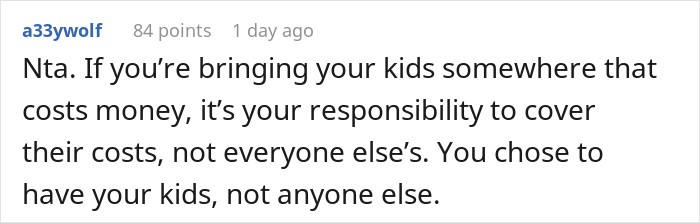
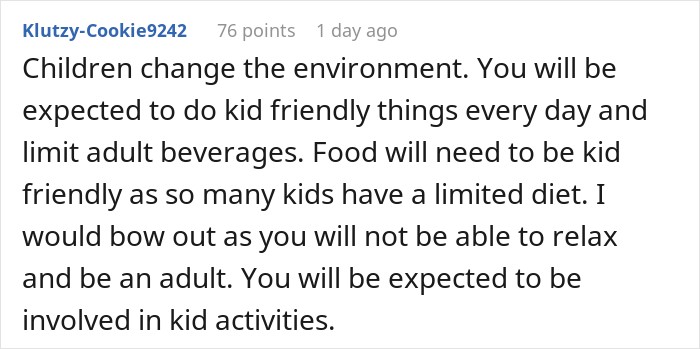
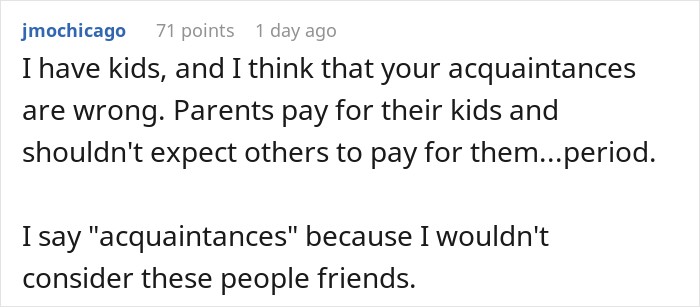
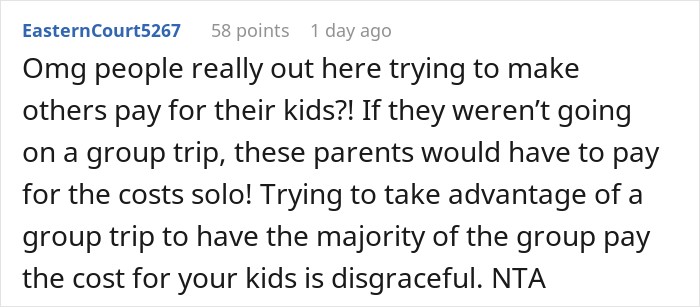
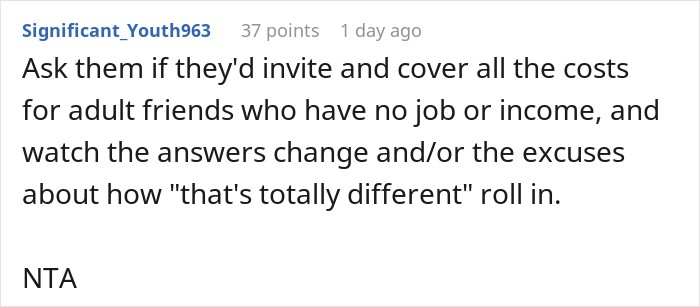
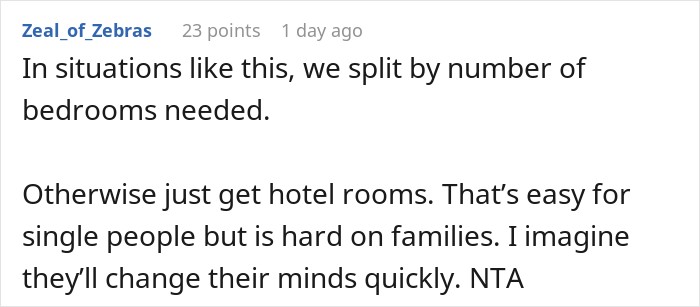
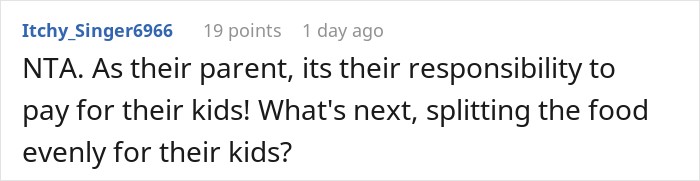
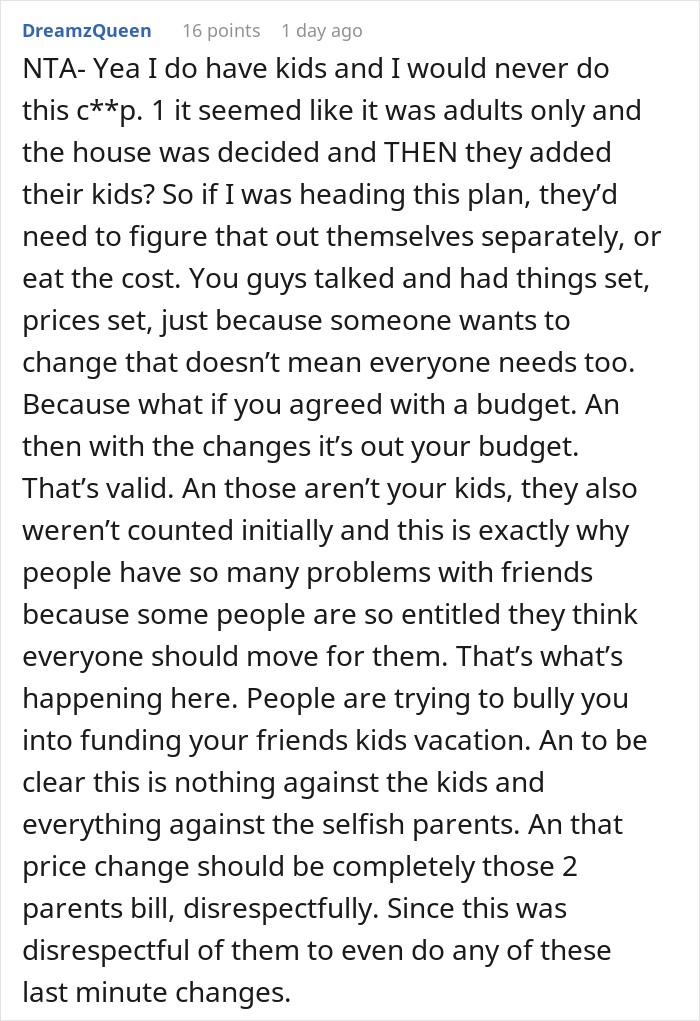
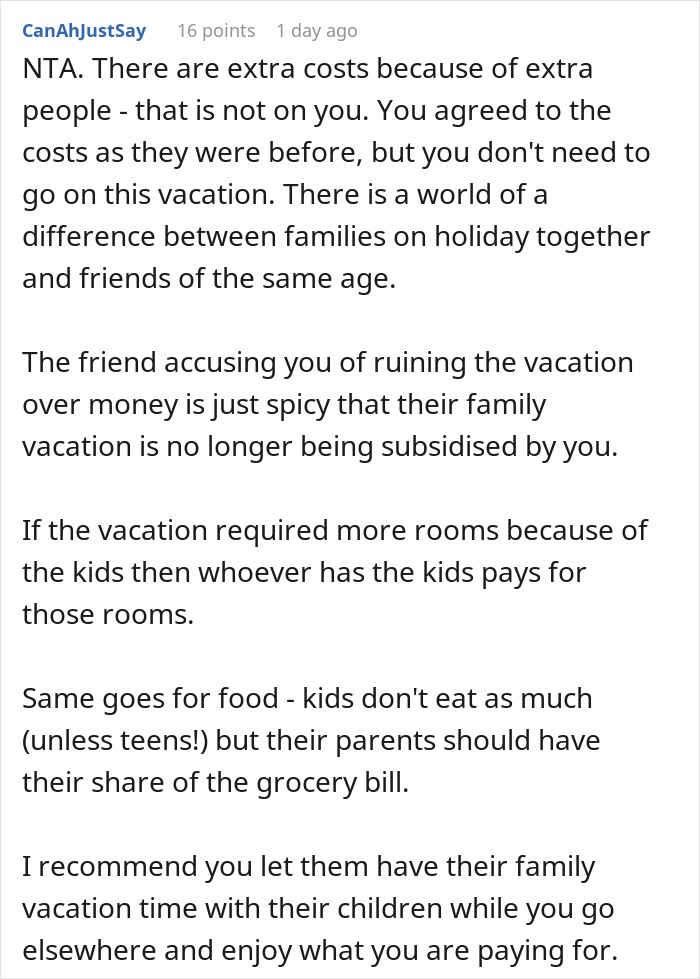
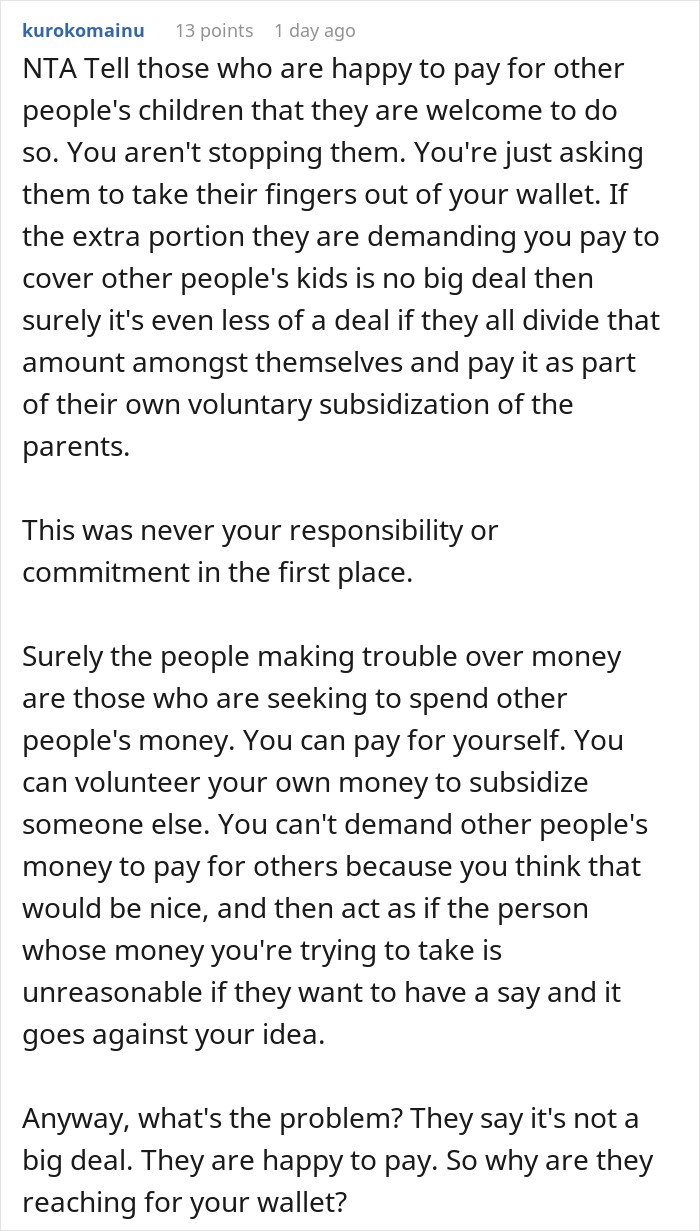
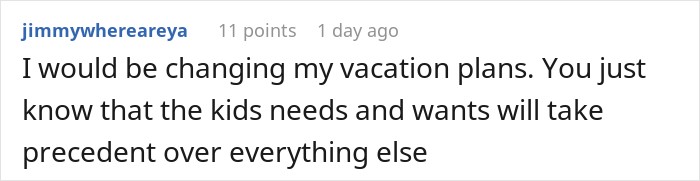
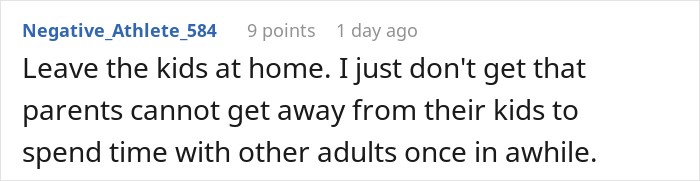
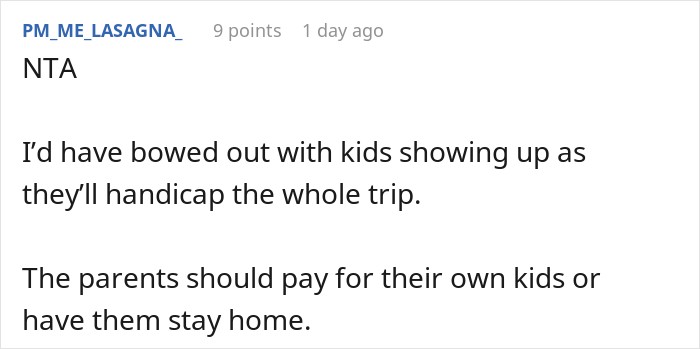
The internet had a lot to say about the viral friend vacation drama. Here are some people’s thoughts











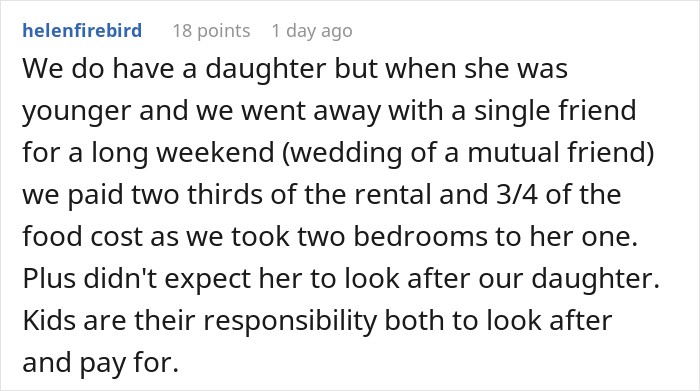
Someone had a similar story to share. Here is what happened