
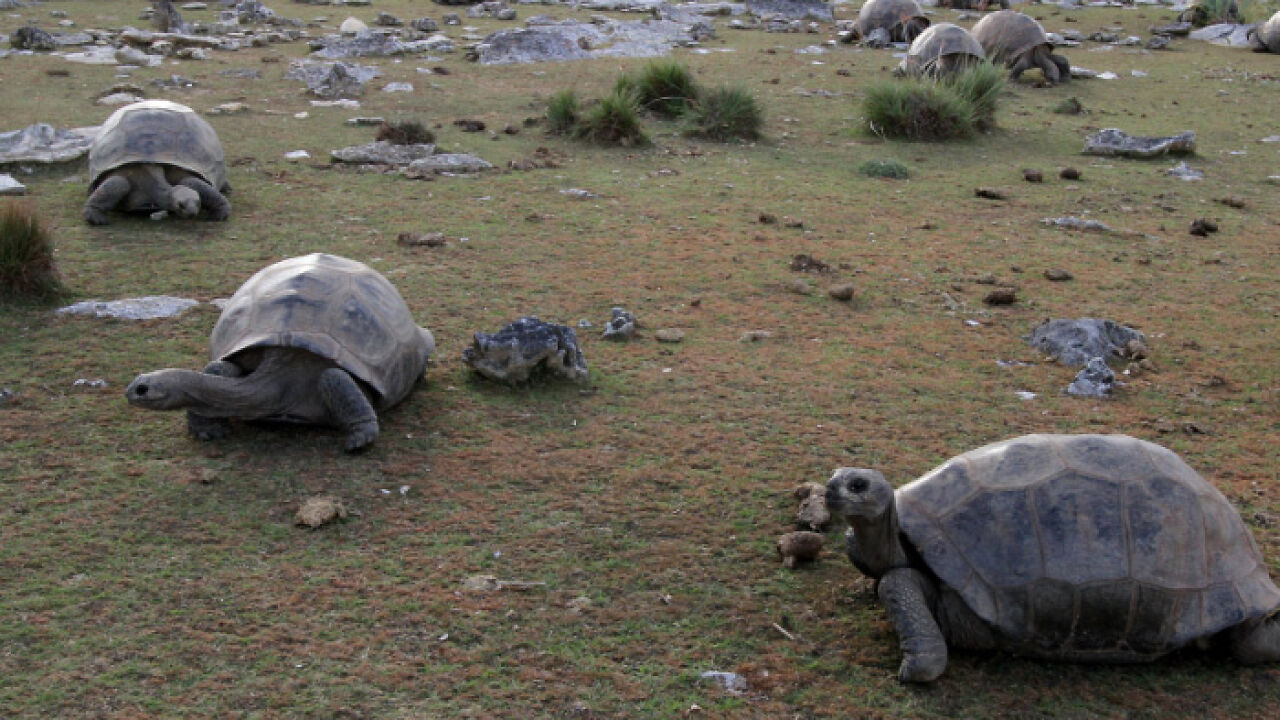
Imagine an island where giant tortoises outnumber the people living in the entire country.
For one particular island off the coast of East Africa, this is not an exaggeration but an actual reality.
Researchers have made an extraordinary discovery related to giant tortoises, a species that was once pushed dangerously close to extinction.
Giant tortoises currently outnumber the entire human population of Seychelles
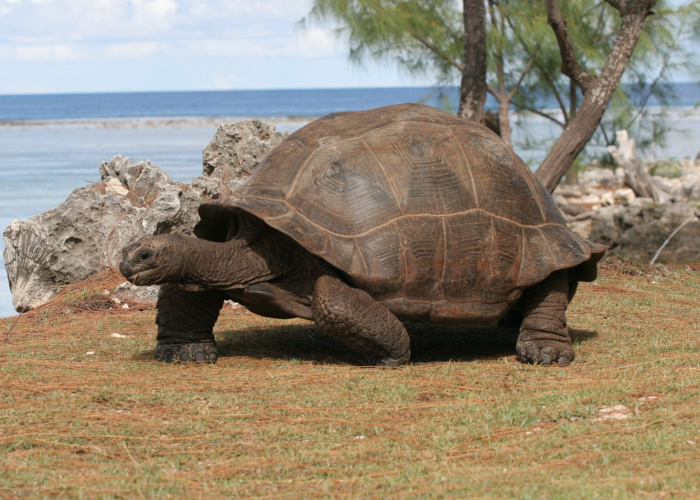
University of Exeter/FotoNatura

A landmark survey has revealed that Aldabra Atoll in the Seychelles is home to approximately 180,000 free-roaming giant tortoises.
Roughly 180,000 of these giant reptiles inhabit the remote atoll, exceeding the tiny archipelago nation’s human population of around 122,000.
The survey marks a major milestone for the Aldabra giant tortoise population and is the most rigorous estimate of the species’ numbers to date.
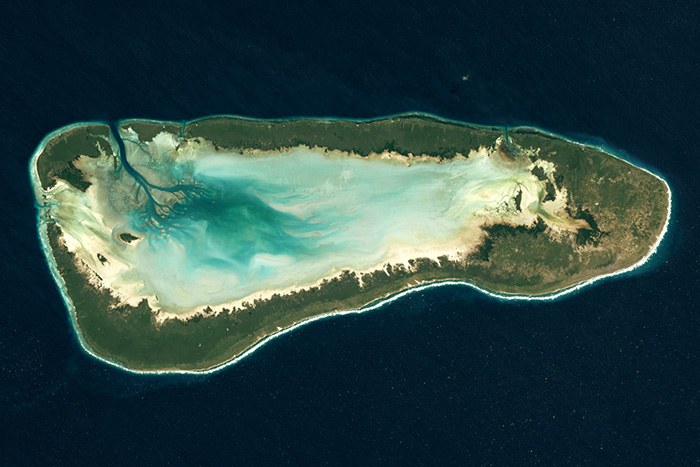

There was a time when the giant tortoise was in serious trouble.
The relentless exploitation in the 19th century meant that fewer than 1,000 Aldabra tortoises were left on the island. But a recovery program led to the island becoming strict with its conservation efforts over the last few decades.
Today, the picture looks dramatically different.
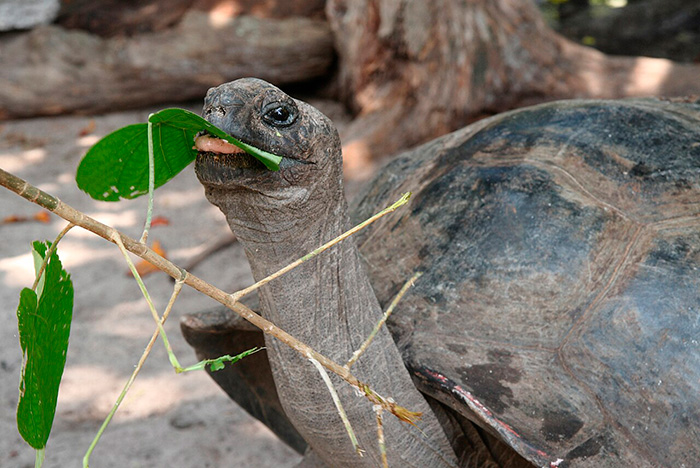
Scientists discovered around 180,000 giant tortoises roaming freely in Aldabra Atoll
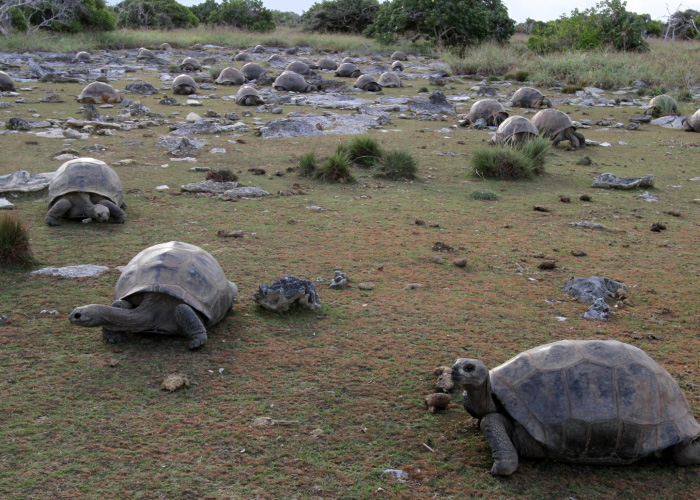
University of Exeter/Dennis Hansen
The recent study led by the Seychelles Islands Foundation (SIF) and the University of Exeter analyzed five years of monitoring data collected between 2018 and 2022 to estimate the current population.
Researchers concluded that there were almost 183,000 adult and subadult tortoises, making the latest numbers the highest recorded population figure for the species.


This is “proof of what long-term commitment to conservation can achieve. This is wonderful news for Seychelles, for the world and for everyone who has worked to protect Aldabra,” said Dr. Frauke Fleischer-Dogley, CEO of SIF.
The latest figures are the first update since a widely cited estimate of 100,000 tortoises in the late 1990s.
Less than 1,000 Aldabra giant tortoises were left on the island in the 19th century, but they’ve made a remarkable recovery
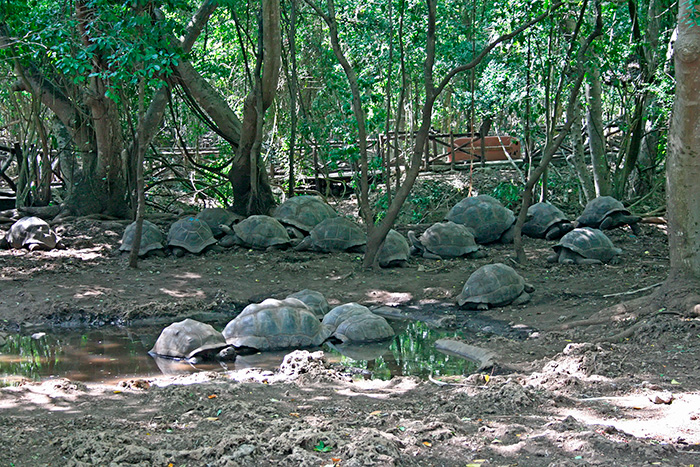
While the population estimate is certainly reason to celebrate, researchers said the new figure should not be seen as evidence of the number of tortoises nearly doubling since the last estimate.
The difference largely comes down to how the animals were counted.
Previous surveys did not include tortoises present on the island but not spotted by surveyors, possibly because the animals were hiding in the shade or vegetation.
Aldabra Atoll is one of only two places in the world where giant tortoises are found in the wild, with a much smaller population living in the Galápagos.
Apart from Aldabra Atoll, the only other place in the world where giant tortoises are found in the wild is Ecuador’s Galápagos Islands, which is home to a much smaller population.
The island’s giant tortoise monitoring program is “one of the longest-running in the region”
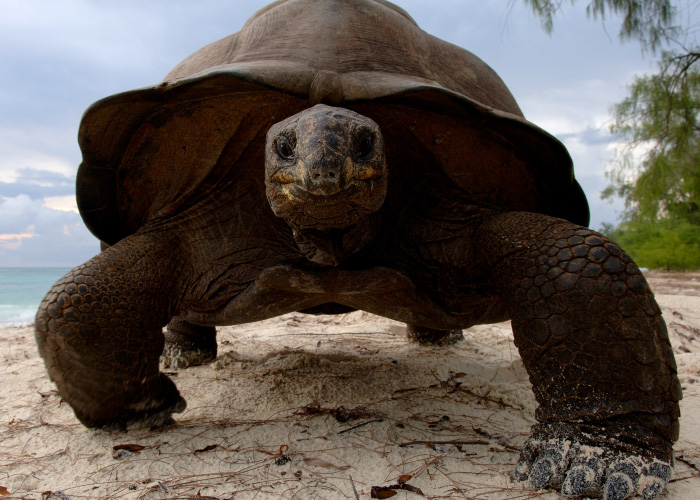
Nancy Bunbury, one of the study’s co-authors, said Aldabra’s giant tortoise monitoring program is “one of the longest-running in the region.
But the island’s dense vegetation makes it hard to count the reptiles in some places.
“By modeling what we didn’t see, as well as what we did, we’ve produced the most reliable baseline yet for this iconic Seychelles species, establishing a benchmark we can use to track the population for decades to come,” she said.
Visited the Giant Tortoise Enclosure at the Seychelles National Botanical Garden with President Dr. Patrick Herminie.
The Aldabra Giant Tortoise, which is native to Seychelles, is among the largest and longest-living species on Earth, with some of them witnessing over two centuries of history.
The Aldabra Giant Tortoise also have an association with the special friendship between India and Seychelles. In 2014, two of them were gifted to the Alipore Zoo in Kolkata. A few years later, Seychelles gifted a few more tortoises to Hyderabad Zoo.
@StateHouseSey
— Narendra Modi (@narendramodi) June 27, 2026

While the findings of the latest survey are encouraging, researchers said the Aldabra giant tortoises still face several threats.
This includes climate change causing longer and more frequent droughts, consequently affecting the animals’ shade and available food.
Feral cats and black rats also pose a threat, as they feast on eggs and hatchlings of the giant tortoises.
The new numbers should be treated as a “baseline” and not the “endpoint,” experts said
View this post on Instagram
Dr. Dave Hudson, postdoctoral research associate at the University of Exeter, Cornwall, pointed out that the work continues, despite the new positive results.
“These results are great news for the tortoises and testament to the fantastic work done in the field,” he said before asserting that the new numbers should be treated as a “baseline” and not the “endpoint.”
“Hopefully we have provided the conservation managers the evidence they need to track future change and act early as the tortoises face increasing pressures from climate change, drought and invasive species,” he added.
“Very glad to hear that!” one commented on the news


