Having a childhood friend means sharing years of memories, growing up together, and knowing each other in a way few people do. But sometimes, even the closest friendships can take an unexpected turn.
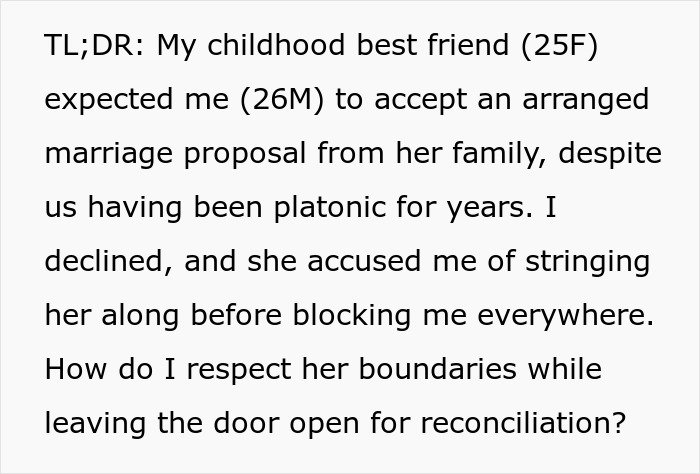
One man learned this the hard way when his family told him that his childhood best friend’s parents had proposed that the two of them get married. He was completely caught off guard. When he turned down the proposal, things took a turn he never saw coming. Keep reading to find out what happened.
Many people value childhood friendships because they offer a special kind of bond built on trust and unconditional support

magnific / magnific (not the actual photo)
For one man, that lifelong friendship took an unexpected turn when he found out his childhood friend had expected him to marry her


magnific / Magnific (not the actual photo)




magnific / Magnific (not the actual photo)








karlyukav / magnific (not the actual photo)




user18526052 / magnific (not the actual photo)
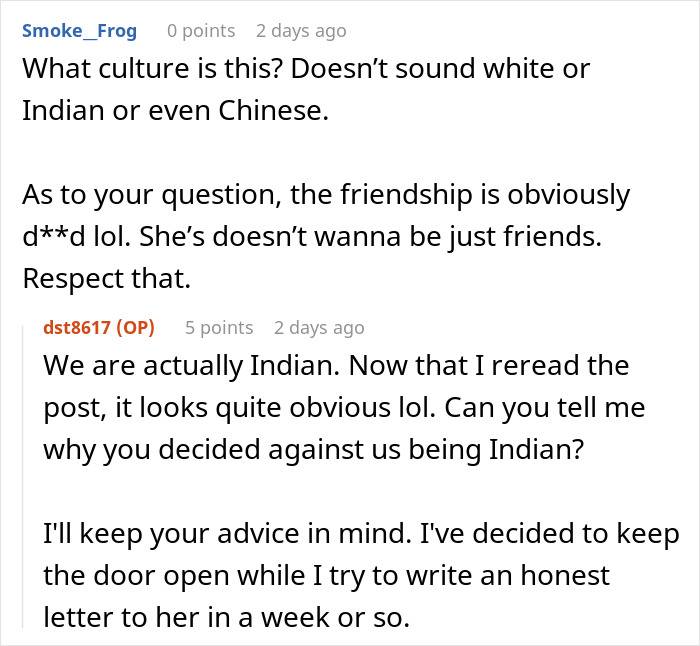
The man shared more details about what happened and why the situation left him so confused




In many cultures, marriage is about bringing two families together and sharing similar values and traditions
We’ve all seen romantic movies where two people fall in love, overcome a few obstacles, and eventually get married. And for many people, finding love and choosing their own life partner is the ideal way to begin a marriage. But that’s not the only way people find their happily-ever-after. In many cultures, arranged marriages are still a common tradition. And contrary to what some people might think, they don’t always involve parents forcing their children to marry a complete stranger. In many cases, families help introduce potential partners, while the people getting married have a say in whether they want to take things forward. The idea is that love and compatibility can develop over time, rather than needing to be there from the very beginning.
This idea of love growing gradually is explored in The Namesake by Pulitzer Prize-winning author Jhumpa Lahiri. The novel challenges the Western ideal of intense, immediate romantic passion by portraying love as something that can grow through shared experiences, vulnerability, mutual respect, and the everyday choice to care for one another. Rather than presenting love as a sudden spark, the story explores how two people can build a meaningful relationship over time. It offers a different perspective on what makes a marriage work, suggesting that romance doesn’t always have to come first for affection and commitment to follow.
Arranged marriage is also often understood through the role that families and communities play in choosing a partner. One article highlights how the practice is rooted in sociological principles such as collective belonging, parental guardianship, and elders’ role in helping make suitable matches. From this perspective, marriage isn’t viewed solely as a decision between two individuals; it can also be seen as a union between families, shaped by shared values, social expectations, and responsibility toward the next generation.
Although attitudes toward marriage have changed in many parts of the world, arranged marriages remain an important tradition in countries such as India, Bangladesh, and Pakistan, as well as in some other Asian communities. According to World Population Review, arranged marriages have deep traditional roots in South Korea and remain prevalent in some rural communities. While couples have more freedom to choose their partners today, parental approval is still highly valued. In some cases, families turn to marriage brokers, who help identify potential partners from compatible economic and cultural backgrounds. These arrangements reflect how marriage customs can evolve while still retaining the influence of family and tradition.
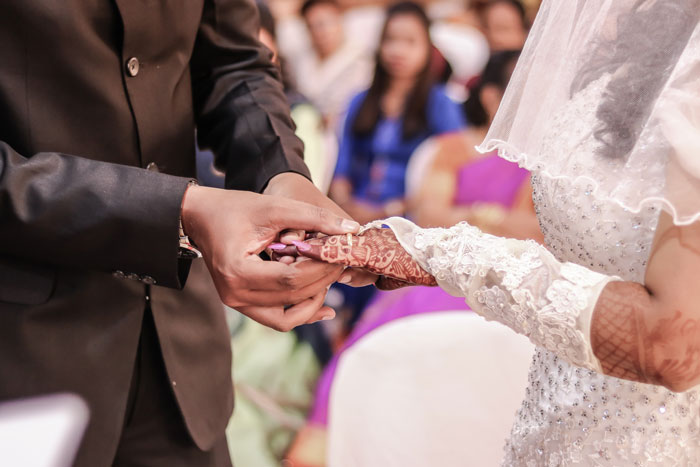
Arranged marriages have their pros and cons, as family support can be helpful, but their expectations can also create pressure
Jatinpurohit74 / Envato (not the actual photo)
In India, arranged marriages have long been shaped by cultural and religious traditions. Families may look for a prospective partner who shares their religion, caste, and cultural background, while financial stability and family circumstances can also influence the decision. Some families also follow horoscope matching, consulting astrological charts to assess compatibility. Similar considerations can also play a role in Bangladesh and Pakistan, although customs and expectations vary by family, region, and community. For some people, these traditions offer reassurance that a potential partner will fit into their family and way of life. For others, they can feel restrictive, particularly when personal preferences don’t align with family expectations.
Of course, finding a partner and getting married is only the beginning. What matters just as much is the quality of the relationship that follows. Research on marital quality has linked happier, more supportive marriages with several positive outcomes, including lower levels of depression, better self-rated health, and fewer physical health problems. A healthy marriage can provide emotional security, companionship, and someone to lean on during difficult times. However, these benefits depend on the relationship itself, not simply on whether the couple met through an arranged introduction or fell in love on their own. Mutual respect, communication, trust, and the ability to work through disagreements can all play an important role in building a lasting partnership.
Another important point is that marital quality doesn’t look the same everywhere. What people consider a happy or successful marriage can depend on cultural expectations, social norms, and the roles partners are expected to play. For example, the Dyadic Adjustment Scale, developed using an American sample, includes the frequency of kissing as one measure of relationship adjustment. However, research by Shek and Cheung (2008) suggests that kissing may not be viewed as an indicator of marital satisfaction in China. Similarly, Lee and Ono (2008) suggest that in Japan, a good marriage has traditionally been associated with a husband who works while his wife does not, whereas in the United States, a husband’s ability to financially support his wife may be less central to how a good marriage is understood. These differences highlight why it’s important to consider cultural context when studying relationships. A marriage that looks successful by one culture’s standards may be understood differently in another.
Of course, arranged marriages, like love marriages, come with their own advantages and challenges. Family involvement can offer guidance, shared values, and a wider support system, but it can also bring pressure to meet expectations that don’t necessarily reflect what the couple wants. Similarly, choosing a partner based on romantic love can offer a strong emotional connection, but that alone doesn’t guarantee compatibility or a lasting relationship. Ultimately, neither approach automatically leads to a happy marriage. What matters is whether both people genuinely want to be together, feel comfortable making their own decisions, and have the freedom to say yes or no without being pressured.
Coming back to this story, the man seems to care about his childhood friend, but that doesn’t necessarily mean he sees marriage as the right next step. Their shared history and the expectations around arranged marriage may have complicated things, especially if she believed he would agree to the proposal.
Now, Pandas, we’d love to hear your thoughts. What do you think about arranged marriages, and do you believe love can grow over time between two people who are introduced by their families? Or should romantic feelings and personal compatibility come first? Share your thoughts in the comments!
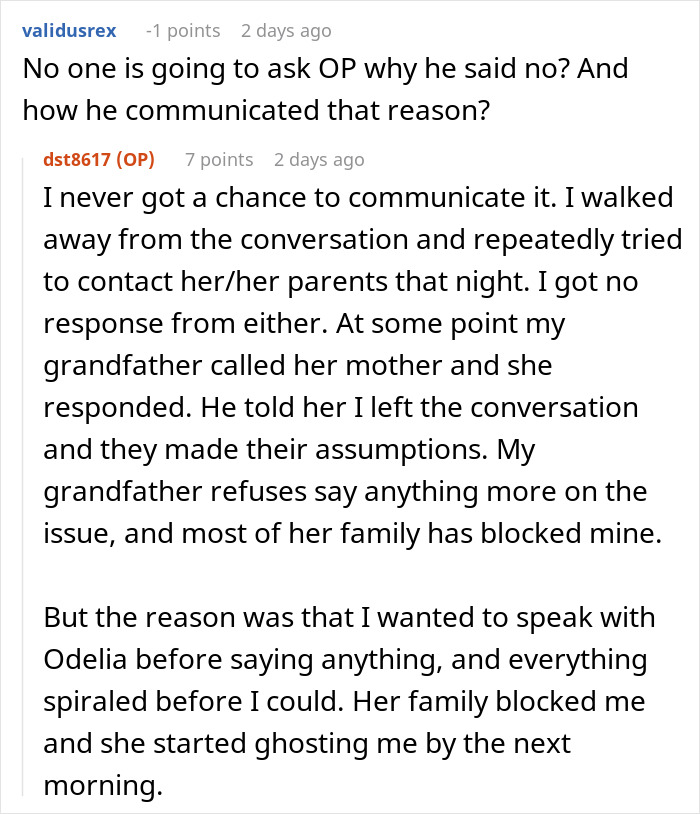
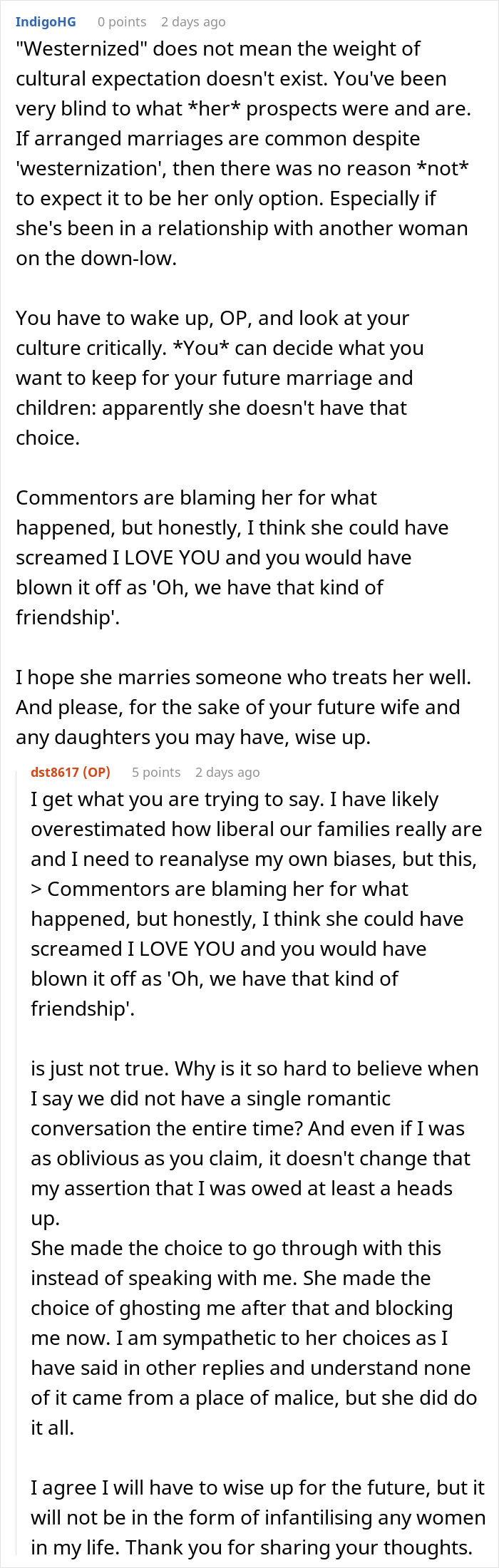
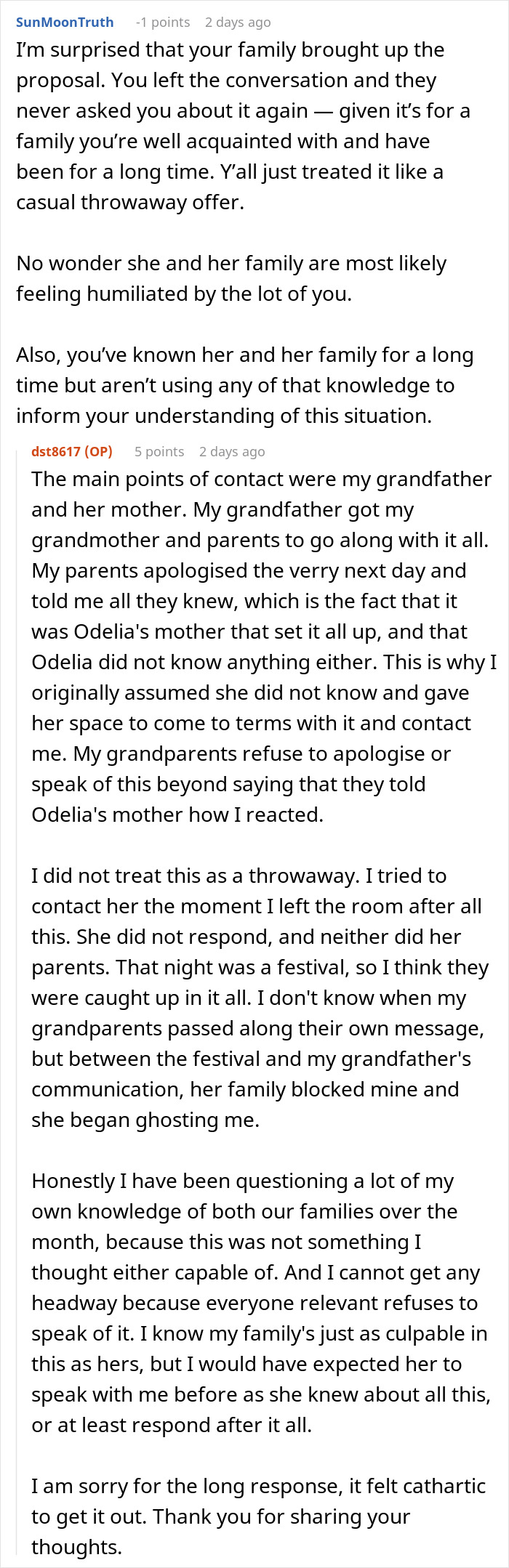
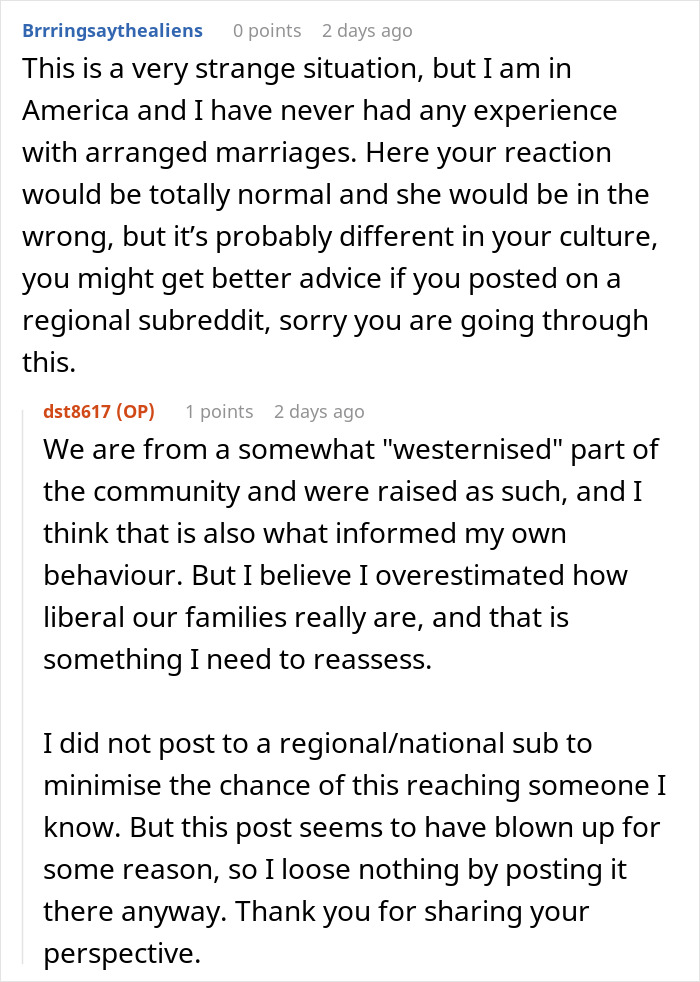
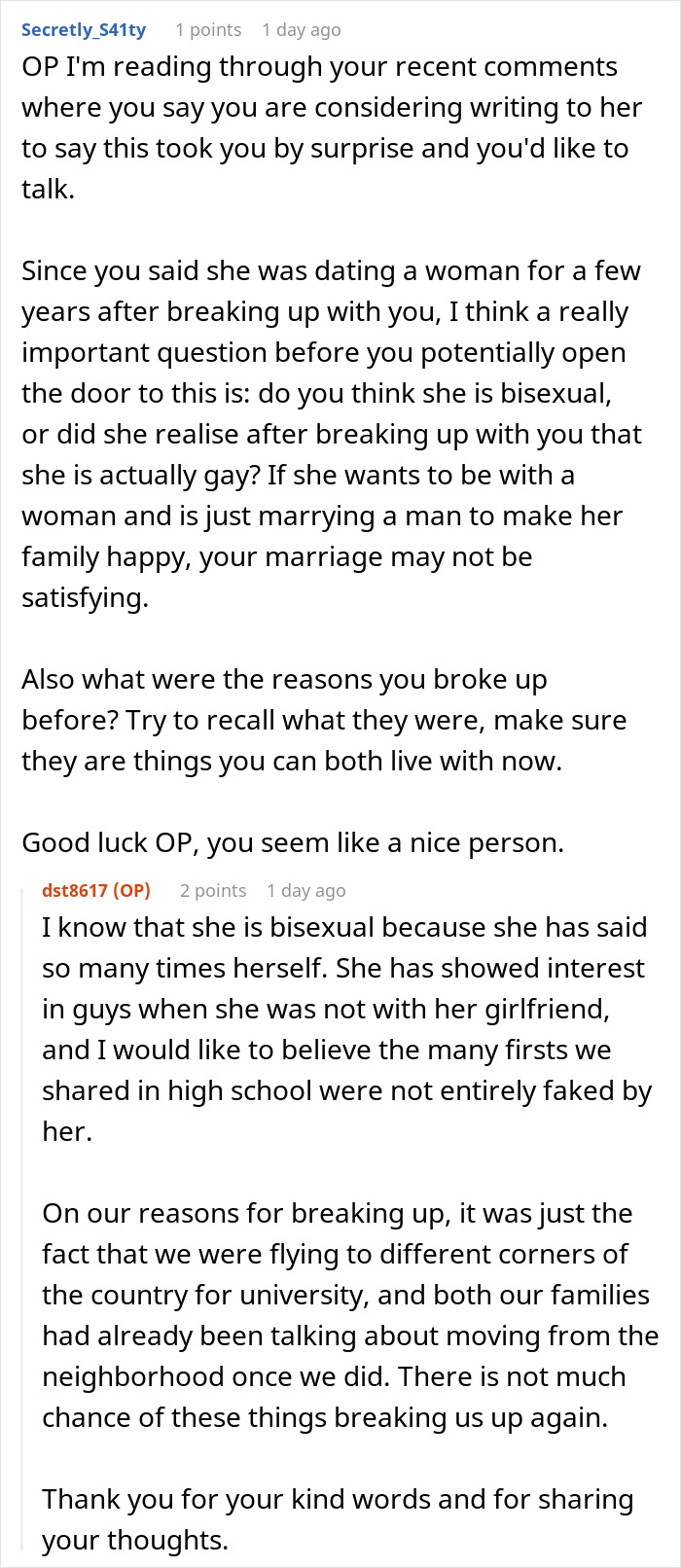
As the man opened up about his feelings toward his childhood friend, people weighed in with their own thoughts on the situation
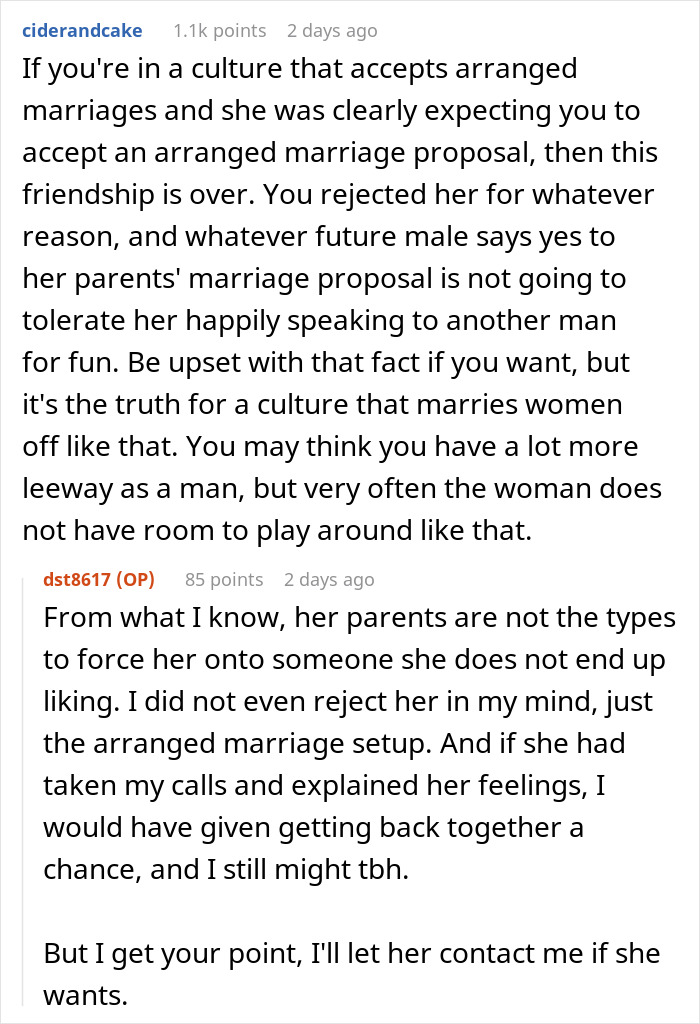
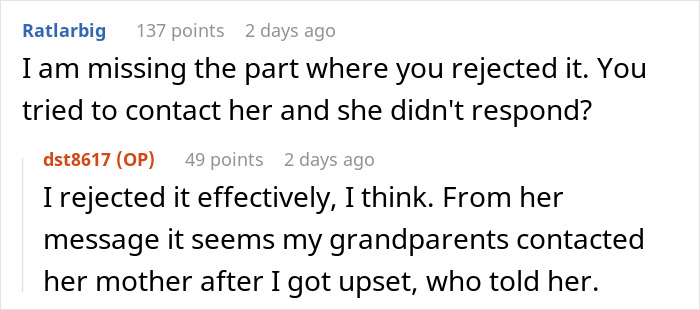

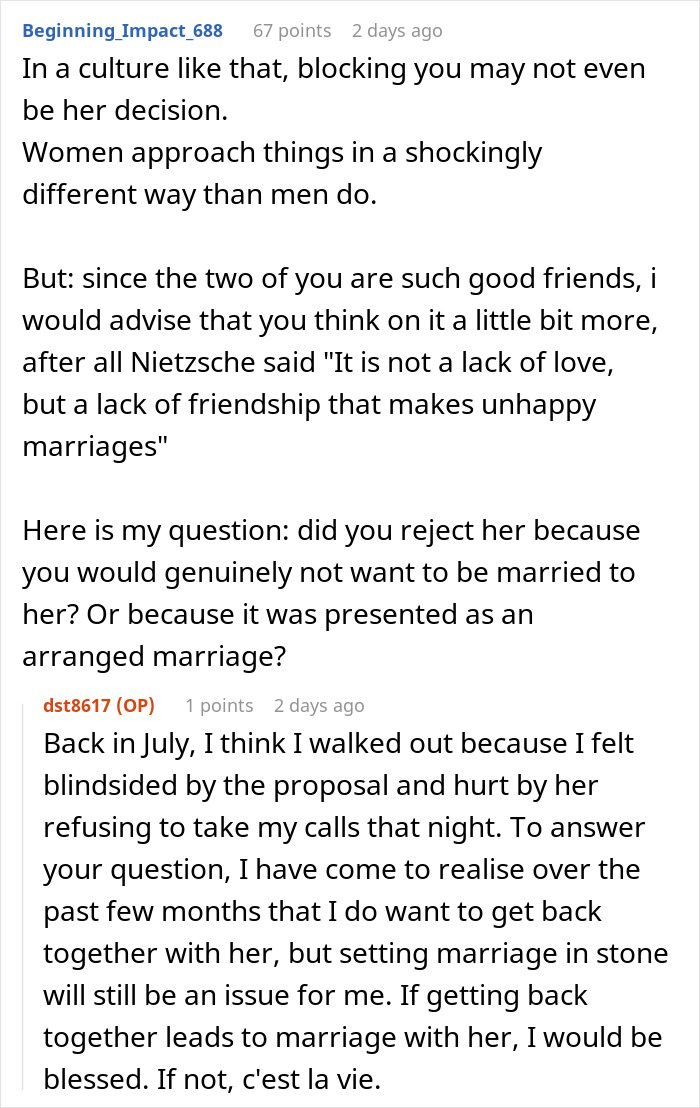
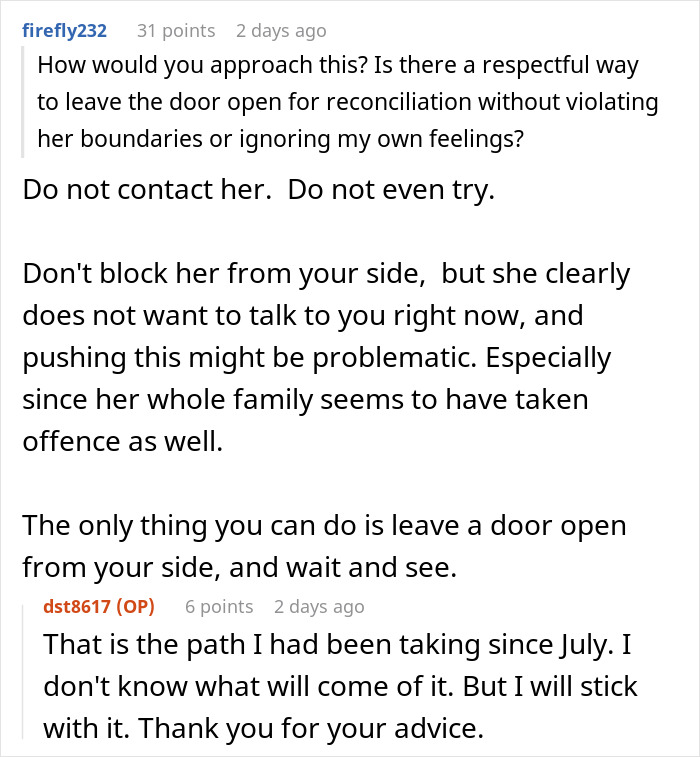

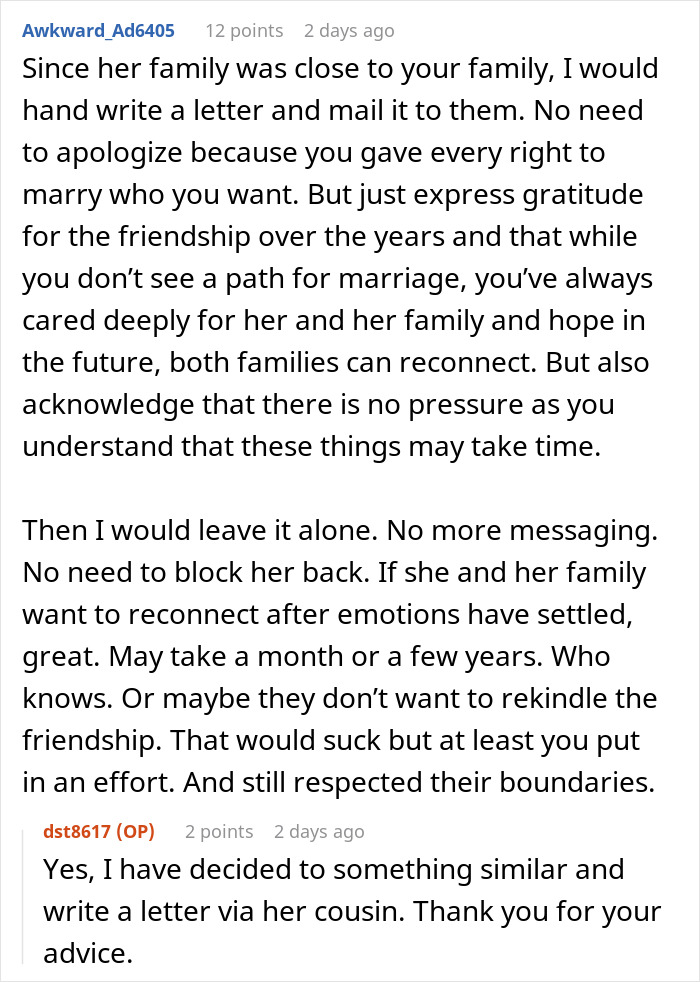
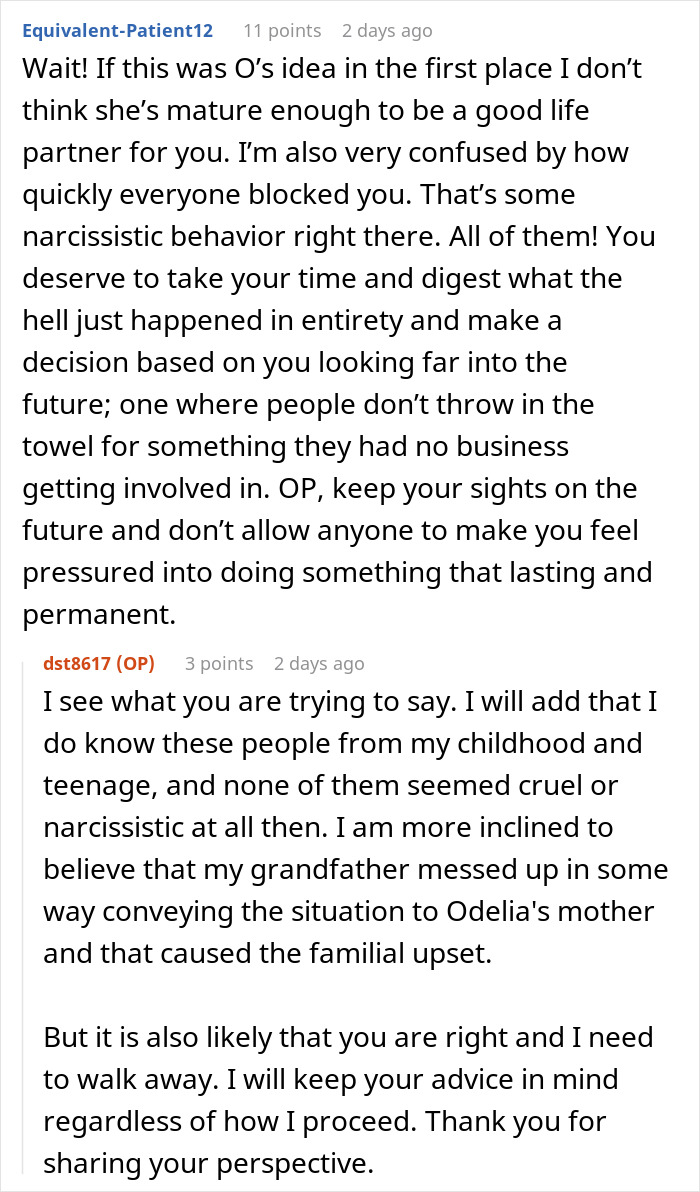


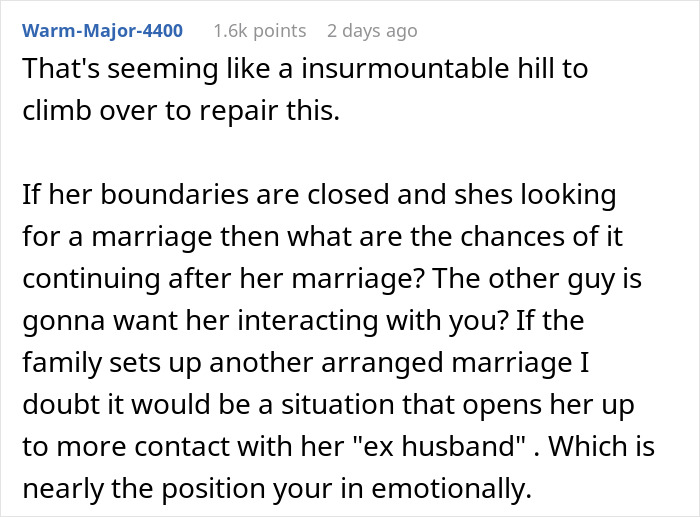

Some people questioned whether the author had handled the situation appropriately