On paper, a homeowners association, or HOA, is supposed to keep a neighborhood looking nice and make things better for every resident. In reality, they can be the kind of nightmare you’d never wish on your worst enemy.
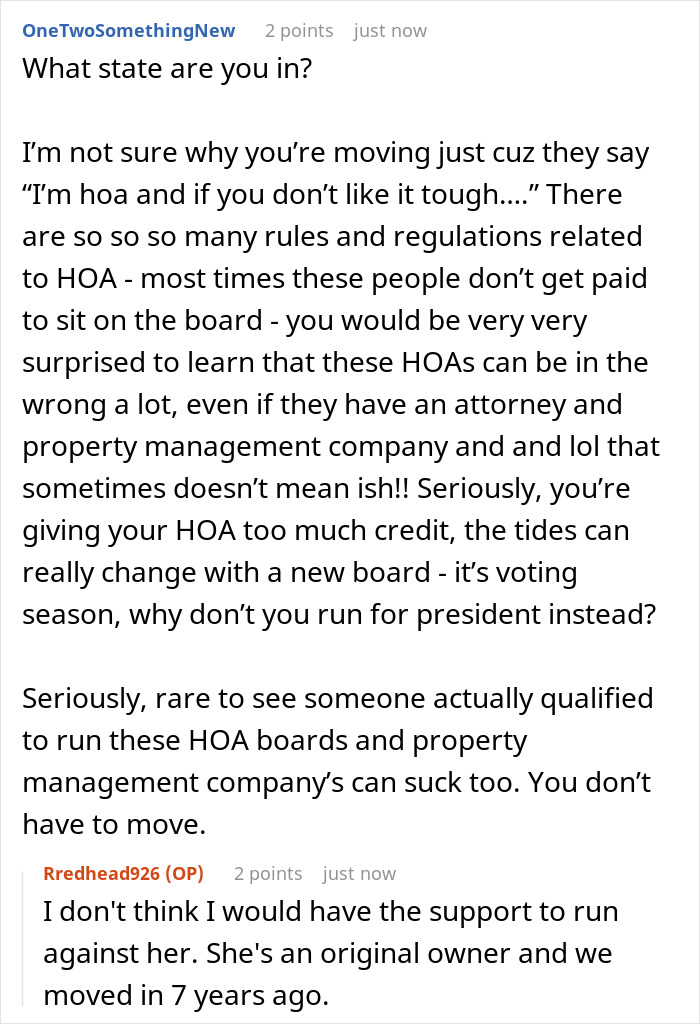
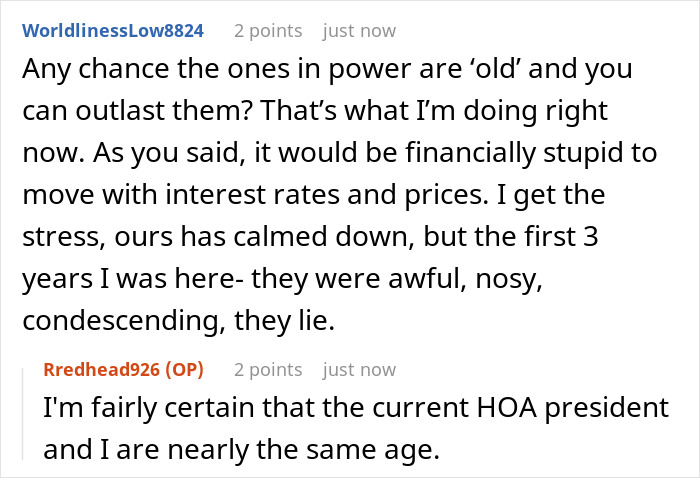
One couple has been dealing with their HOA for seven years, and after countless threats, fines, and stressful disputes, they’ve finally reached their breaking point. But when they tried to stand up for themselves, the HOA president had a simple response: if they didn’t like how things were run, they should move.
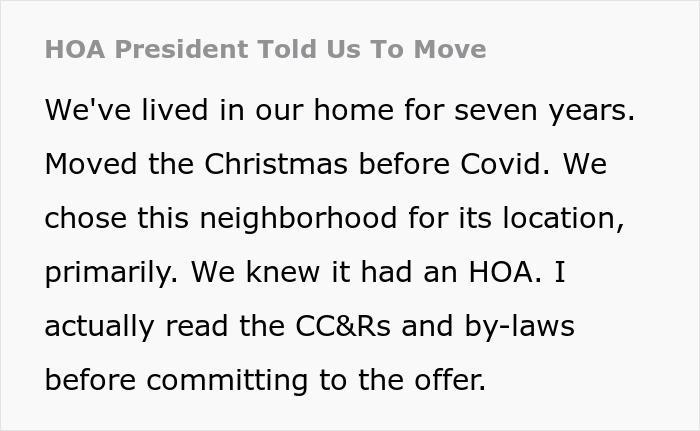
The couple thought they had finally found their forever home

wavebreakmedia_micro (not the actual photo)
But seven years of dealing with their HOA turned that dream into a nightmare





Tiarra Sorte (not the actual photo)



Engin Akyurt (not the actual photo)

Abigail Sylvester (not the actual photo)
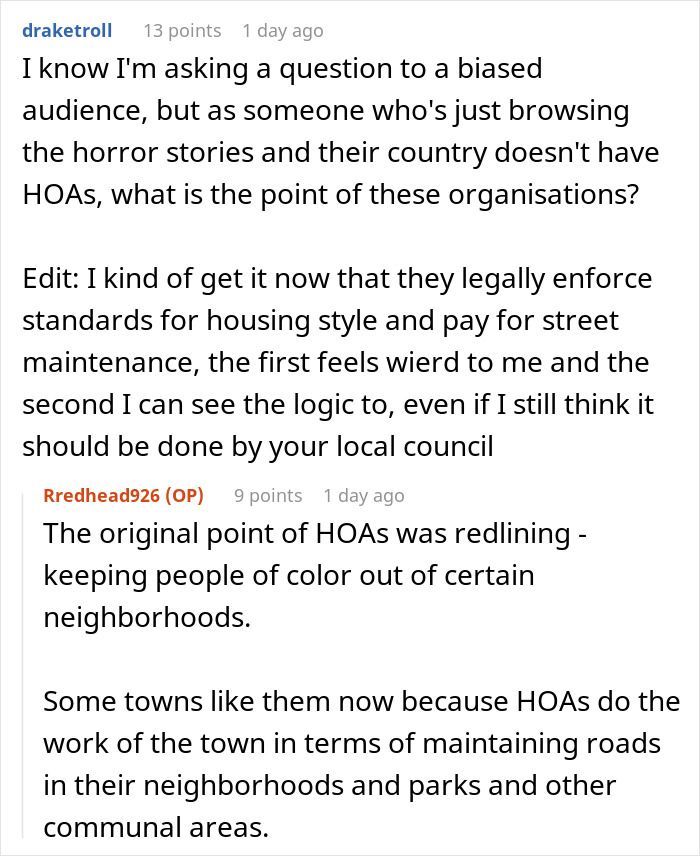
HOAs started gaining popularity after WWII and played a role in keeping communities segregated
Homeowners associations are a pretty common part of life in the United States. They’re responsible for maintaining shared spaces and making sure properties follow certain rules.
In exchange, residents pay regular fees that help cover everything from landscaping to neighborhood amenities. In theory, the arrangement sounds reasonable, especially when everyone agrees on how things should be run.
The idea has been around for quite some time. Modern planned communities took off in the US after World War II, when developers began building large neighborhoods for returning veterans and their families.
One famous example was Levittown, New York, where more than 17,000 homes were built between 1947 and 1951. Residents had to follow restrictions that controlled things like where they could hang laundry.
Sadly, at the time, the community also had racist restrictions that prevented Black families from buying homes there, reserving them for white residents only. The developers claimed that allowing Black families to move in would lower property values.
In 1948, the Supreme Court ruled that courts could no longer enforce such racial restrictions. However, discrimination continued, and Levittown remained overwhelmingly white for years afterward. Such practices helped keep neighborhoods segregated and denied many Black families the chance to own affordable homes.
But as the years went by, homeowners associations grew in popularity, taking responsibility for neighborhood maintenance and enforcing community rules. And plenty of people living in HOA communities today seem happy with the arrangement.
A 2026 survey by the Foundation for Community Association Research found that 86% of respondents rated their experience with community associations as either positive or neutral. Another 82% believed their boards generally acted in the community’s best interests.

Drazen Zigic (not the actual photo)
One in ten homeowners have considered selling their homes because of problems with their HOA
Still, those numbers don’t mean everyone is thrilled with their HOA. A 2024 Rocket Mortgage survey of more than 1,000 homeowners found that 57% disliked having one. More than 30% felt their association had too much power, while 10% were considering selling their homes because of HOA-related problems. That’s quite a price to pay for what is supposed to be a pleasant place to live.
Money is another common source of frustration. HOA fees can increase, and residents may also face special assessments when their association needs additional funds.
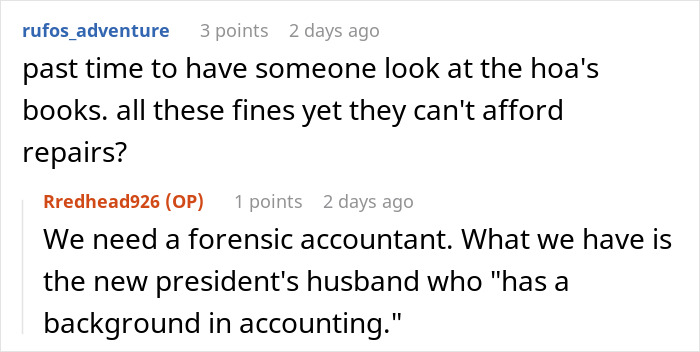
The same Rocket Mortgage survey found that only 28% of homeowners felt involved in financial decisions. That can be particularly frustrating when residents are expected to pay for projects they had little say in approving.
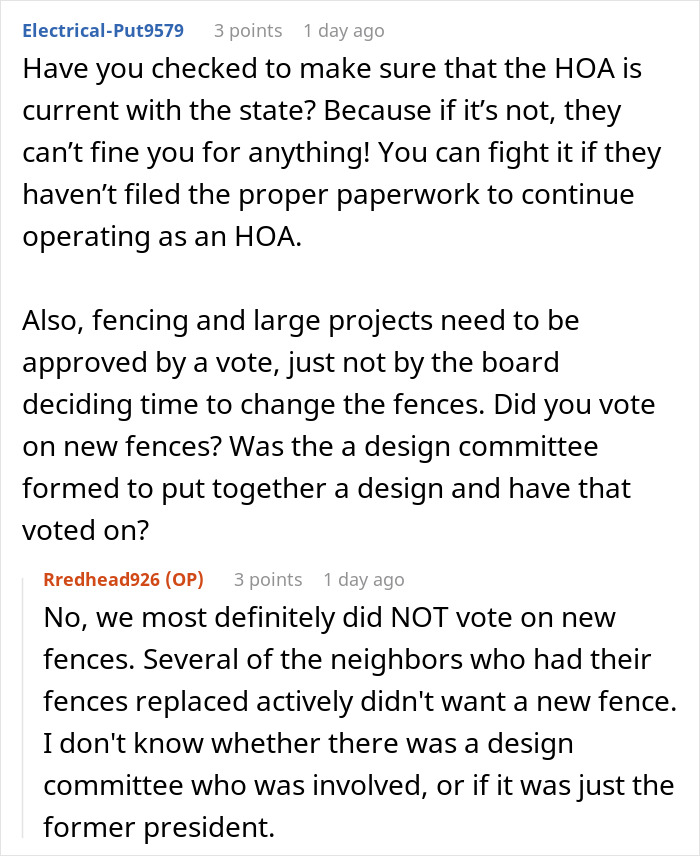
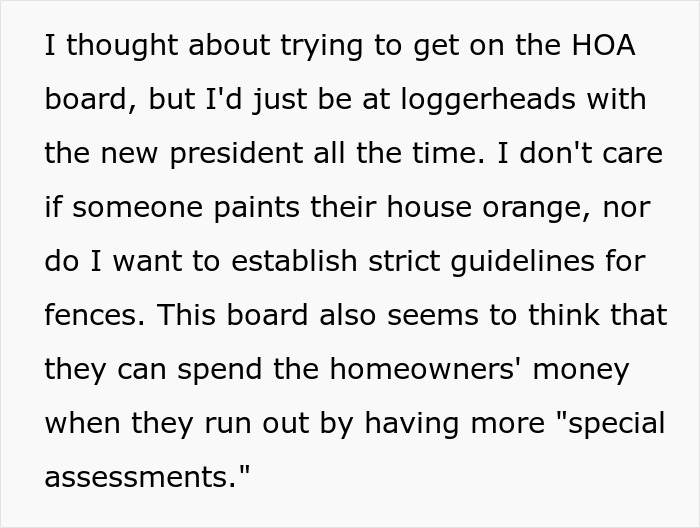
Of course, the rules themselves can also cause arguments. Something as ordinary as changing your landscaping or replacing a fence can become a headache when an HOA has strict requirements.
And because these associations can impose fines for violations, disagreements can quickly become expensive. It’s easy to see why some residents feel they have very little control over their own properties.
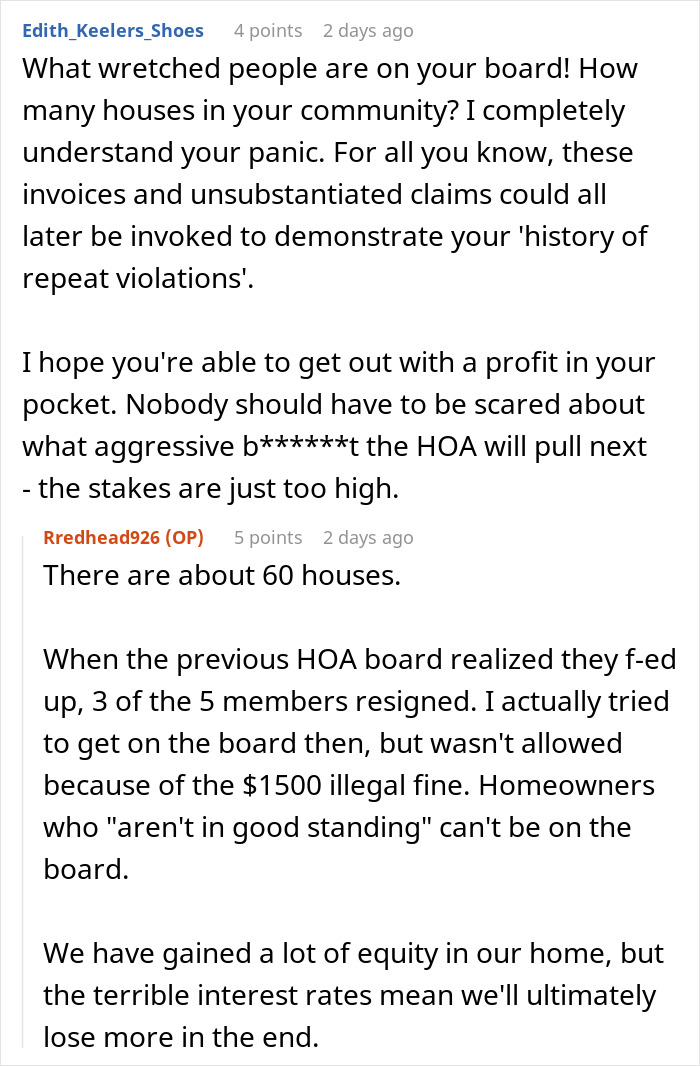
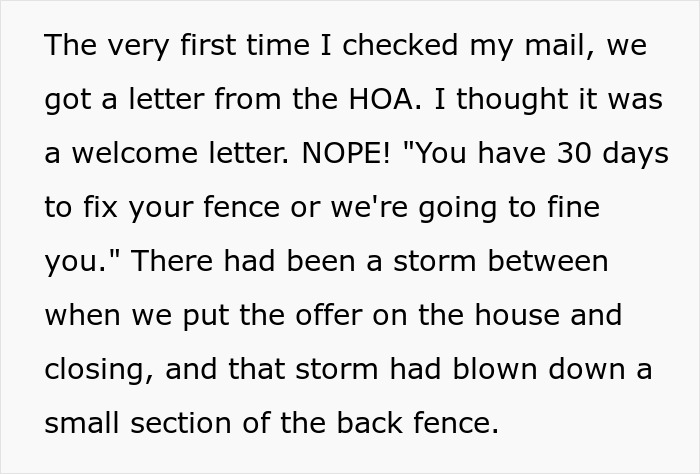
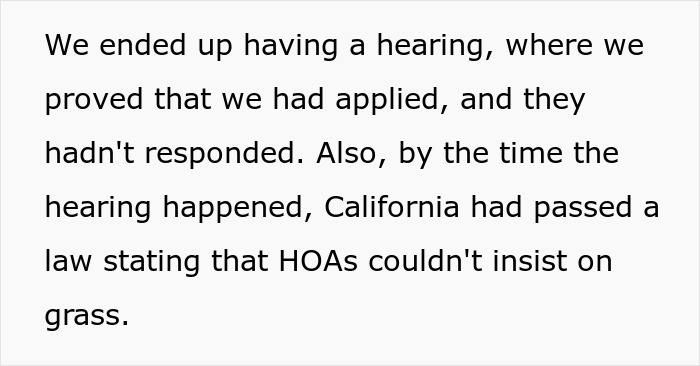
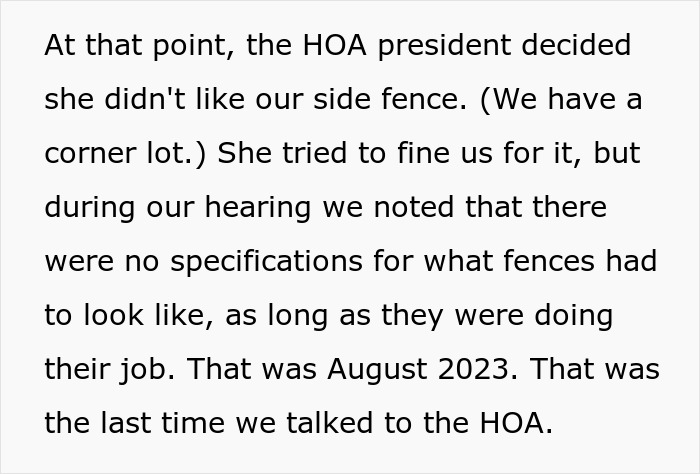
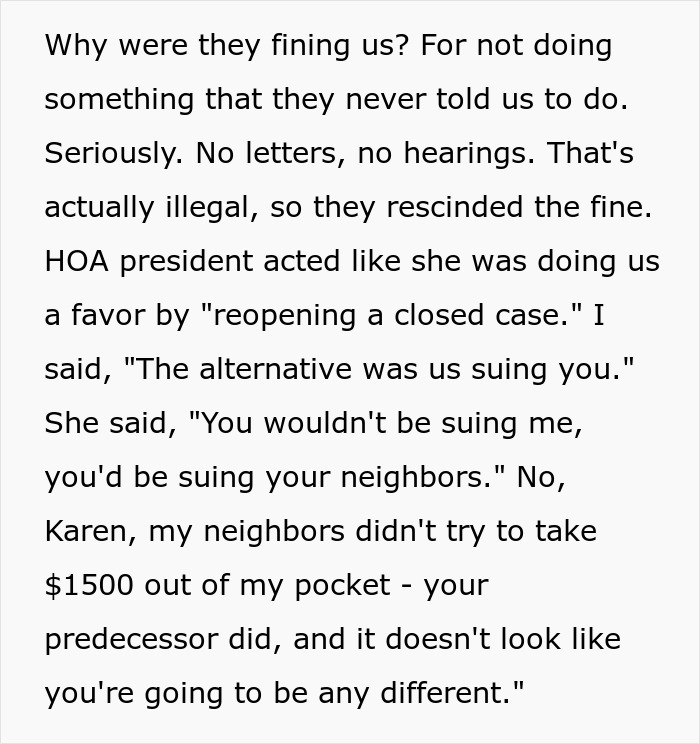
For the couple in this story, the problems started almost immediately after they moved in. Over seven years, they received repeated warnings about their fence and landscaping, along with a $1,500 fine that was eventually rescinded.
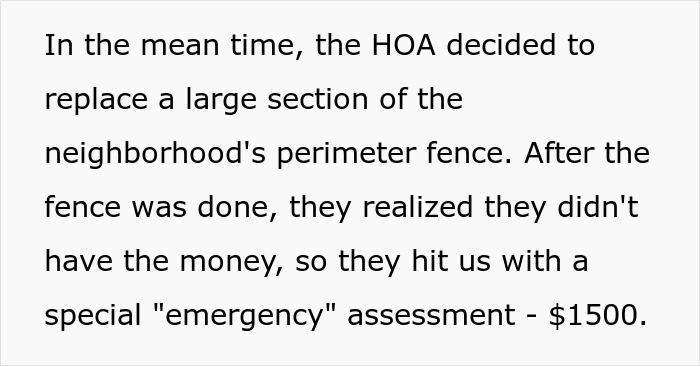
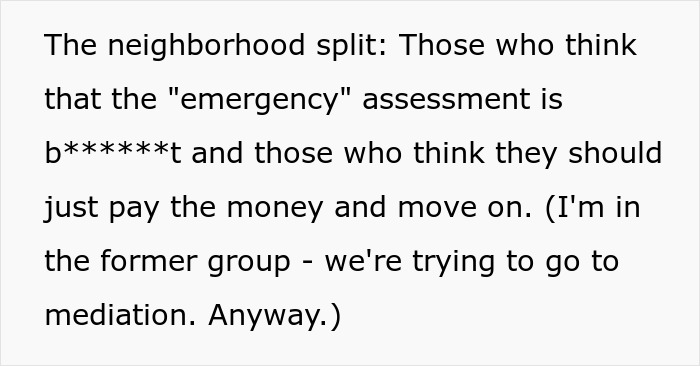
They also faced a separate $1,500 special assessment for neighborhood repairs. The constant disputes became so stressful that simply receiving another HOA letter could trigger a panic attack.
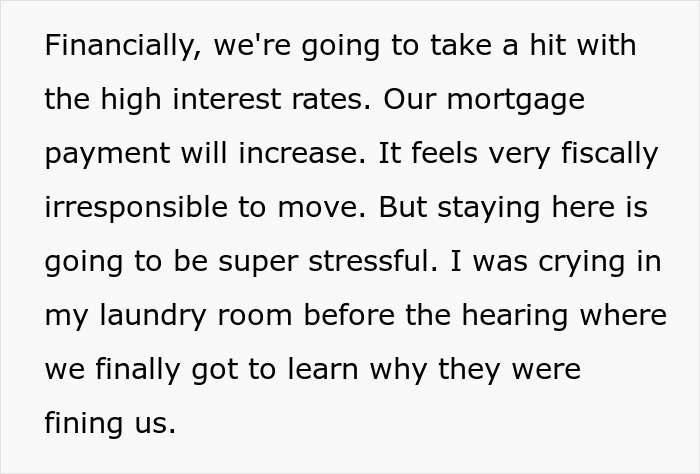
Now, despite loving their house and knowing that moving will cost them more money, they’ve decided to sell. They had hoped this would be their forever home, which makes the decision particularly painful.
Do you think they should keep fighting the HOA or move somewhere they can finally enjoy some peace? Share your thoughts in the comments below.
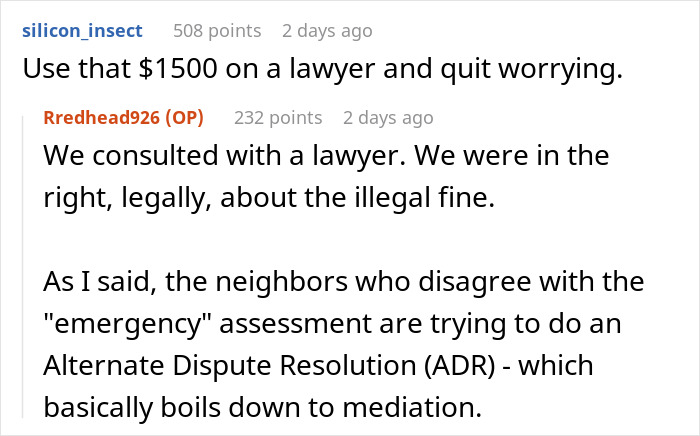
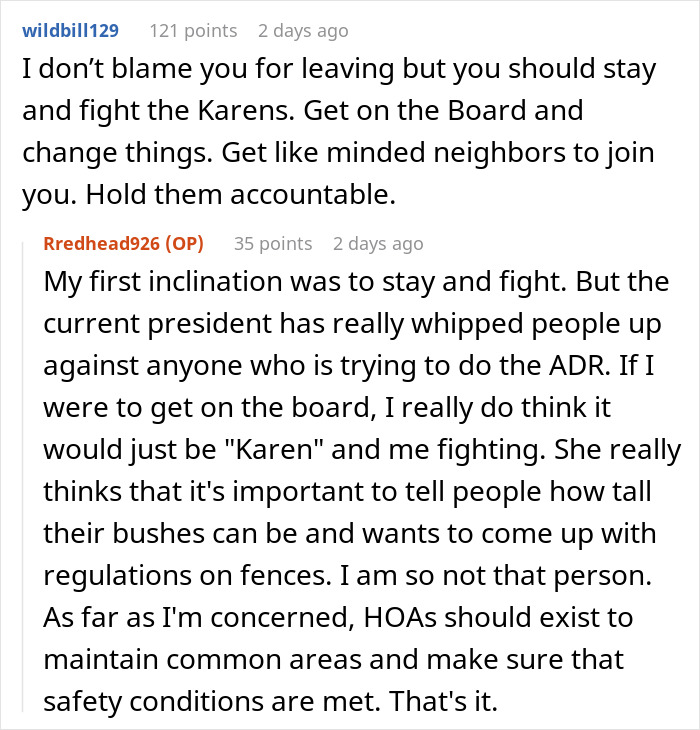
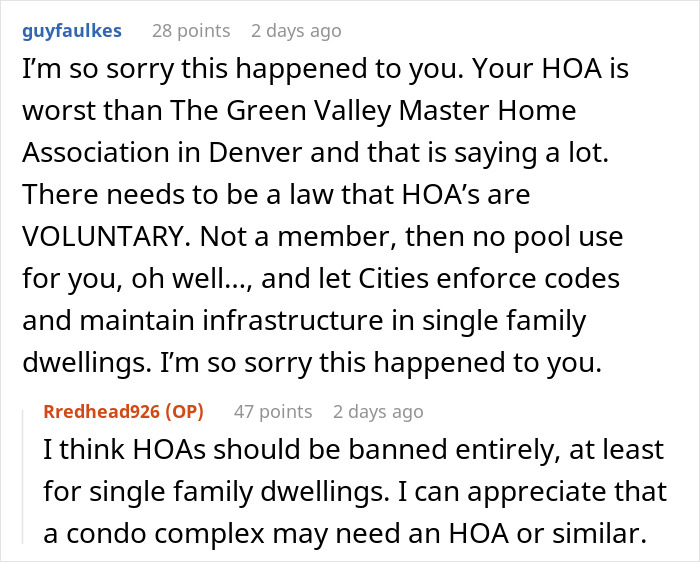
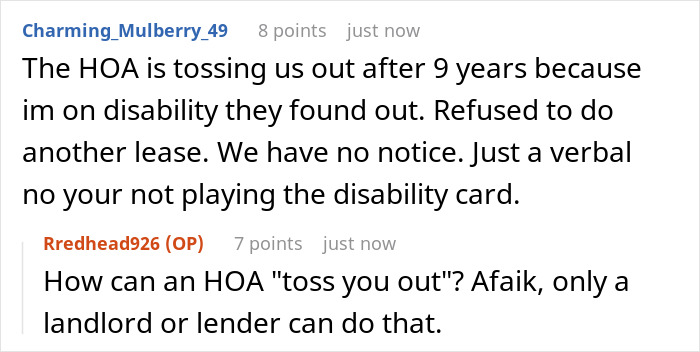
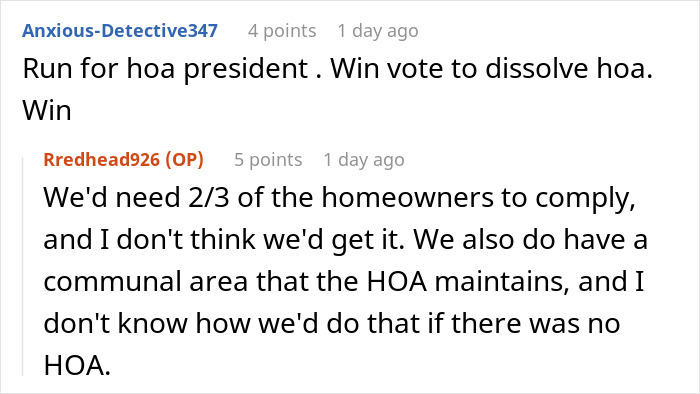
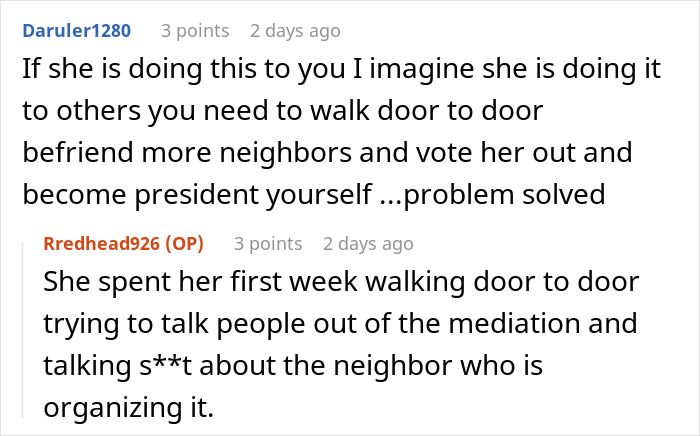
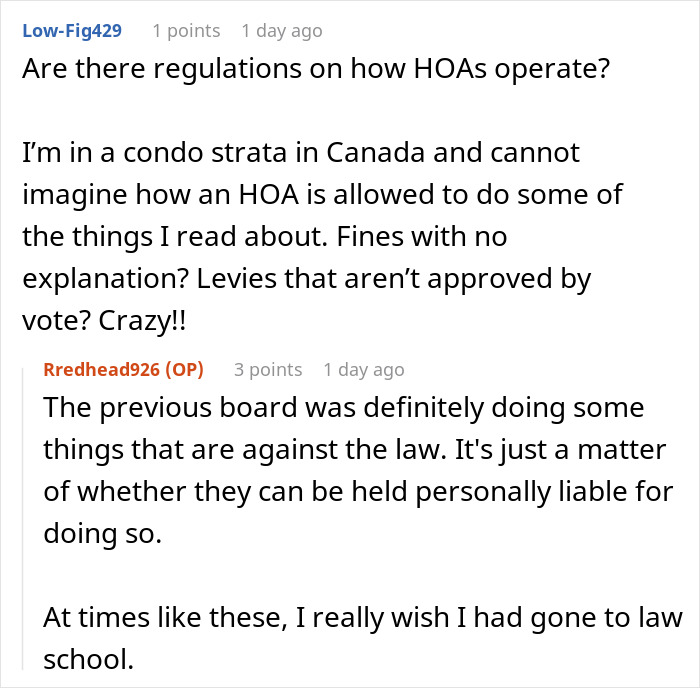
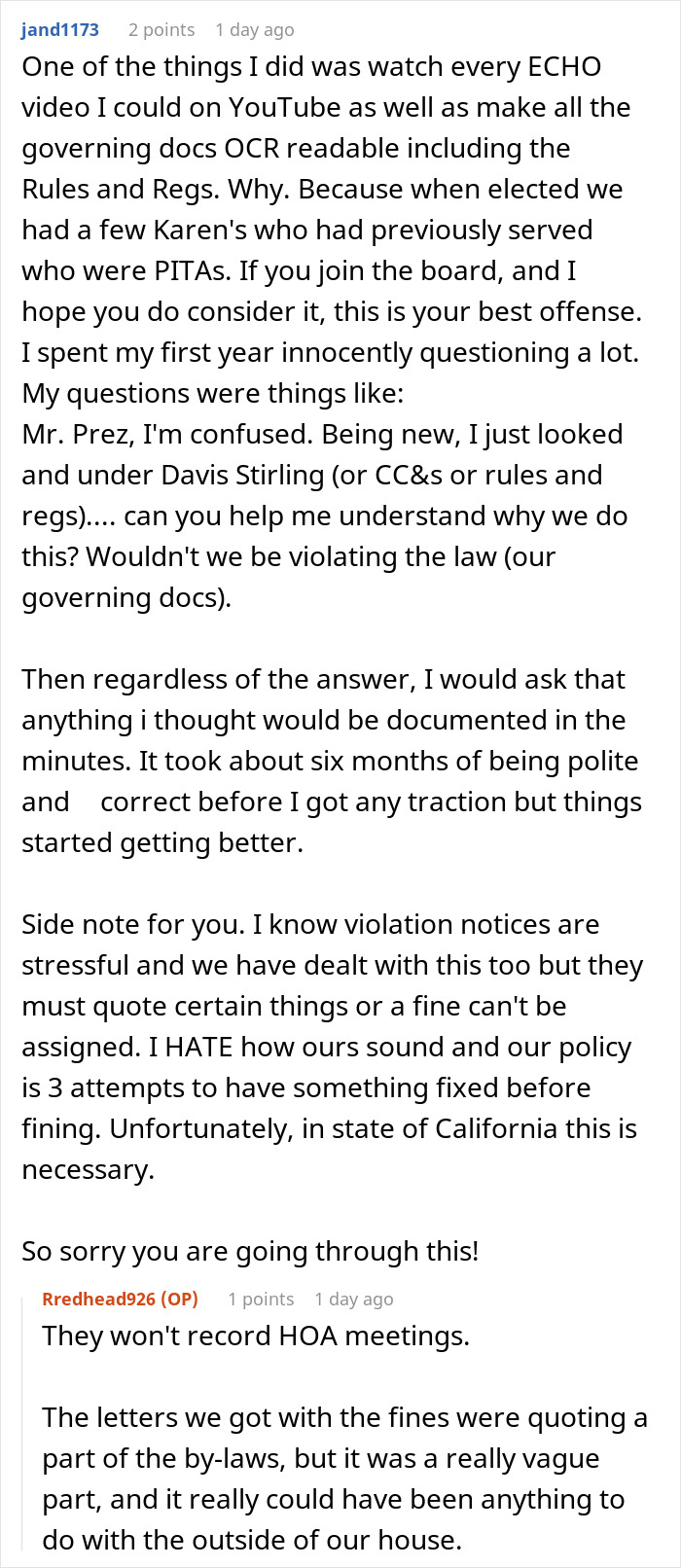
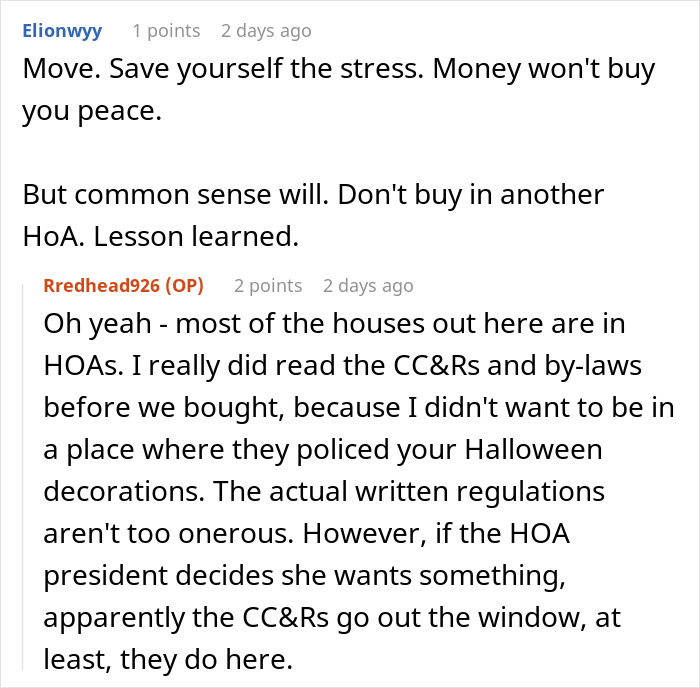
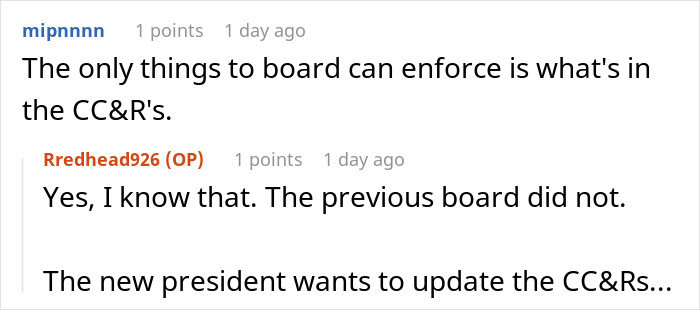
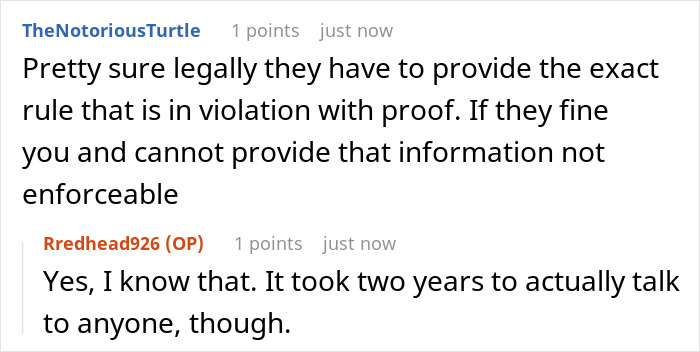
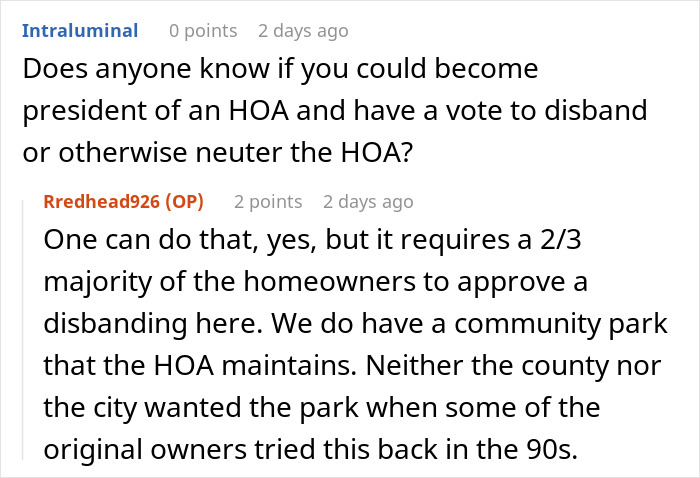
Readers felt sorry for the couple and tried offering some advice on how to deal with the HOA