
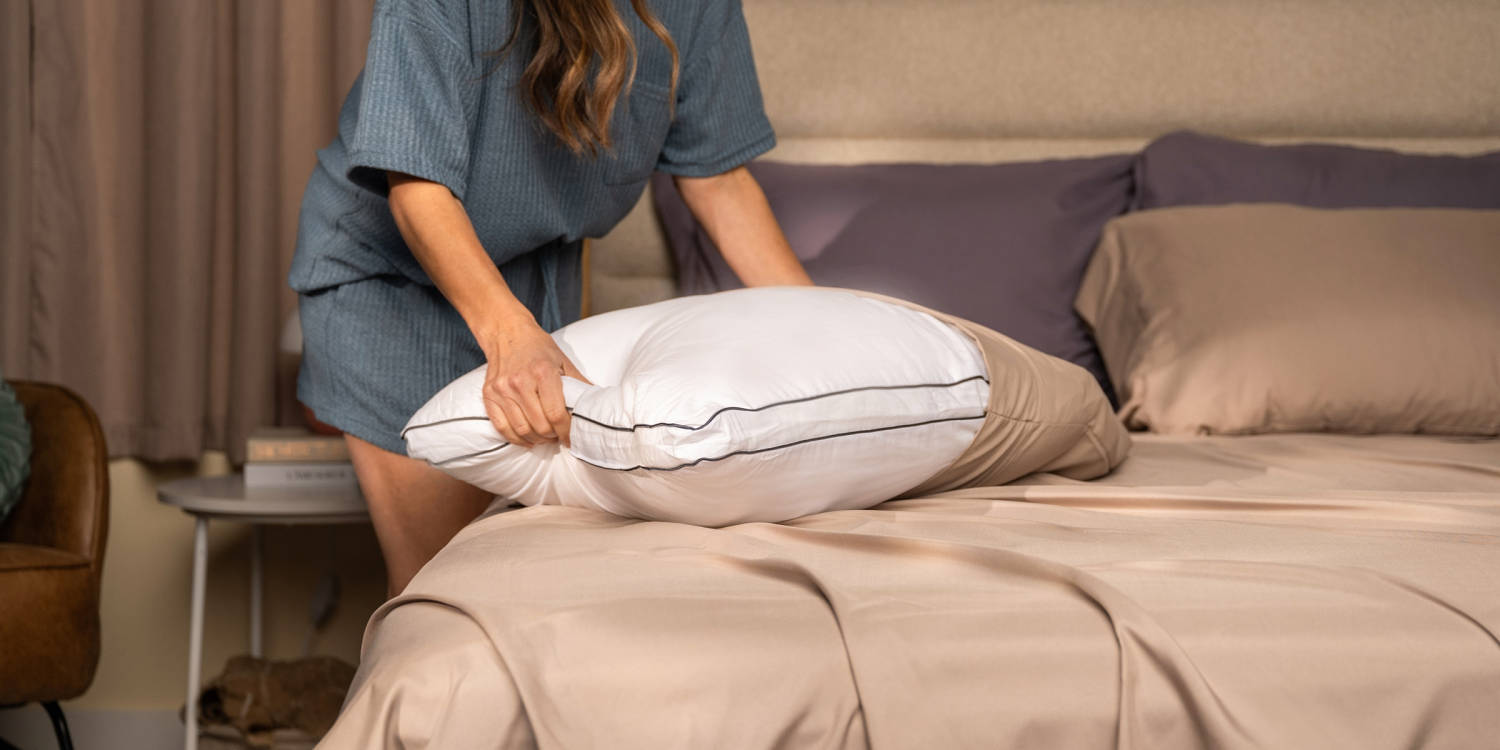
Bed pillows go through a lot of wear and tear over the years, particularly if you move around a lot in your sleep. Plus, pillows have direct contact with all of the oils and skin care products on your face, which means they need to be washed often. But how often should you actually clean your pillows and when do you know it’s time to just throw them away and invest in a new set?
I spoke with cleaning experts to learn more about how often you should clean and replace your pillows and what signs you should look for to determine when to do one or the other. Plus, I asked experts the best way to clean pillows (not just pillowcases) depending on what type they are.
Selected.Our top picks
Want more from NBC Selected? Sign up for our newsletter, The Selection, and shop smarter.
How often should you clean and replace your pillows?
“I recommend cleaning pillows every three to six months and while there’s no hard expiration date, I generally expect to replace pillows every year or two,” says Robin Murphy, a cleaning expert and chief cleaning officer at home cleaning company Maid Brigade. “What matters is their condition. If your pillow is lumpy, stays flat after fluffing, has a persistent odor, or no longer supports your head and neck comfortably, it’s probably time for a new one.”
The best products for cleaning and replacing pillows
All of the products below have at least a four-star average from 500 or more shoppers on Amazon. Some of the recommendations below are also based on guidance from experts.
You can add these balls to the dryer after washing your down alternative pillows. Made entirely from wool from New Zealand sheep, the dryer balls help pillows dry fast and soften fabrics, according to the brand. Plus, they also help reduce static and wrinkles in clothing. These should help maintain the filling of pillows and prevent it from clumping.
This is technically a laundry sanitizer, not a detergent, so it’s meant to be used with detergent, and its main job is to get rid of bacteria and odors. The bleach-free sanitizer is safe to use on multiple types of apparel and fabrics. Plus, it’s effective in cold water and suitable for clothing of all different shades. Additionally, people who bought it say that it does a great job of getting rid of odors, and that one shopper even notes that it’s effective on pillows. You can pair this with Tide’s Free & Clear laundry detergent, which is my go-to mild detergent when I’m washing something delicate that I don’t want ruined in the washing machine.
If you want to clean a pillow that doesn’t smell great without having to actually put it in the washer, you should also try this fabric refresher spray from Febreeze. It’s great for freshening up clothing or fabrics that aren’t machine washable or ones that are very sensitive to machine washing. Plus, the brand even mentions that it’s suitable for deodorizing things like pillows and sofas. Shoppers agree, confirming that they use it on things like pillows and furniture.
Both experts I spoke to recommend keeping a pillow protector on your pillow in addition to a pillow case. Pillow protectors are to your pillows what mattress protectors are to your mattress — they keep out water and bed bugs. These are hypoallergenic, according to the brand, so they’re also great if you have sensitive skin. They’re available in terry cloth and cotton. Plus, the protectors are available in sizes for king and queen pillows, as well as for travel-size and body pillows.
Purple’s ultra-popular Harmony pillow is a latex pillow with a honeycomb gel wrap that eases several pressure points to offer better sleep, according to the brand. It’s available in multiple lofts (thickness), and in both standard and king sizes. The brand recommends the 5.5-inch loft for stomach and back sleepers and 6.5-inch and 7.5-inch pillows for side sleepers. If you’re ready to start fresh with a new set of clean pillows, this is a highly-reviewed option that shoppers say is also breathable.
How do you clean a pillow?
How you clean a pillow depends on what type it is, particularly if the filling is made from memory foam versus a down alternative and polyester. Kadi Dulude, a cleaning expert and the owner of home cleaning company Wizard of Homes, recommends paying attention to what the care label says on your pillow before laundering it, but in general you should wash machine-washable pillows two to four times a year.
“Memory foam pillows can’t be machine washed but they have a tight cover on them that you can wash instead,” she says. Murphy also recommends using a gentle cycle with mild detergent to wash pillows. “Wash two at a time to balance the machine, and dry thoroughly on low heat with dryer balls to prevent clumping.” For memory foam pillows, Murphy recommends spot-cleaning the actual pillow and, like Dulude mentioned above, only washing the cover. Both Dulude and Murphy recommend using pillow protectors in addition to pillowcases to help prolong the quality of your pillows.
- How to clean a machine-washable pillow: Remove the pillowcase from your pillow and place the pillow in your washing machine drum. Murphy recommends washing two at once since it will help balance out the weight around the machine’s agitators. Start a gentle cycle and only use mild detergent; wash the pillows the same as your regular clothing. To dry, Murphy recommends putting the pillows in a dryer and using low heat and dryer balls, which will help prevent the filling from clumping. Allow them to dry completely before putting any covers back on them to prevent mildew from growing on them, says Murphy.
- How to clean memory foam and latex pillows: Since memory foam and latex pillow are often not machine washable, both Dulude and Murphy recommend removing the cover from them (not just the pillowcase) and washing the cover. To clean the actual pillow, Murphy recommends spot cleaning, which includes using products like gentle fabric sprays or stain removers to get rid of stains and odors, as opposed to drenching the entire pillow in water. Allow them to dry completely before putting the cover and pillow case back on.
How do you know when it’s time to replace your pillows?
The best way to tell when it’s time to get a new set of pillows has everything to do with their appearance and feel. “[Replace your pillow] when you see it’s lost its shape, is lumpy and is not giving the support it used to,” says Dulude. “And of course when you can see discoloration/stains that can’t be washed out.”
Meet our cleaning experts
At NBC Selected, we work with experts who have specialized knowledge and authority based on relevant training and/or experience. We also take steps to ensure all expert advice and recommendations are made independently and without undisclosed financial conflicts of interest.
- Kadi Dulude is a cleaning expert and the owner of home cleaning company Wizard of Homes.
- Robin Murphy is a cleaning expert, chief cleaning officer at home cleaning services company Maid Brigade and writer at cleaning site Who Likes It Dirty.
Why trust NBC Selected?
I’m a commerce editor at NBC Selected, where I write about home and kitchen appliances, cleaning and more. I’ve written about how often to replace towels and sheets, how to clean hardwood floors, the best way to clean stainless steel appliances and more. For this story, I spoke to multiple cleaning professionals for their input and recommendations.
Catch up on NBC Selected’s in-depth coverage of tech and tools, wellness and more, and follow us on Facebook, Instagram, X and TikTok to stay up to date.