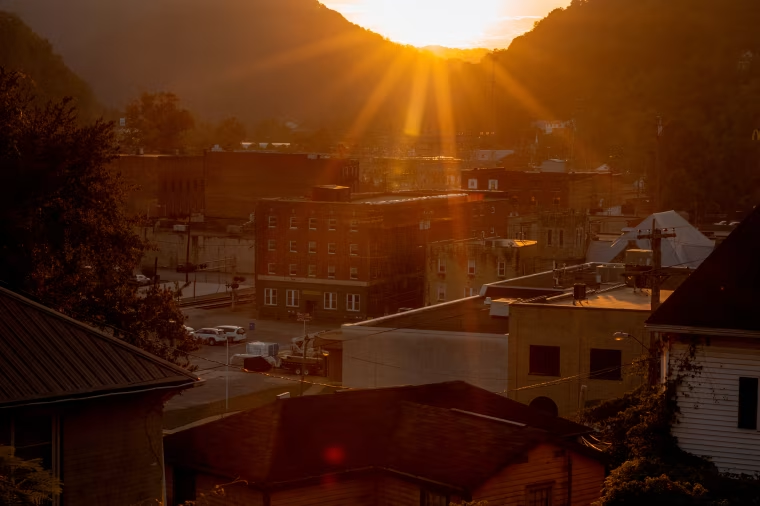
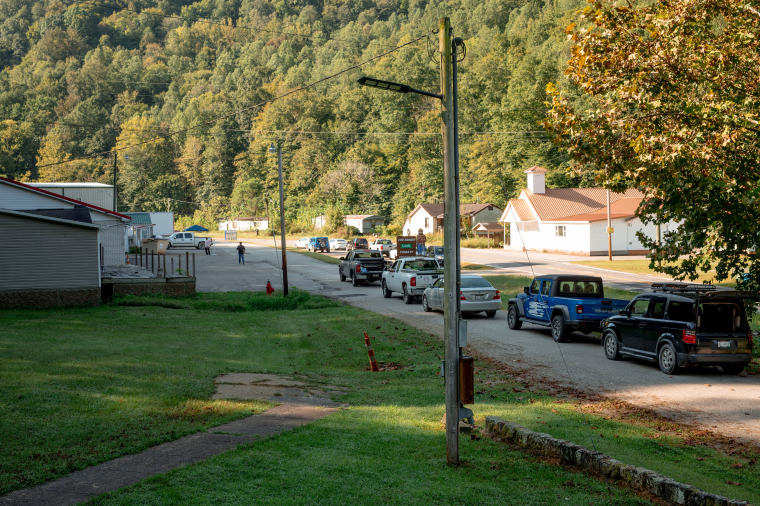
DUNLOW, W.Va. — Bill Likens stared down a half-mile-long line of cars that started forming before the sun came up over the Appalachian Mountains. He had one job: figure out how to feed them all.
Some had driven more than 30 miles in aging cars and trucks that wheezed down flood-prone roads through the steep hills. They sat silently as the temperature rose into the 80s, their vehicles turned off with no air conditioning to preserve gas, waiting hours for a few boxes of food.
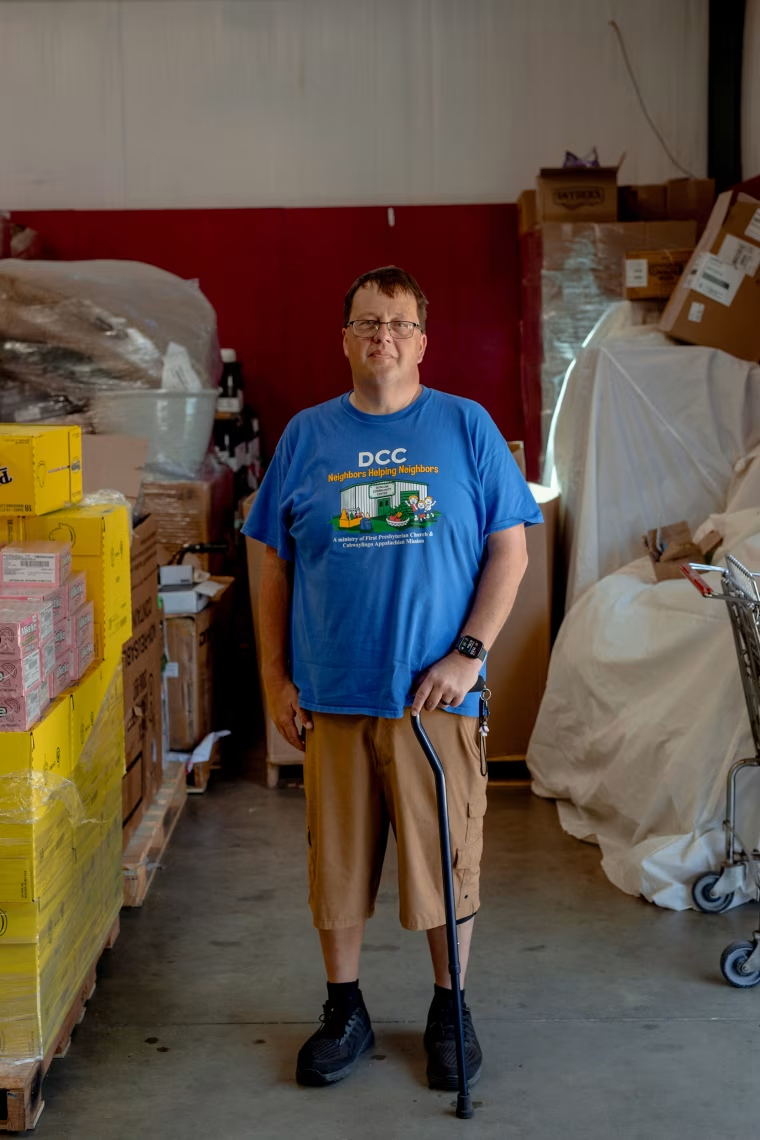
Aided by a cane, Likens, 51, surveyed the pallets being unloaded off a semitruck that arrived that morning. He counted cartons of eggs and sacks of potatoes to calculate how much each waiting car could get — an algorithm of hunger he is constantly trying to solve.
“There’s a decent chance we could run out,” said Likens, who runs the food pantry in Dunlow as director of community outreach for Cabwaylingo Presbyterian Chapel, a small brick church he attended growing up.
“I don’t want them to sit in that line and not get anything,” he said. “But I don’t have a lot of extra food these days.”
Increasingly, the job of feeding the nation’s hungry is falling on the shoulders of everyday Americans like Likens, who have become the last bulwark against hunger in a land of plenty.
Likens and others on the front lines of feeding their neighbors say they face unprecedented challenges brought on by Washington. Food distribution programs are getting less food from federal programs to feed the hungry after cuts by the Trump administration. At the same time, restrictions on food stamps from the Republicans’ “big, beautiful bill” have driven up demand, while rising gas prices because of the Iran war have cut into the budgets of households and food banks alike.
The challenges extend far beyond Appalachia. An NBC News survey of 48 of the largest food banks across 35 states and Washington, D.C., found that nearly three-quarters said more people are showing up at their doors over the past year, from workers on their lunch breaks to older adults overwhelmed with medical expenses. At the same time, more than 80% said the food and funding they received through the U.S. Department of Agriculture had dropped and they were struggling with higher fuel costs for transporting food.
In Maine, Good Shepherd Food Bank said the USDA cut the amount of food it received from 13 million pounds to 9 million pounds in one year. A Michigan food bank, Forgotten Harvest, said it’s handing out less food to make sure there is enough to go around: one bag of potatoes instead of two, two tubs of yogurt as opposed to six.
“People are facing multiple hits to their budgets,” said Poonam Gupta, a senior research associate at the Urban Institute, a think tank that researches social and economic issues. “It is really difficult to find a way to continue affording a healthy and nutritious and balanced diet when you just have these constant hits.”
Food banks’ struggles started in the early days of President Donald Trump’s second term when officials cut a $400 million Covid-era program to supply food banks with food from local farmers and paused an estimated $500 million in other planned food purchases by the USDA. Funding from Congress for a separate decades-old program to supply food banks with emergency food assistance has increased over the past several years, but many food bank leaders said they’re still getting less overall than during the Biden administration.
We want to hear from you
- Have you been affected by changes to the SNAP/food stamp program? Share your story here.
Trump also signed into law the new restrictions on who can receive Supplemental Nutrition Assistance Program benefits, or food stamps, requiring nearly all able-bodied adults not caring for young children to work, volunteer or go to school at least 80 hours a month. Since the law was enacted, more than 5 million people, including at least 1 million children, have lost their food benefits.
White House spokesperson Anna Kelly defended the administration’s policies, saying Trump is “uplifting every American’s financial situation” through tax cuts and efforts to increase jobs and business investments.
“President Trump is strengthening SNAP for the Americans who need it by ensuring these programs are sustainable for future generations,” Kelly said, including measures to “crack down on waste, fraud and abuse.”
The USDA said it hasn’t reduced the amount of food it provides.
“Every day, the Food and Nutrition Administration invests $340 million in low-income communities and people in need of nutrition assistance, including millions of school children, elderly, and the disabled,” a USDA spokesperson said. “The mission to help those in need has not changed.”
While those on the ground say they are thankful for everything they get, they are struggling to do more with less. Facing Hunger Foodbank, which supplies Likens’ pantry and others across Appalachia, has seen a 25% increase in the number of people seeking help over the past year, while the amount of food the federal government supplies has fallen by a third, CEO Cyndi Kirkhart said.
Those forces have hit especially hard in areas that were already struggling economically, like West Virginia’s once-flourishing coal mining communities. The spike in gas costs means a 45-minute drive to the nearest grocery store can set residents back more than $15. And West Virginians who must comply with the new work requirements to receive food benefits are confronting a lack of jobs and training programs. Since last summer, about 24,000 people, including 8,000 children, have lost food stamps, according to the West Virginia Department of Human Services.
“It’s like the pandemic on steroids without funds,” Kirkhart said. “I don’t believe the government needs to provide everything, but if you’re going to ask us to, please help.”
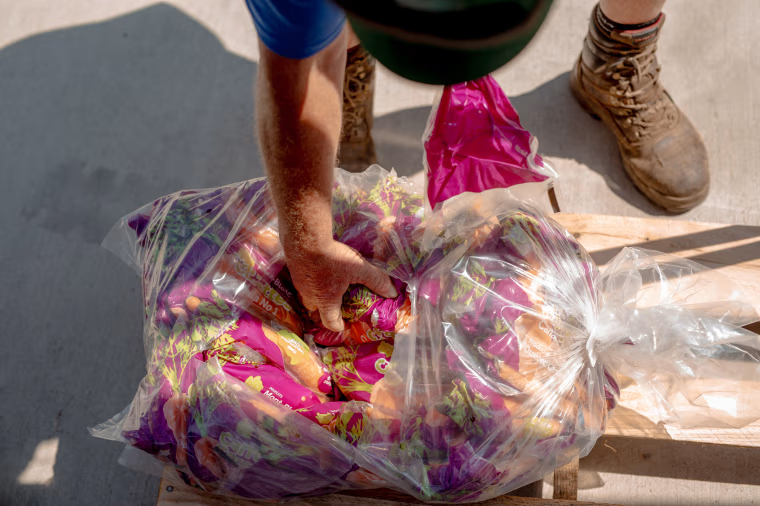
Keeping neighbors fed
Likens learned the tricks of how to battle an aching emptiness in his stomach early in life. When he was 12, his father, a construction supervisor for a coal mine, was injured by a falling piece of equipment. Suddenly, his family of seven had to live off of just $350 a month in government assistance.
Growing up, there were days he ate only two meals, and he was never full. His mother often made biscuits and gravy because it was relatively filling. For the first week of the month, she had enough powdered milk to make the gravy. For the rest of the month, she mixed water, oil and a bit of flour. It had the appearance of gravy but not the flavor.
The family survived with help from the same church he works for today. He and his wife, Addie, whom he met playing in the middle school band, live in the church house he and his brothers helped build as teenagers to repay the church for the food it had provided.
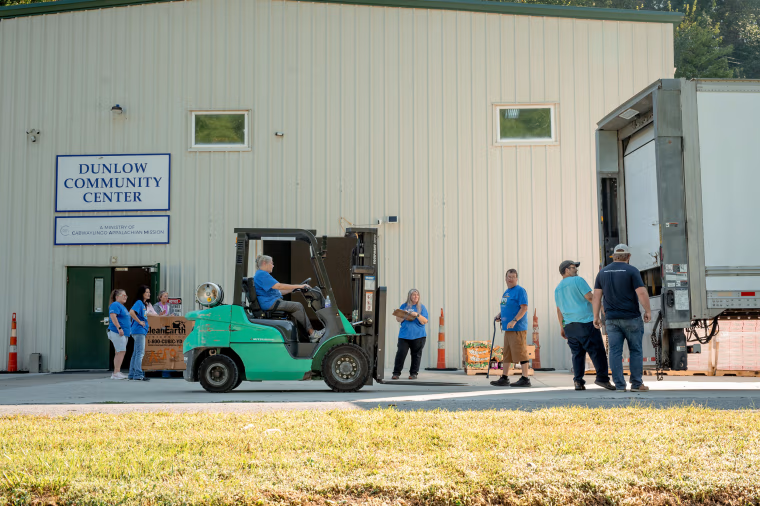
In this corner of West Virginia, hunger is nothing new. For decades, the coal mining jobs that built many of the communities here have been leaving; the last mine near Dunlow closed more than a decade ago. Attracting new industries has been a struggle with little flat land, limited internet service and aging infrastructure. As the jobs left, so did many of the area’s younger residents, leaving a large population of seniors, including many raising grandchildren, who rely on Social Security as their only income.
Likens said making sure no one goes hungry in his hometown has never been harder. His pantry, which serves 700 to 800 households, has gotten 25% less food from the USDA over the past several years, he said. The amount varies month to month, making it difficult to plan. In August, he got just 2.5 pounds of food per household, compared with the 20 pounds he was getting monthly several years ago. Meat has become a rarity, replaced by items like dried beans, which can be difficult to cook with for those with disabilities or children preparing their own meals.
“This is the leanest we’ve been in the 23 years I’ve been doing this,” Likens said.
The USDA said it hasn’t changed the type of food it sends.
“States are responsible for ordering — based on supply and demand — and while no significant changes have been seen, the Trump administration has indeed prioritized increased purchases of fruits, vegetables, seafood and other proteins,” the spokesperson said.
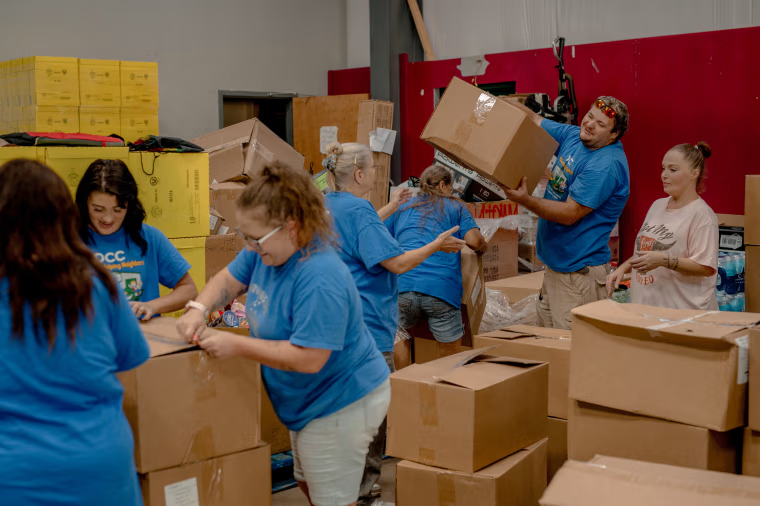
Likens said he has become increasingly dependent on food donations from private companies and food purchased by Facing Hunger, the West Virginia food bank that supplies his pantry and others. Everything he can get helps, but it’s not always the most nutritious food: His pantry was recently lined with 5-foot-high pallets of donated Peeps and more than 100,000 packages of Mike and Ike candy from other nonprofits. Canned pork has become a food pantry delicacy.
“We need to recognize the fact that it does hurt people when we cut these programs that are so necessary,” Likens said.
Along with running the food pantry, Likens started a backpack meals program in which every child at the nearby schools gets a small shopping bag of food to take home on the weekends. Volunteers pack the 250 bags each week with things kids can easily fix for themselves — a box of mac and cheese, a cereal bar, a Cup Noodles.
“When I was a kid, this would have been my dream to have at home,” he said. “To be able to get a Chef Boyardee and a little juice.”
Disappointed in Washington
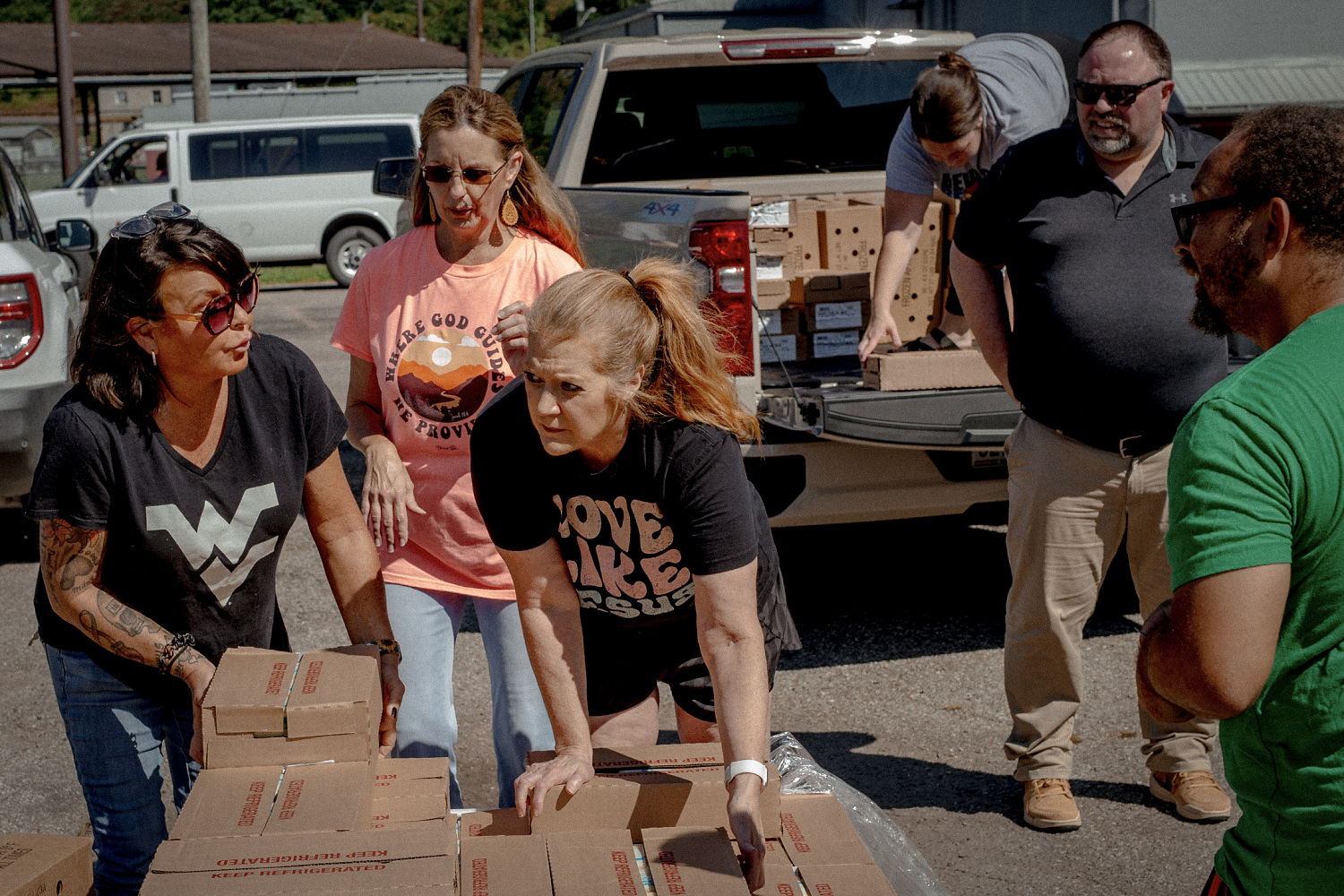
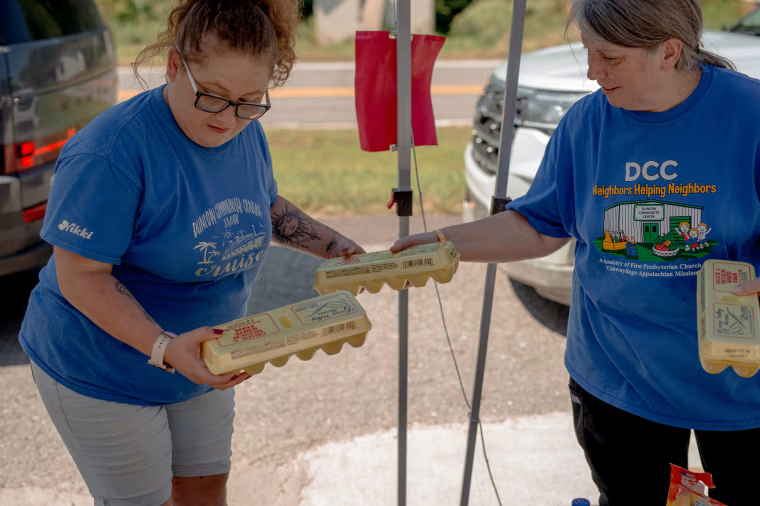
With the food for that day unloaded, Likens looked on as cars and trucks started slowly rolling through and an assembly line of volunteers began placing boxes in trunks and truck beds.
Among the offerings: a carton of eggs, half a gallon of milk, a 5-pound bag of potatoes, around five pieces of cooked chicken, a pack of Jimmy Dean turkey sausage and a bag of apples. Facing Hunger purchased nearly all of the food that day with the money it gets from private donations, state funding and grants. The only items that came from the USDA were packs of sliced Swiss cheese.
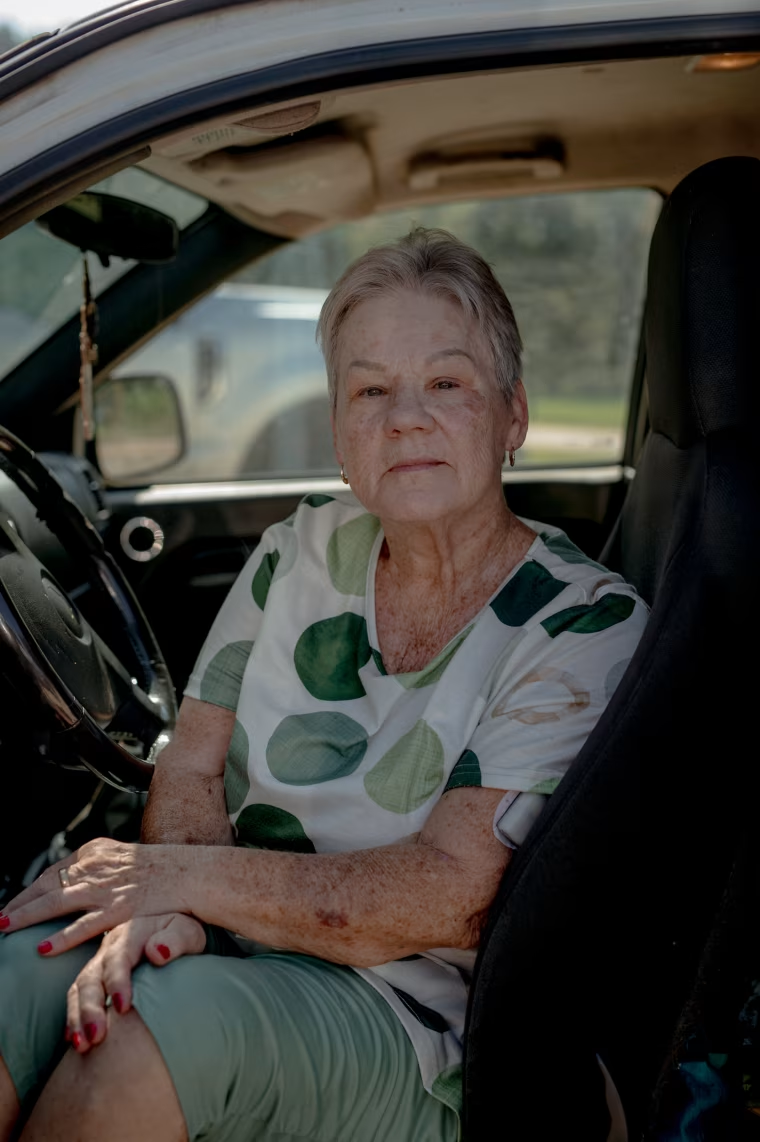
Inside a small SUV was Joanne Girvin, who waited her turn with her one-eyed Yorkshire terrier, Jasper, sitting on her lap.
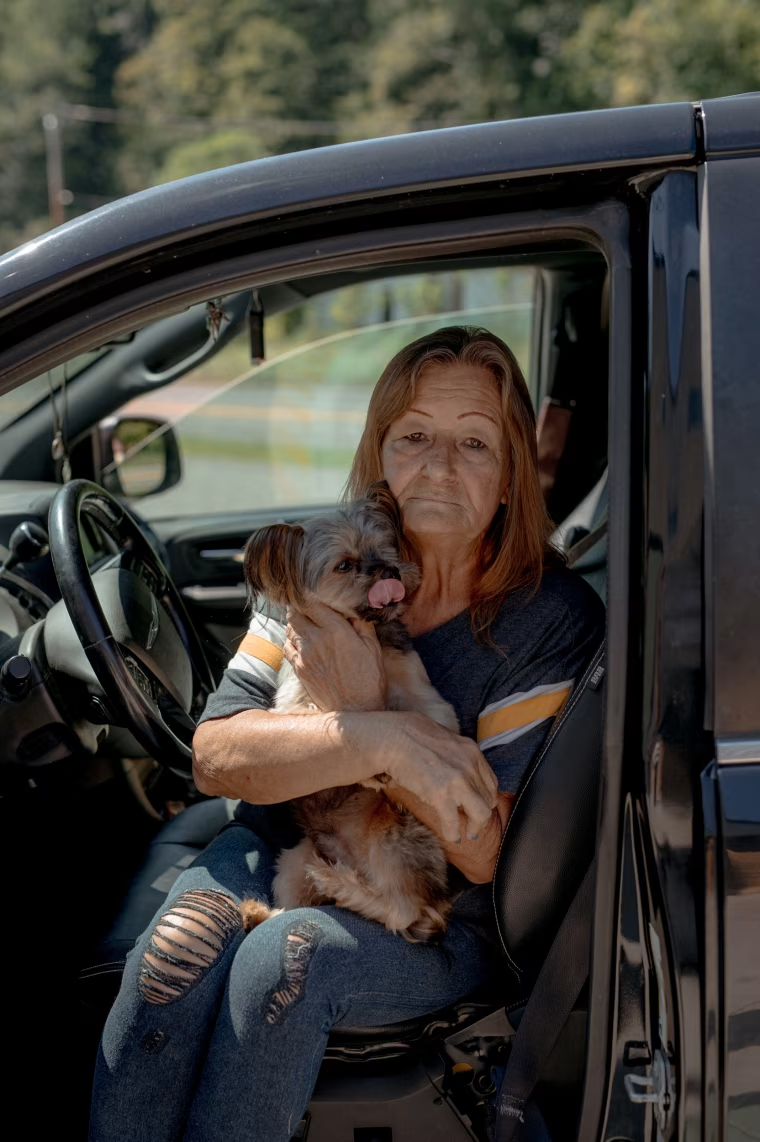
Girvin, 73, used to own a restaurant nearby and is now living off Social Security, which is barely enough to cover her monthly bills. Already on a tight budget, she has no extra room for $4 gallons of gas or a rising electric bill. That has left one place to cut — her food.
She said she has lost 20 pounds over the past year because she has been eating less. The night before, she’d eaten canned deer meat left over from last fall’s hunting season with rice and gravy. Some nights she eats a bag of frozen broccoli with butter.
“Sometimes I just sit down and cry when I’m trying to figure out what you’re going to eat out of a can or something because you don’t have no meat,” Girvin said as her eyes welled with tears. “It’s just really bad, this economy. It’s horrible.”
Girvin has chickens in her backyard that she relies on for eggs, and this hunting season she and her husband plan to get more deer meat to feed themselves through the winter. When food is running low for her dog, she goes out and hunts a squirrel for him. For a bit of extra money, she sells some of her old belongings at flea markets.
She said she doesn’t think those in Washington understand the struggle she and her neighbors face.
“We need help,” she said. “They just don’t know the half of it. They really don’t.”
It was a frustration echoed by others who showed up that morning in a state that Trump won in 2024 with 70% of the vote. While some supported Trump’s decision to attack Iran despite the higher gas prices and argued Republicans were an improvement over Democrats, others said Trump should be doing more to lower prices.
A few cars behind Girvin in line was Bonnie Newsome. She used to drive a school bus, but now, like Girvin, she’s struggling to afford groceries on her retirement income.
Asked whether she had a message for Trump, she said: “I love you, but I think you can do a better job than what you’re doing.”
Over the past year, she has been hit by a string of higher costs, including her electric bill, groceries and gas. With winter coming, she’s worried about affording propane to heat her house.
“I really thought President Trump would move right on in and take care of everything,” Newsome said. “He’s disappointed me, he has.”
Without help from Washington, she relies on people like Likens. She has known him since he was a child and she was driving the school bus.
“If it weren’t for this food pantry that Bill’s doing, we would be in trouble. We really would,” Newsome said. “I used to pick Bill up when he was a kid and drive him to school, and now he’s taking care of me.”
‘We stick together here’
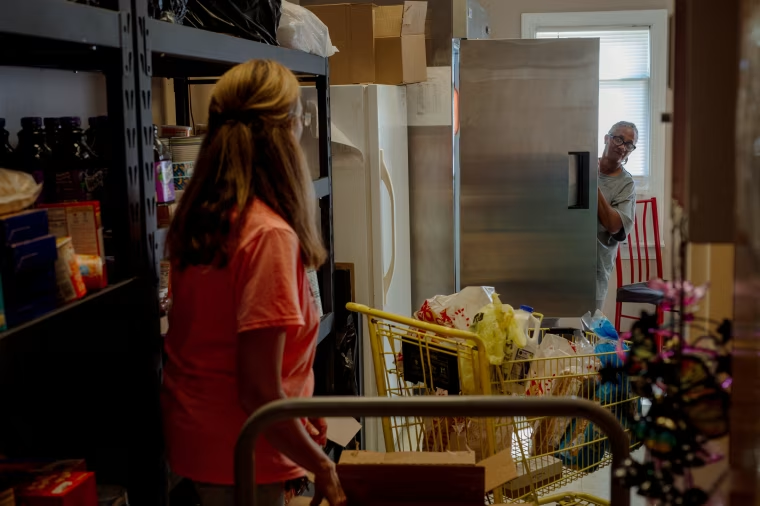
About an hour away from Likens’ pantry, Donna Paterino was doing her own calculus of how to feed more mouths with less food. Her pantry, tucked in the back room of a firehouse, serves more than 200 households a month, twice as many as a year ago, while the quantity and quality of the food she’s getting from the USDA has declined, she said. The USDA deliveries are often less filling and difficult for seniors to cook with, like a recent influx of chickpeas.
“I live by faith and not by sight. But if I’m looking, I see a bunch of people in Washington who are out of touch,” Paterino said.
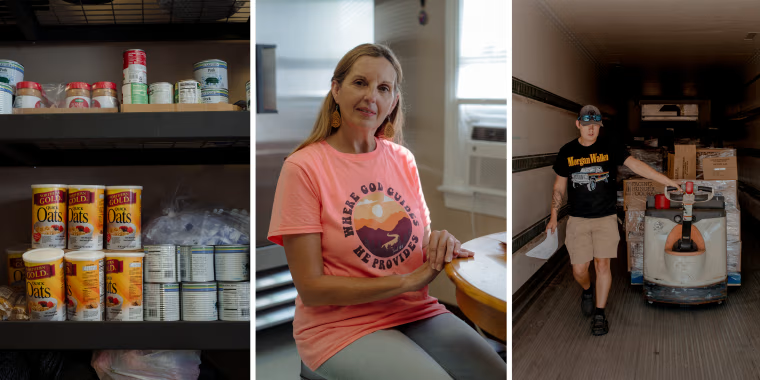
Before she started Widow’s Mite Food Pantry 15 years ago in Matewan, a town made famous for a 1920s shootout between supporters of coal miners and representatives of the mine owners, Paterino, 60, worked for years at school cafeterias, where she saw the signs of hunger in her community.
Students, many being raised by grandparents, would quietly ask her for an extra portion at lunch; one told her all there was to eat at home was a bottle of ranch dressing; another was so thin her pants were held up by a rope.
Now, she said, the faces of those she’s serving have changed.
“My focus used to be just the seniors and grandparents raising grandchildren,” she said. “Now, I have just as many middle-class families who reach out and say: ‘Do you have anything left that I can use? Do you have any juice I can give the kids until Monday?’”
To fill the gaps, Paterino is left scrambling for donations. Each week, she picks up cast-off food from a nearby Dollar General, which gives her items like milk a few days before its sell-by date or dozens of damaged boxes of cereal.
She recently got a call from the Dollar General store manager when one of its freezers went out, telling her to get there as soon as she could to collect the food, which included frozen burritos and Hot Pockets, before it defrosted. Within 20 minutes, in the pouring rain, she was there with a volunteer to load it up, and days later those items had helped 12 families get through the end of the month until their food stamp benefits rolled over.
Once her food leaves the pantry, she often sees it continue to trickle throughout the community — a senior will give their milk to a family with young kids, and a family will make a pot of soup for a neighbor.
In Mingo County, where Paterino runs her small pantry, 1 in 3 children live in poverty, and the population has declined by 9% since 2020. One in 7 working-age adults receive Social Security disability benefits because they are unable to work, a number driven up by injuries in the coal mines, like crushed spines and black lung disease.
“We have deficits here already with a lack of jobs, a lack of opportunities and being in a rural community,” Paterino said. “But what you don’t have other places that we do have is a camaraderie to help one another, neighbor helping neighbor.”
“We stick together here.”
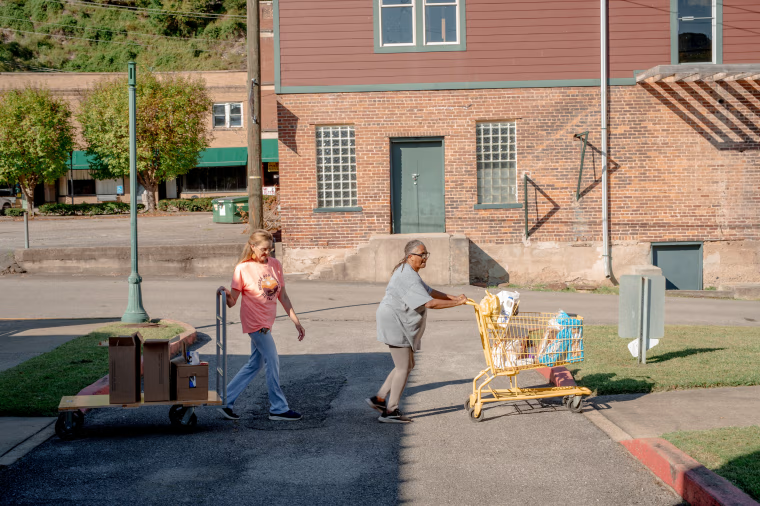
Down to the last box
The pallets of food were starting to shrink, and the end of the line still wasn’t in sight at Likens’ food pantry in Dunlow. He looked on nervously and tried to formulate a plan B to make sure everyone who came got something to eat. Inside his warehouse, he had some pre-packed bags for school kids he could hand out if needed.
When the last of about 200 vehicles had passed through around 1 p.m., Likens was left with eight half-gallon jugs of milk, two bags of potatoes, four bags of carrots, one carton of eggs, two bags of apples and a sizable amount of sliced Swiss cheese. He’d just made it.
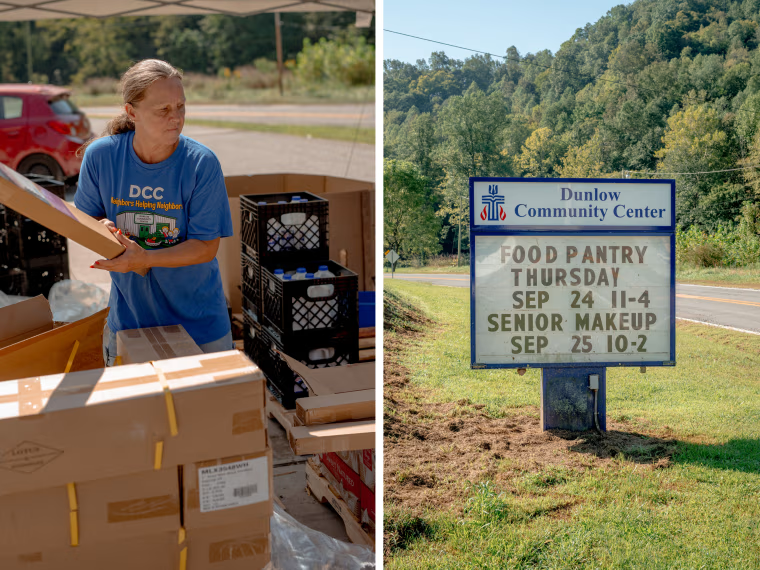
Likens finally sat down to rest his leg, which was damaged a decade ago by bone cancer, and volunteers started moving the empty pallets and boxes inside. Then one more car pulled through. It was a worn van driven by an elderly man with a bandage around his arm from blood work and a woman with a young child in the back. A Bible sat on the dash.
“You got any food left?” the man shouted from his car window. They were coming from a doctor’s appointment and weren’t able to arrive earlier, he told Likens.
Likens headed back inside to see what he could round up for one last household to feed that day.
“We make sure everyone gets something.”