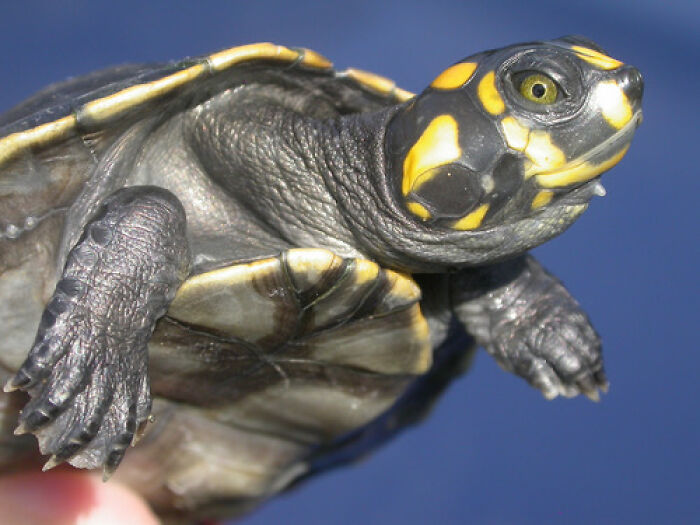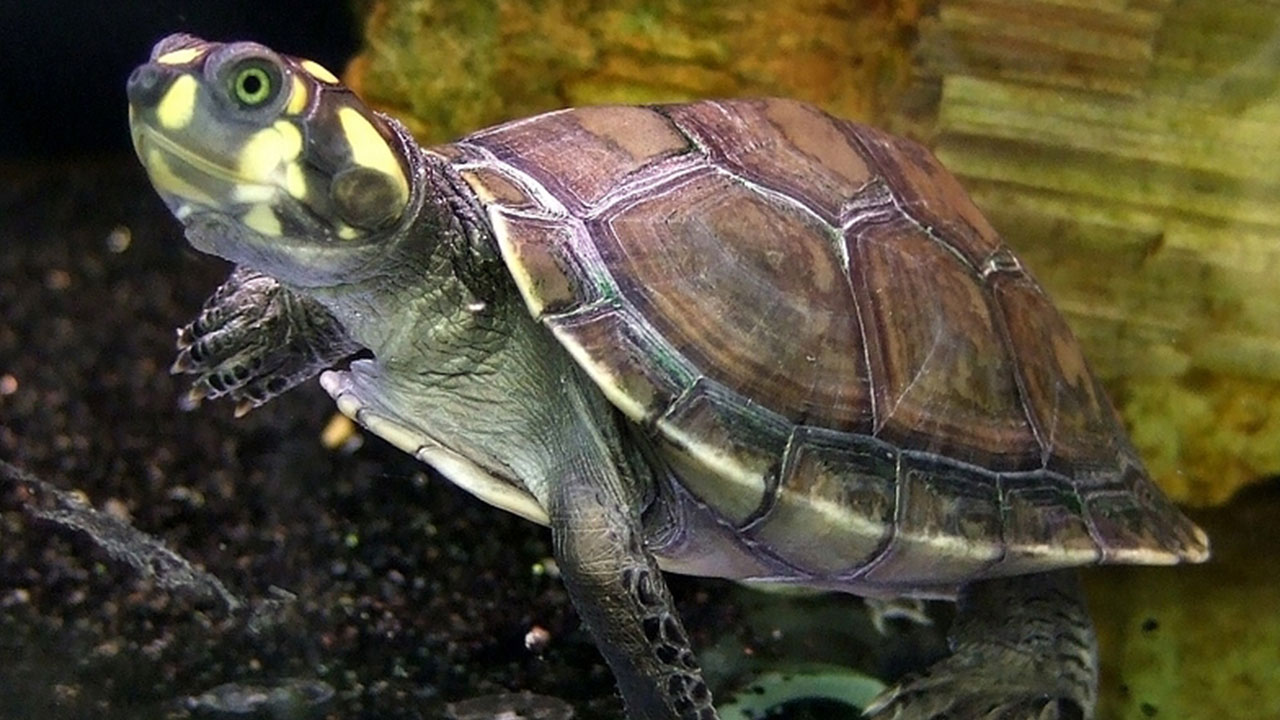
Deep in the Ecuadorian Amazon, the Siekopai people believe that the river’s turtles never swim alone. Each charapa travels under the protection of Koouwajëo, a deity regarded as the turtles’ mother, chief, and ancestral guardian. In Siekoya Remolino, a community on the Aguarico River, they say she weeps these days because her children are in danger. Now a group of seven women is answering her cry, one riverbank at a time.
More info: iucnredlist.org | es.mongabay.com
In the Siekopai tradition of the Ecuadorian Amazon, turtles are sacred animals that connect the visible and spiritual worlds, each one protected by a guardian deity who is said to weep when her children are in danger
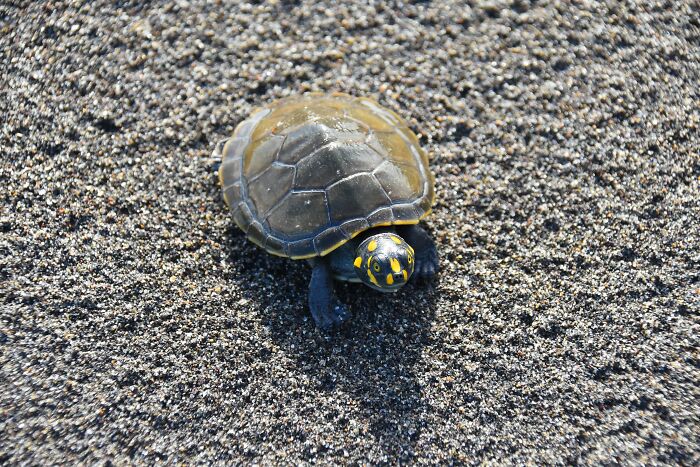
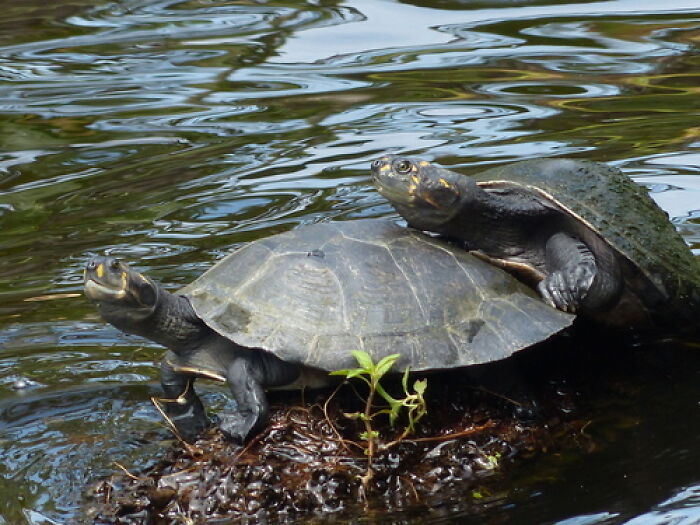
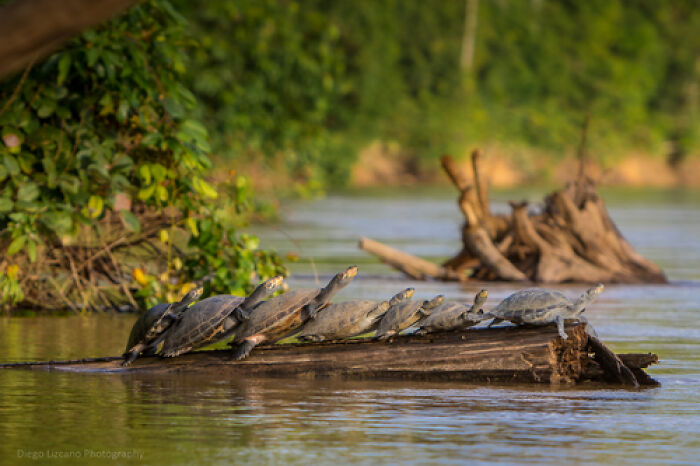
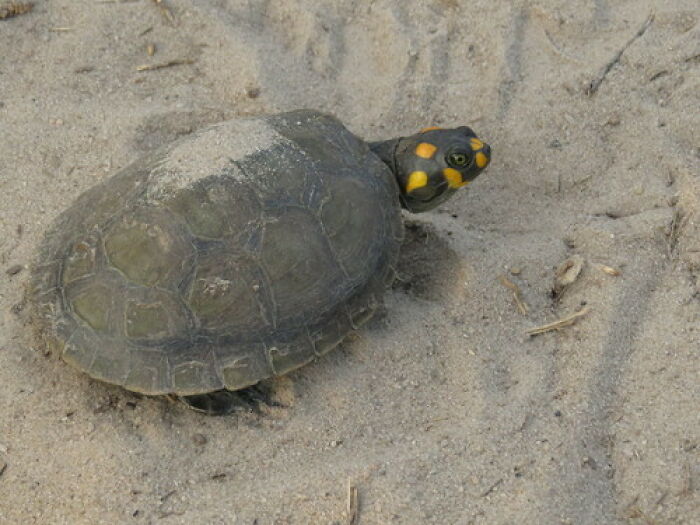
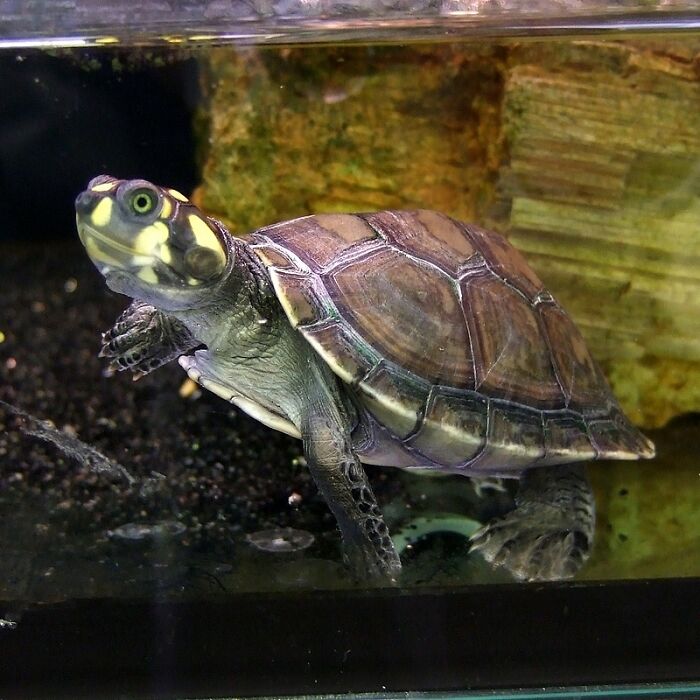
The charapa, or yellow-spotted Amazon River turtle (Podocnemis unifilis), is listed as Vulnerable by the IUCN, and its troubles are mostly human-made. People take eggs from nests and hunt adults. Trash, oil, and gasoline wash into the water, and the wakes of passing boats and barges erode the banks where the turtles nest. Climate change adds another layer, with rivers swelling so high that the nesting beaches vanish underwater. This past December and January, the floods were so intense that the women could not monitor the beaches at all, because there were no beaches left to walk.
Once a common sight along the Aguarico River, the charapa turtle is now listed as Vulnerable, threatened by egg collection, hunting, pollution, boat traffic, and rising floods
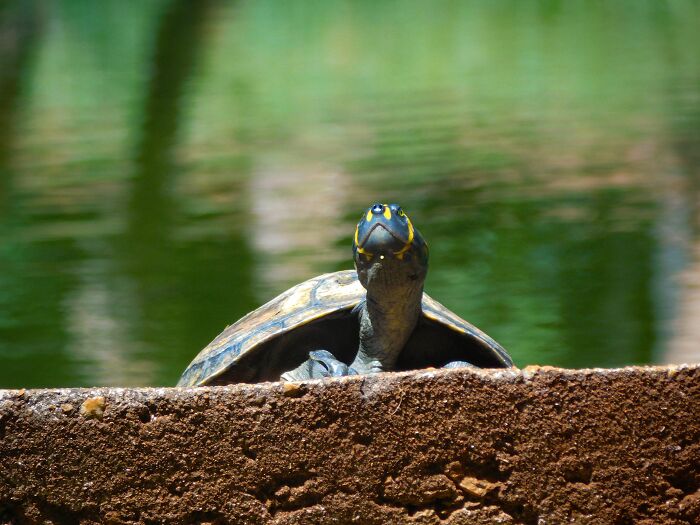
The women call themselves Tari Nomiowa’i, or “turtle women,” and their days begin before sunrise. Led by 25-year-old Janeth Piaguaje, the group (aged 18 to 64, including her own mother) sets out with buckets, gloves, and monitoring tools to search the wet sand for tracks. When they find a nest, they enter every detail into the Epicollect5 app: the date, the time, the location, and the number of eggs. They handle the eggs with great care, and mark each one’s original position so the embryo is never rotated. “If we place the eggs wrong, the turtles can’t come out,” Janeth explains. The eggs then move to an artificial sand nursery built near the village, where the women copy the depth and conditions of the original nest and monitor its temperature and humidity.
Determined to protect them, seven Siekopai women of all ages formed a group called the Tari Nomiowa’i, or “turtle women,” and walk the riverbanks before sunrise searching for tracks and nests in the sand
The know-how behind all this comes from home. Janeth learned to handle eggs and read the nesting calendar from her father, José César Piaguaje, an artist and community monitor who trained in turtle management through a biodiversity station in Yasuní National Park. In 2025, she received a fellowship from Conservation International Ecuador’s Amazon Indigenous Women Program, which helped support the group. The women also belong to a network of ten communities (Kichwa, Waorani, Cofán, and Siekopai) that share experience and work toward a joint permit to manage two charapa species.
Each nest is carefully recorded with a tracking app, and its eggs are gently moved to a protected sand nursery built to copy the natural conditions of the riverbank
Their latest nesting season has already brought results. During 2025-2026, the team gathered eight nests with 235 eggs, and 208 hatched. The hatchlings stayed for about a month in tubs filled with river water, taking turns being fed by the women on cassava, sweet potato, and taro leaves. Then, in March and April, they were released into the Aguarico. At one of the first releases, with schoolchildren and neighbors watching dozens of tiny turtles head for the water, Janeth was overwhelmed. “I was very happy,” she recalls, “and I started to cry.” The children painted murals of the turtle life cycle, named the hatchlings before letting them go, and some promised never to take eggs from a nest again. Janeth’s four-year-old daughter helps too, by chopping leaves for the babies.
Their leader, Janeth Piaguaje, learned to handle the eggs and read the nesting calendar from her father, and that inherited knowledge now guides the entire project
The work is also bringing other opportunities to the community. Janeth’s family has started community tourism built around turtle monitoring; other women are making ceramics inspired by the charapa, and her father contributes paintings of the territory. Janeth sums up her father’s lesson simply: a single turtle in the river is nature, but seeing many of them is biodiversity, and that is what matters most.
After hatching, the baby turtles are cared for by the women for about a month, fed with cassava, sweet potato, and taro leaves, until they are strong enough to face the river
It will take years to know whether the charapa population is truly recovering, and the floods, boats, and pollution have not gone away. But Janeth likes to imagine that Koouwajëo no longer weeps alone. Perhaps she can now hear the turtle women’s footsteps on the sand, the children’s games at the water’s edge, and more than two hundred small turtles swimming home.
In the latest nesting season, 208 hatchlings were released into the Aguarico with schoolchildren and neighbors watching, giving the community new hope for the future of its turtles