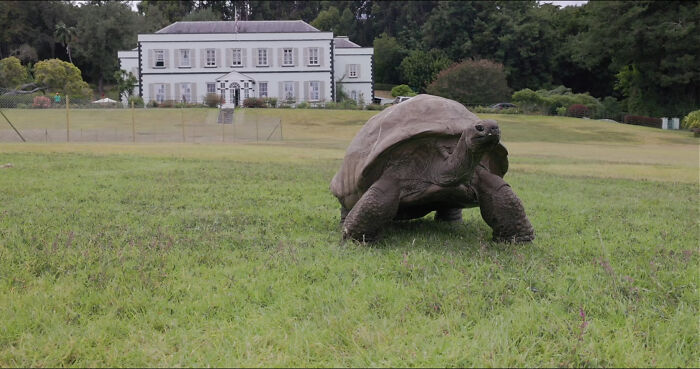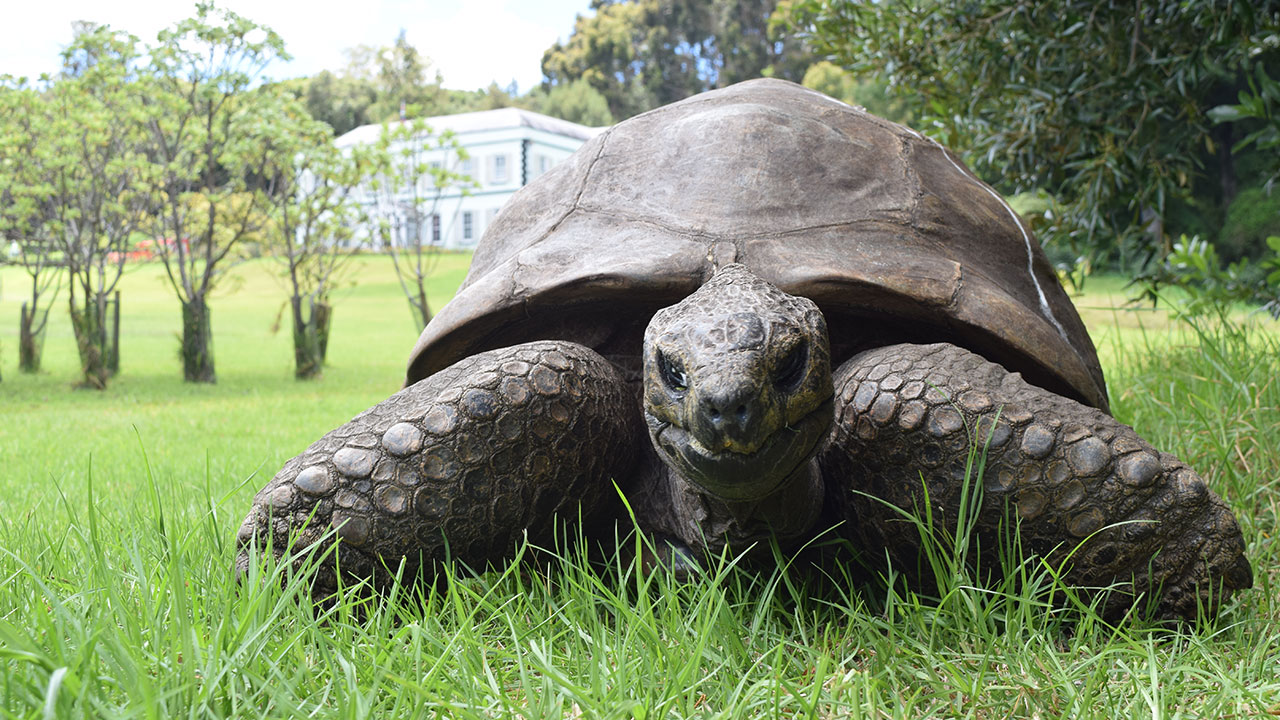
Imagine being born before Queen Victoria took the throne, witnessing nearly two centuries of human history, and still enjoying a good meal and some attention from visitors. For Jonathan, a giant tortoise living on the remote South Atlantic island of St. Helena, that’s simply everyday life. Estimated to have hatched around 1832, he is approximately 194 years old in 2026, making him the world’s oldest known living land animal and the oldest recorded tortoise.
But Jonathan is much more than a record holder. He’s a beloved member of the St. Helena community, an unexpectedly lively character despite his advanced age, and now the subject of fascinating scientific research that could help researchers better understand why certain animals live exceptionally long lives. His story combines nearly two centuries of history with some remarkable discoveries about aging.
Scroll down to learn more about this extraordinary tortoise, his daily life, and the secrets scientists are hoping to uncover from his incredible longevity.
More info: sthelenatourism.com | Instagram | Facebook
Jonathan’s incredible journey began around 1832, long before anyone could have imagined his extraordinary lifespan
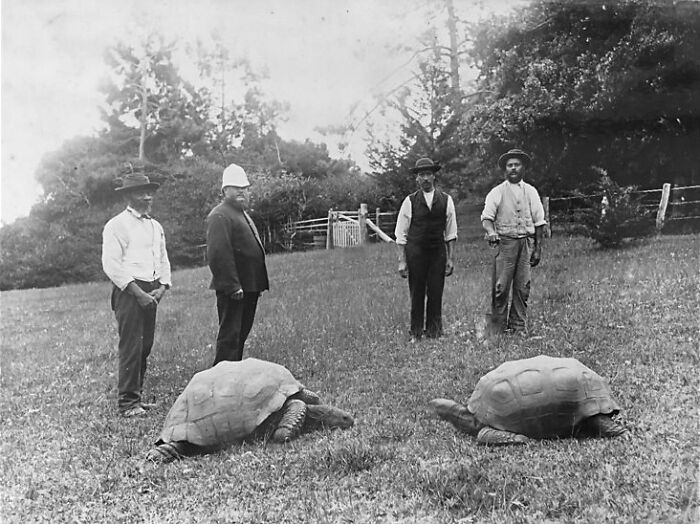
Unknown photographer/Public Domain
Jonathan’s story on St. Helena began in 1882, when he was brought to the island from the Seychelles as a gift to the governor. He was already a fully mature tortoise, believed to be at least 50 years old, which is how researchers and historians estimated his birth year at 1832. His exact age remains uncertain, meaning he could actually be older than the commonly cited 194 years.
Since his arrival, Jonathan has lived on the grounds of Plantation House, the official residence of St. Helena’s governor. Over the generations, he’s seen more than 30 governors come and go, lived through two world wars, and witnessed extraordinary technological change. He was already more than a century old when the first humans landed on the Moon in 1969.
By the time he arrived on St. Helena in 1882, Jonathan was already believed to be at least 50 years old
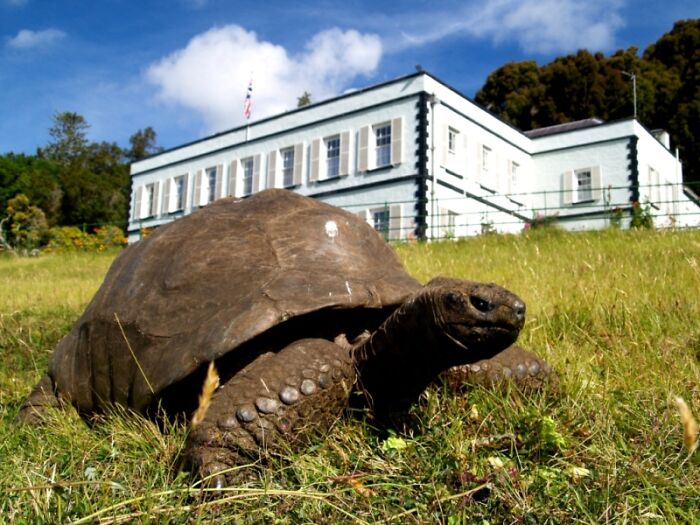
Over the decades, Jonathan has witnessed the reigns of eight British monarchs and countless historical milestones
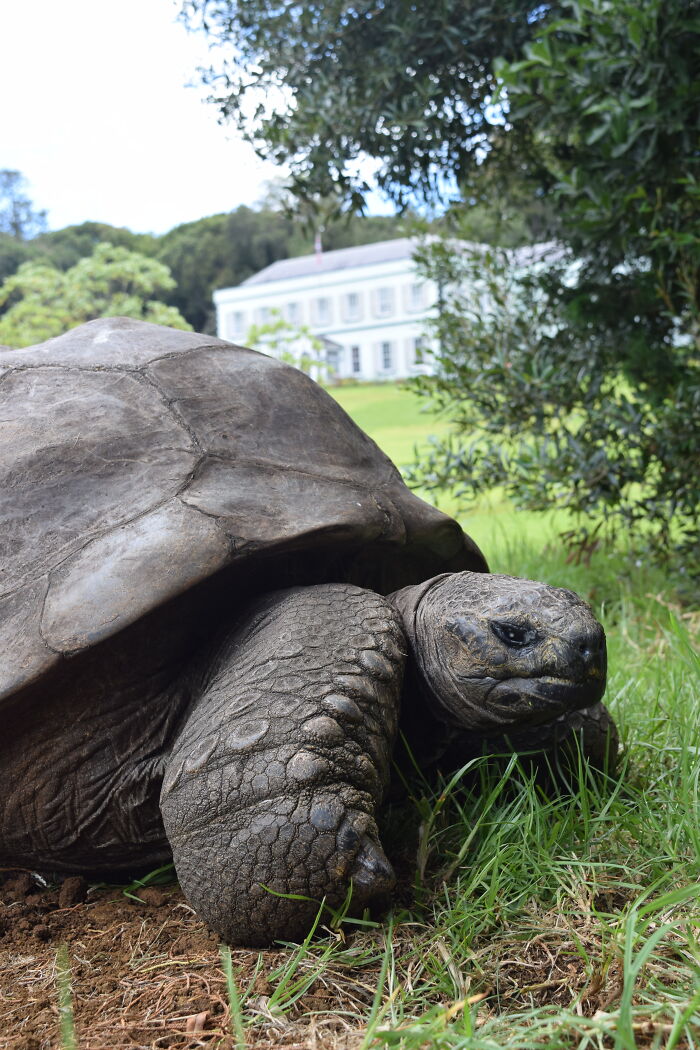
For the people of St. Helena, however, Jonathan is much more than a fascinating connection to the past. He’s considered a national treasure, even appearing on the island’s five-pence coin. In June 2026, Guinness World Records further recognized his international significance by officially naming him one of its ICONS, celebrating the remarkable impact he’s had beyond his two existing world records.
Despite his age, Jonathan continues to enjoy a relatively active and comfortable life. He shares a grassy paddock at Plantation House with three other giant tortoises, spending much of his time grazing and wandering around the grounds. Although his eyesight has deteriorated considerably and he’s lost much of his sense of smell, his hearing remains an important way of navigating his surroundings and interacting with his caregivers.
For generations of islanders, Jonathan has been a beloved resident and a symbol of St. Helena
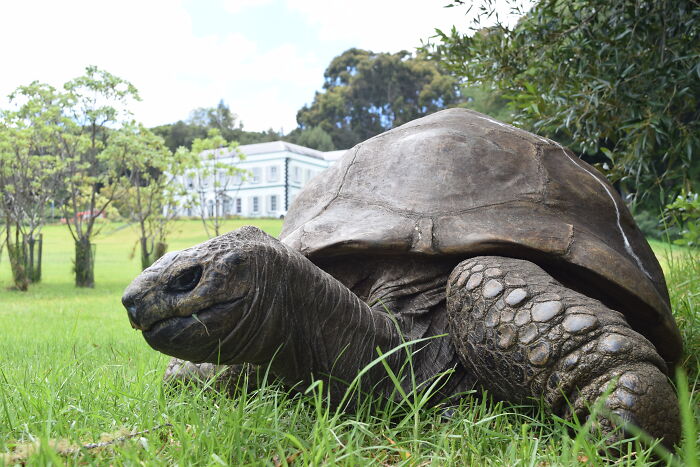
Although his eyesight has deteriorated, his appetite for his favorite vegetables remains as strong as ever

Andrew “Andy” Cant, St. Helena’s Senior Veterinary Officer, shared some firsthand insights into Jonathan’s personality and daily routine with Bored Panda. “He’s quite a character,” Andy explained, adding that the elderly tortoise enjoys the attention he receives from visitors. “If only he could speak, he could tell some tales!”
Andy says Jonathan recognizes the gate’s distinctive squeak when someone enters his paddock carrying food. Hearing it, he raises his head and turns toward the sound. While grass makes up most of his diet, the tortoises also receive a weekly selection of vegetables as a nutritional supplement. Jonathan is hand-fed because of his poor eyesight and particularly enjoys crunching on carrots, lettuce, and cucumber.
His appetite isn’t the only thing that’s remained impressive. Andy explained that Jonathan is sometimes more active than his younger companions and still shows romantic interest in Emma, the group’s only female tortoise. He’s also particularly fond of physical affection. After feeding, a gentle rub on his neck or legs can send him into what Andy describes as “a sort of trance,” during which he stretches his legs out and stands tall.
Jonathan’s weekly meals are carefully supplemented with fresh vegetables to help keep him healthy
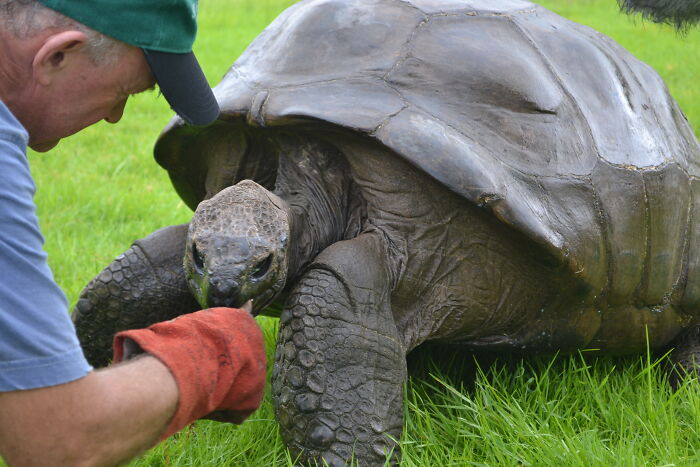
His companions David, Emma, and Fred help keep him company on the grounds of Plantation House
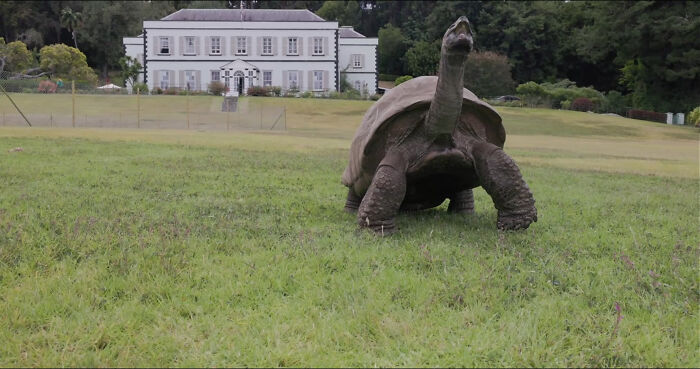
Jonathan’s longevity has also attracted considerable scientific attention. In October 2026, researchers published a study in the journal Science Advances examining his genome and epigenome to investigate what might have allowed him to survive for almost two centuries. Because drawing blood could pose unnecessary health risks, scientists collected DNA from his saliva and cheek lining instead.
One of the most fascinating discoveries involved DNA methylation, a process in which chemical markers help regulate gene activity. These patterns typically become more disorganized with age, a phenomenon known as methylation entropy. While Jonathan showed signs of this aging process across much of his genome, researchers identified 272 gene promoters, regions that help control gene activity, where his methylation patterns remained remarkably stable. Many of these were associated with mitochondrial energy production and RNA processing, suggesting that maintaining these essential cellular functions could play an important role in his extraordinary longevity.
The findings could also provide valuable insights into human aging, as tortoises and mammals share many fundamental biological processes. Understanding how Jonathan’s cells have maintained certain protective mechanisms for so long might eventually help scientists investigate age-related diseases and cellular deterioration in humans. However, researchers emphasize that further studies are needed to establish whether these genetic and epigenetic characteristics directly contributed to his exceptional lifespan.
Despite his remarkable age, Jonathan sometimes displays more energy than his much younger companions
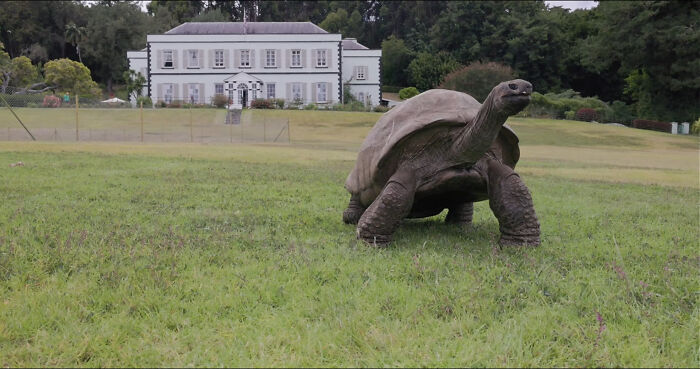
Researchers hope his extraordinary longevity could offer valuable insights into the biological mechanisms of aging
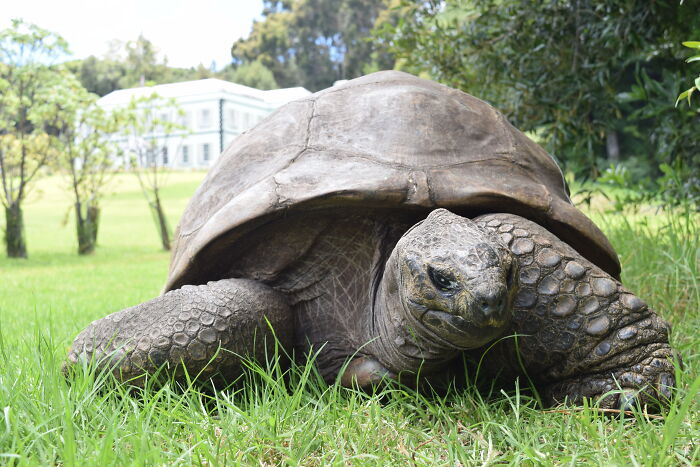
While scientists continue investigating the biological secrets behind Jonathan’s long life, he seems perfectly content with his familiar routine on St. Helena. He enjoys food, company, sunshine, and the attention of the people who care for him. Andy speaks to him regularly, though he admits their conversations tend to be one-sided.
As he put it, Jonathan is “older and wiser than me,” and generally keeps his thoughts to himself. Perhaps that’s part of his charm. After nearly two centuries on Earth, Jonathan has become both a remarkable scientific subject and a reminder that a fulfilling life can be made up of simple pleasures, familiar surroundings, and a little affection.
Nearly two centuries after his birth, Jonathan still enjoys life’s simple pleasures, from a tasty meal to a gentle scratch on the neck