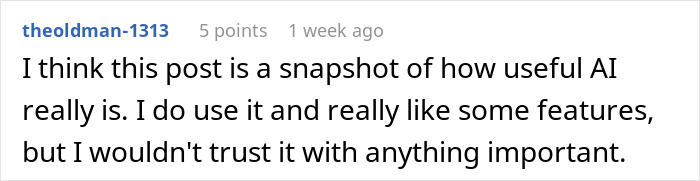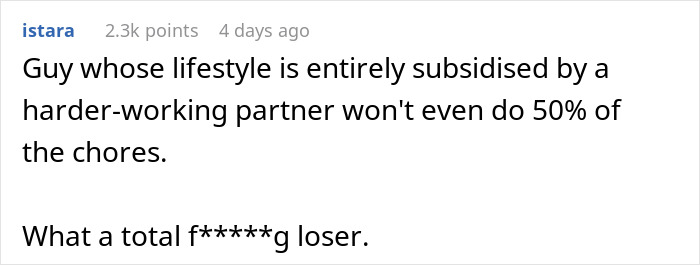
We’ve heard about AI stealing jobs and ruining people’s livelihoods. But now, it seems like robots are coming for our relationships, too.
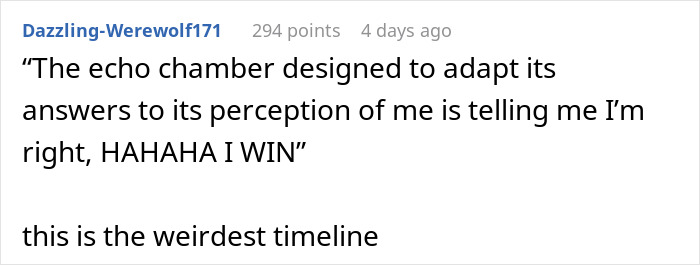
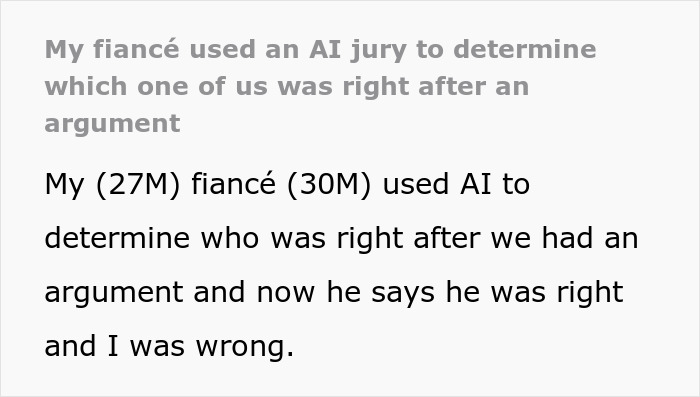
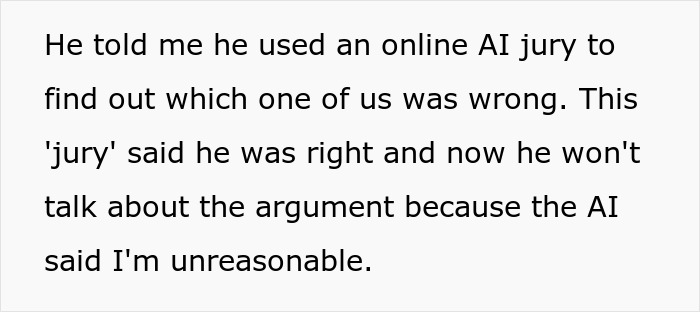
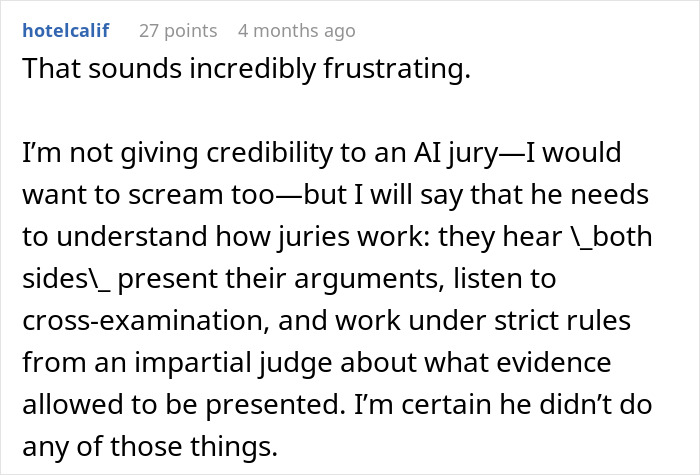
What happened to the good, old days of talking things through with one’s partner and settling disagreements without external interference? That’s the question many were left pondering after a man shared how his fiancé used AI Jury to prove him wrong during an argument.
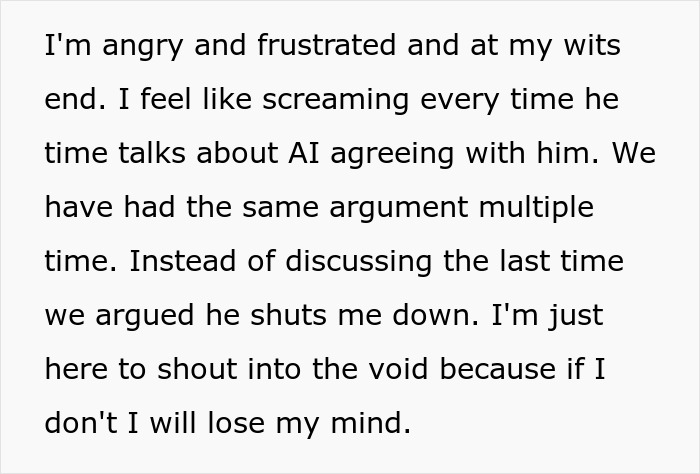
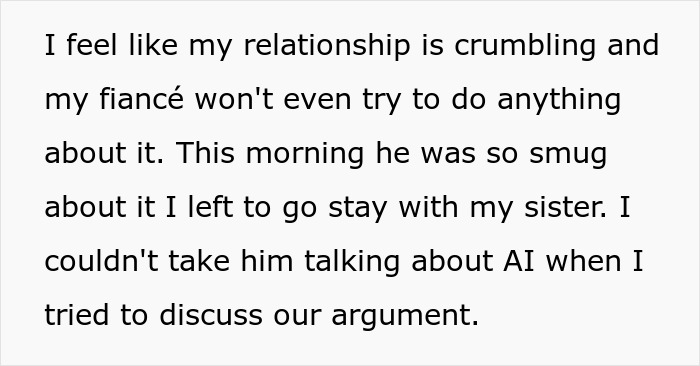
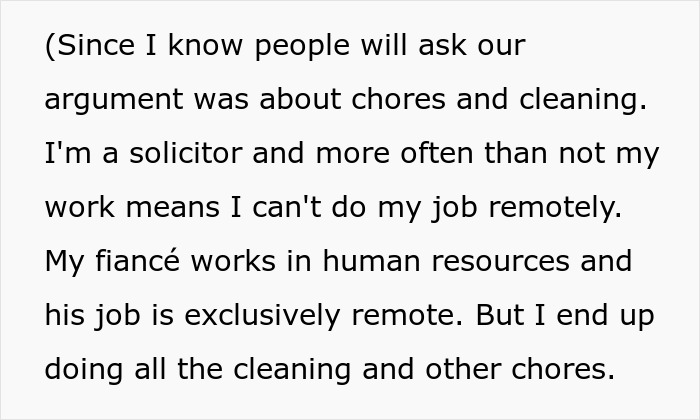
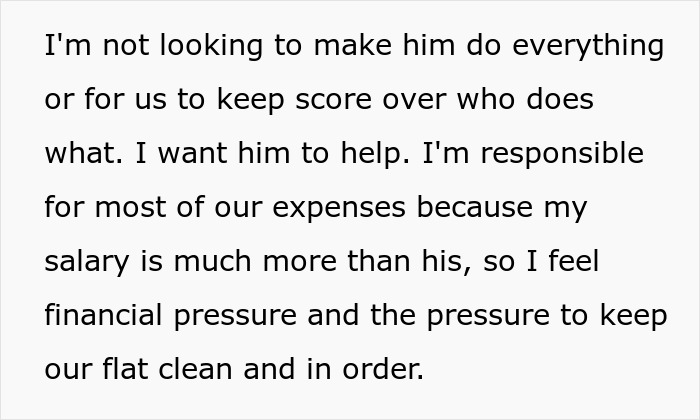
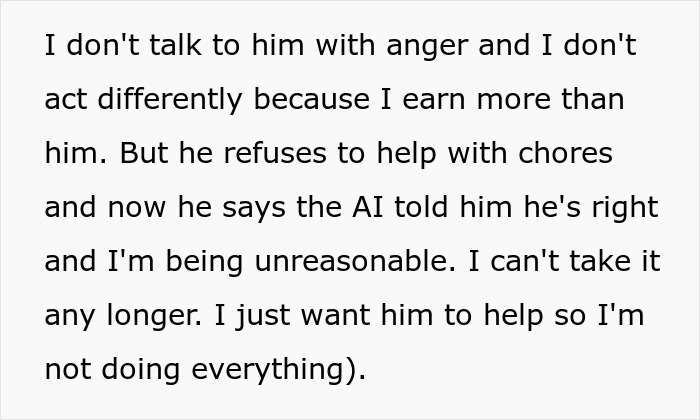
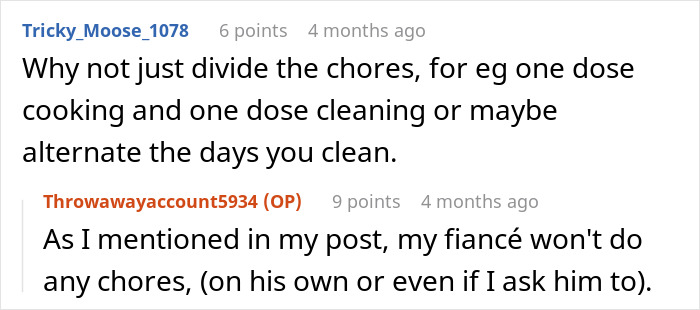
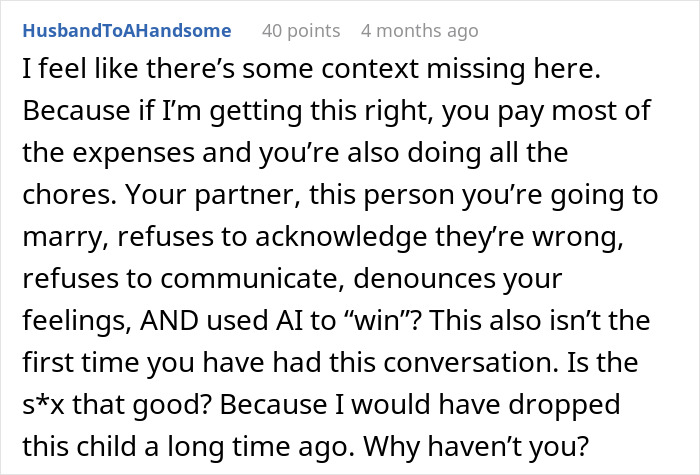
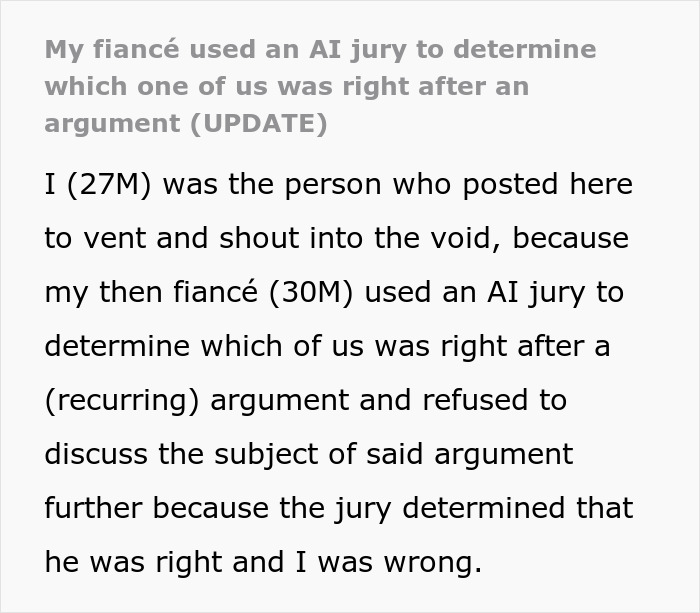
The disagreement was over how their housework is split, and the fact that the fiancé refuses to do any at all. According to AI, he’s entitled to be lazy and the partner doing 100% of the chores is “unreasonable” to expect more. Needless to say, it hasn’t ended well.
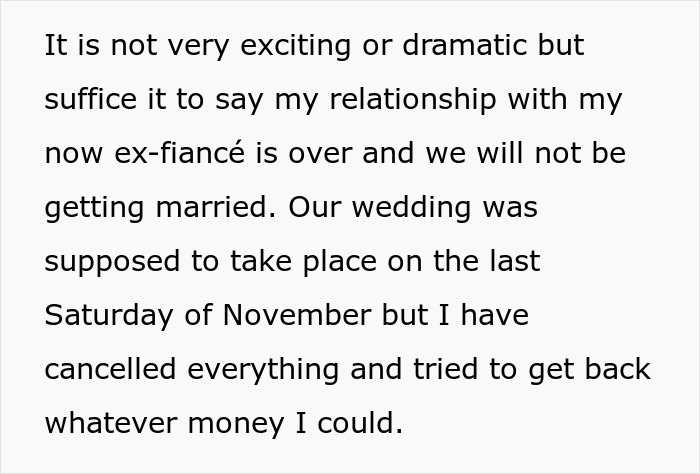
They were due to get married in November but then AI got in the way

krakenimages.com / magnific (not the actual photo)
His fiancé used a robot jury to settle an argument over splitting chores, and it’s caused massive drama
Jo Lin / unsplash (not the actual photo)
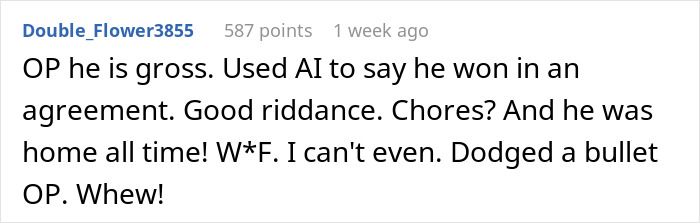
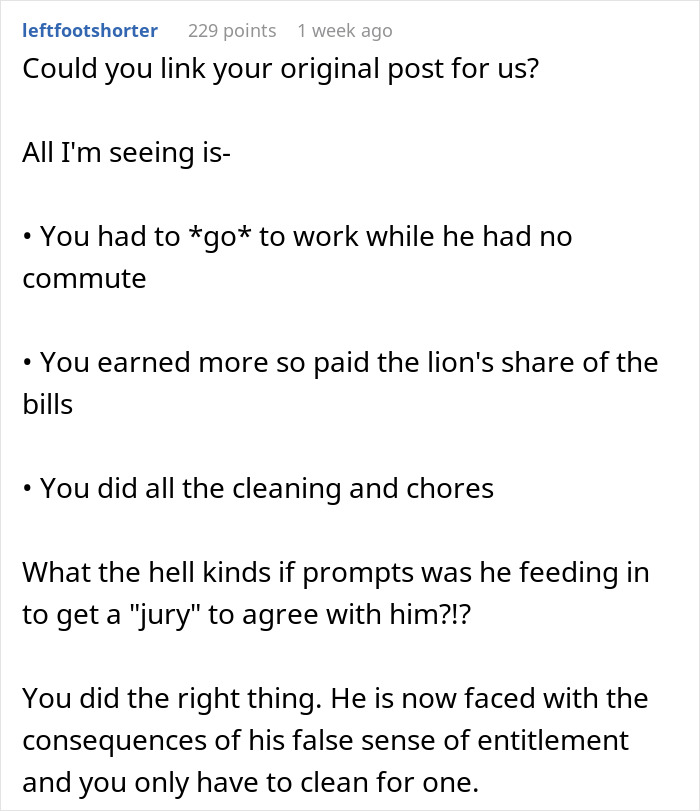
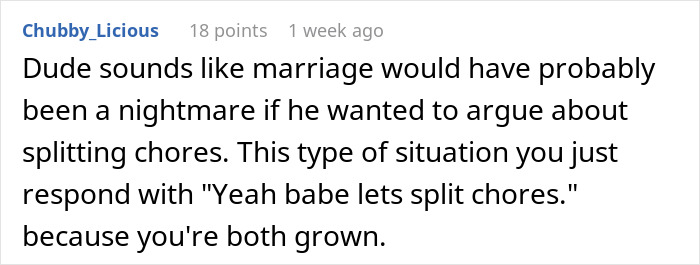
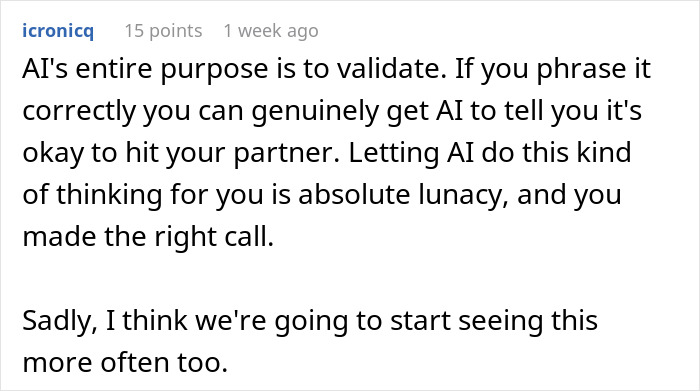
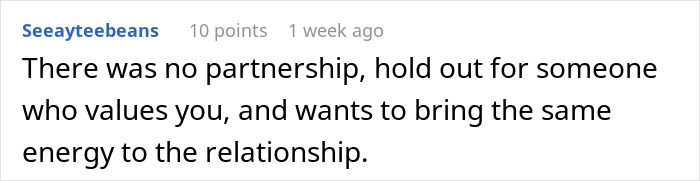
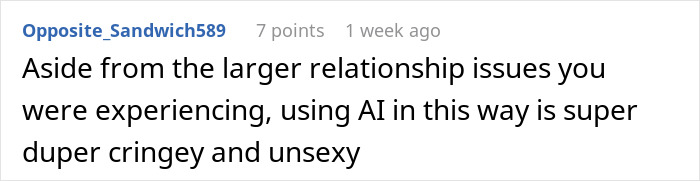
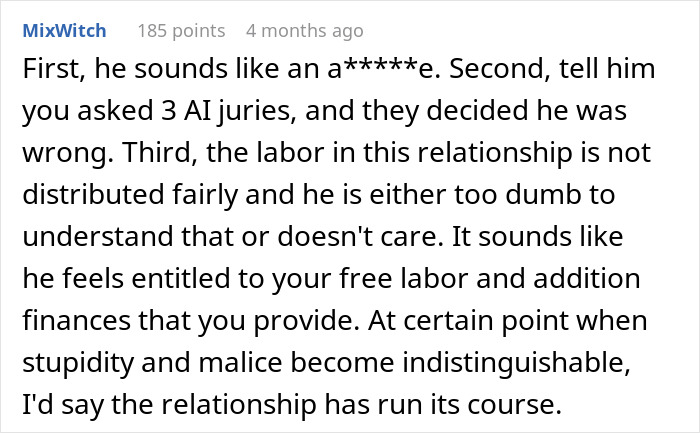
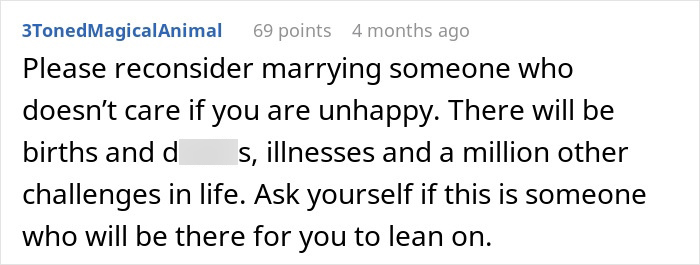
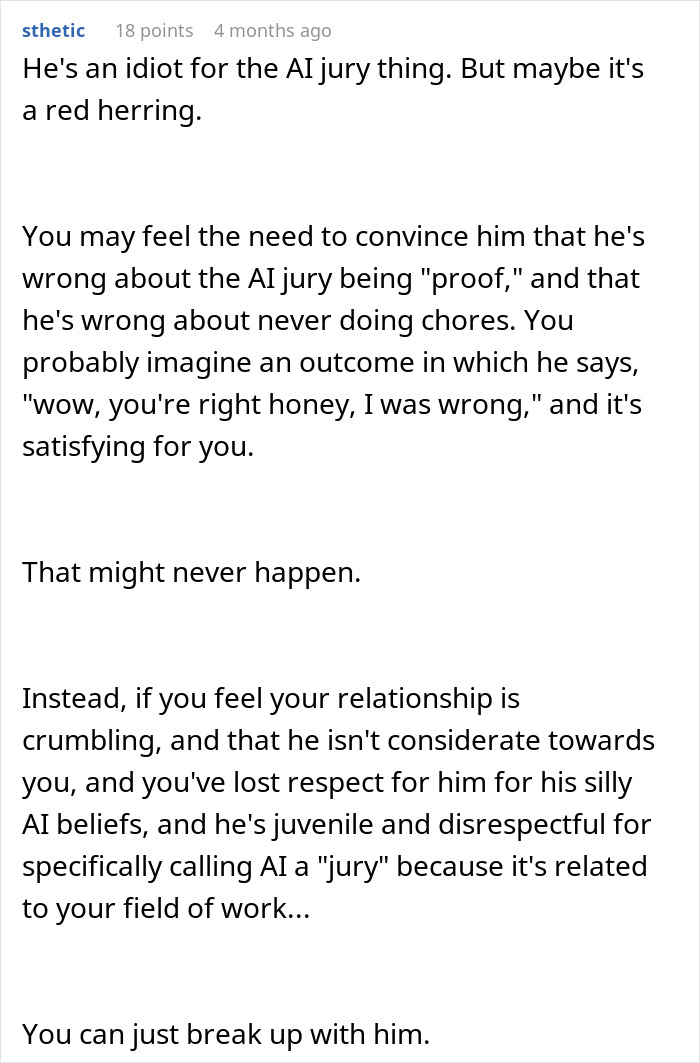
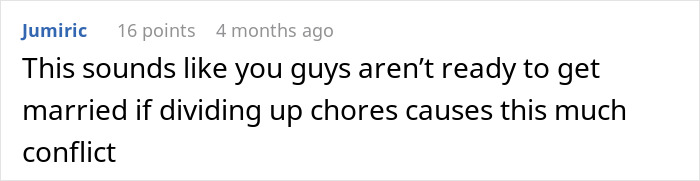
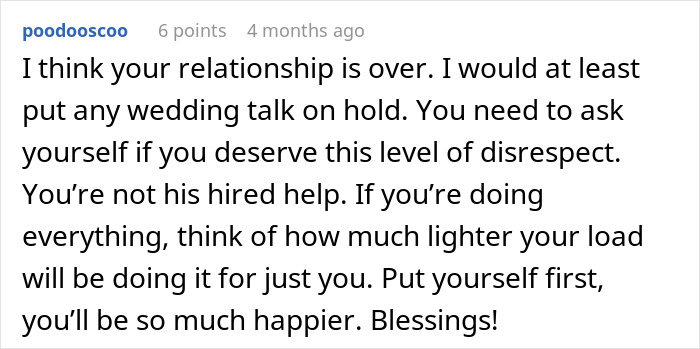
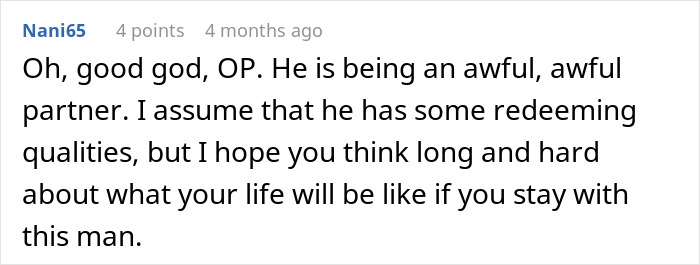
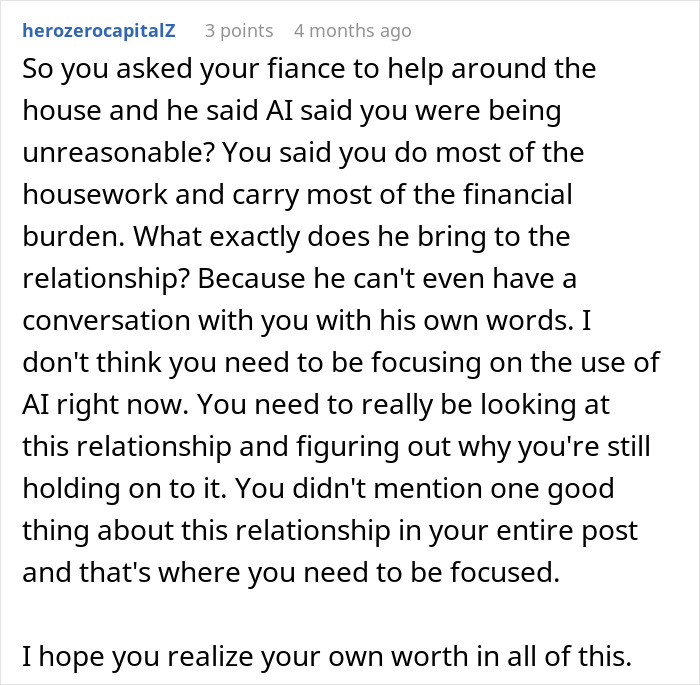
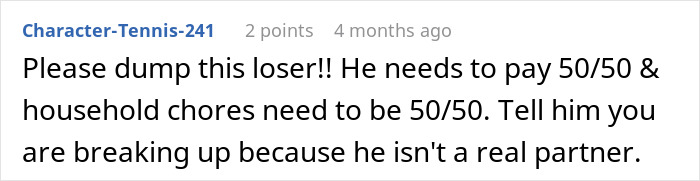
Many felt the relationship was over and the man should leave




evanaasa / magnific (not the actual photo)
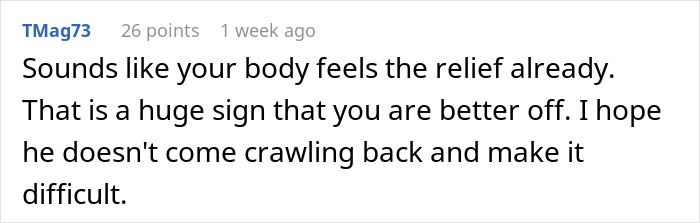
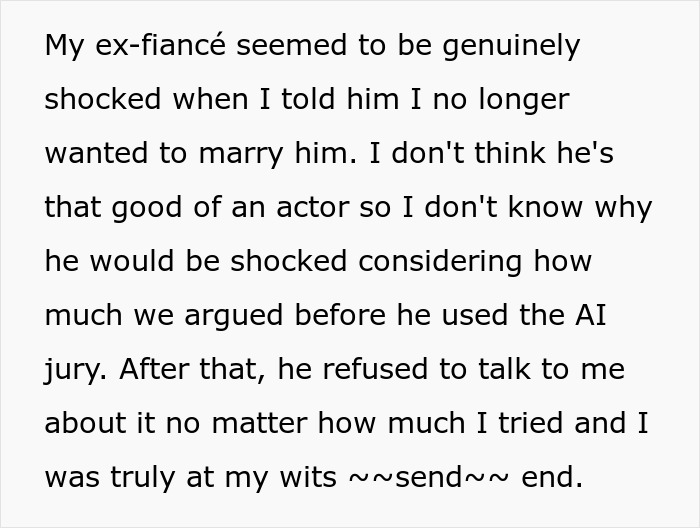
The man returned with an update four months later, revealing that things had taken a wild turn

magnific / magnific (not the actual photo)
Why AI can’t replace human judgment, according to a jury expert
If you think it’s wild that AI is being used to settle arguments between couples, then you might be even more shocked to know that robots are making their way into real courtrooms.
According to Sonali Chakravarti, Professor of Government and director of the Allbritton Center for the Study of Public Life at Wesleyan University, judges have increasingly been incorporating artificial intelligence into their work.
“Risk-assessment tools now help judges make decisions about bail, and lawyers and judges have used AI to research legal precedent,” says the expert. “Some judges are even experimenting with it to formulate rulings, and simulations have used AI tools to stand in for human jurors.”
However, Chakravarti warns that there are moral and ethical implications to this. The author of Radical Enfranchisement in the Jury Room and Public Life believes that allowing an AI bot to determine a verdict by assessing evidence distorts the meaning of legal judgment.
“I believe AI obscures the importance of what human decision-makers bring to the task, and why they are essential for the legitimacy of the legal system,” the jury scholar writes. “Since the Middle Ages, jurors have had to grapple with the weight of determining guilt – including having serious reservations about the quality of the evidence, the legitimacy of punishment and the impossibility of complete knowledge about the case.”
DC Studio / magnific (not the actual photo)
Chakravarti explains that AI systems are trained to maximize predictive certainty: “That is, they offer suggestions based on previous patterns or on the training they have received,” she says. “They cannot weigh different outcomes in light of prior experiences or collective ideals.”
Ken Broda-Bahm, Senior Litigation Consultant at Holland & Hart LLP agrees. He says that AI draws from large language models. Therefore, it’s really good at answering questions that already have loads of answers it can delve into. But that’s not the case when it comes to individual legal matters.
“So what you are getting from AI responses are plausible-sounding guesses based on commentary about juries on other cases, or jurors in general,” says Broda-Bahm. “What you won’t be getting is a reaction to your case because there is literally no foundation for those reactions in the language AI draws from.”
Meanwhile, Chakravarti cautions that in order to take responsibility for its own decision, a jury needs judgment, “not mere calculation inspired by what a machine considers the optimal outcome.”
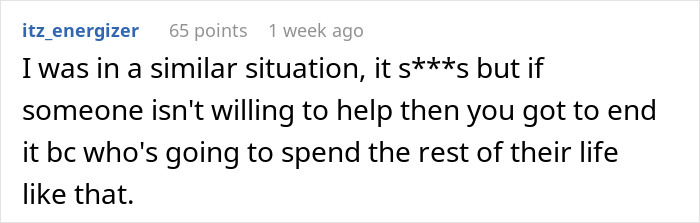
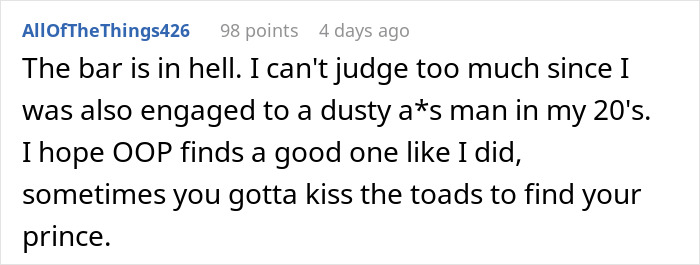
“The bar is in hell”: People were shocked by the laziness and praised the man for leaving