A man’s list of “non-negotiables” for how men should treat women has sparked a heated online debate, with some viewers calling the advice the “bare minimum” and others saying several rules feel “outdated.”
TikTok creator Chase Ridgeway shared his dating guidelines in a now-viral video he posted on August 5, 2026.
He explained that although he had been single for three years, he still wanted to share his perspective on how men should treat women.
The video quickly drew attention, racking up millions of views, thousands of likes, and comments.

Many viewers enthusiastically praised Ridgeway’s emphasis on thoughtfulness, planning dates, and making an effort with a partner’s friends and family.
“I love how the bare minimum needs to be explained nowadays,” one person wrote, while another declared, “Bare minimum fellas, if you think this is too much, you’re not ready.”
But not everyone was convinced.
Some viewers questioned the gendered nature of the advice, with one person arguing, “A lot of this is very outdated and seems kind of off to me tbh.”
Viktoria Slowikowska/Pexels (Not the actual image)
Amid the ongoing debate, Bored Panda spoke with dating and relationship expert Dr. Jessica O’Reilly, who says the answer may not be as simple as labeling the rules progressive or outdated.
According to her, the most important thing is whether both people genuinely appreciate the dynamic.
“I’d prioritize curiosity, respect, and responsiveness over any universal set of rules,” she explained.
“Pay attention to the person you’re actually dating: What makes them feel cared for? What matters to them? What are they comfortable with?”
Here are the eight dating rules Ridgeway says men should follow, and Dr. Jessica’s take on whether old-school chivalry still has a place in modern relationships.
View this post on Instagram


#1 Her Problems Are Your Problems, But Supporting Her Doesn’t Mean Taking Them Over
Chase’s fifth rule took emotional support a step further.
He told his viewers, “If a woman is telling you her problems, that means she feels comfortable, and she feels safe telling you these things.”
“So guess what? Those problems that she has, guess what? They are now yours, and whatever she feels about said problem, you better feel that way three times more.”
Some viewers praised the sentiment, interpreting it as a call for men to take their partners’ concerns seriously.
But another commenter strongly disagreed with the idea that a partner's problems should literally become your own.
“Her problems are not your problems, and you shouldn’t try to make them yours,” they wrote, arguing that this could become “a form of co-dependency.”
Instead, they suggested that partners should care about the problem while supporting the person through it, rather than automatically trying to solve it.
Dr. O’Reilly similarly emphasized genuine interest over performative support.
“Be honest. Be curious, but don’t fake it,” she said. “Vulnerability, inquisitiveness and interest don’t need to be performative, so hopefully you’re genuinely interested in what they’re experiencing and feeling.”
She also pointed out that relationship advice can sometimes focus too heavily on what one individual should do to produce a particular outcome.
“This is where sometimes advice can fall short because it’s focused on the individual doing something to produce a specific outcome as opposed to examining the broader gender norms and social conditioning that shape whose feelings, experiences, and problems we learn to take seriously,” she explained.
In other words, being there for a partner doesn't necessarily mean fixing everything.
Sometimes, simply listening, showing empathy, and understanding what the other person actually needs can be more valuable.

© Photo: Pavel Danilyuk/Pexels (Not the actual image)
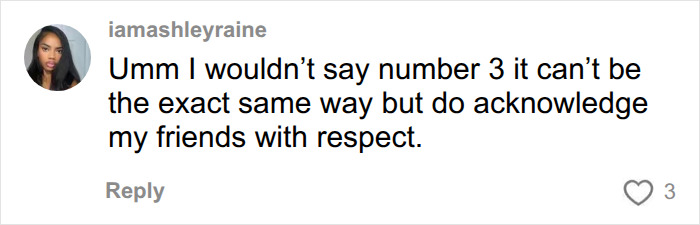
#2 Don’t Forget To Show Her Friends The Same Warmth You Show Her
Ridgeway’s third rule focused on something beyond the couple themselves: how a man interacts with the woman’s friends and family.
“If you’re with a girl and she’s with her friends, you should be greeting her friends with the exact same enthusiasm that you’re greeting her,” he said.
“The way that you treat a woman is exactly how you should be treating her friends, and that goes for family as well.”
This was one of the rules that received praise from viewers, with commenters appreciating the idea that someone should make an effort with the people their partner cares about.
Dr. O’Reilly agrees that making an effort can communicate something meaningful.
“Making an effort with the people your partner cares about can be a way of saying, ‘What matters to you matters to me,’” she explained.
However, she stressed that there isn't one universal standard for what that effort should look like.
“What that effort looks like varies across cultures,” she said. “In some families, being deeply involved in one another’s lives is expected and valued, while in others, greater independence is the norm.”
That means someone doesn't necessarily need to become best friends with their partner's entire social circle.
“You don’t have to love all of your partner’s friends and family,” Dr. O’Reilly said, “but you can make an effort to understand why those relationships matter to them.”

© Photo: Vitaly Gariev/Pexels (Not the actual image)
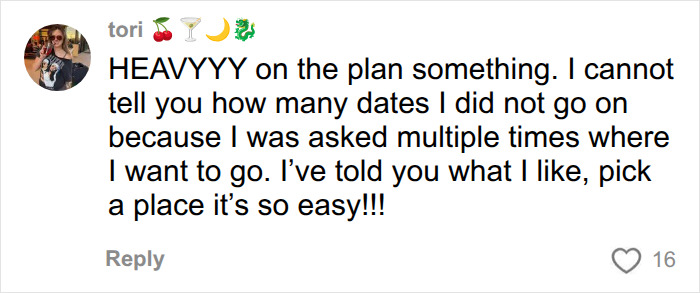
#3 Always Have A Plan, But Taking The Lead Should Still Leave Room For Her Preferences
Chase’s final rule was about dating initiative: “If you are with a woman and you’re making plans, you make those plans, and you tell her. Tell, do not ask.”
The advice struck a chord with several commenters, particularly those who said they were tired of making every decision about where to go and what to do.
Dr. O'Reilly also viewed this aspect of Ridgeway's list positively, with an important caveat.
“Given the general mental and social load women carry, initiative and planning can be very attractive, as it communicates effort and interest,” she said.
Taking the lead doesn't necessarily mean taking control, she explained.
“It’s not a sign you’re controlling because you put effort into planning,” Dr. O’Reilly said. “Of course, you can always check in with ‘I booked ABC. How does that sound?’”
The key, she added, is staying responsive to the other person's preferences even when you're doing the planning.
That distinction matters because Ridgeway himself acknowledged that a woman might not always want to be “led.”
For Dr. O’Reilly, the healthiest approach is ultimately less about following a fixed set of rules and more about paying attention to the individual.
While some viewers saw the rules as simple acts of respect that shouldn't need explaining, others saw them as a list built around gender expectations that don't necessarily apply to every modern relationship.
As Dr. O’Reilly put it, “You can follow every dating rule perfectly and still fail to really see the person in front of you.”
“I think healthy relationships are less about performing the ‘right’ behaviors and more about genuinely wanting to understand one another and being willing to adjust as you learn.”

© Photo: Katerina Holmes/Pexels (Not the actual image)
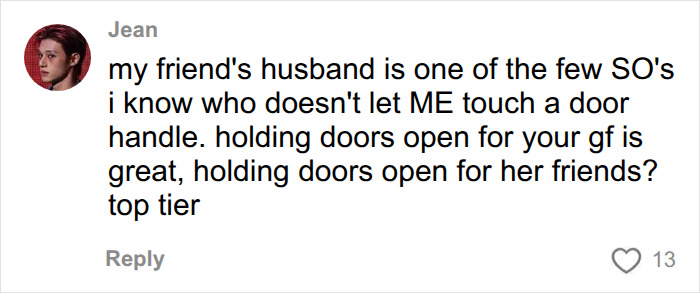
#4 Open The Door For Her, But Remember That Thoughtfulness Shouldn’t Depend On Gender
Chase Ridgeway kicked off his list with a classic gesture of chivalry: opening doors.
“This can be an apartment door, a car door, whatever it is,” he said. “If you’re with a woman and there’s a door in front of you, that door needs to be opened for said woman, no exceptions.”
Some viewers enthusiastically received the rule, with one person saying, “It’s crazy cause these are bare minimum qualities of a MAN being a MAN, but they still have to be talked about, and that's just proof that masculine men rarely exist.”
Another simply wrote, “Your parents did a good job raising you!!”
But others questioned why something as basic as holding a door open should be specifically associated with men and women.
One commenter asked, “You think a woman is incapable of opening a door? Women are not helpless.”
Dr. Jessica O’Reilly says the gesture itself isn't necessarily the issue.
Rather, it comes down to whether the person receiving it actually appreciates it.
“These gestures are thoughtful when they reflect attention to the individual’s desires as opposed to assumptions about an entire group based on one demographic factor,” she said.
“Wanting to do something to be thoughtful and chivalrous is admirable and oftentimes appreciated.”
At the same time, she pointed out that consideration does not mean someone is obligated to accept a gesture.
“What feels patronizing to one person may be deeply appreciated and desired by another,” Dr. O’Reilly explained.
She added, “Pay attention to how they respond and respect their preferences. And you can always ask what they’re into!”
She also cautioned against assuming that gender alone should dictate how partners behave, noting that “gender alone can’t determine how we date or care for one another.”

© Photo: Pavel Danilyuk/Pexels (Not the actual image)
#5 Walk Between Her And The Street, Even Though The Old-School Rule Has Its Critics
Ridgeway’s second rule was another traditional piece of dating etiquette: “If you’re walking in the street with a woman, you should always be standing in between her and the street.”
He added, “You are standing in between her and the street, no exceptions.”
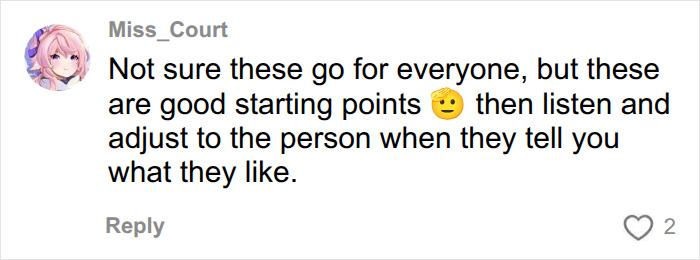
Some viewers liked the protective gesture, but one commenter questioned whether the rule actually makes sense in every situation.
“I think a lot of these are really good. This I disagree with a bit,” the person wrote, explaining that walking on the street side “is I think good in nature” but may not always be practical.
They pointed out that depending on which side the woman carries her purse, positioning a man between her and the road could potentially leave the bag more exposed to someone trying to snatch it.
Another commenter was even more skeptical, writing, “A lot of this is very outdated… Holding the door should not be gendered, standing on the road side of the sidewalk makes no sense (why do I have to put myself in the danger?), it is also stupid.”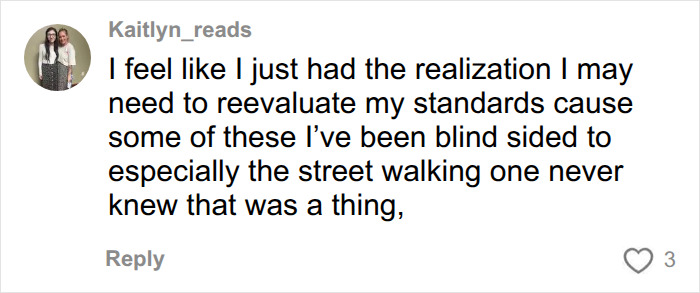

© Photo: Marco Pozzi/Pexels (Not the actual image)
#6 Always Carry A Jacket, No Matter The Weather, In Case She Gets Cold
Chase’s seventh rule may have been one of the most specific.
“I don’t care what time of year it is,” he said. “Wherever you go, bring a jacket, not for you, but for the woman, okay? God forbid she ever gets chilly, and you don’t have something to give her.”
The advice prompted plenty of enthusiastic reactions from viewers who clearly enjoyed the old-fashioned romantic gesture.
One person wrote, “Yes to all of this. I’m a strong and independent woman, but I appreciate literally every single one of these.”
Another commenter even suggested adding another rule to the list: “Also holding the woman’s hand when going up the stairs (if there is enough room). And letting the lady walk in front always.”
The jacket rule ultimately illustrates Dr. O’Reilly's larger point particularly well: a thoughtful gesture isn't necessarily outdated simply because it is traditional.
So if someone loves the idea of their partner carrying a jacket for them, there is nothing inherently wrong with the tradition.
But it doesn't have to be a requirement for every relationship.


© Photo: Joe Chernomorets/Pexels (Not the actual image)
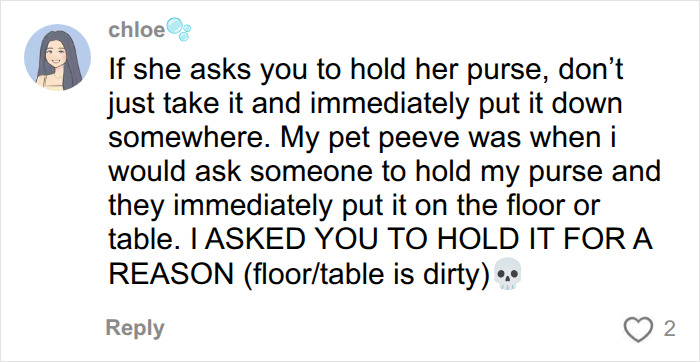
#7 Offer To Carry Her Purse, Even When She Says She Can Manage It Herself
Ridgeway's sixth rule returned to physical acts of consideration.
“If she has a bag, if she has shoes, if a woman is carrying something, you best believe you will offer to carry that,” he said.
“I don’t care how little a bag or something is, you will offer to carry it no matter what.”
He did, however, make one distinction: the woman could decline.
“And if she tells you no, perfect, but you will at least offer,” Chase said.
That qualification matters because it turns the gesture into an offer rather than an instruction that a woman must accept.
Dr. O’Reilly included offering to carry a bag among the gestures that can be thoughtful when they are based on the individual rather than a blanket assumption about women.
“Most people regardless of gender appreciate when you go out of your way for them,” she said.
But, once again, she stressed the importance of paying attention to the response.
“Consideration doesn’t inherently imply that you’re obligated to accept the gesture,” she explained.
One commenter disagreed with this rule, asking, “Bro all of these are double standards, why are men expected to treat women like princesses?”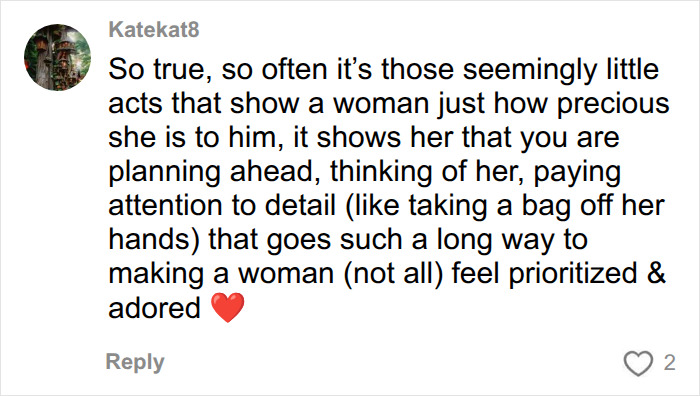

© Photo: Nicolás Reyes/Pexels (Not the actual image)
#8 Always Pay For The First Meal, But Don’t Let Generosity Override Her Wishes
The content creator was particularly emphatic about his fourth rule.
“Always pay, always pay for the first meal when you are together,” he said.
He continued, “I don’t care how many times a woman offers to split the bill or to pay, whatever. You will be paying for that first meal, no matter what, if you are with a woman.”
This was one of the most divisive parts of the list.
Some viewers agreed with him, while others argued that a woman offering to split the bill should be able to do so without having her preference dismissed.
Dr. O’Reilly says nothing is inherently wrong with preferring that a man pay, but that preference shouldn't automatically become a universal rule.
“You’re allowed to have preferences and preference is not necessarily a universal rule,” she explained.
She also noted that money can mean different things to different people, including “generosity, care, tradition, independence and more.”
“It’s also not something we have equal access to,” she said, pointing out that expectations around who pays “can reflect differences” in income, privilege, and financial security.
According to the expert, early dating is partly about figuring out whether two people actually share compatible expectations.
“If someone insists on paying after the other person genuinely wants to split, the ‘generous’ act can actually become disregard for their preference,” she said.
That distinction seemed to resonate with the debate happening in Ridgeway’s comments, where some users stressed that paying for dinner should never create an expectation of anything in return.
Dr. O’Reilly also questioned the motivation behind the gesture.
“Why do you want to pay as a man?” she asked.
“Is it because you recognize the effort women tend to have to invest before a date? Is it because paying is one of the ways you like to show care or generosity? Or is it because you believe a man’s role is to provide and a woman’s role is to be provided for?”
She added that the same behavior can represent “very different values,” depending on the people involved.
“I don’t think opening a door or paying for dinner is inherently antiquated, just as splitting a bill isn’t inherently progressive,” she said.
Dr. O’Reilly added, “I’m more interested in the beliefs behind the behavior, whether both people genuinely enjoy the dynamic and whether there’s room for those roles to change.”