Some office rules are so unnecessary that following them to the letter becomes entertainment in itself. Tell a group of coworkers they can’t step into the wrong team’s territory, and you might accidentally create a building full of people policing stairways, stopping conversations, and finding increasingly ridiculous ways to obey the rules.
That is essentially what happened to this employee after a coworker decided that the stairs leading to her team’s area had suddenly become a problem. Management responded with a new restriction on who could enter team areas, only to discover that employees were more than happy to follow the rule exactly as written, even when doing so made the entire office less convenient.
Give employees a perfectly unnecessary policy, and there is always someone willing to follow it so literally that the whole office starts wondering why the rule existed in the first place

drobotdean / Magnific (not the actual photo)
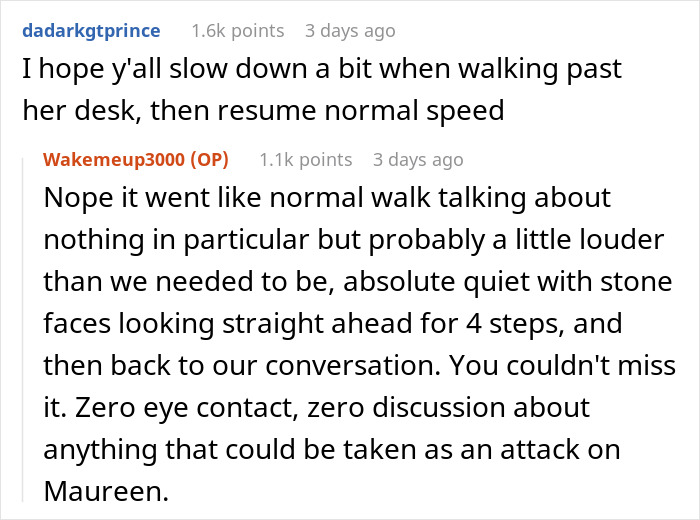
A coworker was accused of deliberately walking past a colleague’s desk to give them dirty looks, prompting management to restrict access to other teams’ areas

DC Studio / Magnific (not the actual photo)

The Yuri Arcurs Collection / Magnific (not the actual photo)
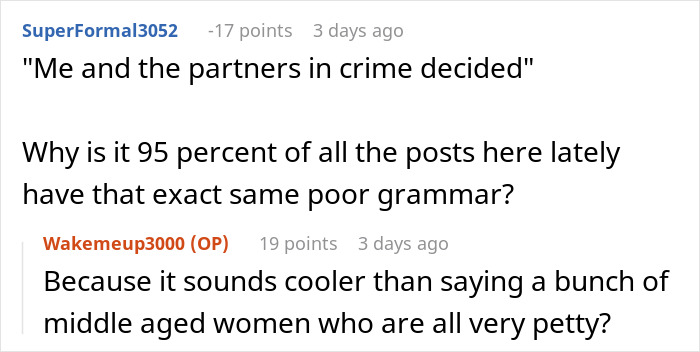
The coworker and other colleagues strictly abided by the new rule
However, it caused enough disruption that management scrapped it after three days
An office can be a strange little ecosystem where a desk, hallway, staircase, or break room somehow starts feeling like someone’s personal kingdom. And this happens because office workers do not necessarily think of their desks and surrounding areas as completely neutral spaces. In fact, research on employee territoriality has found that workers do develop behaviors around claiming, controlling, and defending workplace spaces.
That sense of territory can become especially noticeable when other people regularly pass through an employee’s immediate workspace. Further research examining territoriality in open-plan offices found that factors such as the location of a desk, how long someone spends there, the nature of their work, and proximity to hallways and passers-by can influence how employees personalize and interpret their surroundings.
Modern office layouts often try to encourage employees to communicate and collaborate, but that can create a constant trade-off between accessibility and privacy. So, employees need opportunities to interact with colleagues while also needing places to concentrate without unwanted interruptions.
That then becomes particularly relevant when a walkway, staircase, or shared area happens to cut through a team’s working space. From one perspective, someone is simply passing through. From another, they are entering an area where employees are trying to work. Office design can therefore create conflicts that have little to do with the people involved and much more to do with how the space was originally arranged.

Now, this does not mean every complaint about someone walking past a desk is really about noise or distraction. It does, however, show why physical movement around a workspace can become more significant than it appears. When people feel that their ability to work is being interrupted, they may become more protective of the area around them, even when the other person has no intention of causing a disturbance.
Besides, not every perceived intrusion is necessarily caused by a genuine disruption. Sometimes the meaning attached to another person’s behavior is personal, as Verywell Mind affirms. Someone can simply walk past a desk, stop to speak with a colleague, or take the same route every day without intending to disturb anyone, while the person watching them may interpret that behavior as deliberate, irritating, or directed at them.
For example, in this case, the author had no work-related relationship with Maureen or practical reason to target her. Rather, the conflict came from the coworker’s interpretation of those ordinary, seemingly innocent walks. That distinction matters because a personal irritation can become much bigger when it is turned into an organizational rule affecting everyone else.
According to psychologist Abby Medcalf, the biggest problem with any workplace boundary is that it has to make practical sense. If employees have to walk through a particular area to reach the stairs, elevators, bathrooms, break rooms, or colleagues, declaring that area off-limits can simply move the problem somewhere else. Therefore, the workplace may discover that the original irritation was considerably smaller than the solution.
Can you relate to this situation at all? Have you ever had a coworker turn a completely harmless habit into a personal issue? We would love to hear from you in the comments!
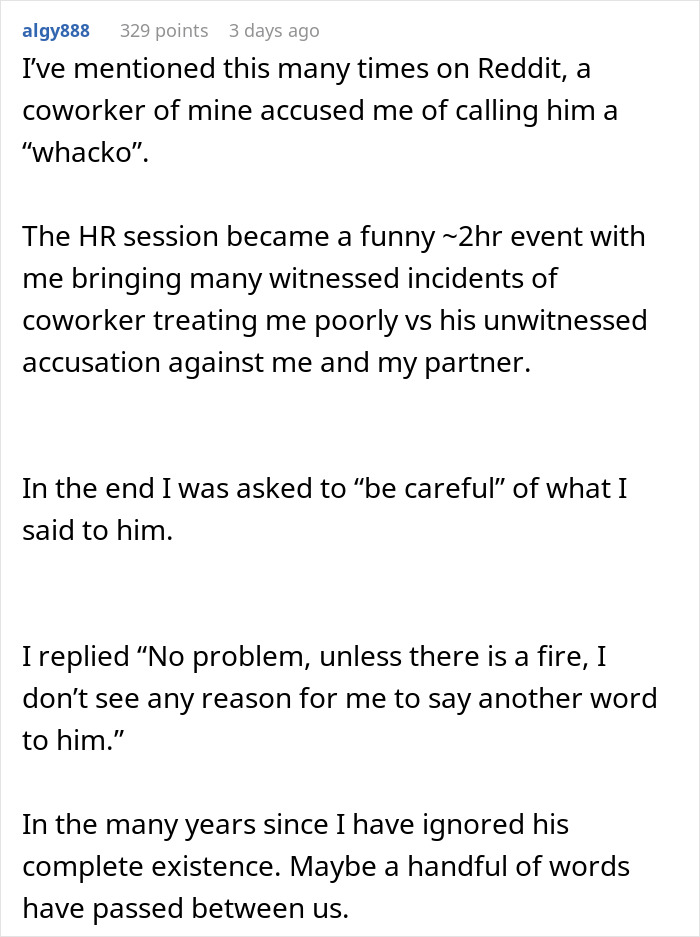
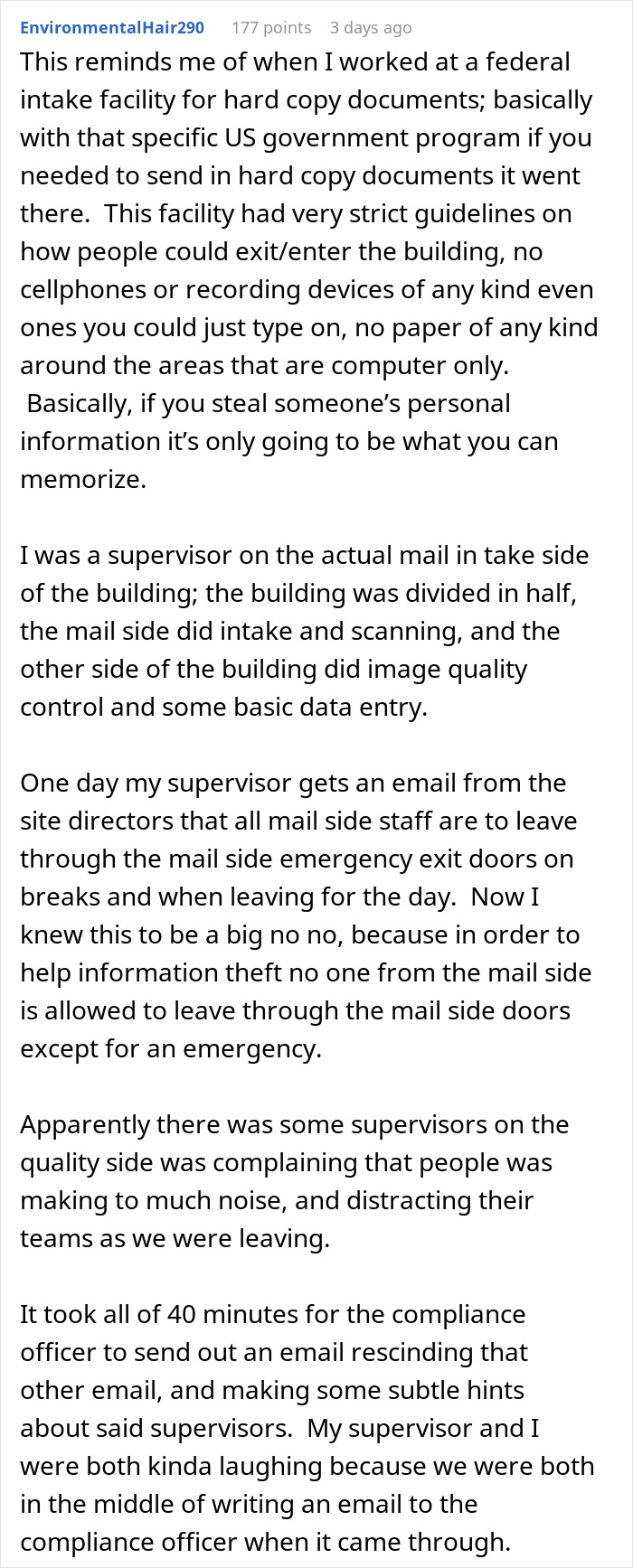
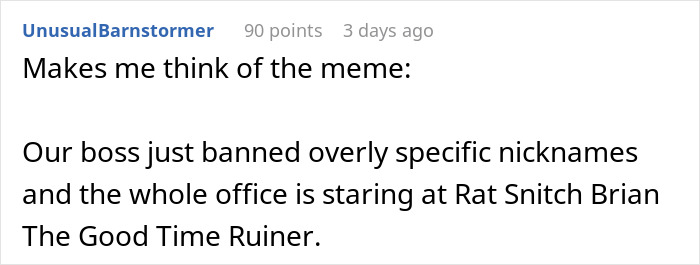
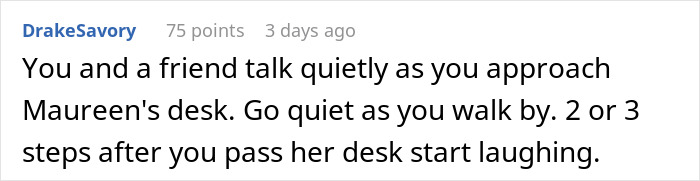
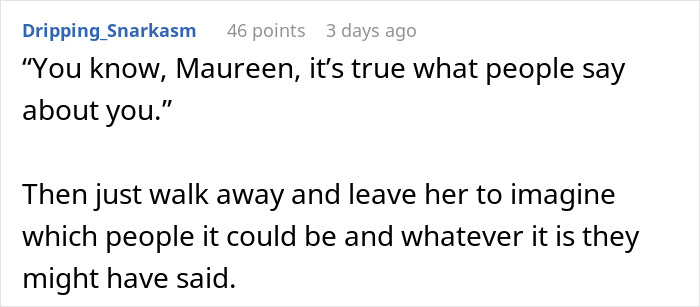
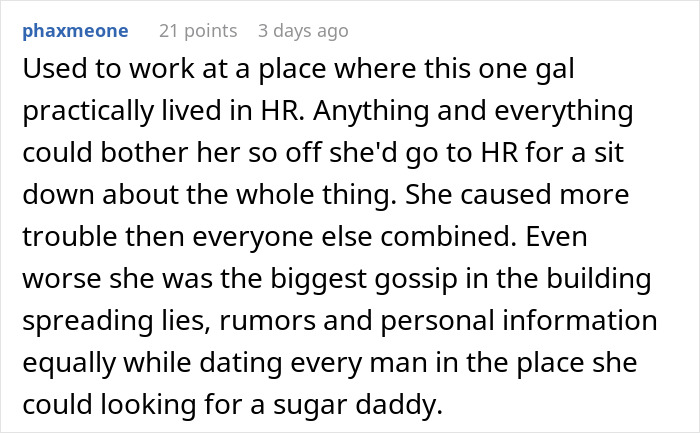
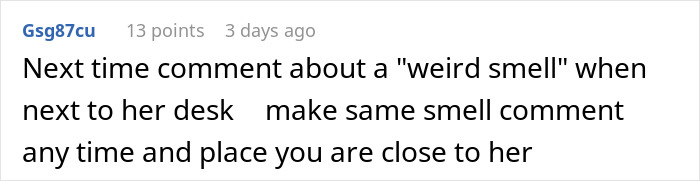
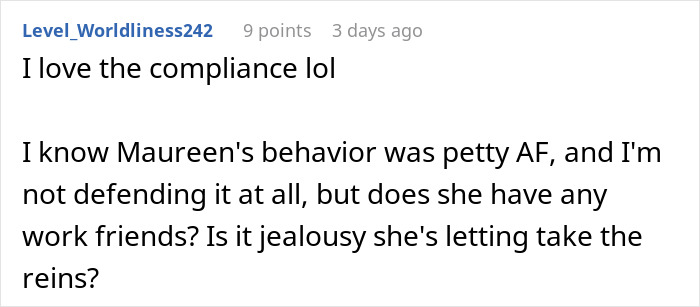
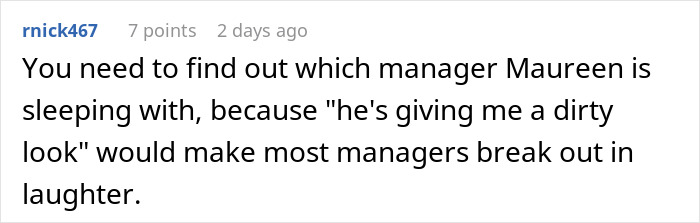
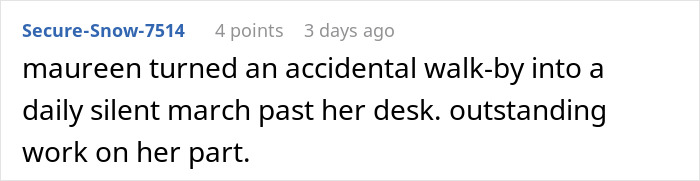
Netizens found the situation absurd as an ordinary walk to meet a friend for lunch somehow turned into a company-wide issue over who could enter certain areas