Workplace theft feels particularly icky because somehow you become an accessory without ever getting your hands dirty. The colleague who is light-fingered with the petty cash or the golden girl who can do no wrong in the boss’s eyes gets away with it while everyone else watches and sighs. Most people in that situation do one of two things. They complain to someone who does not listen, or they keep their head down and let it go.
One retail worker chose a third option. When his thieving manager planted stolen vouchers to frame him for the theft, he smiled, made friends with the accuser, studied every camera angle in the building, and spent three months running a solo sting operation. The evil grin his colleagues noticed that evening in the stockroom was entirely justified.
Stealing from the store you work for is a big offense, no matter if it is a voucher or a chocolate bar

DC Studio / Magnific (not the actual photo)
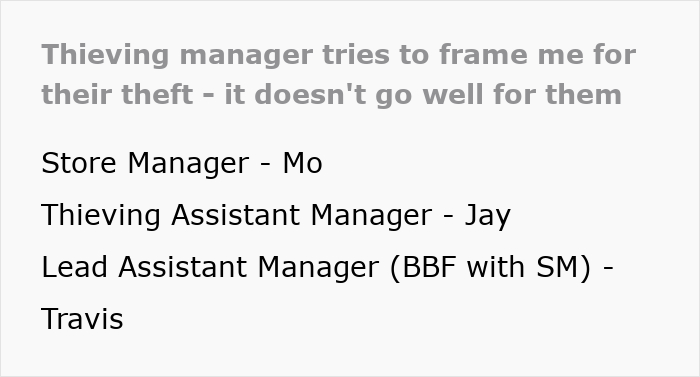
An employee was known for her thieving ways, but she took it too far when she tried to implicate her colleague when she committed fraud with store vouchers

pch.vector / Magnific (not the actual photo)
Her colleague decided that he would play a long game, befriending the thief to a point where he could frame her too

magnific / Magnific (not the actual photo)
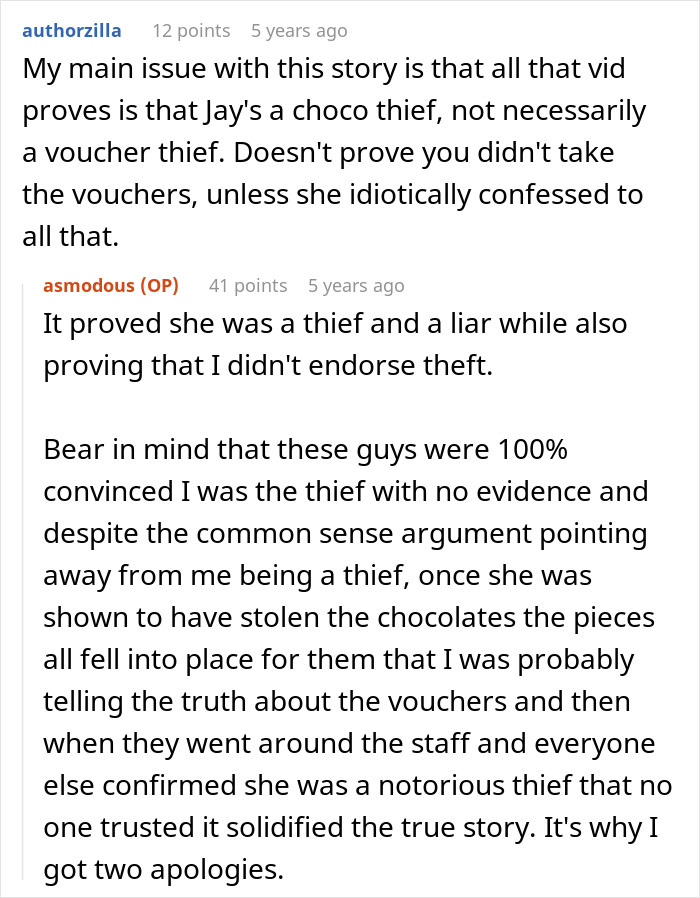
She was tasked with disposing of old stock candy bars, but he encouraged her to keep it and made sure it was all caught on camera

seventyfour / Magnific (not the actual photo)
He told the manager to check the security camera, and she was caught red-handed with the bag of candy

magnific / Magnific (not the actual photo)
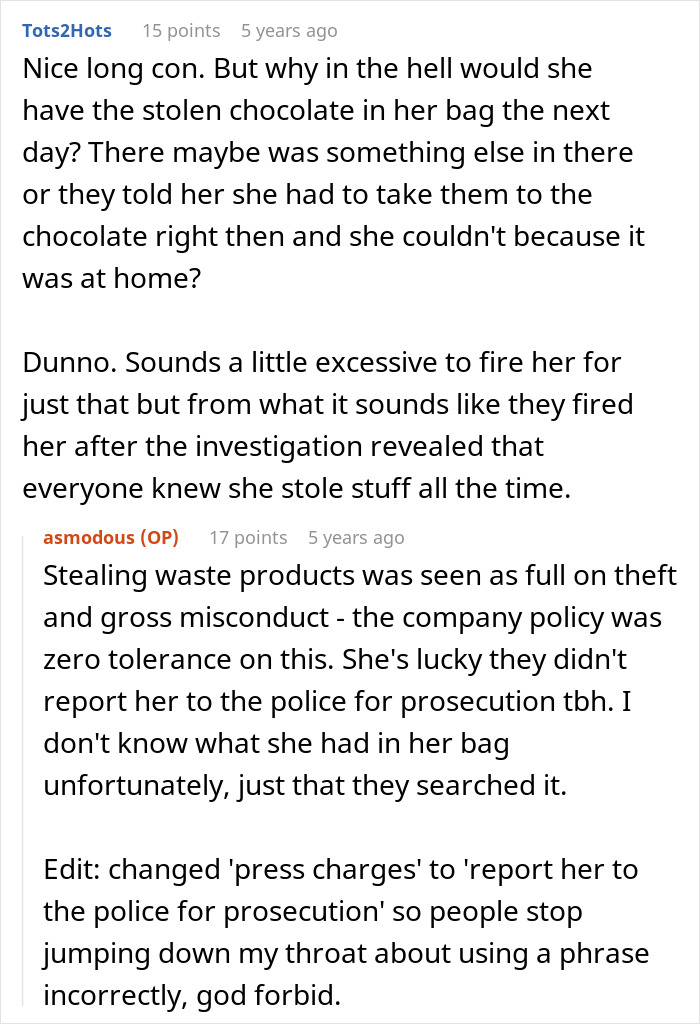
With irrefutable proof, she was suspended from work and soon fired, and the falsely accused employee received an apology from management
Statistics show that more than half of employees stay quiet when they see thieving for fear of retaliation from authority
But contrary to what you might think, staying quiet when you see a colleague stealing is not cowardice. Organizational psychology consistently shows that when misconduct is being committed by someone with management protection, employees who speak up are not rewarded for their integrity. They are punished for their inconvenience.
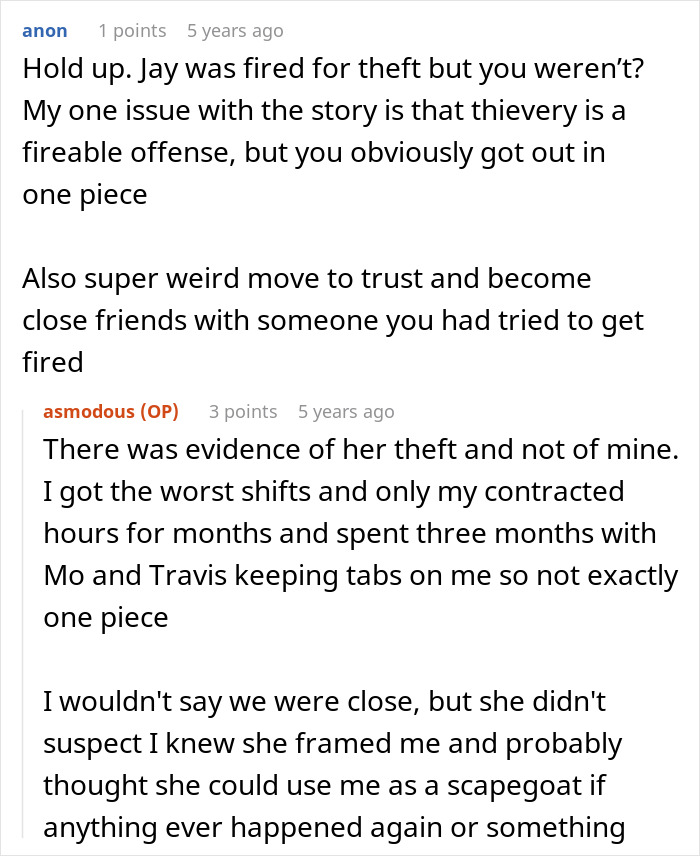
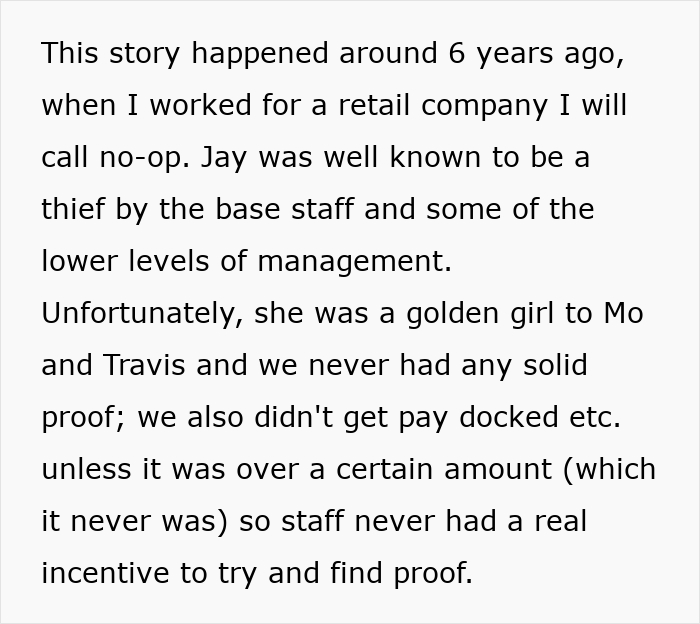
A study by the Whistleblowing Monitor found that 55% of workers who witnessed misconduct stayed silent specifically because they feared retaliation, and among younger employees aged 18 to 29, a staggering 82% who did speak out faced actual retaliation. Every member of staff at that store knew Jay was a thief. Nobody said anything because nobody had proof, and without proof, you are just a troublemaker with a grudge against the golden girl.

Antoni Shkraba / Pexels (not the actual photo)
When a manager uses their authority to deny your reality, plant evidence against you, and make you the villain of a story you were the victim of, it does some real damage. Psychologists call it institutional betrayal, and it hits differently from regular betrayal because humans are wired to trust authority figures for safety and fairness. When that trust gets weaponized against you, the cognitive and emotional fallout can be huge.
The self-doubt, the replaying of events, the desperate search through bins for vouchers you know you did not steal is way beyond paranoia. Your reality is systematically undermined by someone with more power than you, and that can do a number on your psyche.
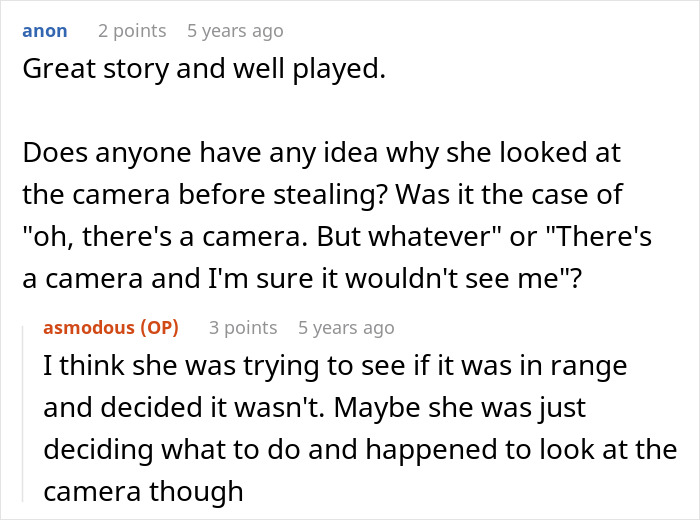
What made his response so effective was that he did not fight the institution head-on. He worked within it, studied it, learned its camera angles and its blind spots, and waited until he had something undeniable. He played a slow game, and when he walked up to Travis that morning with the most somber face he could manage, he did much more than just catch a thief. He was also reclaiming a version of events that had been taken from him, and delivering it in a format that nobody in that building could deny.
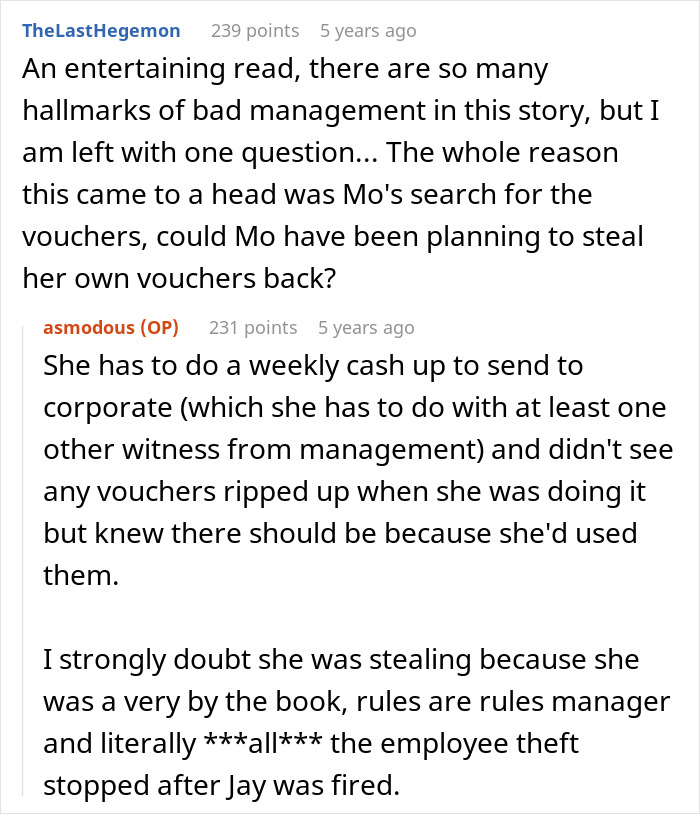
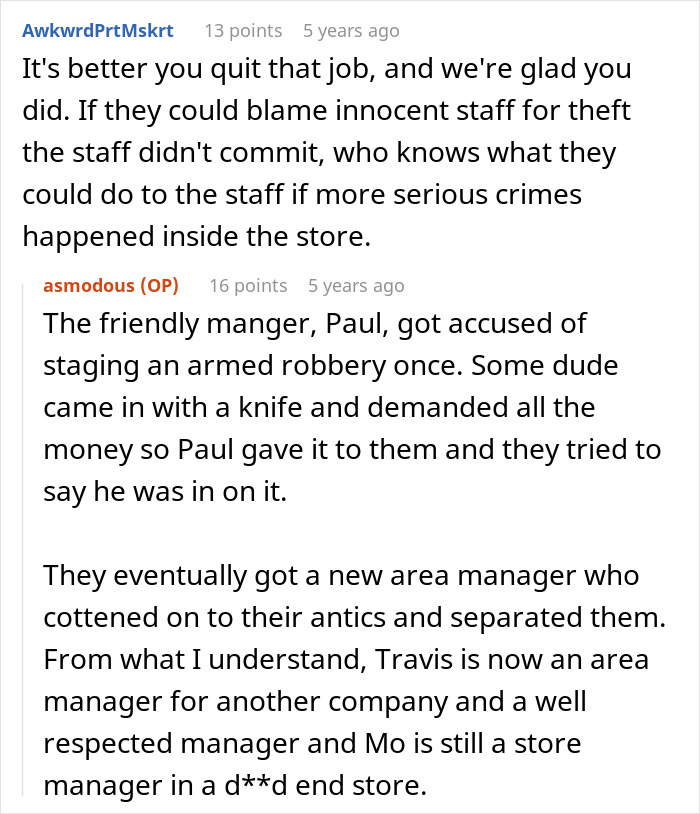
Commenters applauded the poster for his tremendous patience, loving the sweet serving of karma that came the thief’s way