
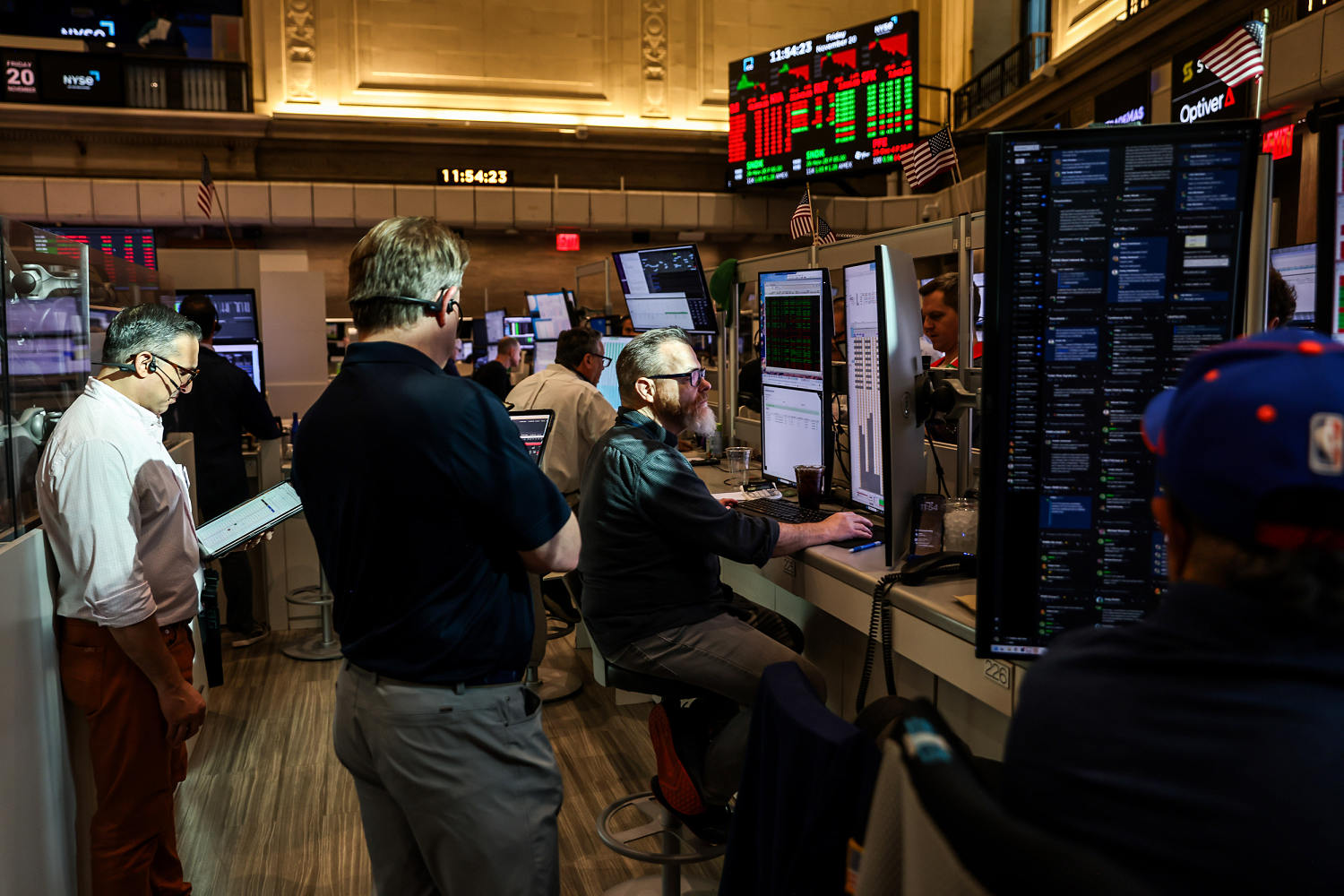
The surging stock market of 2026 capsized Friday, wiping out gains for the year in the tech-heavy Nasdaq Composite while the broad S&P 500 and the Dow entered correction territory, meaning they have declined 10% from recent peaks.
The dramatic sell off is raising fresh fears about the viability of the AI investment wave that had powered stocks and economic growth writ large higher for the first half of the year.
Friday’s declines were led by Anthropic, whose blockbuster IPO just 24 hours earlier now feels like a blip after the stock lost 9%, wiping out hundreds of billions in paper wealth and putting ishares just a few dollars above its IPO price.
Nvidia also dragged markets lower, tumbling about 14% following a Reuters report that regulators are looking into accounting irregularities at the chip giant.
With Friday’s losses of 3.7%, the S&P 500’s seven-day losing streak is its worst since the Covid-19 pandemic; the index is now up less than 1% on the year.
The Nasdaq finished the day down 5.3%, and the Dow dropped 1.9%.
The losses also sully one of the most visible bright points of President Donald Trump’s second term. Amid sticky inflation and frozen housing and jobs markets, U.S. equities were the one part of the economy that appeared resilient. The AI investment boom created seemingly insatiable demand for stocks among investors, minting multiple new trillion-dollar companies in the process.
While Friday’s declines were stark, they were not sudden, capping instead a weeks-long slide that began in early October as the combination of elevated oil prices, rising interest rates, mounting corporate debt loads, stubborn inflation, supply chain issues and a flagging consumer put increasing pressure on stock prices.
The sell-off picked up steam earlier this month in the wake of Democrats’ midterm victories, which raised fears of a slowdown in the tech sector’s data center buildout. Losses accelerated again last week as the scandal erupted involving former Nvidia CEO Jensen Huang and advanced chips potentially being diverted to China.
“The stock market is going through an AI repricing, reflecting an environment of slowing data center buildouts, reduced funding sources for AI-related projects and a slower trajectory of technology-related earnings growth,” wrote Richard Saperstein, chief investment officer at Treasury Partners, in a client note. “This has been exacerbated by the Nvidia crisis and the Democratic midterm win, which were a one-two punch for the AI story.”
Alongside the stock sell off, investors have increased purchases of U.S. Treasury bonds — a sign that investors are seeking more reliable returns amid signs of weakening growth from higher interest rates and a stalling economy in China.
“The pressure is becoming increasingly widespread, and that’s been felt across other asset classes too,” Deutsche Bank managing director Jim Reid wrote in a note to clients Friday.
For U.S. households relying on 401(k)s and pension funds for retirement, the downturn is especially unwelcome at a time when inflation continues to prove nettlesome.
Kevin Gordon, head of macroeconomic strategy and research at Charles Schwab, told NBC News that markets are feeling particular pressure from an increasingly “hawkish” Federal Reserve that is signaling aggressive rate hikes in the face of unrelenting inflation.
“They’re signaling that they want to be aggressive in raising rates,” Gordon said. Combined with a weeks-long downturn among AI and tech stocks, “we have dual forces hitting the market.”
A prolonged downturn could begin to cut more deeply into economic growth, he said.
“If you have enough of a protracted downturn, which we really haven’t had since 2007-2009 in terms of length and duration, that’s when you’d really start to worry,” he said.
This is a developing story. Please check back for updates.