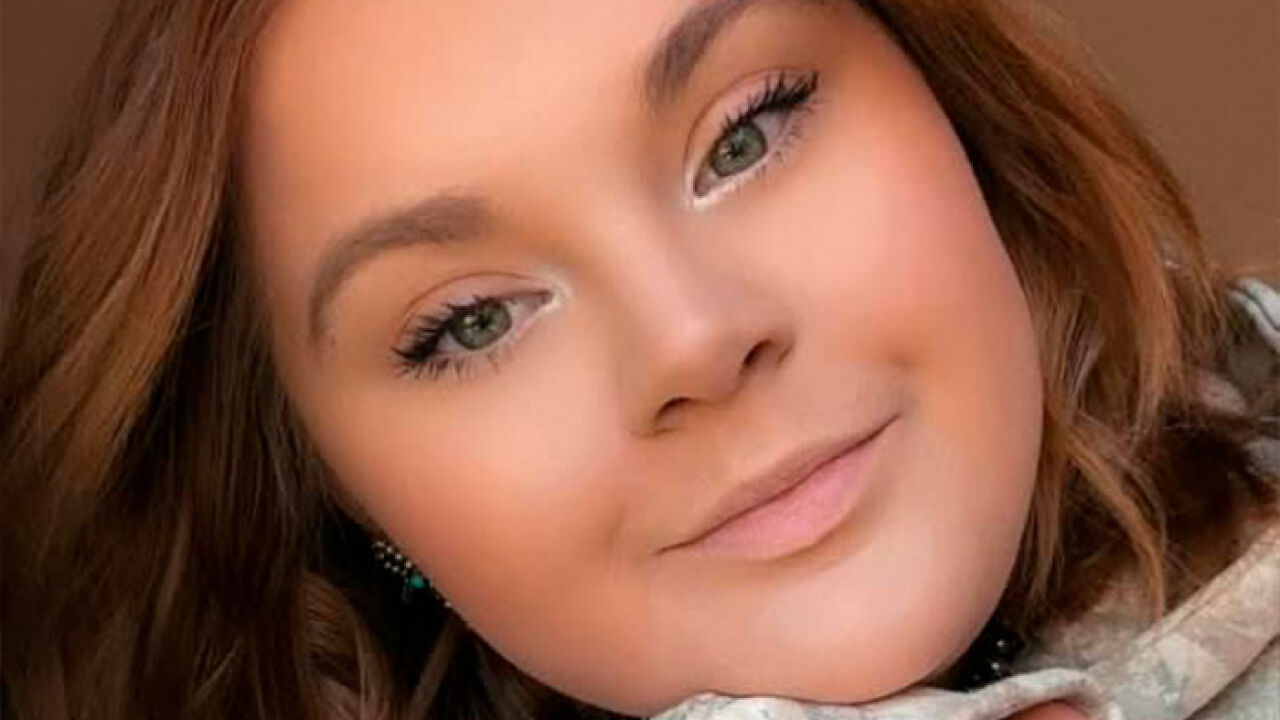
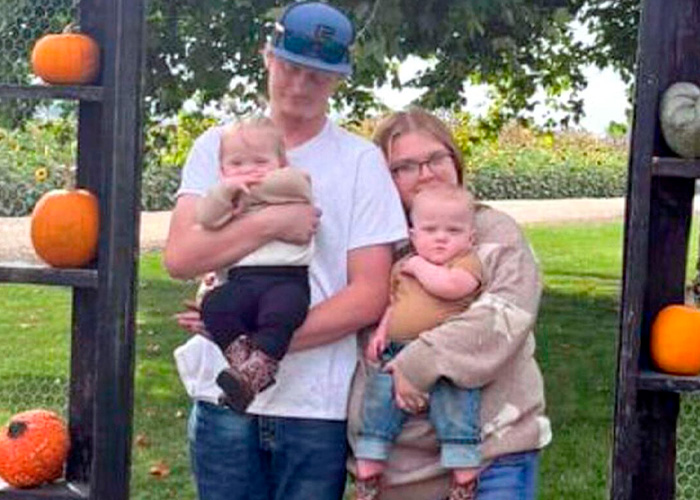
On May 1, 2025, 23-year-old Andrea Renee Shaw woke up to any parent’s worst nightmare. She found her 18-month-old twins, Dallas and Tyson, lifeless in their shared bed without explanation.
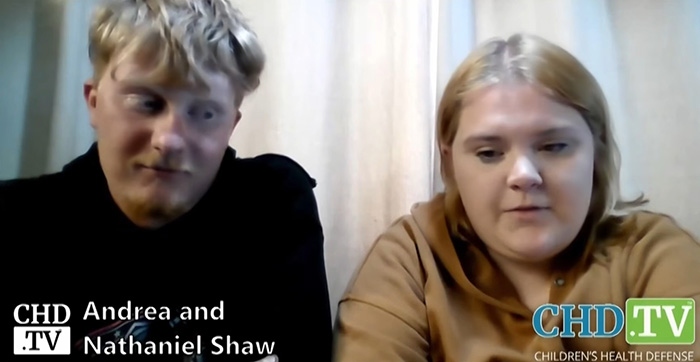
Alongside her husband, Nathaniel Shaw, she made her grief public and angrily blamed the children’s fate on vaccinations they had received eight days earlier.
For more than a year, the Idaho mother became the face of the vaccine-skeptical movement which blames the procedures for inducing a wide host of developmental and health problems in children.
However, when investigators finally announced the results of their investigation, the person they accused was the last one many expected:
Herself.
Now facing two counts of first-degree homicide and the possibility of capital punishment, Andrea maintains her innocence.
A 23-year-old mother took her own children’s lives and blamed it on vaccines

Long before the tragedy, Andrea was a teenager building a life with Nathaniel Shaw in Payette, a small Idaho community near the Oregon border.
Around 2020, during the COVID-19 pandemic, she moved into the home of Nathaniel’s family at just 17 years old.
The couple eventually married, although the precise circumstances of their first meeting and wedding have not been publicly documented.
Nathaniel, who went by Nate, had grown up with an interest in mechanics and agriculture.
His former high school teacher, Tyson Smith, recalled that Nate enjoyed working on engines and had participated in FFA, a youth organization focused on agricultural education.
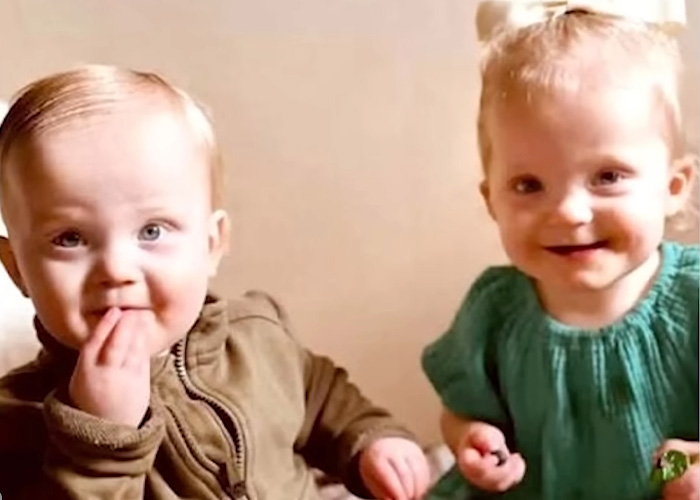
When Nate and Andrea welcomed their first children, they named their baby boy Tyson in his honor.
The couple’s daughter was named Dallas.
Andrea’s early adulthood went without issues. According to her attorney, Joseph Filicetti, she had no previous criminal record, not even a parking ticket.
There were also no publicly documented allegations of violence involving the young mother before the passing of her children.
By late 2023, Andrea and Nate were preparing to become parents to twins.
But their introduction to parenthood would prove more difficult than expected.
Dallas and Tyson were born three months prematurely and required intensive medical care

The twins arrived approximately three months before their expected due date, at around 29 weeks of pregnancy.
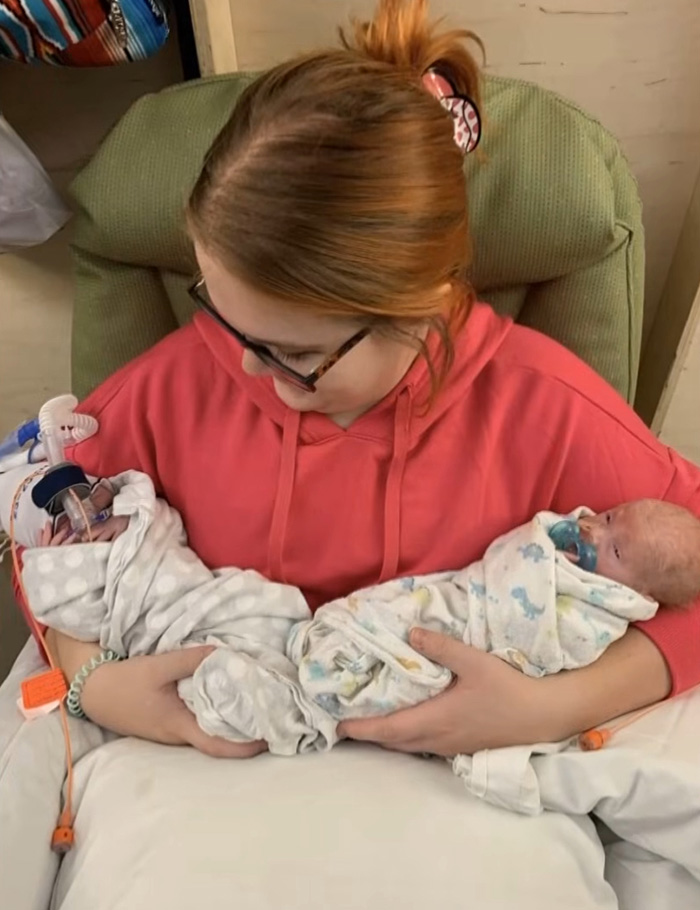
Born so early, Dallas and Tyson required treatment in a neonatal intensive care unit before they could go home.
Andrea later spoke publicly about those first weeks, recalling the extensive medical care the babies received.
Despite their difficult start, the children eventually joined their parents at home, where the family settled into life in Payette. In a subsequent interview, Nate described his children as gentle, intelligent toddlers.
His memories of Dallas were particularly emotional.
“Her smile, you could see it and it would make the sun just seem dim,” he recalled. “It could just light up your whole world as nothing else ever could.”
The twins also shared a close bond, according to their parents. They ate together and slept beside one another, often following the same daily routines.
Andrea later described them as “perfect happy little babies.”
For the young couple, who had already experienced the uncertainty of a premature birth, their children’s progress was a source of relief. And as the twins approached their second birthday, nothing in their publicly documented history indicated the extraordinary tragedy that would soon take place.
A routine medical appointment became the beginning of the family’s nightmare
On April 23, 2025, Andrea took the 18-month-old twins to Snake River Pediatrics for a scheduled checkup.
Her mother-in-law, Wendy Shaw, accompanied them.
During the appointment, Dallas and Tyson received vaccinations against influenza and hepatitis A, as well as DTaP, which protects against diphtheria, tetanus and pertussis.
According to Andrea’s later account, she and Wendy expressed concerns about the flu vaccine because Nate and other relatives had previously experienced adverse reactions.
Andrea said the medical staff reassured them, and she ultimately consented to the vaccinations.
Although she would later become a vocal critic of childhood immunizations, she said the twins had previously received recommended vaccines without complications.
The following morning, however, Andrea claimed their condition changed.
Both children developed diarrhea, became unusually lethargic and appeared to have bluish discoloration around their lips.
Her attorney later described similar discoloration affecting their hands and feet.

Nate recalled being shocked by how quickly the twins appeared to deteriorate.
“I was kind of in disbelief,” he said in an interview with Children’s Health Defense, describing the sudden change in their appearance.
Andrea and Wendy took the children to the emergency department at St. Luke’s in Fruitland, Idaho, on April 24.
According to records reviewed by The New York Times and The Guardian, the children received Tylenol and frozen treats before being discharged.
Their symptoms were documented as a possible “post-immunization reaction,” and the physician did not consider either child to be in immediate danger.
The twins reportedly appeared to recover just hours before they were found lifeless
During the week following the appointment, Andrea said she struggled to get the children back to their normal condition.
She described continuing diarrhea and periods of unusual tiredness.
According to her account, she contacted the pediatric practice again on April 30 in an attempt to obtain another appointment.
She claimed the office was too busy to see them.
But that same day, something changed.
After nearly a week of worrying symptoms, the twins apparently began behaving like themselves again.
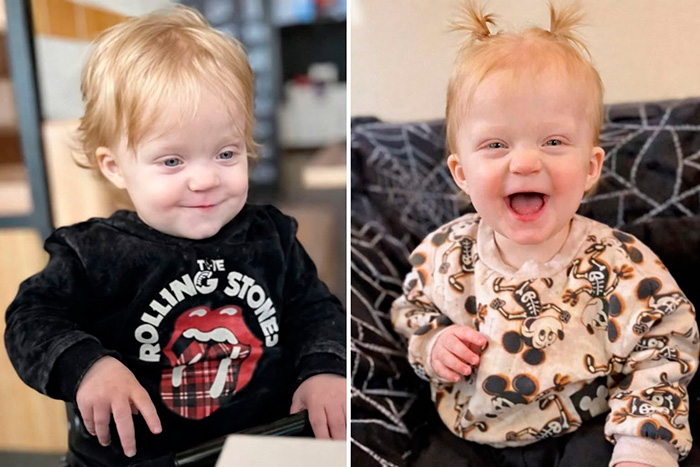
“They were great,” Andrea said during a later interview.
She recalled that they had resumed eating normally, drinking from their sippy cups and talking.
It was the first day since their vaccinations that she felt they were behaving as they had before becoming ill.
That evening, Andrea decided to spend some time with friends.
According to her attorney’s reconstruction, she left the family’s home at approximately 11 pm, leaving Nate with the children.
Dallas and Tyson appeared to be sleeping when she departed.
Nate was reportedly asleep during the night, while Andrea returned at approximately 2 am.
Her lawyer said she checked on the twins when she arrived and believed they were still sleeping.
Prosecutors, however, would later identify that period as the likely window in which the children lost their lives.
They alleged Andrea suffocated the twins after returning home while her husband was asleep.
On May 1, Andrea discovered both children unresponsive in their shared bed
According to Filicetti, Andrea looked in on the twins at approximately 8 a.m. and believed they were asleep.
Several hours later, at around 11 am, she returned to check on them again.
This time, she realized something was terribly wrong. She touched Tyson and discovered that his body was cold.
Both children lay motionless in the bed they shared.
“The way I saw them, they looked as if they had gone in their sleep,” she said during a subsequent interview.
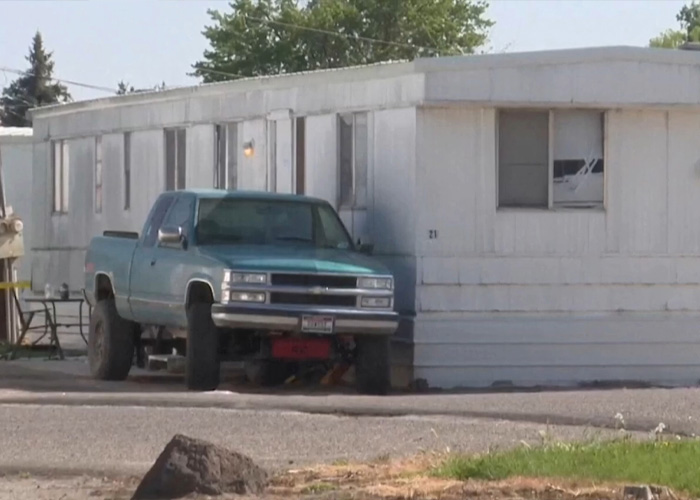
Andrea called 911 and reportedly attempted to perform CPR. Police arrived at the family’s home in Northgate Mobile Court at approximately 11:30 am.
By then, both Dallas and Tyson were deceased.


Their father was at work when the emergency response began.
According to Nate’s account, the manager of the mobile-home park called him after noticing police officers and emergency vehicles surrounding his trailer.
She wanted to know what had happened. Nate tried contacting Andrea but could not reach her.
He then telephoned his mother, Wendy.
This time, a police officer answered and informed Nate that his children had lost their lives.
“This isn’t happening,” he said.
And the investigation was only beginning.
Investigators began questioning the parents as disturbing inconsistencies emerged
Police immediately treated the incident as suspicious.
Autopsies were performed the following day, May 2, while investigators began reconstructing the family’s movements during the twins’ final hours.
Andrea was interviewed extensively.
According to Payette County Prosecutor Mike Duke, her account changed during questioning.
Duke later told a court that Andrea initially claimed she had fed the twins breakfast on the morning of May 1 and gone through their normal routine.
She subsequently withdrew that statement.
Investigators also questioned her description of what she saw after returning home from her night out
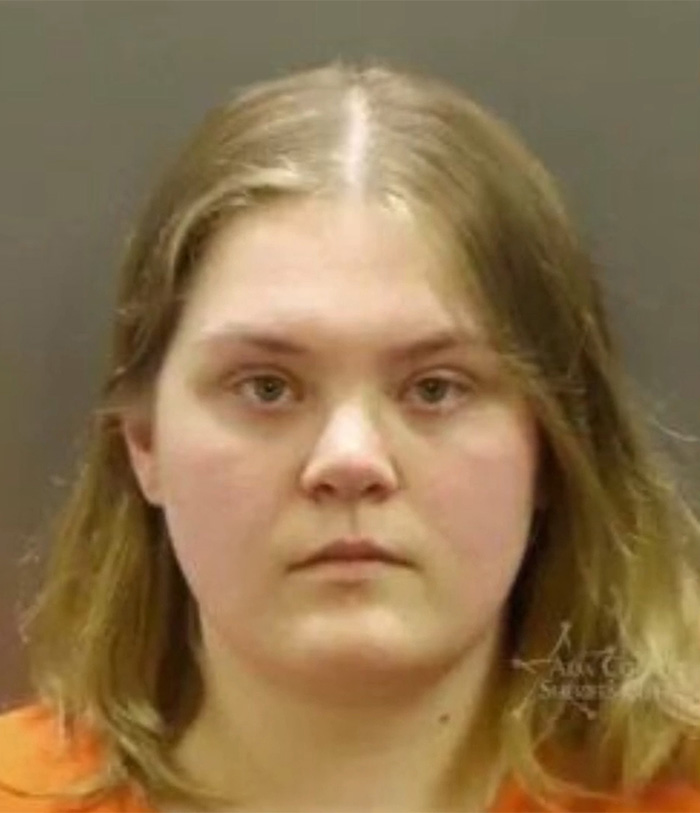
According to Duke, Andrea initially claimed one of the children had sat up between 1 am and 2 am, but later said she had not actually witnessed that movement.
The inconsistencies were significant.
Nate’s description of the night, on the other hand, remained consistent: he had been asleep and did not witness anything unusual.
Andrea, however, accused investigators of pressuring her during the interviews.
She claimed detectives suggested she might have experienced a postpartum-related blackout and harmed the twins without remembering.
“They said that it wasn’t medical,” she recalled.
Meanwhile, the family’s belief that the vaccinations had caused the tragedy was about to reach a much larger audience.
The grieving parents went public with allegations that vaccines had harmed their children
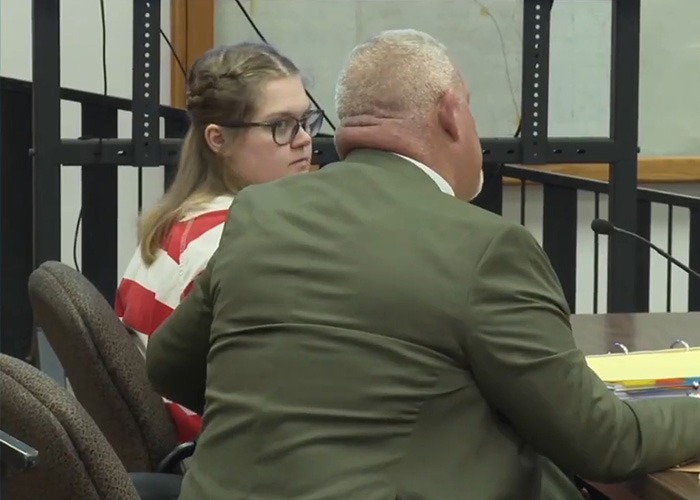
Within days of the twins’ deaths, Andrea and Nate participated in an interview with Children’s Health Defense, an organization founded by Robert F. Kennedy Jr. that has long challenged mainstream vaccine policy.
The couple described the children’s premature birth and their medical treatment during the previous week.
Andrea insisted the vaccinations were responsible for their deterioration.
She said she had previously trusted childhood vaccination recommendations, but the tragedy had changed her views.
“I feel that I wish I was anti-vaccine now,” she told the interviewer.
Nate supported his wife’s account and maintained that she would never have harmed their children.


The organization publicized the case, presenting the twins’ fate as a possible example of the dangers it associates with childhood vaccination.
However, the medical explanation remained unproven.
Medical experts subsequently reviewed the available emergency-room records and challenged the proposed connection.
Dr. Jake Scott, an infectious disease specialist at Stanford University, told The Guardian that the reported timing and symptoms did not fit a fatal vaccine reaction.
“It was not the vaccines,” he concluded.
Other experts similarly rejected the suggestion that the immunizations could explain both children suddenly passing away eight days later.
After more than a year, prosecutors accused Andrea of suffocating both children
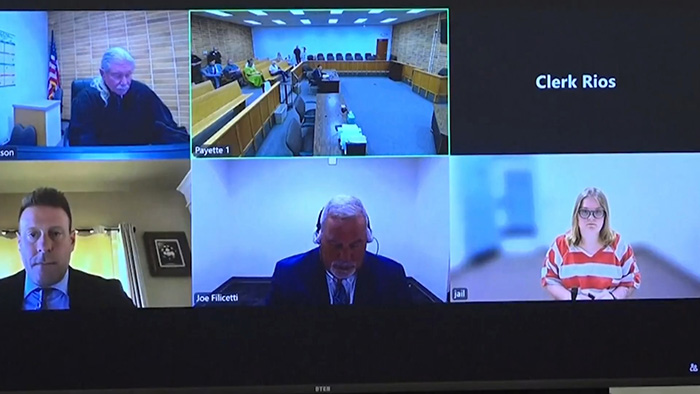
As the family continued advocating for its explanation, detectives pursued a criminal investigation.
Over approximately 14 months, authorities gathered medical evidence and consulted specialists to determine what had happened in the twins’ shared bedroom.
Prosecutors later said investigators considered excessive heat, carbon monoxide and other forms of poisoning, along with vaccination-related explanations.
One postmortem test also reportedly identified rotavirus in one twin, a contagious infection that can cause severe diarrhea.
But investigators ultimately developed a different theory.
According to Duke, both children had pulmonary vascular congestion, while one also had pulmonary edema.
The prosecutor argued that these findings were consistent with suffocation.

He also emphasized the circumstances surrounding the simultaneous casualties. In his view, smothering was “the only conceivable explanation.”
The defense, of course, strongly disagreed.
Filicetti said the county coroner had classified the tragedies as undetermined and suggested overheating as another possibility.
Forensic pathologist Dr. Michael Baden, who discussed the evidence with USA TODAY, agreed that congestion and edema alone could not establish smothering.
A Payette County grand jury put an end to the debate on June 29, 2026, and indicted Andrea on two counts of first-degree homicide.
The following day, police arrested her in Boise.
Andrea was arrested just days after giving birth to another daughter
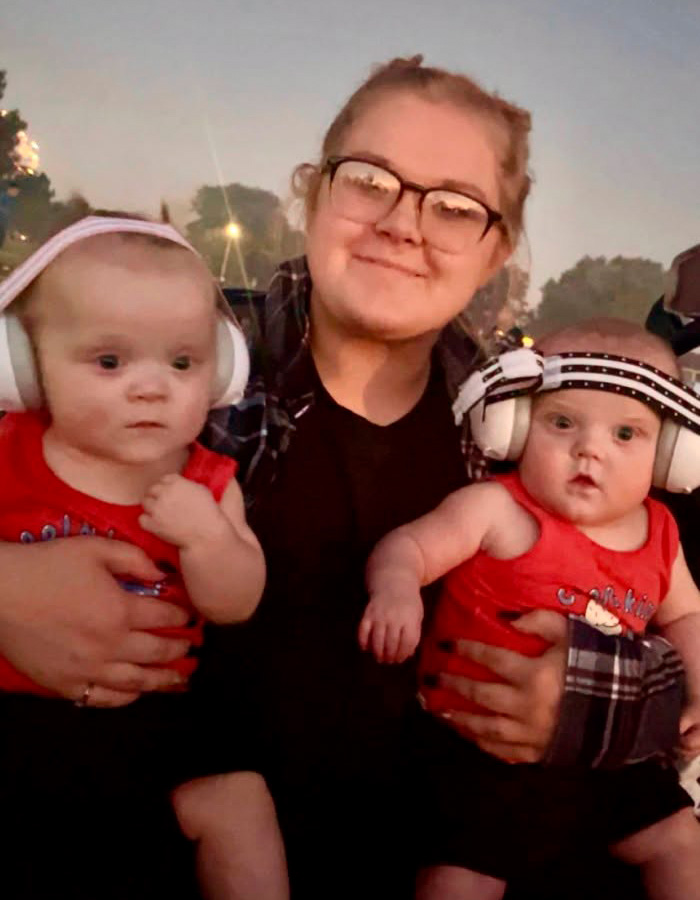
During the months following the twins’ passing, Andrea had become pregnant again. She and Nate had moved to Boise, where they were preparing to raise another child.
Their daughter, Keaton Hope, was born shortly before Andrea’s arrest.
According to Filicetti, the baby was only five days old when officers took her mother into custody and described Andrea as a devoted parent.
“All she’s ever wanted to be is a mom,” he told USA TODAY.
Initially, Andrea was held on a $2 million bond.
Her defense requested a reduction, arguing that she needed to return home to her newborn, particularly after undergoing a cesarean section.
But prosecutors objected.
They argued that if Andrea had indeed taken the lives of Dallas and Tyson, and that the new baby could also be at risk.
Nate Eaton – Reporter/Facebook
In July, Judge Kiley Stuchlik revoked the bond entirely. Andrea remained incarcerated, separated from Keaton.
Despite it all, Nate continued supporting his wife, while family members attended the court proceedings.
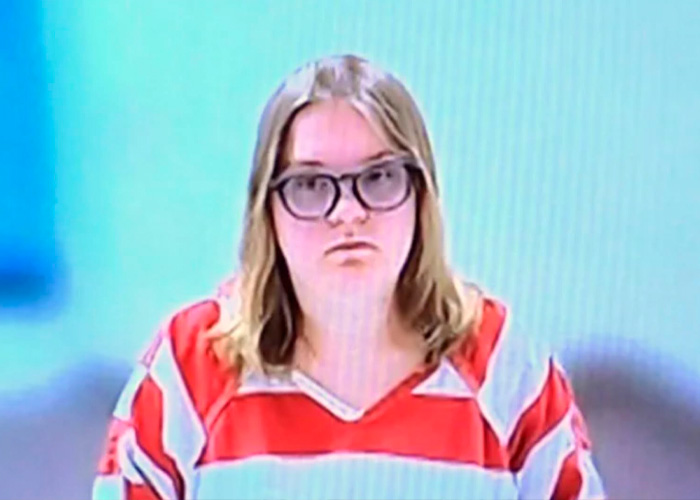
During an August 18 hearing, Andrea appeared wearing a striped jail uniform and handcuffs.
She pleaded not guilty to both charges and requested a jury trial.
Meanwhile, the dispute over the twins’ fate had reached federal court through an unrelated civil case.
In January 2026, Andrea had become a lead plaintiff in litigation brought by Children’s Health Defense against the American Academy of Pediatrics, accusing the organization of misleading the public about vaccine safety.
Prosecutors are now seeking capital punishment as Andrea fights to have the case dismissed
On October 16, 2026, prosecutors formally announced their intention to seek the death penalty if Andrea is convicted.
The state cited four aggravating circumstances, including the deaths of two children during the same alleged episode and what prosecutors described as an “utter disregard” for human life.
They also argued that Andrea could represent a continuing danger to society.
Filicetti condemned the decision.
“That’s outrageous,” he said, maintaining that prosecutors would be unable to prove homicide beyond a reasonable doubt.
On October 21, the defense filed a motion seeking dismissal of both charges.


The motion challenges the prosecution’s handling of evidence before the grand jury, including the medical findings that Filicetti says do not establish homicide.
Prosecutors, however, remain confident in their case.
Duke told USA TODAY that Andrea is entitled to the presumption of innocence and that he must convince a jury of her guilt.
“I plan to fulfill that responsibility at trial,” he said.
As of November 11, 2026, Andrea remains in custody, awaiting a December 2 hearing on her dismissal motion.
Her trial is scheduled to begin on January 11, 2027.
She has not been convicted, and the competing explanations for the twins’ deaths remain unresolved.
In the meantime, Andrea has reportedly kept in contact with Nate and their infant daughter through telephone and video calls.
“What a cruel world.” Readers debated whether capital punishment was appropriate