Parents shouldn’t have favorites but unfortunately, many do. Sometimes, it comes across in subtle ways. Other times, it’s glaringly obvious that siblings are not being treated equally and fairly. For example, if a mother leaves her entire inheritance to one daughter, while the other gets nothing.
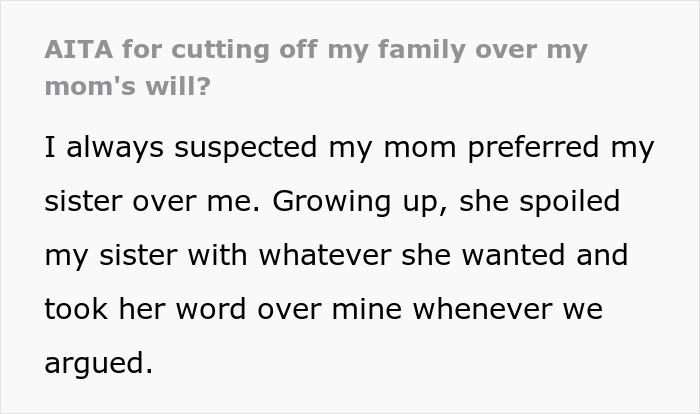
A woman says she was treated as second-best throughout her entire childhood. Her sister always got first prize, and even ended up ‘stealing’ her boyfriend and marrying him. The final straw was when their mom left the family home and business to the ‘golden child.’ The woman immediately cut off her relatives and didn’t look back. Ten years later, her sister came knocking.
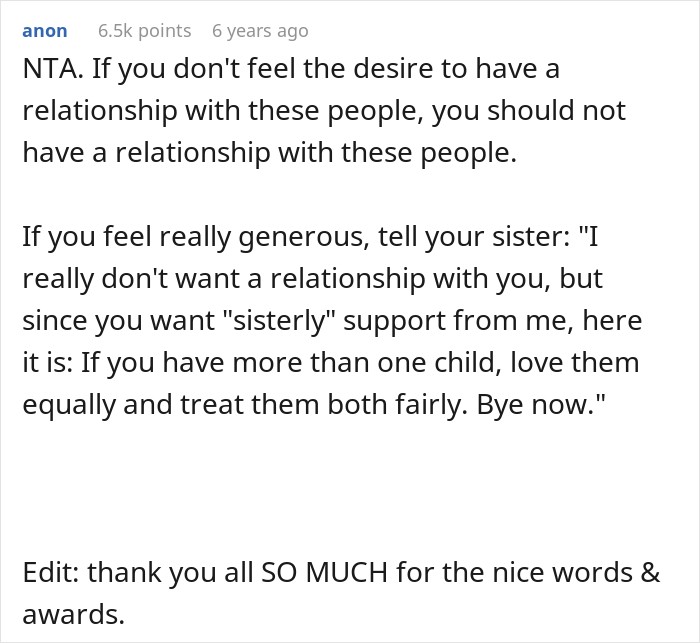
She’s always felt like the ‘black sheep,’ and the final straw was learning about her mother’s will

magnific / magnific (not the actual photo)
Her sister will inherit everything, while she gets nothing… So she’s decided to disinherit her family






bearfotos / magnific (not the actual photo)










ansiia / magnific (not the actual photo)
Parental differential treatment occurs in up to 65% of families, and has long-lasting consequences
Any parent who says they don’t have a favorite child might be lying. In fact, parental differential treatment occurs in up to 65% of families. That’s according to research published by the American Psychological Association (APA). The APA’s 2025 study involved more than 19,000 participants and found that both mothers and fathers show a slight tendency to favor daughters over sons.
Regardless of whether parents are favoring their daughters or their son’s, the outcome can have long-lasting negative consequences. And not only to the “non-favorite” child…
Parental favoritism is about so much more than one child getting a bigger or better birthday gift. “At its core, it’s a sustained pattern of differential treatment across attention, affection, discipline, resources, or emotional availability,” explain the experts from ReachLink, a platform that connects people with therapists.
“One child gets the benefit of the doubt during conflict. Another gets more warmth, more time, more grace,” they add. “When that gap is consistent and rooted in a parent’s own emotional needs or projections, it becomes favoritism.”
While the less-favored child can grow up with an array of issues, the “golden kid” also stands to suffer. Because of the amount of disproportionate praise, protection, and resources the “golden child” receives, it can cause havoc with their own self-worth. As the experts explain, this favored child is quietly expected to validate the parent’s self-image.
“Over time, they often develop performance anxiety, people-pleasing tendencies, and a fragile sense of self that depends entirely on outside approval,” they say.
Meanwhile, Dr. Alexander Jensen, an associate professor at Brigham Young University says that siblings who receive less favored treatment tend to have poorer mental health and more strained family relationships, according to Jensen.
“If you grew up as the child who received less, the wound often goes deeper than feeling shortchanged. It becomes a belief: not that you got less, but that you deserved less. That something about you, at your core, was less lovable,” adds the Reachlink team.
They note that unfavored children often carry a lifelong habit of measuring themselves against others, in careers, friendships, and even their own parenting.
In the meantime, the “golden child” is carrying their own trauma…
“Perhaps the cruelest part of the favored child’s experience is that they are rarely given permission to name it as painful. The response they anticipate, and often receive, is some version of: ‘At least you were the favorite.’ That silencing is its own wound,” say the experts. “It prevents them from processing the real costs of their position, including the guilt, the identity fragility, the relational losses, and the exhausting performance of gratitude for something that was never as simple as it looked from the outside.”
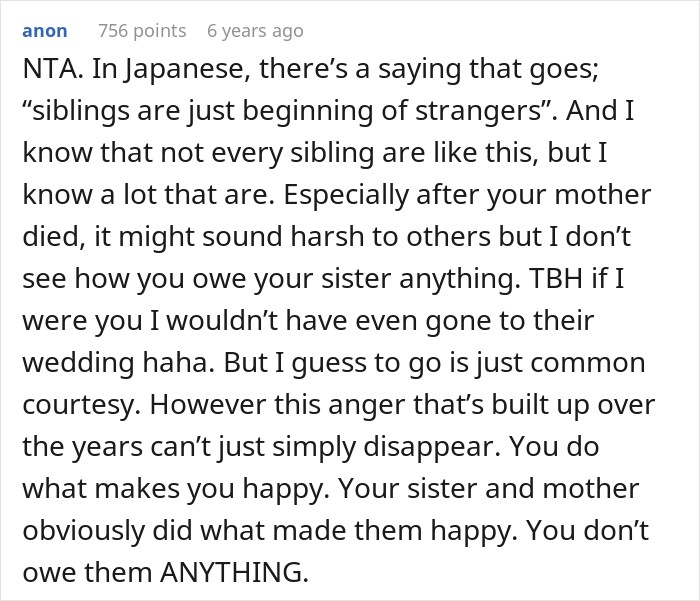
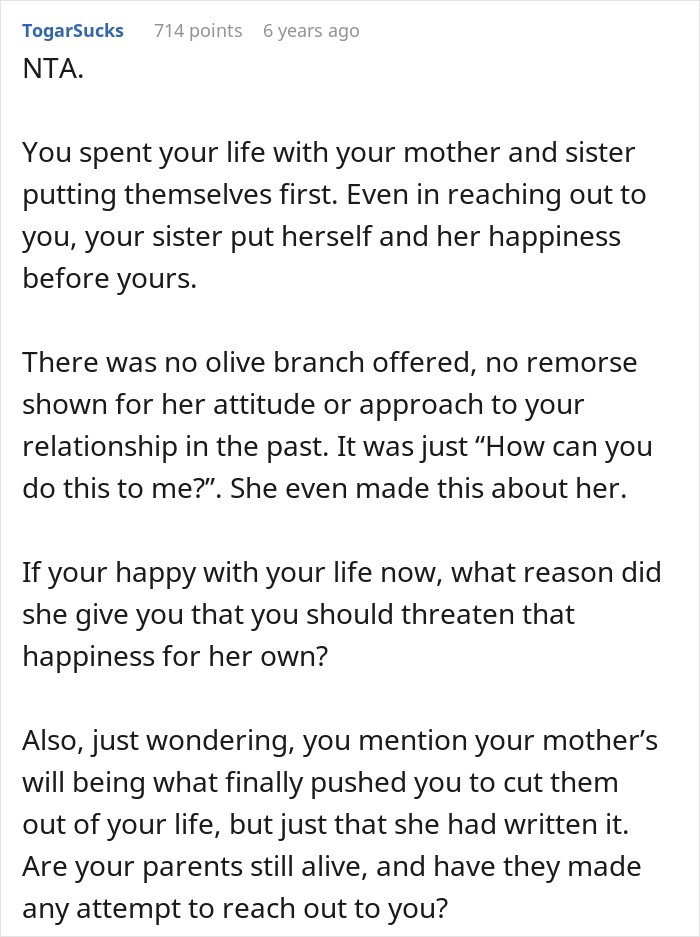
Many felt the woman did exactly what was needed, and told her not to look back