You know how parents sometimes have a whole plan for your life, even when you’ve got completely different ideas? They might mean well, but being told what you should or shouldn’t do all the time can get frustrating fast. And when it comes to big decisions like having kids, that pressure can create some serious tension.
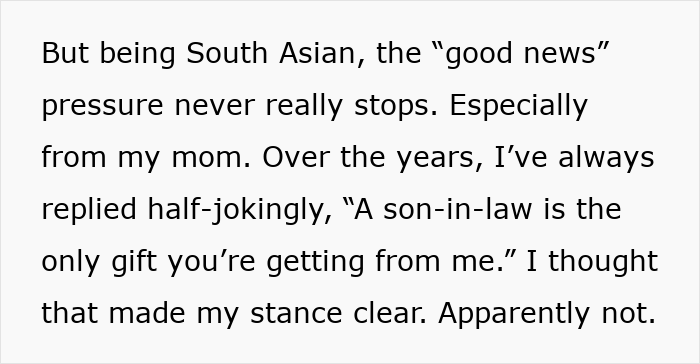
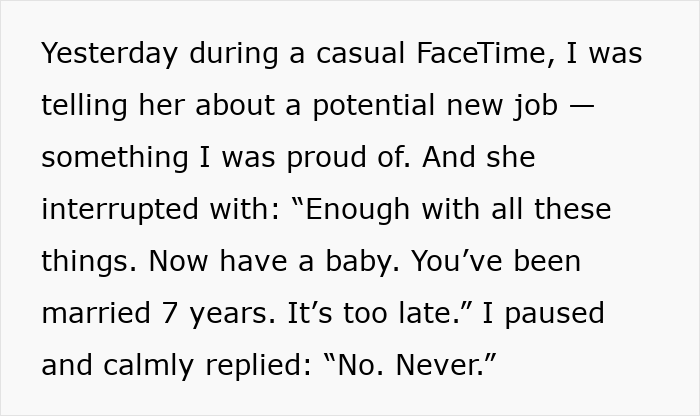
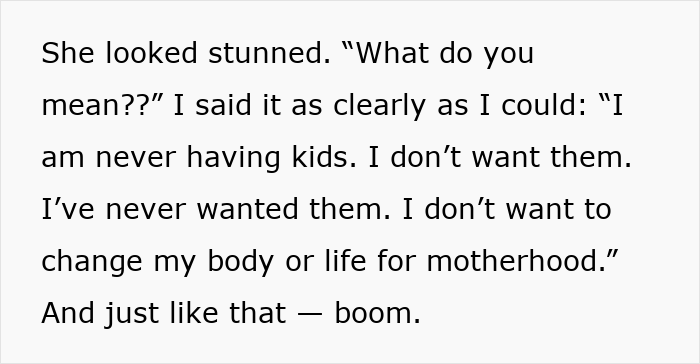
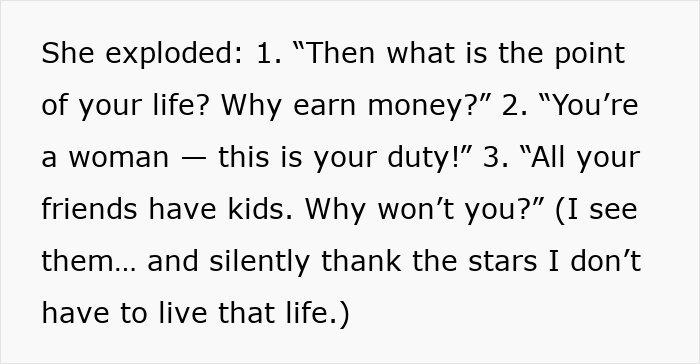
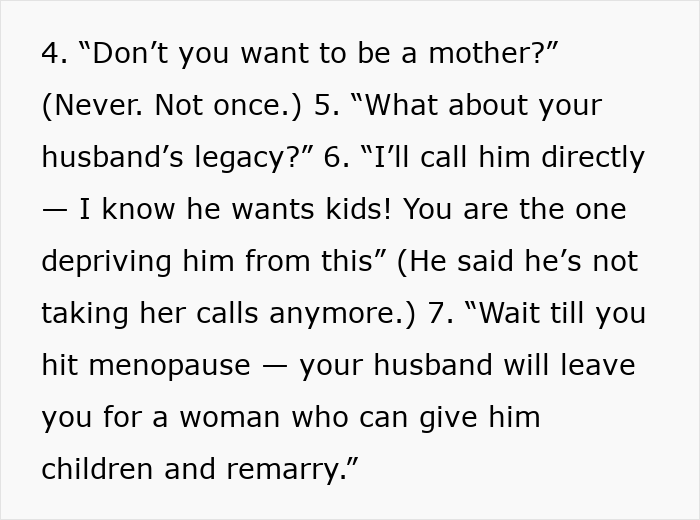
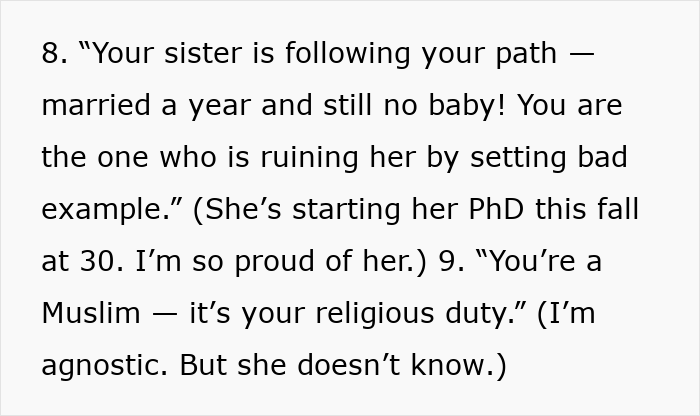
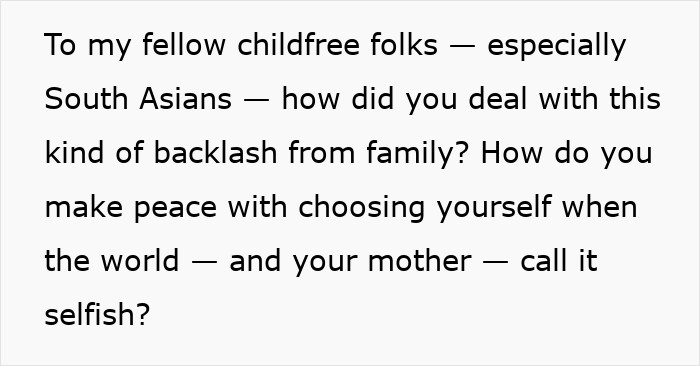
Take this woman’s story, for instance. She’d made it clear that having kids wasn’t part of her plans, but her mom just wouldn’t let it go. Things finally came to a head when she excitedly shared news about a potential new job, only for her mother to turn the conversation back to babies and her supposed “duty” to have them. What should’ve been a happy moment quickly turned into an emotional confrontation. Keep reading to find out what happened next.
Mothers are often a source of love, strength, and support for their children

wichayada69 / Envato (not the actual photo)
However, a woman shared how her decision not to have children sparked conflict with her religious mother


benzoix / Magnific (not the actual photo)

Wavebreak Media / Magnific (not the actual photo)



magnific / Magnific (not the actual photo)
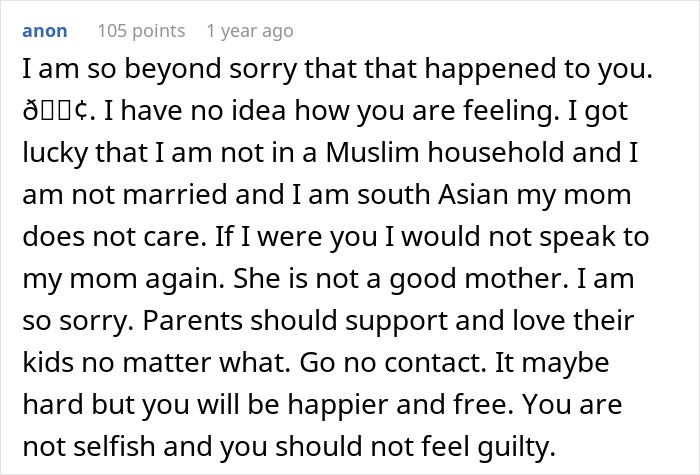
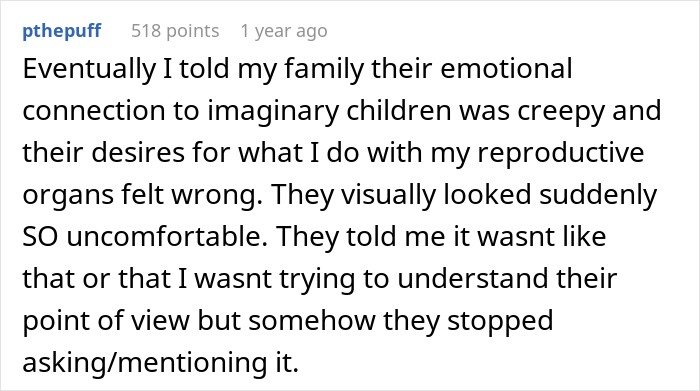
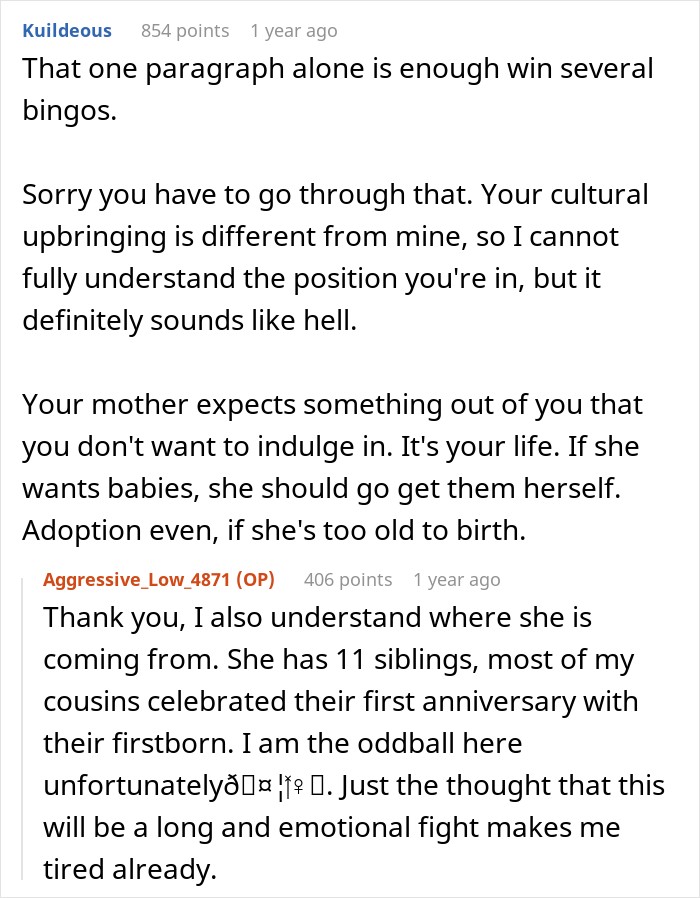
People sympathized with the woman as she revealed more details about her situation
Rising childcare and education costs are one of the key reasons many Gen Z individuals are choosing to delay or opt out of having children
For the longest time, life followed a familiar script for many people – study hard, land a stable job, get married, have kids, buy a house, and settle down. It was often seen as the “safe” and socially accepted path to a successful life. Generations grew up believing this was the natural order of things, something to aspire to without question. For many, it also brought stability and predictability, where each milestone naturally led to the next. Over time, this roadmap became deeply ingrained in culture and family expectations, shaping how societies defined success. Anything outside of it was often viewed as unconventional or uncertain. But as the world evolves, so do the definitions of what a “good life” truly means for different individuals.
For older generations like Baby Boomers and Millennials, success was often defined by building a family and steadily climbing the corporate ladder. But younger generations are shifting priorities. Many now place greater importance on personal freedom, meaningful work, financial independence, and experiences like travel, rather than traditional milestones such as marriage or parenthood. This shift reflects changing economic realities as well as evolving attitudes toward work-life balance and identity.
One of the biggest reasons behind this shift is the rising cost of raising children. According to the U.S. Department of Agriculture, it now costs over $300,000 to raise a child to the age of 18—and that doesn’t even include college expenses, which can easily add another six-figure amount. For many, that number alone makes parenthood feel financially overwhelming. Combined with everyday living costs, it becomes a long-term financial commitment many households feel unprepared for.
And it’s not just the cost of raising a child that’s making people think twice. Housing, healthcare, and everyday essentials are getting more expensive, making it harder for many young adults to save money or feel financially secure. Add to that the uncertainty of gig work, short-term contracts, and jobs that don’t always offer long-term stability, and planning for the future becomes even trickier. After all, when you’re still figuring out how to afford a home or build some savings, taking on the responsibility of raising a child can feel like a huge leap.
Rising costs, evolving goals, and changing lifestyles are all contributing to this shift, but the reasons aren’t limited to younger generations. A 2024 Pew Research Report explored why many older adults never had children, and the answers were surprisingly varied. For many aged 50 and above, the most common response was simple: it just never happened. However, the reasons differed significantly depending on whether they had once wanted children, revealing how life circumstances often shape outcomes as much as intentions do.
Among those who had hoped to have children at some point but didn’t, about 51% said it simply never happened. In comparison, only 20% of those who never wanted children gave that as a reason. This group was also more likely to point to not finding the right partner (41% vs. 21%) and infertility (25% vs. 5%) as major factors that shaped their lives. These numbers highlight how external circumstances, rather than choice alone, often play a major role in family decisions.
Another reason some people might think twice about having kids is the impact parenthood can have on their careers. In her book Kids Ain’t Cheap, financial expert Ana Kresina explains how the high cost of childcare can force parents to make some difficult choices. For instance, one parent, often the mother, may have to put their career on hold or reduce their working hours because childcare is simply too expensive. And while that might seem like the best option at the time, it can mean missing out on promotions, salary increases, and valuable retirement savings. So, for someone who’s worked hard to build a career, putting their professional growth on hold can understandably make the decision to have children even more complicated.

pressfoto / Magnific (not the actual photo)
In many Asian households, there is often strong pressure to have children due to the belief that children provide long-term security and support in later life
That said, many Asian households still face significant pressure to follow traditional life paths. This often stems from deeply rooted cultural values around family continuity, societal expectations, and the idea that children provide support in later life. Marriage and parenthood are often seen not just as personal milestones, but as responsibilities toward the family. While these expectations are slowly evolving, the tension between tradition and modern choices continues to shape many conversations around this topic, especially for younger generations trying to balance personal desires with family expectations.
Ultimately, whether or not to have children is a deeply personal choice. There’s no single “right” path, and what brings fulfillment can look very different for each person. For some, parenthood is a lifelong dream; for others, a meaningful life may center around career, relationships, passions, or personal growth. Respecting these choices (without judgment) is key to creating a more understanding and inclusive society, where people are not pressured into a single definition of success.
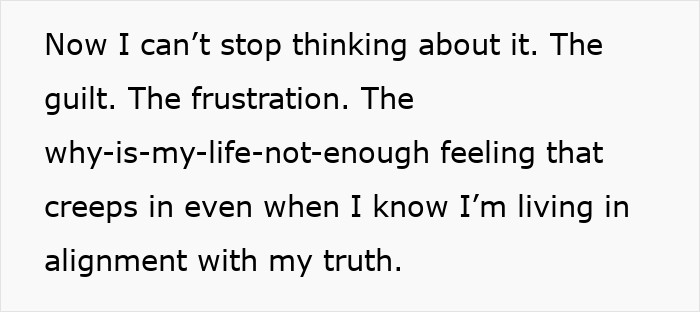
Pressuring children into life decisions often reflects a more authoritarian parenting style, where obedience is prioritized over open dialogue. In this case, the author’s mother seemed unwilling to accept “no” as an answer. She strongly insisted that her daughter should have a child and repeatedly pushed her viewpoint without fully acknowledging her daughter’s feelings or choices. Not respecting a child’s autonomy or dismissing their decisions can create emotional strain and tension within families. This situation raises an important question—what are your thoughts on such pressure from parents? Have you ever personally felt pushed toward marriage or having children before you were ready?
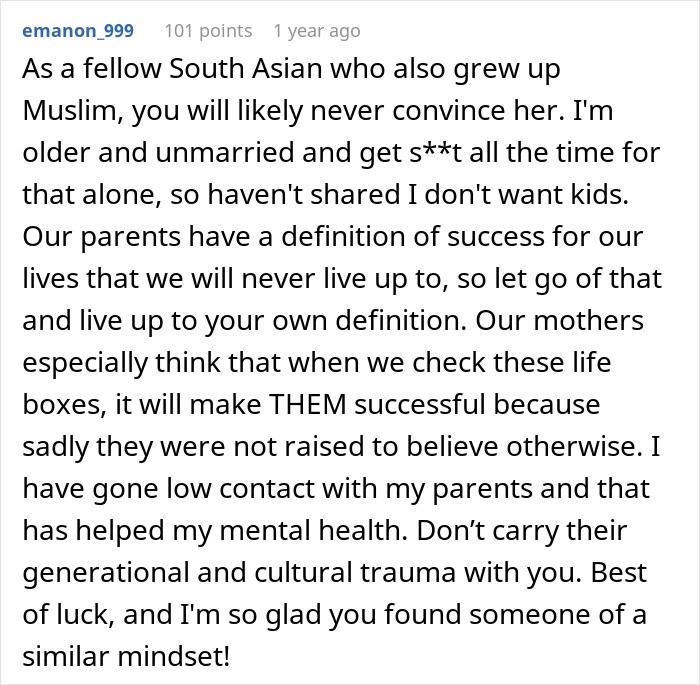
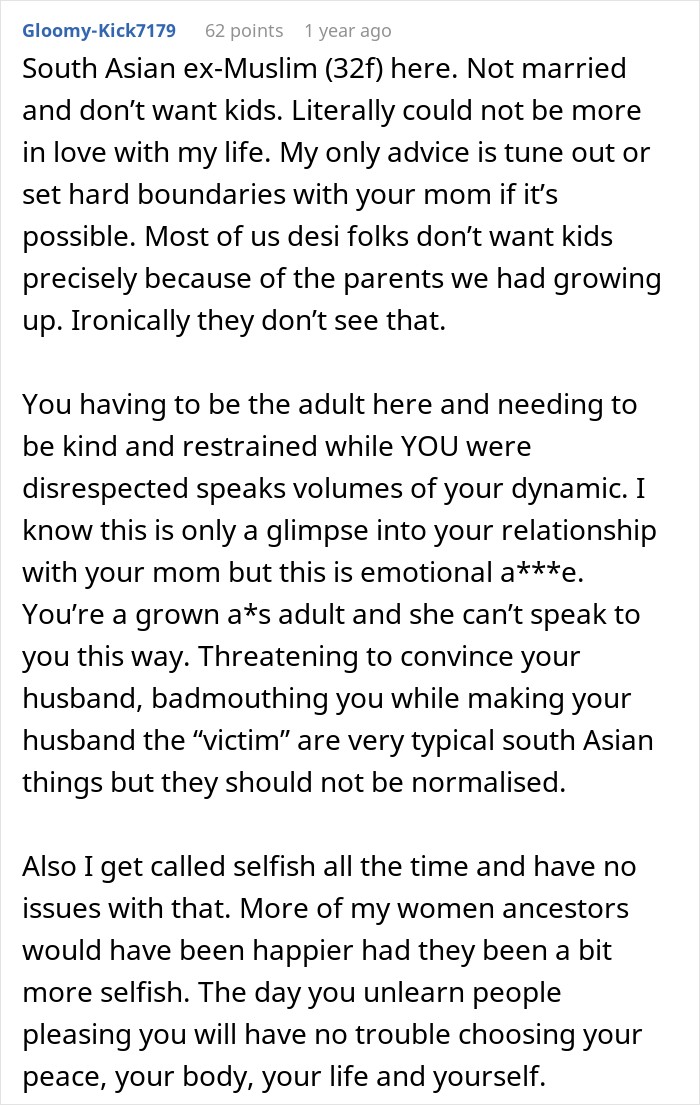
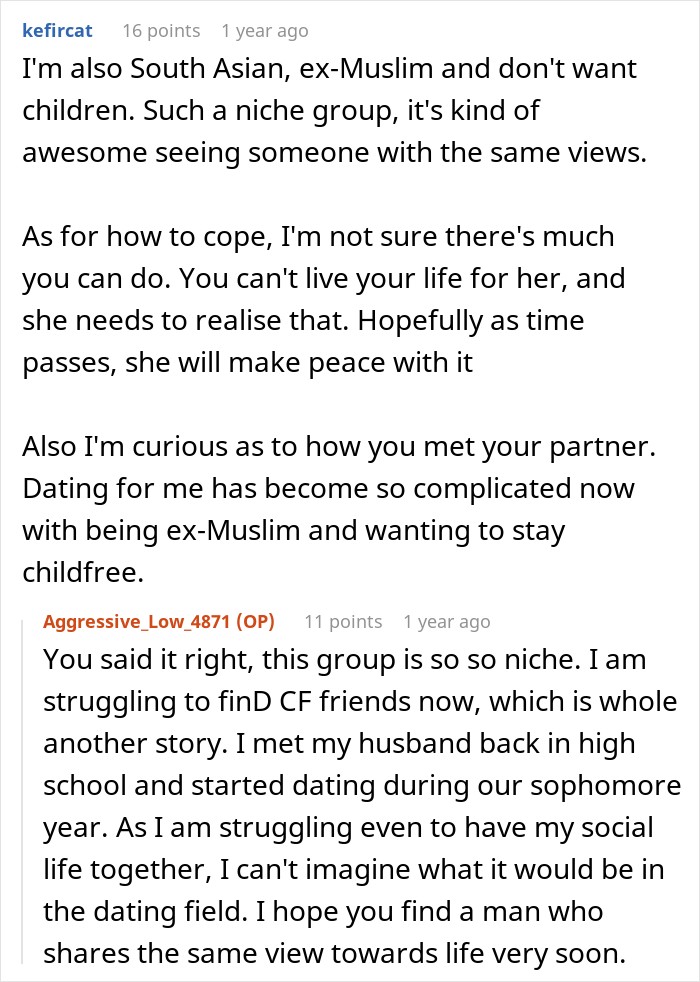
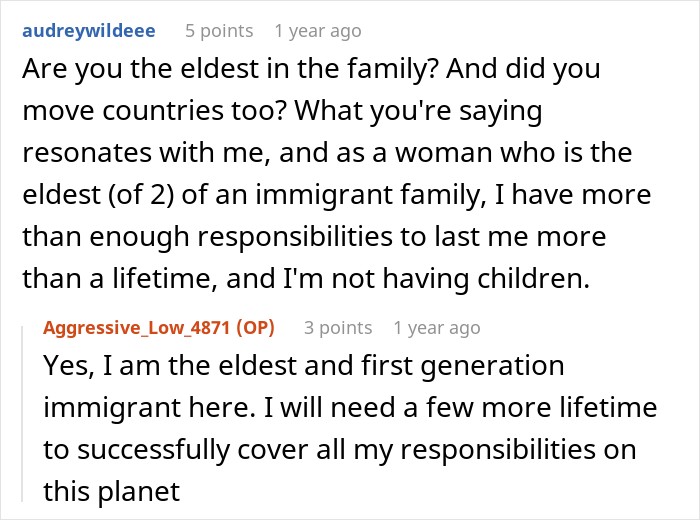
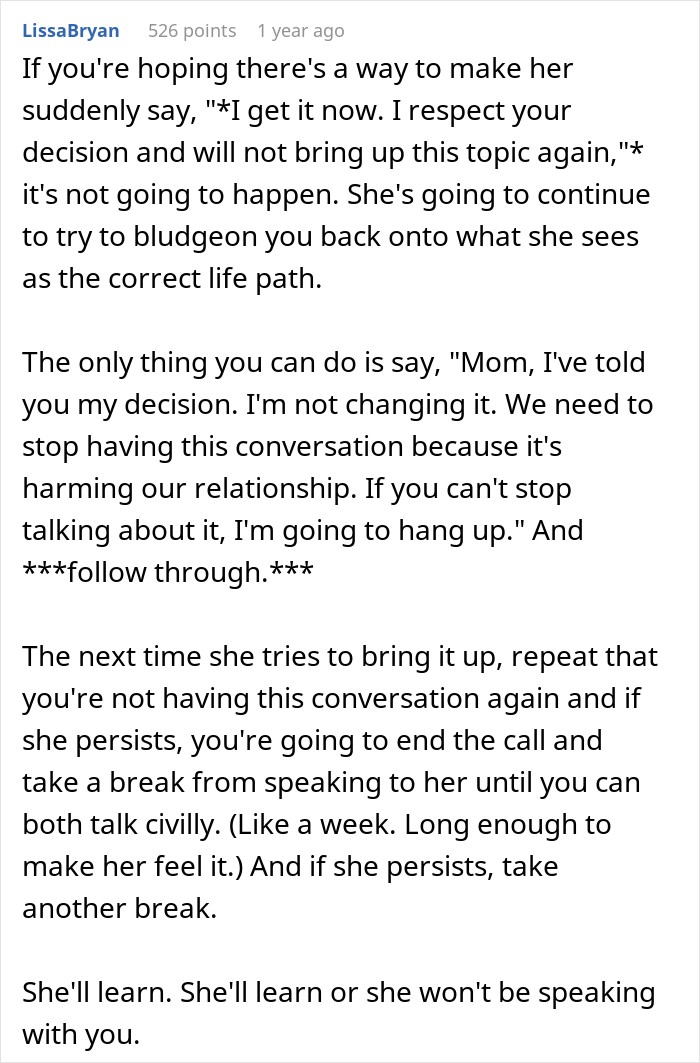
Many also offered advice on how she could handle the disagreement with her mother

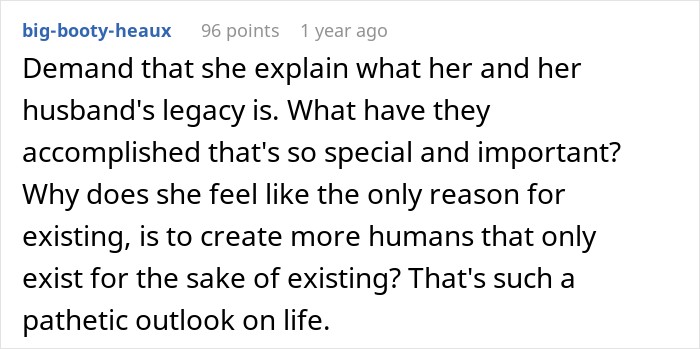
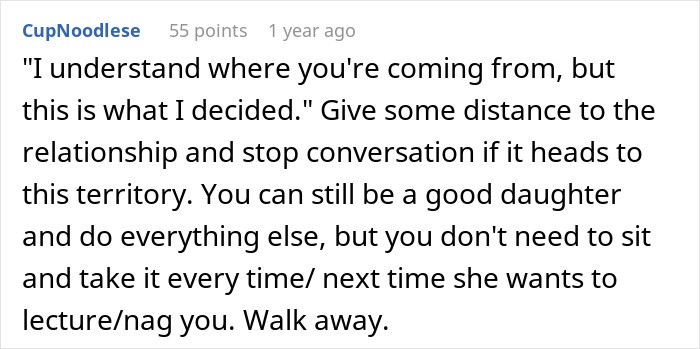
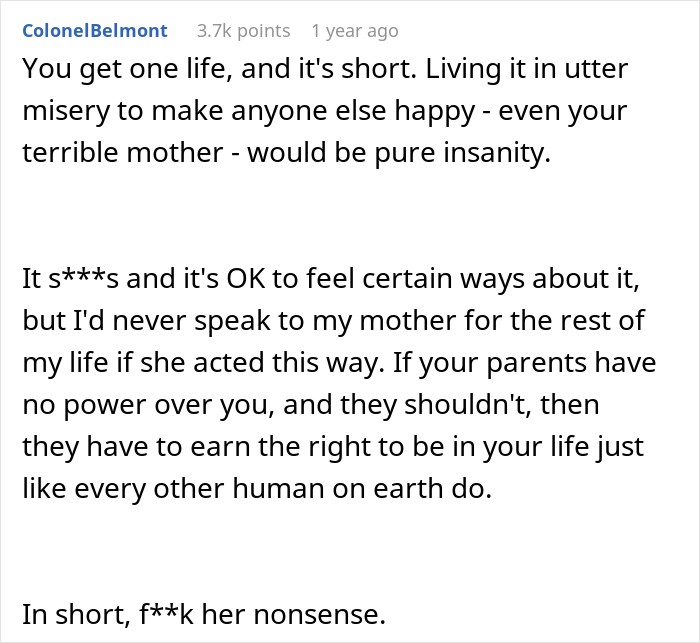
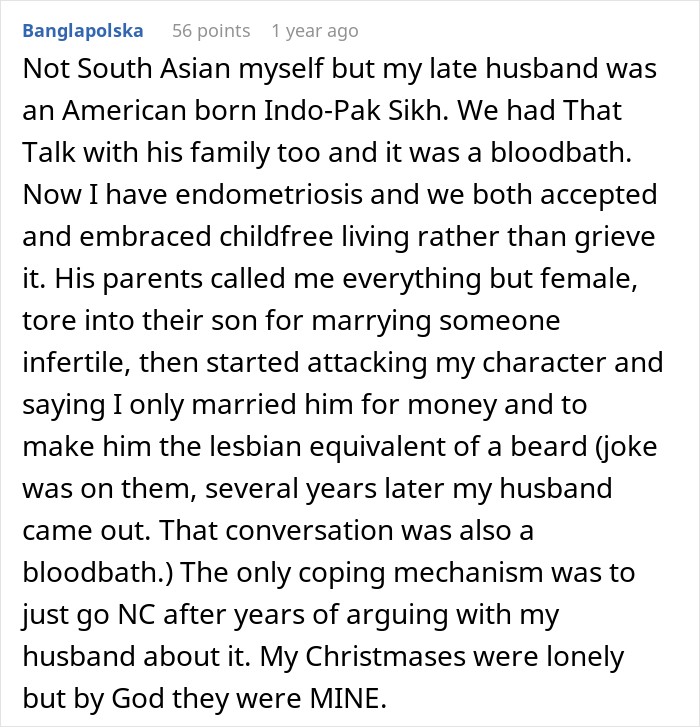
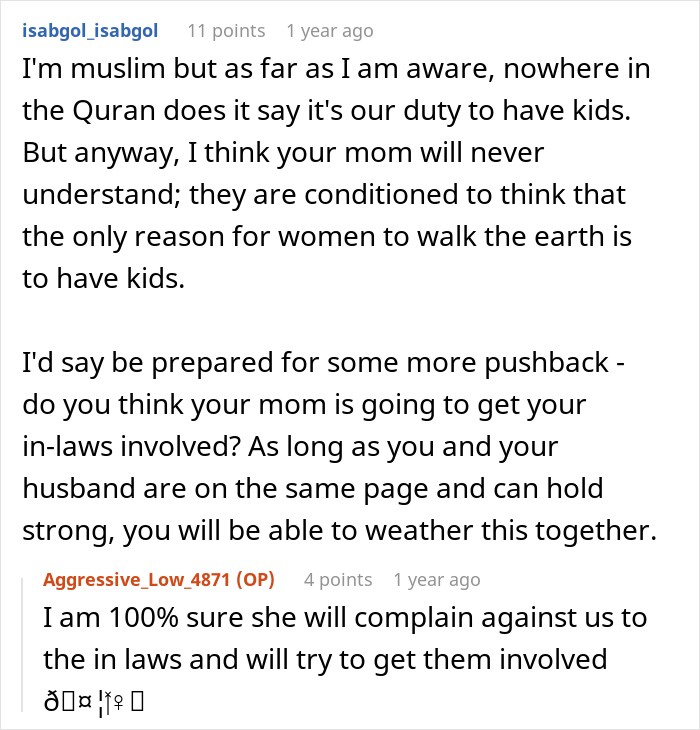
Others shared similar experiences and the challenges they faced with their own families