Who doesn’t like candy? Especially when it comes in the form of something that is supposed to be healthy! I have a serious sweet tooth, so turning down a little treat is not always easy. The problem is that not everything that looks like candy is necessarily safe.
This became a frightening reality for a 44-year-old mother from Cheshire, UK, who regularly took ashwagandha gummies. What started as part of her routine eventually led to a serious medical emergency that left her family facing a devastating situation.
Doctors later connected her condition to the popular supplement, but what happened next was far more serious than anyone expected.
Health supplements can be an easy addition to daily routines, but their benefits and potential risks deserve careful consideration
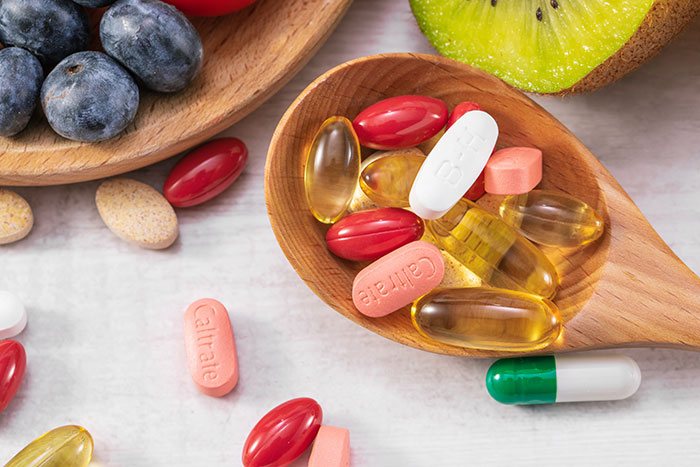
wirestock / Magnific (not the actual photo)
A mother’s daily wellness routine took an unexpected turn after she began taking popular ashwagandha gummies
Lois Kinder, 44, is a mother of two from Cheshire, UK. She worked as a TikTok affiliate and spent about a year taking and promoting ashwagandha-based products. Her husband said companies often sent her supplements to sell on social media. The family has not shared which brand she used.
In early July, Kinder started vomiting and showed signs of jaundice, as her eyes and skin turned yellow. Three days after seeing her doctor, her teenage daughter found her unresponsive at home. Paramedics revived her, but she was confused and did not recognize her children. Doctors later found she had acute liver failure.
Doctors put Kinder in an induced coma and moved her to Queen Elizabeth Hospital Birmingham, where she was added to the urgent transplant list. On July 22, a matching donor liver became available. During the transplant, she had three cardiac arrests after a blood clot blocked the main artery to her lungs, which left her without oxygen for a long time.
Lois survived the liver transplant, even though she had three cardiac arrests during surgery. She later woke up from her coma and now knows her family and can say a few words, but she is still in critical care with serious brain damage.

rudoelena / Magnific (not the actual photo)
What is ashwagandha and why do we get it as candy
Ashwagandha, also known as Withania somnifera, is an evergreen shrub that has long been used in Ayurvedic medicine. It contains compounds called withanolides. Today, supplements often use the plant’s root, leaves, or extracts. Some studies suggest these preparations may help with stress and insomnia, but there is still limited evidence for many of the other claimed benefits.
Ashwagandha has been used in traditional medicine for over 3,000 years, so there is no single modern discovery date. Botanist Carl Linnaeus first described it as Physalis somnifera in 1753. Later, in 1852, Michel Félix Dunal placed it in the genus Withania, giving it the name we use today.
Gummies have gone from being a novelty to becoming a big part of the supplement industry. According to the Nutrition Business Journal, 47% of regular supplement users pick gummies as their first choice when starting supplements. Many people prefer gummies because they taste good and are easy to take.
This popularity goes beyond supplements. In a survey of 370 adults, 63% said they had used gummy candies as cannabis edibles in the past year, making them one of the most common choices. People seem to like edibles because they are convenient, discreet, and do not involve smoke.

javi_indy / Magnific (not the actual photo)
Kinder’s case is far from being the only one
A similar case occurred to a 41-year-old woman who developed severe liver injury after taking ashwagandha and progesterone for about two months. Her condition worsened to acute liver failure, and doctors had to perform an emergency liver transplant. This was the first case to link ashwagandha supplements to acute liver failure that required a transplant.
She took the supplements to improve her wellbeing and quality of life after thyroid surgery. Doctors found severe liver cell damage and extensive liver tissue damage, but could not find another clear cause. She survived after the transplant, and her case was similar to Kinder’s medical emergency.
Researchers in India looked at 23 patients who developed liver injury after taking ashwagandha supplements between 2019 and 2022. After removing cases where patients used multi-herbal products or other supplements that could cause liver injury, they found eight cases linked to ashwagandha alone. The most common problem was cholestatic hepatitis.
Five of the eight patients already had chronic liver disease, and three of them developed acute-on-chronic liver failure. All three lost their lives during follow-up. Tests on the supplements found only natural plant chemicals, with no signs of adulteration or contamination. The other patients had liver injuries that lasted a while but eventually got better on their own.
user25451090 / Magnific (not the actual photo)
Most people do not use complementary approaches to replace regular medical treatment. According to the NCCIH, those who use natural products are more likely to do so for general wellness than for treating a specific health issue. Over 85% use natural products for wellness, and more than 40% use them to address a health condition.
For many, supplements are part of a daily wellness routine instead of something they take only when they are sick. This difference helps explain why products like herbal supplements attract people who want to support their overall wellbeing. The NCCIH data highlights how much wellness shapes the use of natural products.
Social media makes it easier for people to find and talk about complementary medicine, but it also allows questionable claims to spread quickly. A review of 29 studies found that social media shares both users’ and practitioners’ beliefs about complementary medicine, but it can also spread misinformation. This makes it hard to judge how reliable online health advice is.
Natural supplements can be attractive to people who want easy ways to support their wellbeing, but not every product or claim is safe. Before trying a new supplement, it is important to look at the evidence for its benefits, possible side effects, interactions, and to get advice from qualified health professionals. Being informed helps people make safer choices.
Have you ever taken a supplement without checking much about its ingredients or possible risks? Would Lois Kinder’s story make you think twice before trying one?
Not everyone online is aboard in the ashwaghanda train
@libertyava Absolutely not. #fyp #ashwagandha #no ♬ original sound – libertyava
Netizens questioned the safety of this suplement, while others focused on always checking with the doctor first