
WASHINGTON — The Supreme Court kicked off a new term Monday, with the justices wrestling with an attempt by oil companies to throw out lawsuits alleging they should pay damages for the impacts of climate change.
Although the case concerns a specific lawsuit the city and county of Boulder, Colorado, brought against Exxon Mobil and Suncor Energy, the ultimate decision could have broad ramifications for more than two dozen similar lawsuits brought by cities and counties around the country.
The justices — lacking a ninth member because Justice Samuel Alito’s recused — asked tough questions of both sides as they tackled broad legal questions raised in the case. Alito’s absence raises the possibility of a 4-4 split ruling that would leave the legal issues unresolved while allowing the Boulder case to move forward.
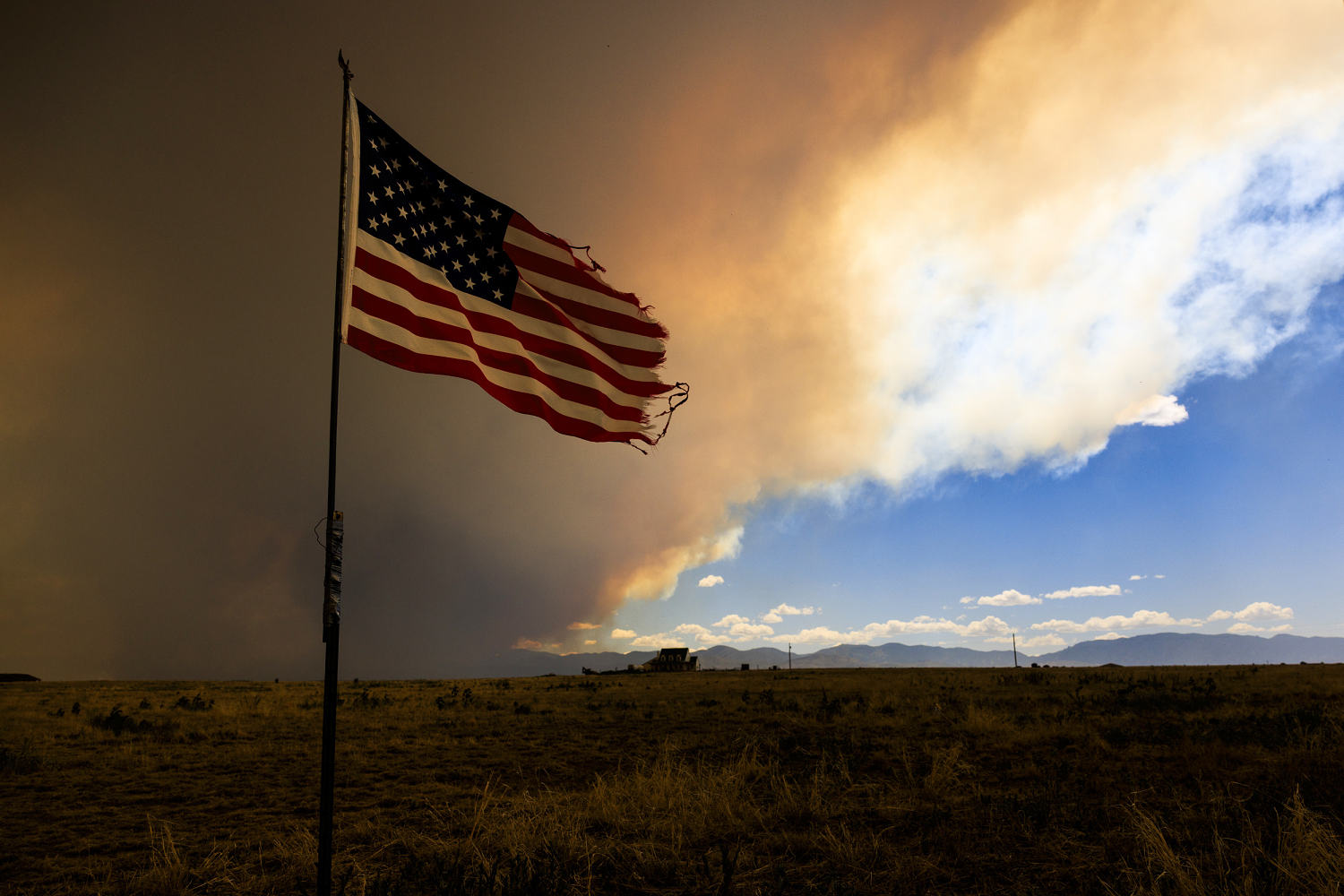
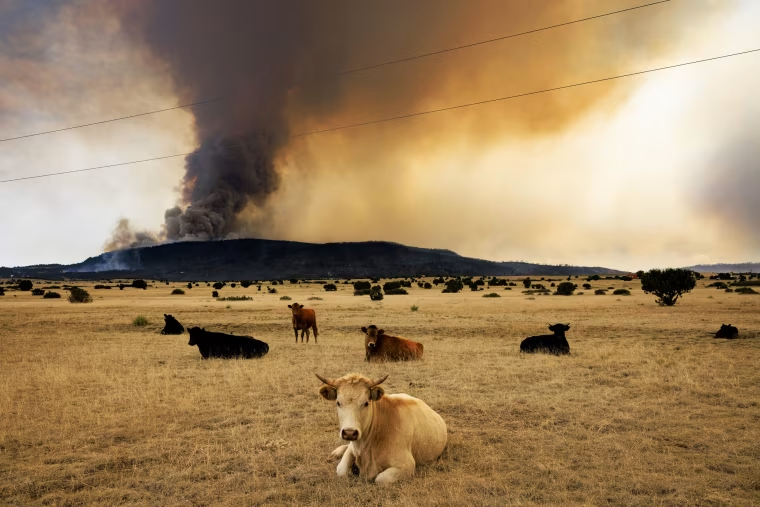
Boulder officials say they face increasing costs because of the impacts of climate change, including efforts to minimize risks from wildfires. Just this summer, Colorado has experienced extreme heat, drought and multiple fires.
The lawsuit, bringing claims under state law, says Exxon and Suncor misled consumers about the impact that greenhouse gases produced by their products would have on the climate.
The companies deny the allegations and warn that if the Boulder lawsuit and others like it are able to move forward to trial, they and other energy companies could face crippling damages in the billions of dollars. They also argue climate change is such an inherently national and international issue that it cannot be the subject of litigation in state courts.
There was some sympathy from the bench toward the oil companies and the potential for substantial damages.


00:0000:00
Supreme Court weighs who can be sued for climate change costs
02:36
Chief Justice John Roberts, one of the court’s conservatives, wondered how many more cities and counties would launch similar lawsuits if the court allows the Boulder case to continue.
“Just to make sure I have a correct understanding. Presumably, if you prevail, the next day a municipality in every single state will file a lawsuit,” he told Boulder’s lawyer, Kevin Russell.
Although Boulder’s claims are based on consumer deception, Roberts also seemed skeptical that the lawsuit was anything other than what he called “an effort to reduce emissions.”
On the other hand, Roberts, in an exchange with the oil companies’ lawyer, Kannon Shanmugam, said litigation brought in state court against out-of-state companies over an alleged harmful product is commonplace.
Other justices also seemed conflicted. Liberal Justice Elena Kagan at one point compared climate litigation with the wave of lawsuits against tobacco companies and drug manufacturers that sold opioids, which were allowed to proceed.
The oil companies have pushed back on such comparisons, saying that in the tobacco and opioid litigation there was a much more direct connection between the product and alleged harm to consumers.
But Kagan also wondered if, as the oil companies argue, the Clean Air Act that was enacted by Congress to regulate air emissions nationwide could foreclose the Boulder claims. A ruling saying that state lawsuits are preempted by the federal law could be “the more natural and simpler route” of deciding the case if the court sides with the companies, she said.
A decision on those lines would be the narrower of two paths to victory for the oil companies, with Shanmugam pushing for a broader ruling that state lawsuits are prohibited under the Constitution.
Liberal Justice Sonia Sotomayor pointed out that even if the Clean Air Act bars states from seeking to cap emissions, the lawsuit does not seek to do that. “The Clean Air Act does not regulate marketing or advertising of fuel, correct?” she said.
The most vocal justice in backing the oil companies was conservative Justice Brett Kavanaugh, who cited several court precedents that he said were “crystal clear” that air and water pollution are matters of federal law that the states cannot regulate.
“We don’t have to reinvent the wheel because we’ve said this multiple times,” he added.
Overall, there appeared to be a lack of consensus on the bench as to how to resolve the case, with one possibility that the court simply dismisses it, which would allow litigation to continue.
Lurking in the background are recent efforts by the Trump administration’s Environmental Protection Agency to eliminate greenhouse gas regulations under the Clean Air Act, an issue being litigated that could reach the justices in a later case.
“I think it is difficult to decide whether the Clean Air Act preempts these claims when we don’t know whether the Clean Air Act applies to greenhouse-gas emissions when the EPA is saying it lacks the statutory authority to do that,” Russell told the justices.
The Boulder case was the first to be argued in the courtroom as the justices began a new nine-month term after a summer break. Other major cases already on the docket involve a challenge to bans on AR-15 semiautomatic rifles and two about the Trump administration’s hard-line immigration policies.
Alito announced last week he was stepping aside from hearing the Boulder lawsuit but did not say why. Liberal groups have said for months that he should recuse himself because he owns stocks in other oil companies that could benefit from a ruling in favor of Exxon and Suncor. Alito’s decision was a surprise, as the court had told NBC News in May there was no need for him to step aside.
The litigation is playing out amid a broader battle between oil companies and their allies on one side and groups advocating for action on climate change on the other.

State courts have become a focus, in part, because of a lack of action at the federal level, with the Trump administration rolling back Obama- and Biden-era policies seeking to reduce carbon emissions and speed up the transition to cleaner energy. The administration, which filed a brief backing Exxon and Suncor, has also sought to block renewable energy projects, with President Donald Trump calling climate change a “hoax.”
In a ruling in 2011, the Supreme Court shut the door to making certain claims against energy companies over climate change in federal court, saying they were displaced by the Clean Air Act.
The proxy war over the issue has also focused attention on a chapter about climate science in a reference manual for federal judges. It was abruptly withdrawn this year after conservatives alleged the authors had a conflict of interest. Some also called for Kagan to recuse herself in Monday’s case because she wrote a foreword to the manual. She later said she did not even read the climate chapter.