There’s always that one neighbor who treats a random Tuesday night like New Year’s Eve and assumes the rest of the building will just put in their earplugs.
But one fed-up tenant decided they had endured enough sleepless nights after their neighbors refused to dial down the volume. Sharing the story online, the resident said they cooked up a brilliant, petty masterpiece to teach their partying neighbors a permanent lesson.
Read the full story below to see how Rebecca Black’s “Friday” ultimately helped the resident get sweet, silent justice.
One resident’s new neighbors had a habit of playing loud music and partying, sometimes until 3 in the morning

NicoBecker / Magnific (not the actual photo)
After many sleepless nights, the resident decided to teach the neighbors a lesson

sonnnnnic / Magnific (not the actual photo)


SkelDry // Magnific (not the actual photo)


norgal / Magnific (not the actual photo)


seventyfour / Magnific (not the actual photo)
Nobody likes noisy neighbors, yet many have had the misfortune of dealing with one
Most people try to be good neighbors. They lower their TV volume, try not to talk loudly, and wave politely in the hallway. But plenty have been accused of driving their neighbors crazy, too.
According to a 2022 survey by Lombardo Homes, over 53% of Americans admitted that they lived next to an “annoying” neighbor. By a landslide, noise is the number-one complaint. Loud music topped the list, followed closely by shouting adults, noisy pets, rowdy kids, and early-morning construction noise.
Dealing with that kind of daily disruption can take a heavy toll. Regular exposure to loud sounds can damage your ears, but even quieter, chronic noises chip away at your mental health over time. A 2019 study of nearly 4,000 people living in multi-story housing found a clear link between neighborhood noise and chronic issues like severe headaches, sleep disruption, depression, and anxiety.
Even if a sound isn’t loud enough to fully wake you, it can still trigger your body’s hidden stress responses. Poor sleep can also ruin your mood and focus the next day. “Exposure over a long period of time causes annoyance and affects sleep. It can affect your mental health and can also have an effect on your children’s learning,” says Professor Charlotte Clark from St George’s University of London.
Researchers in the Netherlands recently discovered that chronic neighbor noise is directly tied to higher rates of fatigue, muscle pain, and even long-term cardiovascular problems.
When people reach their breaking point, they do not always handle it quietly. According to a survey, 37% of people have tried confronting an annoying neighbor face-to-face. About 13% have left passive-aggressive notes, and 15% have called the police. But for the truly frustrated, 17% admitted they have gone out of their way to get petty revenge.
Revenge is an ancient reflex that sits deep inside us
Even though modern society tells us to suppress it, that urge is hardwired. Long before courts, police forces, or apartment management offices existed, early humans had no legal systems to protect them. In that environment, retaliation kept people safe.
From an evolutionary standpoint, spite serves a very practical purpose. While people often say revenge is toxic or destructive to personal relationships, the fact that humans evolved the capacity for it at all points to a deep survival advantage. Its primary goal is deterrence.
“If you have a reputation for someone who is going to seek retribution, people are not going to mess with you or take advantage,” notes researcher Dustin Chester.
Of course, understanding the evolutionary root of payback does not mean encouraging petty wars in apartment hallways. We can appreciate what the urge is designed to do while still wanting to help people keep their impulses in check. Plus, experts caution that there isn’t enough research on the long-term impact of how people actually feel weeks or months after carrying out petty revenge.
If you’re in a similar situation as the author of this post, experts usually recommend traditional steps for dealing with a noisy neighbor. These include knocking on doors for a polite chat, leaving friendly reminder notes, or contacting building management. When those diplomatic efforts fail, legal proceedings or involving local authorities become the final resort.
As urban populations swell — with the United Nations projecting that two-thirds of humanity will live in cities by 2050 — sharing thin walls and tight spaces will only become more common. This means our daily acoustic battles are here to stay, unless we collectively learn how to share the space.
That means laying down thick carpets and heavy rugs to trap high-frequency sounds, and soundproofing windows and doors if you blast music. At the end of the day, what goes a long way is policing your own behavior. Because let’s be honest… nobody else in the building is listening to your 3:00 AM EDM playlist quite as fondly as you are.
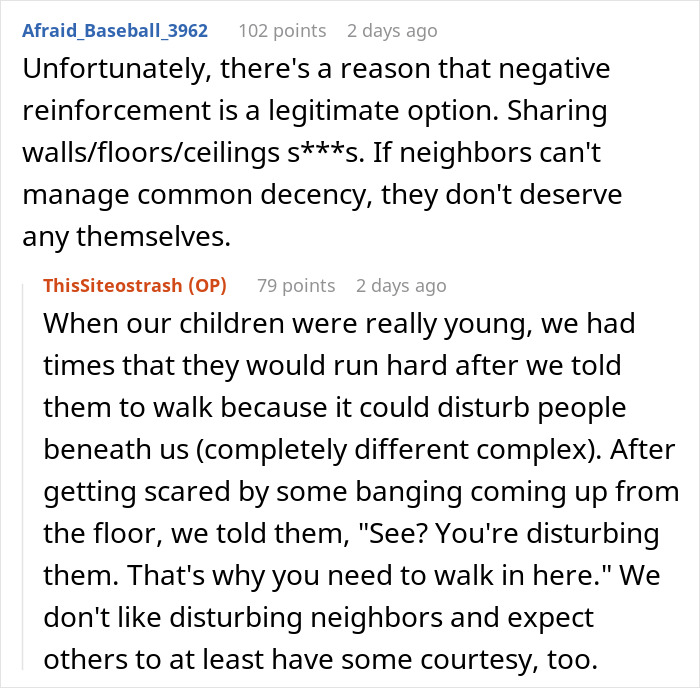
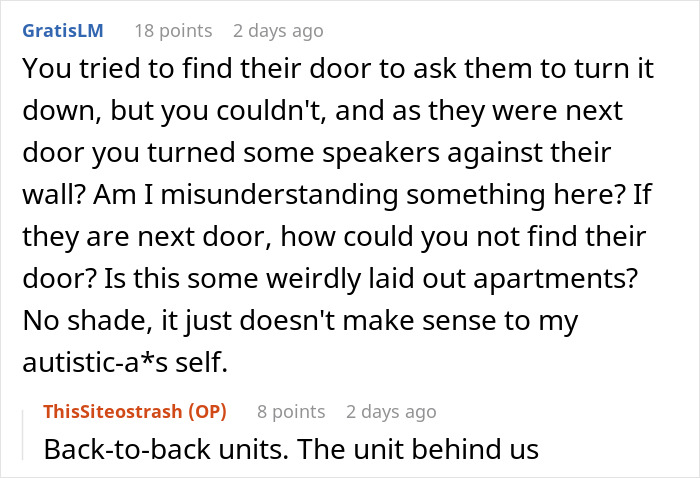
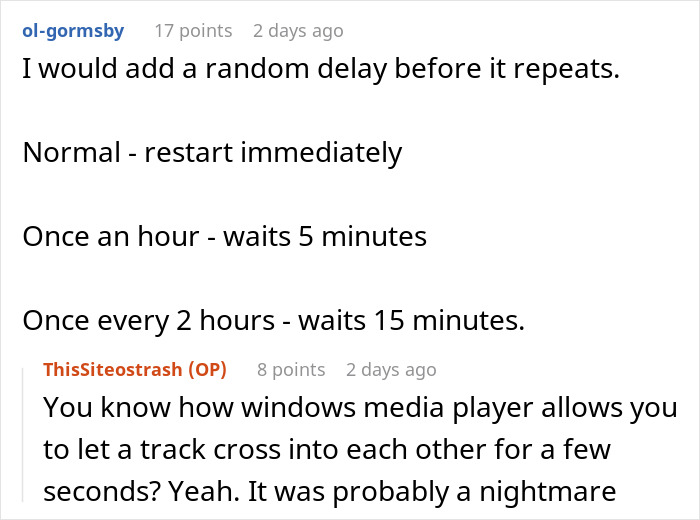
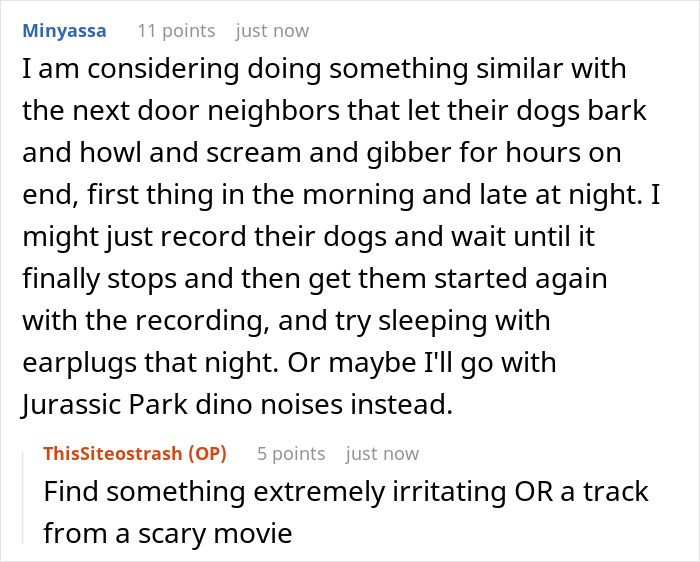
The author gave some more info in response to the comments