

Australian transgender model and content creator Grace Hyland recently opened up about a deeply personal experience she has struggled to put into words.
The 26-year-old became visibly emotional while admitting that she regrets undergoing gender-affirming bottom surgery.
“I did not have bottom dysphoria. I had shame,” Hyland shared with her viewers in a series of Instagram videos.
Transgender model Grace Hyland said she underwent bottom surgery “to fit society’s” expectations of women

Grace Hyland, born Grace Elizabeth Stevenson, is an Australian social media personality, model, and LGBTQ+ advocate.
She is the daughter of Australian actor Mat Stevenson, best known for playing Adam Cameron on the television soap opera Home and Away.
Hyland came out to her family at age 12 and publicly transitioned at 14.
She has since used her platform to advocate for transgender youth, mental health support, and access to gender-affirming care, including speaking at events such as the AACTA Festival.
However, in an emotional two-part video shared on Instagram on Tuesday, November 24, Grace revealed that she deeply regrets undergoing gender-affirming bottom surgery.
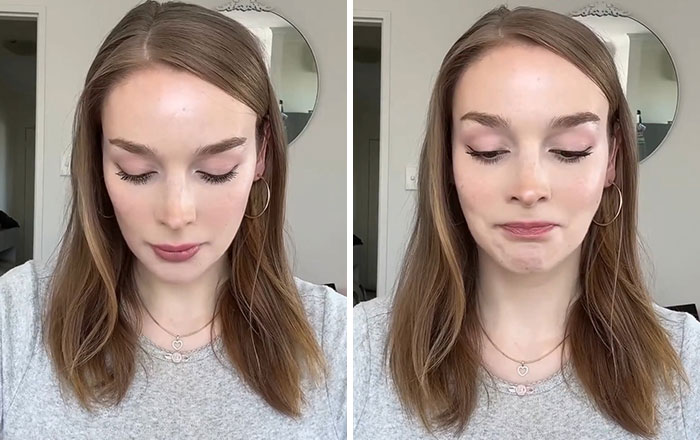

“As you can see from the title, I deeply regret getting gender-affirming bottom surgery, and I’ve tried filming this video so many times…” she began.
“I just wanna make this video because this is a very unique experience to me, and I don’t really hear many people speaking about this. I just wanna leave this here for if there’s anyone else out there who feels the same.”
Grace said she did not undergo the operation because she experienced distress about her genitalia.
Instead, she believed she had to change her body to fit a particular image of womanhood.
“I did not do this surgery for me. I did this surgery to fit society’s disgustingly perfectionistic ideals of what a woman should be,” she explained.
Hyland stated she felt external pressure to undergo the procedure, noting, “I did not do this surgery for me”


“I did not have bottom dysphoria, and there are no words to describe the t**ture that I went through when I saw my g**itals for the first time. I prayed to God to k*ll me, and I did this because I had a lot of internalized shame and guilt.”
According to reports, Hyland underwent the operation in 2019, when she was 19.
She attributed her decision partly to “the shame and guilt from early trauma and the transphobic” comments she encountered about transgender women and their bodies.
Hyland also described how the experience had affected her emotionally, admitting that, in some ways, she felt the operation had “ruined my life before it even began.”
Although Hyland spoke candidly about her regret, she made it clear that she does not feel the same way about every aspect of her transition.
“I’m so thankful that I got the opportunity to go on hormone replacement therapy at a young age, and my passing privilege has made my life so much easier than what it would’ve been,” she said.

“It gave me bodily autonomy and control over my own life, and that is something that really helped me, and I genuinely felt seen for the first time in my life.”
Grace also clarified that she had not experienced surgical complications and that the operation had not affected her ability to experience pleasure.
“Hormonally, I’m a woman… I can o**asm,” she explained. “It’s not like I’m a cisgender man who just got his bit sliced off, like, they kept all the nerves, they’re just rearranged. Um, so it’s not as serious as it sounds.”
Hyland also wanted other people who had undergone similar procedures and were struggling with their feelings to know they were not alone.
“If you’re a post-op girl like me who’s gone through what I’ve gone through, and you feel like you can’t talk about it, I just want you to know that I’m here for you,” she said.
Grace’s surgery reportedly involved gender-affirming genital reconstruction, but she has not disclosed the exact technique

The procedure Hyland has referred to as bottom surgery is a form of gender-affirming genital surgery.
For transgender women, two commonly discussed options are full-depth v**inoplasty and vulvoplasty, sometimes called zero-depth v**inoplasty.
However, Grace has not publicly revealed which specific technique her surgeon performed.
According to Johns Hopkins Medicine, full-depth v**inoplasty involves rearranging genital tissue to create external genitalia, including the v**va and labia, as well as a v**inal canal.
One established approach is penile inversion v**inoplasty, in which preserved penile skin is used to construct the v**inal canal.
Vulvoplasty, on the other hand, creates external genitalia without a full-depth v**inal canal.
Grace Hyland was put on puberty-halting drugs at the age of 13. He underwent plastic surgery: first breasts, then a hole where his genitals used to be.
All of this was done to make him sexually attractive, and receptive, to men. This was done to serve a male fetish for “sissies”… pic.twitter.com/jJQpi8qyoQ
— Genevieve Gluck (@MsGluck) November 24, 2026

The choice of procedure depends on an individual’s needs, goals, and discussions with their surgical team.
Recovery also involves long-term considerations.
People who undergo full-depth v**inoplasty generally need to use medical dilators regularly to maintain the depth and width of the newly created v**inal canal.
The surgery can permanently alter genital anatomy, and while reconstructive procedures may be possible in some circumstances, they cannot simply restore the original anatomy.
Hyland has not announced any plans to undergo further surgery.
Multiple studies have documented surgical regret, but Hyland does not want her experience “used against” transgender people


In a follow-up video, Grace also addressed the possibility that her story could be used to question the healthcare choices of other transgender people.
“I just wanna make it abundantly clear that just because I regret gender-affirming bottom surgery, that doesn’t mean that I disagree with gender-affirming bottom surgery,” she said.
“Trans people with bottom dysphoria exist, and I think it’s amazing that we have surgeons who can do this for people who need it, and I do not support taking this away from people.”
She also emphasized, “I do not want my journey to… be used as ammunition against the trans community. Every trans person is different. Every person’s dysphoria level is different.”
A 2021 systematic review and meta-analysis published in Plastic and Reconstructive Surgery Global Open examined 27 studies involving 7,928 transgender patients.

It estimated the overall prevalence of regret after gender-affirming surgery at around 1%, with the estimate for v**inoplasty at approximately 2%.
The researchers also cautioned that the studies used varied methods to assess regret, making it difficult to measure everyone’s experiences consistently.
A separate 2024 systematic review published in Annals of Plastic Surgery estimated the pooled prevalence of regret at 1.94% across 3,662 patients.
The findings also highlighted that regret can be complex and should not be treated as a single experience shared by everyone.