
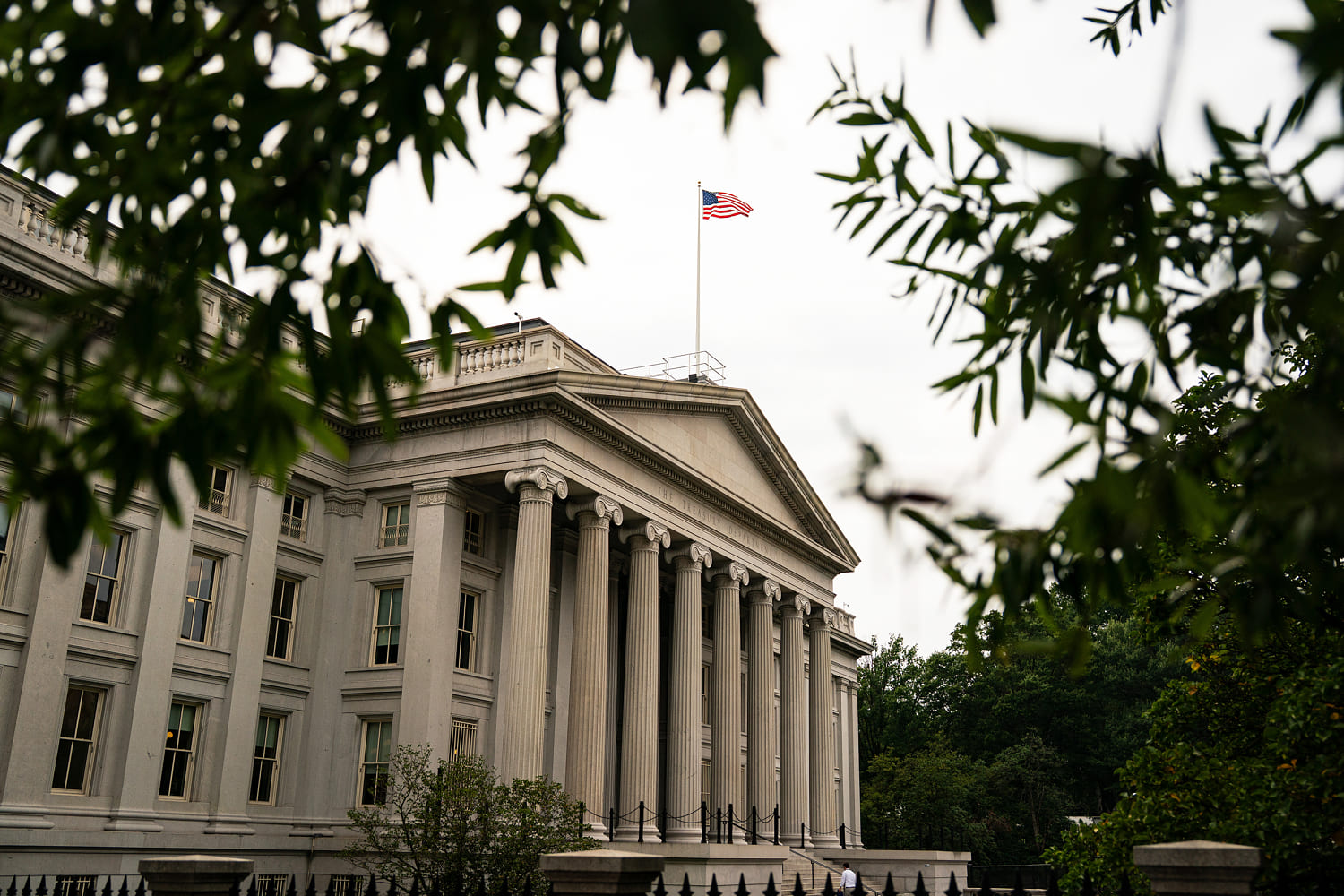
The yields on U.S. Treasury bonds jumped Wednesday and oil prices rose, sending stocks tumbling as investors braced for the prospect of future Fed rate hikes.
The yield on the 10-year Treasury bond, which heavily influences consumer borrowing rates, especially mortgages, rose as high as 5.13%, its highest since 2007. Indeed, the average 30-year fixed mortgage rate jumped to 7.26% on Wednesday, according to Mortgage News Daily. That’s the highest point since Jan. 13, 2025 — and of President Donald Trump’s second term.
The 10-year yield’s rise was its sharpest one-day jump since April 9, 2025, a week after Trump’s tariffs began roiling global markets, according to Dow Jones data.
Yields on five- and 30-year Treasury bonds also hit levels that had not been seen since before the 2008 global financial crisis.
Stocks fell in response to the rise in yields and oil prices. The Nasdaq Composite index ended the trading session down 1.13%, and the S&P 500 fell 0.75%. The Dow declined 352 points.
International Brent crude oil climbed 3.8% to end the day at $103.08 per barrel, while U.S. crude oil closed up 1.8%, at $92.16. The rise in oil prices snapped a streak of five days of declines.
Rising oil prices often translate into higher bond yields because of the effect higher energy costs can have on inflation more broadly.
Yields move higher
One of the primary drivers of Wednesday’s rise in bond yields was the release of new economic data that revealed rising inflation.
Yields rise sharply when Treasury bonds sell off.
“US business activity growth accelerated for a fourth successive month in September to reach the fastest rate for over five years,” S&P Global reported in its latest purchasing managers index reading.
“Firms’ input costs have meanwhile jumped in September at the steepest rate for four years, with fuel and transport costs spiking higher thanks to the rise in oil prices seen during the month, which will add further to the upward pressure on selling prices and inflation in the coming months,” said Chris Williamson, chief business economist at S&P Global Market Intelligence.
Investors viewed the data as likely to increase the odds of multiple Federal Reserve interest rate hikes later this year and next. As of late Wednesday afternoon, market odds for a Fed rate hike in October were up to more than 70%.
One Fed policymaker signaled that he would be likely to vote in favor of another rate increase during the Fed’s Oct. 27-28 meeting.
“Risks to achieving our inflation target have increased, while risks to the labor market have receded,” Federal Reserve governor Michael Barr said at a housing conference in Chicago.
“In my base case, further policy adjustments are likely to be needed to ensure inflation comes down to target in a timely fashion,” he said.
Oil prices rise
Crude oil trading desks Wednesday were focused on the latest developments in the Iran war.
Tuesday, the price of oil fell sharply after Trump said U.S. officials were holding talks with Iranian representatives at the U.N. General Assembly. But hopes that the talks would produce tangible results were dashed by a new report Wednesday that a cargo vessel had been “struck by an unknown projectile” in the Strait of Hormuz.
Lying just off Iran’s southwestern coast, the strait, a critical chokepoint for global energy supplies, has been under a military blockade for seven months.
Trump further shook energy markets Tuesday when he said he supported a ban on U.S. exports of diesel fuel.
“Let’s not send out the diesel,” Trump told reporters at the U.N. “I’ve called for it within my people. I’ve been talking about it.”
Trump’s remarks sent European benchmark diesel futures higher by as much as 7% early Wednesday.
But experts and energy industry groups warn that a ban on diesel exports would spell even higher gas prices for Americans.
“Removing U.S. diesel from the market could instead result in reduced refinery runs, global economic damage and even higher U.S. prices,” the American Petroleum Institute said in a statement.
Trump’s energy secretary, Chris Wright, also said a ban would not help bring down prices.
“The blunt tool of banning diesel exports definitely doesn’t work,” he said Wednesday at an event in New York, according to Reuters.
Wright said at an event hosted by The New York Times later Wednesday, “Nobody wants a full blanket ban or zero exports of diesel.”
“That’s not being discussed,” he said.
Stocks tumble
Inflation-sensitive stocks, such as travel companies and large technology firms, were hit hardest by Wednesday’s reversal.
The S&P’s biggest sector loser was utilities, which includes many of the companies leading the AI data center boom. Higher interest rates could add billions of dollars to the cost of building AI infrastructure.
The consumer discretionary and real estate sectors were also notable decliners.