
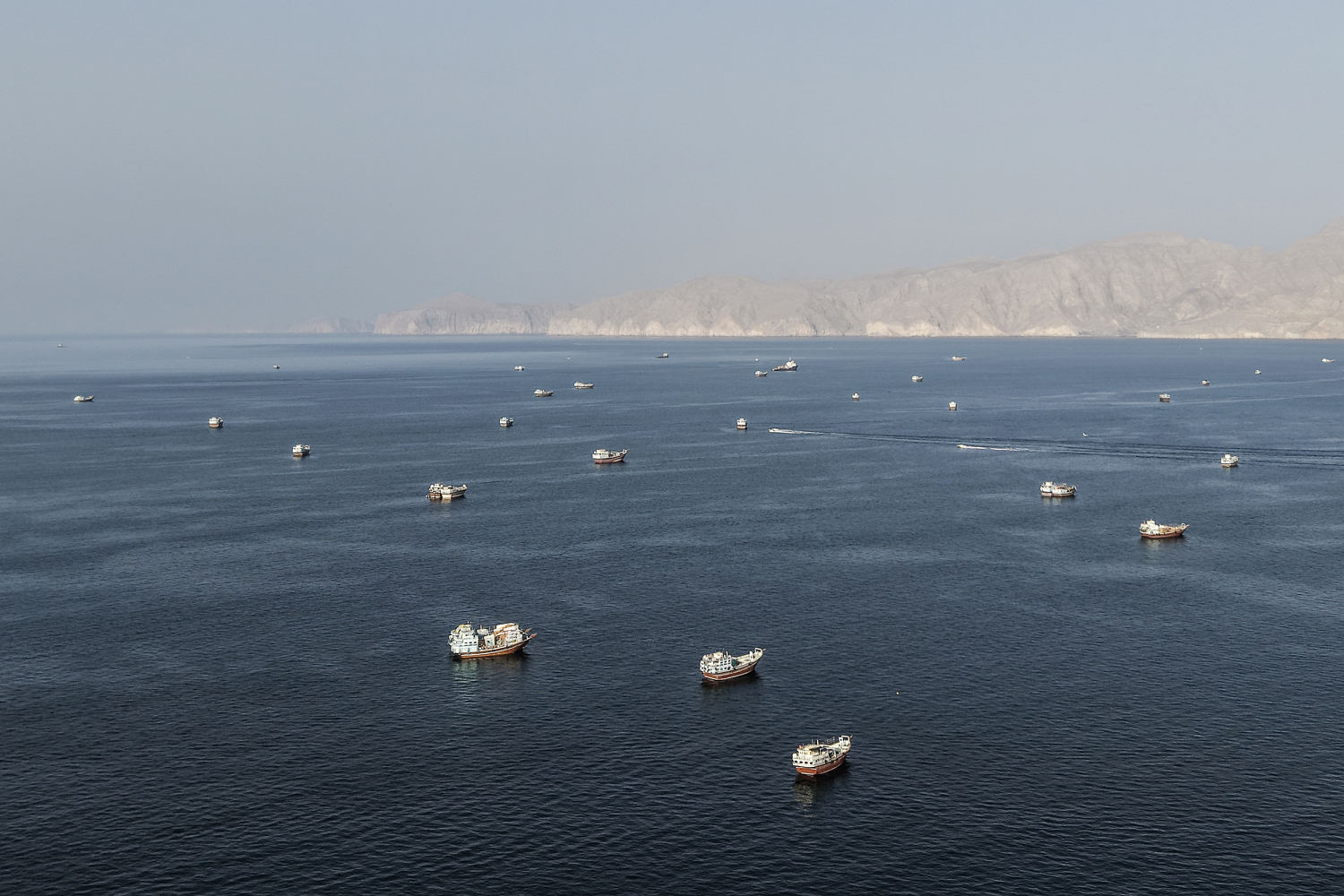
The U.S. military carried out limited strikes Monday on Iran’s Qeshm Island, according to two U.S. officials.
The officials said the U.S. attacks, which came on the eve of crucial U.S. midterm elections and as the Middle East is anxious about the possibility of a return to all-out war, were not a resumption of major combat operations in Iran. They described the attacks as self-defense in response to Iran’s ongoing efforts to target maritime shipping and U.S. assets.
The U.S. continues to intercept drones and missiles that are targeting shipping every day, one of the U.S. officials said.
The Islamic Revolutionary Guard Corps has routinely targeted and shot at U.S. manned and unmanned aircraft over the Strait of Hormuz and in the area over the past few weeks, one of the U.S. officials said.
The U.S. is occasionally striking Iranian missile launchers in self-defense when the Revolutionary Guard shoots at U.S. aircraft, the official said.
Iran tried to target a U.S. aircraft again, leading to the U.S. strike on Qeshm to take out the launcher, the official said, calling it part of ongoing operations.
A third U.S. official said, “This was a defensive measure for Iranians using surface-to-air missiles against U.S. assets.”
Iranian state media reported that five explosions were heard Monday on Qeshm Island.
President Donald Trump had said the U.S. would not launch strikes on Iran before Tuesday’s midterm elections.

01:15
The unpopular Iran war and the resulting impact on U.S. gasoline prices and other parts of the economy have been a vulnerability for Republicans as they try to keep control of Congress.
The administration was last known to have carried out some attacks in early September, but thousands of U.S. troops remain in the waters off Iran to maintain a naval blockade aimed at preventing tankers carrying Iranian oil from getting to the global market. A third aircraft carrier and thousands of additional troops are also on their way to the Middle East.
Earlier Monday, Vice President JD Vance offered measured optimism that a deal can still be struck to prevent Trump from following through on his threat to potentially order new strikes on Iran after the midterm elections.
Vance sent a letter to Iran’s security chief, Mohsen Rezaei, last week, few details of which have been offered by the White House. Trump told reporters the letter was focused on assisting Iran with “medical supplies and various things.”
Vance suggested Monday that there was reason to believe the U.S. and Iran could still come to an agreement.
“We’ve had a number of good conversations with the Iranians,” he told reporters when he was asked about the letter, adding that he and Trump “both feel pretty good about the prospects for potentially coming to a negotiated settlement. We’re going to keep on working at it.”
The region remains on edge about the prospect of the U.S.’ resuming full-scale operations against Iran. The back-channel efforts are playing out as Israel and some Middle East allies lobby Trump on the way forward in the eight-month-old war, which has rattled global markets and wreaked havoc on Iran.
Israeli Prime Minister Benjamin Netanyahu had pushed for renewed strikes even before the Israeli election last week as he sought to highlight his security credentials to a public deeply scarred by the Hamas-led Oct. 7, 2023, attacks.
But the war has also loomed large for American voters ahead of Tuesday’s midterm elections.
Oil prices dropped sharply Monday as renewed diplomatic efforts to end the war appeared to show signs of progress.
Trump noted the drop Monday in a speech in Washington, which was billed as his closing argument to Americans, and sought to minimize the scale of the conflict, which has cost U.S. taxpayers at least $47 billion.
“I don’t know if you even call it a war, because we haven’t been doing any fighting for months,” Trump said. Earlier he posted on Truth Social that “Iran wants a settlement, as soon as possible.”
He has frequently asserted that the two sides are close to a deal to end the conflict, though one has so far failed to materialize.
Iran has repeatedly said it is open to a diplomatic resolution, but has largely stuck to its demands.
Tehran “has delivered a firm and rational response to the American side and the ball is now in America’s court to prevent a war,” Parliament Speaker and top negotiator Mohammad Bagher Ghalibaf said Tuesday.