
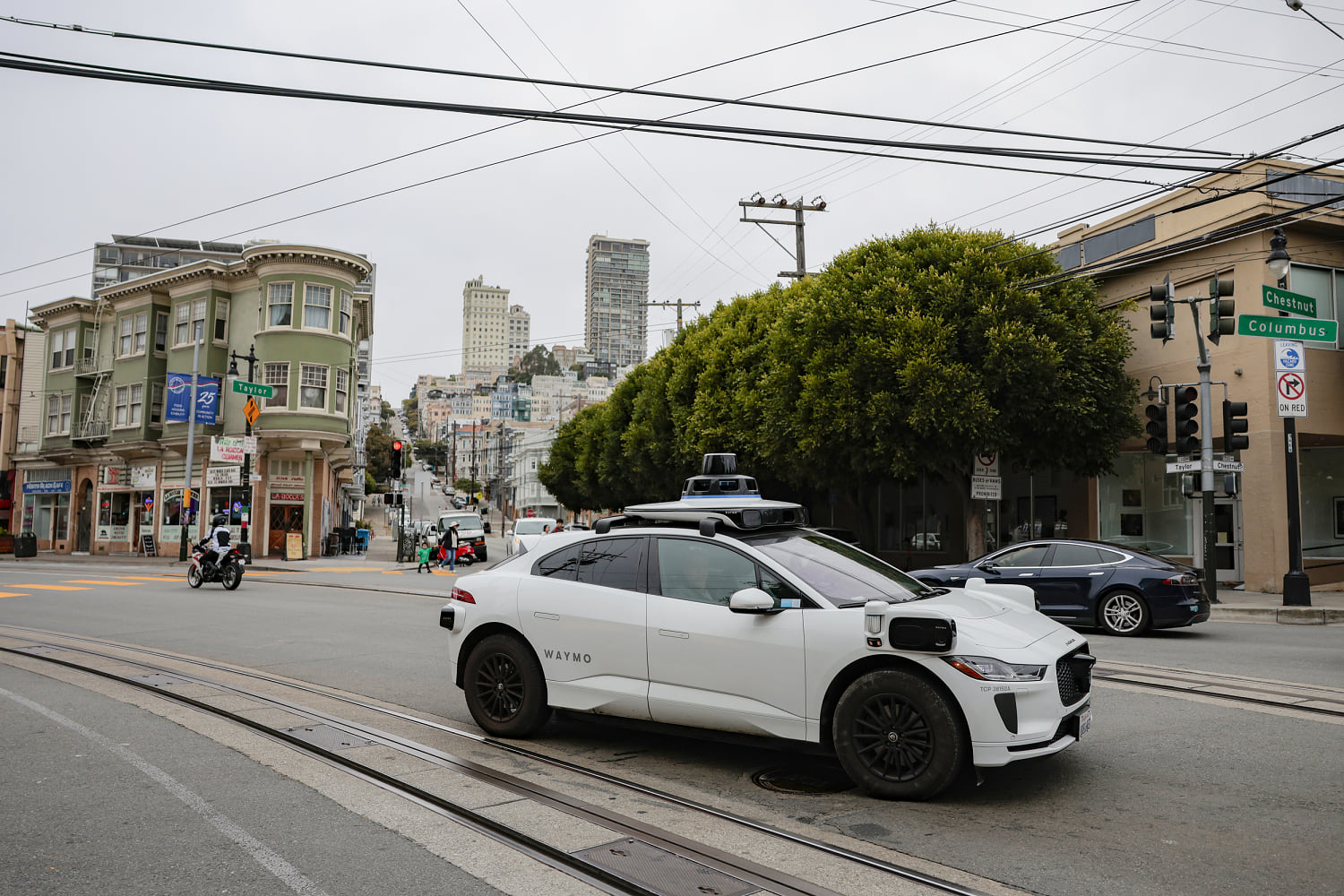
Waymo will stop putting its driverless vehicles on U.S. freeways for now. The move comes after California banned the company’s robotaxis from state highways after officials determined that they pose an “imminent hazard to public safety.”
“We’ve proactively implemented a freeway operating restriction across all of our markets,” a Waymo spokesperson said Tuesday in a statement. “Notably, this only extends to our freeway service, and we’re working to quickly and safely re-open freeway routing.”
California’s Department of Motor Vehicles said it issued its ban Nov. 11 after one of Waymo’s autonomous vehicles tried to pass highway patrol officers conducting a traffic break on a San Francisco-area freeway this month.
The department also cited a separate incident in which three of the company’s vehicles entered an active construction closure on another San Francisco-area highway.
“The Department determined that Waymo’s driverless freeway operations pose an imminent hazard to public safety due to recurring incursions by its vehicles into active construction zones where construction workers, vehicles and equipment are present,” the department said.
Similar restrictions were placed on the company after similar incidents earlier this year, the department said.
The ban will remain in place until Waymo can address the issue, according to the release.
In a statement, Waymo pointed out that the construction zone incidents did not involve injuries or collisions and said it is complying with the restrictions.
The National Highway Traffic Safety Administration said it is in communication with both the state DMV and Waymo and will “take additional actions as appropriate.”
Waymo’s robotaxis are in more than a dozen cities across the U.S. Waymo, which is owned by Google’s parent company, Alphabet Inc., first introduced the driverless taxis in San Francisco in 2024.
Waymo said it is working with state officials to “diligently and responsibly” resume freeway operations and service continues to operate normally on regular ground-level roads.