
It can be unfathomable, even heartbreaking, for anyone to find out that one of their friends has terminal cancer. Especially if you’re close to them, you will do anything and everything to give them comfort and happiness in their limited time.
However, many may argue that finding out it was all a lie is even more distressing. A woman knows this experience all too well after learning that one of her good friends had faked having such a serious illness.
Upon realizing the elaborate falsehood, she went into retaliation mode and planned to take legal action.
Learning that a friend has cancer can rattle one’s world

Tima Miroshnichenko / pexels (not the actual photo)
This woman, however, had a doubly distressing experience after finding out her friend had faked having a terminal illness






Getty Images / unsplash (not the actual photo)
After realizing how elaborate the lie was, she intended to take legal action

Malingering has become more prevalent in the social media and information age
Malingering (a.k.a. Factitious Disorder) is defined as the “intentional fabrication of physical or psychological symptoms for personal gain.” It could be as simple as walking with a limp or pretending to experience chest pain or as exaggerated as saying you have a serious illness like cancer.
According to psychologist Dr. Susan Albers of the Cleveland Clinic, blatant malingering is much easier in today’s digital age because it’s easier to access information to concoct an elaborate lie.
“It’s great that so many people feel comfortable sharing their experiences with physical or mental health conditions. But some viewers will misuse that information,” Dr. Albers said.
“It’s easier to describe complex symptoms if you’ve heard somebody who actually has the condition talk about them on social media.”
Boundaries are necessary for dealing with betrayal, and it could mean revisiting what matters to you the most
Being lied to is one thing, but being taken for a ride like what the author experienced can be much more infuriating. She went above and beyond for her friend, only to learn it was all a sham.
Some people may experience trust issues after such betrayals, which is why experts like Ohio-based psychologist Dr. Ramone Ford emphasize the importance of boundaries and knowing what matters the most.
As he noted, failing to set self-imposed guidelines can cause history to repeat itself. And if that happens, there is no one else to blame but yourself.
“Reestablishing your goals is healthy if you’re going to recommit to these relationships. You can redefine what matters to you and redefine those boundaries together,” Dr. Ford said.
From her end, the author immediately set her boundaries by blocking her lying friend. Suing may not be necessary, especially if she isn’t in dire need of money, but she can choose to do so if it gives her peace of mind.
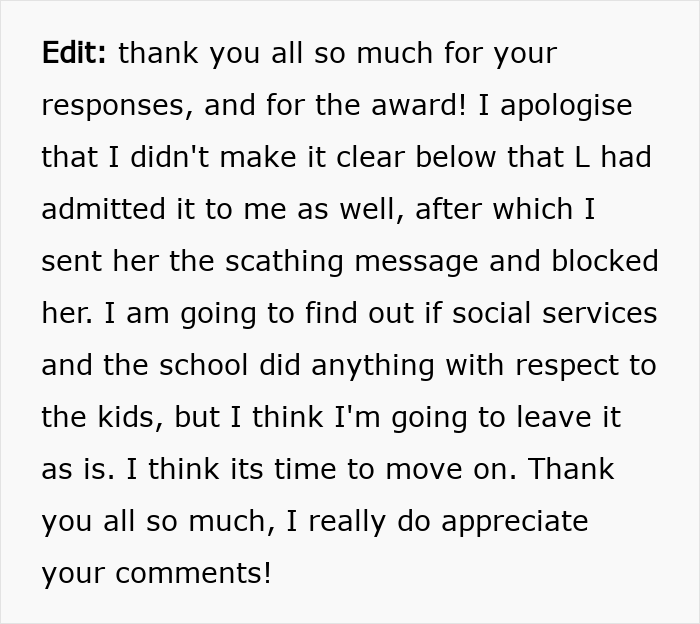
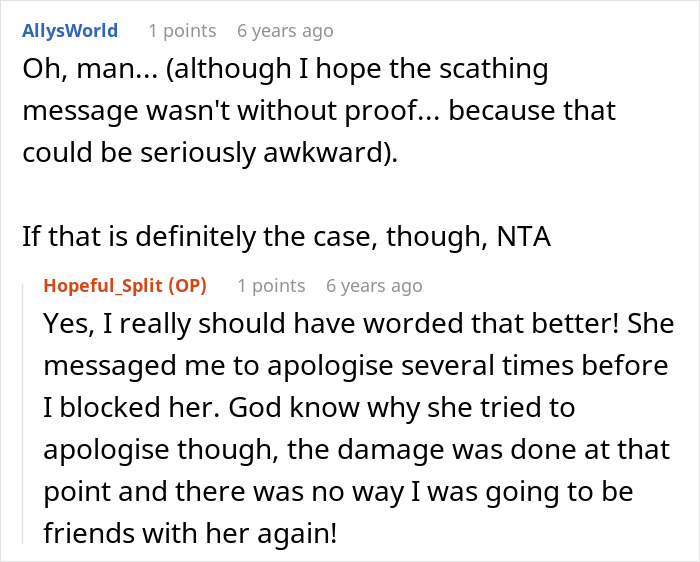
The author provided more information in the comments
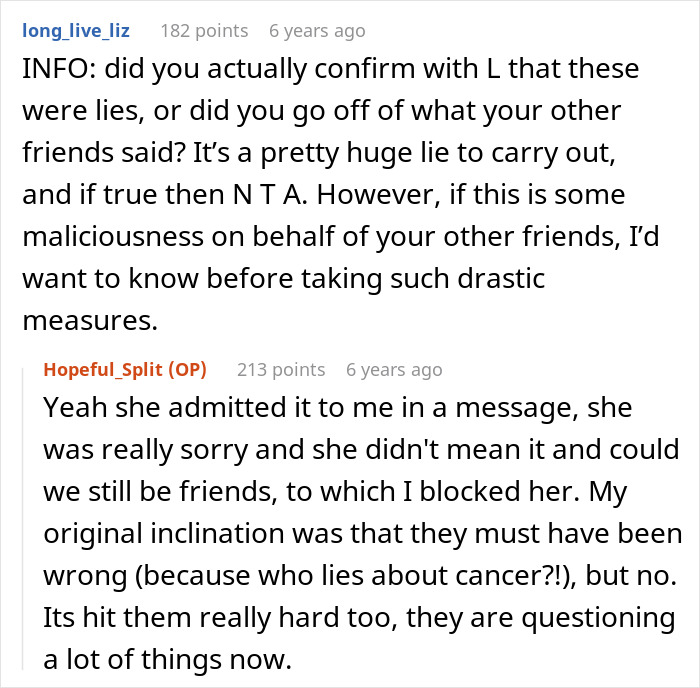
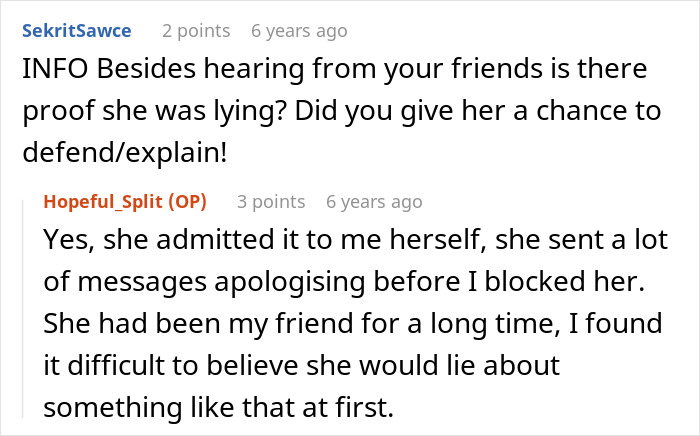
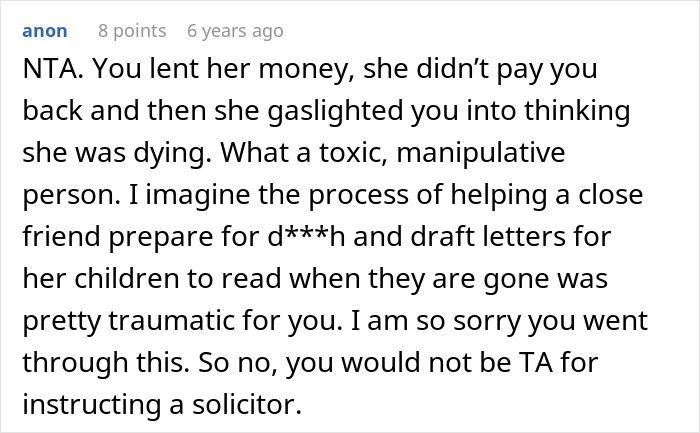
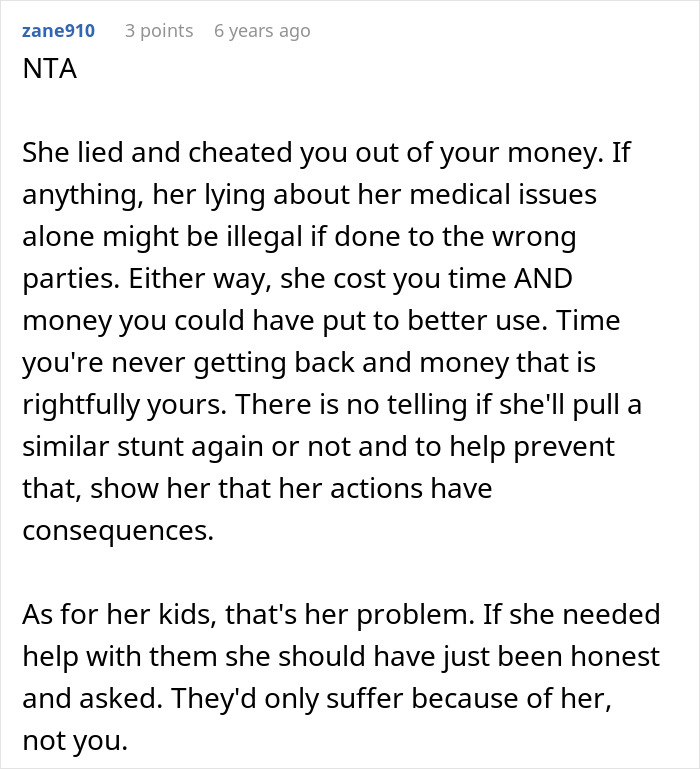
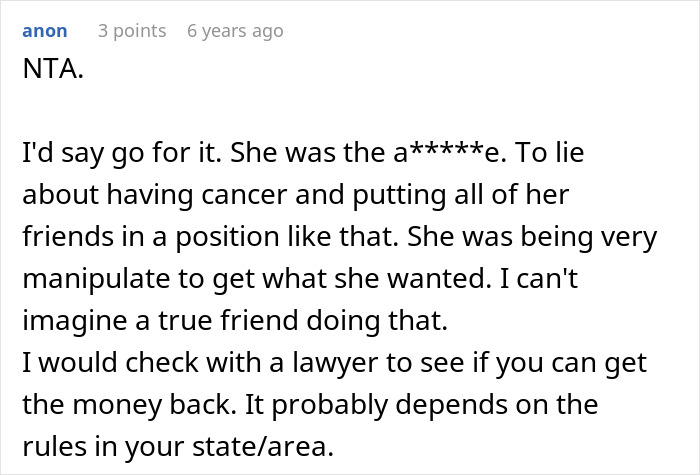
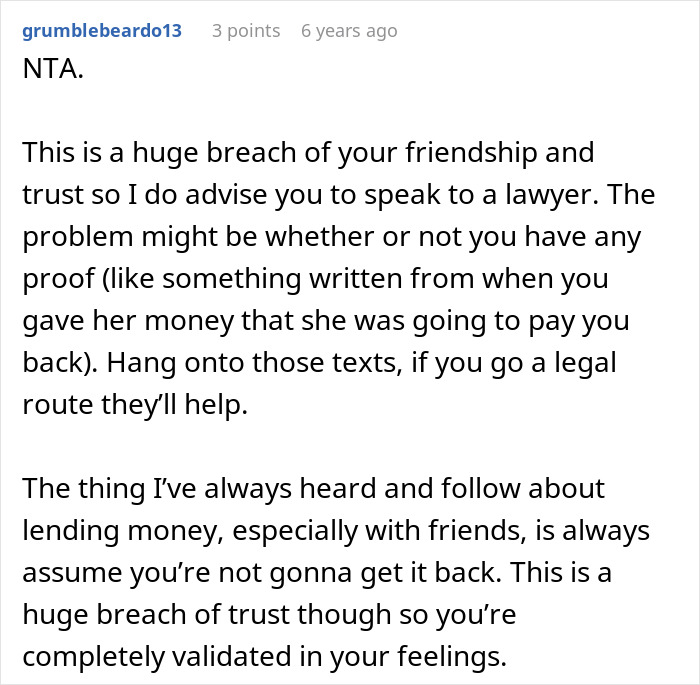
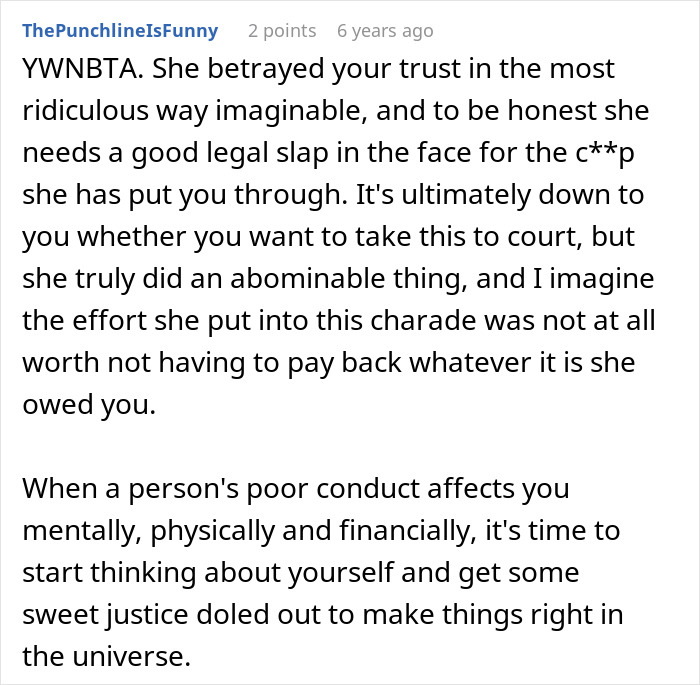
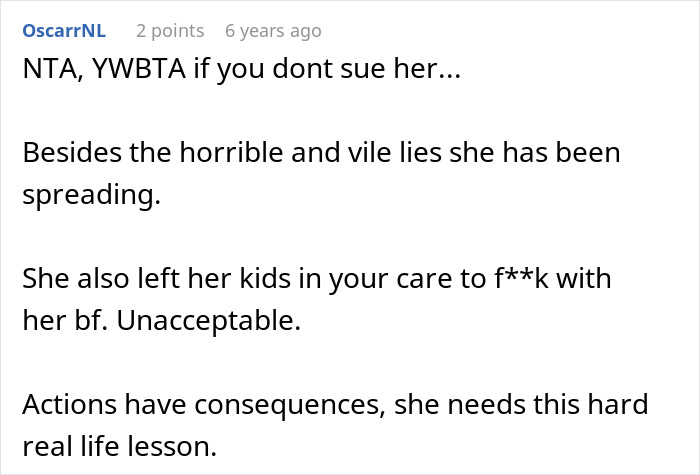
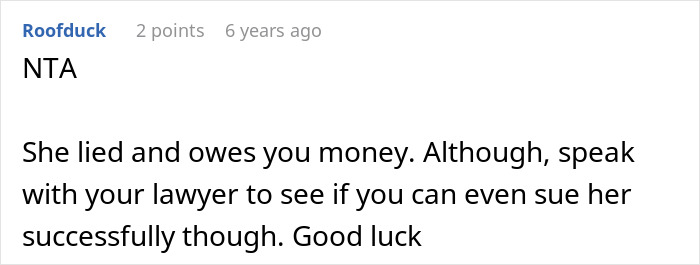
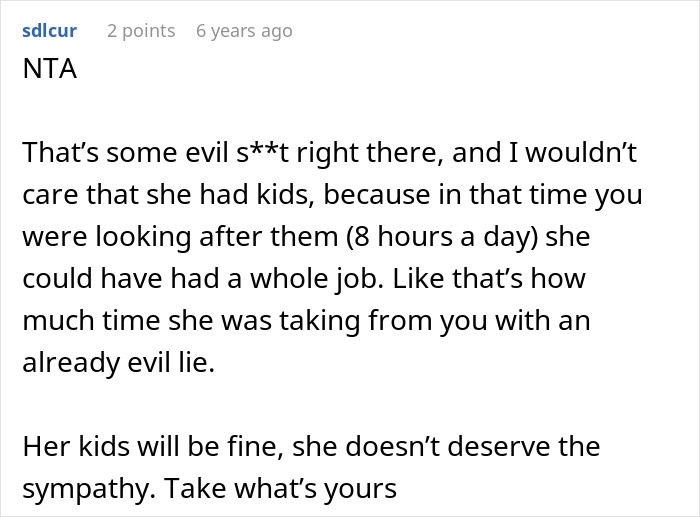
Most readers sided with her



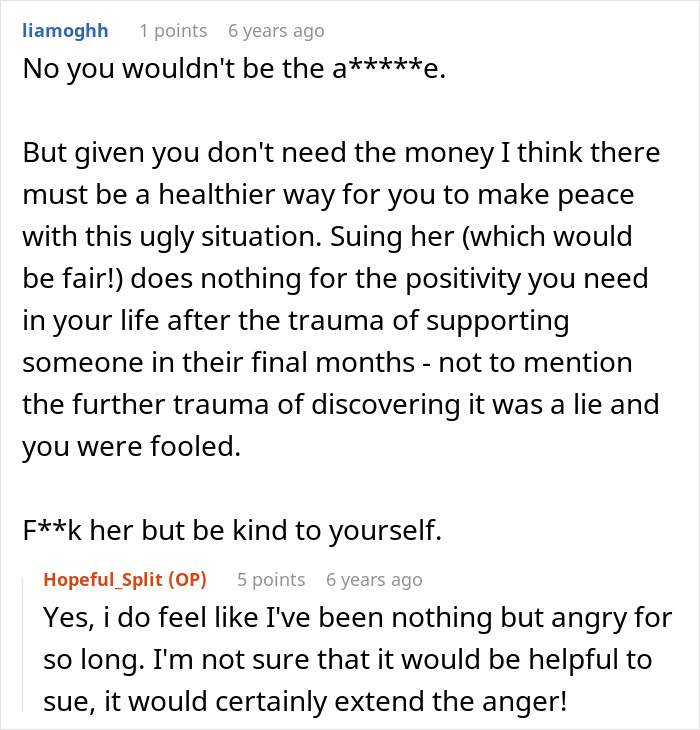










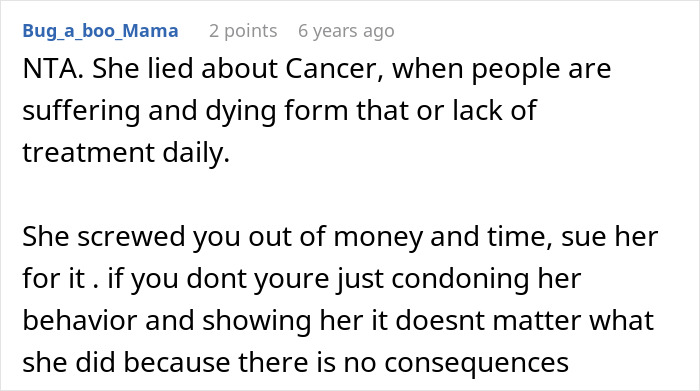







However, one person had a slightly different take