
Hurricanes can make even familiar places feel uncertain. A building that was perfectly safe on an ordinary afternoon may look very different when powerful winds are approaching, trees are swaying overhead, and nobody can say with confidence how well the structure will hold up. In those moments, people need more than a roof over their heads. They need a plan they trust, a sense of security, and reassurance that the people and animals they care about will be safe.
Pets can make emergency decisions more complicated, especially when the safest available shelter has rules about animals. And this was the situation this woman found herself in when she needed to make sure her cat was safe. While her parents had been clear about her cat not being in the house, she didn’t expect that they wouldn’t budge in such a dire situation.
There are times when asking someone to bend the rules shouldn’t feel like asking for the moon
lookstudio / Magnific (not the actual photo)
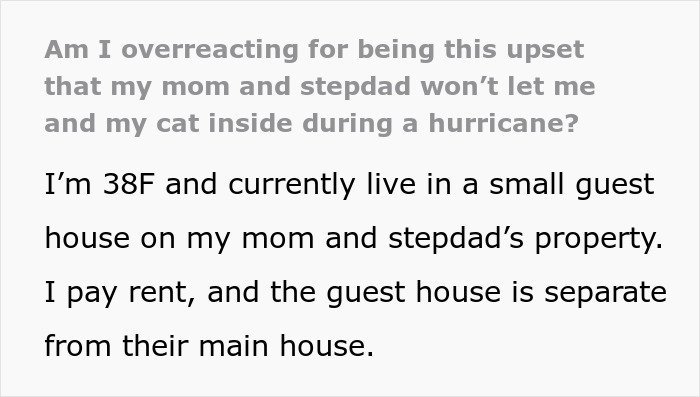
The 38-year-old woman living in a guest house on her mom and stepdad’s property grew worried about its safety as a Category 3 hurricane approached
Magic by Jelena / Magnific (not the actual photo)



muhammad.abdullah / Magnific (not the actual photo)
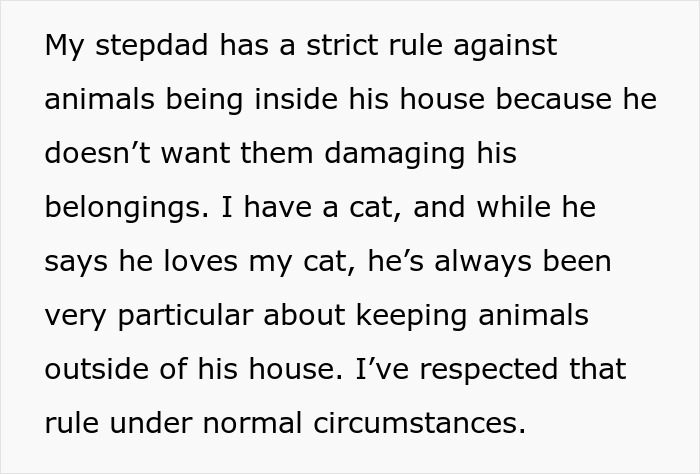
She asked to shelter in the main house with her cat, but her stepdad refused to make an exception to his strict no-pets rule, and her mom supported his decision


rawpixel.com / Magnific (not the actual photo)
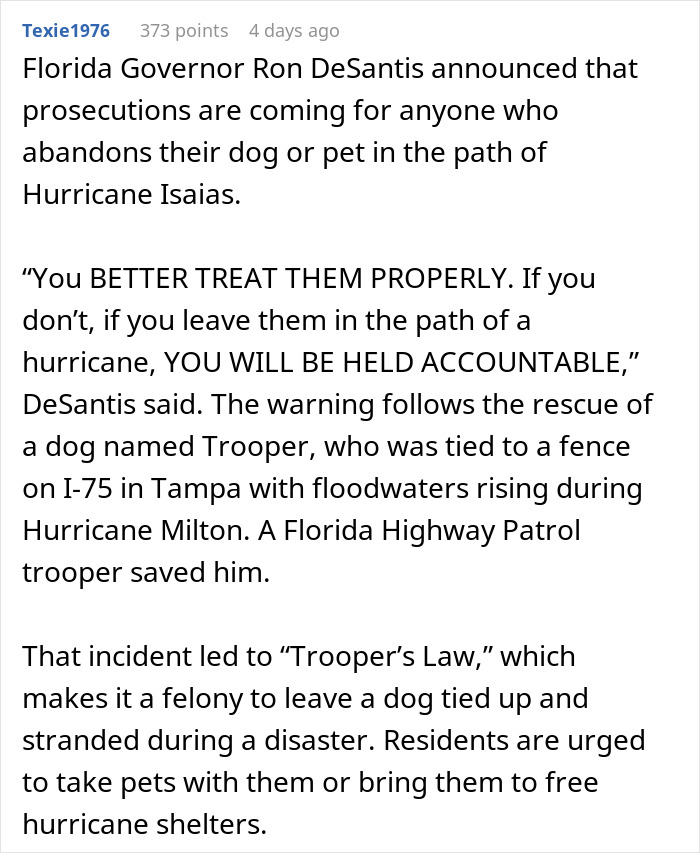
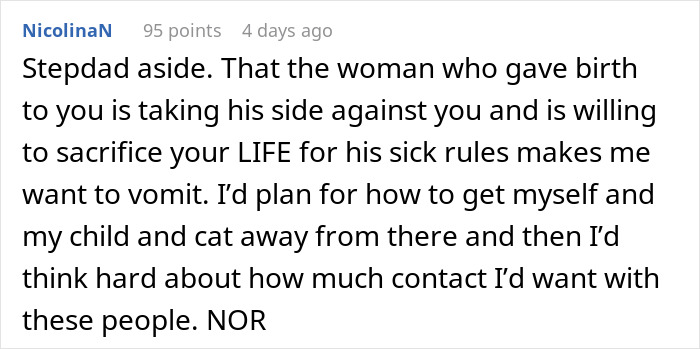
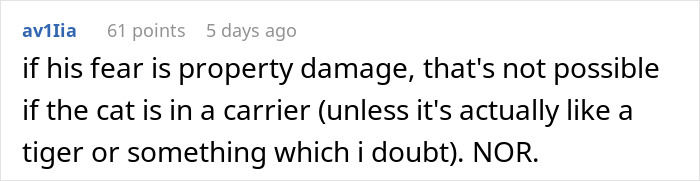
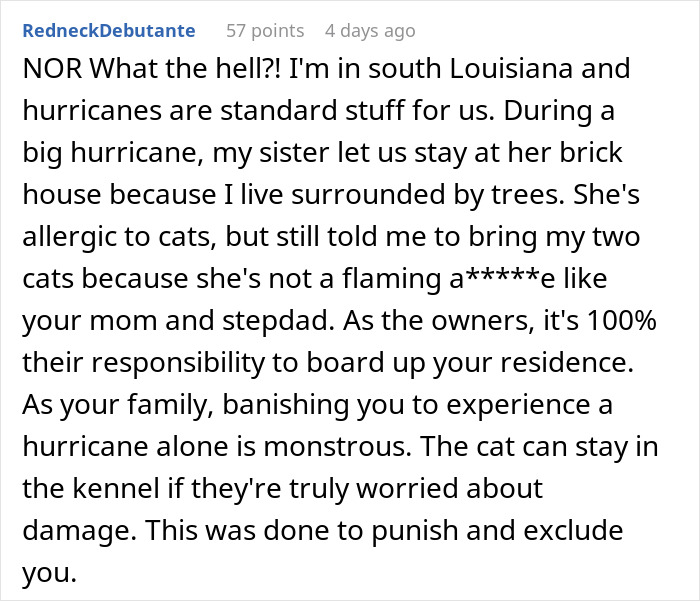
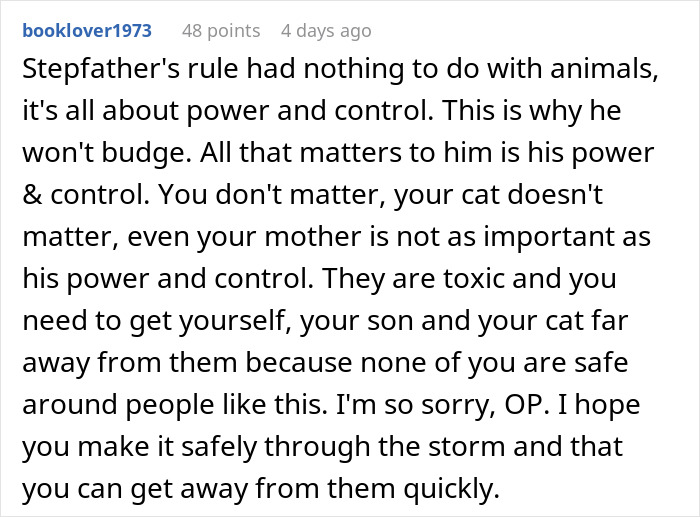
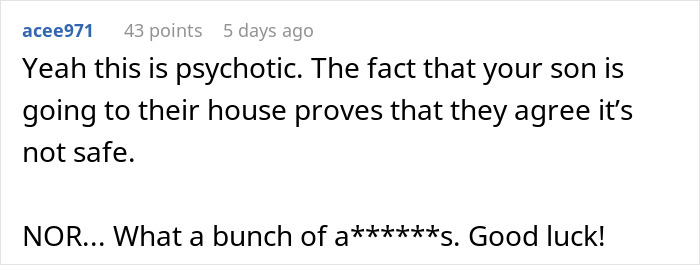
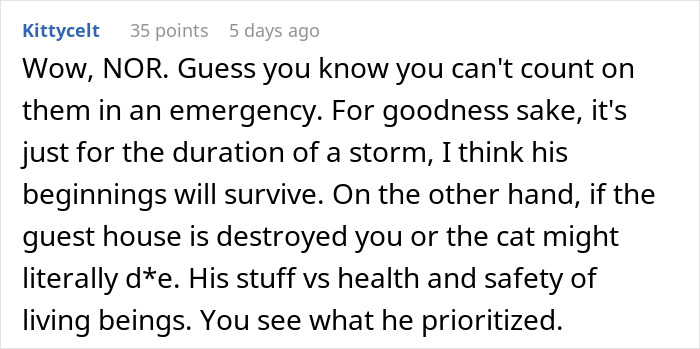
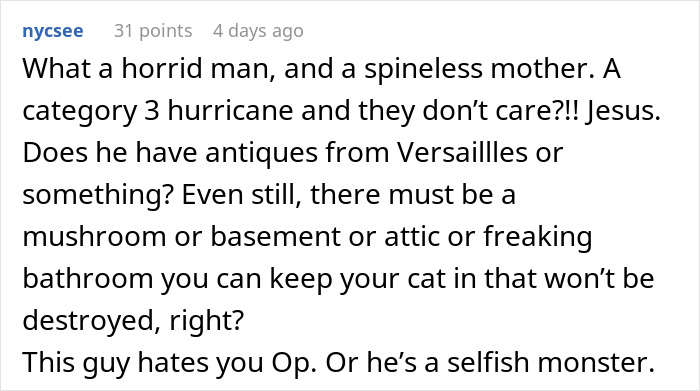
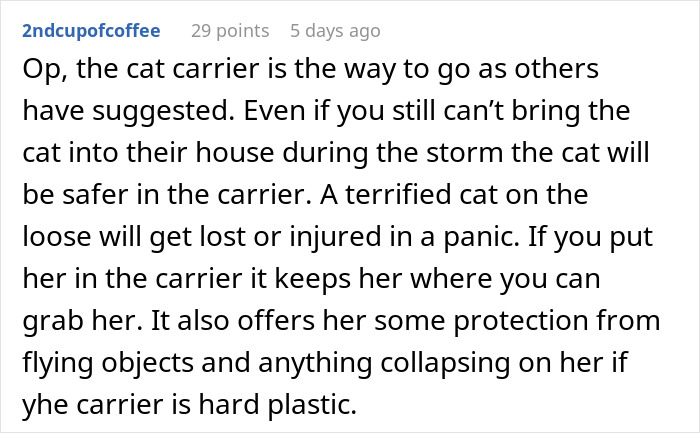
Netizens expressed disbelief at the stepfather’s refusal to make a temporary exception when a hurricane threatened the cat’s well-being, and were equally disappointed in the mother
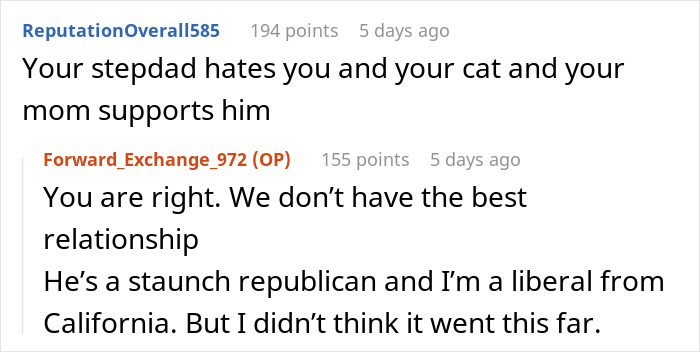
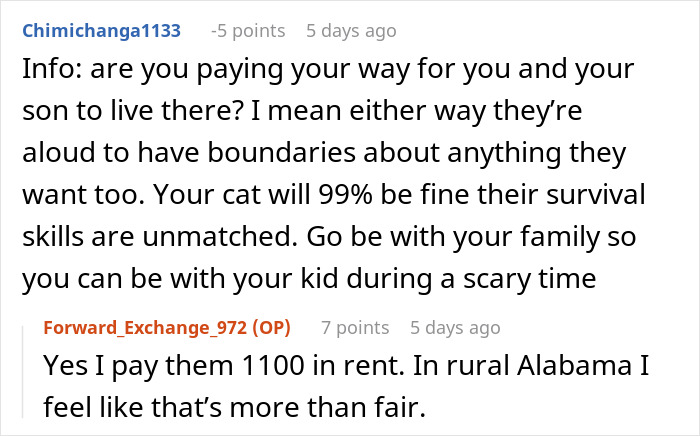

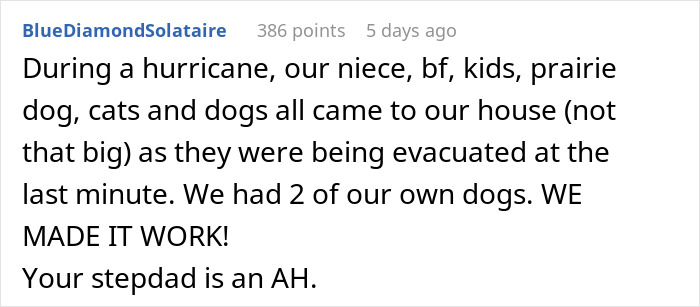
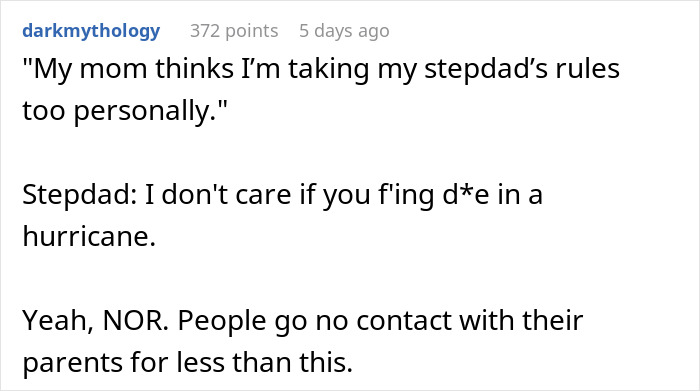

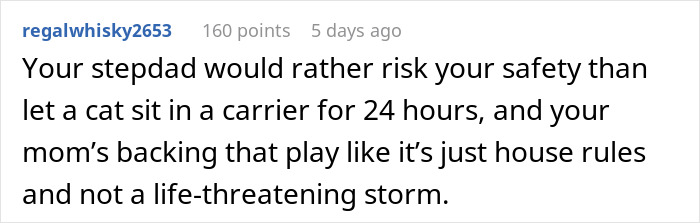
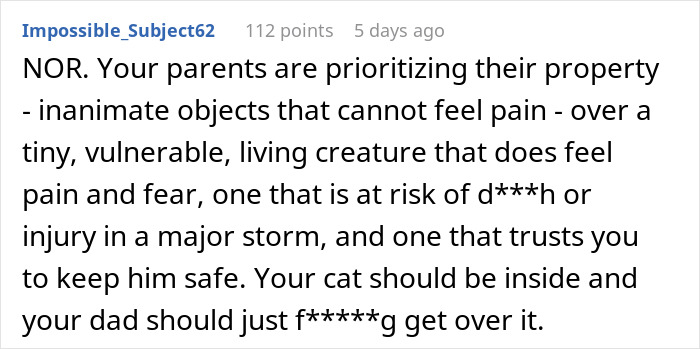


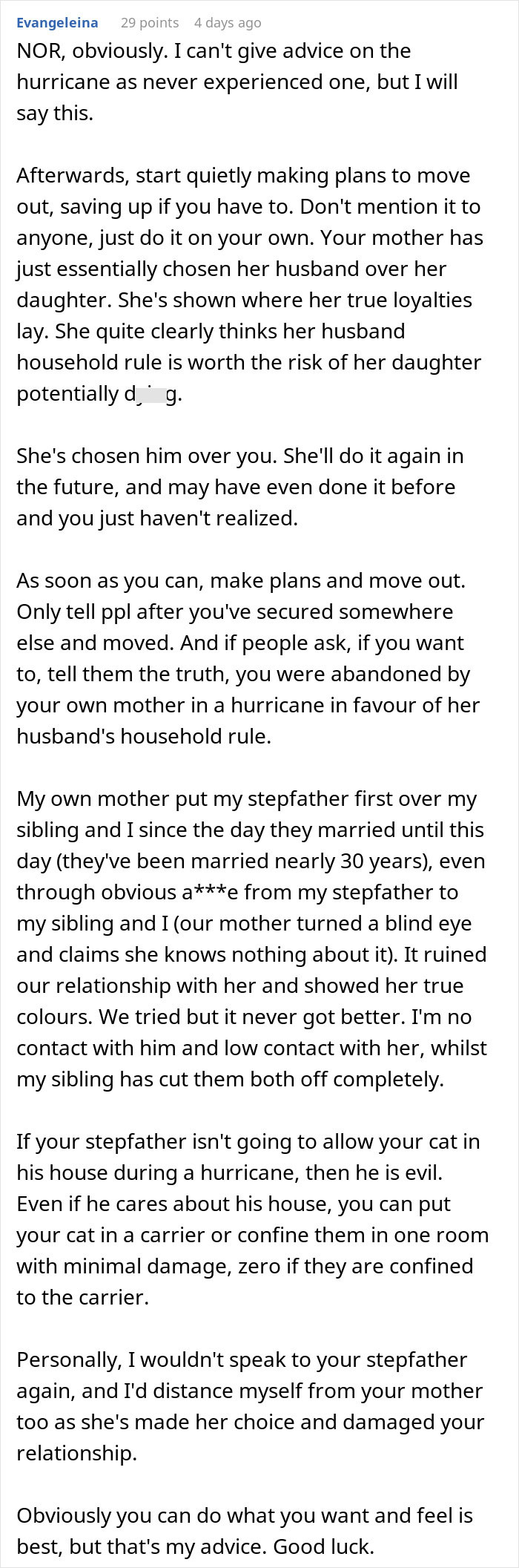
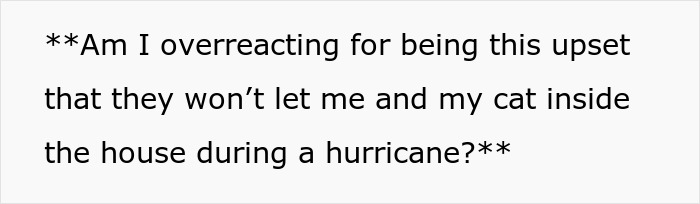
Feeling that her safety and her cat’s well-being were being disregarded, she expressed her hurt and wondered whether she was overreacting
prostooleh / Magnific (not the actual photo)
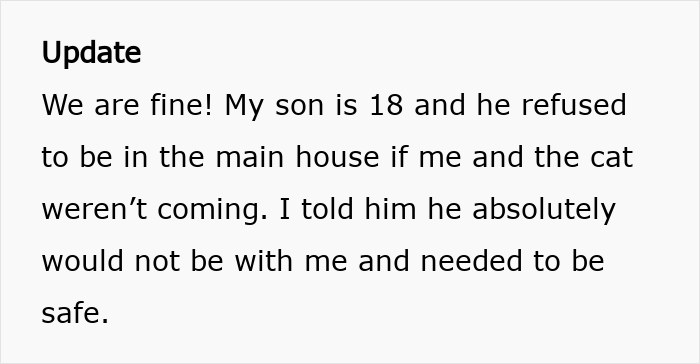
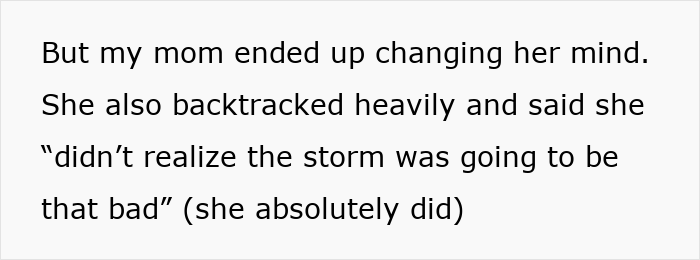
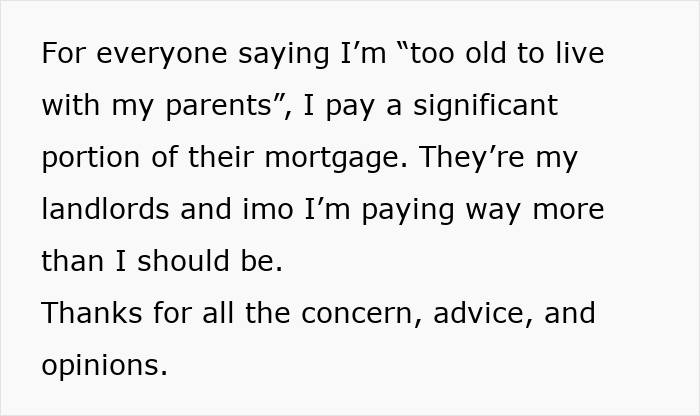
The woman confirmed that they were all safe and clarified that she pays a significant portion of her parents’ mortgage, making them her landlords rather than providing her with free housing
A Category 3 hurricane is not a storm to underestimate. Fox Weather classifies these storms as major hurricanes, with sustained winds of approximately 111 to 129 miles per hour. Its hurricane classification guidance warns of devastating damage, including the risk of trees being uprooted, power lines falling, and buildings suffering structural damage.
That makes the woman’s concern about a small guest house surrounded by large trees understandable, even though its actual safety cannot be determined from the description alone. A building’s construction, condition, location, and exposure all matter. The American Red Cross’s hurricane safety guidance recommends taking shelter in a sturdy building, ideally in a small interior room without windows on the lowest level that is not at risk of flooding.
It also advises people to follow evacuation instructions from local authorities. This is important because a house looking sturdy does not automatically make every room safe, and a separate building cannot be judged safe or unsafe based only on its size. When people are unfamiliar with a property, preparing for a major storm requires reliable information rather than assumptions about which structure will hold up best.
Pets add another layer to emergency planning because evacuation and shelter options do not always accommodate them. The U.S. government’s Ready’s guidance on preparing pets for disasters recommends identifying safe places to take animals before an emergency occurs, since some hotels and public shelters do not accept pets.
rawpixel.com / Magnific (not the actual photo)
They add that owners are also encouraged to prepare supplies and arrange backup care with trusted people. These recommendations highlight a practical problem, which is that even when someone recognizes the need to leave an unsafe building, finding somewhere that accepts both the person and their pet can be difficult when time is running out.
However, there is also an emotional dimension to the decision to seek shelter. For some people, their pet is a source of comfort and familiarity, not simply another responsibility to manage. A 2021 study that collected repeated reports from 159 dog and cat owners found that having a pet was associated with more positive emotional states during stressful moments.
Therefore, household boundaries can become harder to navigate when an emergency puts different priorities in direct conflict. One person may focus on protecting their property and maintaining a rule they have consistently enforced, while another concentrates on reducing a perceived threat and keeping the family together.
Clear communication and preparation can help prevent these competing concerns from becoming a last-minute standoff. Ideally, families living on the same property should discuss storm procedures in advance, identify a suitable shelter, and agree on what would happen to pets if evacuation became necessary. The broader lesson from hurricane preparedness is that emergency plans should account for the people involved, the buildings available, and the pets who depend on them.
What do you think about this situation? Should safety always come before household rules in an emergency, even when pets are involved? We would love to hear from you!