Every relationship has its ups and downs. It’s inevitable, really. But sometimes, those difficulties become a pattern, and what once seemed like a rough patch can start to look a whole lot more toxic. And when someone decides it’s time to leave, things can get complicated—especially if their partner isn’t willing to let them go quietly.
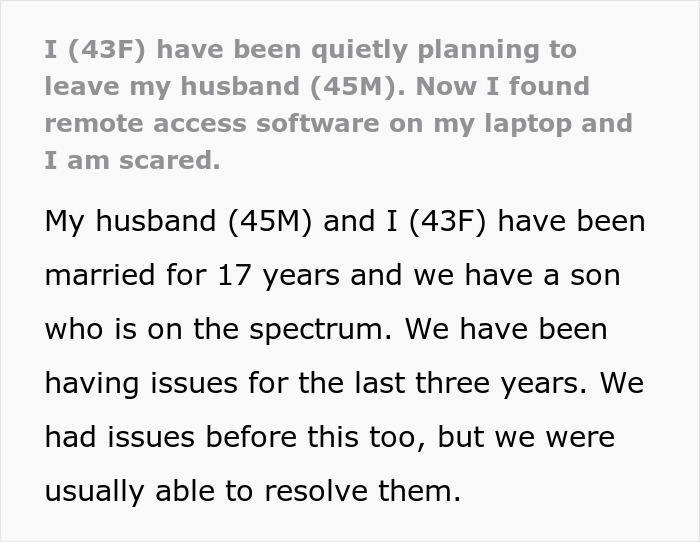
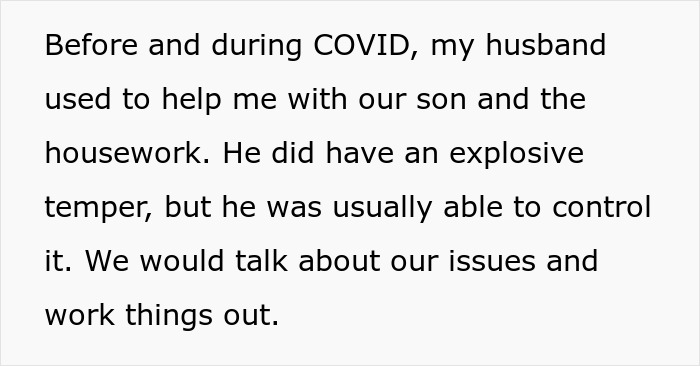
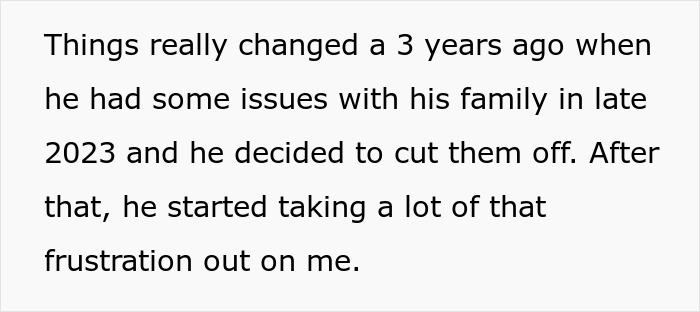
That’s something this woman would come to discover well into her 17-year marriage. After her husband had a falling-out with his family, she says he changed, and their relationship became increasingly hostile. When she tried to separate and file for divorce, she says he made it clear that leaving would make her life very difficult. So she began quietly planning an exit for herself and her autistic son. Then, some strange things happening on her laptop raised unsettling questions about just how private her plans really were.
This woman’s husband of 17 years had become increasingly hostile toward her

drobotdean / Magnific (not the actual photo)
She knew she’d need to leave him quietly—but then she made a disturbing discovery on her laptop

drobotdean / Magnific (not the actual photo)





Getty Images / Unsplash (not the actual photo)

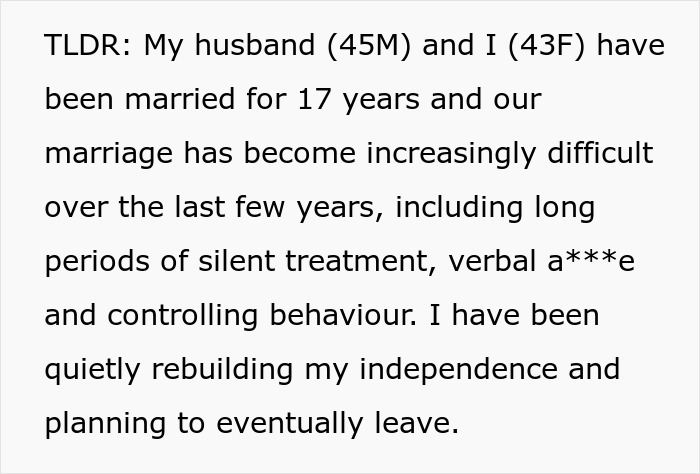
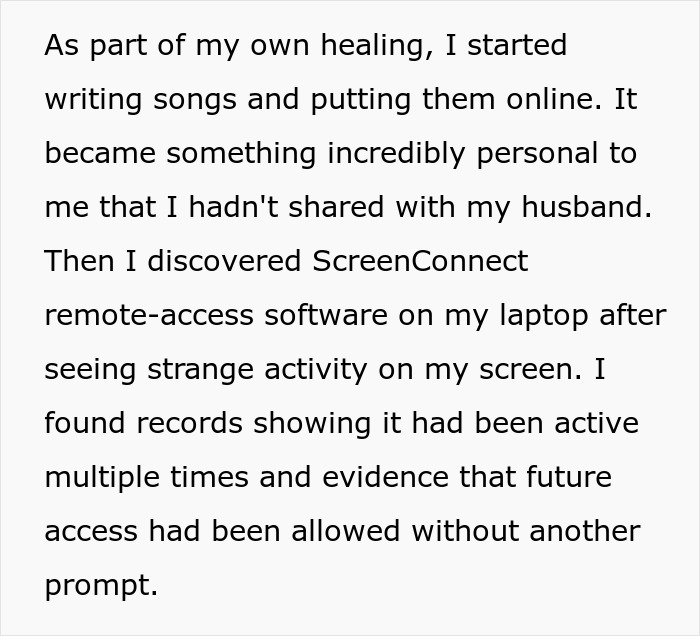
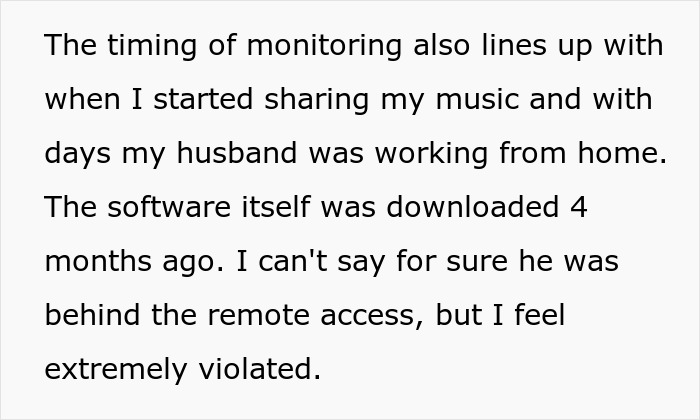
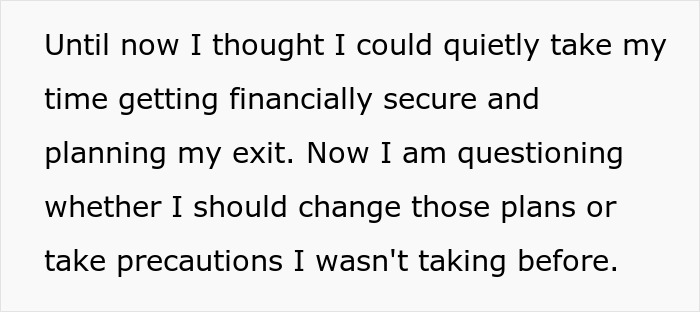
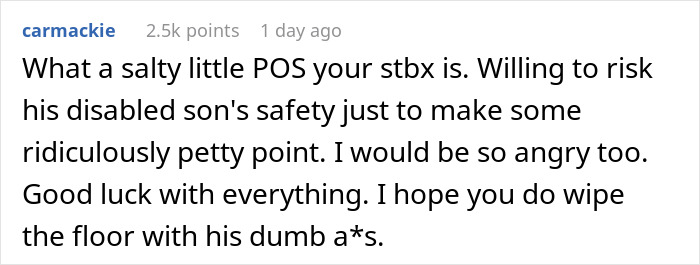
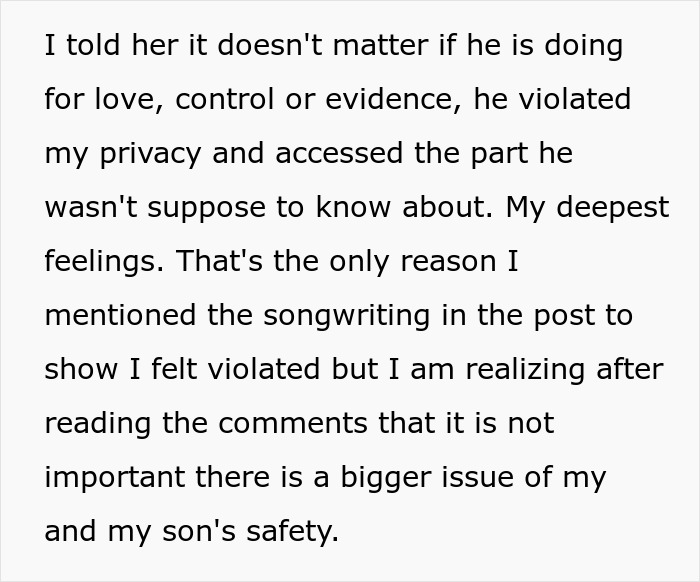
In an edit, the poster clarified a few details, adding that her and her son’s safety was the “bigger issue”

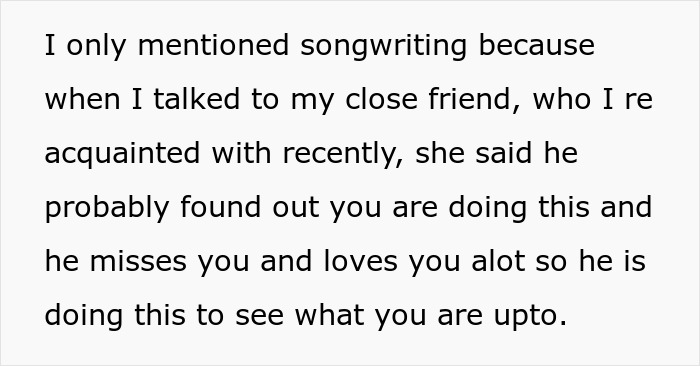
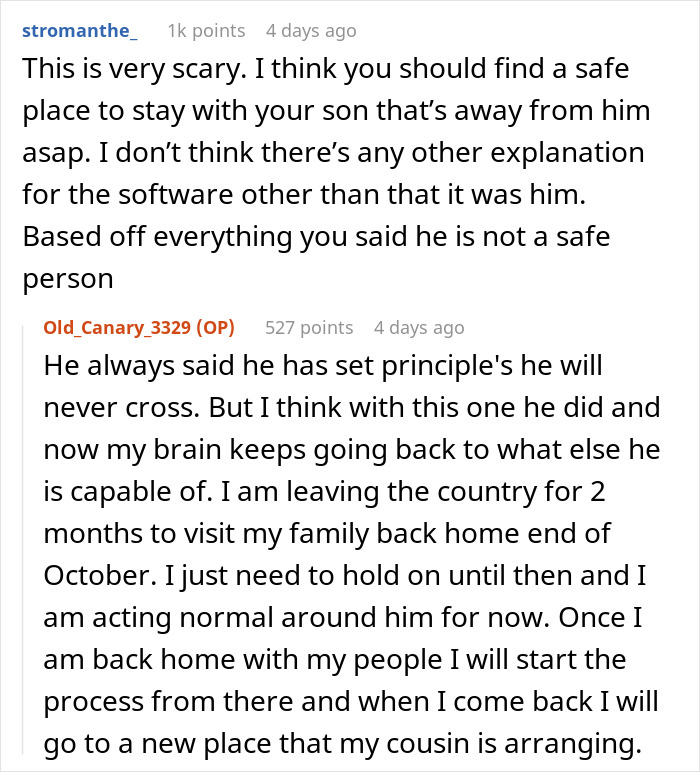
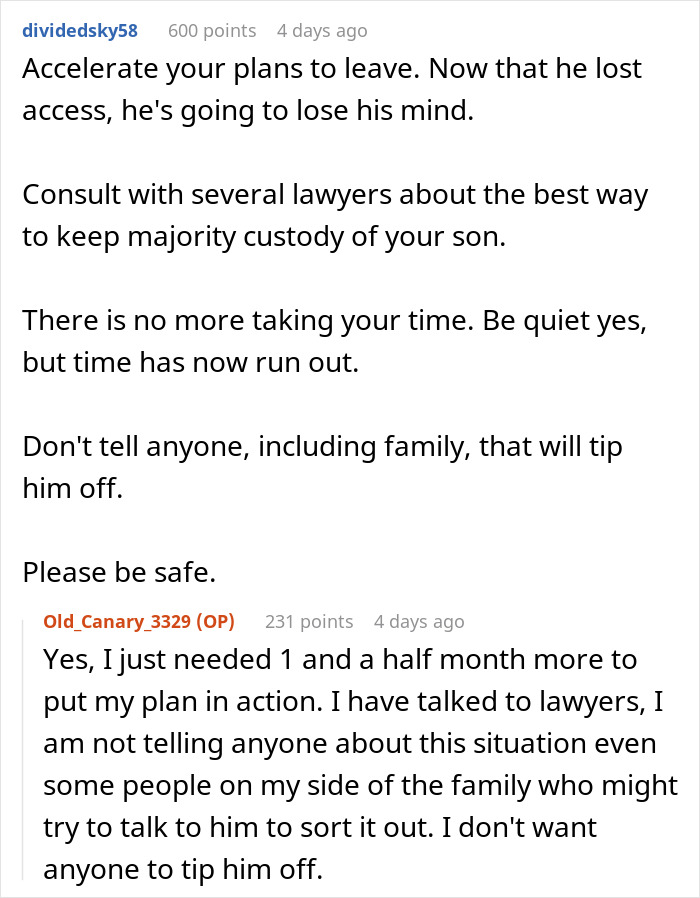
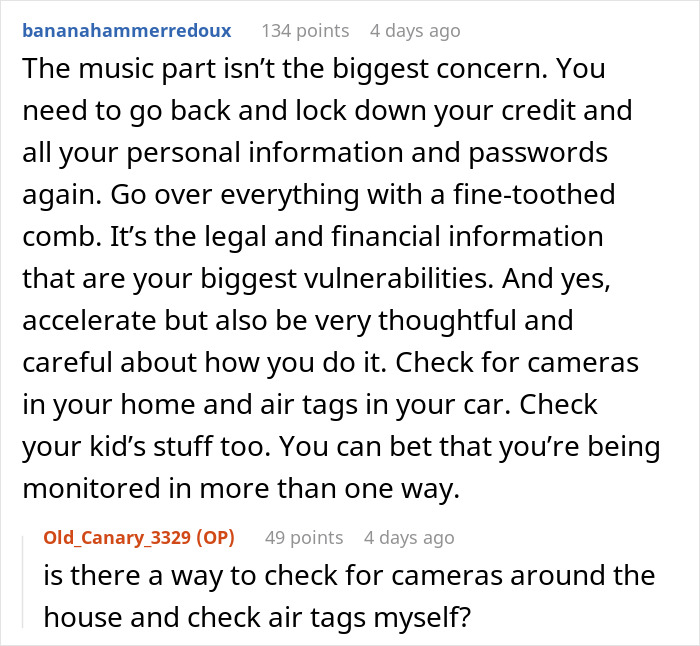
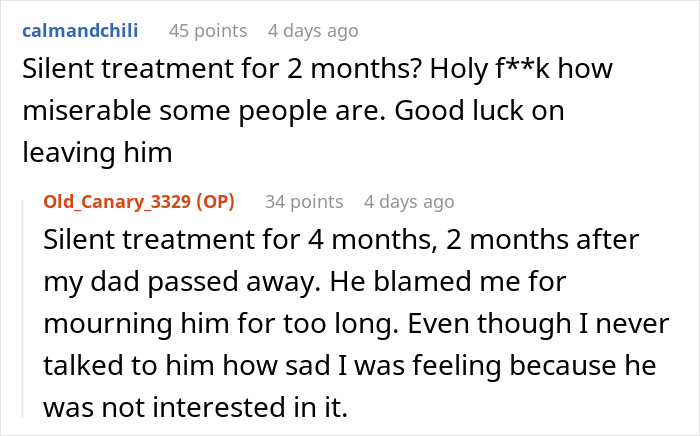
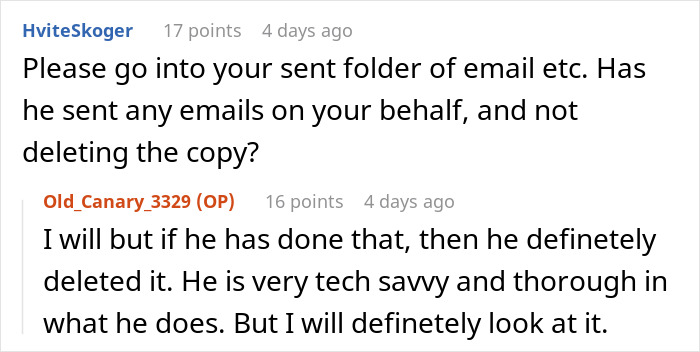
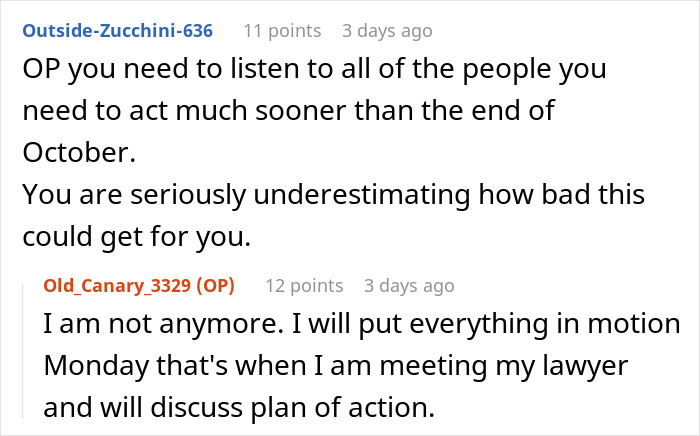
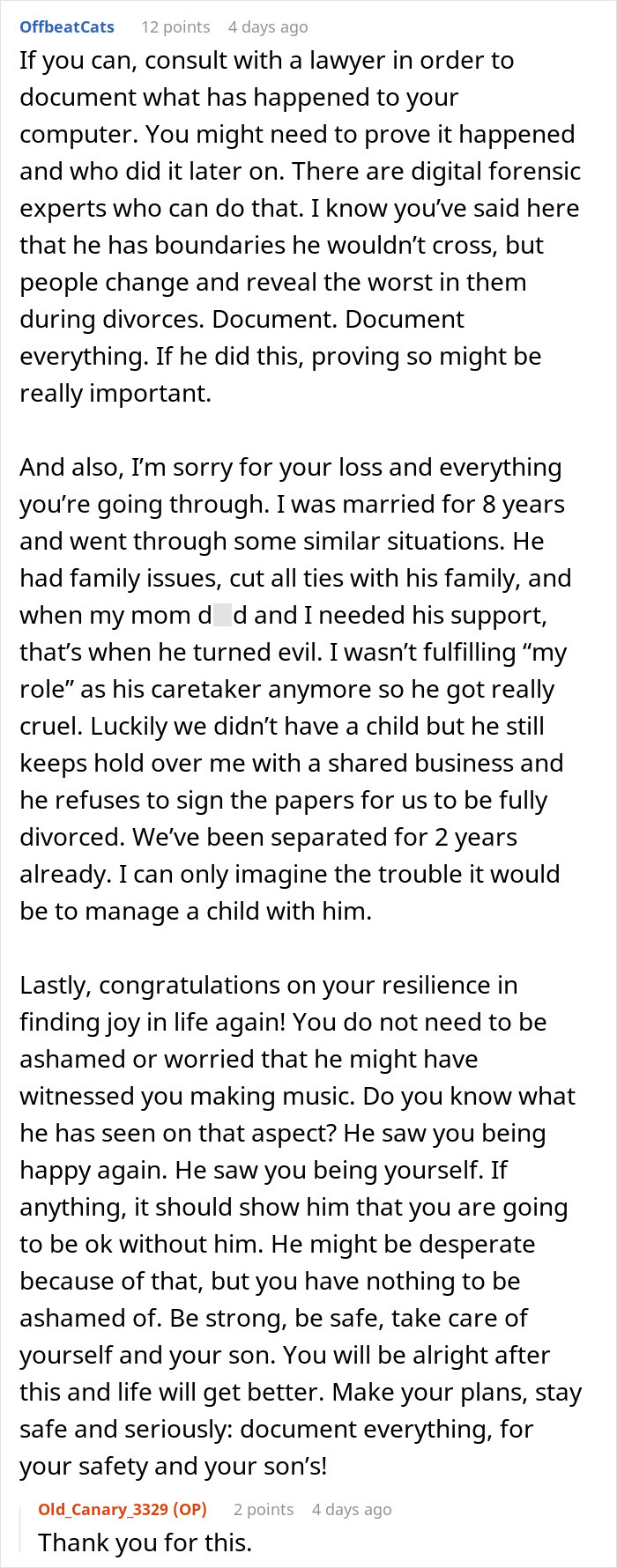
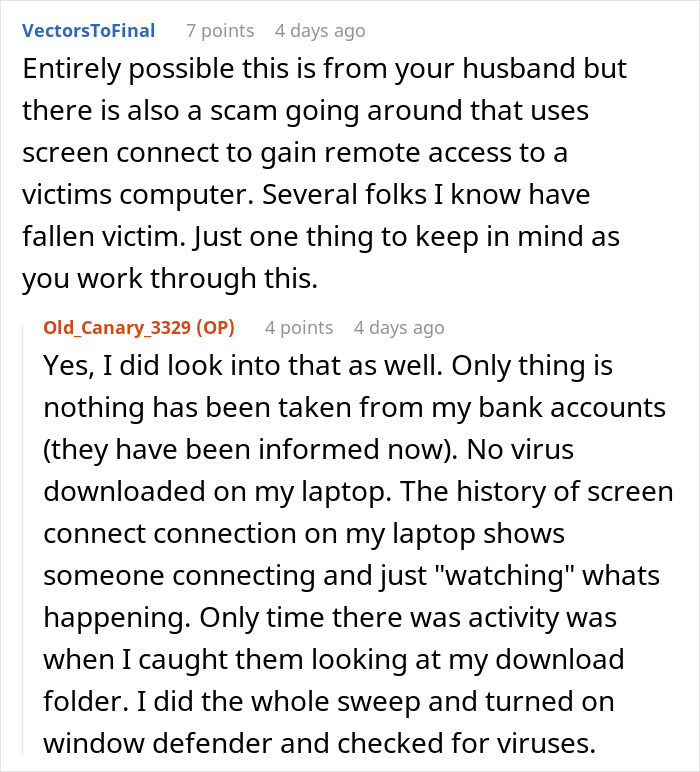
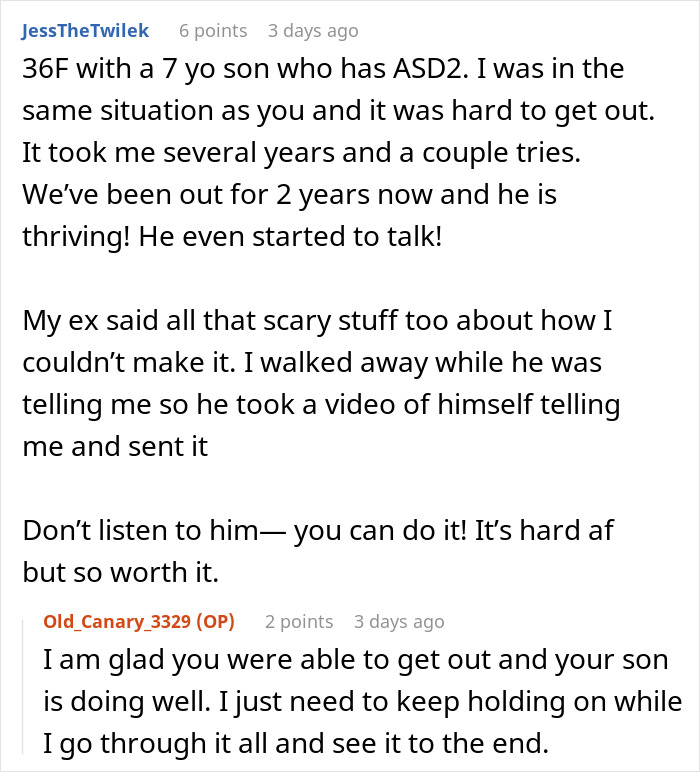
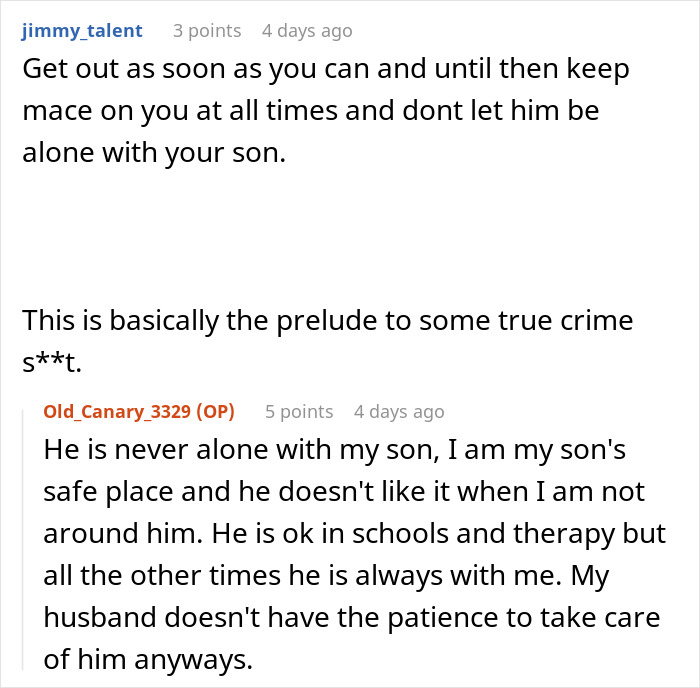
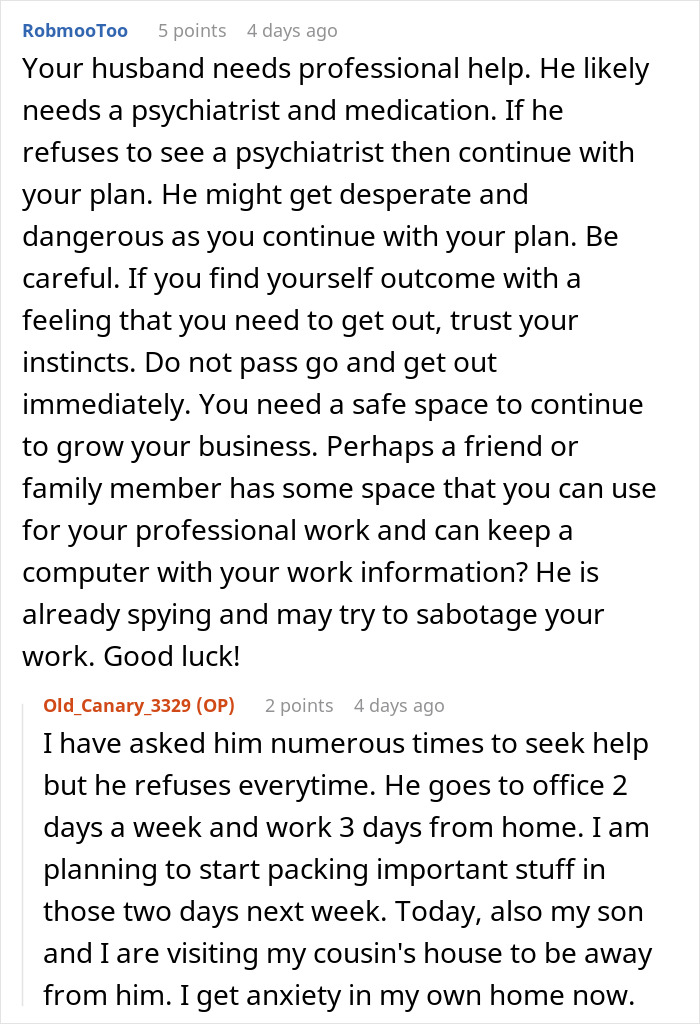
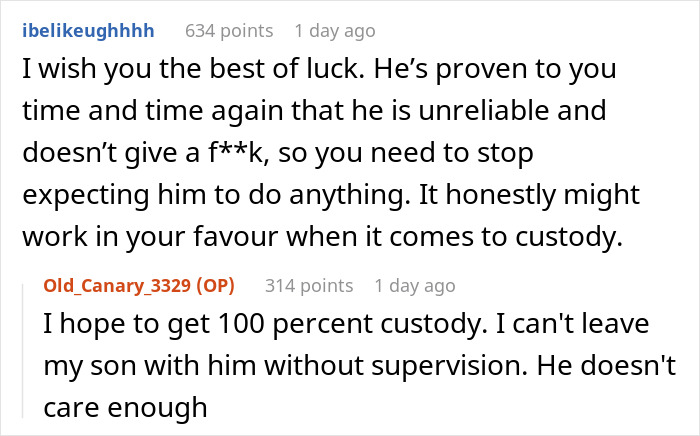
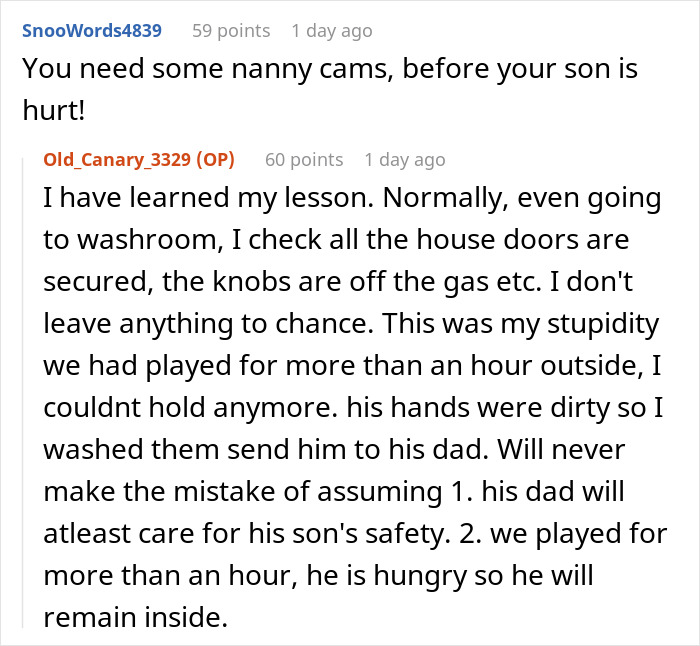
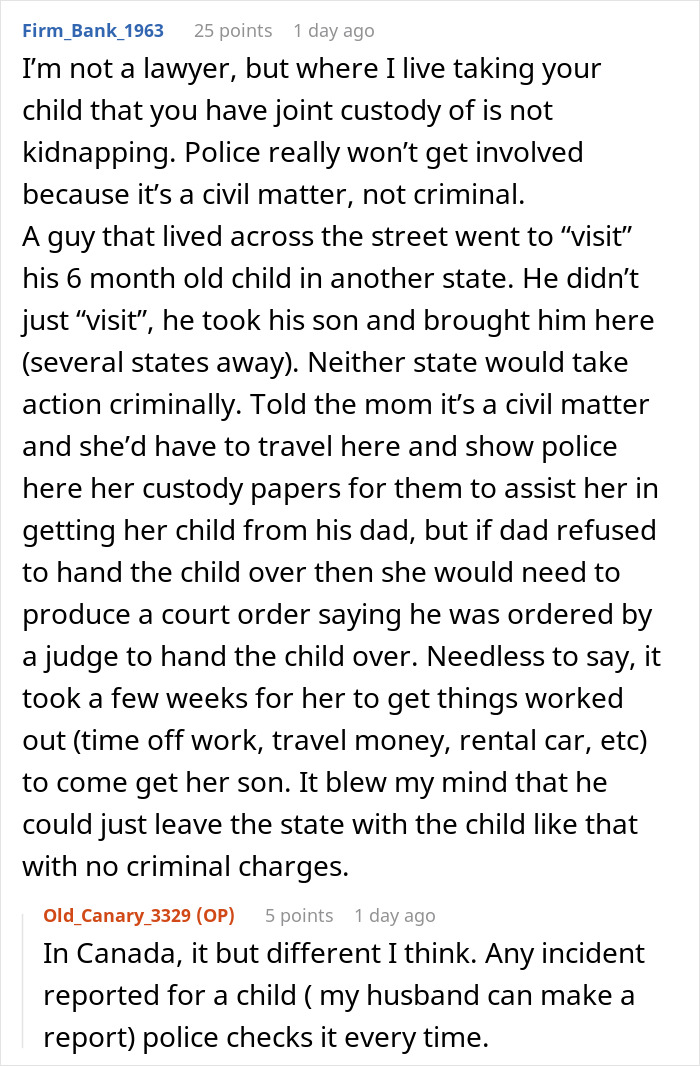
Commenters offered advice, while the poster’s responses shed more light on the situation


What makes a relationship toxic?
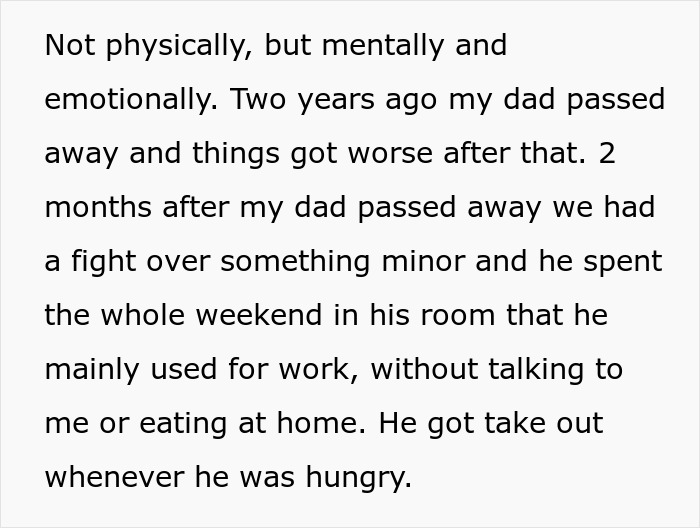
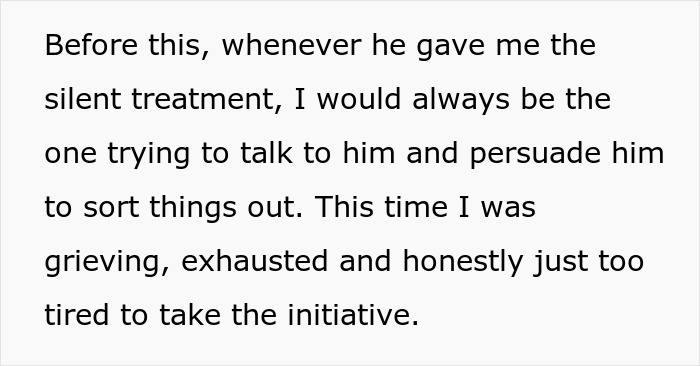
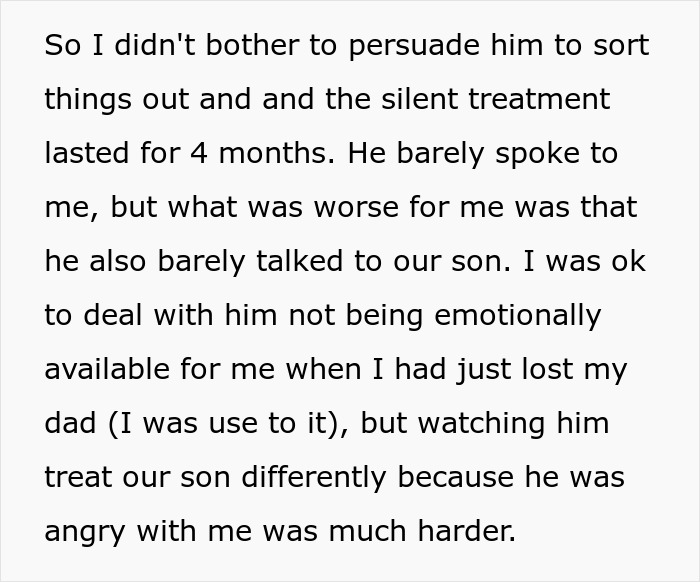
From an outsider’s perspective, it’s pretty hard to tell if a relationship is toxic. As Elizabeth Scott, PhD, writes for Verywell Mind, “Only you can tell if the bad outweighs the good in a relationship.” While the poster herself doesn’t actually characterize her relationship with her husband as toxic, she describes several behaviors that can be associated with unhealthy relationships: his controlling and demeaning behavior, explosive temper, taking out his frustration on her “mentally and emotionally,” a lack of emotional availability, treating their son differently, and silent treatment lasting a staggering four months.
Scott notes that “if someone consistently threatens your well-being by what they’re saying, doing, or not doing, it’s likely a toxic relationship.” She also clearly states that relationships involving physical or verbal mistreatment are “definitely classified as toxic.” But even when someone recognizes that they’re in a toxic relationship, leaving isn’t necessarily straightforward. In fact, according to one hotline, in the most extreme cases of toxic relationships, people make an average of seven attempts to leave before they’re able to do so successfully.
Why leaving can be complicated
As psychotherapist Marni Feuerman explains, there are many reasons someone might find it difficult to leave, including fear, children, finances, love, and shame. In this case, the poster had been married for 17 years, shared a child with her husband, and says her attempts to separate and divorce were met with resistance—ranging from him pleading for a second chance to both of their families getting involved and, ultimately, warnings that he’d make her life more difficult. So it’s plain to see why walking away wasn’t simply a matter of the poster making a decision—it meant quietly figuring out how to do so while navigating the practical and personal complications that came with it.
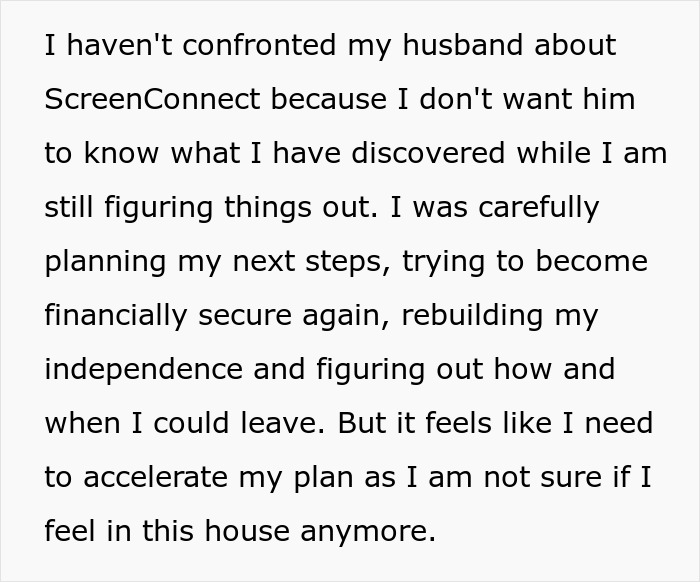
And, according to her post, she had already started doing just that. She was setting boundaries and taking steps to regain control over her own life. As she put it, “I started working on rebuilding my income, becoming financially secure again and honestly just trying to find ways to be happy even while I was still living in this situation.”
Preparing to leave a toxic relationship
Some of these actions also line up with Feuerman’s advice for leaving a toxic relationship. Among other things, she recommends working toward financial independence, letting trusted people know what you’re going through, and making time for hobbies or personal projects. The poster described how songwriting had become an outlet for processing what she had been experiencing, while also allowing her to express herself and reconnect with old friends.
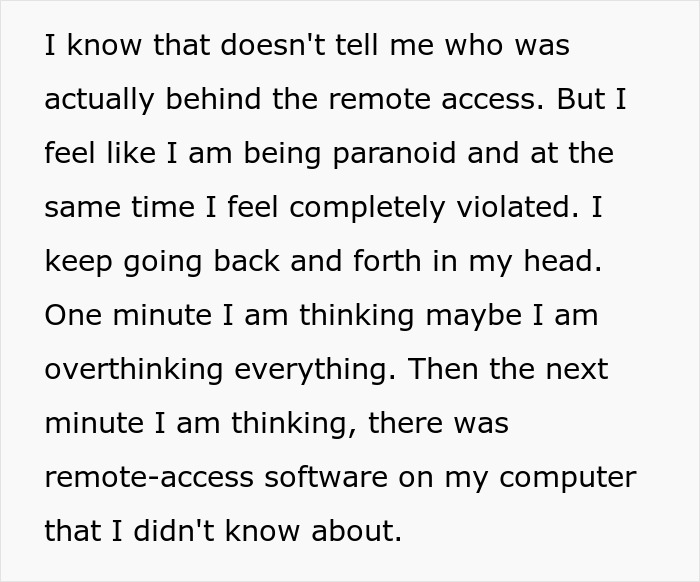
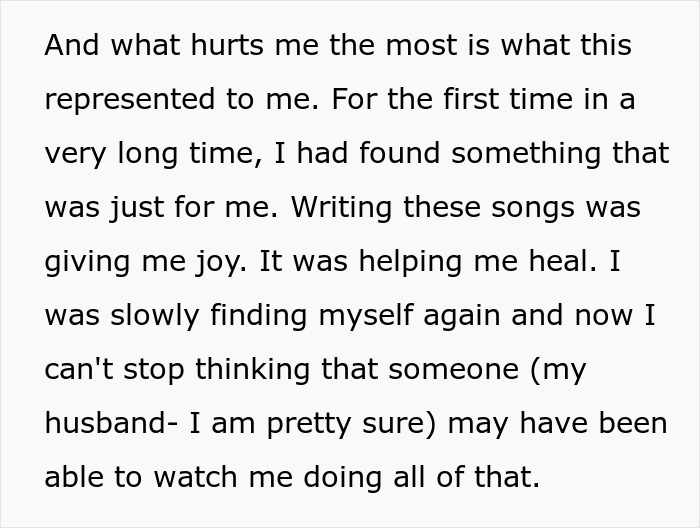
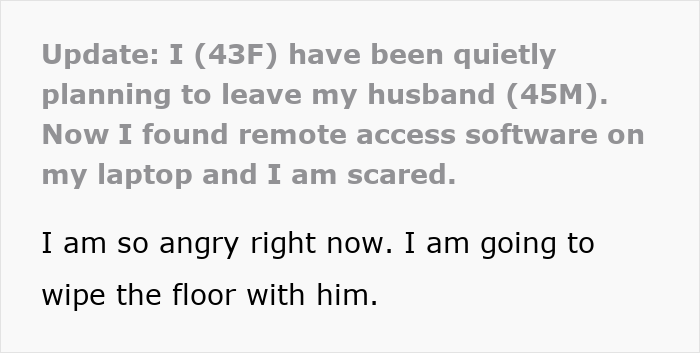
And that brings us to the laptop that prompted the woman’s post in the first place. Her initial reaction focused pretty heavily on the violation she felt knowing there was a possibility that someone had been able to watch her songwriting—a deeply personal outlet she described as her “own healing process.” As she wrote, “Writing these songs was giving me joy. It was helping me heal. I was slowly finding myself again and now I can’t stop thinking that someone (my husband- I am pretty sure) may have been able to watch me doing all of that.” But an edit to her post suggests that, after reading the responses, she began to see the situation somewhat differently. She explained that she had only mentioned the songwriting because she felt “violated,” but realized that it was “not important” compared with what she described as “a bigger issue” of her and her son’s safety.
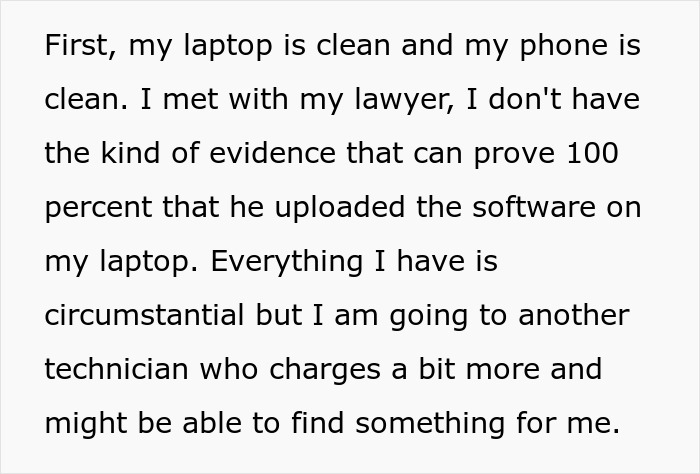
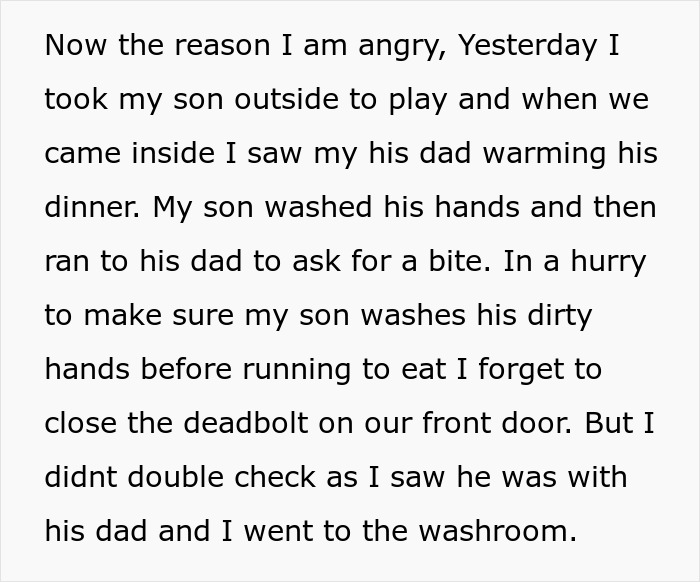
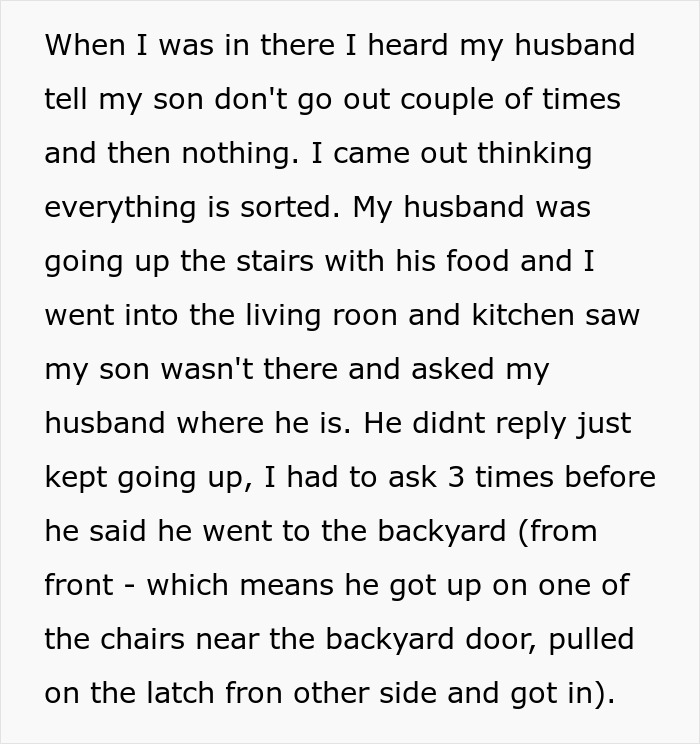
And that distinction is important. Because if you’re quietly preparing to leave a toxic relationship, keeping your plans private can be crucial. Experts explain that the period when someone is leaving can be particularly dangerous, as a partner who senses they’re losing control may respond in ways that put the person at greater risk. That makes the poster’s and the commenters’ concerns about her and her son’s safety understandable. And while we can’t know for sure whether her husband did have access to her laptop or was monitoring her activity, her subsequent update provides some context for why those concerns may not have been entirely unwarranted…
The poster returned four days later with a disturbing update

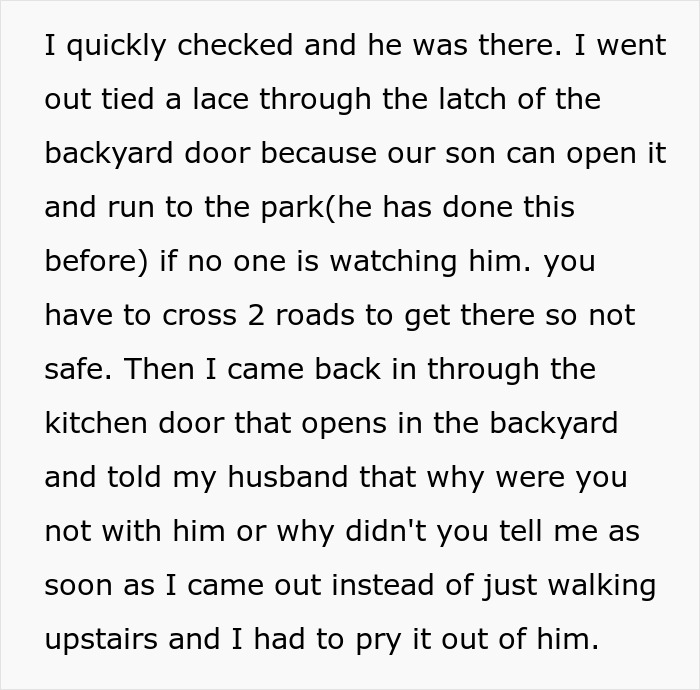
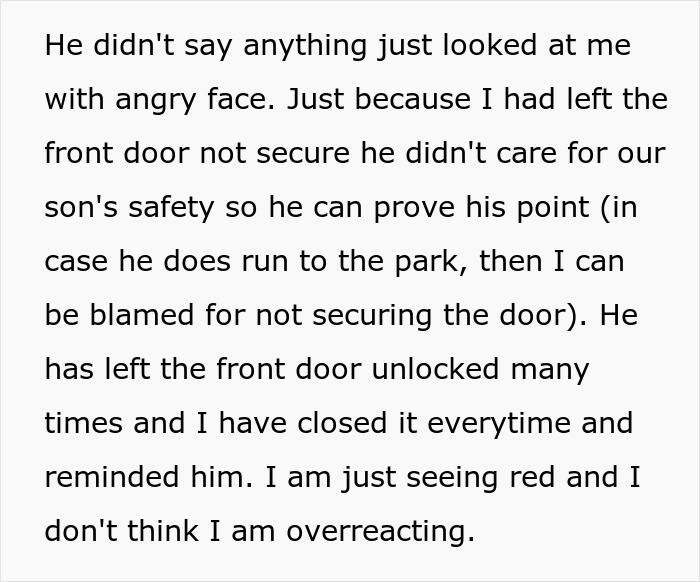
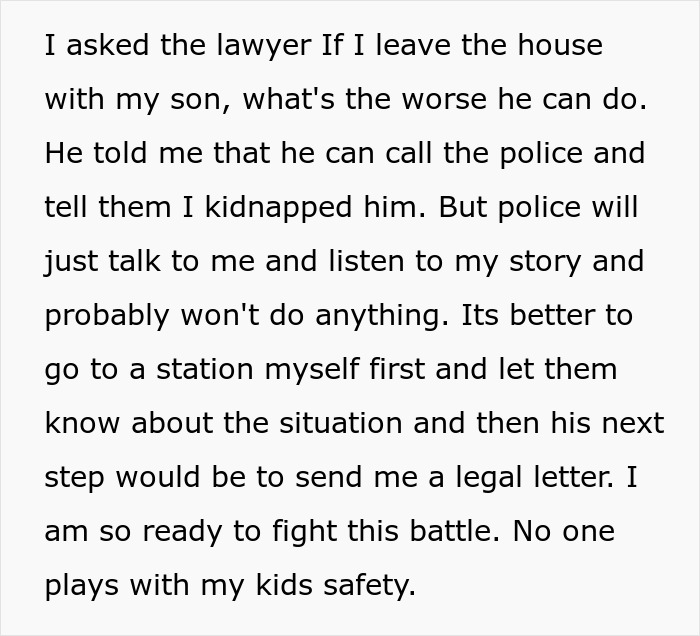
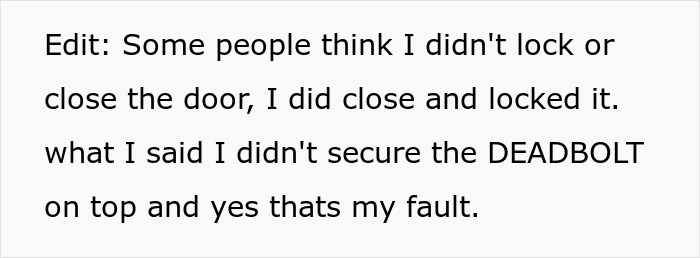
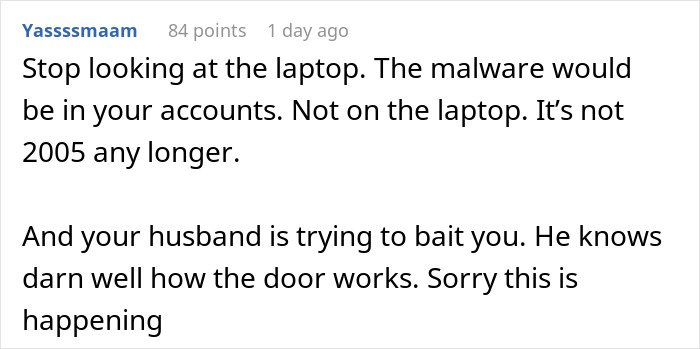
Commenters had plenty more advice for the poster following the incident
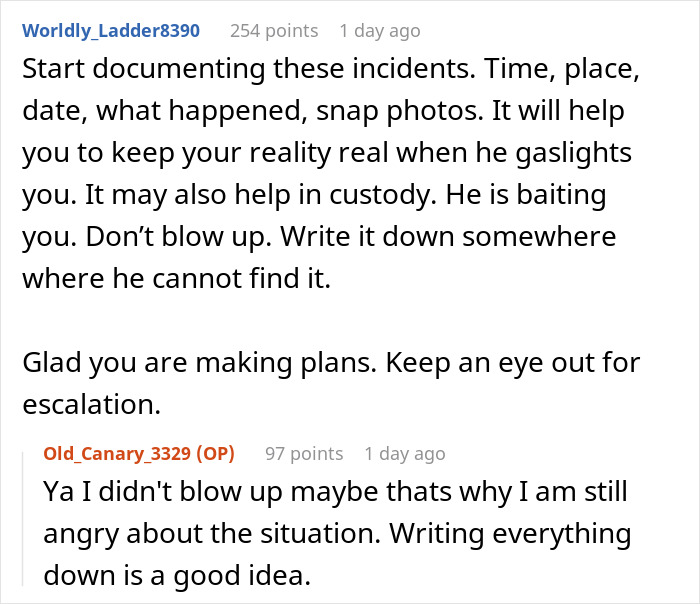
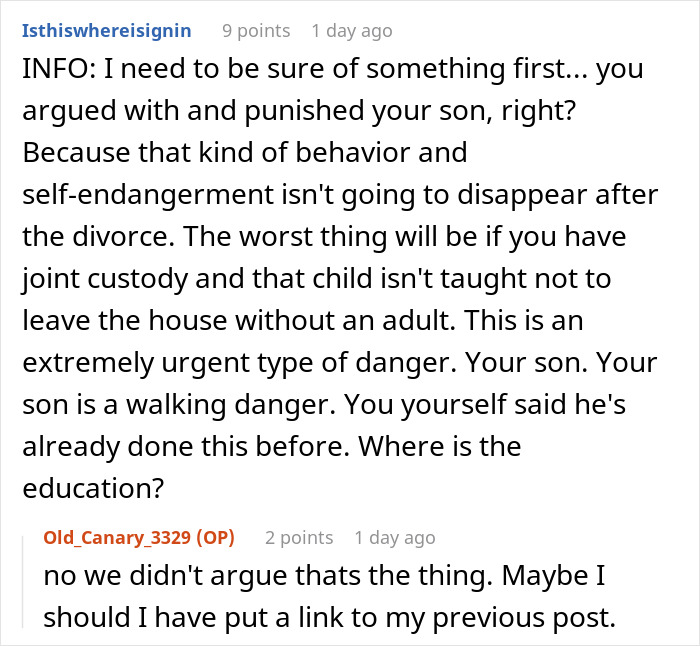
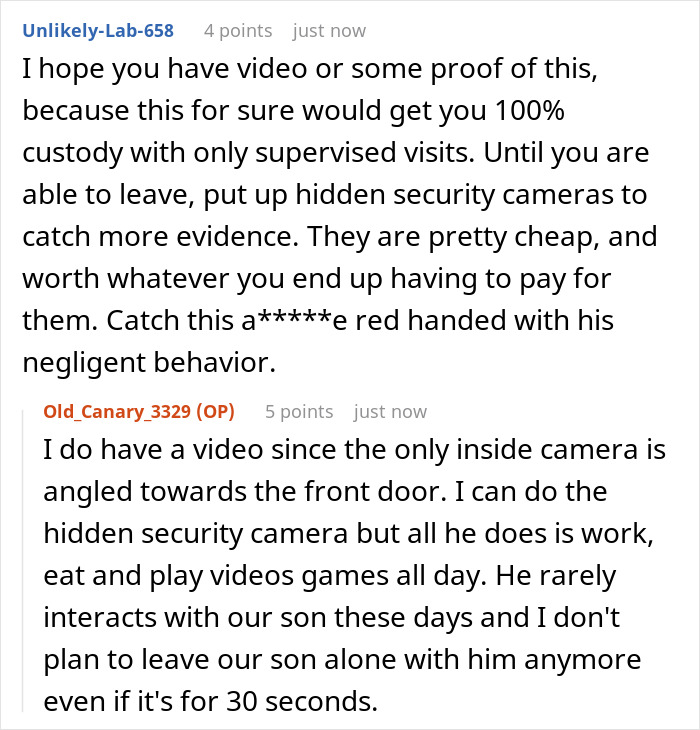
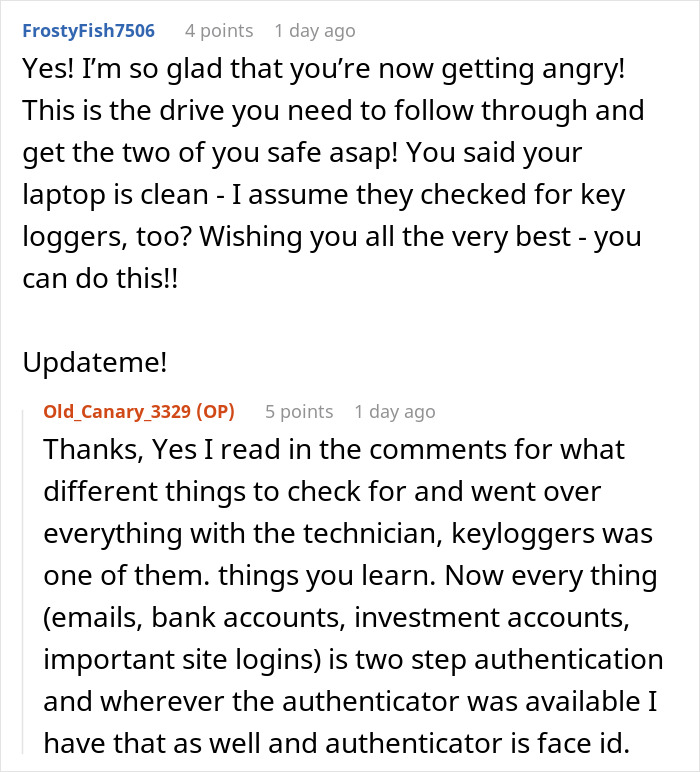
Some called it an outright attempt by the husband to bait the poster