There are plenty of wonderful mothers-in-law out there who genuinely love and support their families. Sadly, their reputation often gets ruined by the ones who seem determined to make their children-in-law’s lives as difficult as possible.
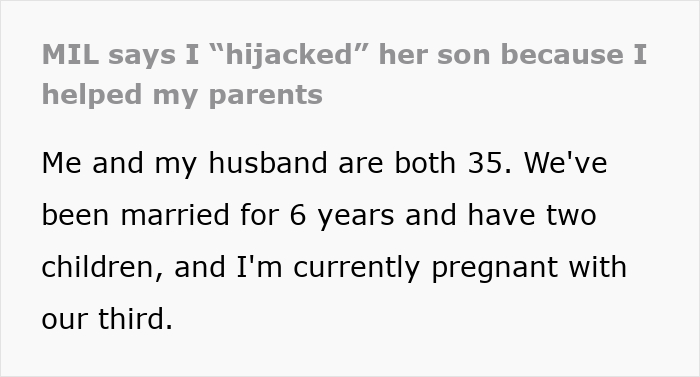
One woman was left confused when her mother-in-law suddenly started acting cold toward her. After months of wondering what was wrong, she finally got an answer when the woman accused her of “hijacking” her son. The reason behind it left her completely stunned.
The woman was confused when her mother-in-law suddenly grew cold and started treating her differently

kaboompics / Pexels (not the actual photo)
When she finally found out why, the reason left her completely stunned


Curated Lifestyle / Unsplash (not the actual photo)



Teona Swift / Pexels (not the actual photo)


Getty Images / Unsplash (not the actual photo)

Pablo Merchán Montes / Unsplash (not the actual photo)
Despite the stereotype, most daughters-in-law actually get along with their mothers-in-law
At this point, we’ve heard so many mother-in-law horror stories that plenty of us probably picture the default MIL as a “monster-in-law.” She gets involved where she shouldn’t, has an opinion on absolutely everything, and somehow turns a harmless family dinner into a full-blown headache.
Despite the stereotype, though, many daughters-in-law actually seem to get along with their mothers-in-law pretty well.
Researchers Geoffrey Greif and Michael Woolley surveyed 351 women across the US about their relationships with their mothers-in-law. Most described those relationships positively. Among the women who weren’t so happy, however, the same complaints kept coming up again and again.
Some women felt like their mother-in-law clearly preferred another child-in-law, while others felt she got far too involved in their marriage. A few also found it hard to talk to her openly when something was bothering them. And, of course, cold behavior and arguments over parenting didn’t exactly help either.
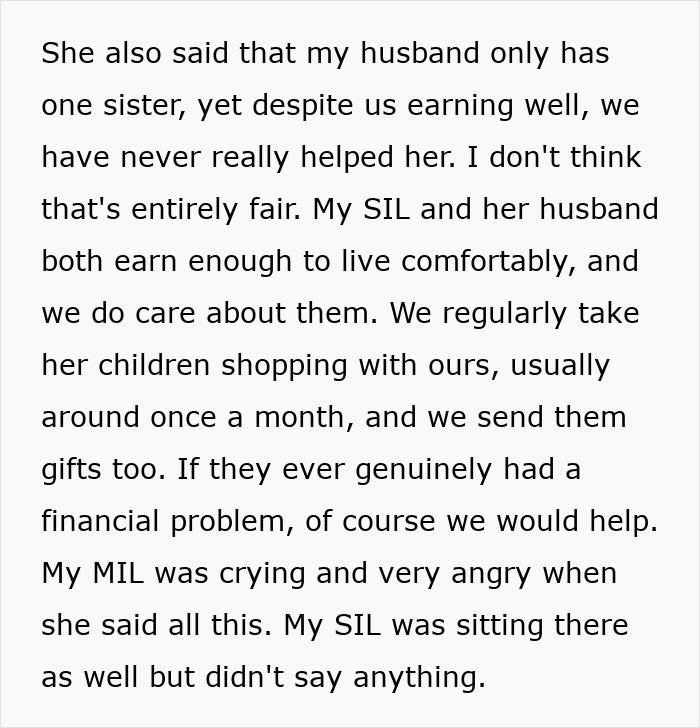
The woman at the center of this story, by all accounts, seemed to have a pretty normal relationship with her mother-in-law. Then her MIL suddenly became distant and started picking fights over things that didn’t seem to make much sense.
Eventually, she found out what had apparently been bothering her all along. And it turned out her MIL believed she had “hijacked” her son. Just like that, she started sounding a lot like the difficult mothers-in-law we hear about so often.

Getty Images / Unsplash (not the actual photo)
When mothers-in-law and daughters-in-law do clash, it’s often because both want their opinions and needs to be taken seriously
So why do these fights between mothers-in-law and daughters-in-law keep happening in the first place?
Psychologist Terri Apter explains that both women may want to be the “A person” in their own family. Each has her own needs and expectations, and both want their values to carry some authority.
That can get tricky because every family has its own ideas and unwritten rules about how everyone should behave. One family might happily split the restaurant bill down the middle, while another expects the person who invited everyone out to pay.
Some expect everyone to show up for every holiday and birthday, while others are perfectly fine celebrating separately. Even something as simple as who cooks, who helps clean up, or when everyone sits down to eat can be handled differently from one family to another. And that can easily create friction.
A mother-in-law might tell her daughter-in-law what she “should” do because, to her, it feels completely normal. The daughter-in-law, meanwhile, may hear it as criticism or unwanted interference.
Then the son or husband gets stuck in the middle. If he backs his mother, his wife may feel undermined. If he backs his wife, his mother may worry that she’s losing the closeness she once had with him. You really can’t win.
But there might also be a genetic explanation for why people fight with their in-laws. One study suggests the biological bond between parents and children can make people more likely to want “shared resources,” like money or care, to go toward their own relatives. So that idea of what’s “fair” within a family can easily lead to disappointment and resentment.
Of course, knowing this won’t make the arguments disappear. People still have to deal with hurt feelings and talk about what they expect from each other.
In this case, the couple now has to figure out where they go from here after everything that was said. How do you think they should handle it? Share your thoughts in the comments below.
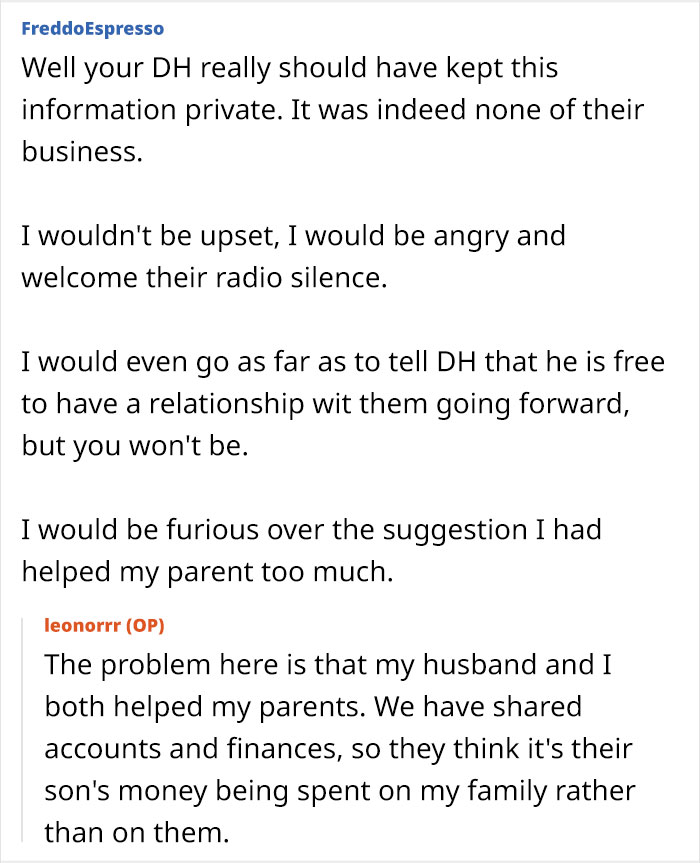
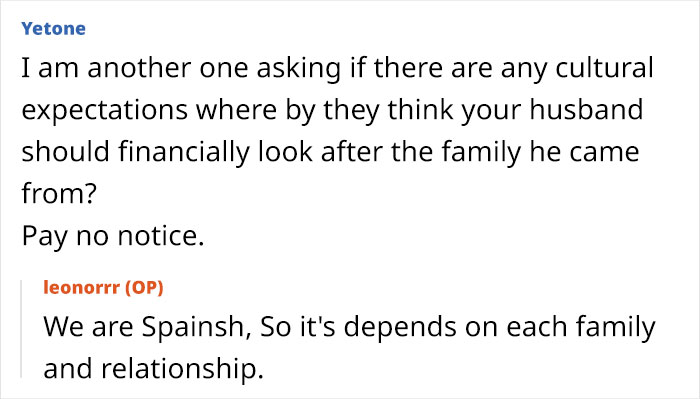
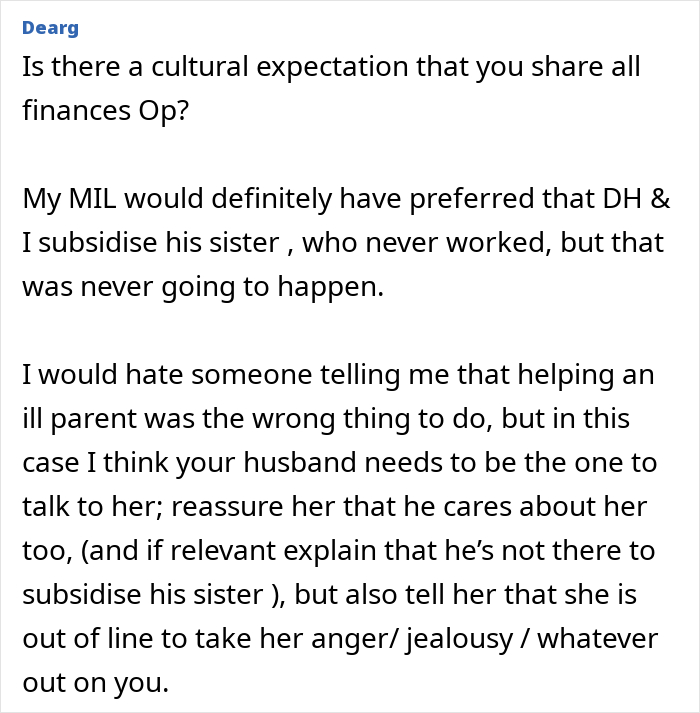
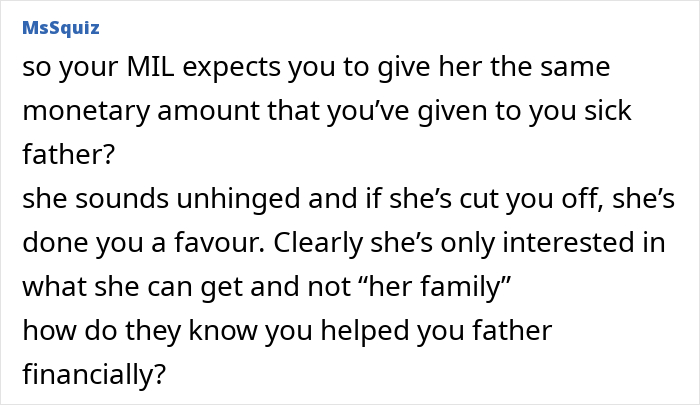
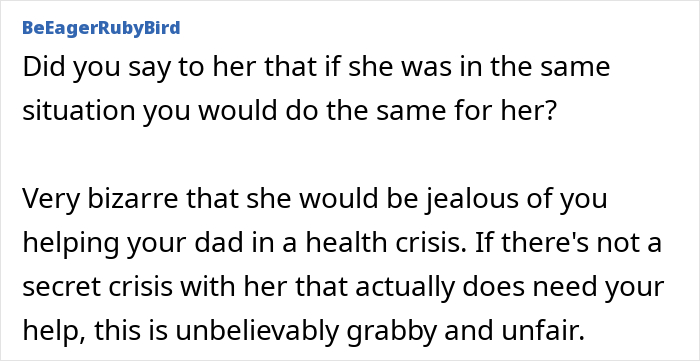
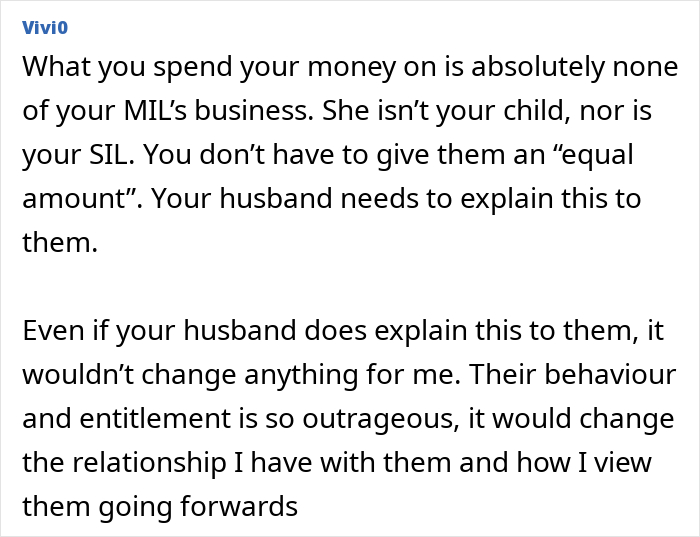
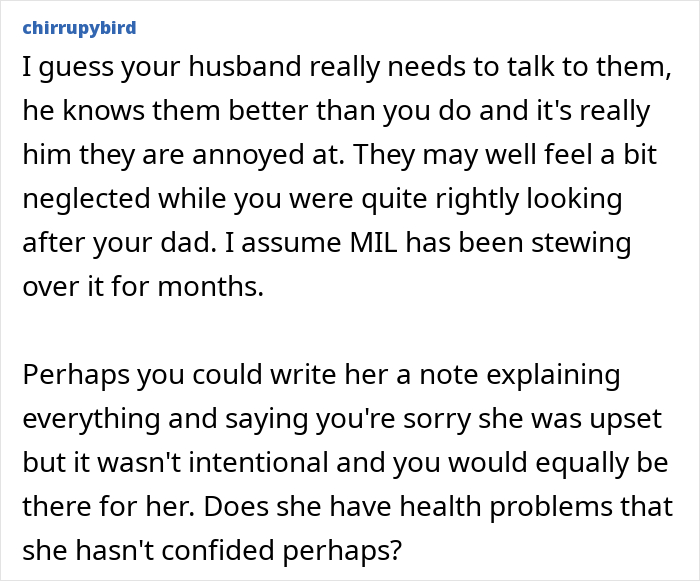
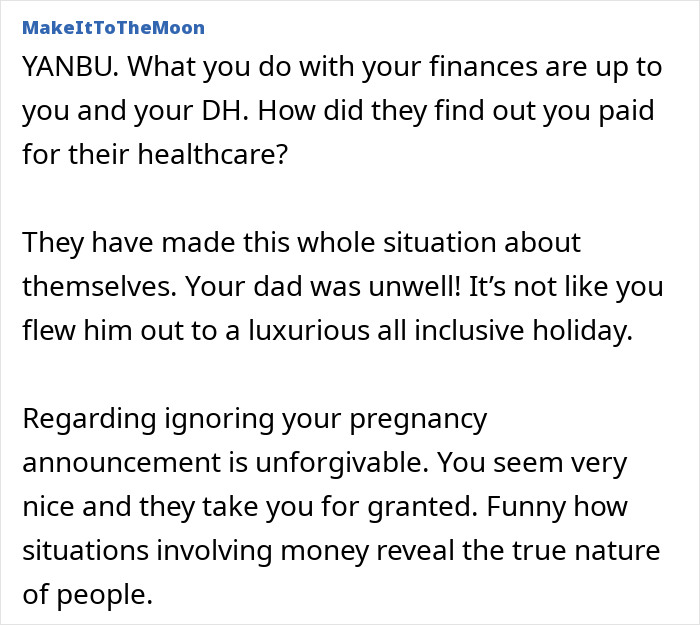
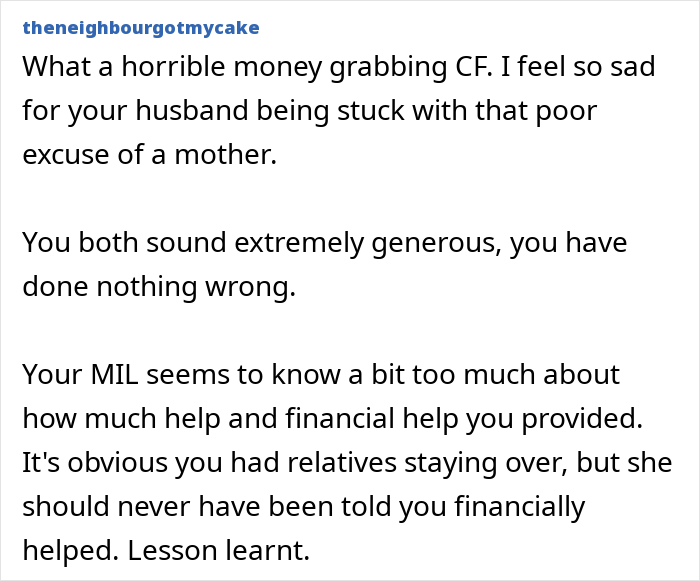
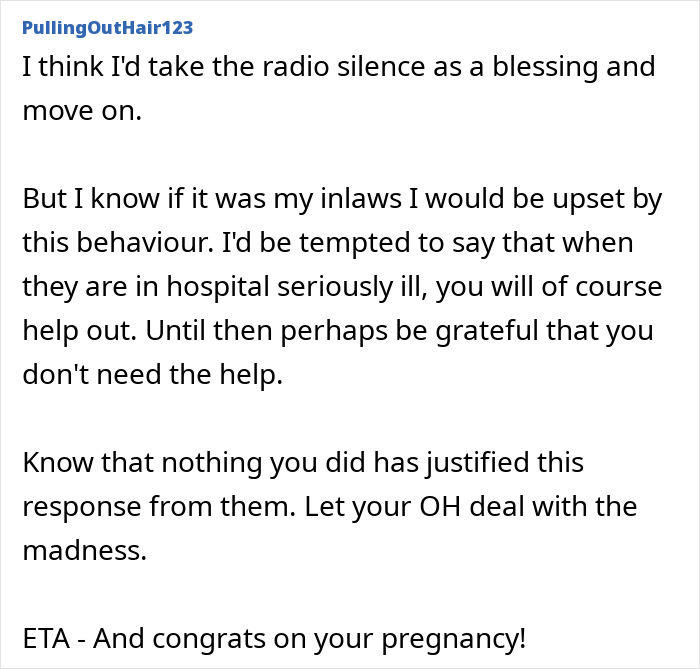
Readers thought the woman’s mother-in-law was completely out of line