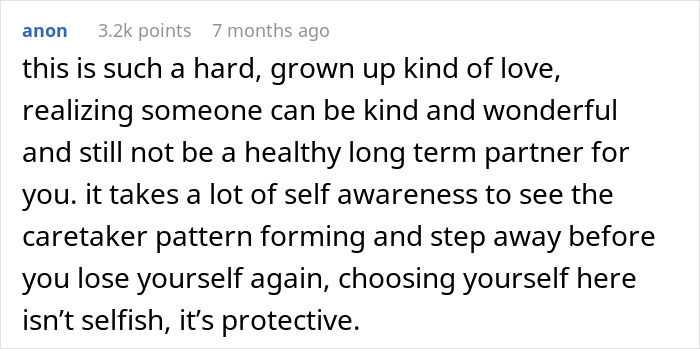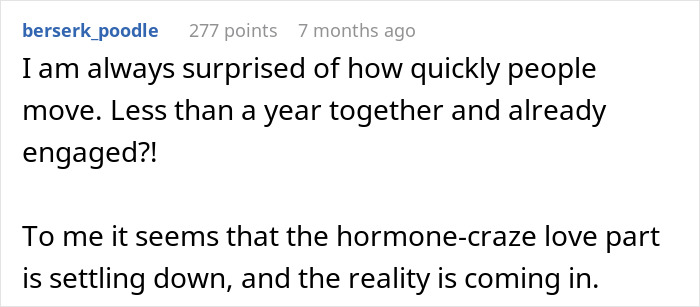
Often, it’s an incredible feeling when you meet someone who seems to tick all the boxes—kind, caring, thoughtful, and everything you’ve been looking for. It’s a rare connection, and naturally, you don’t want to lose someone like that. But sometimes, even the best relationships come with challenges that aren’t easy to ignore.
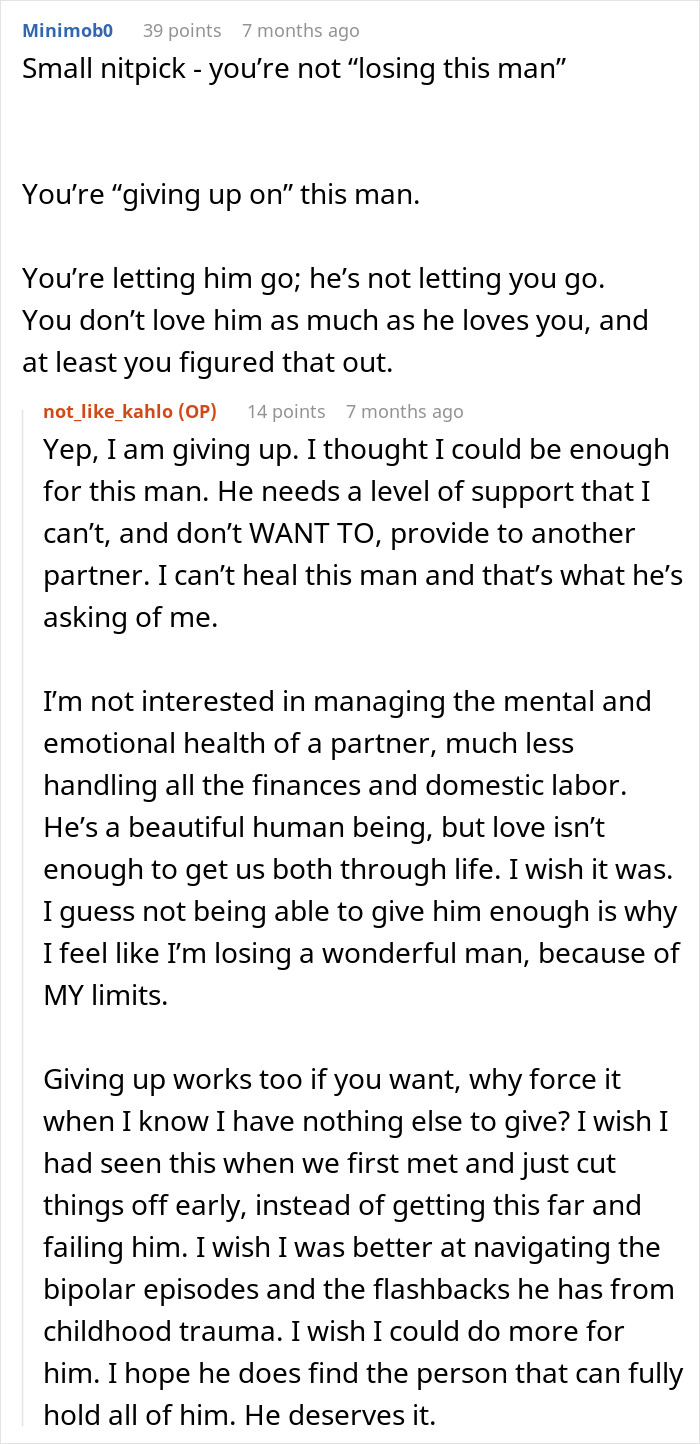
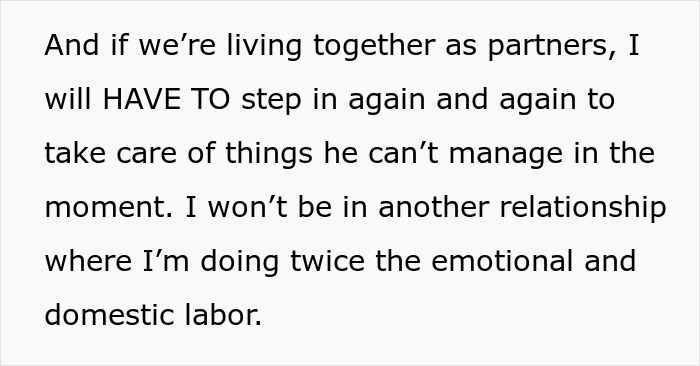
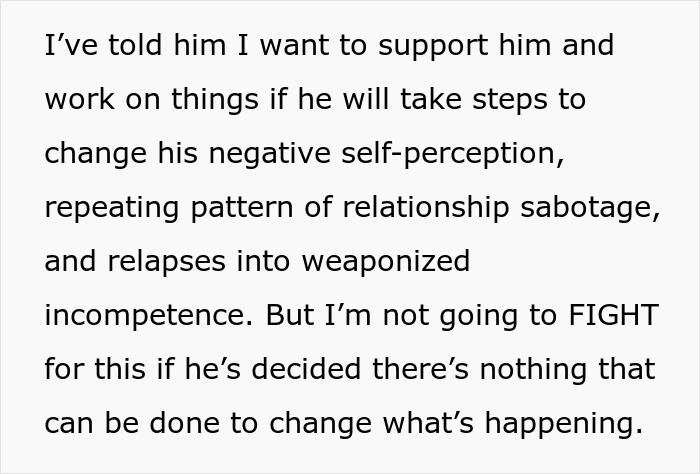
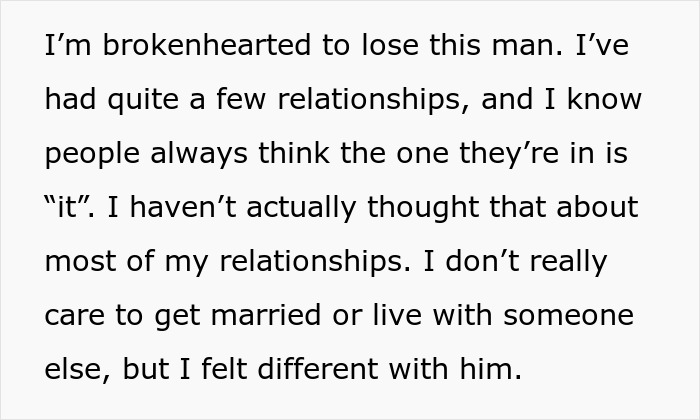
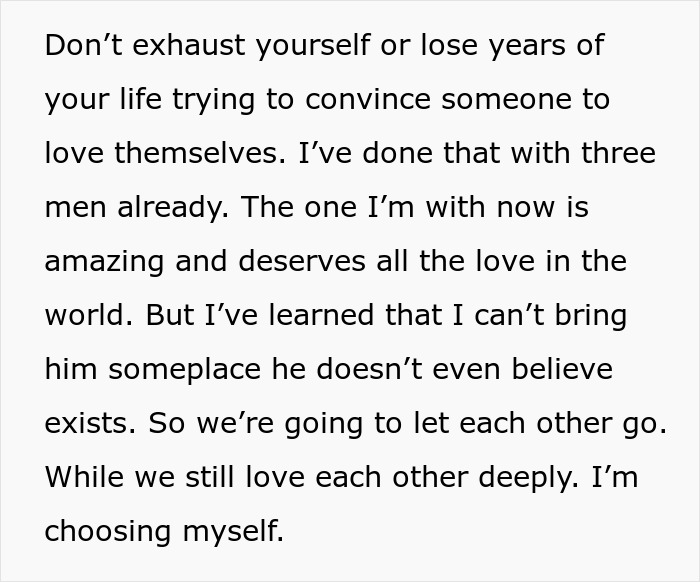
One woman shared how she fell for a loving, supportive man but gradually became his therapist, life planner, and emotional support system. Feeling drained, she eventually decided to walk away. Keep reading to find out why love alone wasn’t enough.
Relationships can be fulfilling, but they can also become emotionally draining when one partner carries too much of the weight
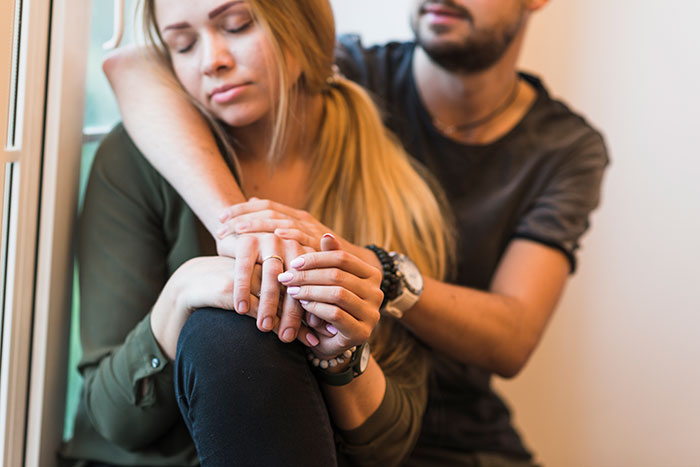
magnific (not the actual photo)
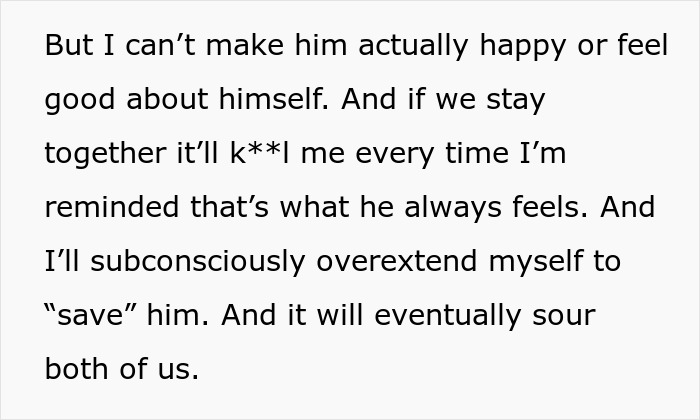
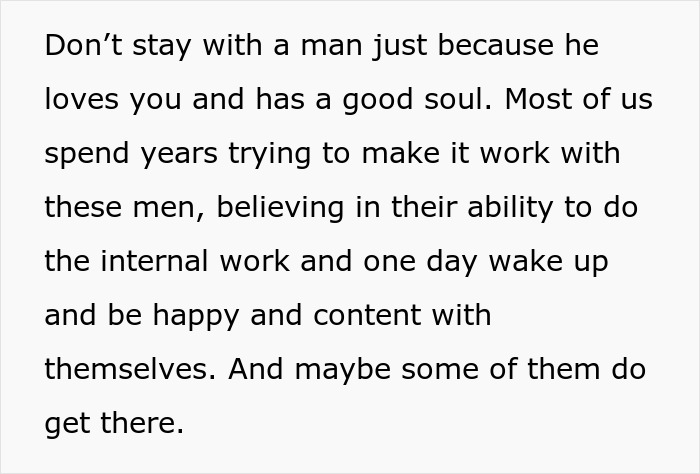
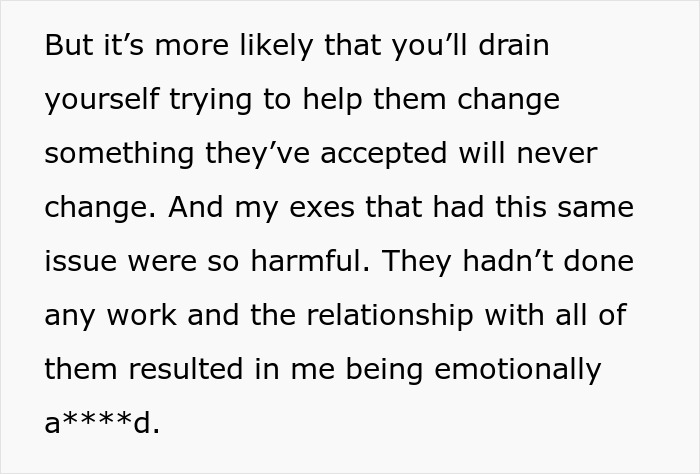
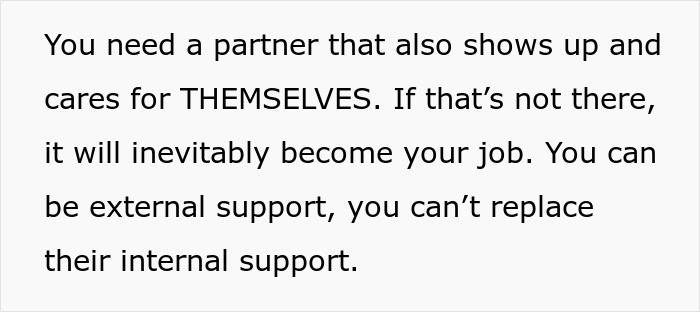
One woman shared how she reached her breaking point after spending so long being her boyfriend’s emotional anchor


EmilyStock (not the actual photo)
Self-care is essential for your mental health, helping you manage stress, recharge, and stay balanced
Many of us have heard the phrase, “You can’t pour from an empty cup.” Though simple, it holds a powerful truth: you can’t keep giving to others when you’re running on empty. Taking care of your own needs isn’t selfish—it’s essential. Think of the times you’ve said yes when you were already exhausted or pushed yourself to be there for someone after a long, draining day.
You might do all of this because you genuinely care about others, and that’s a beautiful quality. But caring for yourself has to come first, too. Self-care plays a huge role in maintaining your mental well-being. In fact, the National Institute of Mental Health explains that mental health includes emotional, psychological, and social well-being—and self-care supports all of these. It can even support recovery and treatment when someone is struggling. So, taking time for yourself isn’t a luxury; it’s part of staying mentally and emotionally balanced.
When you constantly put yourself last, burnout becomes almost inevitable. Whether it’s staying late at work to meet deadlines, always being available for others, or ignoring your own needs, it slowly adds up. Over time, this kind of pattern drains you emotionally, physically, and mentally. You may start feeling tired all the time, disconnected, or even resentful without fully understanding why. That’s what happens when you keep giving without giving yourself the chance to recharge.
At its core, self-care means taking an active role in maintaining your health and well-being. Individuals, families, and even communities can practice it to stay healthy, prevent illness, and cope during difficult times. And it doesn’t always require professional help—it can start with small, everyday actions. Globally, access to healthcare isn’t equal, which is why organizations like the WHO emphasize self-care as an essential tool. It empowers people to take control of their health and create a stronger foundation for overall well-being.
One of the biggest benefits of self-care is how much it can lower stress. When you start prioritizing your needs (even in small ways like taking breaks, resting properly, or setting boundaries), you give your mind and body a chance to recover. Over time, this helps reduce the constant feeling of pressure and overwhelm. It’s not about doing something big or dramatic, but about consistently giving yourself the space to breathe and reset.
Another important benefit is how it improves your sense of self-worth. When you regularly take care of yourself, you start to feel more valued—not by others, but by yourself. Meeting your own needs sends a powerful message that you matter. This builds confidence and helps you develop a healthier relationship with yourself. Over time, that inner sense of worth becomes stronger and more stable.
Taking time for yourself allows you to reset, focus on what matters, and show up fully for both yourself and others
And perhaps most importantly, when you take better care of yourself, your relationships improve too. When you feel balanced and supported within, you can show up more fully for others without feeling drained. You communicate better, set healthier boundaries, and engage more meaningfully. In a way, self-care doesn’t take away from your relationships; it strengthens them.
Self-care doesn’t have to be complicated. Start with the basics: eat balanced meals, stay hydrated, and prioritize sleep. Find time for activities you enjoy, whether it’s reading, journaling, walking, or listening to music. Set priorities that matter to you, and don’t be afraid to say no to things that drain your energy. These small habits can help you feel more grounded and recharged, allowing you to show up for yourself and others without running on empty. Remember, self-care isn’t selfish; it’s essential.
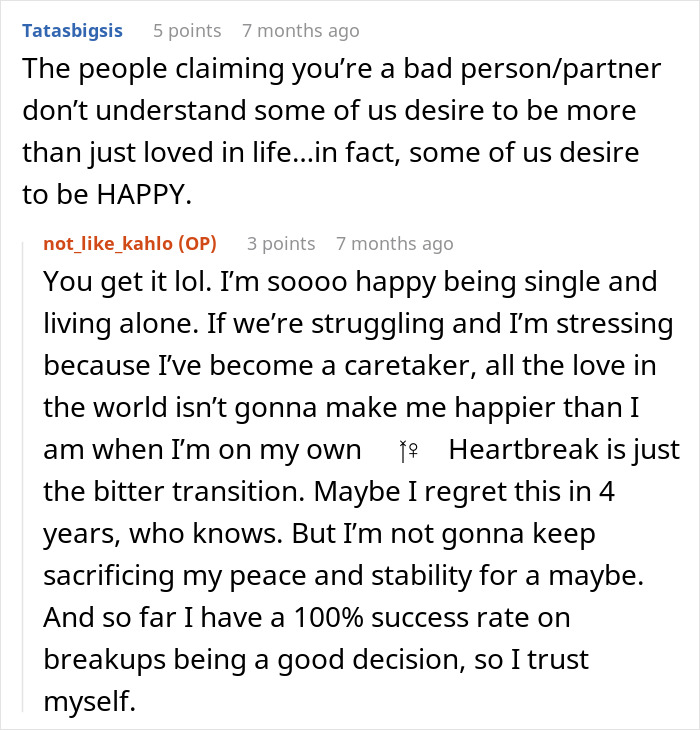
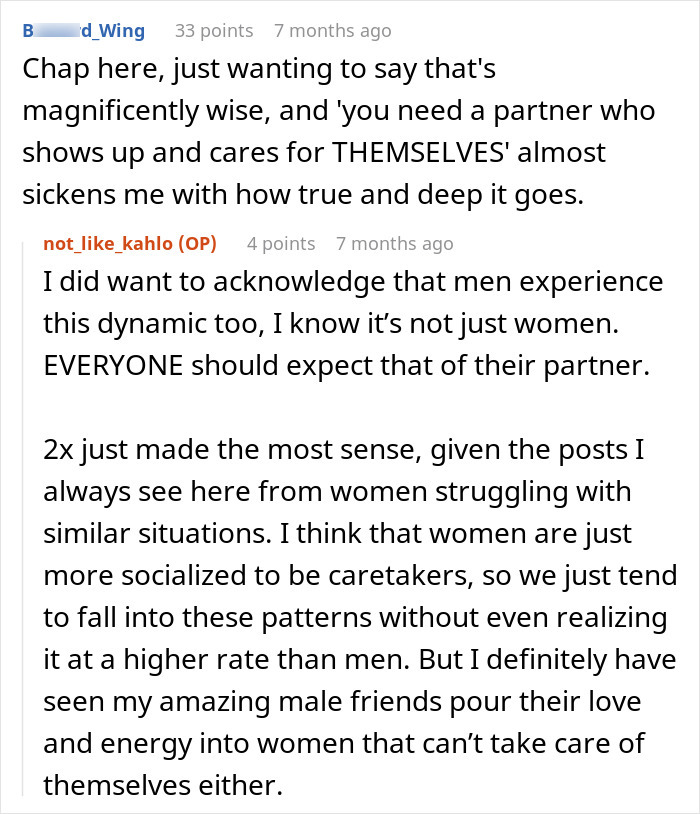
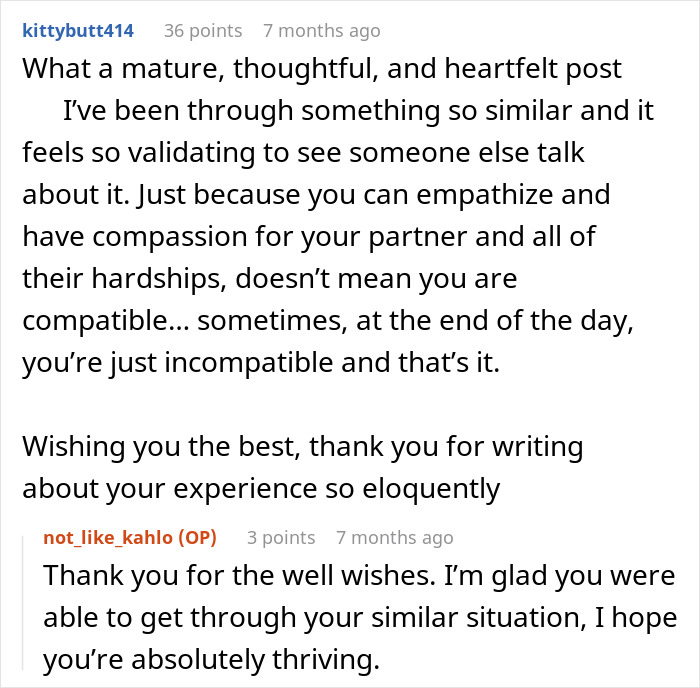
Coming back to this particular case, it seems the woman really put herself first, and honestly, that choice feels right, as many commenters have pointed out. It’s a powerful reminder that taking care of yourself should come before trying to “fix” someone else or constantly manage their emotions. What do you think? Should she have stayed with her partner, or was choosing herself the better path? Let us know your thoughts.
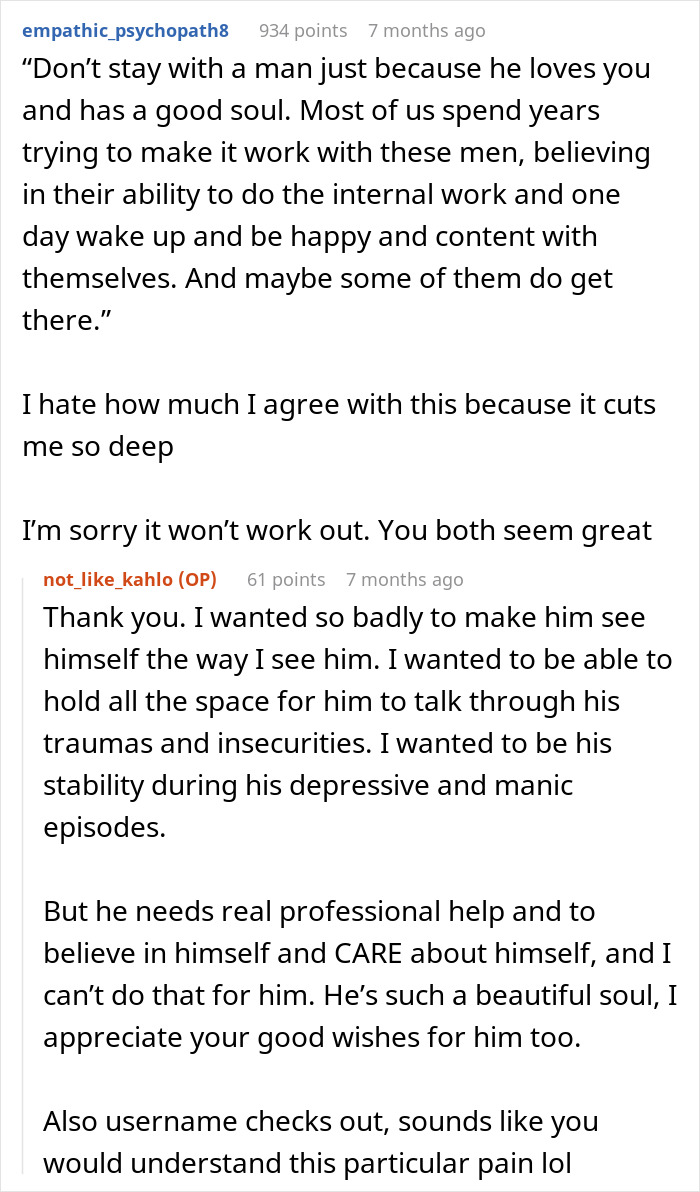
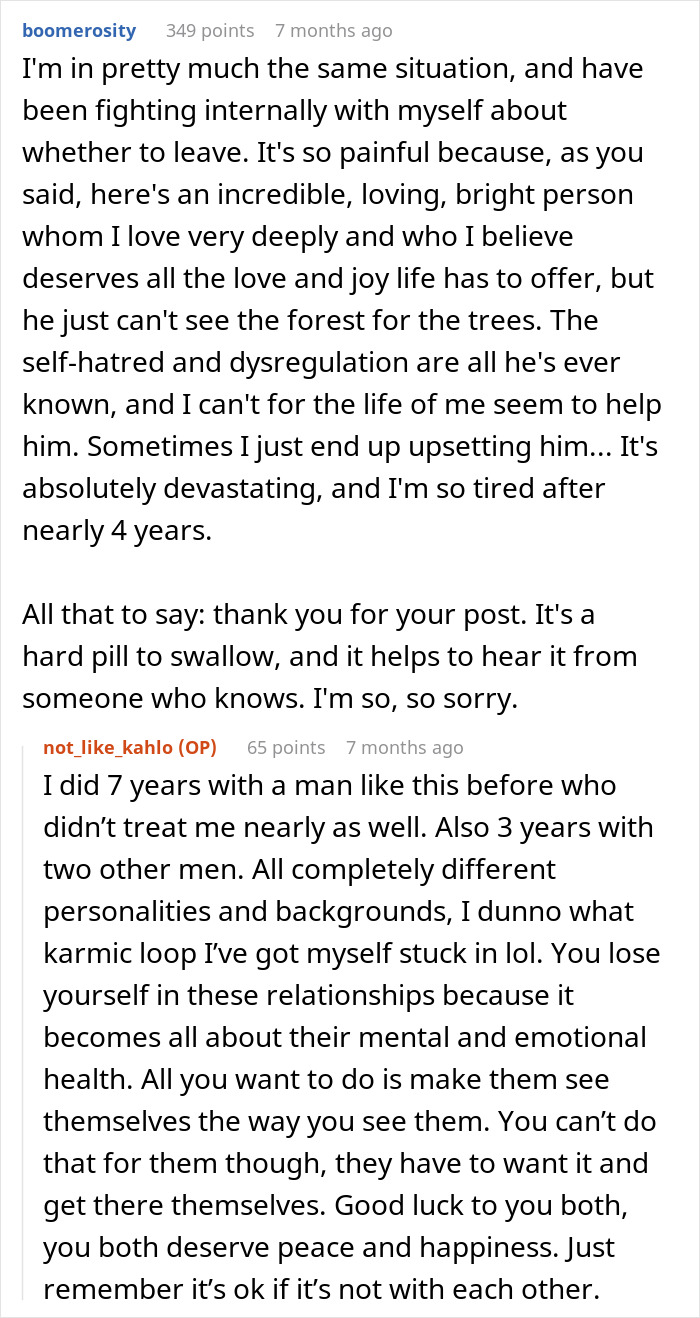
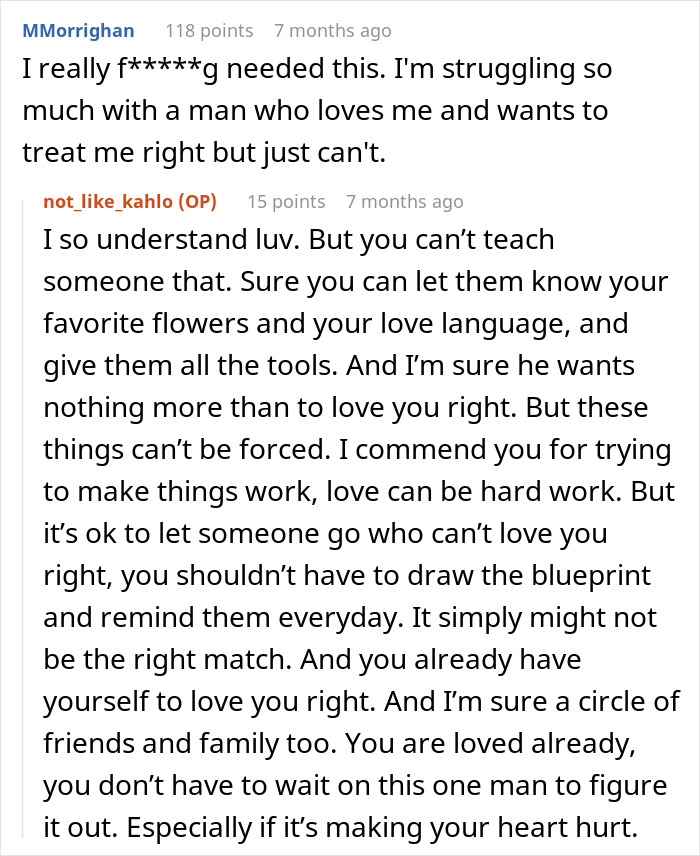
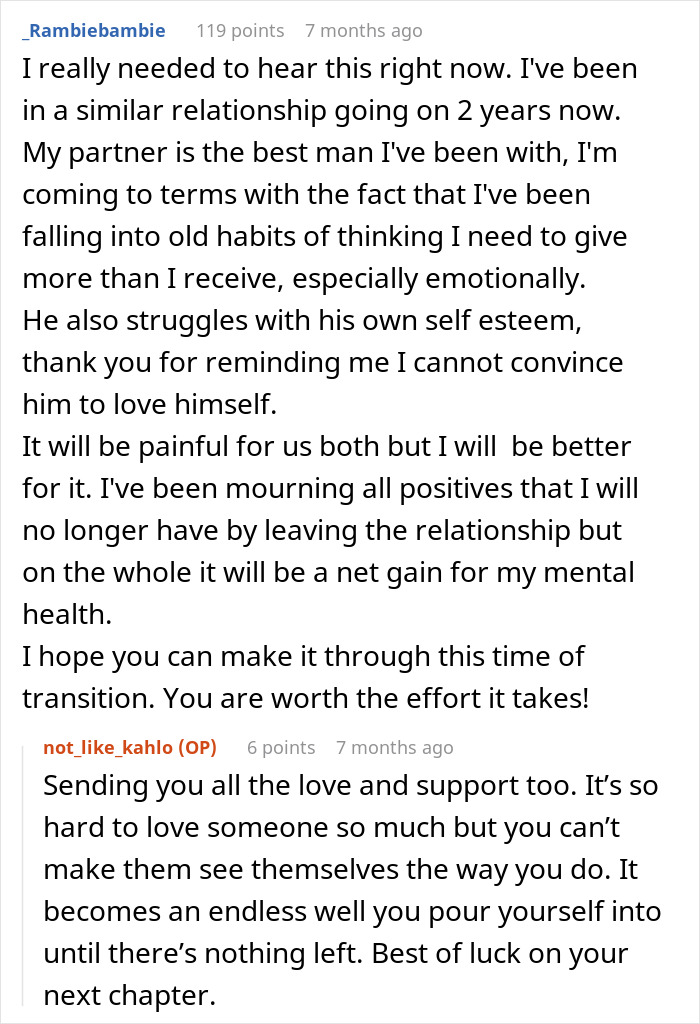
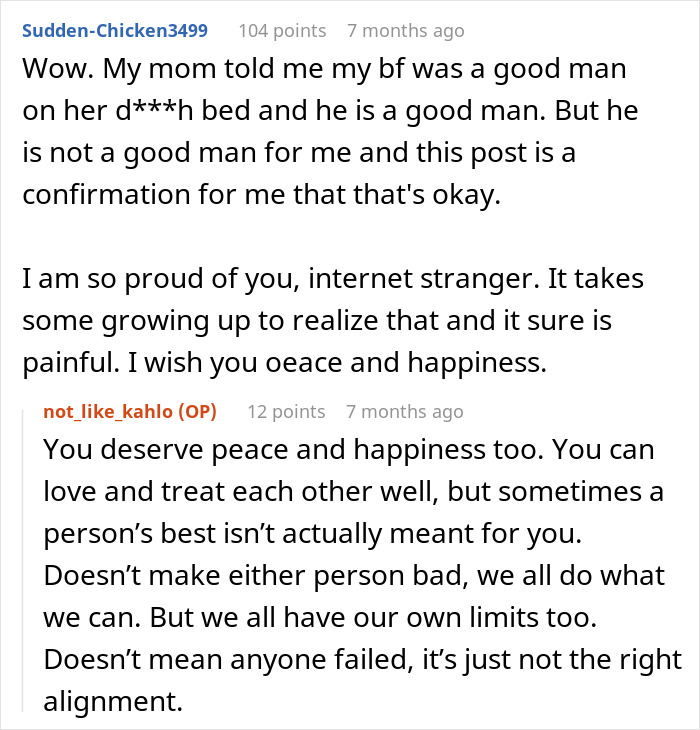
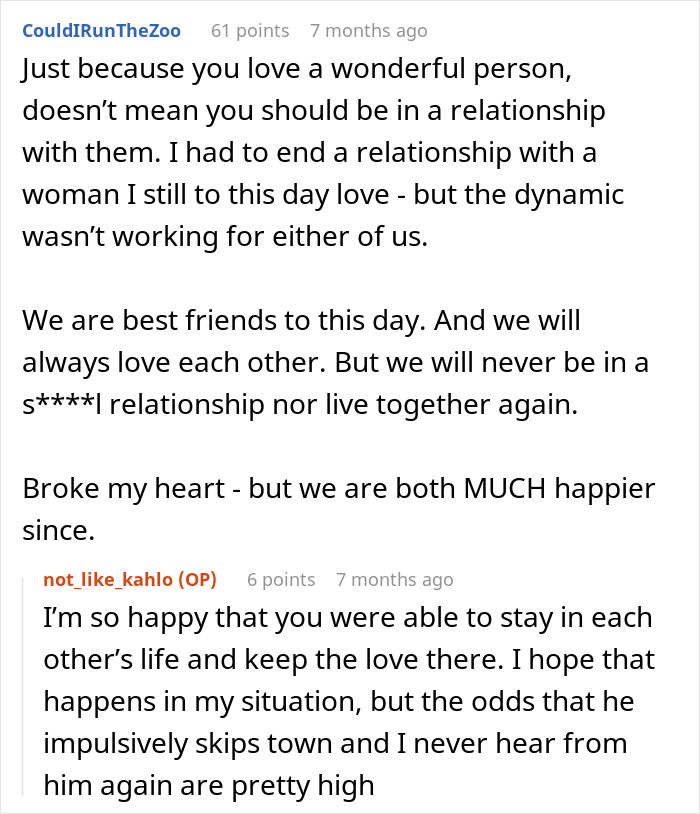
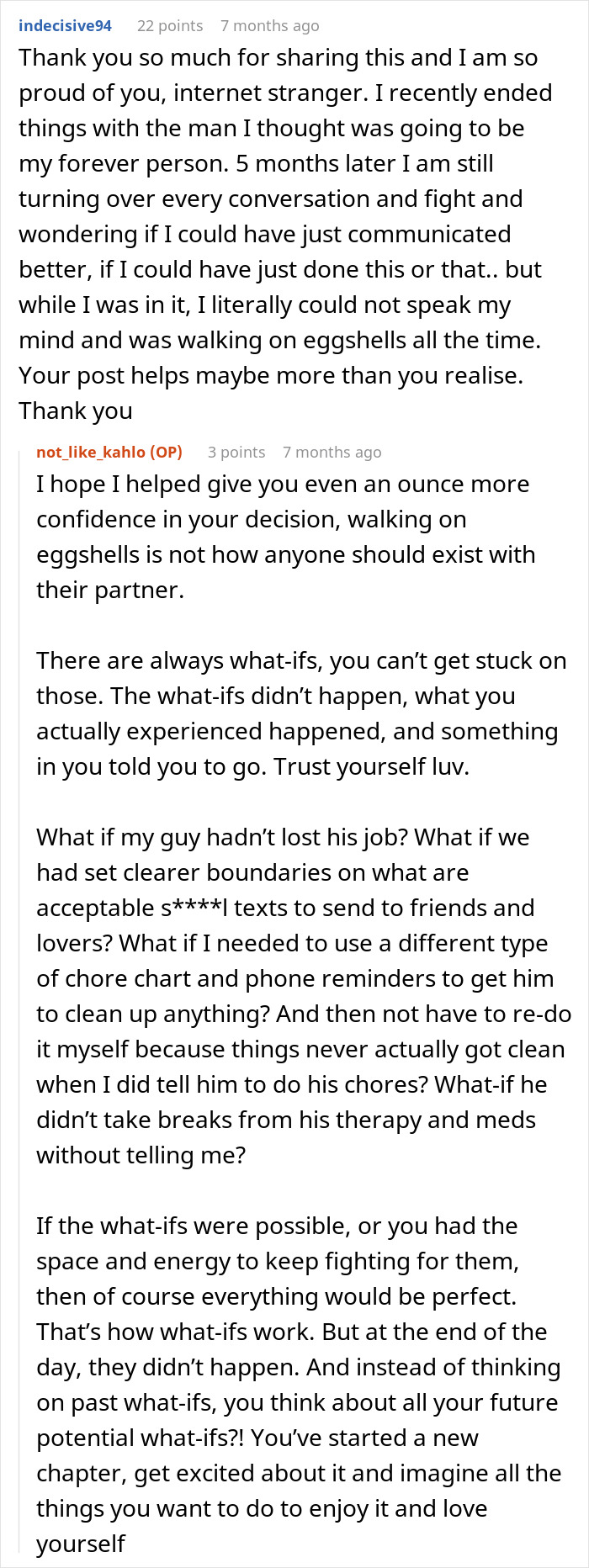
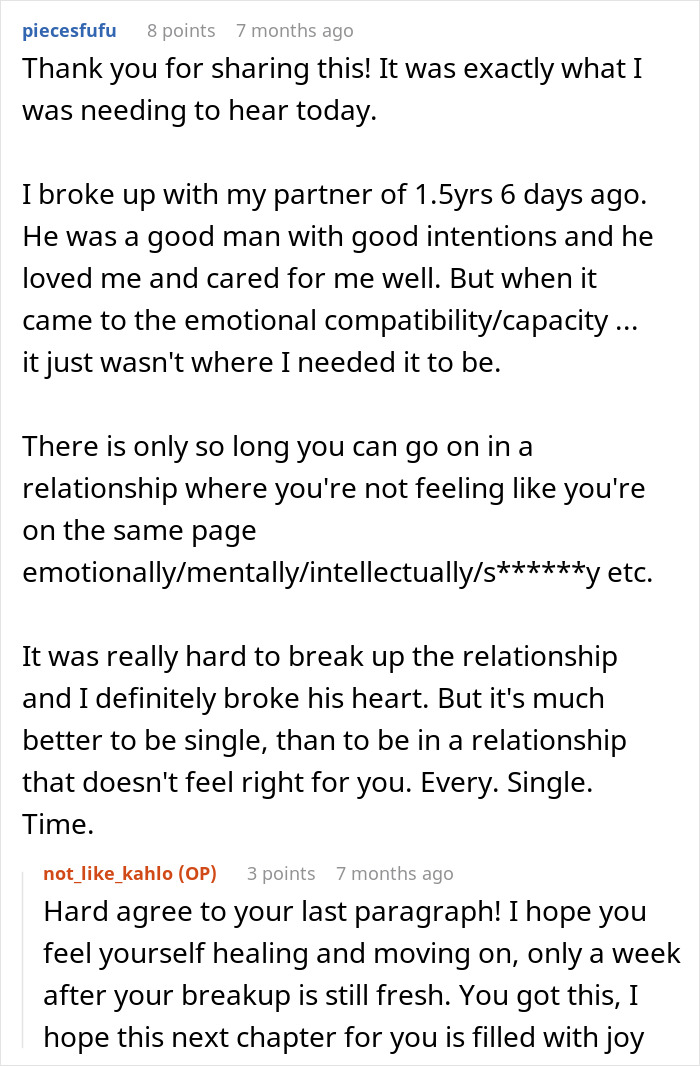
Many people related to her experience and understood why she felt exhausted
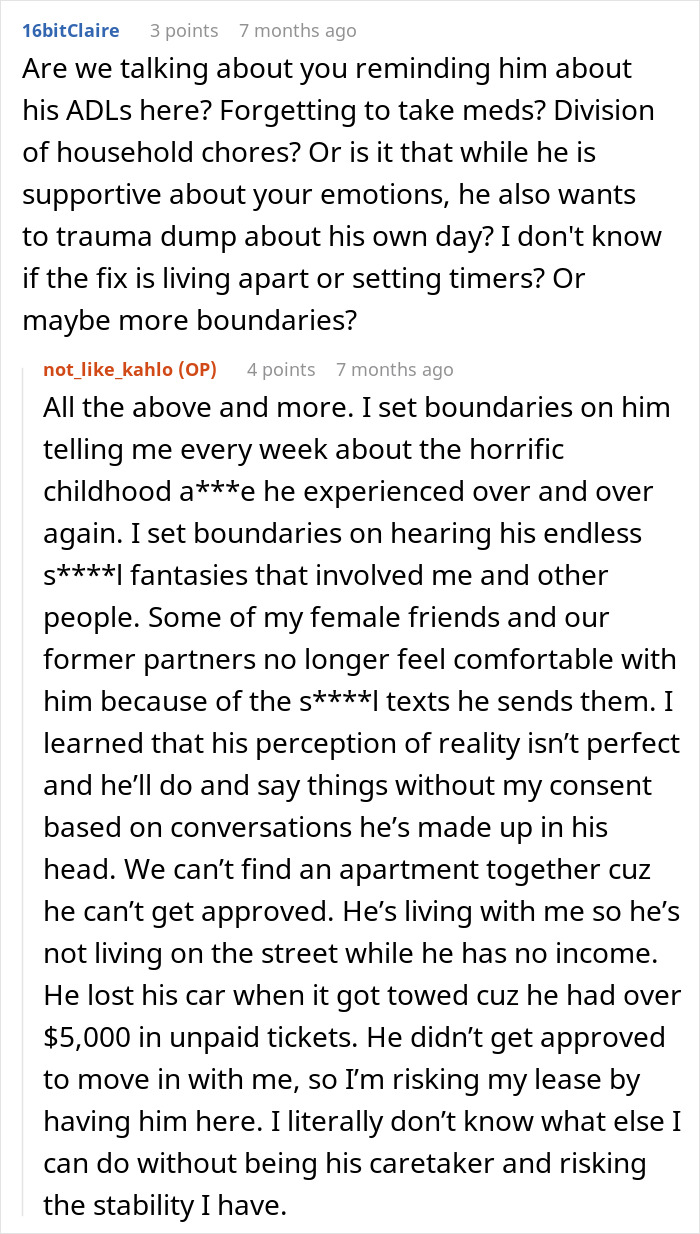
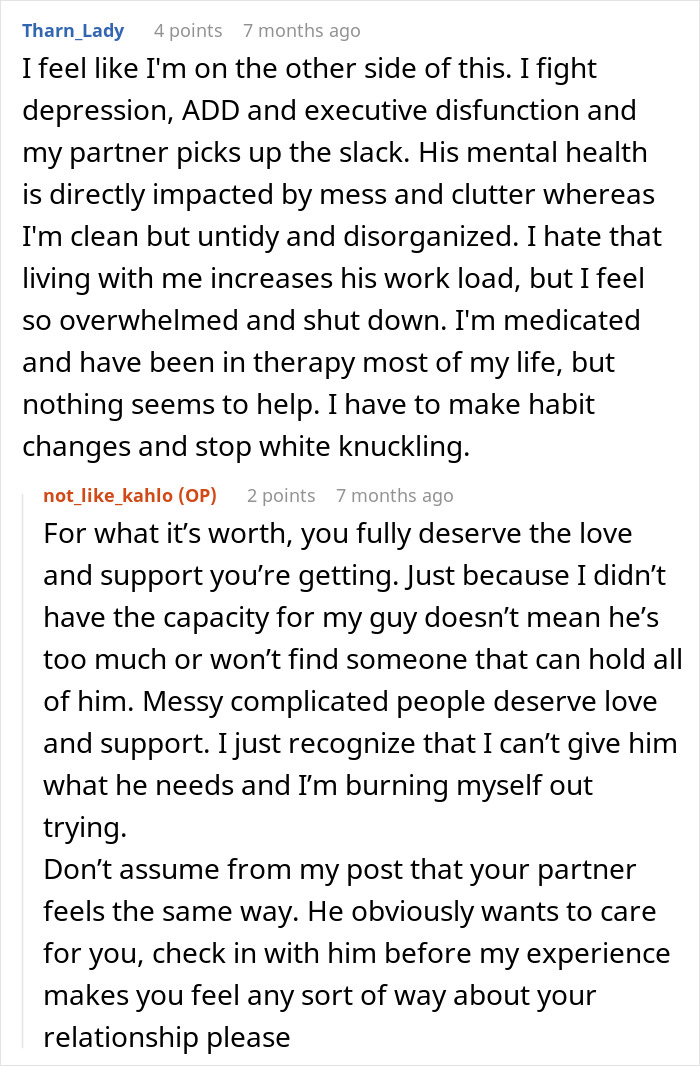
Others criticized her, arguing that she wasn’t being a good partner
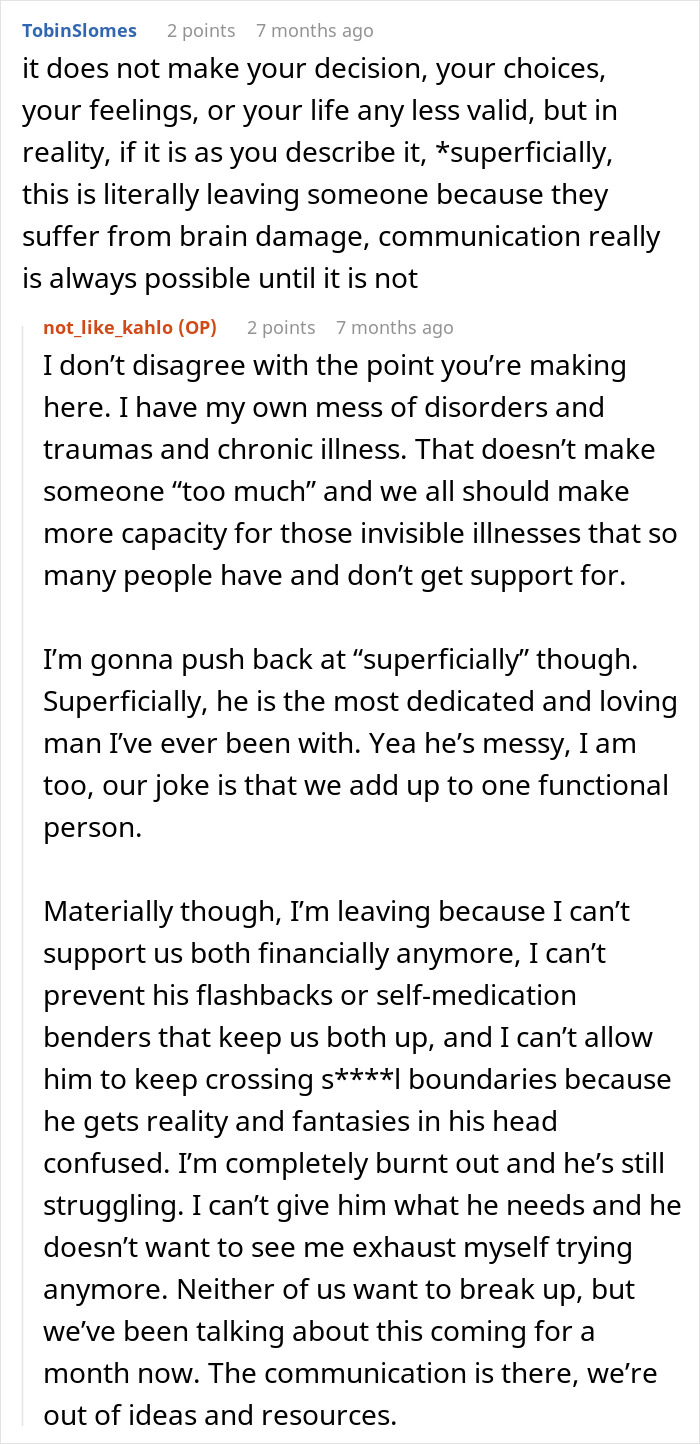
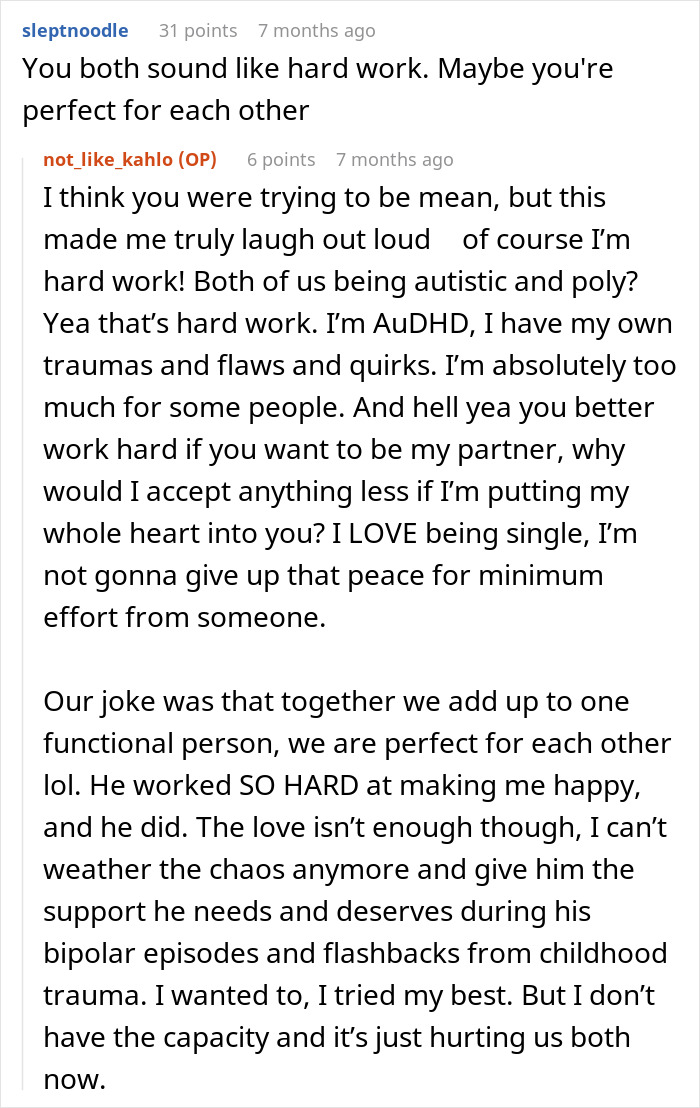
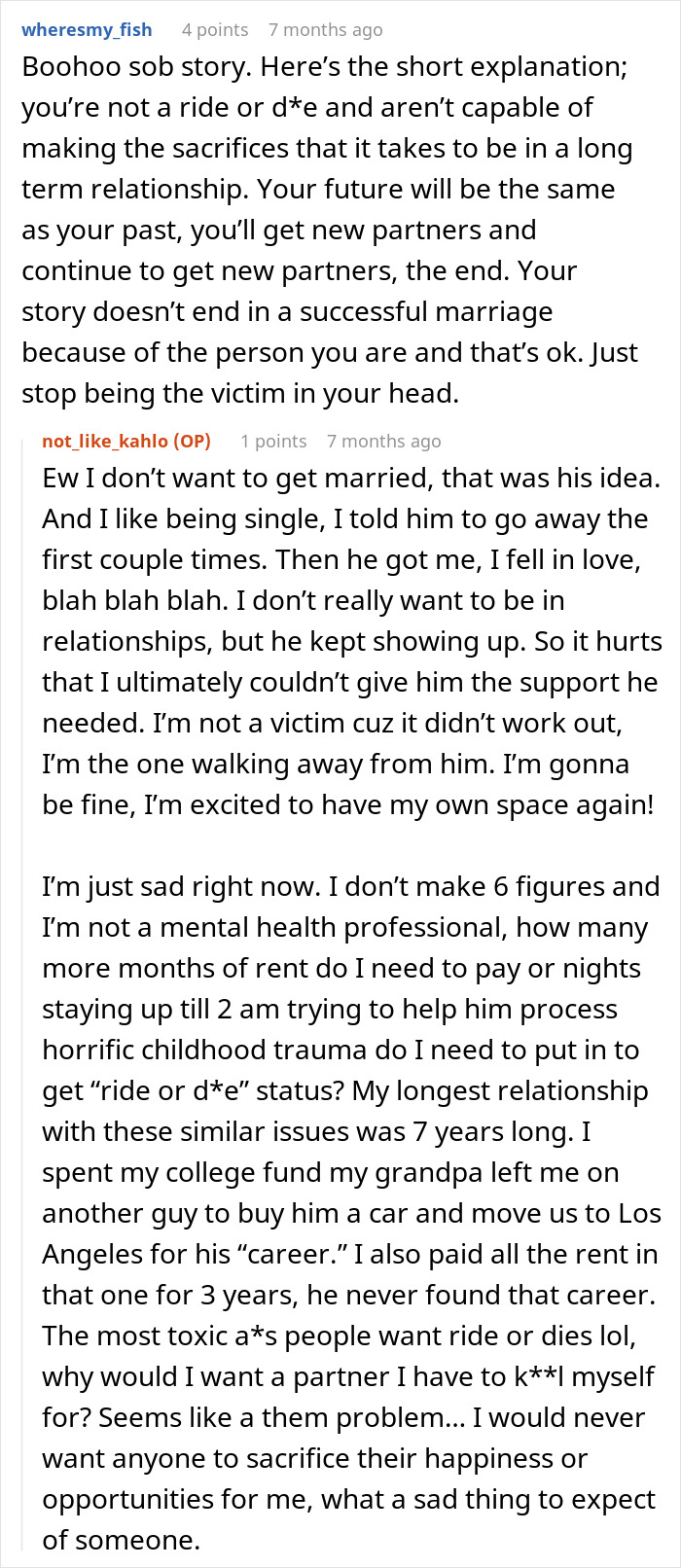
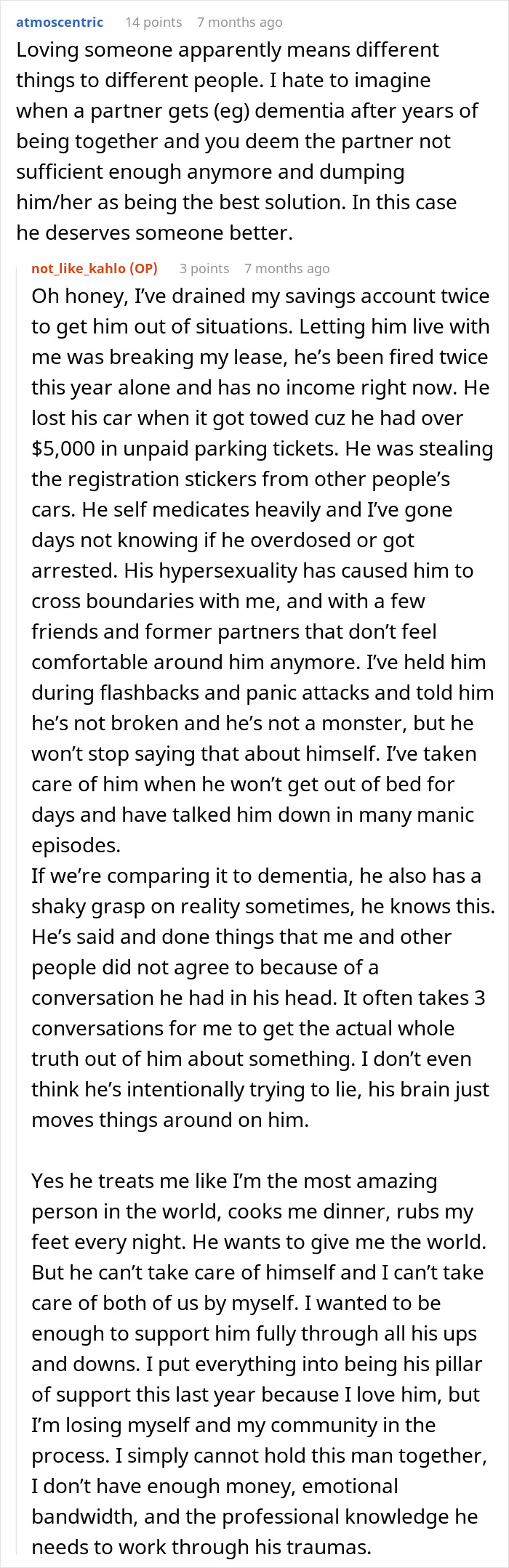
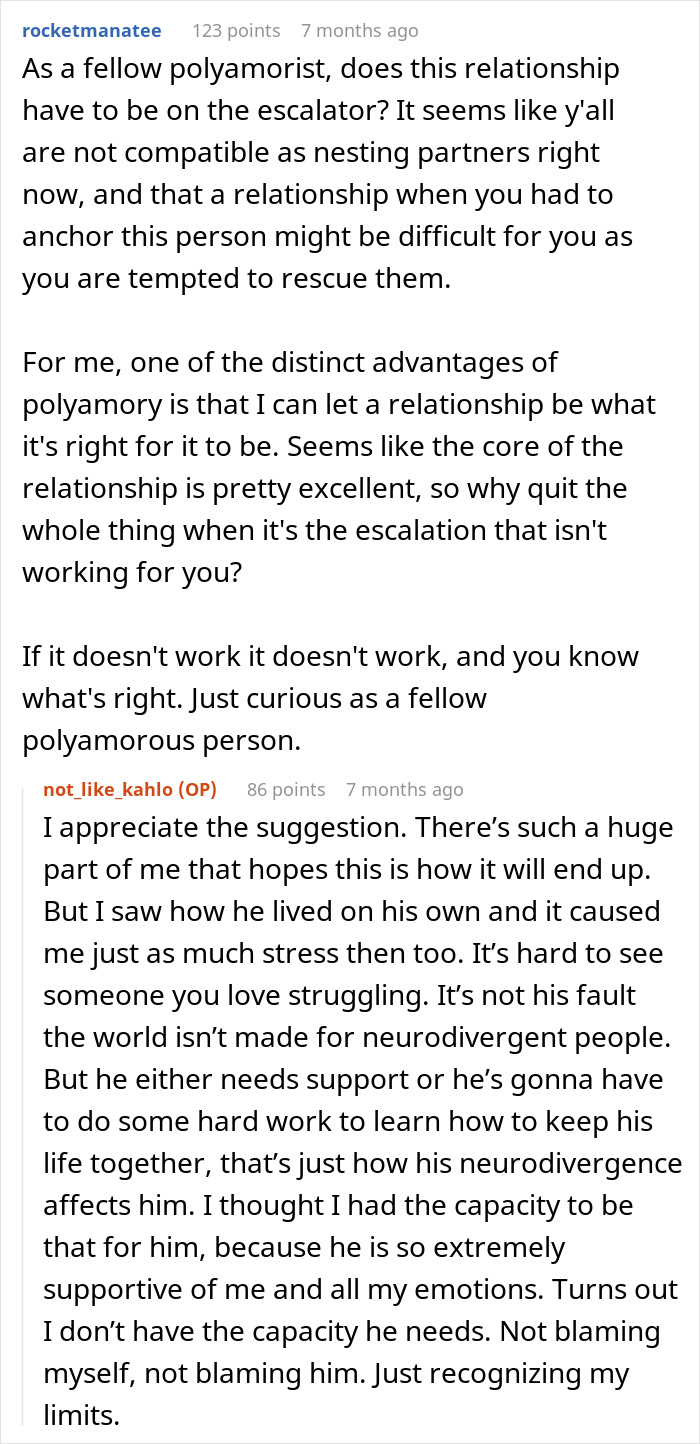
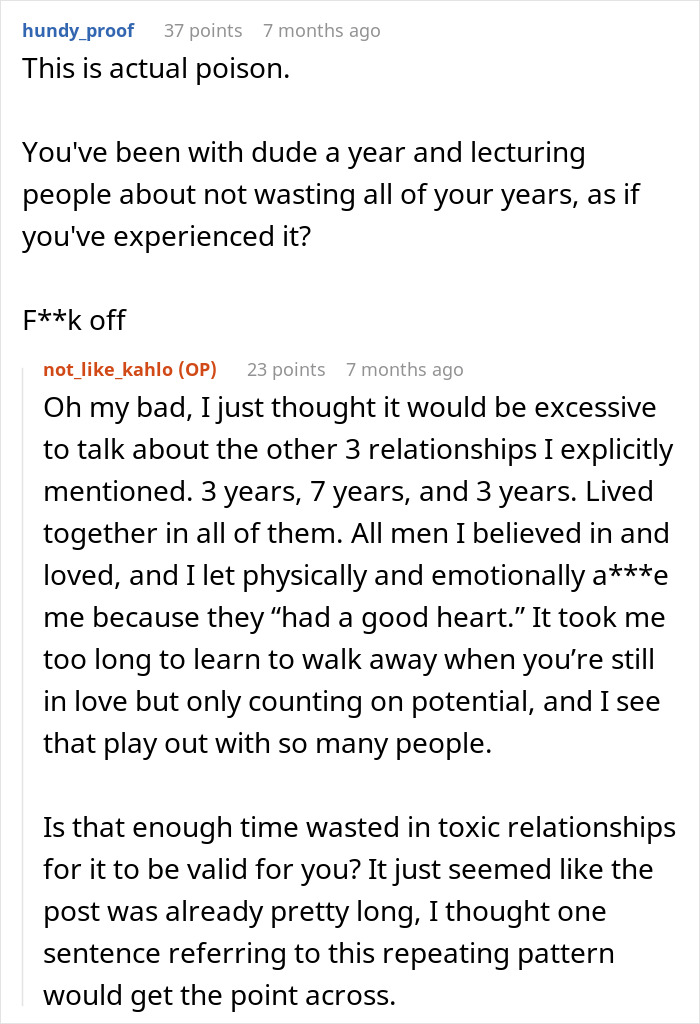
Some readers, however, showed their support and sympathized with her situation