Any kind of help with childcare feels like a blessing, ask any working parent. They rely on family, friends, and even paid services for basics like school pick-up, babysitting, and day care.
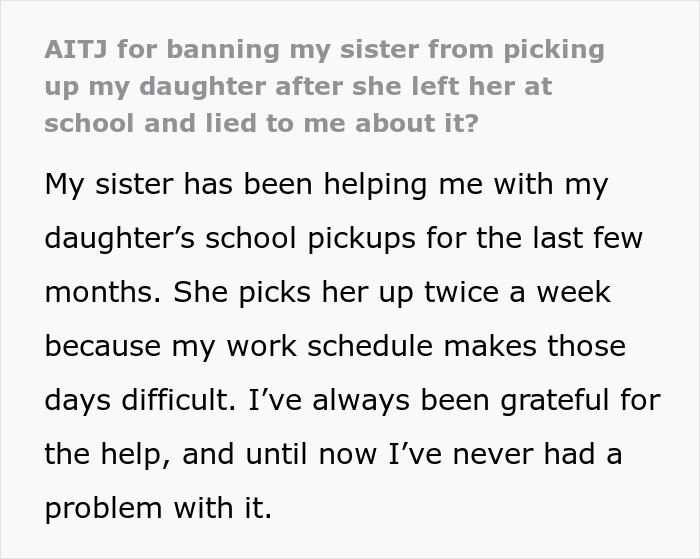
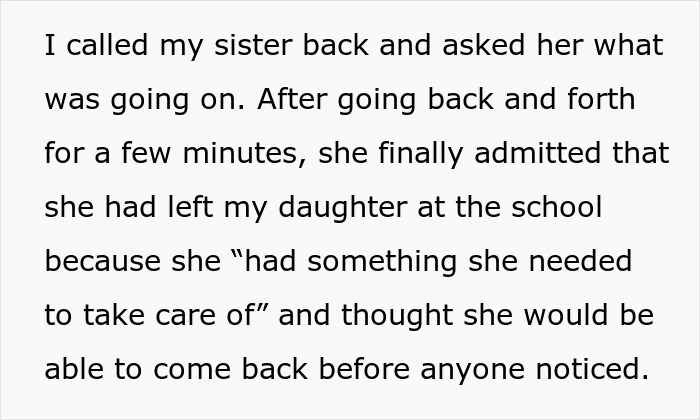
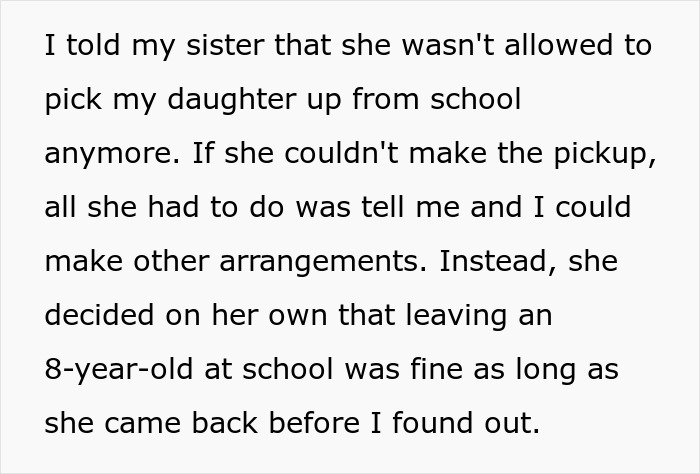
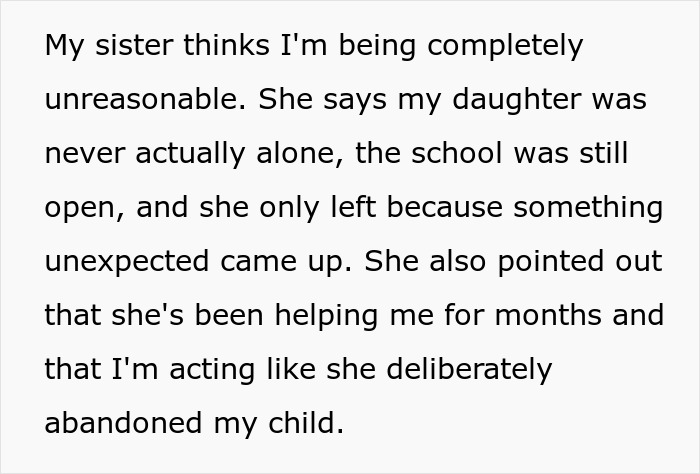
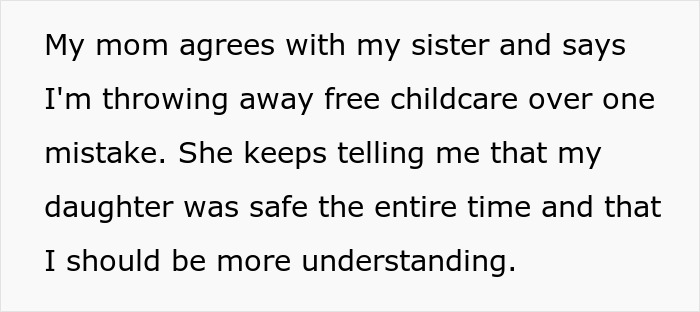
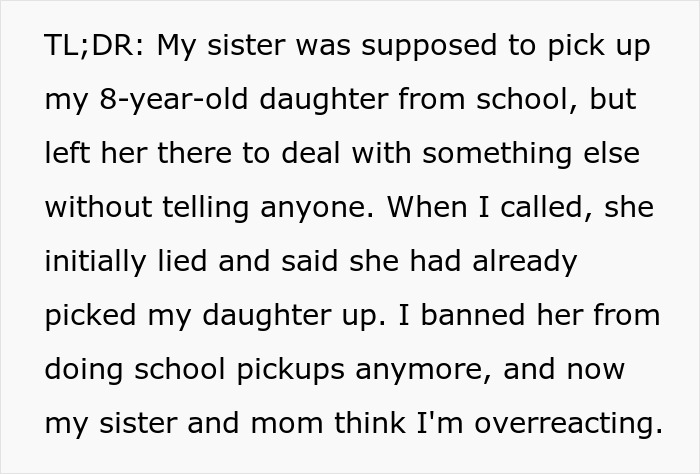
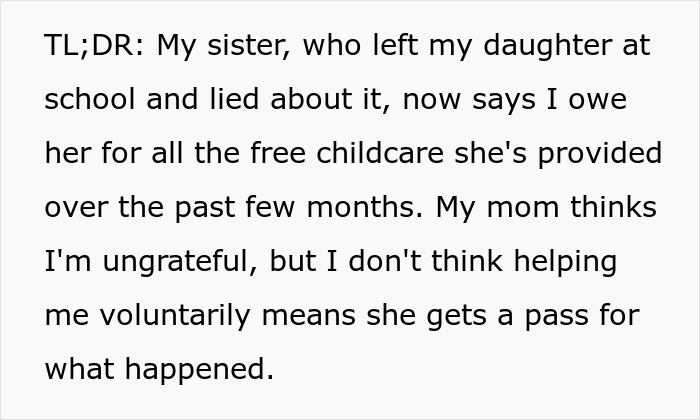
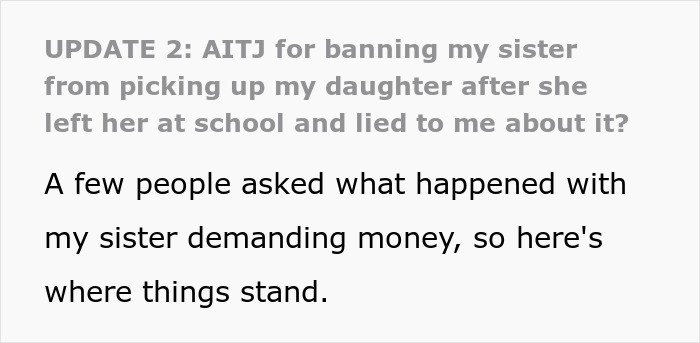
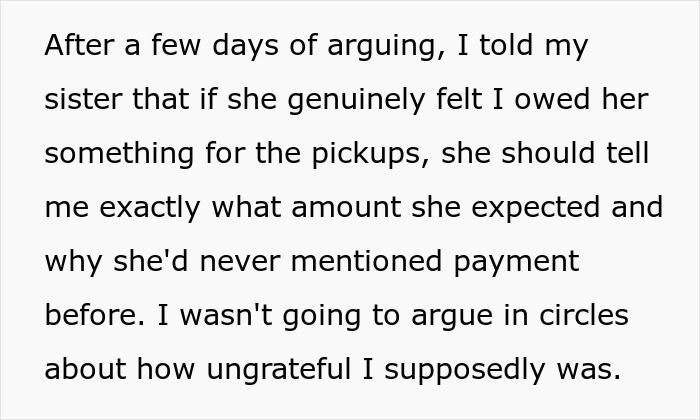
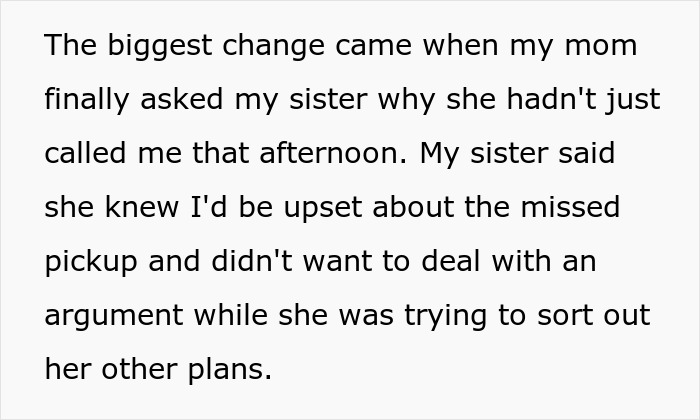
One woman thought she had her daughter’s school pick-up figured out when her sister promised to help out twice a week. But earlier this month, the sister was almost an hour late, didn’t tell anyone, and then started spinning a web of lies and guilt trips. The woman shared her ordeal online after the sister accused her of being ungrateful and got their mother involved to referee.
You’ll definitely want to read the full story and all the updates to find out what the sister did after — and how netizens reacted to the whole situation.
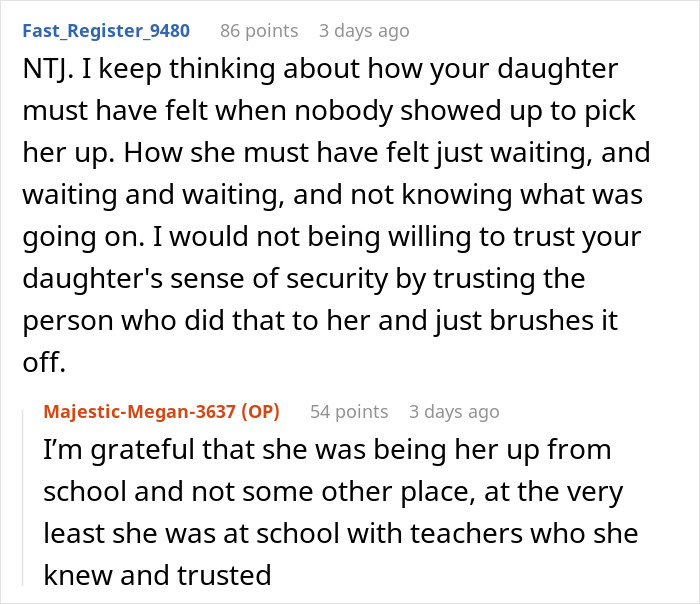
A woman left her niece waiting for almost an hour at the school

Wavebreak Media / magnific (not the actual photo)
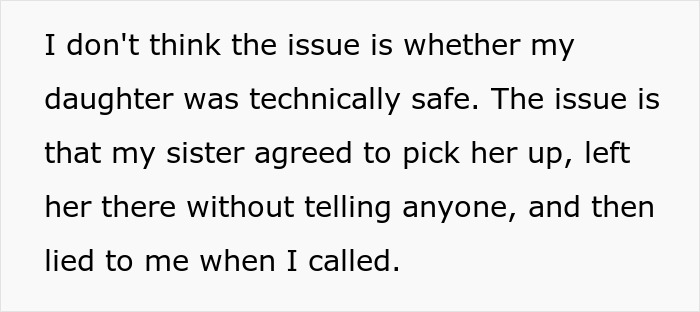
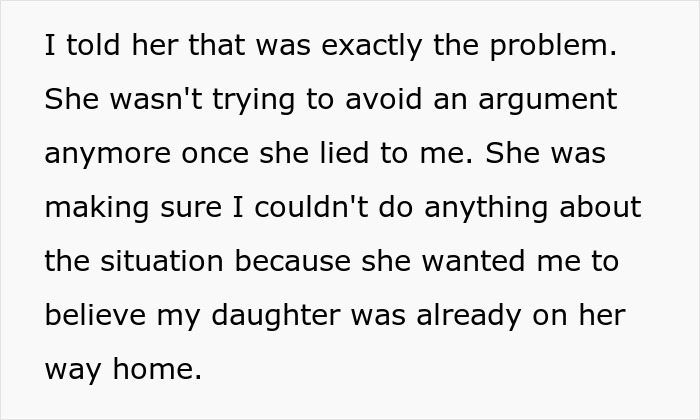
Then she lied to her sister and said she had already picked her up






katemangostar / magnific (not the actual photo)

Raising children takes a village, especially when parents are struggling to juggle work and family
Balancing work and family demands remains a persistent challenge for many parents, especially given the mental and financial costs of childcare. Pew Research Center data from March 2026 indicates that 70% of American parents handle parenting-related tasks while working. About 59% said they handle work-related tasks while with their children, and 54% said it’s difficult to balance work and family responsibilities.
The study noted that parents, especially moms, carry the mental load of balancing what their families need with what their work demands.
Then, of course, you have the financial struggles. Lower- and middle-income families often rely on family members, friends, or neighbors to watch the kids. Meanwhile, wealthier families are mostly paying for professional daycare or preschool.
“We have this idea of the modern nuclear family where everything’s on the parents’ poor old shoulders. That’s not the way we used to live, and it is not the way lots of other countries do it today. They disperse pressures across lots of grownups, and make use of their extended families,” says Rachel Carrell, chief executive of childcare provider Koru Kids.
Research shows that trusted social circles provide emotional validation and a sense of shared community. Extended family and friends can also enrich a child’s social environment and act as role models.
Proximity makes that kind of extended support possible in the first place. Data show that about 55% of American adults live within an hour’s drive of at least some of their extended family members.
That geographic closeness isn’t just about Sunday dinners or holiday get-togethers — it has real-life economic impacts. A National Bureau of Economic Research study found that married women with young children who live close to their mothers or mothers-in-law have a 4 to 10 percentage point higher predicted probability of employment and labor force participation than those living farther away.
Relying on family for childcare comes with a unique set of challenges
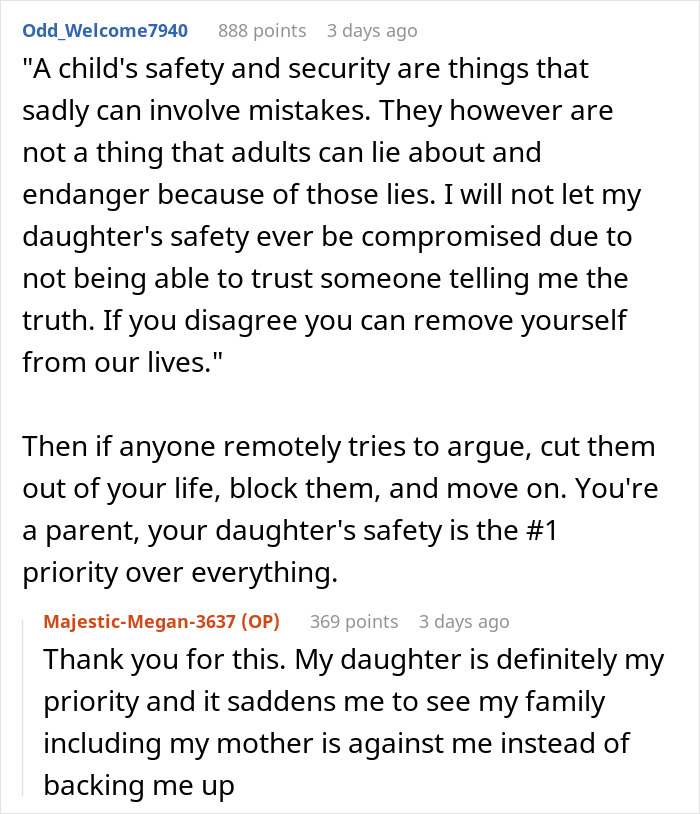
Since you are dealing with a relative rather than a paid professional, you cannot always treat a mistake like a formal HR violation. Even so, convenience can never come at the expense of a child’s safety and well-being. Leaving an eight-year-old child unattended and uninformed inside a school crosses a clear line.
When a family member makes a major error and responds with guilt-tripping, gaslighting, or defensiveness instead of an apology, it often points to deeper issues like entitlement or family enmeshment.
Psychological research on enmeshed family systems shows that when people are called out for crossing a line, they often react with extreme defensiveness or rejection because they see personal boundaries as a personal attack or betrayal. Instead of holding the person accountable, the family dynamic often pressures the victim to sweep things under the rug to keep the peace.
“Enmeshed relationships can be manipulative. The other person may use a variety of tactics to try to get you to cross your boundaries, such as guilt-tripping, shaming, or even threats. This can make it very difficult to stand up for yourself and enforce your boundaries,” says Sharon Martin, psychotherapist and codependency expert.
Relationship experts note that the healthiest way to handle these dynamics is to hold firm to boundaries, encourage clear communication, and, when necessary, seek outside guidance like family therapy.
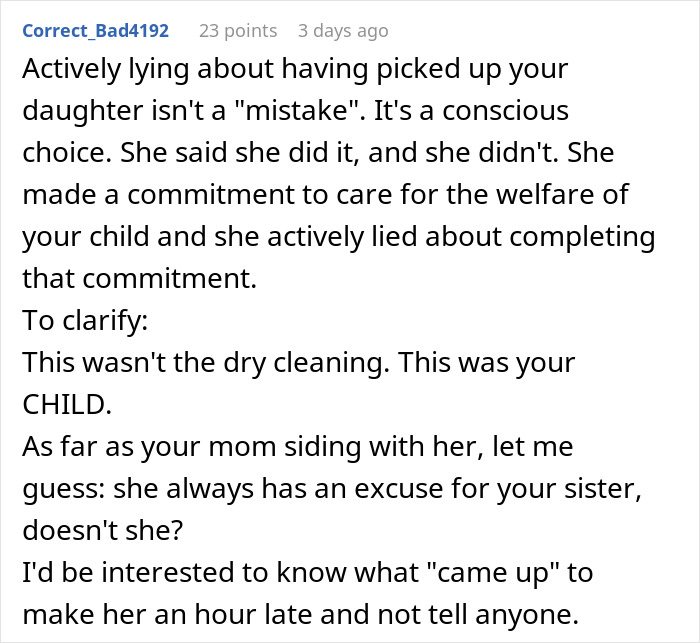
Running a few minutes late happens to everyone, but lying about a missing child, keeping everyone in the dark, and dodging accountability is a different issue entirely. When a promise is broken, it takes time and genuine effort to rebuild trust — and this rule applies to family just as much as anyone else.
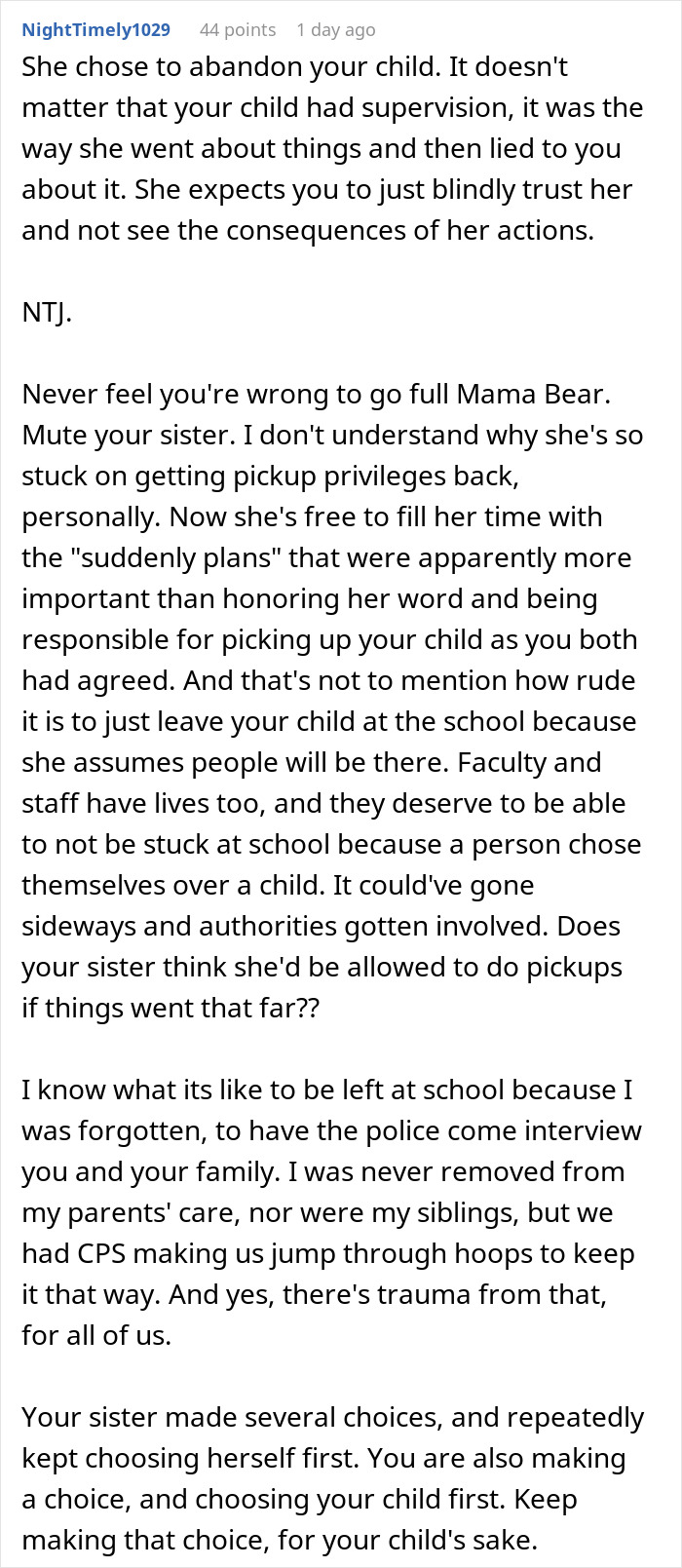
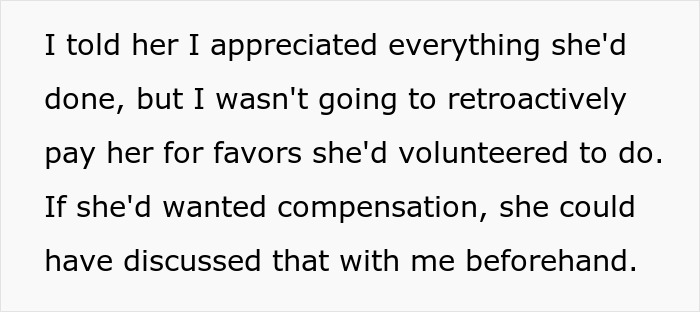
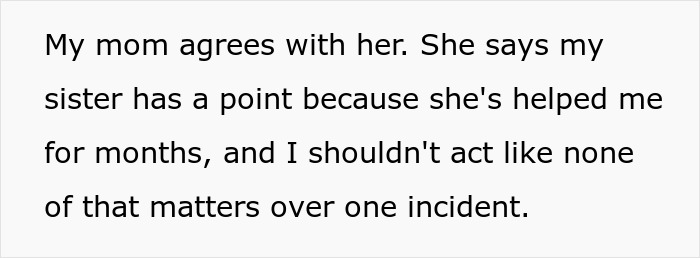
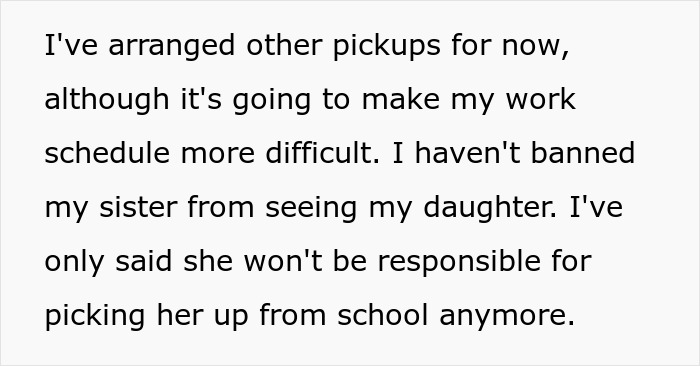
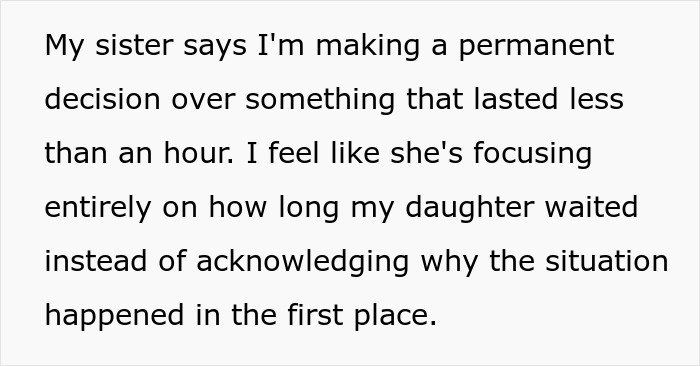
The woman gave more info in response to the comments


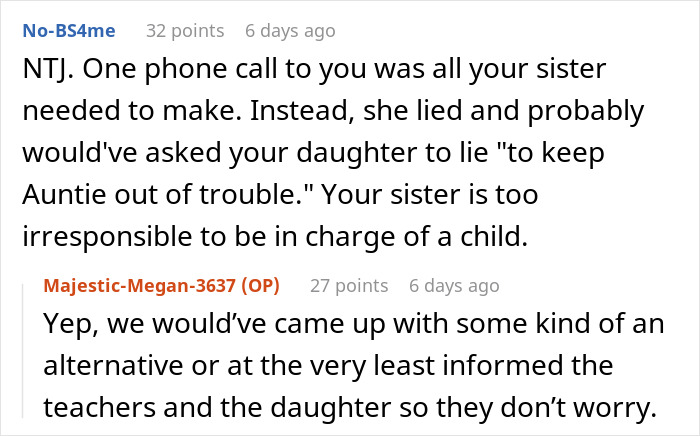


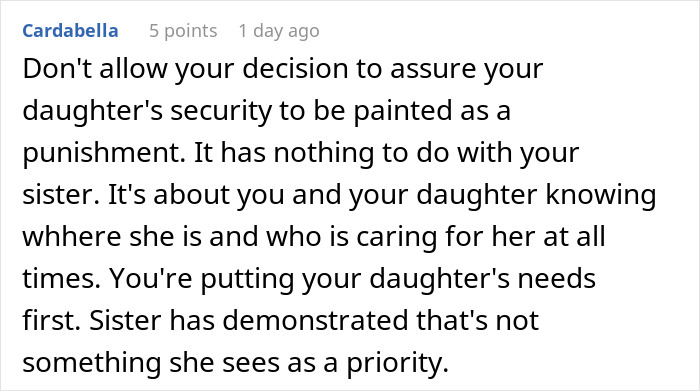
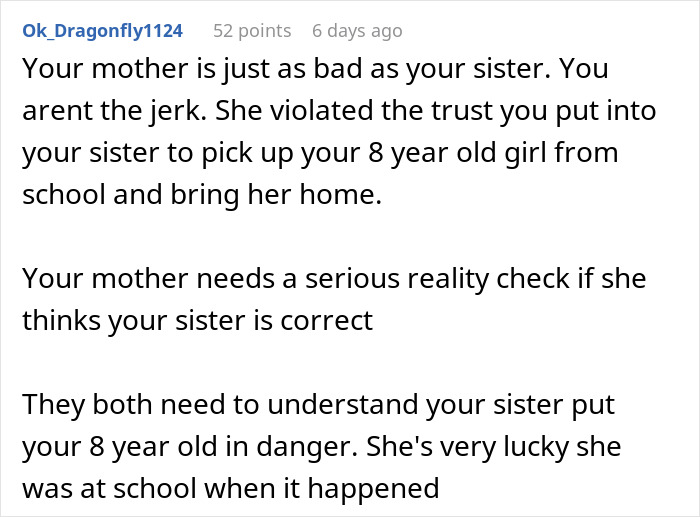
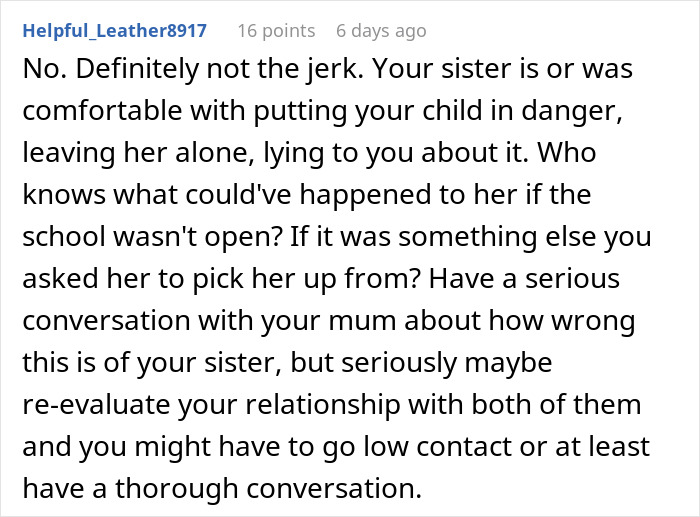
Many people in the comments reassured the author that what she did was right









kasto80 / magnific (not the actual photo)
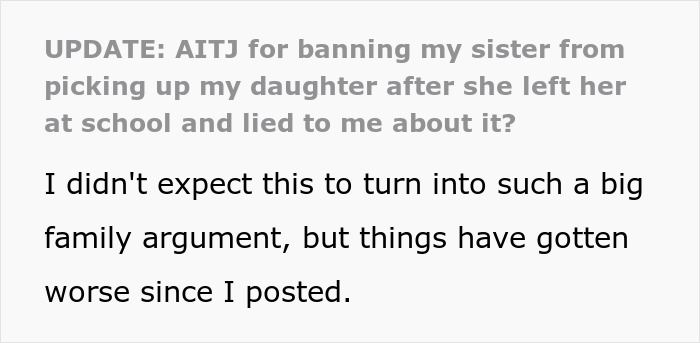
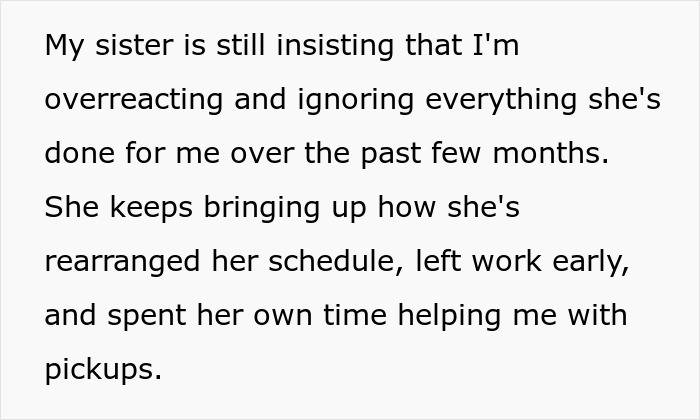
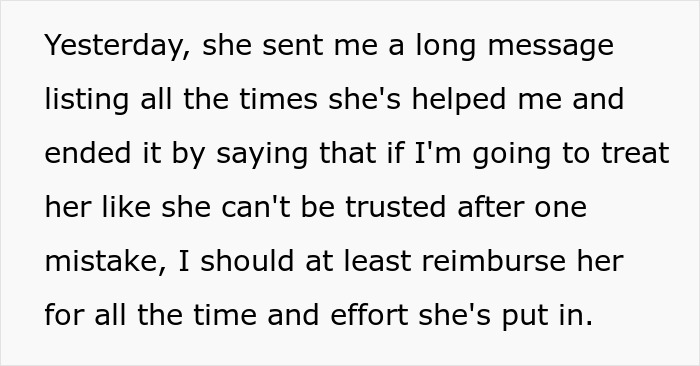
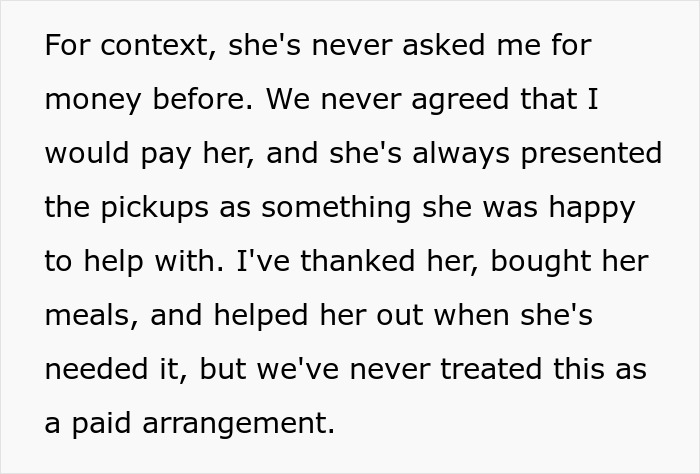
The woman gave another update about how far her sister was willing to take the drama



Here’s what people had to say in the comments












fabrikasimf / magnific (not the actual photo)
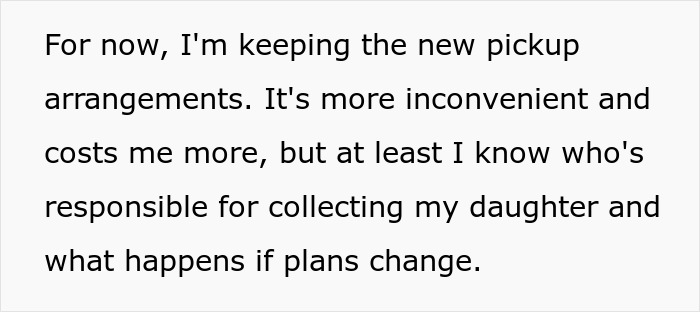
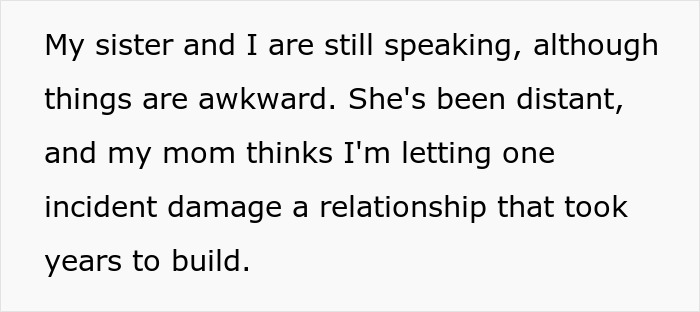
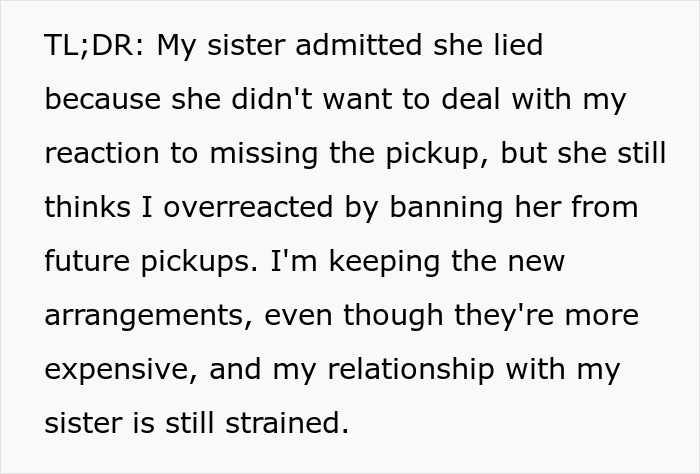
The woman shared that her relationship with her sister is now strained






Netizens had a lot of questions, opinions and advice for the woman