Food can be a sore spot in romantic relationships. While it may seem trivial, issues like preferences and dietary restrictions can trigger friction. In some cases, it can escalate into a full-blown dispute.
This couple just went through a tumultuous episode when a vegetarian woman assumed her spouse would follow suit, which didn’t happen. Her expectations arose after years of saying she had no problem with her partner’s liking for meat and fish.
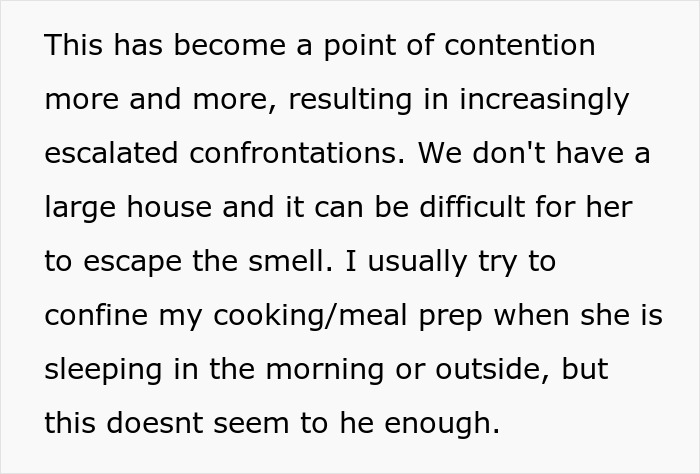
According to her spouse, their eating habits have led to escalating confrontations, especially when the smell of cooked meat fills the home.
Food can sometimes be a source of tension in romantic relationships

lidiiadraw / Magnific (not the actual photo), ai-generated image
For this couple, the issues arose because of their conflicting dietary preferences

eclipsephotostock / Magnific (not the actual photo)
Apparently, the woman expected her spouse to follow the same diet as her
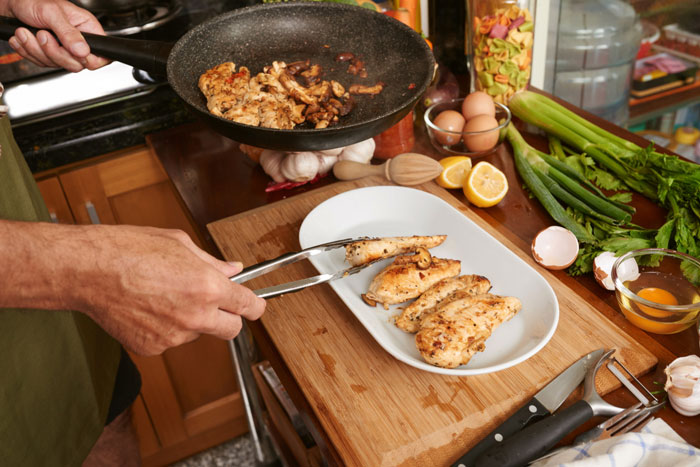
pressfoto / Magnific (not the actual photo)
The spouse’s refusal to follow suit has caused friction in the household


photoroyalty / Magnific (not the actual photo)
Diet is important to the self-identity of vegetarians
On the surface, the wife may seem unreasonable for being upset that her spouse refused to go vegetarian as well. But according to research by psychology professor Hal Herzog, this is because the vegetarian diet is strongly tied to the self-identity of those who follow it.
For one, Herzog and his team found that vegetarians and vegans alike were more likely to associate themselves with non-meat eaters. This applies to close friendships and romantic relationships.
Herzog also found that giving up meat may become a dating hurdle. And as he explained, the reasons are rooted in the cultural and social implications of sharing food and drinks.
“Across all cultures, much human social life revolves around the sharing of food and drink,” Herzog wrote. “It’s safe to say that a moral vegetarian would not feel comfortable sitting around a family Christmas dinner table in which the main course was a five-pound hunk of rare rib roast.”
Creating solutions to a problem may be more helpful than coming to a compromise
Expecting a spouse to follow your lifestyle when they don’t want to will create problems in the long run. At this point, compromises will also likely not happen, especially if one person refuses to give in within reason.
Based on the author’s account, the couple seemingly hasn’t taken the time to sit down and talk things out yet. According to the story, the smell of cooked meat and fish has led to escalated confrontations between the couple, as the author refuses to go vegetarian, at least for the time being.
At this point, a solution that works for both parties may be the more viable option. According to licensed marriage and family therapist Marisa Cohen, compromises may lead one person to resent the other over time.
“Rather than trying to convince your partner that your plans are the best, approach the discussion from a place of love and compassion,” Cohen stated, noting that the goal is to work together rather than against each other.
It may help the couple to sit down, hash out their feelings, then come up with a resolution that works for the situation. They can also consider seeking professional advice and help if absolutely necessary.
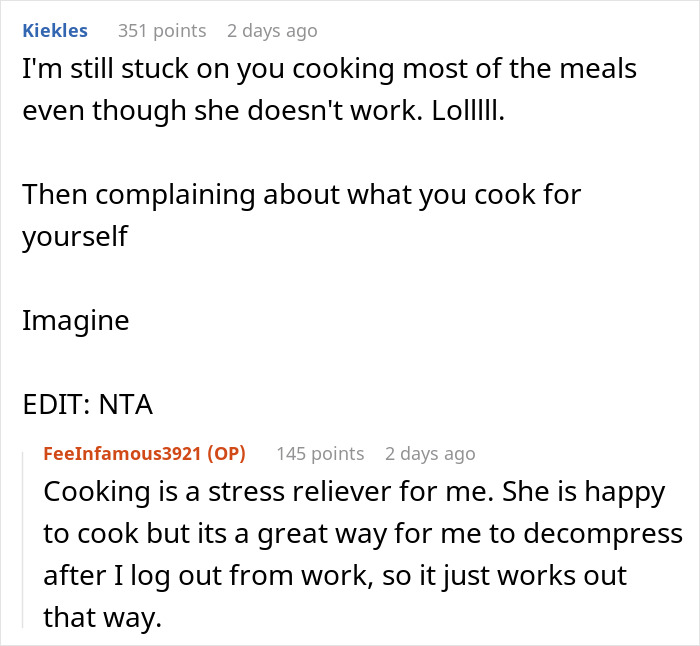
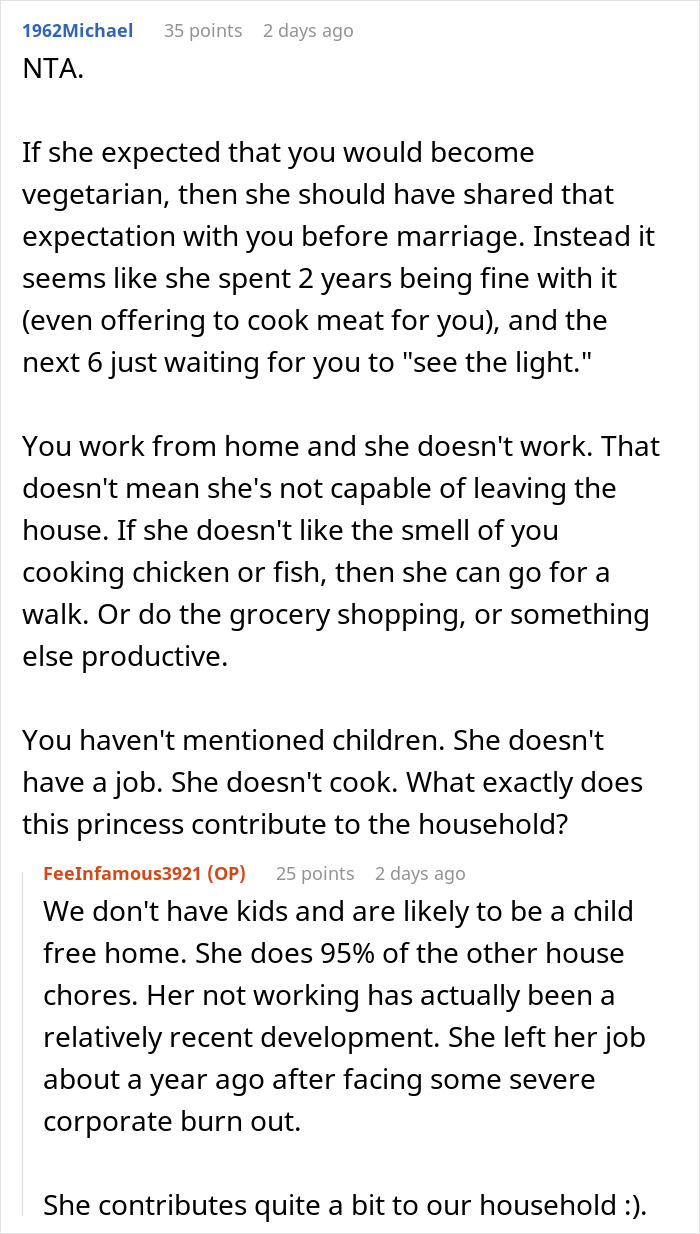
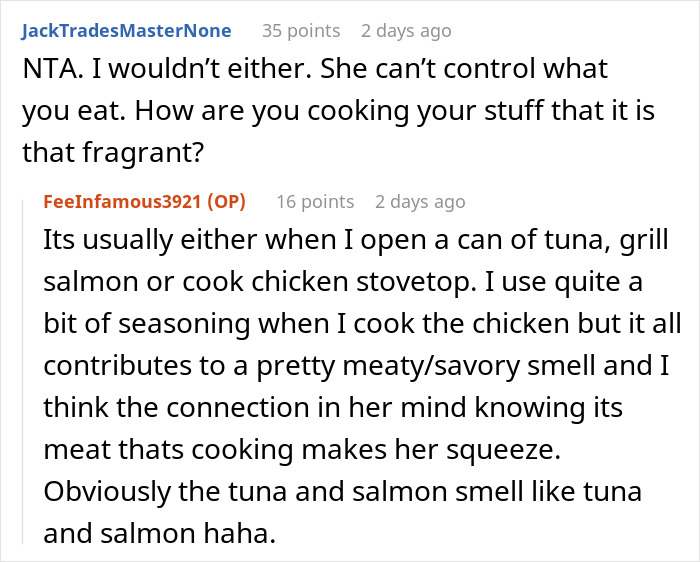
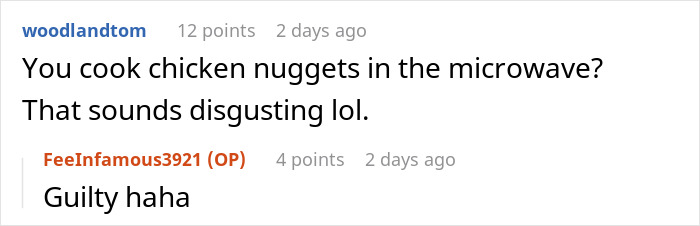
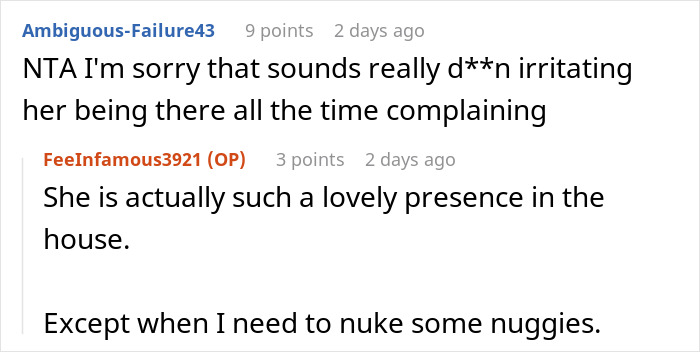
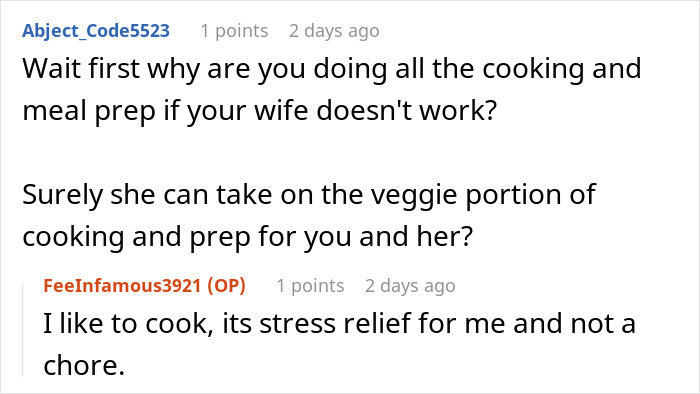
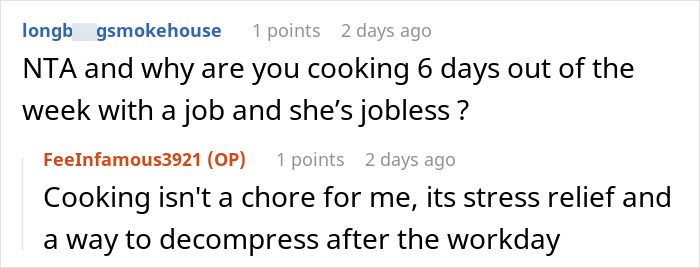
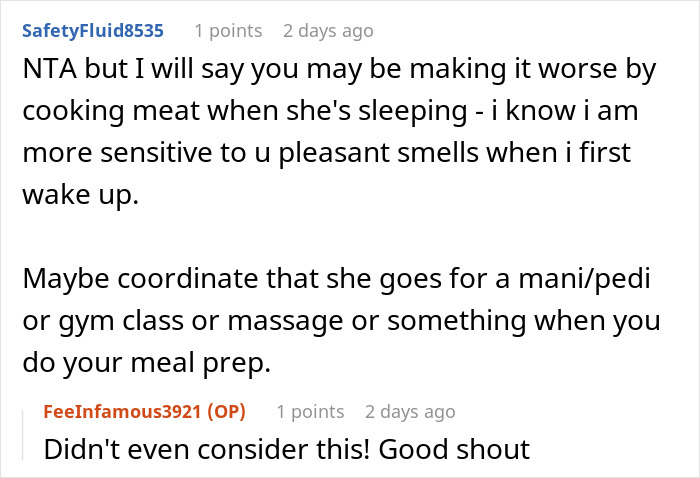
Most readers sided with the author, who provided more details in the comments